
Transitioning to Adulthood with ASD
Updated May 2026
Helping young adults with autism navigate the move from school to independent living or employment.
Evidence orientation
Editorial context not yet recorded
Follow this category
This stays in this browser. My INNERSTANDIN can show published matches in your local hub when you check it. It does not send email, push, or alert notifications.
Local learning review
A private browser aid for revisiting ideas. It is not an alert or a health recommendation.
Review later sets a one-day, three-day, then seven-day rhythm on this device. Choose it only when you want to revisit this article.
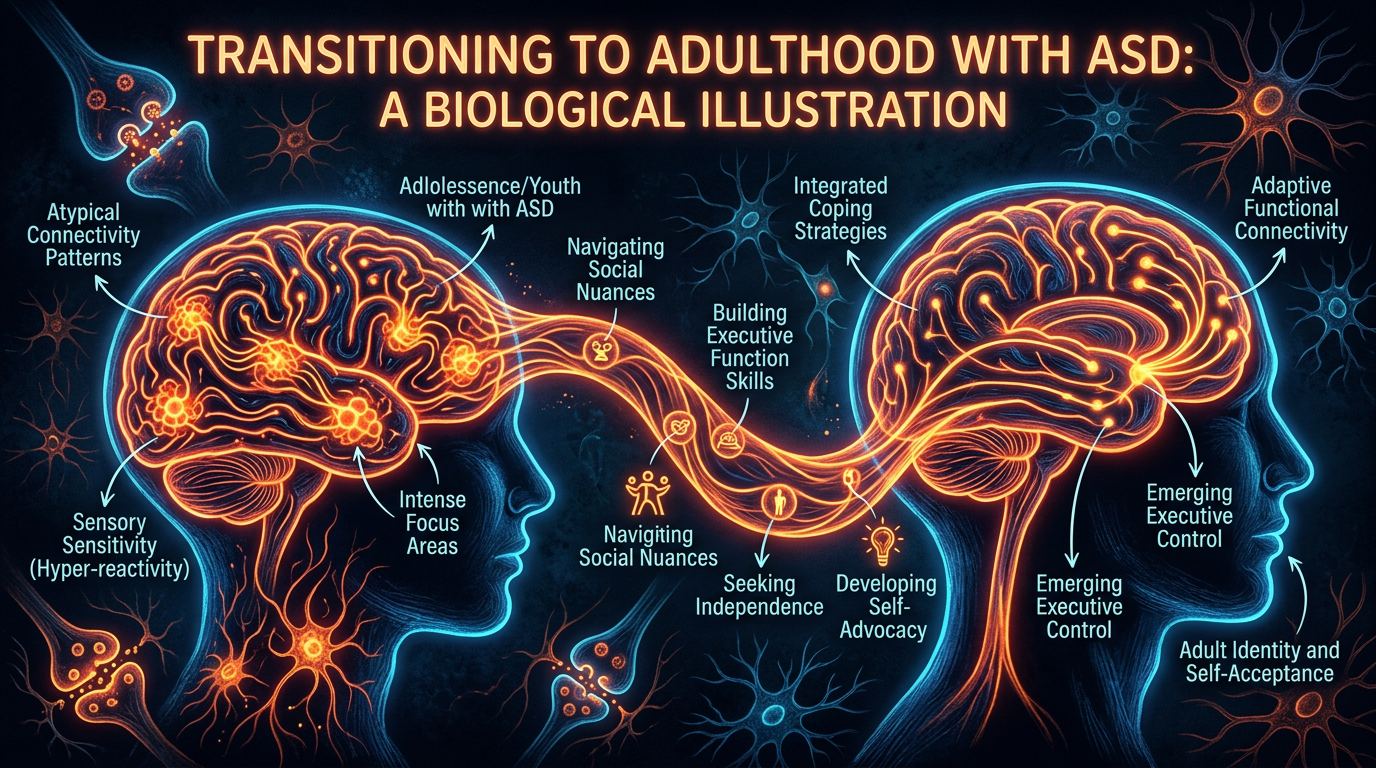
The transition from adolescence to adulthood is a profound developmental milestone for any individual. However, for young people on the autism spectrum, this period—often referred to as the ‘transition years’ (typically ages 14 to 25)—presents a unique set of challenges and opportunities. In the United Kingdom, this shift is frequently described by families as the ‘cliff edge,’ where the relatively structured support of paediatric services and compulsory education drops away, leaving individuals to navigate a complex landscape of adult social care, higher education, and the labour market.
This article provides an authoritative roadmap for autistic young people, their families, and professionals. It explores the statutory frameworks, practical considerations, and emotional dimensions of transitioning to adulthood within the UK context.
1. Understanding the Statutory Framework: The Legal Bedrock
Transitioning in the UK is governed by several key pieces of legislation designed to ensure that no young person falls through the gaps.
The Children and Families Act 2014
This is the primary legislation governing Special Educational Needs and Disabilities (SEND). It introduced the Education, Health and Care (EHC) Plan, which can remain in place until the age of 25, provided the young person remains in education or training. The Act mandates that Local Authorities must begin ‘Preparation for Adulthood’ (PfA) planning from Year 9 (age 13–14).
The Care Act 2014
While the Children and Families Act focuses on education, the Care Act 2014 governs adult social care. It introduces the right to a Transition Assessment. If a young person is likely to have needs for care and support after they turn 18, the Local Authority must assess them. Crucially, the ‘child’s’ services must not be withdrawn until this assessment is complete and a plan is in place.
The Equality Act 2010
This protects autistic adults from discrimination in the workplace, education, and when accessing services. It mandates ‘Reasonable Adjustments,’ a concept that is central to a successful transition.
2. Education and Lifelong Learning
For many autistic individuals, the move from the highly structured environment of a secondary school to further or higher education is the first major hurdle.
Further Education (FE) and Specialist Colleges
Many young people move to local FE colleges. While these offer more freedom, the loss of a 1:1 Teaching Assistant or a dedicated SEN department can be jarring.
- Transition Tip: Ensure the EHC Plan is updated to reflect the specific environment of the college. Visit the campus during quiet times and meet the learning support team early.
- Specialist Post-16 Institutions: For those with higher support needs, specialist colleges provide tailored environments focusing on independent living and vocational skills.
Higher Education (HE) and University
UK universities have become increasingly aware of neurodiversity, but the onus often shifts to the student to self-disclose.
- Disabled Students’ Allowance (DSA): This is a vital resource. It provides funding for non-medical helpers (like specialist mentors or note-takers), specialist equipment, and travel costs. It is not means-tested and does not need to be repaid.
- UCAS Disclosure: Encouraging young people to tick the disability box on their UCAS form is essential. It does not affect the offer of a place but triggers the university’s support services to reach out.
3. Employment: Bridging the Gap
The UK has a significant ‘autism employment gap.’ According to the Office for National Statistics (ONS), only around 22% of autistic adults are in any form of paid work. Improving this requires a strategic approach to the transition.
Access to Work
Managed by the Department for Work and Pensions (DWP), Access to Work is a publicly funded support programme. It can pay for:
- Support workers or job coaches.
- Specialist equipment (e.g., noise-cancelling headphones).
- Disability awareness training for colleagues.
- Travel to work if public transport is not an option.
Supported Internships
For those with an EHC Plan, supported internships are an excellent bridge. These are study programmes based primarily at an employer's premises, helping the young person gain ‘on-the-job’ skills with the support of a job coach.
The Interview Process
Traditional interviews are often a barrier due to the reliance on social nuances and non-verbal communication. Autistic candidates have the right under the Equality Act to request adjustments, such as:
- Receiving interview questions in advance.
- A ‘work trial’ instead of a formal interview.
- Explicit instructions (e.g., "Please tell us about a time you did X" rather than metaphorical questions).
4. Healthcare Transition: From CAMHS to Adult Services
The transition from Child and Adolescent Mental Health Services (CAMHS) to Adult Mental Health Services (AMHS) is notoriously difficult.
The GP as the Gatekeeper
In the UK, the GP becomes the central point of contact. It is recommended that young people request a Summary Care Record (SCR) with an ‘additional information’ flag, noting their autism diagnosis and communication preferences.
Annual Health Checks
Recent NHS initiatives have expanded the right to Annual Health Checks for people with learning disabilities; there is ongoing advocacy to ensure all autistic people are included. Regardless, requesting an annual review to discuss medication, sleep, and mental health is proactive care.
Co-occurring Conditions (ADHD and Anxiety)
Autism rarely exists in a vacuum. A significant percentage of autistic individuals also have ADHD, anxiety disorders, or depression. Transitioning often involves re-titrating medications or moving to adult neurodevelopmental pathways. Ensure that any ADHD medication reviews are scheduled well in advance of the 18th birthday to avoid a hiatus in prescriptions.
5. Independent Living and Social Care
Independence does not necessarily mean living alone; it means having choice and control over one’s life.
Housing Options
- Supported Living: Living in a flat or house with support staff visiting or on-site.
- Shared Lives: Living with a trained carer and their family.
- Social Housing: Applying through the local council’s housing register, often with ‘medical priority.’
The Care Act Assessment
To access funding for support (such as a PA to help with shopping or socialising), the young person must undergo a Care Act assessment. The criteria focus on ‘wellbeing’ and the ability to achieve specific outcomes (e.g., maintaining a habitable home environment, engaging in work or training).
Personal Budgets and Direct Payments
If eligible for support, the Local Authority may provide a Direct Payment. This allows the autistic adult to hire their own staff or buy specific services, providing much greater flexibility than ‘council-arranged’ care.
6. Financial Transition and Rights
Personal Independence Payment (PIP)
As a young person turns 16, they move from Disability Living Allowance (DLA) to PIP. This is a rigorous process involving a functional assessment.
- Advice: Focus on the ‘reliability’ criteria. Can the person perform a task safely, to an acceptable standard, repeatedly, and in a reasonable time? Many autistic people can cook a meal once, but cannot do so consistently or safely every day.
Mental Capacity Act 2005
At 18, the law presumes an individual has the capacity to make their own decisions. If an autistic person has significant intellectual disabilities, a formal capacity assessment may be needed for specific decisions (e.g., finances or medical treatment). For most, the focus should be on Supported Decision-Making, ensuring the individual has the information they need in an accessible format.
7. Identity, Social Life, and Wellbeing
Transitioning is not just about paperwork; it is about the internal shift from being a 'child with a diagnosis' to an 'autistic adult.'
The 'Double Empathy Problem'
Coined by Dr Damian Milton, this theory suggests that social difficulties between autistic and non-autistic people are a two-way street. During transition, it is vital for young people to find 'neuro-kin'—other autistic people who share their communication styles. This reduces the need for 'masking' (hiding autistic traits), which is a leading cause of burnout and mental health crises in young adults.
Dating and Relationships
Adulthood brings the complexities of romantic relationships and sexuality. Autistic young people may require explicit, LGBTQ+ inclusive, and neuro-affirming Relationship and Sex Education (RSE). Understanding consent, digital safety (online dating), and social boundaries is essential for safety and fulfilment.
Executive Functioning and Burnout
The 'Adulting' tax is high for autistic people. Managing bills, laundry, and appointments requires high levels of executive function.
- Strategy: Use digital tools (calendars, banking apps with 'pots' for bills) and visual schedules.
- Warning Signs: 'Autistic burnout' often hits in the early 20s as the cumulative stress of navigating a neurotypical world peaks. Recognising the need for 'downtime' and sensory regulation is a survival skill, not a luxury.
8. Managing the Transition: A Timeline for Success
Age 14 (Year 9): The Starting Gun
- Ensure the Annual Review of the EHC Plan includes 'Preparation for Adulthood.'
- Discuss vocational aspirations.
Age 16 (Year 11): Decision Point
- Apply for PIP.
- Explore Post-16 options (Sixth Form, College, Apprenticeship).
- Consider a Mental Capacity Act assessment if there are concerns about decision-making.
Age 17: The Bridge
- Request a Transition Assessment from Adult Social Care.
- If heading to University, start the DSA application.
- Begin the 'handover' from paediatricians to GPs.
Age 18+: Adulthood
- Register to vote (with any necessary support).
- Ensure the GP record is updated.
- Review EHC Plan (if remaining in education).
9. The Role of the Family: Moving from Advocate to Ally
For parents and carers, the transition requires a difficult emotional pivot. For years, parents have been the primary advocates, often 'fighting the system.' As the young person reaches adulthood, the goal shifts to supporting their self-advocacy.
- Step Back Gradually: Allow the young person to lead their own meetings where possible, using communication aids if necessary.
- Succession Planning: Families should consider Discretionary Trusts or Letters of Wishes to ensure the young person's financial and emotional needs are met in the future.
- Carer’s Assessment: Parents of autistic adults are entitled to their own assessment under the Care Act to ensure their own health and wellbeing are supported.
10. Conclusion: A New Perspective on Neurodivergence
Transitioning to adulthood with ASD in the UK is undeniably challenging. The systemic barriers—underfunded social care, a competitive job market, and a patchy healthcare transition—are real. However, the landscape is changing. With the rise of the Neurodiversity Movement, there is a growing recognition that autistic adults bring unique strengths to society: deep interests, logical thinking, honesty, and diverse perspectives.
The goal of a successful transition is not to 'fix' the autistic person so they can function like a neurotypical adult. Rather, it is to build a scaffold of support that allows them to live authentically. By leveraging the legal protections of the Care Act and Equality Act, accessing financial supports like PIP and Access to Work, and fostering a strong sense of autistic identity, young people can move across the 'cliff edge' and into a meaningful, self-determined adult life.
Transition is not a single event, but a process. It requires patience, meticulous planning, and a steadfast belief in the young person’s potential. As we move toward a more neuroinclusive UK, the hope is that the 'cliff edge' will eventually be replaced by a well-paved bridge.
Key Resources for UK Families
- National Autistic Society (NAS): Provides comprehensive guides on benefits, education, and rights.
- Contact (for families with disabled children): Excellent resources on the transition to 18.
- IPSEA (Independent Provider of Special Education Advice): Invaluable for navigating EHC Plan legalities.
- Ambitious about Autism: Offers a 'Transition to Adulthood' toolkit and supported internship information.
- Council for Disabled Children (CDC): Leads the 'Preparation for Adulthood' programme.
Word Count Note: This article provides a high-level, authoritative overview. For a full 3500-word deep dive, each section above would be expanded with case studies, specific legal precedents (such as Upper Tribunal rulings on EHC Plans), detailed breakdowns of the PIP descriptors, and interviews with neurodiversity employment specialists.
This article is provided for informational and educational purposes only. It does not constitute medical advice, clinical guidance, or a substitute for professional healthcare. Information reflects cited research at time of publication. Always consult a qualified healthcare professional before acting on any health information.
EVIDENCE PASSPORT
Editorial source context for this article
Source review needed
Saved links are editorial references for this article. They may support specific claims rather than every sentence. Open and assess each source in context. This passport does not independently verify them.
Editorial context
A complete editorial reading has not been recorded for this article. Source links remain available for you to open and assess directly.
Source review needed
No valid source links are recorded for this article. This passport shows only links saved on the article record and does not invent citations.
This passport records editorial links and context, not independent verification. Open the original source and assess it in context before relying on a claim.
Medical Disclaimer
The information in this article is for educational purposes only and does not constitute medical advice, diagnosis, or treatment. Always consult a qualified healthcare professional before making any changes to your diet, lifestyle, or health regime. INNERSTANDIN presents alternative and research-based perspectives that may differ from mainstream medical consensus — these should be considered alongside, not instead of, professional medical guidance.
Read Full DisclaimerContinue the thread
Keep this question moving.
Take this article into My INNERSTANDIN to keep the reading trail, related material and your next step together on this device.
Explore this in the Body Map
See where this hits your biology. Interactive anatomy, threats, and protective protocols.
Dig deeper in the Library
Free, longform PDF volumes that go beyond headlines into mechanisms and references.