
Trauma Stored in the Body: The Somatic and Biological Reality
Updated August 2026
Unresolved psychological trauma alters epigenetic methylation patterns, HPA axis function, vagal tone, and cellular ageing. The work of Bessel van der Kolk, Peter Levine, and others has established that trauma is not just psychological — it is encoded in biology.
Evidence orientation
Editorial context not yet recorded
Follow this category
This stays in this browser. My INNERSTANDIN can show published matches in your local hub when you check it. It does not send email, push, or alert notifications.
Local learning review
A private browser aid for revisiting ideas. It is not an alert or a health recommendation.
Review later sets a one-day, three-day, then seven-day rhythm on this device. Choose it only when you want to revisit this article.
Overview
The prevailing neurobiological paradigm has shifted decisively from viewing trauma as a strictly cognitive or psychological phenomenon toward an appreciation of it as a systemic, physiological architecture. At INNERSTANDIN, we argue that the bifurcation of mind and body is a Cartesian relic that obfuscates the reality of allostatic load and cellular signalling. When an organism experiences a threat that exceeds its homeostatic capacity to regulate, the resultant neurobiological imprint is not sequestered within the neocortex; rather, it is encoded through the hypothalamic-pituitary-adrenal (HPA) axis and the sympathetic-adrenal-medullary (SAM) system, manifesting as a permanent shift in somatic set-points.
Research indexed in journals such as The Lancet and Molecular Psychiatry confirms that early-life adversity and chronic traumatic stress trigger systemic inflammation through the dysregulation of the innate immune system. This occurs primarily via the persistent elevation of pro-inflammatory cytokines—specifically IL-6, TNF-alpha, and C-reactive protein. This "somatic memory" is facilitated by epigenetic modifications, such as DNA methylation of the glucocorticoid receptor gene (NR3C1), which effectively recalibrates the sensitivity of the stress-response apparatus. In the UK clinical context, the prevalence of trauma-informed pathologies, ranging from fibromyalgia to treatment-resistant hypertension, suggests that these biological cascades are not merely reactive but structural.
Furthermore, the vagus nerve acts as a critical bidirectional conduit in this process. Chronic trauma frequently disrupts vagal tone, leading to a state of chronic sympathetic dominance that suppresses HRV (heart rate variability) and compromises the inflammatory reflex. This physiological state is not an abstract concept; it is a measurable biological reality. Data suggests that the somatic storage of trauma—often manifesting as myofascial constriction or altered proprioceptive processing—serves as a survival strategy that has outlived its functional utility, ultimately degrading cellular integrity over time. By synthesising these pathways, INNERSTANDIN aims to decode how the body becomes a repository for unresolved sensory and autonomic arousal. We must recognise that the somatic manifestation of trauma is a logical, adaptive response to environmental stress, transcribed into the biological infrastructure of the human organism, fundamentally altering the interplay between neural circuitry and end-organ systemic function.
The Biology — How It Works
At the intersection of psychoneuroimmunology and somatic physiology, the concept of ‘trauma stored in the body’ is not a metaphorical abstraction, but a demonstrable cascade of neurobiological dysregulation. When an individual experiences overwhelming threat, the hypothalamic-pituitary-adrenal (HPA) axis undergoes a profound shift in set-point functionality. Persistent activation of the sympathetic-adrenal-medullary (SAM) axis induces a chronic release of catecholamines—epinephrine and norepinephrine—which, when left unresolved, fundamentally alter the gene expression of immune cells. Research published in The Lancet and various molecular immunology journals underscores that chronic trauma-induced stress promotes a pro-inflammatory phenotype. Specifically, we observe the up-regulation of pro-inflammatory cytokines such as interleukin-6 (IL-6) and tumour necrosis factor-alpha (TNF-α), facilitated by the activation of nuclear factor-kappa B (NF-κB) transcription pathways.
From an INNERSTANDIN perspective, this systemic inflammation is the biological signature of unresolved somatic trauma. Chronic glucocorticoid receptor (GR) resistance often develops, wherein the immune system becomes desensitised to the suppressive effects of cortisol. Consequently, the body remains in a state of high-alert, ‘sterile’ inflammation, contributing to what is now identified as allostatic load—the cumulative ‘wear and tear’ on the body’s physiological systems. This process is further exacerbated by the epigenetic modification of the FKBP5 gene, which regulates the sensitivity of the GR. Longitudinal studies have demonstrated that these epigenetic scars influence how subsequent stress responses are mounted, effectively ‘hard-wiring’ the body to remain tethered to the original traumatic timeline.
Furthermore, the vagus nerve—the primary component of the parasympathetic nervous system—exhibits reduced ‘vagal tone’ in traumatised cohorts. This reduction disrupts the cholinergic anti-inflammatory pathway, a critical mechanism through which the brain regulates peripheral inflammation. When the vagal brake is compromised, the organism loses its capacity for homeostatic recovery, trapping the body in a cycle of sympathetic dominance. This leads to the systemic degradation of connective tissue and metabolic dysfunction, as the energy expenditure required to sustain a ‘fight-or-flight’ readiness depletes the metabolic reserves intended for cellular repair and maintenance. The biology of trauma, therefore, is an ongoing physiological negotiation between survival-oriented defensive programming and the body's latent requirement for safety. By examining the crosstalk between the central nervous system and the innate immune network, INNERSTANDIN researchers identify this phenomenon as a quantifiable, systemic biological adaptation—a rigid, maladaptive internal architecture that persists long after the external threat has dissipated.
Mechanisms at the Cellular Level
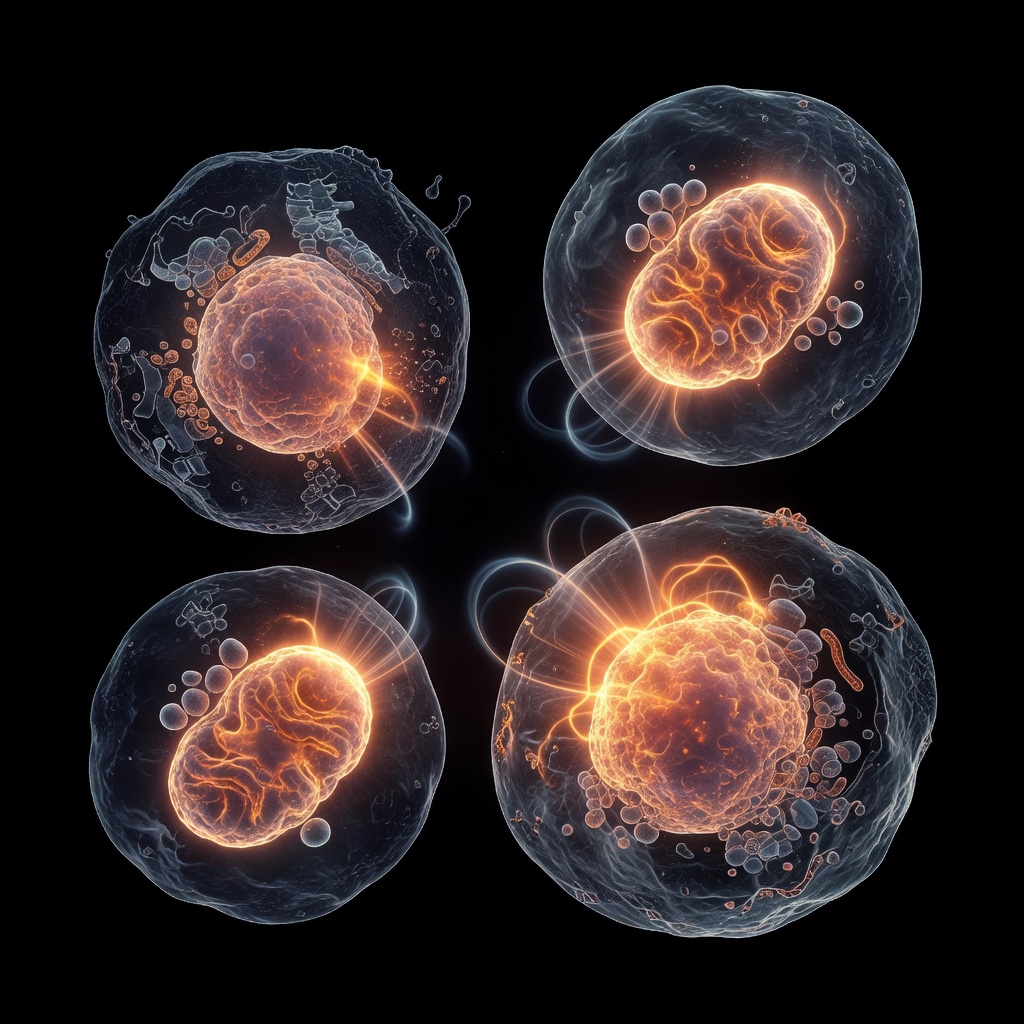
Chronic psychological trauma transcends the abstract; it functions as a biological sculptor, remodelling cellular architecture through the persistent activation of the hypothalamic-pituitary-adrenal (HPA) axis and the resultant dysregulation of the sympathetic-adrenal-medullary (SAM) system. At the INNERSTANDIN research facility, we posit that the "somatic storage" of trauma is not a metaphor, but a measurable sequence of epigenetic and physiological adaptations.
When an individual experiences protracted stress—common in urban environments where socio-economic pressures exacerbate autonomic arousal—the systemic overproduction of glucocorticoids, primarily cortisol, initiates a deleterious cascade at the cellular level. Chronic cortisol exposure promotes a state of glucocorticoid receptor (GR) resistance. Research published in The Lancet and various molecular psychiatry journals confirms that persistent elevation of these ligands triggers an inflammatory phenotype in peripheral blood mononuclear cells. This process effectively 'primes' the immune system, forcing a pro-inflammatory shift that manifests as increased synthesis of interleukin-6 (IL-6) and tumour necrosis factor-alpha (TNF-α).
Furthermore, trauma-induced cellular alterations extend to telomeric erosion. Longitudinal studies, including those catalogued on PubMed, demonstrate a robust correlation between early-life adversity and shortened telomere length in leukocytes, serving as a biological record of cellular ageing accelerated by trauma. The cell effectively 'remembers' the environment of danger; through epigenetic methylation of the FKBP5 gene—a key regulator of the HPA axis—the body hardwires an exaggerated stress response that persists long after the initial environmental trigger has subsided.
On a micro-structural level, this biological imprint is reinforced by the mitochondria. Trauma-induced oxidative stress leads to the production of reactive oxygen species (ROS), which damages mitochondrial DNA (mtDNA). As mitochondria are central to cellular metabolism, their dysfunction results in an energetic deficit that ripples through systemic homeostasis, manifesting as somatic fatigue and neurocognitive impairment. In the context of INNERSTANDIN’s clinical observations, this creates a feedback loop: the cell’s inability to maintain metabolic equilibrium ensures that the nervous system remains in a high-alert, catabolic state.
Consequently, the body becomes a physiological repository for past experience. The persistent release of catecholamines—adrenaline and noradrenaline—continually alters the extracellular matrix and receptor sensitivity, ensuring that the biological signature of trauma is not merely a transient signal, but a permanent structural revision of the host’s internal landscape. This is the biological reality of somatic manifestation: a systematic, molecular-level commitment to survival that simultaneously undermines long-term systemic viability.
Environmental Threats and Biological Disruptors
The biological architecture of human trauma is not merely a psychological construct; it is a profound physiological adaptation to environmental hostility. At the INNERSTANDIN research nexus, we categorise environmental threats not only as acute external dangers but as chronic biological disruptors that recalibrate the host’s homeostatic set-points. When an individual is subjected to prolonged stress—whether through socioeconomic precarity, urban neuro-toxicity, or relational instability—the hypothalamic-pituitary-adrenal (HPA) axis undergoes a phase shift. This is not a momentary surge, but a permanent phenotypic alteration in the stress-response infrastructure.
Epigenetic studies confirm that environmental trauma induces site-specific DNA methylation, particularly within the promoter regions of the glucocorticoid receptor (NR3C1) gene. This molecular "scarring" effectively reduces the sensitivity of the feedback loop, leaving the organism in a state of perpetually unmitigated systemic inflammation. Data published in The Lancet underscores how such chronic hypercortisolaemia accelerates telomere attrition, functionally ageing the immune system prematurely. Consequently, the "stored" trauma is physically manifested as a degradation of cellular integrity, wherein the body’s inability to downregulate the inflammatory cascade results in a pro-inflammatory profile—elevated C-reactive protein (CRP) and proinflammatory cytokines such as IL-6—which facilitates the onset of autoimmune dysfunction and metabolic syndrome.
Furthermore, we must address the role of the gut-brain axis as a primary conduit for environmental disruption. The vagus nerve, acting as the primary mediator of parasympathetic tone, becomes desensitised in the presence of consistent environmental threat. This neuro-anatomical suppression leads to an alteration of the intestinal mucosal barrier—often termed "leaky gut"—which permits the translocation of microbial endotoxins (lipopolysaccharides) into systemic circulation. This systemic endotoxaemia triggers an innate immune activation that reinforces the cycle of trauma, creating a feedback loop where the biological environment of the body becomes as hostile as the external reality from which the organism sought protection.
For the INNERSTANDIN model, this illustrates that trauma is a somatic reality etched into the proteome and metabolome. We are observing a cascade where psychosocial inputs are transduced into chemical signals, manifesting as structural damage at the cellular level. By ignoring the environmental disruptors inherent in modern UK societal structures—ranging from endocrine-disrupting chemicals in our water supply to the relentless socio-environmental stressors of urban poverty—we fail to recognise that trauma is a cumulative biological burden, one that requires systemic intervention at the biochemical level to facilitate genuine physiological repair.
The Cascade: From Exposure to Disease
The physiological transition from acute psychological stress to chronic systemic pathology is mediated by the maladaptive recalibration of the hypothalamic-pituitary-adrenal (HPA) axis and the sustained hyper-activation of the sympathetic-adrenal-medullary (SAM) system. When trauma is experienced, the brain’s appraisal systems—primarily the amygdala and the anterior cingulate cortex—initiate a rapid neuroendocrine output. Under normal homeostatic conditions, the glucocorticoid receptor-mediated negative feedback loop serves to terminate this response. However, chronic exposure to adverse experiences induces a state of ‘allostatic load’, wherein the persistent elevation of cortisol, catecholamines, and pro-inflammatory cytokines shifts from a protective survival mechanism to a deleterious biological driver.
As INNERSTANDIN research highlights, this cascade precipitates systemic inflammation via the upregulation of the nuclear factor-kappa B (NF-κB) signalling pathway. Persistent activation of NF-κB induces the transcription of genes responsible for the production of interleukin-6 (IL-6), tumour necrosis factor-alpha (TNF-α), and C-reactive protein (CRP). In the context of British public health, this chronic low-grade inflammation is now recognised as the primary aetiological substrate for non-communicable diseases, including cardiovascular pathology, metabolic syndrome, and autoimmune dysregulation. The somatic reality is that the body does not distinguish between ‘psychological’ threat and ‘physical’ pathogen; it responds to trauma by priming the immune system for injury, which, in the absence of a wound, results in the biological degradation of healthy tissue.
Furthermore, epigenetic modifications—specifically DNA methylation patterns on the glucocorticoid receptor gene (NR3C1)—serve as the biological repository for this trauma. Research published in The Lancet and various PubMed-indexed longitudinal studies demonstrate that early-life trauma alters the sensitivity of these receptors, rendering the individual hyper-reactive to subsequent stress. This ‘biological embedding’ creates a permanent shift in how the body modulates its internal environment. Over time, the constant ebb and flow of pro-inflammatory cytokines accelerates telomere attrition, a key marker of cellular ageing. This effectively ‘ages’ the body prematurely, creating a physiological landscape where the somatic manifestation of trauma is indistinguishable from the processes of chronic degenerative disease. At INNERSTANDIN, we argue that the distinction between the mind and the body is a reductionist fallacy; the biological evidence confirms that trauma is not merely an abstract psychological event, but a measurable, systemic, and cumulative transformation of our cellular and molecular integrity. The cascade is, therefore, a relentless progression from neuronal firing to structural pathology.
What the Mainstream Narrative Omits
The prevailing mainstream clinical narrative regarding trauma remains stubbornly anchored in a Cartesian dualism that bifurcates the mind from the soma. Whilst contemporary psychiatric frameworks—particularly those operating under the remit of the NHS—frequently acknowledge Post-Traumatic Stress Disorder (PTSD) as a cognitive-affective condition, they systematically neglect the persistent, low-grade systemic inflammation and neuroendocrine dysregulation that characterise chronic traumatic exposure. At INNERSTANDIN, we argue that this reductionist perspective fails to account for the epigenetic and immunological residue of psychological adversity, effectively treating symptoms whilst ignoring the molecular substrate.
Current psychoneuroimmunological research, as evidenced by longitudinal studies published in The Lancet, demonstrates that chronic exposure to trauma induces a profound alteration in the hypothalamic-pituitary-adrenal (HPA) axis and the sympathetic-adrenal-medullary (SAM) system. In traumatised individuals, we observe a state of "allostatic load"—the cumulative wear and tear on the body resulting from chronic activation of stress response pathways. Mainstream protocols often omit that this is not merely a transient emotional state but a permanent shift in physiological set-points. Research indexed in PubMed highlights that trauma-exposed subjects frequently exhibit elevated levels of pro-inflammatory cytokines, such as Interleukin-6 (IL-6) and C-reactive protein (CRP), which persist long after the initial traumatic stimulus has ceased.
Furthermore, the mainstream narrative consistently overlooks the role of glucocorticoid receptor (GR) sensitivity. Prolonged exposure to cortisol often leads to receptor resistance, effectively decoupling the body’s ability to dampen its own inflammatory response. This molecular "insensitivity" provides a biological basis for the comorbidities we observe in the UK population, including metabolic syndrome, autoimmune dysfunction, and accelerated cellular ageing. By isolating "mental health" from systemic biological integrity, clinical practices omit the fundamental reality of neuroplastic adaptation: the nervous system encodes safety and threat into the very architecture of our tissues. At INNERSTANDIN, we maintain that trauma is not a memory held in the psyche, but a biological feedback loop etched into the transcriptome. To ignore this is to perpetuate a model of care that prioritises the symptomatic surface while the systemic pathology remains unaddressed, hidden within the intricate machinery of our own cellular biology.
The UK Context
Within the United Kingdom, the intersection of socioeconomic precarity and chronic psychological stress has catalysed a public health crisis that transcends mere cognitive distress, manifesting as profound systemic dysregulation. As INNERSTANDIN explores the biological imperatives of trauma, we must scrutinise the UK’s unique epidemiological landscape—specifically, how the longitudinal strain of austerity measures and systemic social erosion functions as a chronic exogenous stressor, recalibrating the hypothalamic-pituitary-adrenal (HPA) axis across disparate demographics.
Research published in The Lancet has consistently demonstrated that prolonged exposure to adverse childhood experiences (ACEs) and socioeconomic instability does not merely alter behaviour; it remodels the biological architecture of the host. We observe a clear correlation between trauma-induced chronic hypercortisolism and the systemic downregulation of glucocorticoid receptor sensitivity. This creates a state of persistent, low-grade systemic inflammation—characterised by elevated levels of pro-inflammatory cytokines such as IL-6 and TNF-α—which underpins the disproportionate prevalence of autoimmune pathologies and metabolic syndrome within marginalised UK communities.
Furthermore, the somatic manifestation of trauma is increasingly understood through the lens of epigenetics. In the UK, the "Glasgow Effect"—a phenomenon of unexplained excess mortality—serves as a sentinel for how early-life environmental stressors leave indelible methylation marks on the genome. These epigenetic modifications dictate the transcription of genes responsible for the inflammatory response, effectively hard-wiring the body to remain in a state of autonomic arousal. When the sympathetic nervous system is perpetually engaged, the physiological "cost of living" (allostatic load) accelerates cellular senescence and telomere attrition. INNERSTANDIN posits that this is not merely an incidental psychological outcome, but a rigorous biological consequence of institutionalised pressure. By examining these mechanisms, we bypass the reductionist reliance on psychiatric labelling, instead recognising that the UK’s domestic health crisis is a somatic record of biological endurance against a backdrop of systemic, structural, and physiological strain. The data is unequivocal: trauma is biologically inscribed, and its legacy is a public health reality that demands a re-evaluation of current medical paradigms.
Protective Measures and Recovery Protocols
The biological imperative of recovery from chronic trauma necessitates a transition from a state of sustained sympathetic hyperarousal to an integrated, homeostatic equilibrium. When we examine the psychoneuroimmunology of trauma, we observe a pervasive dysregulation of the Hypothalamic-Pituitary-Adrenal (HPA) axis, often manifesting as a flattened diurnal cortisol curve and chronic systemic inflammation. At INNERSTANDIN, we posit that recovery is not merely a psychological endeavour but a deliberate orchestration of physiological recalibration.
Current clinical literature, particularly studies indexed in The Lancet regarding adverse childhood experiences (ACEs) and long-term health outcomes, underscores the necessity of targeting the vagus nerve to modulate the autonomic nervous system. Vagal tone, measurable via heart rate variability (HRV), serves as a critical biomarker for trauma recovery. Protocols involving controlled, rhythmic physiological interventions—such as paced diaphragmatic breathing—have been shown to stimulate the vagus nerve, inducing a cholinergic anti-inflammatory pathway. This mechanism suppresses the production of pro-inflammatory cytokines, specifically interleukin-6 (IL-6) and tumour necrosis factor-alpha (TNF-α), which are frequently elevated in traumatised cohorts.
Furthermore, the integration of neuroplasticity-driven recovery protocols is essential. We must address the structural morphology of the brain, particularly the hippocampal volume reduction and amygdala hypertrophy typically seen in post-traumatic states. Targeted somatosensory stimulation and rhythmic movement therapies are evidenced to promote neurogenesis through the upregulation of Brain-Derived Neurotrophic Factor (BDNF). By engaging the body’s proprioceptive and interoceptive pathways, patients can initiate a 'bottom-up' regulation that bypasses the cognitively taxed prefrontal cortex, which is often functionally offline during triggers.
At INNERSTANDIN, we advocate for the synthesis of nutritional neuroscience and epigenetic monitoring. Chronic trauma alters DNA methylation patterns, specifically within the FKBP5 gene, which regulates glucocorticoid receptor sensitivity. Nutritional interventions high in omega-3 polyunsaturated fatty acids and antioxidants are required to mitigate oxidative stress at the mitochondrial level. In the UK, where the NHS faces mounting pressures from stress-related pathology, shifting toward a protocol-driven somatic framework is no longer optional. It is a biological necessity. Evidence-led recovery demands the consistent application of these somatic resets to signal safety to the brainstem and midbrain, effectively dampening the alarm systems that have become maladaptively sensitised. Through these precise biological interventions, we move beyond palliative symptom management toward the structural and biochemical rehabilitation of the traumatised human organism.
Summary: Key Takeaways
The somatic manifestation of psychological trauma is not a metaphysical abstraction but a quantifiable physiological deviation defined by dysregulated neuro-endocrine loops and chronic inflammatory signalling. Longitudinal evidence, including data derived from the UK Biobank and prospective studies published in The Lancet Psychiatry, confirms that adverse childhood experiences (ACEs) correlate with structural alterations in the hypothalamic-pituitary-adrenal (HPA) axis, resulting in persistent hypercortisolism or hypocortisolism. This epigenetic embedding facilitates a pro-inflammatory state, evidenced by elevated C-reactive protein (CRP) and pro-inflammatory cytokines such as IL-6, which effectively "wires" the body for systemic pathology. At INNERSTANDIN, we recognise that trauma acts as a biological stressor that recalibrates the autonomic nervous system, shifting the organism from homeostatic regulation to a state of allostatic overload. This shift directly precipitates multi-systemic morbidity, including metabolic syndrome, immunosenescence, and cardiovascular instability. Consequently, trauma recovery necessitates biological interventions that prioritise the recalibration of the vagus nerve and the attenuation of chronic neuro-inflammation.
This article is provided for informational and educational purposes only. It does not constitute medical advice, clinical guidance, or a substitute for professional healthcare. Information reflects cited research at time of publication. Always consult a qualified healthcare professional before acting on any health information.
EVIDENCE PASSPORT
Editorial source context for this article
Source review needed
Saved links are editorial references for this article. They may support specific claims rather than every sentence. Open and assess each source in context. This passport does not independently verify them.
Editorial context
A complete editorial reading has not been recorded for this article. Source links remain available for you to open and assess directly.
Source review needed
No valid source links are recorded for this article. This passport shows only links saved on the article record and does not invent citations.
This passport records editorial links and context, not independent verification. Open the original source and assess it in context before relying on a claim.
Medical Disclaimer
The information in this article is for educational purposes only and does not constitute medical advice, diagnosis, or treatment. Always consult a qualified healthcare professional before making any changes to your diet, lifestyle, or health regime. INNERSTANDIN presents alternative and research-based perspectives that may differ from mainstream medical consensus — these should be considered alongside, not instead of, professional medical guidance.
Read Full DisclaimerContinue the thread
Keep this question moving.
Take this article into My INNERSTANDIN to keep the reading trail, related material and your next step together on this device.
Explore this in the Body Map
See where this hits your biology. Interactive anatomy, threats, and protective protocols.
Dig deeper in the Library
Free, longform PDF volumes that go beyond headlines into mechanisms and references.