
Understanding Chronic Kidney Disease: Early Detection and Lifestyle Management
Updated May 2026
An in-depth look at identifying early warning signs of chronic kidney disease and how lifestyle modifications can slow its progression and improve quality of life.
Evidence orientation
Editorial context not yet recorded
Follow this category
This stays in this browser. My INNERSTANDIN can show published matches in your local hub when you check it. It does not send email, push, or alert notifications.
Local learning review
A private browser aid for revisiting ideas. It is not an alert or a health recommendation.
Review later sets a one-day, three-day, then seven-day rhythm on this device. Choose it only when you want to revisit this article.
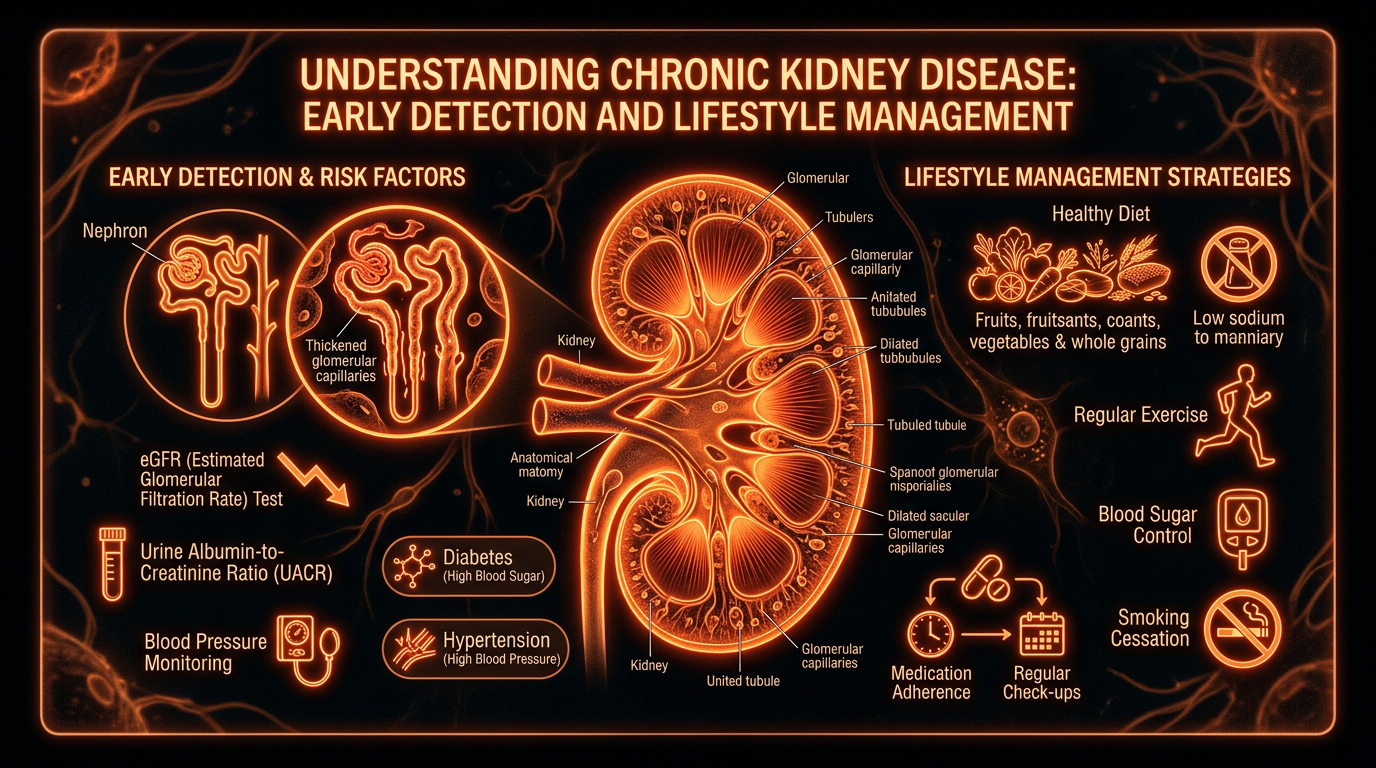
Understanding Chronic Kidney Disease: Early Detection and Lifestyle Management
The human renal system is a marvel of biological engineering, a sophisticated filtration complex that processes approximately 180 litres of blood daily to maintain internal homeostasis. Yet, beneath the surface of modern clinical practice lies a burgeoning crisis. Chronic Kidney Disease (CKD) is no longer a condition relegated to the elderly or the genetically predisposed; it has evolved into a systemic epidemic, driven by environmental insults and metabolic dysfunction.
For the INNERSTANDING community, we must peel back the layers of conventional nephrology to reveal why the kidneys are the first responders to systemic toxicity and why the current medical paradigm often fails to detect the "silent" decline until irreversible damage has occurred.
The Biological Architecture: More Than a Filter
To understand CKD, one must appreciate the nephron—the functional unit of the kidney. Each kidney contains roughly one million nephrons, consisting of a glomerulus (the filter) and a tubule (the processor).
The biological mechanism of CKD is essentially a progressive loss of these nephrons. When a nephron is damaged by high blood pressure, glucose toxicity, or oxidative stress, the remaining nephrons undergo "hyperfiltration" to compensate. While this maintains systemic balance in the short term, it leads to increased intraglomerular pressure, eventually scarring the delicate tissues—a process known as glomerulosclerosis.
The RAAS Dysregulation
The Renin-Angiotensin-Aldosterone System (RAAS) is the kidney’s primary mechanism for controlling blood pressure. In a healthy state, it is a precision tool. In the modern diseased state, however, the RAAS becomes chronically overactive. This persistent activation causes systemic vasoconstriction and sodium retention, creating a feedback loop where the very system designed to protect the kidney becomes the primary driver of its destruction through interstitial fibrosis.
The Role of Podocytes
Crucial to the filtration barrier are podocytes—highly specialised cells that wrap around the capillaries of the glomerulus. These cells are terminally differentiated, meaning once they are lost, they do not regenerate. The "truth" often omitted in standard consultations is that by the time protein appears in the urine (proteinuria), significant podocyte loss has already occurred.
The Silent Crisis: UK Perspectives
The prevalence of CKD in the United Kingdom is staggering, yet public awareness remains dangerously low. The condition is often asymptomatic until it reaches Stage 3 or 4, leading to the moniker "the silent killer."
According to Kidney Care UK and NHS data, an estimated 3.5 million people in the UK are living with CKD, yet nearly a million of these individuals remain undiagnosed. Furthermore, CKD is projected to become the fifth leading cause of death globally by 2040 if current dietary and environmental trends persist.
The socio-economic burden is equally profound. The NHS spends approximately £1.45 billion annually on adult renal services, with dialysis and transplantation consuming the vast majority of these resources. This reactive model of healthcare—treating the end-stage rather than preventing the onset—is a systemic failure that demands a shift toward early detection and metabolic correction.
Environmental Disruptors: The Invisible Nephrotoxins
While diabetes and hypertension are the primary clinical "labels" for CKD causes, they are often symptoms of deeper environmental disruptions. To achieve true INNERSTANDING, we must examine the iatrogenic and environmental factors that standard medicine frequently overlooks.
Glyphosate and Agricultural Runoff
The kidneys are the primary route for the excretion of water-soluble toxins. Glyphosate, the world’s most widely used herbicide, has been implicated in renal tubular injury. In the UK, traces of glyphosate are frequently found in bread and cereal products. Research suggests that glyphosate may act as a carrier for heavy metals, delivering them directly to the renal tubules and inducing chronic inflammation.
Heavy Metal Accumulation
Cadmium, lead, and mercury are potent nephrotoxins. Cadmium, in particular, has an exceptionally long half-life in the human body (up to 30 years) and accumulates preferentially in the renal cortex. Sources range from cigarette smoke (including passive exposure) to contaminated soil and old piping. Even at "sub-clinical" levels, these metals impair the enzyme systems within the mitochondria of renal cells, leading to ATP depletion and cell death.
The Pharmaceutical Burden (NSAIDs)
One of the most significant "hidden" causes of kidney decline in the UK is the over-the-counter availability of Non-Steroidal Anti-Inflammatory Drugs (NSAIDs) such as ibuprofen. These drugs inhibit prostaglandins, which are essential for maintaining blood flow to the kidneys. Chronic use, often for preventable lifestyle-related aches, leads to "analgesic nephropathy"—a slow, unnoticed strangulation of the kidney’s blood supply.
PFAS: "Forever Chemicals"
Per- and polyfluoroalkyl substances (PFAS), used in non-stick cookware and water-resistant fabrics, are ubiquitous in the UK water supply. These chemicals disrupt the lipid metabolism within the kidneys and are linked to a reduction in the estimated Glomerular Filtration Rate (eGFR).
The Failure of Early Detection: Beyond eGFR
The standard marker for kidney function is the eGFR, calculated from blood creatinine levels. However, as an INNERSTANDING analysis reveals, this is a lagging indicator. Creatinine is a waste product of muscle metabolism; a person can lose up to 50% of their kidney function before their creatinine levels rise significantly.
The Cystatin C Alternative
For a more accurate assessment, one should look to Cystatin C. Unlike creatinine, Cystatin C is produced by all nucleated cells at a constant rate and is not influenced by muscle mass or diet. It is a far more sensitive marker for early-stage renal decline.
The UACR: The Gold Standard for Damage
The Urine Albumin-to-Creatinine Ratio (UACR) detects the leakage of albumin—a protein that should remain in the blood. If albumin is in the urine, the filtration barrier is "leaking." Waiting for the eGFR to drop without monitoring UACR is akin to waiting for a car engine to seize before checking the oil.
Recovery Protocols: A Scientific Path to Regeneration
The conventional narrative suggests that CKD is a "one-way street." While scarred tissue cannot be easily revived, the remaining functional nephrons can be optimised, and the systemic environment can be shifted from pro-inflammatory to regenerative.
1. Metabolic Correction and the Alkaline Load
The kidneys are responsible for maintaining the body’s pH balance. Modern Western diets, high in ultra-processed foods and poor-quality animal proteins, impose a "High Potential Renal Acid Load" (PRAL). This forces the kidneys to produce ammonia to neutralise the acid, which is directly toxic to the renal tubules over time.
- Action: Transition to a "Plant-Dominant" alkaline diet. This does not necessarily mean veganism, but rather ensuring that 70-80% of the plate consists of alkalising vegetables (leafy greens, cruciferous vegetables) to reduce the acid-buffering burden on the kidneys.
- Bicarbonate Therapy: Under clinical supervision, small doses of sodium bicarbonate can neutralise systemic acidity and have been shown in UK trials to significantly slow the progression of CKD.
2. The Gut-Kidney Axis
Emerging research highlights the "Gut-Kidney Axis." When gut permeability (leaky gut) increases, uremic toxins produced by pathogenic bacteria (such as p-cresol and indoxyl sulfate) enter the bloodstream. The kidneys must then filter these highly toxic compounds.
- Protocol: High-dose fermentable fibres (inulin, acacia fibre) and specific probiotics (Lactobacillus acidophilus, Bifidobacterium longum) can "trap" these toxins in the gut, allowing them to be excreted via the bowel rather than the kidneys. This is often referred to as "enteric dialysis."
3. Hydration Science: Quality Over Quantity
Standard advice is to "drink more water," but for the CKD patient, the type of water matters. Tap water in many parts of the UK contains chlorine, fluoride, and trace hormones, all of which add to the renal toxic load.
- Action: Utilise reverse osmosis filtration with remineralisation. Proper hydration requires electrolytes (magnesium, potassium) to ensure water enters the cells rather than just increasing the volume of the interstitial fluid (oedema).
4. Mitigating Oxidative Stress
The mitochondria within the renal tubules are highly susceptible to oxidative damage.
- Nrf2 Activation: Compounds that activate the Nrf2 pathway, such as Sulforaphane (found in broccoli sprouts) and Curcumin, enhance the kidney’s endogenous antioxidant production.
- Autophagy Induction: Periodic, supervised intermittent fasting (16:8) can trigger autophagy—the cellular "housecleaning" process—potentially clearing out damaged cellular components within the nephrons.
5. Managing the Glycaemic Load
Hyperglycaemia (high blood sugar) causes the formation of Advanced Glycation End-products (AGEs). These "sticky" molecules gum up the glomerular basement membrane.
- Action: Strict glycaemic control is non-negotiable. This involves the elimination of high-fructose corn syrup and refined carbohydrates, which are primary drivers of "diabetic nephropathy" even in those not yet diagnosed with Type 2 Diabetes.
The Truth-Exposing Conclusion
The prevalence of Chronic Kidney Disease in the UK is a mirror reflecting our modern environment: processed, toxic, and hyper-stressed. The medical establishment's reliance on eGFR as a primary diagnostic tool is a dangerous oversimplification that fails to catch the disease in its reversible stages.
To truly protect the kidneys, one must look beyond the renal system. We must address the "total toxic load"—from the glyphosate in our bread to the heavy metals in our water and the pharmaceutical shortcuts in our cabinets.
Kidney health is not merely about "filtration"; it is about the preservation of the body’s internal ocean. By adopting a protocol of alkalisation, gut-health optimisation, and environmental detoxification, we move from a state of passive decline to one of active renal resilience.
The path to INNERSTANDING begins with the realisation that your kidneys are not failing in a vacuum; they are responding to a systemic environment. Change the environment, and you change the trajectory of the disease.
Summary Checklist for Renal Resilience
- Diagnostic: Request both Cystatin C and UACR tests from your GP or private practitioner.
- Nutritional: Aim for a low-PRAL (alkaline) diet rich in organic phytonutrients.
- Detoxification: Minimise NSAID use and filter all drinking water to remove PFAS and heavy metals.
- Supplemental: Consider magnesium malate and high-quality omega-3 fatty acids to reduce interstitial inflammation.
- Lifestyle: Maintain a healthy blood pressure (below 120/80) through movement and stress reduction, as the kidneys are the first to suffer from the "pressure cooker" of modern life.
This article is provided for informational and educational purposes only. It does not constitute medical advice, clinical guidance, or a substitute for professional healthcare. Information reflects cited research at time of publication. Always consult a qualified healthcare professional before acting on any health information.
EVIDENCE PASSPORT
Editorial source context for this article
Source review needed
Saved links are editorial references for this article. They may support specific claims rather than every sentence. Open and assess each source in context. This passport does not independently verify them.
Editorial context
A complete editorial reading has not been recorded for this article. Source links remain available for you to open and assess directly.
Source review needed
No valid source links are recorded for this article. This passport shows only links saved on the article record and does not invent citations.
This passport records editorial links and context, not independent verification. Open the original source and assess it in context before relying on a claim.
Medical Disclaimer
The information in this article is for educational purposes only and does not constitute medical advice, diagnosis, or treatment. Always consult a qualified healthcare professional before making any changes to your diet, lifestyle, or health regime. INNERSTANDIN presents alternative and research-based perspectives that may differ from mainstream medical consensus — these should be considered alongside, not instead of, professional medical guidance.
Read Full DisclaimerContinue the thread
Keep this question moving.
Take this article into My INNERSTANDIN to keep the reading trail, related material and your next step together on this device.
Explore this in the Body Map
See where this hits your biology. Interactive anatomy, threats, and protective protocols.