
Urban Dust Analysis: Inhaling Plastic in London
Updated May 2026
Studies in major UK cities like London reveal high concentrations of microplastics in urban dust. This represents a significant, yet largely ignored, route of chronic respiratory exposure for urban populations.
Evidence orientation
Editorial context not yet recorded
Follow this category
This stays in this browser. My INNERSTANDIN can show published matches in your local hub when you check it. It does not send email, push, or alert notifications.
Local learning review
A private browser aid for revisiting ideas. It is not an alert or a health recommendation.
Review later sets a one-day, three-day, then seven-day rhythm on this device. Choose it only when you want to revisit this article.
Overview
For decades, the discourse surrounding environmental pollution in the United Kingdom has focused primarily on gaseous effluents—nitrogen dioxide ($NO_2$) from diesel engines, sulphur dioxide from industrial hubs, and the omnipresent threat of carbon dioxide. However, a far more insidious and physically persistent antagonist has been accumulating in our urban centres. As we navigate the streets of London, from the dense corridors of the City to the residential stretches of Southwark, we are not merely breathing air; we are inhaling a suspended particulate suspension of synthetic polymers.
Microplastics (MPs) and nanoplastics (NPs) have transitioned from being a marine biology curiosity to a central crisis in human pulmonology. Recent atmospheric deposition studies in London have revealed that the city’s air contains some of the highest recorded levels of fibrous microplastics in the world. This is "Urban Dust"—a complex, heterogenous mixture of skin cells, mineral grit, soot, and, increasingly, the fragmented remains of our synthetic civilisation.
The scale of the issue is staggering. Research conducted by King’s College London and Imperial College suggests that Londoners are exposed to a constant "plastic rain," where thousands of microplastic fibres settle per square metre every single day. Unlike organic dust, these polymers do not readily biodegrade. They are chemically inert yet biologically provocative, capable of bypassing the primary defences of the human respiratory tract to lodge themselves deep within the lung parenchyma. This article serves as a comprehensive forensic examination of the London atmosphere, the biological mechanisms of plastic-induced injury, and the silent systemic health crisis currently unfolding beneath the veil of "normal" city life.
Fact: Atmospheric deposition rates of microplastics in Central London have been recorded at levels between 575 to 1,008 fibres per square metre per day, significantly higher than those recorded in other major global capitals like Hamburg or Paris.
The Biology — How It Works
To understand the threat of urban microplastics, we must first understand the architectural vulnerability of the human respiratory system. The lungs are designed to facilitate gas exchange across an incredibly thin membrane—the blood-air barrier. This barrier is only a few microns thick, optimized for the diffusion of oxygen and carbon dioxide. It was never evolved to contend with the abrasive, non-biodegradable sharp edges of fragmented polyethylene terephthalate (PET) or polyamide (nylon).
The Aerodynamics of Inhalation
When we inhale urban dust, the fate of the plastic particles is determined by their aerodynamic diameter.
- Coarse Particles (>10μm): Generally trapped in the nasopharyngeal region or the upper airways by mucus and cilia. They are typically coughed out or swallowed.
- Fine Particles (PM2.5): These possess the capacity to reach the bronchioles and the alveolar sacs.
- Ultrafine/Nanoplastics (<0.1μm): These are the most dangerous. Their size allows them to behave like gases, penetrating the deepest recesses of the lungs and potentially translocating directly into the bloodstream.
The Composition of London’s Plastic Air
The "plastic profile" of London’s air is unique. Unlike the spherical beads often found in cosmetic exfoliants (now largely banned), urban atmospheric plastic is dominated by fibres. These fibres originate from two primary sources:
- Synthetic Textiles: Every time a resident walks, sits, or shakes a coat made of polyester or acrylic, thousands of micro-fibres are shed into the immediate environment.
- Tyre Wear Particles (TWPs): A significant portion of London’s urban dust is composed of "road wear"—a hybrid of synthetic rubber (styrene-butadiene) and bitumen.
The fibrous nature of these particles is biologically significant. Fibres are notoriously difficult for the lung's clearance mechanisms to process. Much like asbestos—though through different chemical pathways—long, thin plastic fibres can cause "frustrated phagocytosis," where the body’s immune cells attempt to engulf a particle that is simply too long to be consumed.
Mechanisms at the Cellular Level
Once a microplastic or nanoplastic particle reaches the alveolar surface, the interaction shifts from mechanical to biochemical. This is where the true "innerstanding" of the pathology begins. The human body treats these particles as foreign invaders, triggering a sequence of cellular events that often lead to chronic dysfunction.
Frustrated Phagocytosis and the Macrophage Response
Alveolar macrophages are the primary "janitors" of the deep lung. When they encounter a plastic fibre, they attempt to ingest it via phagocytosis. However, because microplastics are chemically stable and physically rigid, the macrophage cannot break them down. If the fibre is too large, the macrophage may undergo "frustrated phagocytosis," a state where the cell leaks degradative enzymes and Reactive Oxygen Species (ROS) into the surrounding tissue in a desperate attempt to dissolve the indestructible.
Protein Corona Formation
As soon as a plastic particle enters the lung lining fluid, it is immediately coated by a layer of proteins and lipids. This is known as the protein corona. This "cloak" changes how the cell perceives the plastic. A polyethylene particle might be "disguised" by lung surfactants, allowing it to be internalised by epithelial cells rather than being cleared by macrophages. This facilitates the "Trojan Horse" effect, where the plastic carries adsorbed toxins directly into the cell’s interior.
Mitochondrial Dysfunction
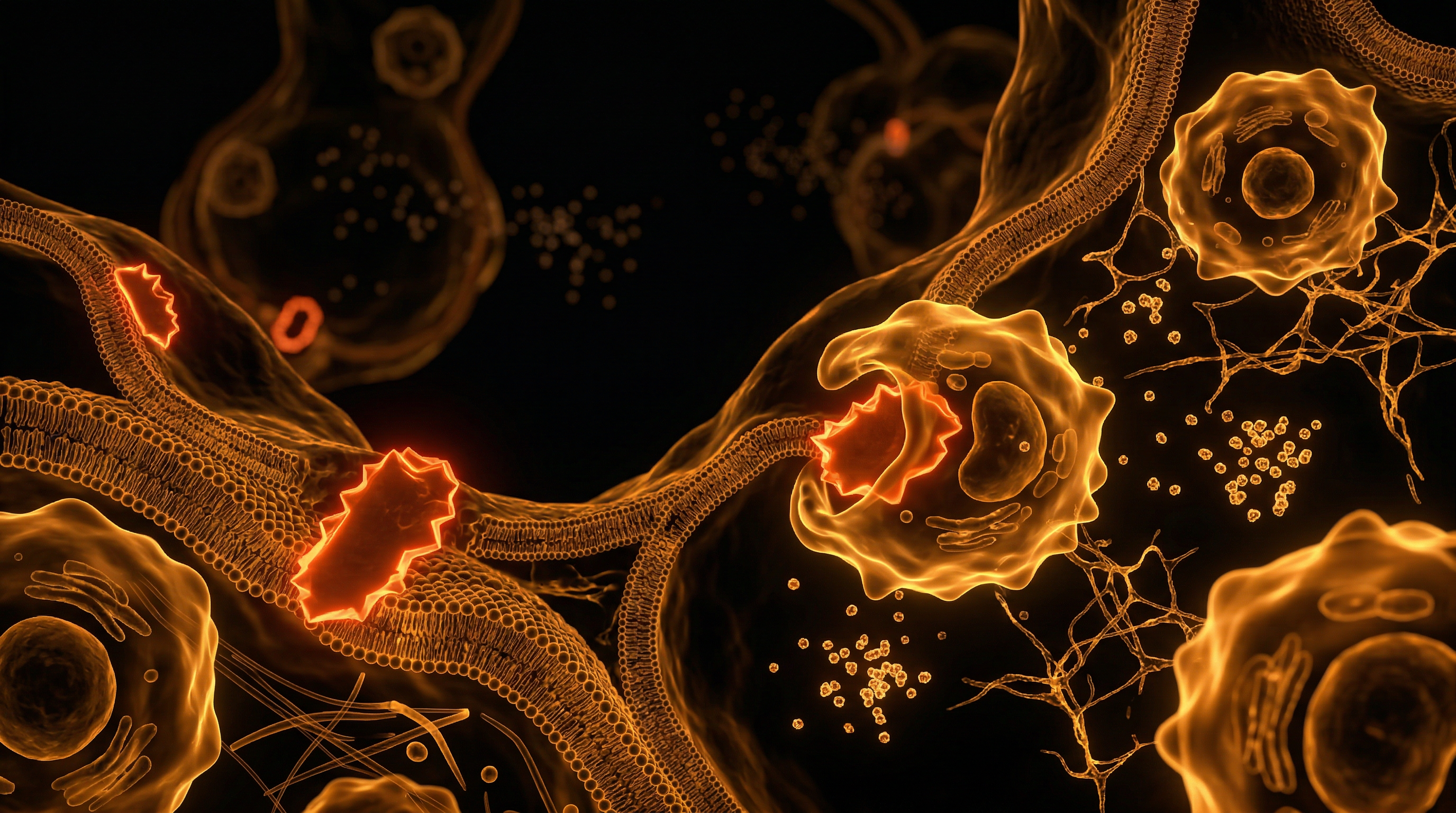
Nanoplastics, due to their diminutive size, can penetrate the cellular membrane and enter the organelles. Studies have shown that NPs can accumulate within the mitochondria—the powerhouse of the cell. Once inside, they disrupt the electron transport chain, leading to a surge in oxidative stress and a decline in ATP (energy) production. This cellular fatigue is a precursor to widespread tissue inflammation.
Statistic: In vitro studies on human lung epithelial cells exposed to microplastic concentrations equivalent to urban "hotspots" showed a 40% increase in inflammatory markers (IL-6 and IL-8) within 24 hours.
Environmental Threats and Biological Disruptors
Microplastics are not merely "plastic." They are complex chemical cocktails. The danger of inhaling London’s dust is twofold: the physical presence of the polymer and the chemical toxicity of its additives and "hitchhikers."
Endocrine Disrupting Chemicals (EDCs)
Plastics are manufactured with a variety of additives to improve flexibility, UV resistance, and flame retardancy. These include:
- Phthalates: Often used as plasticisers, these are known anti-androgens that interfere with hormonal signalling.
- Bisphenol A (BPA): A well-documented xenoestrogen that can disrupt reproductive health and metabolic function.
- Organotin compounds: Used as stabilisers, these can be immunotoxic even at low concentrations.
As these particles sit in the warm, moist environment of the human lung, these chemicals leach out of the plastic matrix and are absorbed into the systemic circulation.
The Adsorption of Urban Pollutants
Microplastics have a high surface-area-to-volume ratio and are often hydrophobic. This makes them perfect "sponges" for other toxins present in London’s air. As a plastic particle floats through a congested area like the Marylebone Road, it adsorbs:
- Polycyclic Aromatic Hydrocarbons (PAHs): Carcinogenic byproducts of incomplete combustion.
- Heavy Metals: Lead, cadmium, and zinc from brake wear and industrial activity.
- Persistent Organic Pollutants (POPs): Legacy chemicals that have remained in the environment for decades.
When you inhale the plastic, you are inhaling a concentrated dose of every other pollutant the particle has encountered during its journey through the city.
The Plastisphere: A Vector for Pathogens
In the humid environment of London, microplastics can develop a "biofilm"—a colony of bacteria and viruses that adhere to the plastic surface. This "Plastisphere" can protect pathogens from UV light and dehydration, essentially acting as a transport ship that carries bacteria deep into the sterile environment of the lower respiratory tract. This may explain the rising incidence of "atypical" respiratory infections in densely populated urban areas.
The Cascade: From Exposure to Disease
The journey from inhaling a microplastic fibre in Piccadilly Circus to the development of a clinical condition is a "cascade" of escalating biological failure. It is rarely an acute event; rather, it is the result of chronic, low-dose, multi-decadal exposure.
Chronic Obstructive Pulmonary Disease (COPD) and Asthma
For individuals with pre-existing conditions, microplastics act as a potent exacerbator. The constant irritation of the bronchial lining by sharp-edged fragments leads to a state of permanent hyper-responsiveness. In London, the "asthma capital" of Europe, the role of synthetic dust in trigger-events is largely overlooked by clinicians who focus solely on pollen or $NO_2$.
Interstitial Lung Disease and Fibrosis
Long-term accumulation of non-cleared microplastics in the interstitium (the tissue between the air sacs) can trigger a fibrotic response. The body, unable to remove the plastic, attempts to wall it off with scar tissue (collagen). Over time, this reduces the elasticity of the lungs, making breathing increasingly difficult—a condition reminiscent of "Flock Worker's Lung," historically seen in textile factory employees but now potentially manifesting in the general urban population.
Systemic Translocation: Beyond the Lungs
The most alarming frontier of this research is translocation. Nanoplastics have been detected in:
- The Bloodstream: Suggesting they can cross the blood-air barrier.
- The Placenta: Meaning the plastic burden is being passed to the next generation before they even take their first breath in the London air.
- The Brain: Research indicates that some ultrafine plastics can bypass the blood-brain barrier via the olfactory nerve, potentially contributing to neurodegenerative pathways.
Callout: A 2022 study published in Environment International detected microplastic polymers in the blood of 80% of tested individuals, with PET (used in drinks bottles and clothing) being the most prevalent.
What the Mainstream Narrative Omits
The current public and political focus remains fixated on "visible" plastic pollution—straws in the ocean, turtles caught in nets, and plastic bags in hedgerows. While these are valid concerns, the inhalation of airborne microplastics is a far more direct threat to human health, yet it is conspicuously absent from major public health campaigns.
The Tyre Wear Scandal
While the transition to Electric Vehicles (EVs) is touted as the solution to urban air quality, it ignores a fundamental physical reality: EVs are significantly heavier than internal combustion vehicles due to their batteries. This increased weight leads to higher rates of Tyre Wear Particles (TWPs).
- Modern tyres are not made of natural rubber; they are roughly 24% synthetic plastic.
- TWPs are a major component of London’s PM2.5 and PM10.
- The mainstream narrative celebrates "Zero Emissions" while ignoring the "Non-Exhaust Emissions" (NEEs) that are filling the lungs of city dwellers with synthetic rubber dust.
The "Safe Level" Fallacy
Regulatory bodies like the Environment Agency and DEFRA (Department for Environment, Food & Rural Affairs) currently have no established safety limits for microplastic concentrations in the air. We are living through a massive, uncontrolled biological experiment. The absence of a limit is often misinterpreted by the public as an "absence of risk."
The Industry Influence
The global plastic industry is a multi-billion pound behemoth. Acknowledging that the very fabric of our modern lives—our clothes, our carpets, our tyres—is shedding a toxic, inhalable dust would necessitate a radical and expensive restructuring of the global economy. Consequently, research funding is often directed toward "clean-up" technologies rather than "source reduction" or the investigation of long-term human pathology.
The UK Context
London serves as a "perfect storm" for microplastic inhalation. The city’s geography, combined with its high population density and Victorian infrastructure, creates a unique atmospheric trap.
The "Canyon Effect"
London’s narrow streets, flanked by tall buildings, create "street canyons." These architectural features trap air masses, preventing the dispersion of microplastics. A fibre shed from a pedestrian's fleece in Oxford Street may circulate within that street canyon for days, being kicked back up into the air by every passing bus—a process known as re-suspension.
The Indoor vs. Outdoor Paradox
While this article focuses on urban dust, it is critical to note that for many Londoners, indoor air is even more contaminated than outdoor air. The "London lifestyle" involves spending upwards of 90% of time indoors. Modern UK homes, designed for energy efficiency and draught-proofing, trap synthetic fibres from carpets, upholstery, and tumble dryers.
- London apartments with synthetic wall-to-wall carpeting have been found to have microplastic concentrations up to double those of the street outside.
Regional Hotspots
Research by the University of Portsmouth and others has identified that areas near the Thames are particularly susceptible. The river acts as a corridor for wind-borne plastics, while the high volume of heavy goods vehicles (HGVs) on the North and South Circular roads ensures a constant supply of fresh tyre dust.
Local Data: Samples taken from the air near the underground stations at King’s Cross and Victoria showed significantly higher concentrations of metallic-plastic hybrids, likely resulting from the friction of braking trains combined with synthetic dust from passenger clothing.
Protective Measures and Recovery Protocols
Given the ubiquity of microplastics in London, total avoidance is impossible. However, as biological researchers, we can suggest protocols to mitigate exposure and support the body’s natural detoxification pathways.
Primary Mitigation: Filtration
The first line of defence is mechanical.
- HEPA Filtration: High-Efficiency Particulate Air (HEPA) filters are essential for London residences. A high-quality purifier can capture particles down to 0.3 microns, significantly reducing the indoor plastic burden.
- Nasal Hygiene: The use of saline nasal rinses (Neti pots) after spending time in high-traffic areas can help clear trapped plastic fibres from the nasopharyngeal passage before they migrate deeper.
Biological Support: Nrf2 Activation
Since the primary damage from microplastics is mediated through oxidative stress, reinforcing the body’s endogenous antioxidant system is vital.
- Sulforaphane: Found in cruciferous vegetables, this compound is a potent activator of the Nrf2 pathway, which triggers the production of protective enzymes like glutathione.
- Glutathione Support: Supplementation with N-acetylcysteine (NAC) may provide the lungs with the necessary precursors to maintain the mucosal antioxidant shield.
Lifestyle Alterations
- Material Transition: Moving away from "fast fashion" (polyester/nylon) toward natural fibres (wool, cotton, silk, linen) can significantly reduce the "personal cloud" of microplastics you carry with you.
- Vacuuming with HEPA: Traditional vacuums without HEPA filters often suck up microplastics and vent the smaller, more dangerous particles back into the room. A sealed HEPA vacuum is non-negotiable for urban living.
Policy and Advocacy
On a systemic level, we must demand:
- Mandatory Micro-fibre Filters on all new washing machines sold in the UK.
- Increased Research into the health impacts of tyre wear and the implementation of "low-wear" tyre standards.
- Real-time Microplastic Monitoring as part of the London Air Quality Network.
Summary: Key Takeaways
The revelation that the London atmosphere is saturated with microplastics is not a cause for panic, but a call for profound awareness. We have entered the "Plastocene" era, where the boundary between the synthetic and the biological is blurring.
- Inhalation is a primary route of exposure: Microplastics are not just an "ocean problem"; they are a "lung problem."
- Fibres are the dominant threat: London’s air is uniquely rich in synthetic textile fibres and tyre wear particles, which are particularly difficult for the body to clear.
- The damage is cellular: Through oxidative stress, frustrated phagocytosis, and the leaching of endocrine disruptors, plastics degrade our health from the inside out.
- The "Trojan Horse" effect: Plastics carry heavy metals and pathogens into the deepest parts of the human body.
- Current regulations are insufficient: There is a critical gap between scientific reality and public health policy regarding airborne polymers.
As Londoners, we must look beyond the visible smog. The dust on your windowsill is not just "dirt"—it is the fragmented evidence of a synthetic world being slowly integrated into your biology. True "Innerstanding" requires us to acknowledge this invisible shroud and take the necessary steps to protect our respiratory integrity in an increasingly plasticised world.
This article is provided for informational and educational purposes only. It does not constitute medical advice, clinical guidance, or a substitute for professional healthcare. Information reflects cited research at time of publication. Always consult a qualified healthcare professional before acting on any health information.
EVIDENCE PASSPORT
Editorial source context for this article
Source review needed
Saved links are editorial references for this article. They may support specific claims rather than every sentence. Open and assess each source in context. This passport does not independently verify them.
Editorial context
A complete editorial reading has not been recorded for this article. Source links remain available for you to open and assess directly.
Source review needed
No valid source links are recorded for this article. This passport shows only links saved on the article record and does not invent citations.
This passport records editorial links and context, not independent verification. Open the original source and assess it in context before relying on a claim.
Medical Disclaimer
The information in this article is for educational purposes only and does not constitute medical advice, diagnosis, or treatment. Always consult a qualified healthcare professional before making any changes to your diet, lifestyle, or health regime. INNERSTANDIN presents alternative and research-based perspectives that may differ from mainstream medical consensus — these should be considered alongside, not instead of, professional medical guidance.
Read Full DisclaimerContinue the thread
Keep this question moving.
Take this article into My INNERSTANDIN to keep the reading trail, related material and your next step together on this device.
Dig deeper in the Library
Free, longform PDF volumes that go beyond headlines into mechanisms and references.