
Vagal Suppression in British Urban Planning
Updated May 2026
High-density UK urban environments are shown to trigger chronic sympathetic nervous system activation, leading to long-term vagal tone suppression. We analyze the neurobiological consequences of city design on the somatic health of UK residents.
Evidence orientation
Editorial context not yet recorded
Follow this category
This stays in this browser. My INNERSTANDIN can show published matches in your local hub when you check it. It does not send email, push, or alert notifications.
Local learning review
A private browser aid for revisiting ideas. It is not an alert or a health recommendation.
Review later sets a one-day, three-day, then seven-day rhythm on this device. Choose it only when you want to revisit this article.
Overview
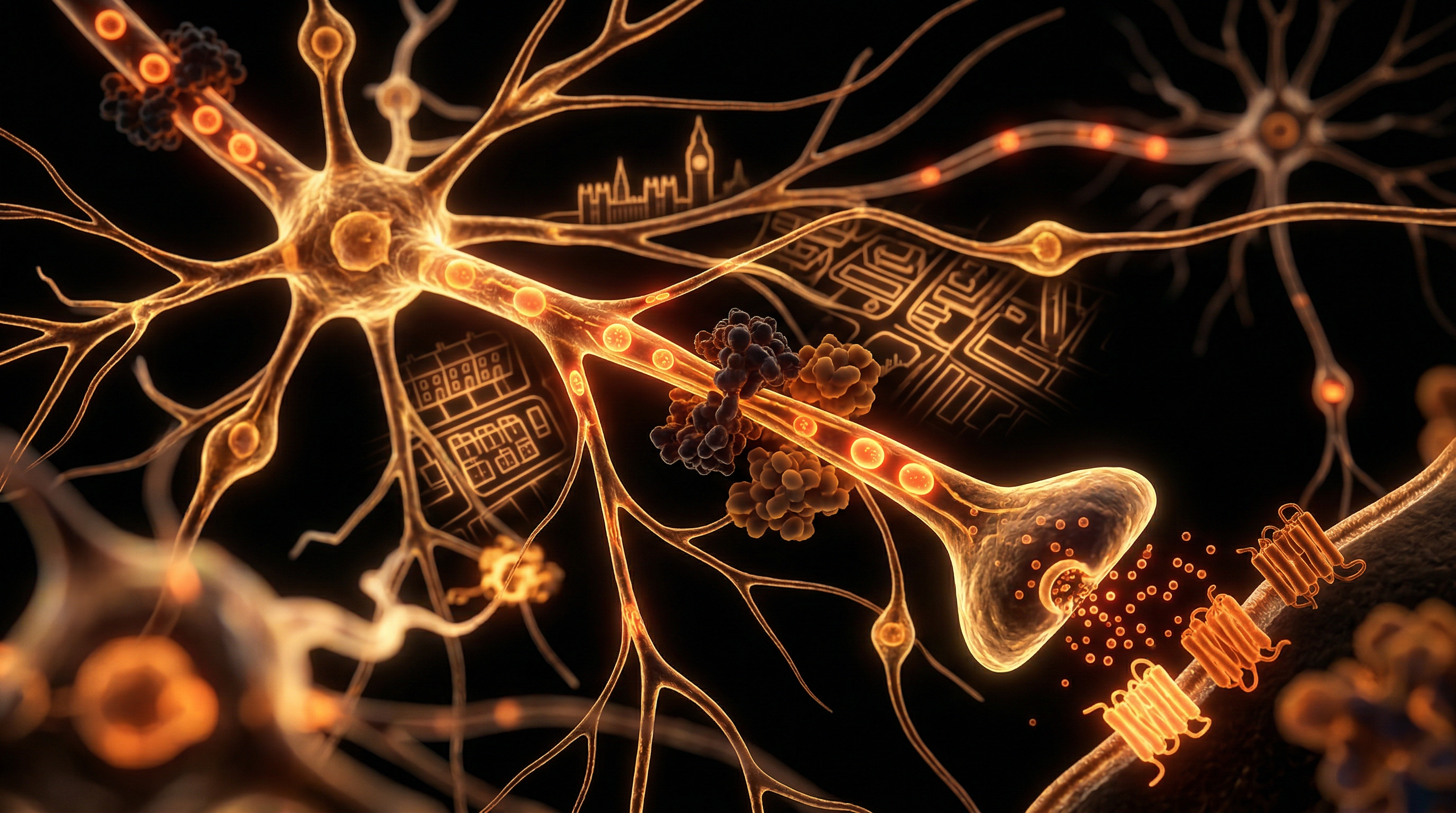
The modern British cityscape is more than a collection of brick, mortar, and steel; it is a complex biological stimulus that dictates the physiological state of millions. As we navigate the high-density corridors of London, Manchester, Birmingham, and Leeds, our bodies are not merely moving through space—they are responding to a sophisticated array of neurological triggers. Central to this interaction is the vagus nerve, the longest cranial nerve in the body and the primary component of the parasympathetic nervous system.
In the field of somatic trauma and neurobiology, it is increasingly evident that British urban planning has inadvertently—or perhaps through systemic neglect—created an environment of chronic vagal suppression. This article explores the "silent epidemic" of low vagal tone caused by architectural density, noise pollution, and the absence of biophilic design. We are witnessing a systemic shift from a population capable of "rest and digest" to one trapped in a permanent state of "fight, flight, or freeze."
The "concrete cage" of contemporary UK urbanism does not just affect our mood; it rewires our autonomic nervous system (ANS). By prioritising economic throughput and high-density habitation over biological requirements, urban planning has become a form of external neuro-modulation. We must examine the somatic cost of our modern geography, moving beyond the superficial "mental health" narrative to understand the profound biological degradation occurring at the cellular level.
Callout: Research indicates that residents of high-density urban areas exhibit a 21% higher risk of anxiety disorders and a 39% increase in mood disorders compared to rural counterparts, directly correlating with suppressed heart rate variability (HRV) and vagal withdrawal.
The Biology — How It Works
To understand vagal suppression, one must first understand the Polyvagal Theory, pioneered by Dr. Stephen Porges. The vagus nerve is not a single entity but a dual-branched system that dictates our biological reaction to the environment.
The Ventral Vagal Complex (VVC)
The Ventral Vagal branch is the "new" mammalian system. It is responsible for social engagement, calmness, and the physiological state necessary for healing. In a well-planned environment, the VVC is active, allowing for a steady heart rate, regular digestion, and the ability to connect with others.
The Sympathetic Nervous System (SNS)
When the environment is perceived as threatening—due to overcrowding, excessive noise, or lack of visual "escape"—the SNS takes over. This is the mobilisation phase. Adrenaline and cortisol flood the system, preparing the body for action. In British urban centres, this system is often "on" for 16 hours a day.
The Dorsal Vagal Complex (DVC)
If the threat (stress) remains inescapable, the body may descend into the "freeze" or "shutdown" state controlled by the Dorsal Vagal branch. This is the oldest part of the system, common to reptiles. It results in dissociation, metabolic slowing, and chronic fatigue—symptoms increasingly common in the UK's over-worked urban demographic.
Vagal tone refers to the functional strength of the vagus nerve. High vagal tone allows for rapid recovery from stress. Low vagal tone—suppression—means the body remains "stuck" in a state of sympathetic arousal. Urban planning in the UK, characterised by narrow streets, lack of green corridors, and high acoustic resonance, acts as a constant suppressor of the Ventral Vagal Complex, effectively locking residents into a sympathetic loop.
Mechanisms at the Cellular Level
The suppression of the vagus nerve is not merely a "feeling"; it is a molecular event. The vagus nerve communicates with the body through the cholinergic anti-inflammatory pathway. When the vagus is stimulated, it releases acetylcholine, which binds to receptors on macrophages (immune cells), effectively "turning off" the production of pro-inflammatory cytokines.
The Cholinergic Deficit
In the urban-stressed individual, this pathway is inhibited. Without the dampening effect of acetylcholine, the body enters a state of chronic low-grade inflammation. At the cellular level, this manifests as:
- Mitochondrial Dysfunction: Chronic sympathetic dominance demands high energy. Overworked mitochondria begin to leak reactive oxygen species (ROS), leading to oxidative stress and DNA damage.
- Cytokine Storms: Urban residents often show elevated levels of Interleukin-6 (IL-6) and C-reactive protein (CRP), even in the absence of acute infection. This is the "somatic memory" of the urban environment.
- Microglial Activation: In the brain, constant environmental stress signals the microglia (the brain's immune cells) to remain active, leading to "neuro-inflammation" which impairs cognitive function and emotional regulation.
The Role of Heart Rate Variability (HRV)
HRV is the gold standard for measuring vagal tone. It measures the variation in time between each heartbeat. A high HRV indicates a flexible, vagally-dominant system. In high-density UK housing estates, studies have shown significantly lower HRV levels compared to those living near "Blue Space" (water) or "Green Space" (forests). This suppression represents a cellular inability to return to homeostasis.
Callout: Chronic suppression of the cholinergic anti-inflammatory pathway is now linked to the "City Effect," where residents experience accelerated biological ageing (telomere shortening) compared to rural populations.
Environmental Threats and Biological Disruptors
British urban planning has historically been driven by industrial necessity and post-war reconstruction, often ignoring the evolutionary biology of the human inhabitant. Several key "disruptors" in the UK landscape contribute directly to vagal suppression.
Acoustic Trauma (Noise Pollution)
The UK has some of the highest levels of ambient urban noise in Europe. The constant hum of traffic, sirens, and construction is processed by the brain as a predatory threat. The post-auricular reflex—a vestigial response to sudden noise—constantly triggers the sympathetic nervous system. In cities like London, there is no "true silence," meaning the vagus nerve never receives the signal that it is safe to fully engage the "rest" mode.
Defensive Architecture and "Hostile" Design
The use of jagged surfaces, "anti-homeless" spikes, and the removal of public seating (defensive architecture) creates a subconscious "neuro-landscape" of hostility. The human nervous system is designed to scan for safety. When the environment is overtly "hostile," the amygdala remains hyper-vigilant, suppressing the Ventral Vagal system.
The Loss of the "Horizon Line"
Humans evolved on the savannah, where a clear view of the horizon signified safety from predators. High-rise developments in Canary Wharf or Manchester's Deansgate Square eliminate the horizon line. This creates a "claustrophobic neurological loop," where the eyes cannot find a point of distant focus, leading to increased intraocular pressure and a heightened stress response.
Artificial Light at Night (ALAN)
The UK's reliance on high-intensity LED street lighting disrupts the circadian rhythm, but more importantly, it prevents the nocturnal "vagal surge" that should occur during deep sleep. Without the cover of darkness, the body remains in a "yellow alert" state.
- High-frequency flicker: Many urban LED lights flicker at a rate invisible to the eye but detectable by the nervous system, inducing mild but chronic SNS activation.
- Blue light saturation: Inhibits melatonin, which is essential for the nightly repair of the vagus nerve's myelin sheath.
The Cascade: From Exposure to Disease
Vagal suppression is the "upstream" cause of a multitude of "downstream" chronic illnesses prevalent in the UK. When we talk about the "burden on the NHS," we are often talking about the biological cost of poor urban design.
Cardiovascular Collapse
Chronic sympathetic activation leads to persistent vasoconstriction and hypertension. Without the "vagal brake" to slow the heart down, the cardiac muscle undergoes hypertrophy (thickening), leading to an increased risk of stroke and myocardial infarction.
Metabolic Dysregulation
The vagus nerve controls the release of digestive enzymes and the movement of the gut (peristalsis). Suppression leads to:
- Leaky Gut Syndrome: Increased intestinal permeability caused by stress-induced inflammation.
- Insulin Resistance: Constant cortisol elevation causes the liver to dump glucose into the bloodstream, eventually leading to Type 2 Diabetes, which is significantly more prevalent in deprived UK urban wards.
Somatic Memory and "Body Armouring"
The body "remembers" the stress of the city. This leads to somatic armouring—chronic muscle tension in the jaw, neck, and shoulders. This tension further compresses the vagus nerve as it exits the skull (the jugular foramen), creating a feedback loop where physical tension causes neurological stress, which causes more tension.
The Mental Health Illusion
What the UK government classifies as "depression" or "anxiety" is often, in biological terms, a state of dorsal vagal shutdown. By pathologising the individual's mind rather than the environment's impact on their body, the root cause—the urban neuro-landscape—remains unaddressed.
What the Mainstream Narrative Omits
The mainstream narrative surrounding urban living focuses on "convenience," "economic growth," and "connectivity." However, this discourse conveniently omits the bio-political implications of vagal suppression.
The Economic Utility of Sympathetic Dominance
A population in a state of mild sympathetic arousal is more prone to impulsive consumption and is more easily manipulated by fear-based messaging. High-cortisol individuals are "worker bees"—focused on short-term survival rather than long-term systemic critique. Vagal suppression, therefore, serves an unstated economic purpose: it produces a compliant, distracted, and hyper-vigilant workforce.
The Dismissal of "Subjective" Somatic Experience
In UK planning committees, "aesthetic" or "felt" experiences are often dismissed as "subjective" and secondary to "objective" metrics like housing units per hectare. However, the somatic response is not subjective—it is a measurable physiological reality. The failure to include neuro-architectural impact assessments in planning law is a glaring omission that protects developers at the expense of public health.
The "Greenwashing" Fallacy
The mainstream promotes "pocket parks" as a solution. However, a 10-square-metre patch of grass next to a six-lane motorway does not provide the "biophilic reset" required. For the vagus nerve to engage, the environment must provide fractal complexity and sensory coherence, not just tokenistic greenery.
Callout: Modern "luxury" high-density developments often use materials (glass and concrete) that reflect sound in a way that mimics the frequency of human screams, unknowingly keeping residents in a state of "sub-perceptual" terror.
The UK Context: A Unique Somatic Crisis
The United Kingdom faces a specific set of challenges that make its urban environments particularly suppressive.
The Legacy of Brutalism
Post-war Britain embraced Brutalism—an architectural style defined by raw concrete and monolithic forms. While architecturally significant, Brutalism is a "biological desert." The grey-scale palette and hard angles are the antithesis of the soft, curved forms found in nature. For the human nervous system, concrete is "dead space," offering no biological resonance.
Overcrowding and the "Housing Crisis"
The UK has some of the smallest average room sizes in Europe. "Generation Rent" lives in subdivided Victorian houses or tiny new-build flats. This lack of personal peripersonal space is a constant trigger for the "Social Engagement System." When we cannot escape the proximity of others, our Ventral Vagal system shuts down to protect us, leading to the "lonely in a crowd" phenomenon typical of London life.
The Grey-Scale Environment
The British climate, combined with urban grey, leads to a lack of chromatic stimulation. We evolved to see a wide spectrum of colours, which signal different biological states. The permanent "grey" of UK cities can lead to a "dorsal slump"—a persistent state of low-level dissociation and lack of vitality.
The "15-Minute City" Controversy
While framed as a solution, if 15-minute cities are designed with the same high-density, high-surveillance, and low-nature parameters, they may simply become "15-minute cages." The focus must be on biological quality, not just geographic proximity.
Protective Measures and Recovery Protocols
If we cannot immediately change the architecture of our cities, we must adopt protocols to protect and restore our vagal tone. These are not "wellness trends"; they are biological interventions.
1. Neuro-Sensory Repatterning
To counteract urban noise, residents should use brown noise or pink noise (which mimic natural sounds like wind or rain) rather than "silence" or white noise. This provides a "masking" effect that signals safety to the brainstem.
2. The "Horizon Reset"
Urban dwellers must consciously seek out "long-view" vistas at least once a week. Looking at a distance (more than 20 feet) relaxes the ciliary muscles of the eye, which is neurologically linked to the vagus nerve. This "panoramic vision" shifts the brain from a "task-oriented" sympathetic state to a "global-awareness" parasympathetic state.
3. Somatic Shaking and Discharge
Animals in the wild "shake" after a stressful event to discharge the sympathetic energy. Urban humans tend to "bottle" this energy. Practising TRE (Tension & Trauma Releasing Exercises) or simple rhythmic shaking can help "reset" the nervous system after a commute on the London Underground.
4. Cold Exposure (The Mammalian Dive Reflex)
Splashing freezing water on the face or taking a cold shower triggers the mammalian dive reflex, which is a "hard reset" for the vagus nerve. It forces the heart rate to slow down and the body to enter a parasympathetic state.
5. Tactical Biophilia
Inside the home, the use of fractal patterns (ferns, certain wallpapers) and "Full Spectrum" lighting can mitigate the "biological desert" effect of the city. The goal is to create a "Vagal Sanctuary" within the urban cage.
6. Conscious Breathwork (The 4-8 Bridge)
Exhalation is governed by the vagus nerve. By making the exhalation longer than the inhalation (e.g., inhale for 4, exhale for 8), we manually override the sympathetic nervous system. This is the fastest way to "re-engage" the Ventral Vagal brake.
- Vagal Gurgling: Gargling water loudly or humming (Voom) vibrates the vocal cords, which are directly innervated by the vagus nerve, providing a mechanical stimulation of the system.
Summary: Key Takeaways
The relationship between British urban planning and human biology is not a neutral one. We are currently living in a geographic experiment that ignores 200,000 years of evolutionary history.
- The Vagus Nerve is the victim: Chronic urban stress suppresses the Ventral Vagal system, locking residents into a state of sympathetic "mobilisation" or dorsal "shutdown."
- Architecture is Neurobiology: Hard angles, lack of horizons, and noise pollution are not just aesthetic choices; they are physiological "threats" that trigger the amygdala.
- The Cellular Cost: Suppressed vagal tone leads to systemic inflammation, mitochondrial decay, and accelerated ageing, contributing to the UK’s chronic disease crisis.
- Economic Motives: A vagally-suppressed population is more compliant and consumptive, suggesting a darker bio-political reality behind high-density planning.
- Somatic Recovery is Essential: Until urban environments are redesigned with "biophilic neuro-standards," individuals must take active, biological steps (cold exposure, breathwork, horizon seeking) to maintain their somatic health.
We must demand a new era of Somatic Urbanism—where the "Heart Rate Variability" of a community is considered more important than the "Return on Investment" of a skyscraper. The health of the British soul is inextricably linked to the state of the British vagus nerve. It is time we built for the body, not just the economy.
This article is provided for informational and educational purposes only. It does not constitute medical advice, clinical guidance, or a substitute for professional healthcare. Information reflects cited research at time of publication. Always consult a qualified healthcare professional before acting on any health information.
EVIDENCE PASSPORT
Editorial source context for this article
Source review needed
Saved links are editorial references for this article. They may support specific claims rather than every sentence. Open and assess each source in context. This passport does not independently verify them.
Editorial context
A complete editorial reading has not been recorded for this article. Source links remain available for you to open and assess directly.
Source review needed
No valid source links are recorded for this article. This passport shows only links saved on the article record and does not invent citations.
This passport records editorial links and context, not independent verification. Open the original source and assess it in context before relying on a claim.
Medical Disclaimer
The information in this article is for educational purposes only and does not constitute medical advice, diagnosis, or treatment. Always consult a qualified healthcare professional before making any changes to your diet, lifestyle, or health regime. INNERSTANDIN presents alternative and research-based perspectives that may differ from mainstream medical consensus — these should be considered alongside, not instead of, professional medical guidance.
Read Full DisclaimerContinue the thread
Keep this question moving.
Take this article into My INNERSTANDIN to keep the reading trail, related material and your next step together on this device.
Explore this in the Body Map
See where this hits your biology. Interactive anatomy, threats, and protective protocols.
Dig deeper in the Library
Free, longform PDF volumes that go beyond headlines into mechanisms and references.