
The Vagal Brake: Decoding the Physiological Governance of HRV
Published April 2026
An investigative look into the Vagal Brake theory, exploring how the parasympathetic nervous system inhibits the heart to manage metabolic and inflammatory states.
Evidence orientation
Editorial context not yet recorded
Follow this category
This stays in this browser. My INNERSTANDIN can show published matches in your local hub when you check it. It does not send email, push, or alert notifications.
Local learning review
A private browser aid for revisiting ideas. It is not an alert or a health recommendation.
Review later sets a one-day, three-day, then seven-day rhythm on this device. Choose it only when you want to revisit this article.
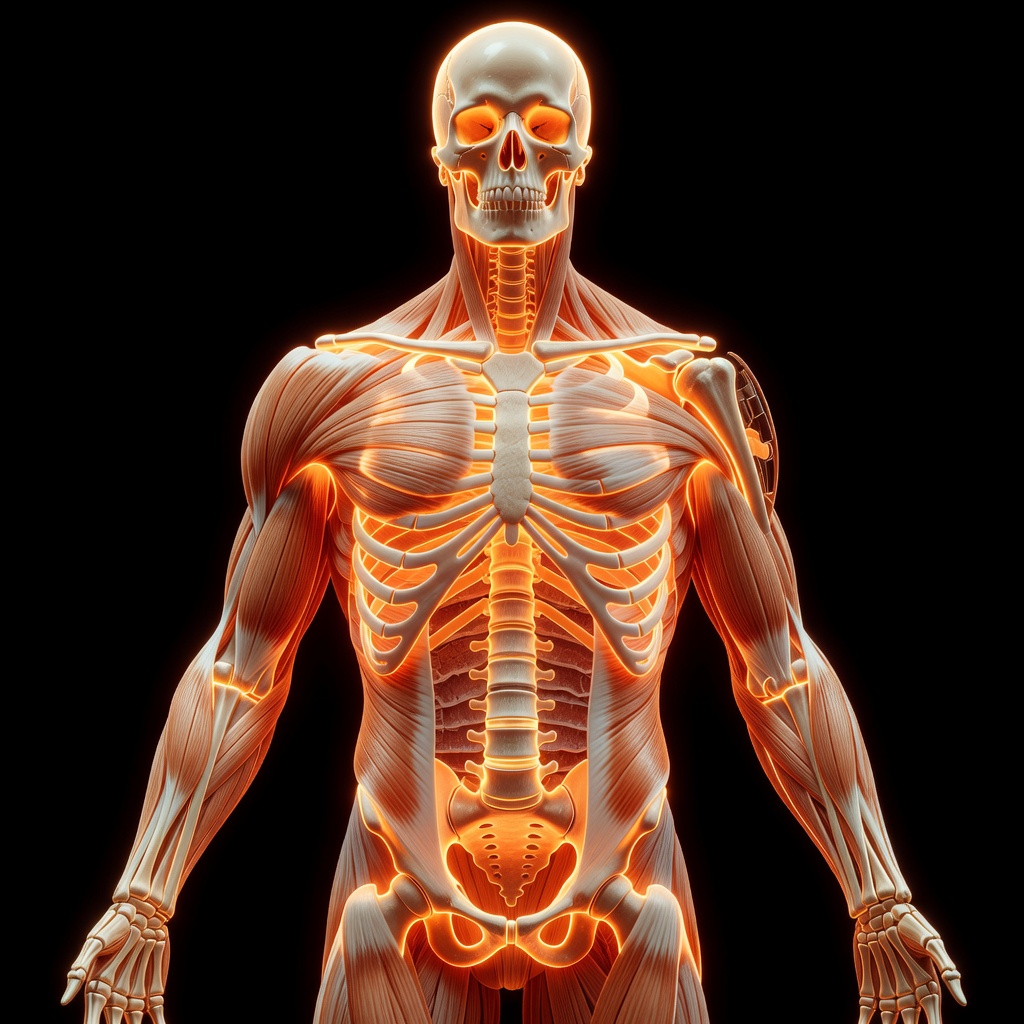
The Vagal Brake: Decoding the Physiological Governance of HRV. In the landscape of contemporary wellness, Heart Rate Variability (HRV) is frequently reduced to a mere 'stress score'. However, for the health-literate individual, HRV represents something far more profound: the real-time efficiency of the Vagal Brake. To understand HRV, one must first look at the sinoatrial (SA) node, the heart’s intrinsic pacemaker. While the SA node has an inherent rhythm of approximately 100 beats per minute, it is constantly modulated by the Autonomic Nervous System (ANS).
The sympathetic branch acts as the accelerator, while the parasympathetic branch, mediated primarily by the Vagus nerve, acts as the brake. The 'Vagal Brake' theory, pioneered by Dr. Stephen Porges, suggests that the parasympathetic nervous system doesn't just 'relax' the body; it actively inhibits the heart's rate to allow for social engagement and metabolic conservation. When we measure HRV, specifically the root mean square of successive differences (rMSSD), we are essentially measuring how effectively this brake is being applied and released. High variability indicates a 'responsive' brake—a system that can rapidly adjust to micro-fluctuations in physiological demand.
Mainstream medicine often overlooks the nuance of this inhibitory control, focusing instead on heart rate as a static metric. Yet, a static heart rate, even a low one, can mask a rigid autonomic system. Section 1: The Bio-Mechanics of Vagal Tone. The Vagus nerve is the longest cranial nerve, facilitating a bidirectional superhighway between the brainstem and the viscera. 80% of its fibres are afferent, meaning they carry information from the organs back to the brain. This creates a feedback loop where the heart's rhythm informs the brain's state of safety.
The 'Polyvagal Theory' posits that our autonomic state is hierarchical. When the myelinated vagus (the ventral vagal complex) is active, it inhibits the older, more primitive sympathetic and dorsal vagal responses. This inhibition is what creates a high HRV. If the brake is weak, the sympathetic system takes over, leading to a state of chronic 'arousal' that manifests as low HRV. This isn't just about feeling stressed; it’s about a physiological inability to return to a state of growth and repair.
Section 2: Beyond the Binary of Stress. We must move beyond the 'Stress vs. Relaxation' binary. HRV is an indicator of 'Adaptive Capacity'. A high HRV suggests the body has a large buffer to handle environmental, physical, and emotional stressors.
Conversely, a chronically low HRV suggests that the 'Vagal Brake' is failing, leaving the system in a state of high-cost operation. In the UK, where chronic stress and lifestyle-related diseases are prevalent, understanding the Vagal Brake is essential for preventative health. It allows us to see the 'invisible' cost of a high-pressure career or poor sleep long before it manifests as hypertension or clinical anxiety. Section 3: The Pathology of Autonomic Rigidity. When the Vagal Brake is consistently underactive, we enter a state of autonomic rigidity.
This is associated with increased pro-inflammatory cytokines, such as IL-6 and TNF-alpha, as the 'Cholinergic Anti-Inflammatory Pathway' is compromised. This pathway is the mechanism by which the Vagus nerve suppresses systemic inflammation. Therefore, a low HRV isn't just a sign of being tired; it is a clinical marker of a pro-inflammatory internal environment. By focusing on metrics like pNN50 (the percentage of successive normal sinus beats that differ by more than 50 ms), we can gain insights into the fine-grained control the parasympathetic system exerts over the heart, offering a much more sophisticated view of health than traditional blood pressure readings.
This article is provided for informational and educational purposes only. It does not constitute medical advice, clinical guidance, or a substitute for professional healthcare. Information reflects cited research at time of publication. Always consult a qualified healthcare professional before acting on any health information.
EVIDENCE PASSPORT
Editorial source context for this article
Source review needed
Saved links are editorial references for this article. They may support specific claims rather than every sentence. Open and assess each source in context. This passport does not independently verify them.
Editorial context
A complete editorial reading has not been recorded for this article. Source links remain available for you to open and assess directly.
Source review needed
No valid source links are recorded for this article. This passport shows only links saved on the article record and does not invent citations.
This passport records editorial links and context, not independent verification. Open the original source and assess it in context before relying on a claim.
Medical Disclaimer
The information in this article is for educational purposes only and does not constitute medical advice, diagnosis, or treatment. Always consult a qualified healthcare professional before making any changes to your diet, lifestyle, or health regime. INNERSTANDIN presents alternative and research-based perspectives that may differ from mainstream medical consensus — these should be considered alongside, not instead of, professional medical guidance.
Read Full DisclaimerContinue the thread
Keep this question moving.
Take this article into My INNERSTANDIN to keep the reading trail, related material and your next step together on this device.
Explore this in the Body Map
See where this hits your biology. Interactive anatomy, threats, and protective protocols.
Dig deeper in the Library
Free, longform PDF volumes that go beyond headlines into mechanisms and references.