
Vagus Nerve Trauma: The Hidden Link in Forceps Deliveries
Updated May 2026
Instrumental births involving forceps can cause significant trauma to the infant's vagus nerve. This damage may lead to long-term digestive and autonomic nervous system dysfunction.
Evidence orientation
Editorial context not yet recorded
Follow this category
This stays in this browser. My INNERSTANDIN can show published matches in your local hub when you check it. It does not send email, push, or alert notifications.
Local learning review
A private browser aid for revisiting ideas. It is not an alert or a health recommendation.
Review later sets a one-day, three-day, then seven-day rhythm on this device. Choose it only when you want to revisit this article.
Overview
The entrance into the world is the most profound physiological transition a human being will ever undergo. While modern obstetrics has successfully reduced maternal and neonatal mortality rates, the mechanical methods employed to ensure a "live birth" often ignore the subtle, yet devastating, long-term neurological consequences of the birth process itself. Among these, iatrogenic trauma—injury induced by medical intervention—stands as a silent epidemic.
The vagus nerve (Cranial Nerve X) is the longest and most complex of the cranial nerves, serving as the primary component of the parasympathetic nervous system. It is the fundamental "biostat" of the human body, regulating heart rate, digestion, immune response, and the stress recovery system. Yet, during instrumental deliveries, specifically those involving forceps, this vital highway of information is placed under extreme mechanical stress.
For decades, the medical establishment has viewed the neonatal skull as a rigid container, yet it is actually a dynamic, shifting architecture of plates designed to overlap during birth. When metal forceps are applied to a foetal head to exert traction and rotation, the pressure exerted is not merely superficial. It penetrates deep into the suboccipital region and the jugular foramen, the narrow exit point through which the vagus nerve leaves the cranium.
This article explores the biological mechanism of vagal injury during forceps delivery, the subsequent collapse of the autonomic nervous system (ANS), and why this critical link remains largely unacknowledged in mainstream perinatal health. We are witnessing a generation of children diagnosed with "idiopathic" reflux, "unexplained" colic, and neurodevelopmental delays that may, in fact, have their roots in the mechanical violence of their first few minutes of life.
Key Statistic: Approximately 10–15% of births in the UK involve instrumental assistance (forceps or ventouse). Research suggests that up to 80% of these infants exhibit some form of cranial strain pattern, with a significant subset showing symptoms of vagal dysfunction.
The Biology — How It Works
To understand how forceps damage the vagus nerve, one must first appreciate the delicate anatomy of the neonatal cranium and the pathway of the nerve itself. The vagus nerve originates in the medulla oblongata of the brainstem. It exits the skull through the jugular foramen, a small opening situated between the occipital bone and the temporal bone.
The Vulnerability of the Jugular Foramen
In a neonate, the bones of the skull are not fused. They are joined by fontanelles and sutures, allowing for "moulding" during the passage through the birth canal. However, the base of the skull—the occiput—is particularly susceptible to compression. When forceps are applied, the blades typically wrap around the infant’s cheeks and the back of the head.
The mechanical force required to pull an infant through the pelvic outlet can exceed 30–50 pounds of tension. This force often causes:
- Compression of the Occipital Condyles: These sit on the first cervical vertebra (C1 or the Atlas). Compression here can narrow the jugular foramen.
- Temporal Bone Internal Rotation: The forceps blades can torque the temporal bones, further encroaching upon the space where the vagus nerve, glossopharyngeal nerve (CN IX), and accessory nerve (CN XI) reside.
The Vagus Nerve: The Master Regulator
The vagus nerve is 80-90% sensory (afferent), meaning it carries information from the body's organs back to the brain. It controls:
- The Pharyngeal Branch: Essential for swallowing and the gag reflex.
- The Laryngeal Branch: Controls vocalisation and airway protection.
- The Cardiac Branch: Regulates the "vagal brake" on heart rate.
- The Celiac Branch: Governs the entire digestive tract, from the oesophagus to the proximal two-thirds of the colon.
When the vagus is compressed at the jugular foramen, the "signal" is dampened or distorted. This is known as Vagal Nerve Entrapment Syndrome in the neonate. The result is a state of dysautonomia—an imbalance where the sympathetic nervous system (fight or flight) becomes dominant because the parasympathetic "brake" (the vagus) is broken.
Mechanisms at the Cellular Level
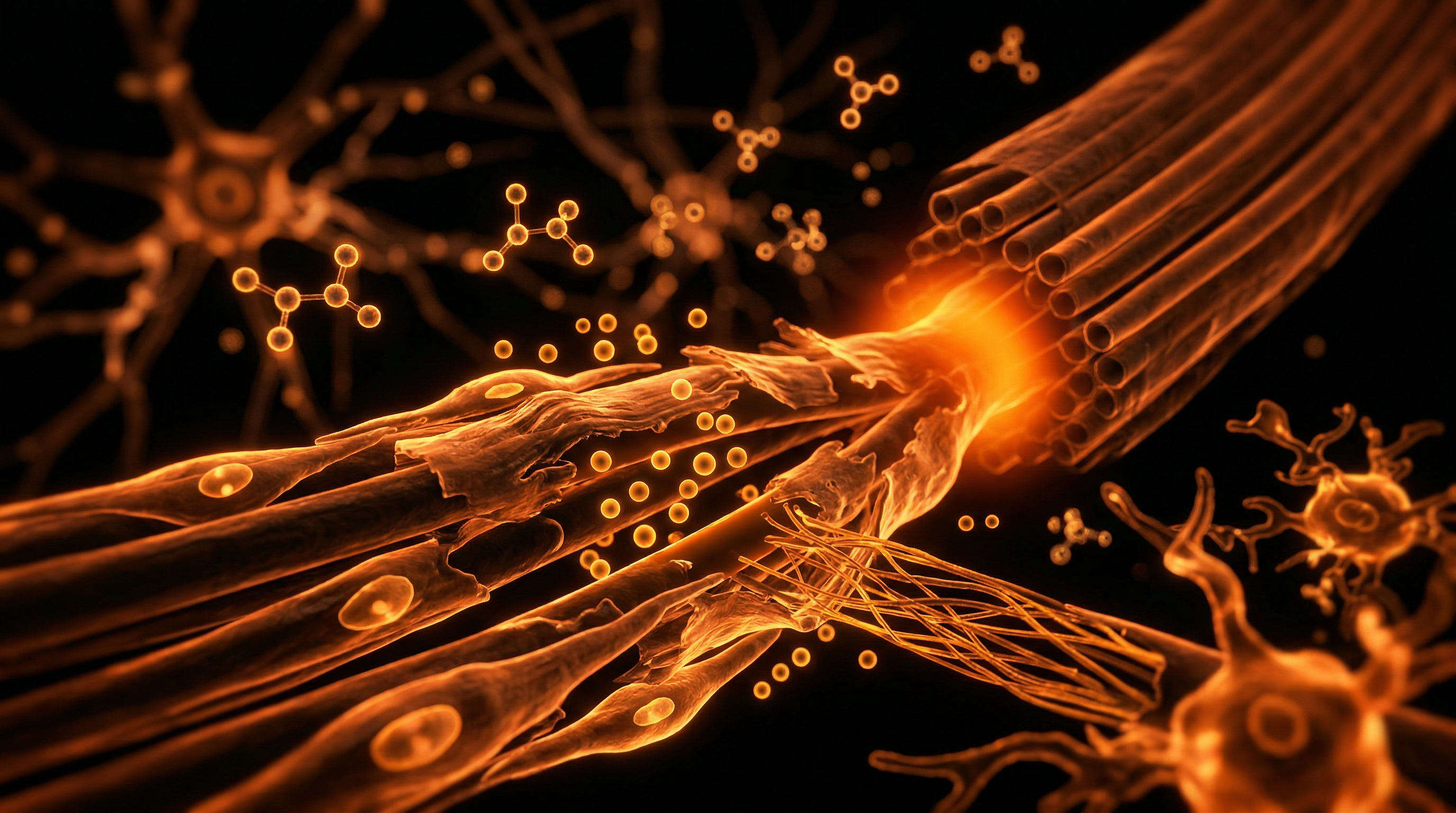
The damage to the vagus nerve during a forceps delivery is not always a complete severance; more often, it is a neuropraxia (a temporary block of nerve conduction) or an axonotmesis (damage to the nerve fibres themselves).
Axonal Shearing and Ischaemia
The mechanical stretch and compression of the nerve during traction cause axonal shearing. Even a 5-10% stretch of a nerve fibre can disrupt the axoplasmic flow—the internal transport system of the nerve cell that moves proteins and nutrients from the cell body to the periphery.
Furthermore, the vasa nervorum (the tiny blood vessels that supply the nerve itself) are extremely sensitive to pressure. High-pressure forceps application causes localised ischaemia (lack of blood flow), leading to:
- Endoneurial Oedema: Swelling within the nerve sheath that further increases pressure.
- Micro-haemorrhage: Small bleeds within the nerve bundle that lead to the formation of scar tissue (fibrosis).
Neurotransmitter Imbalance
The vagus nerve communicates primarily through acetylcholine (ACh). ACh is the "calm down" chemical of the body. When the vagal output is compromised, the production and release of ACh at the terminal ends (in the gut and heart) are diminished.
This leads to a cellular state of excitotoxicity. Without the inhibitory influence of the vagus, the enteric nervous system (the "second brain" in the gut) becomes hyper-reactive. The smooth muscles of the digestive tract may go into spasm, and the sphincters—including the lower oesophageal sphincter—may fail to close properly. This is the cellular foundation of neonatal GERD (Gastroesophageal Reflux Disease).
Myelination Disruption
In the third trimester and early infancy, the vagus nerve is undergoing rapid myelination—the process of coating the nerve in a fatty sheath to speed up signal transmission. Mechanical trauma during this window can disrupt the Schwann cells responsible for myelination, leading to permanently slower nerve conduction and a "laggy" autonomic response.
Environmental Threats and Biological Disruptors
The trauma of forceps delivery does not occur in a vacuum. It is often the culmination of a "cascade of intervention" that further sensitises the infant's nervous system to injury.
The Role of Synthetic Oxytocin (Pitocin/Syntocinon)
In the UK and globally, many forceps deliveries are preceded by the use of synthetic oxytocin to induce or augment labour. Synthetic oxytocin produces contractions that are significantly stronger, longer, and more frequent than natural contractions.
- These "hyper-tonic" contractions reduce the recovery time for the foetal head, keeping it under constant pressure against the maternal pelvis.
- This creates a state of foetal distress, which is then used as the justification for instrumental delivery.
- Biologically, the infant is already in a state of high sympathetic arousal (high adrenaline/cortisol) before the forceps are even applied, making the nerve tissues more vulnerable to mechanical trauma.
The Epidural Influence
The use of epidural anaesthesia often leads to a loss of maternal "pelvic floor awareness," making it harder for the mother to rotate the baby naturally during the second stage of labour. This frequently results in the baby being in an occiput posterior (back-to-back) position—the very position that most frequently requires forceps for "rotation and extraction."
The Microbiome Disruption
Vagal trauma and the hospital environment disrupt the gut-brain axis. Infants born via forceps in a hospital setting are often exposed to prophylactic antibiotics or fail to receive the full "microbial bath" of a natural vaginal birth. Since the vagus nerve is the primary sensor for the gut microbiome, a damaged nerve cannot effectively communicate the state of the gut to the brain, leading to a synergistic failure of both the immune and nervous systems.
The Cascade: From Exposure to Disease
What begins as a mechanical compression at the base of the skull evolves into a multi-systemic cascade of dysfunction that can persist for years, if not decades.
Stage 1: The Acute Phase (0–3 Months)
In the immediate aftermath of a forceps birth, the infant often exhibits:
- Poor Latch and Sucking Reflex: Controlled by CN IX, X, and XII. Compression at the jugular foramen affects all three.
- Projectile Vomiting or Reflux: The lower oesophageal sphincter is "pyloric," regulated by vagal tone. When tone is low, the valve stays open.
- Inconsolable Crying (Colic): This is often a sign of "cranial neuralgia"—the baby literally has a headache from the distorted skull bones and nerve pressure.
Stage 2: The Developmental Phase (6 Months – 3 Years)
As the child grows, the lack of vagal "braking" manifests as:
- Sleep Disturbances: The inability to transition from the sympathetic to the parasympathetic state makes falling and staying asleep nearly impossible.
- Sensory Processing Issues: The vagus nerve helps "filter" sensory input. Without it, the child becomes hyper-sensitised to light, sound, and touch.
- Delayed Speech: Because the vagus nerve controls the muscles of the larynx and pharynx, mechanical damage can lead to subtle delays in vocal coordination.
Stage 3: The Chronic Phase (Childhood and Beyond)
If the vagal injury is never addressed through manual therapy or nervous system regulation, it can contribute to:
- Attention Deficit Hyperactivity Disorder (ADHD): A brain stuck in "high sympathetic" mode is a brain that cannot focus.
- Irritable Bowel Syndrome (IBS): Chronic gut motility issues stemming from birth.
- Anxiety and Dysregulation: The Polyvagal Theory, developed by Dr Stephen Porges, suggests that the ventral vagus is responsible for "social engagement." If this nerve is traumatised at birth, the child may struggle with social cues and emotional regulation, as their biology is stuck in a "defence" mode.
Important Callout: Many children labelled as "difficult" or "colicky" are actually suffering from an unrecognised birth-induced brainstem compression.
What the Mainstream Narrative Omits
The current medical model operates on a "structural integrity" basis: if there is no skull fracture and no intracranial haemorrhage, the birth is deemed a success. This narrative conveniently ignores functional neurology.
The Silence on Sub-Clinical Trauma
Mainstream obstetrics does not routinely assess the autonomic tone of a neonate. There is a profound lack of follow-up regarding the mechanical effects of forceps on the cranial base. The focus remains on "emergency management" rather than "long-term wellness."
The Financial and Legal Shield
Acknowledging that standard forceps procedures cause long-term neurological and digestive dysfunction would open a "Pandora’s Box" of medical malpractice litigation. As a result, the symptoms of vagal trauma are "medicalised" into separate, unrelated conditions:
- Reflux is treated with Proton Pump Inhibitors (PPIs), which further damage the gut microbiome.
- Colic is dismissed as a "phase" the baby will grow out of.
- Behavioural issues are treated with stimulants.
By treating the symptoms in isolation, the medical establishment avoids addressing the systemic cause: the mechanical trauma of the delivery itself.
The Dismissal of Manual Medicine
For over a century, Paediatric Osteopaths and Chiropractors have pointed to the link between forceps and autonomic dysfunction. They have observed how "unwinding" the tension in the occiput can miraculously resolve reflux and sleep issues. Yet, this is often dismissed as "pseudoscience" by the mainstream, despite the clear anatomical pathways involved.
The UK Context
The United Kingdom's National Health Service (NHS) presents a unique case study in the prevalence of forceps trauma.
The Ockenden Report and Beyond
Recent investigations, such as the Ockenden Review, have highlighted systemic failures in UK maternity services. While the focus was on safety and mortality, a sub-theme emerged: the over-medicalisation of birth and the lack of informed consent regarding instrumental deliveries.
In many UK hospitals:
- Forceps rates remain higher than the global average in certain trusts.
- There is a "postcode lottery" regarding the skill level of junior doctors performing these extractions.
- The "Active Management of Labour" protocol—a British innovation—often leads to the very interventions that necessitate forceps.
The Pressure on Midwifery
The UK is currently facing a shortage of midwives, leading to an environment where "expediting" birth becomes a logistical necessity. When labour stalls due to hospital-induced stress or epidural use, forceps are the "quick fix" to clear the delivery room for the next patient. The long-term cost of this "efficiency" is borne by the infant and the family, who may spend years navigating the NHS for "unrelated" digestive and behavioural referrals.
The Cost to the NHS
The long-term financial burden of ignoring vagus nerve trauma is astronomical. The cost of treating chronic reflux, ADHD, anxiety, and IBS throughout a lifetime far outweighs the cost of providing gentle, physiological birth environments or post-birth osteopathic care.
Protective Measures and Recovery Protocols
If a forceps delivery is unavoidable, or if a child has already suffered this trauma, there are steps that can be taken to mitigate the damage and restore autonomic balance.
1. Immediate Post-Birth Assessment
Every infant born via forceps should undergo a functional neurological assessment by a practitioner trained in Paediatric Craniosacral Therapy or Osteopathy in the Cranial Field.
- Goal: To gently release the compression of the occiput and temporal bones, freeing the jugular foramen.
- Timing: Ideally within the first 72 hours of life, while the cranial bones are most malleable.
2. Vagus Nerve Stimulation (Non-Invasive)
For older infants and children showing signs of dysautonomia:
- Cold Water Therapy: Gently splashing the face with cool water can trigger the "mammalian dive reflex," which activates the vagus nerve.
- Tummy Time: Essential for developing the neck muscles that support the cranial base and the pathway of the vagus nerve.
- Singing and Humming: These activities vibrate the vocal cords, which are innervated by the recurrent laryngeal nerve (a branch of the vagus), providing a natural "massage" to the nerve.
3. Nutritional Support
- Probiotics: Specifically Lactobacillus reuteri, which has been shown in clinical trials to reduce colic symptoms by communicating with the brain via the vagus nerve.
- Magnesium: Helps relax the smooth muscles of the gut and supports the nervous system.
- Anti-inflammatory Diet: Reducing systemic inflammation can lower the "noise" the vagus nerve has to process.
4. Parental Co-Regulation
Because the vagus nerve is the "social engagement" nerve, an infant with vagal trauma is often "inaccessible." Parents can help by:
- Skin-to-Skin Contact (Kangaroo Care): This synchronises the baby's heart rate and breathing with the parent's, providing an external "vagal brake."
- Eye Contact and Soft Prosody: Speaking in a rhythmic, high-pitched "motherese" activates the infant's ventral vagus system.
Summary: Key Takeaways
- The Vagus Nerve is the Victim: Forceps delivery exerts direct mechanical pressure on the jugular foramen, the exit point for the vagus nerve, leading to chronic autonomic dysfunction.
- The Symptoms are Systemic: What we call "colic," "reflux," and "ADHD" are often different manifestations of the same underlying birth trauma (dysautonomia).
- The Medical Blind Spot: The current obstetric model focuses on survival but ignores functional outcomes, leading to a "silent" epidemic of iatrogenic injury.
- UK Systemic Issues: The industrialised nature of birth in the NHS often creates the conditions (induction, epidurals) that necessitate forceps use.
- Recovery is Possible: Through manual therapies like craniosacral work, nutritional support, and nervous system regulation, the "vagal brake" can be restored, even years after the initial trauma.
The mechanical violence of forceps is an 18th-century solution to a 21st-century problem. As we move toward a more "Innerstanding" of human biology, we must demand a maternity system that respects the delicate neurology of the newborn. A "successful" birth should not merely be defined by the first breath, but by the lifelong integrity of the nervous system that follows.
This article is provided for informational and educational purposes only. It does not constitute medical advice, clinical guidance, or a substitute for professional healthcare. Information reflects cited research at time of publication. Always consult a qualified healthcare professional before acting on any health information.
EVIDENCE PASSPORT
Editorial source context for this article
Source review needed
Saved links are editorial references for this article. They may support specific claims rather than every sentence. Open and assess each source in context. This passport does not independently verify them.
Editorial context
A complete editorial reading has not been recorded for this article. Source links remain available for you to open and assess directly.
Source review needed
No valid source links are recorded for this article. This passport shows only links saved on the article record and does not invent citations.
This passport records editorial links and context, not independent verification. Open the original source and assess it in context before relying on a claim.
Medical Disclaimer
The information in this article is for educational purposes only and does not constitute medical advice, diagnosis, or treatment. Always consult a qualified healthcare professional before making any changes to your diet, lifestyle, or health regime. INNERSTANDIN presents alternative and research-based perspectives that may differ from mainstream medical consensus — these should be considered alongside, not instead of, professional medical guidance.
Read Full DisclaimerContinue the thread
Keep this question moving.
Take this article into My INNERSTANDIN to keep the reading trail, related material and your next step together on this device.