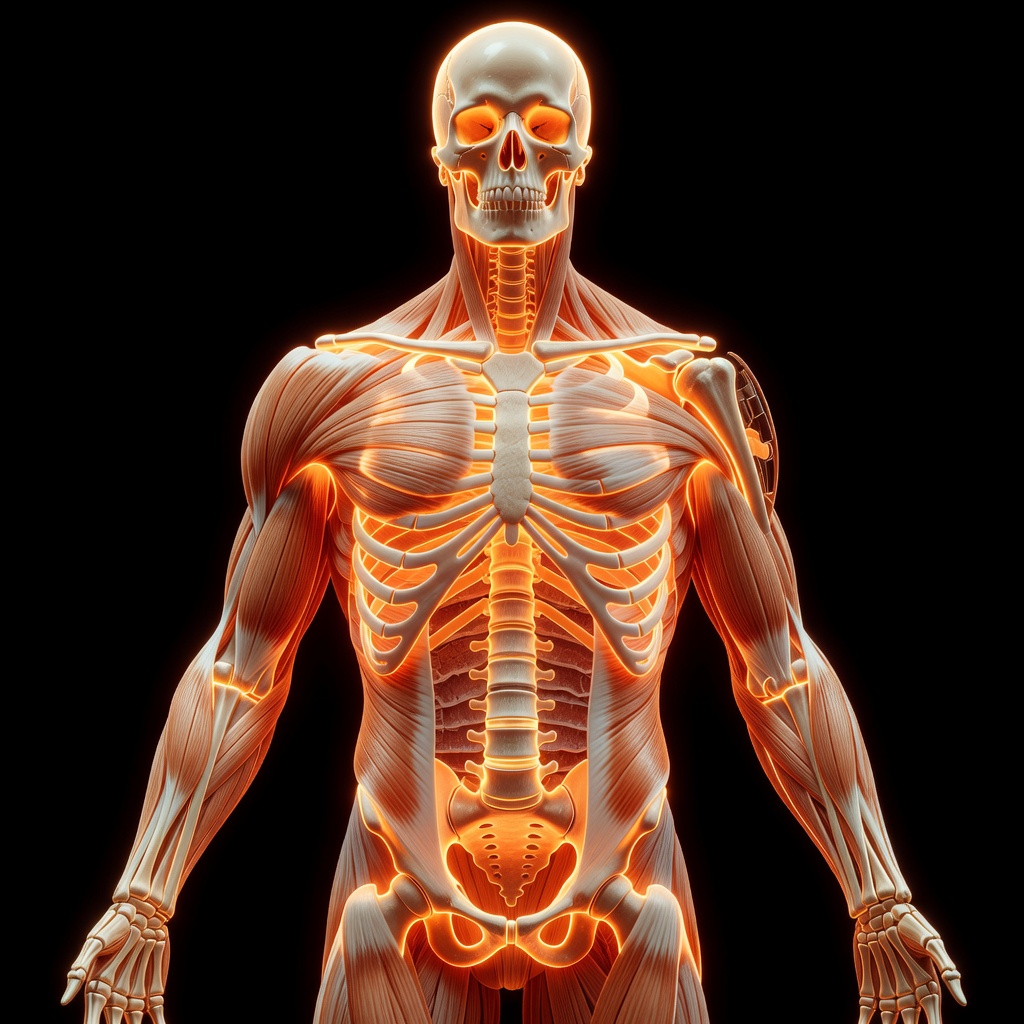
VDR Polymorphisms and Genetic Resistance: Tailoring D3/K2 Ratios to Overcome Vitamin D Receptor Dysfunction
An exploration into how genetic variations in the Vitamin D Receptor (VDR) create biological resistance, and how strategic Vitamin D3 and K2 synergy can bypass these cellular bottlenecks to restore metabolic health.

# VDR Polymorphisms and Genetic Resistance: Tailoring D3/K2 Ratios to Overcome Vitamin D Receptor Dysfunction ## Introduction: The Silent Barrier to Health In the realm of functional medicine, we often treat nutritional deficiencies as simple mathematical equations: if levels are low, we add more. However, at INNERSTANDING, we focus on the root cause of why those levels might be low or, more importantly, why they might be 'normal' on a lab report while the patient remains symptomatic. One of the most significant barriers to achieving true wellness is Vitamin D Resistance, a condition driven by genetic polymorphisms in the Vitamin D Receptor (VDR). For those with these genetic variations, the standard nutritional advice is not only insufficient—it fails to address the cellular reality of their biology. ## Understanding the VDR: The Gateway to Gene Expression The Vitamin D Receptor (VDR) is a member of the nuclear receptor superfamily of ligand-activated transcription factors. Unlike most vitamins that act as enzyme cofactors, Vitamin D acts as a pro-hormone.
Once it enters a cell, it must bind to the VDR to exert its effects. This VDR-Vitamin D complex then migrates to the nucleus, pairs with the Retinoid X Receptor (RXR), and binds to Vitamin D Response Elements (VDREs) on our DNA. This process regulates the expression of over 900 genes involved in immune function, bone metabolism, cardiovascular health, and even mood regulation. ## The Role of Polymorphisms (SNPs) Genetic polymorphisms, or Single Nucleotide Polymorphisms (SNPs), are small variations in our DNA sequence. In the VDR gene, several key SNPs have been identified that alter how well the receptor functions: 1. FokI: This SNP occurs at the start of the VDR protein. The 'f' variant produces a slightly longer, less efficient protein than the 'F' variant.
Individuals with the 'ff' genotype often show a significantly reduced response to Vitamin D. 2. BsmI and TaqI: These SNPs are located at the end of the gene and affect the stability and amount of VDR mRNA produced. High-risk genotypes here can lead to fewer receptors being built in the first place. When a person carries these SNPs, they have what we call 'Genetic Resistance.' Their 'locks' (the receptors) are either misshapen or too few in number, meaning the 'key' (Vitamin D) cannot easily unlock the genetic potential of the cell. ## The Concept of Vitamin D Resistance Clinical Vitamin D Resistance means that a person requires much higher serum levels of 25(OH)D to achieve the same physiological outcome as someone with a 'normal' genotype. While a standard individual might thrive with a blood level of 40 ng/mL (100 nmol/L), a person with VDR polymorphisms might need 80 ng/mL or even 100 ng/mL just to keep their parathyroid hormone (PTH) in check and their immune system functioning. This creates a clinical challenge.
High doses of Vitamin D3 increase the absorption of calcium from the intestinal tract. Without a strategy to manage this influx, we risk hypercalcaemia—too much calcium in the blood—which can lead to arterial calcification and kidney stones. This is where the synergy of Vitamin K2 becomes non-negotiable. ## The D3/K2 Synergy: The Biological Traffic Controller Vitamin D3 brings calcium into the house, but Vitamin K2 decides where it goes. D3 stimulates the production of Vitamin K-dependent proteins, specifically Osteocalcin and Matrix GLA Protein (MGP). - Osteocalcin: Produced by osteoblasts, this protein acts as the 'glue' that binds calcium into the bone matrix. - Matrix GLA Protein (MGP): Found in the vascular system, MGP is the most potent inhibitor of soft tissue calcification currently known. However, both proteins are produced in an inactive state.
They require Vitamin K2 (specifically the MK-7 form for its long half-life) to undergo a process called carboxylation. Only once carboxylated can they grab calcium and move it. For individuals with VDR SNPs who require high-dose D3 to overcome receptor resistance, the production of these proteins is massively upregulated. Consequently, their 'burn rate' of Vitamin K2 is much higher than the average person. ## Tailoring the Ratio for VDR Dysfunction In a standard physiological environment, a ratio of 100mcg of K2 per 5,000 IU of D3 is often recommended. However, for those with VDR resistance, INNERSTANDING suggests a more nuanced approach: 1. The Loading Phase: When overcoming profound resistance (common in autoimmune or chronic inflammatory states associated with VDR SNPs), D3 doses may reach 10,000 to 20,000 IU daily.
In these instances, the K2 ratio should be increased to at least 200-400mcg to ensure that every molecule of MGP is activated to protect the arteries. 2. Magnesium as the Catalyst: The VDR cannot bind Vitamin D without magnesium. Magnesium is also required for the enzymes that convert storage D3 into the active 1,25(OH)2D. If you are 'resistant' to Vitamin D, check your magnesium levels first; it is often the hidden bottleneck. 3. Vitamin A Balance: Since VDR must pair with RXR (the Vitamin A receptor), ensuring adequate Retinol intake is essential. Excessive D3 can theoretically displace Vitamin A, so a balanced intake of cod liver oil or organ meats is often superior to isolated D3. ## Monitoring and Precision Medicine For those with VDR SNPs, we must move beyond the basic 25(OH)D test. To assess if the resistance is being overcome, clinicians should monitor: - PTH (Parathyroid Hormone): If PTH is high, Vitamin D is not doing its job at the receptor level, regardless of the blood level. - Corrected Calcium: To ensure safety during high-dose protocols. - Undercarboxylated Osteocalcin: A functional marker of Vitamin K2 status. ## Conclusion: From Resistance to Resilience The existence of VDR polymorphisms proves that nutrition is not one-size-fits-all.
Genetic resistance is not a destiny of ill-health; it is simply a requirement for a different strategy. By understanding the root-cause mechanics of receptor dysfunction, we can use the synergy of Vitamin D3 and K2 to 'force' the biological locks, ensuring that even those with the most stubborn genetic profiles can achieve optimal systemic health. At INNERSTANDING, we believe that true health education is about providing the tools to bridge the gap between our DNA and our daily lives.
This article is provided for informational and educational purposes only. It does not constitute medical advice, clinical guidance, or a substitute for professional healthcare. Information reflects cited research at time of publication. Always consult a qualified healthcare professional before acting on any health information.
RESEARCH FOUNDATIONS
Biological Credibility Archive
Citations provided for educational reference. Verify via PubMed or institutional databases.
Medical Disclaimer
The information in this article is for educational purposes only and does not constitute medical advice, diagnosis, or treatment. Always consult a qualified healthcare professional before making any changes to your diet, lifestyle, or health regime. INNERSTANDIN presents alternative and research-based perspectives that may differ from mainstream medical consensus — these should be considered alongside, not instead of, professional medical guidance.
Read Full DisclaimerReady to learn more?
Continue your journey through our classified biological research.
DISCUSSION ROOM
Members of THE COLLECTIVE discussing "VDR Polymorphisms and Genetic Resistance: Tailoring D3/K2 Ratios to Overcome Vitamin D Receptor Dysfunction"
SILENT CHANNEL
Be the first to discuss this article. Your insight could help others understand these biological concepts deeper.
RABBIT HOLE
Follow the biological thread deeper