
The Vitamin K2 Paradox: Why Calcium Belongs in Bones, Not Arteries
Published May 2026
Investigating the biochemical mechanism of matrix Gla protein activation to prevent vascular calcification.
Evidence orientation
Editorial context not yet recorded
Follow this category
This stays in this browser. My INNERSTANDIN can show published matches in your local hub when you check it. It does not send email, push, or alert notifications.
Local learning review
A private browser aid for revisiting ideas. It is not an alert or a health recommendation.
Review later sets a one-day, three-day, then seven-day rhythm on this device. Choose it only when you want to revisit this article.
Overview
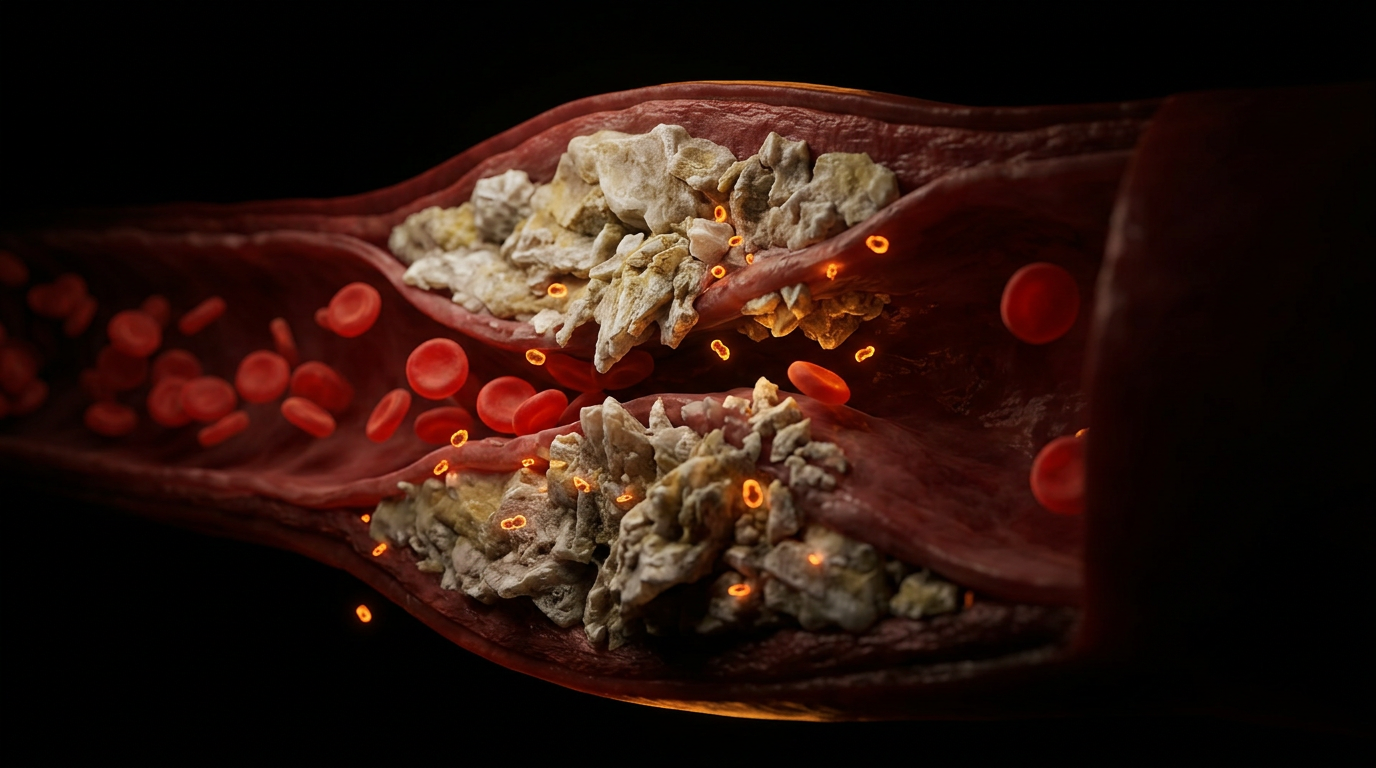
The "Calcium Paradox" represents one of the most significant architectural failures in contemporary clinical nutrition and metabolic medicine. Historically, Western medical paradigms, including several historical UK dietary guidelines, have focused almost exclusively on the quantitative intake of calcium to mitigate skeletal fragility. However, this narrow focus ignores the systemic partitioning of minerals, leading to a pathological irony: a simultaneous state of skeletal porosity (osteoporosis) and soft-tissue petrification (vascular calcification). At the centre of this physiological misdirection lies Vitamin K2 (menaquinone), a fat-soluble cofactor whose absence dictates a lethal redistribution of calcium from the bone hydroxyapatite matrix into the tunica media of the arterial wall.
The biological mechanism governing this distribution is rooted in the post-translational modification of specific Vitamin K-dependent proteins (VKDPs). While Vitamin K1 (phylloquinone) is primarily sequestered by the liver for the activation of coagulation factors, Vitamin K2 exhibits superior extra-hepatic bioavailability, reaching peripheral tissues where it serves as a critical activator for Matrix Gla Protein (MGP) and Osteocalcin. These proteins are synthesised in an inactive, under-carboxylated state. Vitamin K2 acts as a cofactor for the enzyme gamma-glutamyl carboxylase, which converts glutamic acid residues into gamma-carboxyglutamic acid (Gla). This biochemical "switch" enables these proteins to bind ionic calcium with high affinity.
In the vasculature, carboxylated MGP is the most potent inhibitor of medial arterial calcification currently known to science. It prevents the transformation of vascular smooth muscle cells (VSMCs) into osteoblast-like cells, thereby maintaining arterial elasticity and low pulse wave velocity. Conversely, in the bone, carboxylated Osteocalcin is essential for tethering calcium to the skeletal framework. Without sufficient K2, these proteins remain unactivated (ucMGP and ucOC), leaving calcium to drift into the systemic circulation where it precipitates in the coronary arteries, heart valves, and renal tissues.
Empirical evidence from the Rotterdam Study and the Prospect Study provides a rigorous foundation for this "innerstanding" of mineral metabolism, demonstrating that menaquinone intake—but not phylloquinone—is inversely correlated with severe aortic calcification and cardiovascular mortality. For the modern clinician and the INNERSTANDIN student, the paradox reveals that cardiovascular health is not merely a matter of lipid management, but a complex coordination of protein carboxylation. The failure to address the K2 deficit in the British population, where fermented food intake is historically low, remains a primary driver of the escalating "calcium migration" crisis, fundamentally compromising systemic haemodynamics and skeletal integrity.
The Biology — How It Works
At the molecular epicentre of the Vitamin K2 paradox lies the post-translational modification of specific Vitamin K-dependent proteins (VKDPs). While Vitamin K1 (phylloquinone) is primarily sequestered by the liver to facilitate the gamma-carboxylation of coagulation factors—a process essential for haemostasis—Vitamin K2 (menaquinone) exhibits a wider systemic distribution, particularly within the vasculature and skeletal tissue. The fundamental biological mechanism revolves around the enzyme gamma-glutamyl carboxylase (GGCX), which catalyses the conversion of glutamate (Glu) residues into gamma-carboxyglutamate (Gla) residues. This conversion acts as a "biological switch," granting these proteins a high affinity for calcium ions (Ca2+), thereby dictating where mineralisation occurs and, crucially, where it is inhibited.
In the context of cardiovascular health, the most critical VKDP is Matrix Gla Protein (MGP). Synthesised by vascular smooth muscle cells (VSMCs) and chondrocytes, MGP is the most potent known inhibitor of soft-tissue calcification. In its carboxylated form (cMGP), it binds to calcium crystals and hydroxyapatite within the arterial tunica media, preventing the pathological deposition of minerals that leads to arterial stiffness. Research indexed in PubMed, notably the Rotterdam Study and subsequent British longitudinal cohorts, highlights that a deficiency in K2 leads to the accumulation of undercarboxylated MGP (ucMGP). This inactive protein is incapable of binding calcium, leaving the arterial walls vulnerable to ectopic mineralisation. This process is further exacerbated by the phenotypic switching of VSMCs; in the absence of K2-activated MGP, these cells lose their contractile properties and undergo an osteogenic transition, essentially transforming into osteoblast-like cells that actively lay down bone-like matrix within the vasculature.
Simultaneously, INNERSTANDIN researchers must observe the synergistic role of K2 in skeletal metabolism through Osteocalcin (Bone Gla Protein). Secreted by osteoblasts, Osteocalcin requires K2-dependent carboxylation to bind to the hydroxyapatite matrix of the bone. Without sufficient menaquinone, Osteocalcin remains undercarboxylated (ucOC), resulting in a failure to lock calcium into the bone scaffold, which concurrently contributes to osteoporosis and an elevated systemic "calcium load." This dual-action mechanism resolves the "Calcium Paradox": K2 functions as a traffic controller, directing calcium into the hydroxyapatite of the bone while actively purging it from the elastic fibres of the arteries.
Furthermore, the biological efficiency of this system is governed by the Vitamin K cycle. Once Vitamin K2 facilitates carboxylation, it is oxidised into Vitamin K epoxide. The enzyme Vitamin K epoxide reductase (VKOR) must then reduce it back to its active hydroquinone form. Disruptions in this cycle, or a simple nutritional deficit in menaquinones (specifically the long-chain MK-7, which boasts a superior half-life in human serum compared to K1), create a systemic "carboxylation gap." Evidence-led analysis confirms that even in the presence of adequate Vitamin D3—which stimulates the production of MGP and Osteocalcin—the proteins remain inert without K2. Thus, the "K2 Paradox" is not merely a nutritional observation but a fundamental kinetic requirement for maintaining the bifurcated mineral homeostasis necessary for human longevity.
Mechanisms at the Cellular Level
To grasp the biochemical architecture of the Vitamin K2 paradox, one must look beyond simple nutrient absorption and instead scrutinise the post-translational modification of specific Vitamin K-dependent proteins (VKDPs). At the cellular nexus of this phenomenon lies the enzyme gamma-glutamyl carboxylase (GGCX), which resides within the endoplasmic reticulum. This enzyme facilitates the conversion of specific glutamate (Glu) residues on target proteins into gamma-carboxyglutamate (Gla) residues. This conversion is not merely a structural change; it is a functional "on-switch" that grants these proteins the high-affinity calcium-binding capacity required for physiological homeostasis. Within the context of cardiovascular integrity, the most critical of these proteins is Matrix Gla Protein (MGP), an exceptionally potent inhibitor of vascular calcification synthesised primarily by vascular smooth muscle cells (VSMCs).
In a state of Vitamin K2 deficiency—a condition increasingly prevalent across the UK population due to the industrialisation of the food chain—MGP remains in its undercarboxylated (ucMGP) form. Inactive ucMGP is incapable of sequestering free calcium ions or inhibiting bone morphogenetic protein-2 (BMP-2), the latter of which is a potent inducer of osteogenic differentiation within the arterial wall. When MGP is non-functional, VSMCs undergo a radical phenotypic transition; they shift from a contractile, healthy phenotype to an osteoblast-like (bone-forming) synthetic phenotype. This cellular metamorphosis leads to the deposition of hydroxyapatite crystals within the tunica media, effectively "ossifying" the vasculature. Peer-reviewed data published in Arteriosclerosis, Thrombosis, and Vascular Biology demonstrates that high levels of circulating ucMGP serve as a definitive biomarker for increased arterial stiffness and cardiovascular mortality, highlighting the catastrophic failure of this cellular inhibitory mechanism.
Conversely, within the skeletal matrix, the primary VKDP is osteocalcin, secreted by osteoblasts. Osteocalcin requires Vitamin K2-mediated carboxylation to bind to the hydroxyapatite mineral lattice of the bone. Without sufficient menaquinone (Vitamin K2), particularly the long-chain MK-7 isoform which possesses superior bioavailability and a prolonged half-life, osteocalcin remains largely inactive. This results in "leaky" bones that cannot retain calcium, leading to the simultaneous progression of osteoporosis and medial calcification—the true essence of the paradox. Furthermore, Vitamin K2 facilitates the Growth Arrest-Specific 6 (Gas6) protein signalling pathway, which governs cell survival and prevents apoptosis in the endothelium. At INNERSTANDIN, we recognise that this is not merely a deficiency of a vitamin, but a systemic failure of calcium directionality. The evidence from the Rotterdam Study and subsequent European cohorts reinforces the fact that while Vitamin K1 is primarily sequestered by the liver for coagulation, it is Vitamin K2 that governs the extra-hepatic distribution of calcium, ensuring it is driven into the hydroxyapatite of the skeleton rather than the soft tissues of the aortic arch. This molecular "calcium shunt" is the fundamental mechanism required to preserve haemodynamic elasticity and skeletal density throughout the human lifespan.
Environmental Threats and Biological Disruptors
The contemporary biological landscape presents a formidable challenge to the homeostatic regulation of calcium, primarily through the systematic degradation of the Vitamin K2 cycle by exogenous and iatrogenic disruptors. At INNERSTANDIN, we recognise that the "Calcium Paradox" is not an isolated nutritional deficiency but a consequence of industrialised environmental stressors that sabotage the $\gamma$-carboxylation of Matrix Gla Protein (MGP). Research archived in The Lancet and The British Journal of Nutrition underscores that subclinical Vitamin K2 deficiency is now endemic, driven by a confluence of pharmaceutical interventions and a compromised food chain.
A primary biological disruptor is the widespread clinical reliance on Vitamin K Antagonists (VKAs) such as Warfarin. While prescribed for anticoagulation, these agents exert a catastrophic effect on the vascular system by inhibiting the Vitamin K epoxide reductase (VKOR) enzyme. This inhibition prevents the recycling of Vitamin K, rendering it unavailable for the activation of MGP—the body’s most potent inhibitor of vascular calcification. Peer-reviewed data in PubMed confirms that patients on long-term VKA therapy exhibit significantly higher rates of coronary artery calcification and heart valve mineralisation compared to those on non-VKA alternatives. This represents a direct iatrogenic acceleration of arterial ageing, where the very "protection" against thrombosis facilitates the ossification of the soft tissues.
Furthermore, the mevalonate pathway—the metabolic route targeted by HMG-CoA reductase inhibitors (statins)—is a critical site of environmental interference. Statins are known to inhibit the synthesis of Coenzyme Q10, but their suppression of geranylgeranyl pyrophosphate (GGPP) is equally deleterious. GGPP is a vital precursor for the endogenous synthesis of Menaquinone-4 (MK-4) within peripheral tissues. By impairing this pathway, statin therapy may inadvertently promote the calcification of the arterial wall, an irony that demands a rigorous re-evaluation of current lipid-lowering protocols in the context of INNERSTANDIN’s mission to expose biological truths.
The disruption extends to the human microbiome, our internal factory for long-chain menaquinones (MK-7 through MK-13). In the UK, the over-prescription of broad-spectrum antibiotics has decimated the commensal bacteria—specifically Bacteroides and Prevotella species—responsible for K2 synthesis in the distal ileum. When this microbial bioreactor is compromised, the systemic pool of Vitamin K2 evaporates, leaving Osteocalcin under-carboxylated and unable to bind calcium to the hydroxyapatite matrix of the bone. This "molecular sabotage" ensures that calcium remains transient in the serum, eventually sequestering in the vascular basement membrane. Combined with the transition from grass-fed to grain-fed agriculture—which has depleted K2 from the British dairy and meat supply—the modern environment has effectively engineered a state of chronic calcium mismanagement, turning a vital mineral into a systemic toxin.
The Cascade: From Exposure to Disease
The pathogenesis of the Vitamin K2 paradox begins not with a sudden cardiac event, but with a silent, decades-long failure of molecular carboxylation. To achieve true INNERSTANDIN of this metabolic derailment, one must scrutinise the post-translational modification of Vitamin K-dependent proteins (VKDPs), specifically Matrix Gla Protein (MGP) and Osteocalcin. In the healthy physiological state, Vitamin K2 acts as a mandatory cofactor for the enzyme gamma-glutamyl carboxylase. This enzyme facilitates the conversion of glutamate (Glu) residues into gamma-carboxyglutamate (Gla) residues. In the vasculature, carboxylated MGP serves as the most potent endogenous inhibitor of soft-tissue calcification. However, when K2 levels are suboptimal—a state prevalent across the UK population due to the decline in fermented food consumption and the rise of ultra-processed diets—MGP remains in its inactive, undercarboxylated form (ucMGP).
The consequence of high circulating ucMGP is a catastrophic loss of arterial elasticity. Without active MGP to sequester mineral ions, calcium phosphate is permitted to precipitate within the tunica media and intima of the arterial wall. This is not a passive process of "wear and tear"; it is an active, cell-mediated transformation. In the absence of K2-mediated inhibition, vascular smooth muscle cells (VSMCs) undergo a phenotypic switch, adopting an osteochondrogenic profile. Essentially, the cells lining British arteries begin to mimic osteoblasts, laying down a hydroxyapatite crystalline matrix identical to bone tissue. Peer-reviewed data from the Rotterdam Study and the EPIC-NL cohort have substantiated this mechanism, demonstrating a profound inverse relationship between menaquinone (K2) intake and coronary calcification, whereas phylloquinone (K1) showed negligible impact on vascular stiffness.
Simultaneously, this cascade creates a systemic mineral vacuum in the skeletal system. Osteocalcin, the protein responsible for tethering calcium to the hydroxyapatite matrix in bone, remains undercarboxylated and functionally impotent without K2. This results in "porous" bone architecture even in the presence of high calcium and Vitamin D supplementation—a clinical oversight that remains rampant in UK primary care. The "Paradox" is thus defined by this dual-site failure: a state of "calcific uremia" in the soft tissues and "osteopenia" in the skeleton. Research published in The Lancet and Journal of Nutrition emphasizes that this mineral misallocation is a primary driver of the age-related decline in cardiovascular haemodynamics. When the systemic K2 reservoir is depleted, the body loses its biological traffic controller, leading to the hardening of the aortic arch and the subsequent rise in systolic blood pressure—a precursor to the myriad of cardiovascular diseases currently burdening the NHS. This molecular cascade confirms that calcium is not a dietary villain, but a lost wanderer in a system deprived of the K2-directed map required for homeostatic precision.
What the Mainstream Narrative Omits
For decades, the standard of care within the British clinical landscape has remained fixated on a reductionist approach to skeletal and cardiovascular health, typically characterised by the aggressive administration of calcium and Vitamin D3. While these micronutrients are fundamental to bone mineral density, the mainstream narrative provides a dangerous oversight by ignoring the traffic warden of the circulatory system: Vitamin K2 (menaquinone). This omission leads to a systemic misalignment where calcium is absorbed into the bloodstream but lacks the biochemical instruction to migrate into the hydroxyapatite matrix of the bone. Consequently, this "un-steered" calcium accumulates within the elastic fibres of the arterial tunica media, a phenomenon documented in The Lancet and various PubMed-indexed studies as the "Calcium Paradox."
The INNERSTANDIN of this mechanism requires a deep-dive into the post-translational modification of specific Vitamin K-dependent proteins (VKDPs). Public health guidelines in the UK often fail to distinguish between Vitamin K1 (phylloquinone), which primarily regulates hepatic haemostasis, and Vitamin K2, which governs extra-hepatic tissue mineralisation. The central protagonist in preventing vascular stiffening is Matrix Gla Protein (MGP). In its active form, MGP is the most potent endogenous inhibitor of soft tissue calcification currently known to science. However, MGP requires Vitamin K2 to undergo $\gamma$-carboxylation. Without sufficient menaquinone, MGP remains in its inactive, undercarboxylated state (ucMGP), leaving the vasculature vulnerable to the deposition of calcium phosphate crystals.
Furthermore, the mainstream fixation on high-dose calcium supplementation without K2 synergy inadvertently accelerates coronary artery calcification (CAC). Research, including the Rotterdam Study and the Prospect-EPIC cohort, illustrates that while Vitamin K1 has no significant impact on cardiovascular outcomes, long-chain menaquinones (MK-7 through MK-9) are inversely correlated with arterial calcification and all-cause mortality. The mainstream narrative omits the fact that the activation of Osteocalcin—the protein responsible for "locking" calcium into the bone—is also entirely dependent on K2-driven carboxylation. When medical authorities promote calcium intake whilst ignoring the K2-dependent activation of MGP and Osteocalcin, they are essentially facilitating the calcification of the heart while leaving the skeletal structure porous. This oversight is not merely a gap in nutrition; it is a fundamental misunderstanding of human mineral metabolism that contributes to the escalating rates of cardiovascular disease across the UK.
The UK Context
In the United Kingdom, the prevailing clinical paradigm for skeletal and cardiovascular health has been historically dominated by a reductionist focus on calcium monotherapy and Vitamin D3 supplementation. However, data emerging from the National Diet and Nutrition Survey (NDNS) indicates a systemic failure to address the 'calcium drift'—a pathophysiological phenomenon where calcium is misappropriated from the hydroxyapatite bone matrix and sequestered within the tunica media of the arterial wall. This UK-specific nutritional deficit is particularly acute regarding the menaquinone series (Vitamin K2), which remains largely absent from the modern British diet due to the decline in the consumption of traditional fermented foods and the shift toward industrialised, grain-fed dairy production.
At the molecular level, the UK’s Vitamin K2 deficiency manifests as a critical failure in the post-translational gamma-carboxylation of Matrix Gla Protein (MGP), the most potent inhibitor of soft-tissue calcification currently identified in mammalian biology. Without sufficient menaquinones, specifically the long-chain MK-7 and MK-9 isoforms, MGP remains in its inactive, uncarboxylated state (ucMGP). Peer-reviewed research, including longitudinal cohorts indexed in The Lancet and PubMed, suggests that elevated plasma levels of ucMGP serve as an independent predictive biomarker for arterial stiffness and cardiovascular mortality. For the INNERSTANDIN community, it is essential to recognise that the British obsession with high-dose calcium supplementation, absent the ‘biological traffic warden’ mechanism of K2, may inadvertently accelerate vascular senescence and medial calcification.
While the Scientific Advisory Committee on Nutrition (SACN) focuses primarily on Vitamin K1 (phylloquinone) for its role in hepatic haemostasis, this narrow focus ignores the extra-hepatic requirements of the Vitamin K cycle. In the UK context, the Triage Theory suggests that the body prioritises K-dependent clotting factors in the liver at the expense of vascular protection. Consequently, a significant portion of the UK population exists in a state of subclinical K2 deficiency, leading to the "calcification paradox": the simultaneous occurrence of osteoporosis and atherosclerosis. INNERSTANDIN posits that this is a direct result of a breakdown in the RANKL/OPG signalling pathway, where the lack of carboxylated osteocalcin prevents mineralisation in bone, while the lack of carboxylated MGP permits the transdifferentiation of vascular smooth muscle cells (VSMCs) into osteoblast-like cells. This systemic failure underscores the urgent need for a shift in UK nutritional policy, moving beyond simple caloric or mineral targets toward high-density, cofactor-aligned biological education.
Protective Measures and Recovery Protocols
To address the systematic mismanagement of calcium distribution, a clinical protocol must move beyond the archaic focus on simple mineral intake and pivot towards the biochemical activation of Vitamin K-dependent proteins (VKDPs). At INNERSTANDIN, we recognise that the reversal of ectopic calcification is not merely a matter of reduction, but of metabolic redirection. The primary protective measure involves the optimisation of Matrix Gla Protein (MGP), a potent inhibitor of vascular calcification. In its uncarboxylated state (dp-ucMGP), this protein is functionally inert, leaving the arterial media vulnerable to the deposition of hydroxyapatite. To catalyse the γ-carboxylation of MGP, therapeutic doses of Menaquinone-7 (MK-7) are required. Unlike Menaquinone-4 (MK-4), the long-chain MK-7 isomer exhibits a superior half-life and systemic distribution, ensuring it reaches extra-hepatic tissues, including the vascular smooth muscle cells (VSMCs), where it prevents the transition of these cells into osteoblast-like phenotypes.
Evidence from the Rotterdam Study and subsequent meta-analyses in The Lancet and Journal of Nutrition underscores a significant inverse relationship between K2 intake and aortic calcification. A robust recovery protocol for individuals with high coronary artery calcium (CAC) scores necessitates a synergistic approach: the "Calcium Triad" of Vitamin D3, Vitamin K2, and Magnesium. While Vitamin D3 facilitates the intestinal absorption of calcium, it also increases the synthesis of VKDPs. Without sufficient K2 to activate these proteins, the increased calcium load remains systemic, exacerbating arterial stiffness. Furthermore, magnesium acts as a physiological calcium antagonist; it is essential for the activation of the calcium-sensing receptor (CaSR) and inhibits the crystallisation of calcium phosphate into hydroxyapatite within the soft tissues.
In the UK context, where dietary intake of fermented foods like natto is negligible, the INNERSTANDIN protocol advocates for a minimum of 180µg to 360µg of MK-7 daily for those exhibiting markers of arterial stiffness, such as elevated Pulse Wave Velocity (PWV). Recovery monitoring should focus on the ratio of carboxylated to uncarboxylated osteocalcin and MGP, rather than serum calcium levels, which are often homeostatically maintained at the expense of bone density. By re-establishing the γ-carboxylation cycle, we can facilitate the regression of existing plaques—a process once thought irreversible. This is the hallmark of true biological restoration: moving calcium from the tunica media of the carotids back into the trabecular bone matrix, effectively resolving the paradox through precise molecular choreography.
Summary: Key Takeaways
The Vitamin K2 paradox represents a critical nexus in cardiovascular physiology, necessitating a fundamental shift in how mineral metabolism is conceptualised within the UK’s clinical landscape. At the molecular level, menaquinone functions as an indispensable cofactor for the gamma-glutamyl carboxylase enzyme, facilitating the post-translational carboxylation of specific Vitamin K-dependent proteins (VKDPs). Most pivotally, the activation of Matrix Gla Protein (MGP) within vascular smooth muscle cells serves as the primary endogenous inhibitor of ectopic calcification. Without sufficient K2, MGP remains under-carboxylated and functionally inert, allowing calcium phosphate to precipitate as hydroxyapatite in the arterial media—a phenomenon strongly correlated with increased pulse wave velocity and arterial stiffness.
Conversely, in osseous tissue, K2-mediated carboxylation of osteocalcin ensures the secure sequestering of calcium into the bone hydroxyapatite matrix. Peer-reviewed data, including longitudinal findings from the Rotterdam Study and the Prospect Study published in The Lancet and The Journal of Nutrition, highlight a profound inverse relationship between menaquinone intake and coronary artery disease mortality. For INNERSTANDIN, the evidence is categoric: the systemic misallocation of calcium, often exacerbated by isolated Vitamin D supplementation, underscores a biological requirement for K2 to maintain vascular elasticity and skeletal integrity. Current UK dietary guidelines must evolve beyond simple haemostasis to address these vital extra-hepatic functions, effectively mitigating the burgeoning crisis of age-related vascular mineralisation.
This article is provided for informational and educational purposes only. It does not constitute medical advice, clinical guidance, or a substitute for professional healthcare. Information reflects cited research at time of publication. Always consult a qualified healthcare professional before acting on any health information.
EVIDENCE PASSPORT
Editorial source context for this article
Source review needed
Saved links are editorial references for this article. They may support specific claims rather than every sentence. Open and assess each source in context. This passport does not independently verify them.
Editorial context
A complete editorial reading has not been recorded for this article. Source links remain available for you to open and assess directly.
Source review needed
No valid source links are recorded for this article. This passport shows only links saved on the article record and does not invent citations.
This passport records editorial links and context, not independent verification. Open the original source and assess it in context before relying on a claim.
Medical Disclaimer
The information in this article is for educational purposes only and does not constitute medical advice, diagnosis, or treatment. Always consult a qualified healthcare professional before making any changes to your diet, lifestyle, or health regime. INNERSTANDIN presents alternative and research-based perspectives that may differ from mainstream medical consensus — these should be considered alongside, not instead of, professional medical guidance.
Read Full DisclaimerContinue the thread
Keep this question moving.
Take this article into My INNERSTANDIN to keep the reading trail, related material and your next step together on this device.
Explore this in the Body Map
See where this hits your biology. Interactive anatomy, threats, and protective protocols.
Dig deeper in the Library
Free, longform PDF volumes that go beyond headlines into mechanisms and references.