
The Window to the Heart: Retinal Imaging for Cardiovascular Disease Prediction
Updated May 2026
How the microvasculature of the eye provides a non-invasive snapshot of systemic vascular health. Advanced retinal scanning can predict hypertension and stroke risk years before clinical symptoms appear elsewhere.
Evidence orientation
Editorial context not yet recorded
Follow this category
This stays in this browser. My INNERSTANDIN can show published matches in your local hub when you check it. It does not send email, push, or alert notifications.
Local learning review
A private browser aid for revisiting ideas. It is not an alert or a health recommendation.
Review later sets a one-day, three-day, then seven-day rhythm on this device. Choose it only when you want to revisit this article.
Overview
The human body is often viewed as a collection of siloed systems—a heart that pumps, lungs that breathe, and eyes that see. However, this reductionist view fails to grasp the profound interconnectedness of our biological architecture. At INNERSTANDING, we advocate for a holistic, systems-biology approach to health. Nowhere is this interconnectedness more evident, and more clinically significant, than in the relationship between the retina and the cardiovascular system.
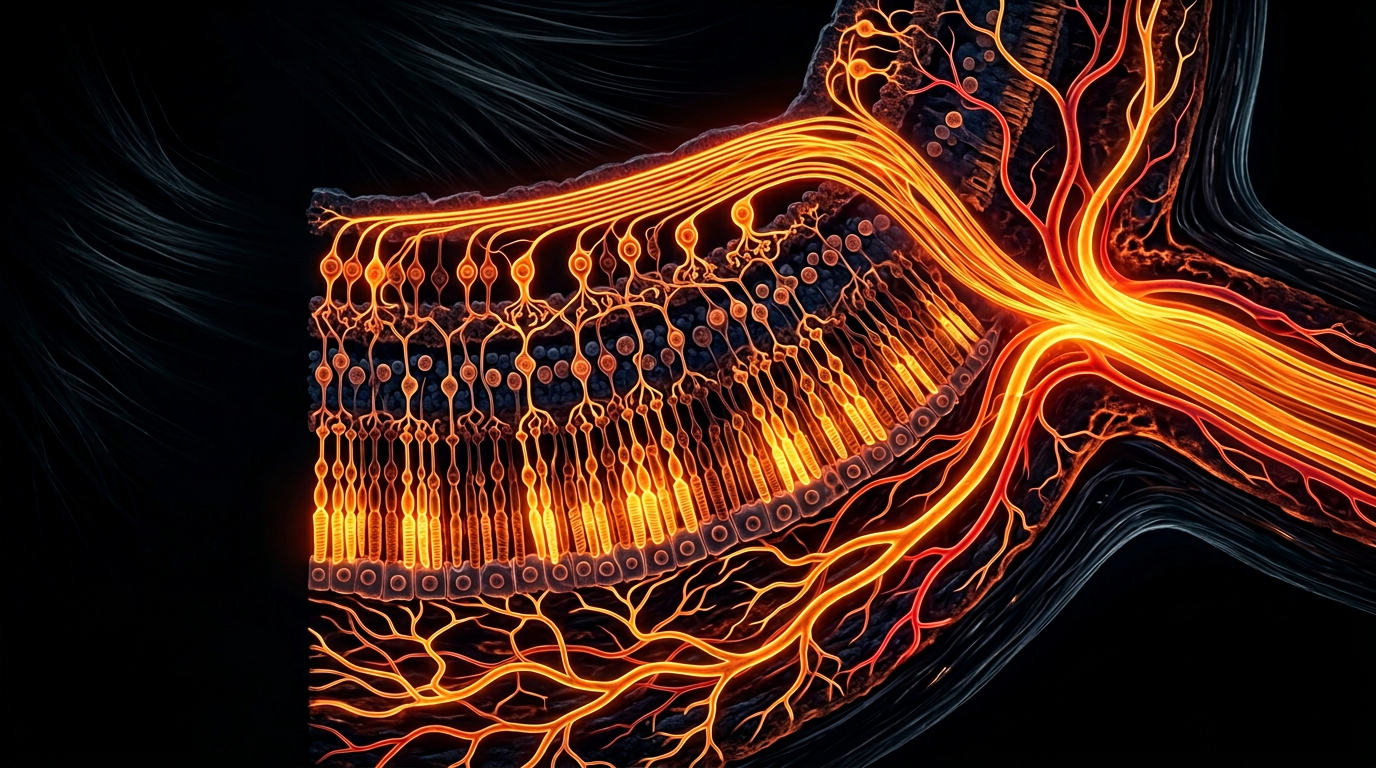
The phrase "the eyes are the window to the soul" is a poetic sentiment, but in clinical biology, the eyes are more accurately the window to the heart. The retina is a unique anatomical site: it is the only place in the entire human body where we can non-invasively, and in high resolution, observe the live microvasculature—the tiny arteries, veins, and capillaries—in their natural environment.
Recent breakthroughs in optical engineering and artificial intelligence have birthed a new field known as Oculomics. This discipline leverages the retina’s status as an extension of the central nervous system and a mirror of the vascular tree to predict systemic diseases, specifically cardiovascular disease (CVD), hypertension, and stroke risk, often years before a patient presents with a single clinical symptom elsewhere.
This article explores the deep biological mechanisms that link ocular health to systemic vitality, exposes the limitations of current diagnostic paradigms, and provides a roadmap for using retinal imaging as a cornerstone of preventative medicine in the UK.
The Biology — How It Works
To understand why the eye predicts heart health, we must first look at embryology. The retina does not develop in isolation; it originates from the diencephalon, the same embryonic tissue that forms the brain. Consequently, the retinal blood vessels share identical structural and physiological characteristics with the vessels of the brain and the heart.
The Microvascular Mirror
While a GP might measure your blood pressure using a cuff (brachial artery) or check your pulse (radial artery), these are assessments of macrovasculature. While important, macrovascular changes often represent the late stages of disease. The real "war zone" of pathology is the microvasculature—the network of vessels smaller than 100 micrometres in diameter.
The retina is densely packed with these micro-vessels. Because they are transparently accessible through the pupil, imaging technologies like Digital Fundus Photography and Optical Coherence Tomography (OCT) can capture the precise architecture of these vessels.
Fact 1: The retina has the highest metabolic rate of any tissue in the human body, even exceeding that of the brain. This makes it exquisitely sensitive to any fluctuations in oxygen delivery or metabolic dysfunction.
Direct Visualization
When a clinician looks at a retinal scan, they are seeing:
- Arteriolar Diameter: The width of the small arteries.
- Venular Diameter: The width of the small veins.
- Tortuosity: How twisted or "curly" the vessels are.
- Branching Angles: The efficiency of the geometric patterns in the blood flow network.
In a healthy system, these vessels follow "Murray's Law," an optimising principle that ensures blood moves with the least amount of energy expenditure. When systemic cardiovascular disease begins to brew, the body loses this geometric efficiency. The retinal vessels are the "canary in the coal mine," showing signs of narrowing, stiffening, and leaking long before the heart muscle begins to strain.
Mechanisms at the Cellular Level
The predictive power of retinal imaging resides in the endothelium—the single-cell layer lining every blood vessel in the body. Endothelial dysfunction is the prerequisite for almost all cardiovascular diseases.
Endothelial Integrity and Nitric Oxide
The endothelium is not merely a lining; it is a dynamic endocrine organ. It produces Nitric Oxide (NO), a gas that signals the smooth muscle of the vessel to relax (vasodilation). In the early stages of cardiovascular disease, the body’s ability to produce or utilise NO is compromised.
In the retina, this manifests as arteriolar narrowing. When the systemic system is under stress from high glucose, inflammation, or oxidative stress, the retinal arterioles constrict. This is a visible manifestation of systemic endothelial dysfunction.
The Blood-Retinal Barrier (BRB)
The retina is protected by the Blood-Retinal Barrier, which is analogous to the Blood-Brain Barrier. It consists of tight junctions between endothelial cells and is supported by pericytes—contractile cells that wrap around capillaries.
When systemic blood pressure is chronically elevated, or when systemic inflammation is high, these pericytes begin to die off (apoptosis). Without pericyte support, the retinal capillaries develop "microaneurysms"—tiny bulges that can eventually leak fluid or blood (exudates). This process, though occurring in the eye, is a direct proxy for what is happening in the microvessels of the kidneys (nephropathy) and the brain (small vessel disease).
The Role of Glycation
For many individuals in the UK, the driver of vascular decay is Advanced Glycation End-products (AGEs). When blood sugar is chronically elevated, glucose molecules "stick" to proteins in the vessel walls. This caramelisation makes the vessels brittle. In the retina, we see this as increased vessel tortuosity. The vessels become "kinked" because they have lost their elasticity.
Fact 2: Research has shown that for every 10-mmHg increase in systolic blood pressure, there is a corresponding measurable narrowing of retinal arterioles, which can be detected by AI long before a manual cuff reading indicates "hypertension."
Environmental Threats and Biological Disruptors
The modern environment is hostile to the delicate microvasculature of the eye. At INNERSTANDING, we identify several "biological disruptors" that accelerate retinal and cardiovascular aging.
1. Artificial Blue Light and Circadian Mismatch
We live in an era of "light pollution." Most UK citizens spend 8–10 hours a day staring at LED screens that emit a narrow, high-energy peak of blue light (approx. 450nm) without the balancing restorative wavelengths of Near-Infrared (NIR) found in sunlight.
This creates chronic oxidative stress in the retina. The mitochondria in the retinal pigment epithelium (RPE) become dysfunctional, leading to systemic inflammation. Furthermore, late-night blue light exposure suppresses melatonin, which is not only a sleep hormone but a potent vascular antioxidant.
2. The "Metabolic Winter" and Ultra-Processed Foods (UPFs)
The UK diet is now dominated by UPFs—foods high in seed oils (rich in linoleic acid) and refined sugars. These substances promote a pro-thrombotic state. The linoleic acid integrates into the cell membranes of the retinal vessels, making them more susceptible to lipid peroxidation. This is a primary driver of atherosclerosis, which we see in the retina as "arteriovenous nicking"—where a stiffened artery actually compresses a vein where they cross.
3. Air Pollution (Particulate Matter 2.5)
In urban centres like London, Birmingham, and Manchester, PM2.5 particles are a significant threat. These microscopic particles enter the bloodstream through the lungs and cause systemic systemic inflammation. Studies have linked high levels of PM2.5 exposure to a measurable thinning of the retinal nerve fibre layer and narrowing of retinal vessels.
Fact 3: Chronic exposure to fine particulate matter (PM2.5) has been shown to cause acute vasoconstriction in the retinal microvasculature within hours of exposure, acting as a direct trigger for cardiovascular events.
The Cascade: From Exposure to Disease
The transition from a healthy vascular system to a stroke or myocardial infarction is not a sudden event; it is a decades-long cascade. Retinal imaging allows us to map this cascade with terrifying precision.
Stage 1: Functional Changes (The Silent Phase)
At this stage, the vessels look normal to the naked eye, but their reactivity is impaired. If you shine a flickering light into the eye, the vessels should dilate (flicker-induced vasodilation). In patients with early-stage CVD or diabetes, this response is blunted. The "piping" is losing its ability to respond to demand.
Stage 2: Structural Changes (The Predictive Phase)
This is where Arteriolar-to-Venular Ratio (AVR) comes into play. A lower AVR (narrower arteries relative to veins) is a powerful predictor of future stroke.
- Arteriolar narrowing is typically associated with long-term hypertension.
- Venular widening is typically associated with systemic inflammation, smoking, and obesity.
Stage 3: Clinical Ocular Manifestations
Retinopathy begins to appear. We see "cotton wool spots"—small white patches on the retina caused by lack of oxygen (ischaemia) to the nerve fibres. While these are in the eye, they indicate that the same ischaemic processes are likely occurring in the white matter of the brain, increasing the risk of vascular dementia.
Stage 4: Systemic Event
The cascade culminates in a systemic event—a heart attack or stroke. The tragedy is that in many cases, the "clues" were visible in the retina 5 to 10 years prior.
Fact 4: A 2022 study involving AI analysis of UK Biobank data demonstrated that retinal scans could predict the risk of a myocardial infarction with a high degree of accuracy up to five years before it occurred.
What the Mainstream Narrative Omits
The current medical paradigm is reactive. In the UK, the standard of care for cardiovascular health generally involves checking blood pressure, measuring cholesterol (LDL/HDL), and calculating a QRISK score based on age and lifestyle.
While useful, these tools are "lagging indicators." By the time your cholesterol is chronically high or your blood pressure is consistently 140/90, significant damage to the microvasculature has already occurred.
Why Isn't Retinal Imaging Standard?
The question arises: if retinal imaging is so predictive, why isn't it part of every NHS health check?
- The Pharmaceutical Bias: The mainstream narrative is heavily invested in the "Statin Model." Statins treat the symptoms of lipid imbalance but do not address the underlying endothelial dysfunction or environmental disruptors. Predictive imaging empowers the patient to make lifestyle changes before they need lifelong medication—a prospect that does not serve the bottom line of the pharmaceutical industry.
- Technological Silos: Optometrists have the equipment (OCT scanners), but they are rarely integrated with General Practice. An optometrist may see "mild hypertensive changes" in a patient's eye but often lacks the clinical pathway to refer that patient for aggressive cardiovascular preventative care.
- Data Complexity: Analysing a retinal scan for "beauty" is easy; analysing it for "microvascular geometry" requires sophisticated AI software. While this tech exists (e.g., Google's ARDA or the UK’s own Altris AI), its implementation is hindered by bureaucratic inertia within the healthcare system.
At INNERSTANDING, we believe you shouldn't wait for the system to catch up. Understanding that your eyes are a direct readout of your heart's health is the first step toward biological sovereignty.
The UK Context
The UK is uniquely positioned to lead the world in retinal-based preventative medicine, yet we are currently failing to utilise our most valuable assets.
The NHS and the UK Biobank
The UK Biobank is one of the world's most comprehensive genetic and health resources. It contains retinal images from over 68,000 participants. Research using this data has consistently shown that the retina can predict not just CVD, but also Parkinson's disease, Alzheimer's, and chronic kidney disease.
However, there is a "postcode lottery" regarding access to advanced retinal imaging. While high-street opticians like Specsavers or Boots Opticians now offer OCT scans for a small fee (usually around £10-£30), the results are rarely interpreted through the lens of cardiovascular risk. They are primarily used to look for glaucoma or Macular Degeneration.
The Burden of CVD in Britain
Cardiovascular disease remains the leading cause of death in the UK, accounting for approximately one-quarter of all deaths. The cost to the NHS is estimated at £9 billion per year. If retinal screening were integrated into the "NHS Health Check" (offered to those aged 40–74), the savings—both in financial terms and in human life—would be astronomical.
The Role of the High Street Optometrist
In the UK, the optometrist is the "front line." We urge our readers to view their annual eye exam not just as a check for a new glasses prescription, but as a vital cardiovascular health screening.
Fact 5: Retinal imaging can detect "Hollenhorst plaques"—tiny pieces of cholesterol or fibrin that have broken off from the carotid artery and lodged in the retinal vessels. These are considered "heralds of a stroke."
Protective Measures and Recovery Protocols
If a retinal scan reveals early signs of vascular narrowing or "nicking," the situation is not hopeless. The endothelium is highly plastic and can be regenerated through targeted biological interventions.
1. Optimising the Glycocalyx
The glycocalyx is a "gel-like" layer that sits on top of the endothelium. It protects the vessel wall from shear stress.
- Protocol: Supplement with Glucosamine and Chondroitin, which provide the building blocks for the glycocalyx.
- Protocol: High-dose Vitamin C (ascorbic acid) is essential for collagen synthesis and maintaining the structural integrity of the capillary basement membrane.
2. Targeted Ocular/Vascular Nutrients
The retina requires specific carotenoids to protect its high-metabolic-rate tissues from oxidative damage.
- Lutein and Zeaxanthin: These are found in dark leafy greens (kale, spinach). They act as internal "blue light filters" and have been shown to improve ocular blood flow.
- Astaxanthin: Often called "the king of carotenoids," astaxanthin can cross the blood-retinal barrier and significantly reduce oxidative stress in the retinal microvasculature.
3. Light Hygiene and Mitochondrial Support
To protect the retinal-cardiovascular axis, one must manage their "light diet."
- Morning Sunlight: View direct sunlight (without glasses/contacts) within 30 minutes of waking. The infrared light in the morning sun pre-conditions the retinal mitochondria for the day.
- Evening Red Light: Switch to red-tinted bulbs or use "Blue Blocker" glasses after sunset to preserve melatonin and allow the vascular system to enter "repair mode."
4. Metabolic Flexibility
Vascular health is intrinsically linked to insulin sensitivity.
- Intermittent Fasting: Giving the body 14–16 hours without food allows for autophagy—the cellular "cleanup" process where damaged proteins in the vessel walls are recycled.
- Nitrate-Rich Foods: Consume beetroot, arugula (rocket), and celery. These provide dietary nitrates that the body converts into Nitric Oxide, directly improving the elasticity of the retinal and systemic arteries.
5. Grounding (Earthing)
While often dismissed by mainstream "experts," the biology of grounding is sound. Connecting the body to the Earth's surface allows for the transfer of electrons, which reduces red blood cell "clumping" (zeta potential). Improved blood viscosity means less "drag" on the delicate retinal capillaries.
Summary: Key Takeaways
The integration of retinal imaging into cardiovascular prediction represents a paradigm shift from reactive sick-care to proactive health-optimisation.
- The Retina is an Extension of the Heart: The health of your retinal microvasculature is a direct reflection of your systemic vascular health and future risk of stroke and heart disease.
- Early Detection: Advanced AI-driven retinal scans can detect signs of hypertension and heart disease up to 10 years before they manifest in traditional tests.
- Look Beyond the Mainstream: Don't wait for the NHS to implement these screens. Take control by requesting OCT scans at your local UK optometrist and asking specifically about the state of your microvasculature.
- Environment Matters: Protecting your eyes from artificial blue light and air pollution is as important for your heart as it is for your vision.
- The Endothelium is Key: Focus on protocols that support Nitric Oxide production and glycocalyx integrity—such as nitrate-rich foods, specific carotenoids, and light hygiene.
The "window to the heart" is open. It is up to us to look through it and act upon the truths it reveals. At INNERSTANDING, we believe that by monitoring the micro, we master the macro. Your eyes are telling a story about your future; it is time you learned how to read it.
This article is provided for informational and educational purposes only. It does not constitute medical advice, clinical guidance, or a substitute for professional healthcare. Information reflects cited research at time of publication. Always consult a qualified healthcare professional before acting on any health information.
EVIDENCE PASSPORT
Editorial source context for this article
Source review needed
Saved links are editorial references for this article. They may support specific claims rather than every sentence. Open and assess each source in context. This passport does not independently verify them.
Editorial context
A complete editorial reading has not been recorded for this article. Source links remain available for you to open and assess directly.
Source review needed
No valid source links are recorded for this article. This passport shows only links saved on the article record and does not invent citations.
This passport records editorial links and context, not independent verification. Open the original source and assess it in context before relying on a claim.
Medical Disclaimer
The information in this article is for educational purposes only and does not constitute medical advice, diagnosis, or treatment. Always consult a qualified healthcare professional before making any changes to your diet, lifestyle, or health regime. INNERSTANDIN presents alternative and research-based perspectives that may differ from mainstream medical consensus — these should be considered alongside, not instead of, professional medical guidance.
Read Full DisclaimerContinue the thread
Keep this question moving.
Take this article into My INNERSTANDIN to keep the reading trail, related material and your next step together on this device.
Explore this in the Body Map
See where this hits your biology. Interactive anatomy, threats, and protective protocols.