
VOL. 09
The Integumentary System
Skin, Hair, Nails & Glands
A complete anatomical reference for the skin — dermis, epidermis, hypodermis layers, all appendage structures (hair follicles, sebaceous and sweat glands, nails), cutaneous sensory receptors, and the rich vascular plexuses of the skin.
CONTENTS
— WHAT'S INSIDE THIS VOLUME
The Epidermis: Layers & Cells
The Dermis
The Hypodermis
Hair Follicle Anatomy
Sebaceous & Sweat Glands
Nail Anatomy
Cutaneous Sensory Receptors
Skin Vascular Architecture
REFERENCE PLATES INCLUDED
This volume features 3 high-fidelity anatomical plates for visual reference.
FULL VOLUME CONTENT
INTRODUCTION
The Integumentary System
You are currently wearing a high-performance, self-repairing suit that covers roughly two square metres. It isn’t just a wrapper. Imagine if your house had a sentient roof that could breathe, sense a light breeze, and waterproof itself instantly. That is your integumentary system—a name that comes from the Latin 'integumentum', which simply means a covering.
Most people look in the mirror and see a static surface, but you are actually looking at a masterpiece of bio-engineering that weighs about four kilograms. It is your largest organ, yet we treat it like a simple backdrop. We shouldn't. It is a dynamic, living shield that works twenty-four hours a day to keep the outside world out and your inside world in.
Every centimetre of you is a high-density zone of activity. In a single scrap of skin the size of a postage stamp, you have three metres of blood vessels, four metres of nerves, and around one hundred sweat glands. You are a marvel of compact organisation. Imagine your brain and your skin as siblings.
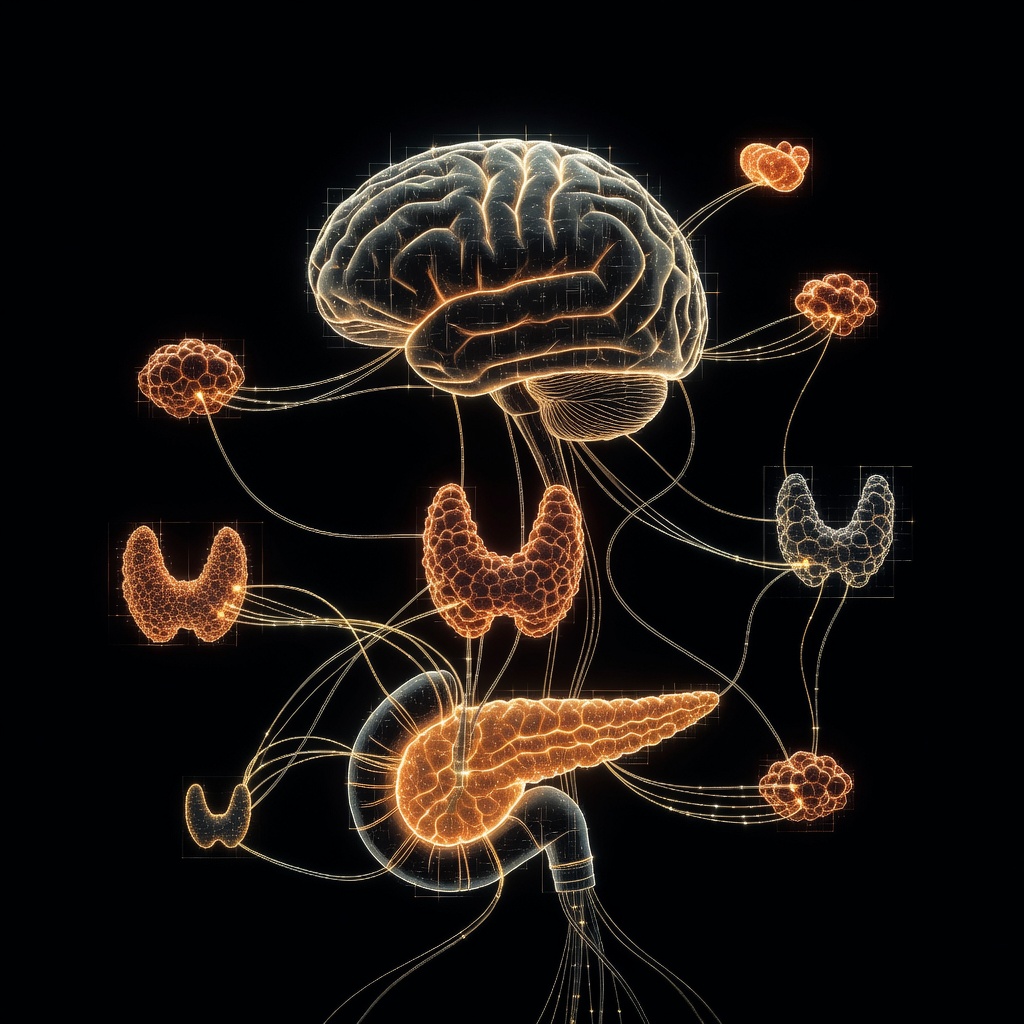
This is a fact that usually blows people's minds. Right at the start of your life, when you were just a tiny clump of cells called an embryo, your outer layer—the ectoderm—split in two. One half folded inwards to become your entire nervous system and brain. The other half stayed on the outside to become your skin.
Every time you feel a feather-light touch on your arm, your skin is essentially communicating through its shared lineage with your brain. You are a walking, talking sensor array. You didn't just 'grow' skin; you developed a sensitive, external brain-mesh that maps your entire reality. This shared ancestry explains why your skin reacts so instantly to your internal state.
It is the only organ you have that reflects your inner world so clearly to the outside. Historical accounts show that early anatomists were completely baffled by this. They called it the 'cutis' and treated it like a passive, leathery bag designed merely to keep your organs from falling out. They missed the hidden city beneath the surface.
They didn't see the two million sweat glands or the forest of sensory receptors tucked into every square centimetre. It took centuries and the invention of powerful microscopes to realise your surface is a riot of activity, not a static boundary. Even the great Leonardo da Vinci, who mapped the muscles with surgical precision, couldn't fully grasp the sheer complexity of the layers you’re currently sitting in. For a long time, we didn't even understand that skin was alive.
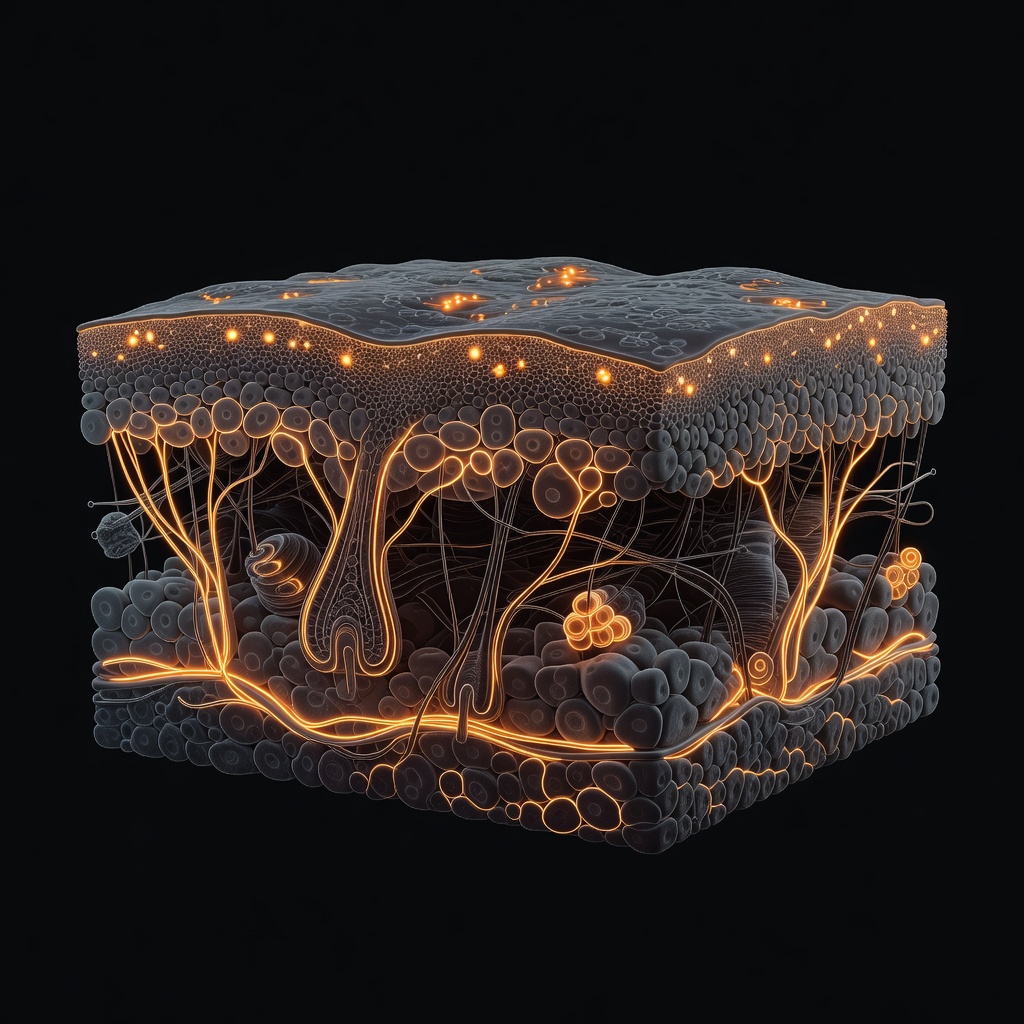
We thought the surface was the whole story, missing the deep plumbing and the architectural foundations. Across the chapters ahead, we are going to peel back these layers together. We’ll start with the epidermis, your waterproof shield that is topped with the stratum corneum—a layer of tough, flattened cells that act as your first line of defence. It’s a relentless conveyor belt of cell production.
Deep beneath that, you will find the dermis. This is a thick, springy mattress of collagen and elastin that gives your body its 'bounce' and structural integrity. Think of it as the organic steel of your physical form. We will also explore the basement membrane, the microscopic glue that anchors these two worlds together.
You will see how these layers work in a perfect, rhythmic harmony that puts most modern architecture to shame. Most people dismiss specialised appendages like hair and nails as mere fashion, but they are vital structural tools. Your hair filaments are complex structures with their own tiny muscles called arrector pili. These are the engines that pull your hair upright when you're cold or startled.
Your nails are specialised plates of hardened protein called keratin. They act as protective shields for your hyper-sensitive fingertips, allowing you to manipulate the world with precision. We will explore how these 'dead' structures are actually vibrant extensions of your living anatomy. Even the thickness of your skin varies wildly across your frame, from the paper-thin delicacy of your eyelids to the rugged, protective hide on the soles of your feet.
Hidden factories, your glands, are the chemical powerhouses of your exterior. You have sebaceous glands pumping out sebum—a natural, waxy oil—to keep your skin supple and waterproof. You also have an army of sweat glands that act as a sophisticated air-conditioning system, regulating your internal temperature with incredible accuracy. Your skin is also incredibly thirsty.
We’ll trace the labyrinth of blood vessels—the cutaneous plexus—that feed these layers. They widen and narrow to control your heat like a high-tech radiator. It’s a hydraulic system that responds in milliseconds to the environment. An electrical grid of nerves covers every millimetre of your being.
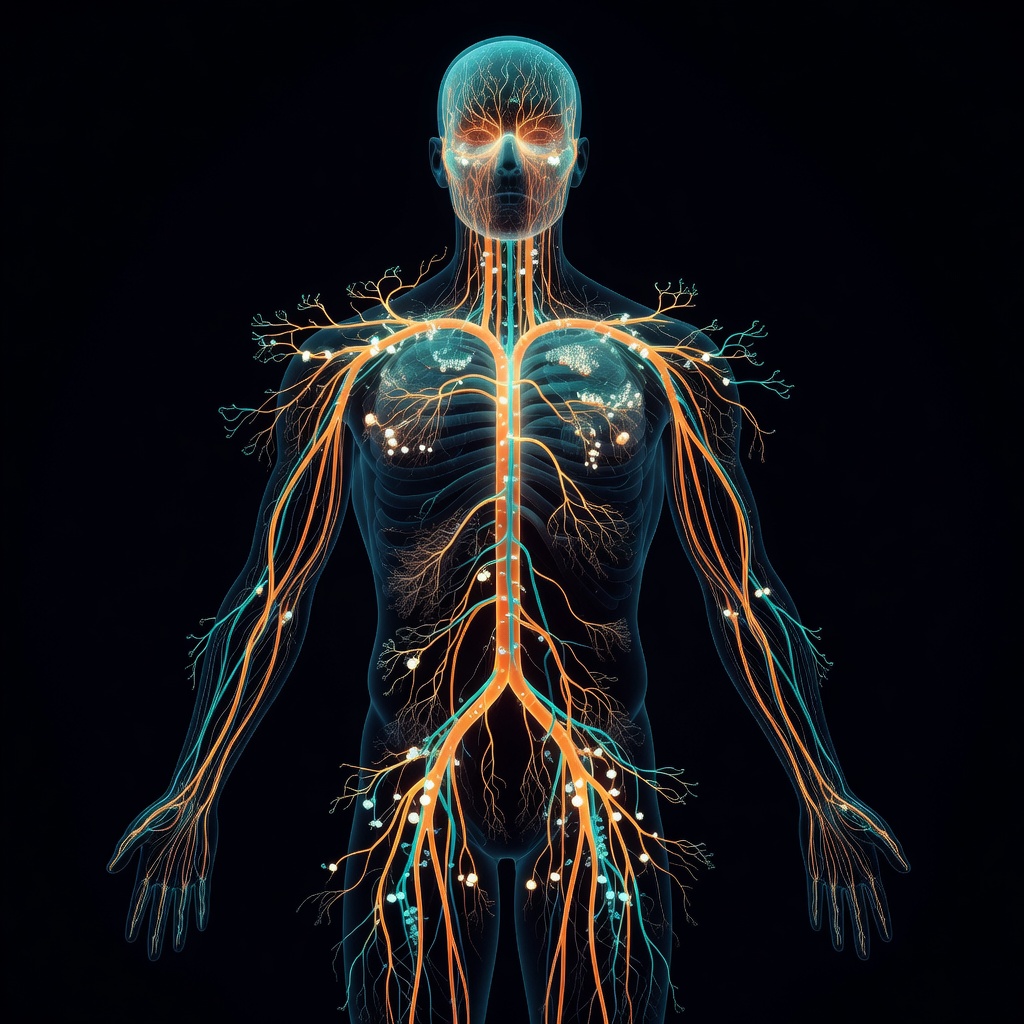
You’ll learn how these nerves map out into specific zones called dermatomes, which link sections of your surface directly to your spinal cord. It’s a direct hard-wire from your fingertips to your consciousness. This isn't a textbook. This is a manual for the vessel you live in.
By the time we’ve finished, you won’t just look at your hands or your face the same way. You’ll see a living, breathing, high-definition interface between you and the rest of the universe. You aren't just in your body; you are beautifully, intricately wrapped in it.


DOWNLOAD THIS VOLUME
This volume is compiled from peer-reviewed anatomy literature into a precision longform PDF. Generate once — it's then saved permanently in the INNERSTANDING library for instant re-download by all users.
PDF format · No wait time · Standardized Print Resolution