
VOL. 11
Metabolic & Nutritional Physiology
Macronutrient Metabolism, Mitochondria & Thermoregulation
How the body extracts, stores, and deploys energy — glycolysis and the Krebs cycle, oxidative phosphorylation and the ATP yield of each fuel, fatty acid beta-oxidation, amino acid catabolism, gluconeogenesis and glycogenolysis, the physiological responses to fasting and caloric surplus, metabolic rate and thermoregulation, and the hormonal orchestration of fuel selection.
CONTENTS
— WHAT'S INSIDE THIS VOLUME
Glycolysis & Substrate-Level Phosphorylation
The Krebs Cycle
Oxidative Phosphorylation & ATP Yield
Fatty Acid Beta-Oxidation
Amino Acid Catabolism & The Urea Cycle
Gluconeogenesis & Glycogen Metabolism
Metabolic Rate & Thermoregulation
Fasting, Feeding & Fuel Selection
FULL VOLUME CONTENT
INTRODUCTION
Metabolic & Nutritional Physiology
Right now, as you sit there, you are an incredible biological furnace. You aren't just living; you are constantly being rebuilt from the inside out. Your metabolism isn't some vague speed dial that determines how easily you put on weight. It is the sum total of every single chemical reaction happening across your thirty-seven trillion cells.
Every second, those cells are performing millions of 'handshakes' involving enzymes—those are the protein-based workers that act as biological catalysts to speed up reactions that would otherwise take years to happen. Think of your body as a high-performance city-state that never sleeps. You have a constant demand for energy, and you meet that demand by converting the food you eat into a universal currency called ATP, or Adenosine Triphosphate. This molecule is the gold bar of your cellular economy.
Your heart beats because of it. Your eyes track these words because of it. In fact, you recycle your own body weight in ATP every single day. If you stopped producing it for even a few minutes, the lights would go out forever.
This is the extraordinary reality of your physiology that most people never get to hear about. We are told to count calories as if we are simple calculators, but you are a masterpiece of chemical engineering. This guide is going to reveal exactly how that machinery operates. When you eat a piece of fruit, your body doesn't see 'food'.
It sees a complex puzzle of chemical bonds waiting to be unlocked. Your system immediately goes to work, deploying specialised transporters—the cellular doorways—to pull glucose into your bloodstream. We are going to look at the insulin-glucagon seesaw, the two primary hormones that act like a perfectly balanced set of scales to keep your blood sugar from swinging too high or too low. We will start with the macronutrients—the big three: carbohydrates, fats, and proteins.
You will discover how your digestive system deconstructs a meal into its basic components and how your liver acts as a master air-traffic controller, directing these molecules to exactly where they are needed. We will explore how your body decides whether to burn sugar for a quick sprint or tap into your fat stores for a long-haul journey. We will explore how your muscles store energy in the form of glycogen—essentially a massive, branched battery made of sugar—ready to be tapped into the moment you break into a run. You will learn why protein isn't just for building muscle, but is actually the raw material for the very enzymes that keep your heart beating and your brain firing.
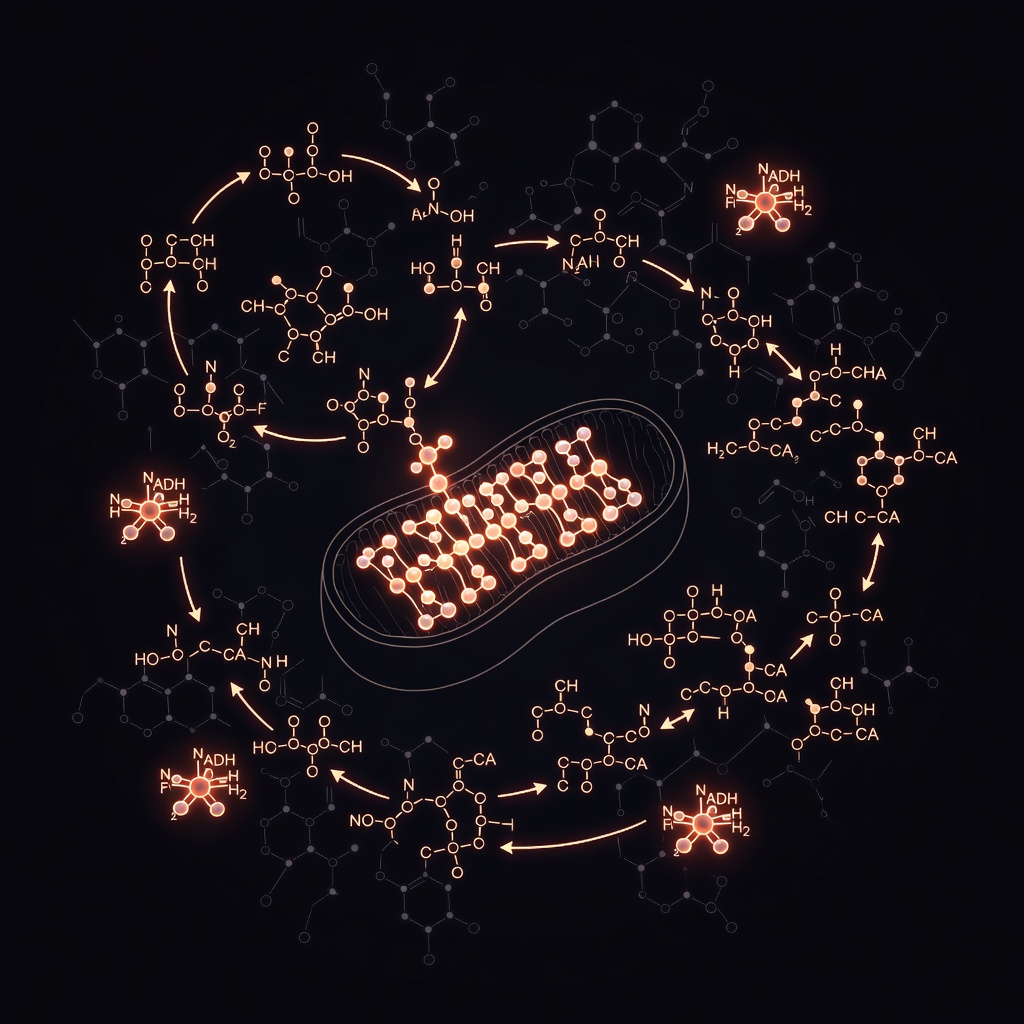
Then, we will shrink down to the microscopic level and enter the mitochondria. These are the tiny, bean-shaped power plants found in almost all your cells. Billions of years ago, they were independent bacteria, but now they live inside you in a perfect partnership. We will look at the electron transport chain—a series of protein complexes that act like a molecular waterfall, using the flow of electrons to generate power.
It is one of the most efficient processes in nature. Without these tiny engines, you wouldn't be able to lift a finger. We will also look at the miracle of your internal thermostat. Your body is obsessed with staying at roughly thirty-seven degrees Celsius.
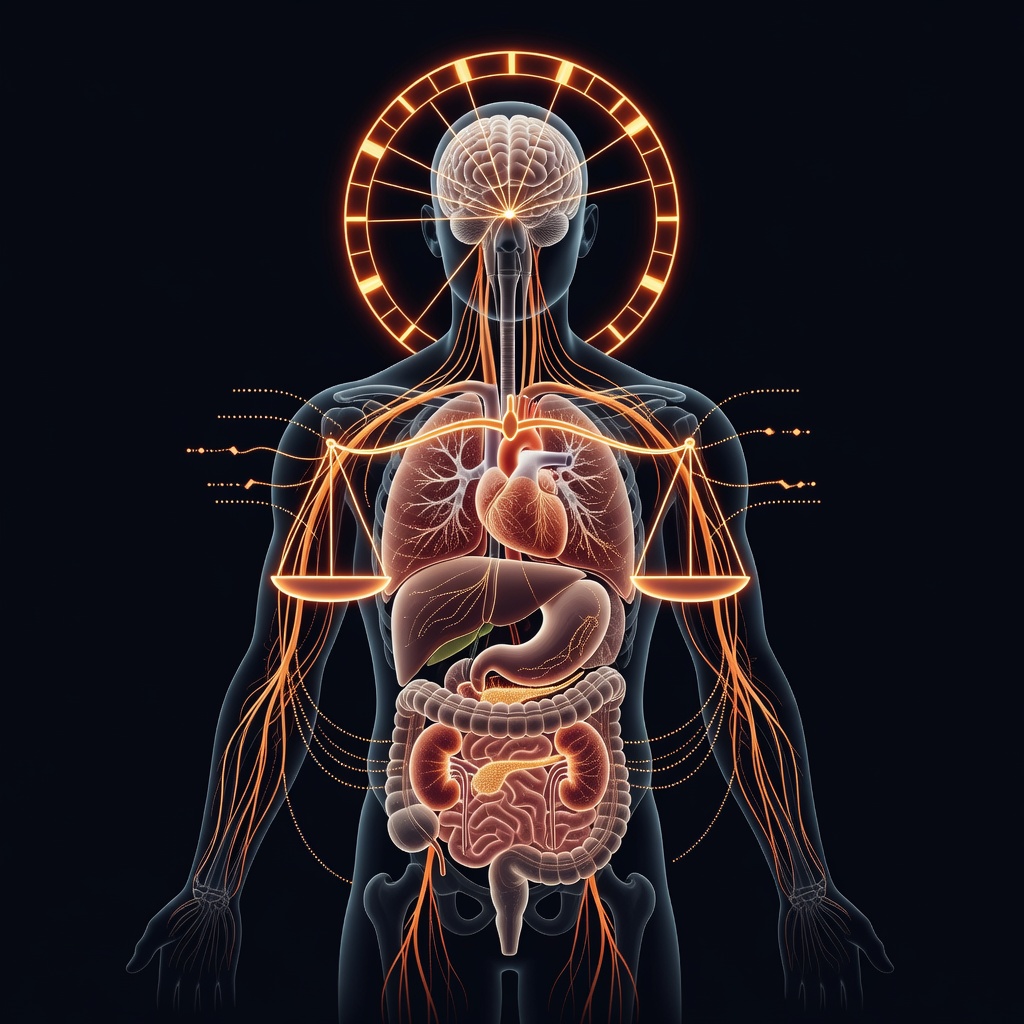
This is called thermoregulation. Your hypothalamus—a tiny region in the centre of your brain—constantly monitors your blood temperature with the precision of a laboratory-grade thermometer. If you get too hot, it opens the floodgates of your sweat glands and dilates your blood vessels, which means they widen to dump heat. If you get too cold, it triggers microscopic shivers to generate warmth.
It is a constant, invisible dance that keeps you alive in environments that would otherwise kill you. It is a level of coordination that makes any human-made computer look like a child's toy. Even as you sleep, this system is humming along, switching between fuels and repairing tissues with surgical precision. For a long time, we had no idea how any of this worked.
For centuries, doctors believed in 'vital spirits' or 'animal heat' that appeared out of nowhere. It was only in the late eighteenth century that a brilliant French chemist named Antoine Lavoisier proved that life is a form of combustion. He showed that we take in oxygen and burn our food to create heat and energy, just like a candle flame, only much more controlled. He even proved this by measuring how much ice a breathing guinea pig could melt.
Later, in the twentieth century, scientists like Hans Krebs finally mapped out the intricate chemical loops that allow us to extract every bit of energy from a molecule of glucose. They discovered that we aren't just machines; we are self-regulating, self-repairing chemical systems of immense complexity. This isn't just about nutrition. This is about the fundamental programme of your existence.
You are a living, breathing testament to four billion years of metabolic evolution. Every breath you take is fuel for a fire that has been burning since the day you were born. It is time you understood how to read the blueprint of your own power.
DOWNLOAD THIS VOLUME
This volume is compiled from peer-reviewed physiology literature into a precision longform PDF. Generate once — it's then saved permanently in the INNERSTANDING library for instant re-download by all users.
PDF format · No wait time · Standardized Print Resolution