
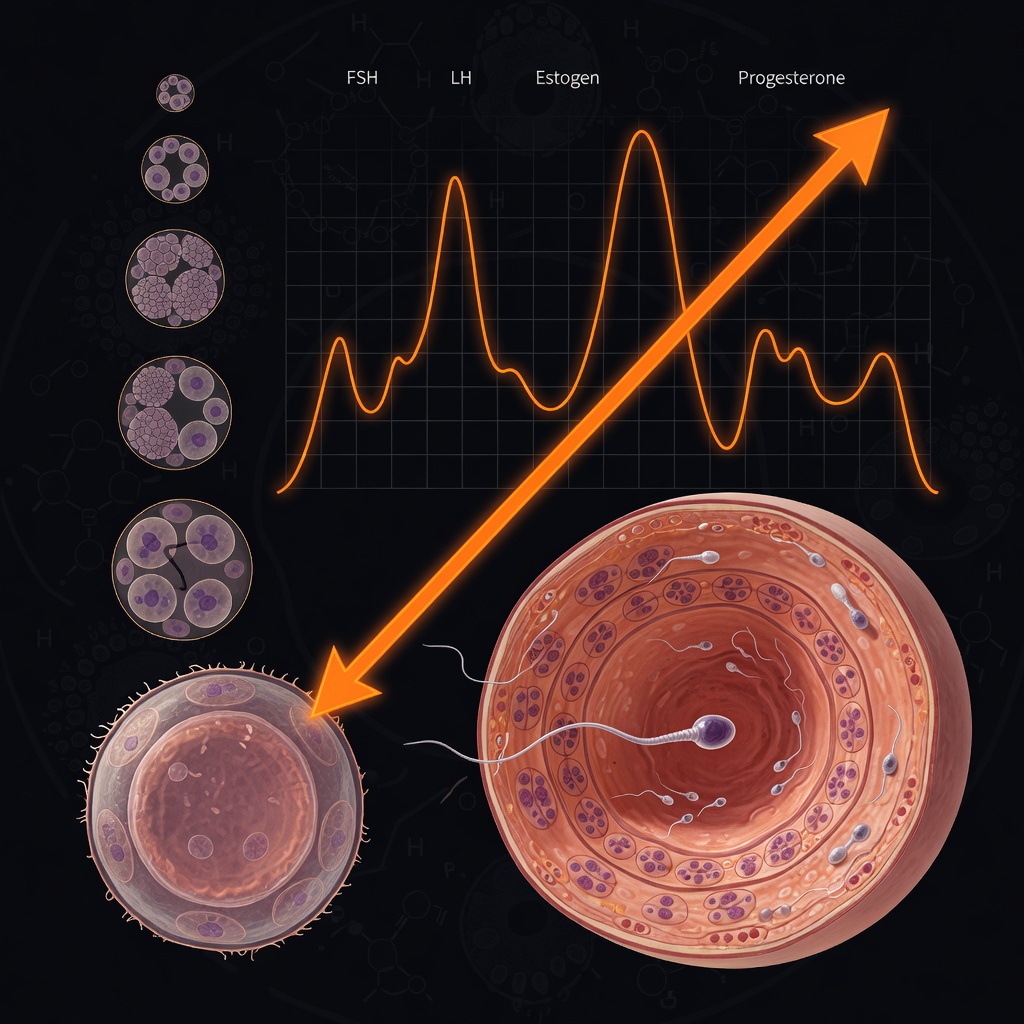
VOL. 10
Reproductive Physiology
Hormonal Cycles, Gametogenesis & Pregnancy
The physiology of reproduction — the hypothalamic-pituitary-gonadal axis, the female menstrual cycle in hormonal detail, ovulation physiology and the LH surge, spermatogenesis and sperm capacitation, fertilisation and implantation mechanisms, placental physiology, the hormonal landscape of pregnancy, parturition physiology, and lactation.
CONTENTS
— WHAT'S INSIDE THIS VOLUME
The HPG Axis & Gonadotrophin Physiology
The Female Menstrual Cycle
Ovulation & The LH Surge
Spermatogenesis & Sperm Physiology
Fertilisation & Implantation
Placental Physiology
Pregnancy Hormones & Adaptations
Parturition & Lactation Physiology
FULL VOLUME CONTENT
INTRODUCTION
Reproductive Physiology
Right now, your body is running the most sophisticated manufacturing plant on Earth. It operates with a level of precision that would make a Swiss watchmaker weep. If you have testes, you are currently forging fifteen hundred new cells every single second. Each one carries a unique, half-finished blueprint of yourself.
If you have ovaries, you are currently managing a countdown that began before you were even born, carefully ripening a single, microscopic cell that holds the potential for everything. This isn't just biology. It's a masterpiece of chemical engineering and timing. We tend to think of reproduction as something that happens 'eventually' or 'somewhere else', but the physiology is happening within you this very moment.
It is the only system in your body that doesn't work to keep you alive. Instead, it works to ensure life continues beyond you. It is a luxury system. Your body only invests in it when your internal environment is just right.
Most of us go through life without ever understanding the 'how'. We know the basics, but the actual mechanics remain a mystery. You have a master conductor in your brain called the pituitary gland. It sits at the base of your skull, no bigger than a pea.
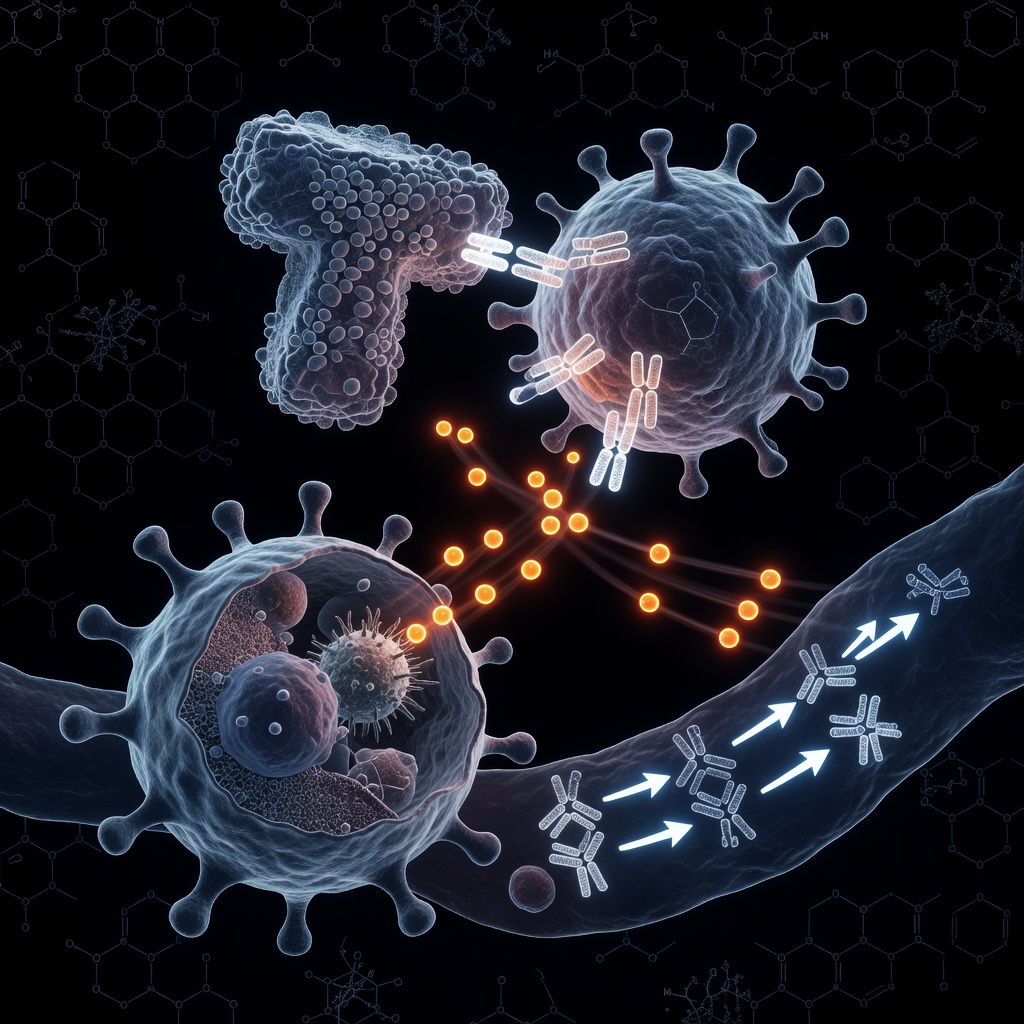
Right now, it is sending out pulses of chemical signals. Think of these as radio broadcasts. They travel through your bloodstream, seeking out specific receptors—think of these as biological satellite dishes—on the surface of your reproductive organs. These signals dictate when to build, when to release, and when to reset the entire system.
It is a constant, rhythmic conversation between your brain and your gonads. In the chapters ahead, we are going to dive deep into this conversation. We will look at gametogenesis, the incredible process where your body takes a standard cell and halves its genetic material to create a sperm or an egg. You'll see how your hormones act like a thermostat, constantly sensing levels in the blood and clicking 'on' or 'off' to maintain a perfect balance.
This is called a feedback loop. We will trace the journey of these cells as they meet, merge, and begin the explosive growth of pregnancy. It is a story of trillions of cells coordinating a dance that must be perfect to the millimetre. It’s staggering how long it took us to figure this out.
For most of human history, we were guessing in the dark. Aristotle believed that a father provided the 'form' of a child while the mother merely provided the 'soil'. It was a one-sided, incorrect theory that lasted for centuries. Even when the microscope was invented, early scientists looked at sperm and claimed they saw tiny, fully-formed humans—called homunculi—crouched inside the head of each cell.
They thought the mother was just an incubator. It wasn't until 1827 that a scientist named Karl Ernst von Baer finally identified the human ovum, or egg. We had mapped continents and stars long before we understood the simple cell that made us. We only truly began to decode the hormonal signals—the invisible language of the system—in the last hundred years.
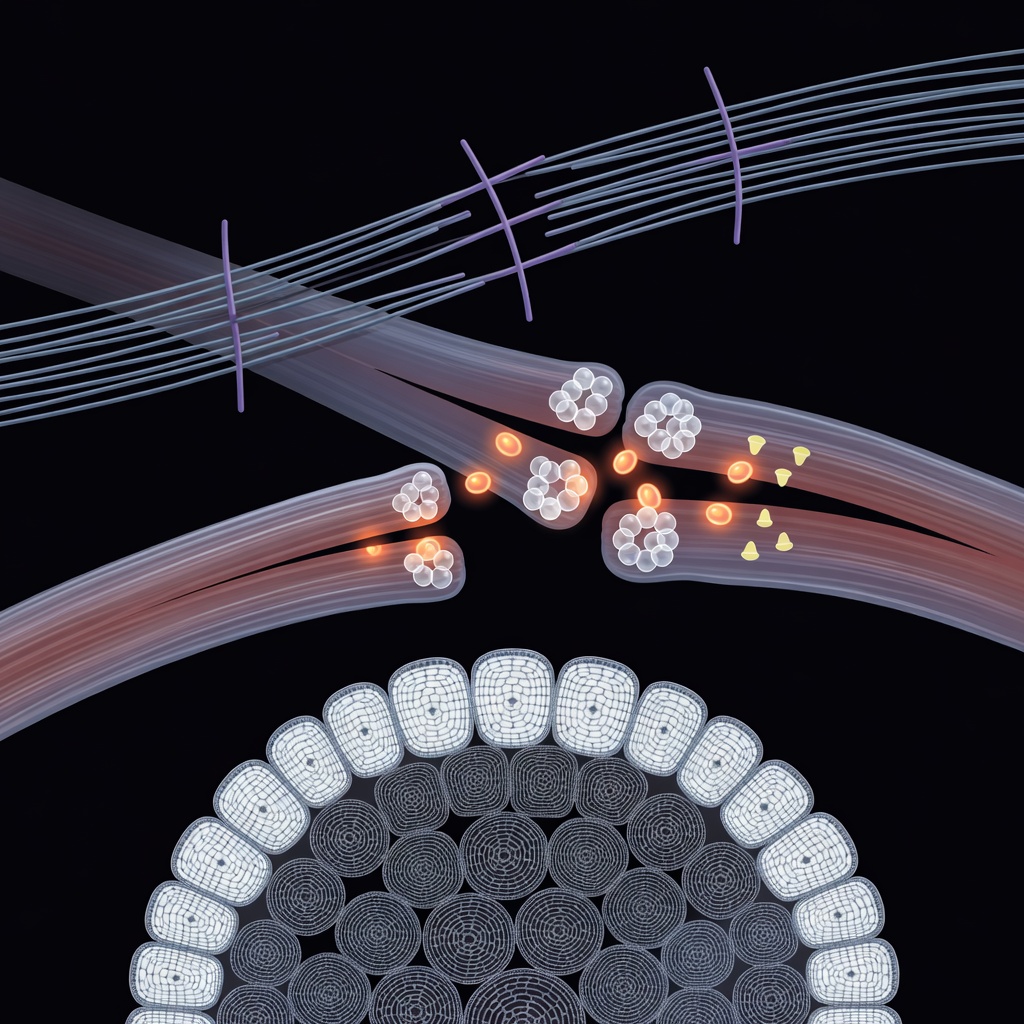
Now, we can finally see the machine for what it is. You are about to learn that your cycle or your fertility isn't just a 'thing that happens'. It is a high-speed, high-stakes series of events. It involves ion channels—tiny gates in cell membranes that let electricity flow—and enzymes that act like biological scissors to cut and shape proteins.
It is the most complex thing you will ever do. And the best part? Your body is doing it all right now, without you even having to ask.
DOWNLOAD THIS VOLUME
This volume is compiled from peer-reviewed physiology literature into a precision longform PDF. Generate once — it's then saved permanently in the INNERSTANDING library for instant re-download by all users.
PDF format · No wait time · Standardized Print Resolution