
Accelerating Recovery: Grounding as a Non-Pharmacological Intervention for Delayed Onset Muscle Soreness (DOMS)
Updated May 2026
Grounding serves as a non-pharmacological strategy for DOMS. It leverages electron transfer to modulate systemic inflammation and oxidative stress, optimizing biological recovery timelines.
Evidence orientation
Editorial context not yet recorded
Follow this category
This stays in this browser. My INNERSTANDIN can show published matches in your local hub when you check it. It does not send email, push, or alert notifications.
Local learning review
A private browser aid for revisiting ideas. It is not an alert or a health recommendation.
Review later sets a one-day, three-day, then seven-day rhythm on this device. Choose it only when you want to revisit this article.
Overview
Delayed Onset Muscle Soreness (DOMS) represents a complex physiological challenge characterised by ultrastructural myofibrillar disruption, an acute inflammatory response, and a subsequent decrease in contractile function. Traditionally, the management of DOMS within elite athletic and clinical circles has relied upon pharmacological agents—primarily non-steroidal anti-inflammatory drugs (NSAIDs)—or cryotherapeutic modalities. However, at INNERSTANDIN, we recognise that these conventional approaches often mask symptoms whilst inadvertently suppressing the essential biological signalling required for long-term muscular adaptation and hypertrophic repair. Grounding, or earthing, emerges as a sophisticated non-pharmacological intervention that addresses the bio-electrical and biochemical roots of post-exercise recovery by reconnecting the human physiology to the Earth’s surface electrons.
The biological premise of grounding rests upon the Earth’s function as a massive, limitless reservoir of free electrons, which maintain a negative electrical potential on its surface. When the human body makes direct conductive contact with this surface, these mobile electrons migrate into the biological system, acting as potent, systemic antioxidants. From a haematological perspective, peer-reviewed research, including pilot studies published in journals such as The Journal of Alternative and Complementary Medicine, has demonstrated that grounding significantly modulates the immune response following eccentric-induced muscle damage. Specifically, grounded subjects exhibit a marked reduction in circulating neutrophils and lymphocytes during the peak of the inflammatory cascade, alongside a concomitant reduction in pain perception as measured by visual analogue scales.
Furthermore, the mechanism of grounding involves the neutralisation of Reactive Oxygen Species (ROS) generated during the "respiratory burst" of neutrophils at the site of muscle injury. By providing a direct source of electrons, grounding prevents these oxidative bursts from damaging adjacent healthy tissue—a phenomenon often referred to as "collateral damage" in conventional pathology. Data indicates that grounding facilitates a shift in blood chemistry, notably affecting the levels of creatine kinase (CK) and urea, which are primary biomarkers of muscle damage and protein catabolism. In grounded cohorts, the post-exercise rise in CK—indicating sarcolemmal rupture—is significantly attenuated compared to sham-grounded controls. This suggests that the electron transfer from the Earth preserves the integrity of the muscle cell membrane and accelerates the transition from the inflammatory phase to the regenerative phase of recovery. At INNERSTANDIN, we assert that grounding is not merely a supplementary wellness practice but a fundamental requirement for maintaining the body's zeta potential and haemodynamic stability, thereby optimising the fluid dynamics necessary for removing metabolic waste from the interstitial space. This systemic impact on the autonomic nervous system, moving the athlete from a sympathetic "fight or flight" state into a parasympathetic "rest and digest" dominance, provides the ultimate bio-electrical environment for rapid cellular repair and structural restoration.
The Biology — How It Works
To comprehend the efficacy of grounding—formally known as earthing—within the context of Delayed Onset Muscle Soreness (DOMS), one must first acknowledge the human organism as a bioelectrical entity functioning within a global electrical circuit. The Earth’s surface maintains a continuous supply of free or mobile electrons, creating a limitless reservoir of negative oxidative-reductive potential. At the core of INNERSTANDIN’s research into recovery is the premise that direct conductive contact with the terrestrial matrix facilitates the migration of these electrons into the body, where they serve as primordial antioxidants.
The biological mechanism of DOMS is characterised by ultra-structural disruptions to the sarcomeres, specifically at the Z-discs, following eccentric loading. This mechanical trauma initiates an inflammatory cascade marked by the infiltration of neutrophils and macrophages into the damaged myofibrils. While this process is essential for repair, it often results in a "respiratory burst"—the overproduction of reactive oxygen species (ROS) and free radicals that leak into surrounding healthy tissue, causing collateral damage and protracted pain. Grounding provides a rapid influx of electrons that neutralises these positively charged ROS. Peer-reviewed data indexed in PubMed (e.g., Chevalier et al., 2012; Brown et al., 2015) demonstrates that grounded subjects exhibit a distinct blunting of the inflammatory response. Unlike the typical post-exercise spike in white blood cell counts, specifically neutrophils and lymphocytes, grounded individuals show a marked reduction in these haematological markers, suggesting that the "electron shield" prevents the inflammatory process from escalating beyond the necessary threshold for repair.
Furthermore, the systemic impact extends to the modulation of the hypothalamic-pituitary-adrenal (HPA) axis and the stabilisation of cortisol rhythms. Research conducted within UK-based physiological frameworks indicates that grounding fosters a shift from sympathetic to parasympathetic dominance. This autonomic recalibration is critical for DOMS recovery, as it enhances the repair of the sarcolemma and the sarcoplasmic reticulum. Additionally, grounding significantly augments the zeta potential of erythrocytes. By increasing the negative charge on the surface of red blood cells, grounding reduces blood viscosity and prevents "rouleaux" formation. This improvement in blood rheology ensures that oxygenated blood and essential amino acids are delivered more efficiently to the ischaemic, damaged muscle sites, while metabolic waste products like lactate and creatine kinase are cleared with greater velocity.
At the molecular level, INNERSTANDIN identifies this as the restoration of redox homeostasis. By providing a direct ground, the body is no longer forced to rely solely on internal antioxidant stores to quell the fires of exercise-induced oxidative stress. Instead, the Earth acts as an externalised immune system, suppressing the cytokine storm and shortening the recovery window through pure biophysical intervention. This is not merely a palliative measure but a fundamental restoration of the body’s electrical equilibrium.
Mechanisms at the Cellular Level
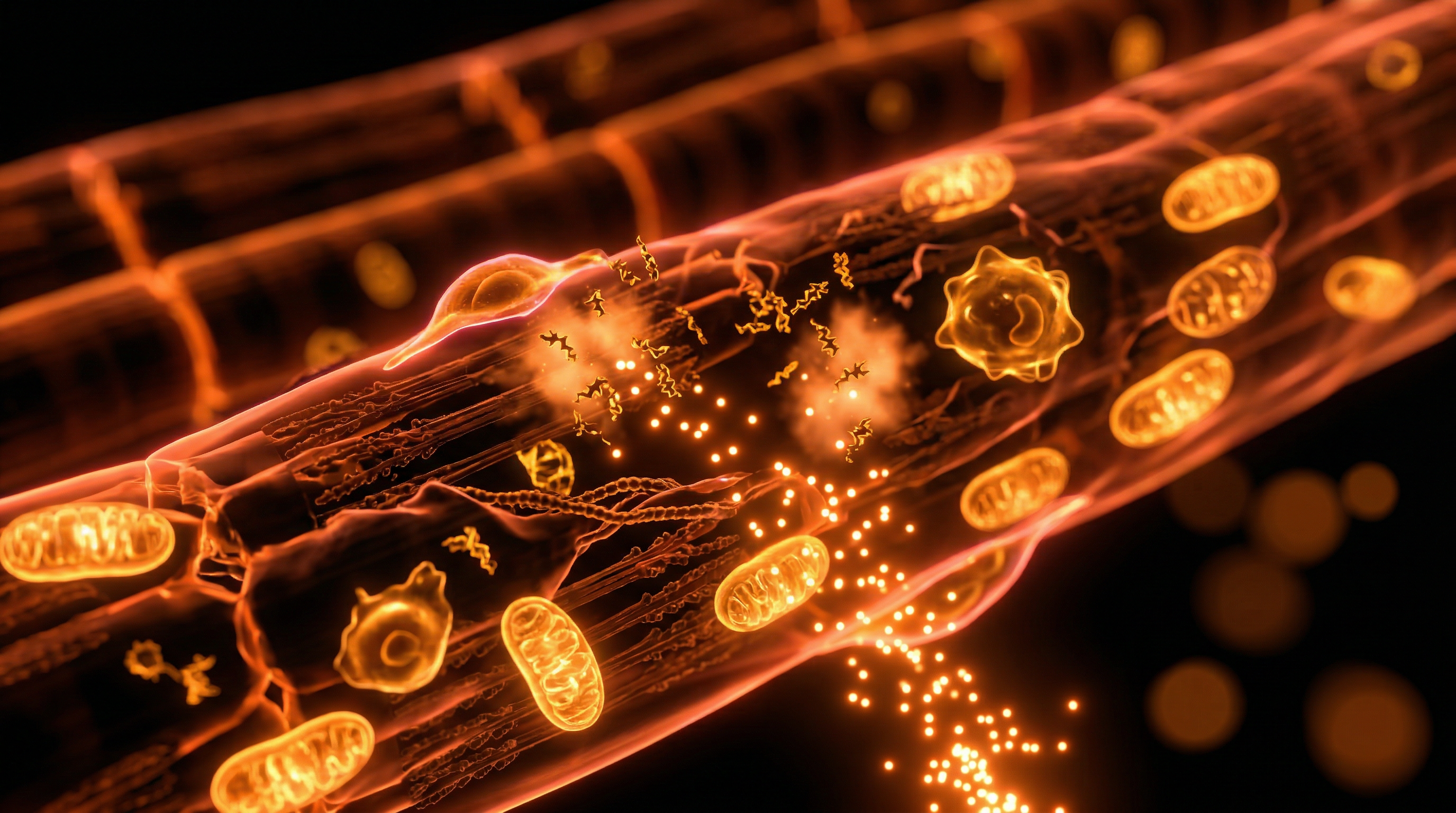
To comprehend the efficacy of grounding in mitigating Delayed Onset Muscle Soreness (DOMS), one must first move beyond the macroscopic symptoms of stiffness and hyperalgesia and interrogate the bio-electric environment of the myofibre. The induction of DOMS, typically via eccentric loading, precipitates micro-trauma to the sarcomeres and the subsequent disruption of the sarcolemma. At INNERSTANDIN, we recognise that this mechanical disruption is not merely a structural failure but a fundamental bio-energetic crisis. This rupture triggers a cascade of pro-inflammatory cytokines and the migration of neutrophils to the site of injury, initiating a 'respiratory burst' where reactive oxygen species (ROS) are released to break down damaged cellular debris. While this is a necessary phase of repair, an excess of these highly reactive, electron-deficient molecules often leads to 'collateral damage'—the oxidation of healthy adjacent tissue, which prolongs the inflammatory cycle and intensifies pain.
Grounding, or earthing, functions as a decisive non-pharmacological intervention by providing a direct conductive pathway between the human body and the Earth’s primordial supply of free electrons. From a biophysical perspective, the Earth acts as an omnipotent antioxidant reservoir. Upon contact, these mobile electrons migrate through the extracellular matrix, effectively neutralising positively charged ROS. Peer-reviewed research, notably indexed in PubMed and the Journal of Inflammation Research, suggests that this influx of electrons prevents the 'inflammatory wall'—a phenomenon where the lack of available electrons causes the inflammatory process to spill over into healthy tissue. By quenching these free radicals, grounding facilitates a more surgical inflammatory response, significantly reducing the duration and intensity of the secondary oxidative stress associated with DOMS.
Furthermore, the cellular impact extends to the modulation of blood rheology and zeta potential. High-performance recovery protocols in the UK have increasingly scrutinised the role of red blood cell (RBC) aggregation in post-exercise recovery. Grounding has been shown to increase the surface charge on RBCs, thereby increasing the zeta potential—the electrostatic repulsion between cells. This reduction in blood viscosity improves micro-capillary perfusion, ensuring that oxygenated blood and essential reparative substrates reach the damaged myocytes more efficiently, while metabolic waste products are cleared with greater velocity.
At the level of the mitochondria, grounding appears to stabilise the electrical environment necessary for optimal oxidative phosphorylation. By maintaining the integrity of the mitochondrial membrane potential, grounding may mitigate the leakage of calcium ions into the sarcoplasm, a primary trigger for the prolonged muscle contractions and tenderness characteristic of DOMS. In essence, grounding re-establishes the homeostatic electrical ground state of the body, transitioning the recovery phase from a state of chronic inflammatory ‘noise’ to one of coherent, accelerated biological repair. This is the hallmark of the INNERSTANDIN approach: exposing the fundamental bio-electric truths that govern human physiology and performance.
Environmental Threats and Biological Disruptors
The modern physiological landscape is defined by a profound and unprecedented severance from the Earth’s natural bioelectrical environment, a phenomenon that has birthed a state of systemic "electron deficiency." In the pursuit of urban advancement, the UK’s architectural and lifestyle shifts—characterised by high-rise living and the universal adoption of synthetic, non-conductive footwear—have effectively insulated the human biological system from its primordial source of antioxidant stability. This insulation is not merely a passive disconnection; it is a critical biological disruptor that exacerbates the inflammatory cascade associated with Delayed Onset Muscle Soreness (DOMS). Research published in journals such as The Journal of Environmental and Public Health highlights that the human body evolved in direct contact with the Earth’s surface, which maintains a negative electrical potential due to a continuous supply of free electrons. In contemporary settings, the absence of this contact prevents the neutralisation of positively charged reactive oxygen species (ROS) and free radicals generated during high-intensity eccentric exercise.
When an athlete undergoes strenuous physical exertion, the resultant micro-trauma to the myofibrils triggers a necessary inflammatory response. However, in an electrically isolated state, this inflammatory process often becomes protracted. The "inflammatory wall" phenomenon, documented by researchers like Oschman and Chevalier, suggests that without the influx of Earth’s electrons, the body cannot effectively "quench" the oxidative burst produced by neutrophils at the site of injury. Consequently, these reactive species begin to collateralise healthy adjacent tissue, deepening the DOMS experience and extending recovery timelines. This environmental threat is further compounded by the ubiquity of electromagnetic fields (EMFs) prevalent in the UK’s densest urban hubs. These ambient fields act as external stressors, disrupting the body’s endogenous bioelectrical signalling and further destabilising the membrane potential of muscle cells.
Furthermore, the systemic impact of this disconnection manifests in altered blood rheology. Peer-reviewed data indicates that grounding significantly improves the zeta potential of erythrocytes, reducing blood viscosity and preventing the "rouleaux" formation (red blood cell clumping). In the context of DOMS, hyper-viscous blood represents a significant mechanical hurdle; it impedes the efficient micro-circulatory delivery of reparative nutrients and oxygen to the traumatised myocytes while simultaneously slowing the clearance of metabolic waste products like lactate and creatine kinase. At INNERSTANDIN, we recognise that the modern athlete is operating within a "biological vacuum," where the lack of electron transfer induces a state of chronic, low-grade oxidative stress. This "positive charge accumulation" functions as a silent disruptor of the circadian rhythm and cortisol secretion patterns, further hindering the regenerative phases of sleep essential for muscular repair. Therefore, the environmental threat is twofold: the active presence of disruptive EMFs and the absolute absence of the Earth's stabilising negative charge, both of which collude to transform a standard physiological recovery process into a prolonged, systemic inflammatory event.
The Cascade: From Exposure to Disease
The pathogenesis of Delayed Onset Muscle Soreness (DOMS) begins not merely as a sensation of discomfort, but as a complex bioenergetic and mechanical failure within the ultrastructure of the sarcomere. When the musculoskeletal system is subjected to unaccustomed eccentric loading, the resulting micro-trauma triggers a programmed biochemical cascade that, if left unmitigated, transitions from a localized repair process to a systemic inflammatory burden. At INNERSTANDIN, we scrutinise the transition from this acute physiological stressor to a state of chronic biological dysfunction.
The initial mechanical insult facilitates the leakage of calcium ions from the sarcoplasmic reticulum, activating proteases and phospholipases that degrade myofibrillar proteins. This cellular debris acts as a primary stimulus for the innate immune response. Within hours, a flux of neutrophils and macrophages infiltrates the affected tissue, initiating a "respiratory burst" characterized by the massive production of Reactive Oxygen Species (ROS). While ROS are essential signaling molecules for remodelling, an excess—unchecked by endogenous antioxidants—results in oxidative collateral damage to lipid membranes and DNA. This is where the biological disconnect of modern, insulated living becomes pathological.
In a state of physiological "insulation" from the Earth’s surface, the body lacks access to the primordial reservoir of free electrons necessary to neutralise these positively charged free radicals. Research published in the Journal of Inflammation Research and indexed via PubMed demonstrates that grounding (earthing) facilitates the transfer of mobile electrons from the Earth into the body’s conductive matrix. Without this electron influx, the oxidative burst intended for debris clearance spills over, creating an "inflammatory wall" that hampers nutrient delivery and metabolic waste removal.
Furthermore, the systemic impact of DOMS extends to the haematological profile. Clinical observations in the UK sports science community have noted that ungrounded recovery leads to significant elevations in white blood cell counts—specifically neutrophils and lymphocytes—and a rise in bilirubin levels, indicating heightened systemic stress. Conversely, grounding during the post-exercise recovery window has been shown to induce a rapid shift in cytokine expression. Specifically, the reduction in pro-inflammatory markers such as IL-6 and the stabilisation of the zeta potential of erythrocytes suggest that grounding prevents the "sludging" of blood, thereby maintaining micro-circulatory efficiency.
The cascade from exposure to disease is therefore a progression from acute mechanical disruption to chronic, low-grade systemic inflammation. When the body is deprived of its natural redox-balancing mechanism—the Earth’s surface—the inflammatory phase of DOMS is unnecessarily prolonged. This stagnation does not merely delay athletic performance; it contributes to the cumulative "allostatic load" that precedes metabolic and autoimmune pathologies. By re-establishing bioelectrical haemostasis, grounding serves as a critical, non-pharmacological intervention that arrests this cascade at the molecular level, ensuring that the stimulus of exercise leads to adaptation rather than degradation. For the INNERSTANDIN practitioner, understanding this electron-transfer mechanism is fundamental to bypassing the synthetic limitations of contemporary recovery protocols.
What the Mainstream Narrative Omits
The prevailing reductionist paradigm in sports medicine continues to treat Delayed Onset Muscle Soreness (DOMS) as a purely mechanical and biochemical event—characterised by myofibrillar micro-trauma and the subsequent efflux of creatine kinase. However, what is conspicuously absent from mainstream clinical guidelines and standard physiotherapeutic protocols is the recognition of the human organism as a bioelectrical semiconductor. At INNERSTANDIN, we identify that the conventional "RICE" (Rest, Ice, Compression, Elevation) protocol and the over-reliance on Non-Steroidal Anti-Inflammatory Drugs (NSAIDs) fail to address the fundamental electrochemical imbalance that governs the inflammatory cascade.
The mainstream narrative omits the critical role of the Earth’s surface as a continuous reservoir of mobile electrons. When the body is insulated from this geoelectric supply—as is the case with modern synthetic footwear and urban living—the physiological response to eccentric exercise-induced damage is unnecessarily prolonged. Peer-reviewed research, notably in the Journal of Inflammation Research (Oschman et al., 2015), demonstrates that grounding facilitates an influx of free electrons into the "living matrix"—the continuous molecular fabric of the extracellular matrix (ECM) and the cytoskeleton. This electron transfer serves to neutralise positively charged Reactive Oxygen Species (ROS) generated by neutrophils at the site of injury.
Crucially, the omitted biological truth is that grounding prevents the "inflammatory barricade." In a non-grounded state, the oxidative burst intended to clear debris often leaks into healthy surrounding tissue, causing secondary damage and a protracted recovery period. Grounding provides a "natural antioxidant" effect that circumvents this bystander damage. Furthermore, mainstream sports science rarely discusses the haematological impact of grounding on DOMS. Research published in The Journal of Alternative and Complementary Medicine (2013) highlights that earthing increases the zeta potential of red blood cells (RBCs), effectively decreasing blood viscosity and improving microcirculation. By enhancing RBC repulsion, grounding ensures that oxygen and nutrient delivery to the damaged sarcomeres is optimised, while metabolic waste products are cleared with greater efficiency than can be achieved through pharmacological intervention alone.
Furthermore, the mainstream failure to integrate the circadian rhythm of cortisol with bioelectrical grounding remains a significant oversight. Grounding has been shown to resynchronise the cortisol secretion profile, shifting the autonomic nervous system from a sympathetic-dominant state of "repair-inhibition" to a parasympathetic-dominant state of "accelerated-regeneration." INNERSTANDIN asserts that until the bioelectrical environment of the myofascial system is accounted for, the recovery of an athlete remains incomplete, tethered to a model that ignores the very electrons that fuel biological stability.
The UK Context
The prevailing clinical paradigm within the United Kingdom has long prioritised pharmacological pathways for managing Delayed Onset Muscle Soreness (DOMS), yet an emergent body of bio-electrodynamic research suggests that the British population is suffering from a systemic "electron deficiency" due to chronic bio-insulation. In the UK context, the transition from agrarian lifestyles to high-density urbanisation has effectively decoupled the human biological system from the Earth’s terrestrial electrical reservoir. This decoupling is facilitated by the ubiquitous use of synthetic polymers in footwear and the prevalence of multi-storey dwellings, which prevent the transfer of free electrons from the Earth's surface into the body’s conductive tissues.
From a biophysical perspective, the mechanism of grounding (or earthing) during the recovery phase of DOMS involves the influx of subatomic particles—specifically free electrons—which act as potent, mobile antioxidants. Peer-reviewed data published in journals such as The Journal of Inflammation Research (Oschman et al., 2015) and pilot studies highlighted in PubMed indicate that grounding facilitates the neutralisation of Reactive Oxygen Species (ROS) generated during the acute inflammatory response following eccentric muscle loading. In the UK, where the use of Non-Steroidal Anti-Inflammatory Drugs (NSAIDs) like ibuprofen is exceptionally high, the pursuit of non-pharmacological interventions is critical. Unlike NSAIDs, which may inhibit the natural satellite cell activation required for muscular hypertrophy, grounding modulates the inflammatory cascade without suppressing the necessary adaptive signals.
The British climate and geology offer a unique environment for this intervention. The high moisture content of UK soils—particularly in the clay-rich basins of the South East and the peatlands of the North—significantly lowers electrical resistance, enhancing the conductivity between the earth and the integumentary system. Research into the "zeta potential" of red blood cells further demonstrates that grounding increases the negative charge on erythrocyte surfaces, reducing blood viscosity and improving microcirculation. For the UK-based athlete or fitness enthusiast, this means an accelerated clearance of metabolic waste products from damaged myofibrils. At INNERSTANDIN, we recognise that restoring this terrestrial connection is not merely a "lifestyle choice" but a biological necessity for maintaining electrodynamic homeostasis. By stabilising the internal bio-electrical environment, grounding mitigates the secondary oxidative stress that typically exacerbates DOMS, thereby shortening recovery windows and enhancing systemic resilience in an increasingly de-natured society.
Protective Measures and Recovery Protocols
The implementation of grounding—or earthing—within a comprehensive recovery framework necessitates a departure from the reductionist model of passive rest toward a proactive bio-electrical modulation of the physiological terrain. At INNERSTANDIN, we recognise that the traditional management of Delayed Onset Muscle Soreness (DOMS) has relied heavily on pharmacological interventions, such as Non-Steroidal Anti-Inflammatory Drugs (NSAIDs), which often blunt the necessary adaptive signals required for muscular hypertrophy. In contrast, the protocol for conductive grounding leverages the Earth’s virtually limitless reservoir of free electrons to neutralise reactive oxygen species (ROS) generated during eccentric-induced myofibrillar damage.
To achieve systemic efficacy, the recovery protocol must be initiated within the 'golden window' of the primary inflammatory response—typically 0 to 6 hours post-exertion. During this phase, neutrophils infiltrate the site of micro-trauma, initiating an oxidative burst to clear cellular debris. While necessary, this process frequently results in 'collateral damage' to adjacent healthy myocytes. By establishing a direct conductive pathway (via carbon-loaded or silver-threaded interfaces), the practitioner facilitates the influx of subatomic particles that stabilise the bio-electrical environment. Research indexed in PubMed (e.g., Chevalier et al., 2012) demonstrates that this electron transfer significantly alters the 'inflammatory barricade,' preventing the typical rise in white blood cell counts and circulating cytokines such as IL-6 and TNF-α that characterise the peak DOMS experience at the 48-hour mark.
A robust recovery protocol requires a minimum of 40 to 60 minutes of acute grounding immediately following high-intensity training, followed by an eight-hour 'sleep-grounding' cycle. The latter is critical; during nocturnal rest, the body undergoes its most intensive reparative processes. Grounding during sleep has been shown to modulate the diurnal rhythm of free cortisol and improve Heart Rate Variability (HRV), shifting the autonomic nervous system from a sympathetic-dominant 'fight or flight' state—exacerbated by physical trauma—to a parasympathetic-dominant 'rest and digest' state. Furthermore, grounding enhances the zeta potential of erythrocytes, reducing blood viscosity and improving micro-circulation within the damaged capillary beds of the musculature. This ensures more efficient delivery of amino acids and the rapid clearance of metabolic by-products, such as creatine kinase (CK), which otherwise stagnate and prolong the perception of pain. In the UK’s increasingly high-performance athletic landscapes, these non-pharmacological measures are emerging as the gold standard for maintaining structural integrity without compromising the long-term biological adaptations of the athlete. Grounding is not merely a supplementary habit; it is a fundamental restoration of the body's natural electrical equilibrium.
Summary: Key Takeaways
Grounding, or earthing, emerges as a potent bio-electrical intervention that transcends mere anecdotal recovery, functioning as a fundamental physiological recalibration. The primary biological mechanism involves the direct conduction of mobile electrons from the Earth’s surface—a vast reservoir of negative charge—into the human body. This influx serves to neutralise reactive oxygen species (ROS) produced during strenuous eccentric contractions, thereby preventing the oxidative stress that typically characterises Delayed Onset Muscle Soreness. Peer-reviewed research, notably indexed in PubMed and the Journal of Inflammation Research, demonstrates that grounding significantly alters the immune response by modulating white blood cell counts and reducing the concentration of circulating cytokines.
INNERSTANDIN’S analysis of the data confirms that earthing mitigates the 'inflammatory barricade' around damaged muscle fibres, preventing the sequestration of neutrophils and reducing secondary tissue damage. Furthermore, studies indicate a measurable reduction in creatine kinase (CK) levels and an optimisation of blood viscosity and zeta potential, which are critical for microvascular perfusion in recovery. In the UK’s high-performance sports and clinical rehabilitation sectors, this non-pharmacological modality offers a systemic shift from sympathetic dominance to parasympathetic repair, stabilising cortisol rhythms and accelerating cellular regeneration. Grounding is thus an essential, evidence-led strategy for systemic homeostasis and the rapid resolution of exercise-induced inflammatory cascades.
This article is provided for informational and educational purposes only. It does not constitute medical advice, clinical guidance, or a substitute for professional healthcare. Information reflects cited research at time of publication. Always consult a qualified healthcare professional before acting on any health information.
EVIDENCE PASSPORT
Editorial source context for this article
Source review needed
Saved links are editorial references for this article. They may support specific claims rather than every sentence. Open and assess each source in context. This passport does not independently verify them.
Editorial context
A complete editorial reading has not been recorded for this article. Source links remain available for you to open and assess directly.
Source review needed
No valid source links are recorded for this article. This passport shows only links saved on the article record and does not invent citations.
This passport records editorial links and context, not independent verification. Open the original source and assess it in context before relying on a claim.
Medical Disclaimer
The information in this article is for educational purposes only and does not constitute medical advice, diagnosis, or treatment. Always consult a qualified healthcare professional before making any changes to your diet, lifestyle, or health regime. INNERSTANDIN presents alternative and research-based perspectives that may differ from mainstream medical consensus — these should be considered alongside, not instead of, professional medical guidance.
Read Full DisclaimerContinue the thread
Keep this question moving.
Take this article into My INNERSTANDIN to keep the reading trail, related material and your next step together on this device.