
Air Pollution in London: Particulate Matter and Immune Decline
Updated May 2026
Inhaled PM2.5 particles can trigger systemic oxidative stress that targets the highly sensitive thymic gland. We analyze data from London’s air quality monitoring to assess the risk to urban residents' immunity.
Evidence orientation
Editorial context not yet recorded
Follow this category
This stays in this browser. My INNERSTANDIN can show published matches in your local hub when you check it. It does not send email, push, or alert notifications.
Local learning review
A private browser aid for revisiting ideas. It is not an alert or a health recommendation.
Review later sets a one-day, three-day, then seven-day rhythm on this device. Choose it only when you want to revisit this article.
Overview
London is often depicted as a global leader in environmental progress, a city of green spaces and burgeoning "Ultra Low Emission Zones" (ULEZ). However, beneath the political rhetoric lies a biological crisis that remains largely unaddressed by public health authorities: the accelerated immunosenescence—or immune ageing—of its eight million inhabitants. While the traditional discourse on air pollution focuses on respiratory ailments such as asthma or cardiovascular events like myocardial infarction, the most insidious threat posed by London’s atmosphere is its targeted assault on the thymus gland.
The thymus is the "master schoolhouse" of the immune system, responsible for the maturation of T-lymphocytes (T-cells). These cells are the frontline soldiers against pathogens and internal malignancies. Yet, this vital organ is uniquely sensitive to environmental stressors. As we navigate the concrete canyons of the City of London or the congested arteries of the South Circular, we are inhaling a complex cocktail of Particulate Matter (PM2.5), heavy metals, and nitrogen oxides.
Statistic: Research suggests that residents of highly polluted urban centres like London may experience thymic involution—the shrinking and loss of function of the thymus—up to a decade earlier than those in rural environments.
This article, presented by INNERSTANDING, delves into the biochemical mechanisms by which inhaled particulate matter transcends the lungs to induce systemic oxidative stress, directly compromising the structural integrity of the thymus. We explore how London’s unique pollution profile acts as a biological disruptor, driving a "cascade of decline" that leaves the urban population vulnerable to chronic disease and premature ageing.
The Biology — How It Works
To understand the impact of London's air on the immune system, we must first examine the Respiratory-Thymic Axis. The thymus gland is located in the upper chest, directly behind the sternum and in close proximity to the major airways and the heart. This anatomical positioning is significant.
When we inhale PM2.5 (particles smaller than 2.5 micrometres in diameter), these microscopic invaders do not merely sit in the lungs. Due to their minute size, they bypass the mucosal defences of the upper respiratory tract and penetrate deep into the alveoli. From there, they cross the blood-air barrier, entering the systemic circulation.
The Blood-Thymus Barrier
The thymus possesses a specialised blood-thymus barrier, designed to protect developing T-cells from circulating antigens. However, this barrier is not impenetrable to the chemical signals of inflammation or the smallest "nanoparticles" found in diesel exhaust. When the body detects foreign particles in the bloodstream, it initiates a systemic inflammatory response.
The Role of Cytokines
The primary messengers of this response are pro-inflammatory cytokines, such as IL-6, TNF-alpha, and IL-1 beta. These molecules are elevated in Londoners living near high-traffic areas. These cytokines act as systemic signals that tell the thymus to "downregulate" production. Over time, chronic exposure to these signals causes the thymic epithelial cells to atrophy, replaced by fatty adipose tissue in a process known as adipose involution.
- T-cell Selection: The thymus is where T-cells learn to distinguish "self" from "non-self."
- Autoimmunity: When the thymic microenvironment is disrupted by pollution-induced stress, this selection process fails, leading to an increase in auto-reactive T-cells.
- Naïve T-cell Output: A healthy thymus produces "naïve" T-cells ready to fight new threats. Pollution-induced decline reduces this output, leaving the individual "immunologically rigid."
Mechanisms at the Cellular Level
At the core of the immune decline seen in urban populations is oxidative stress. This is not merely a buzzword; it is a measurable biochemical state where the production of Reactive Oxygen Species (ROS) outweighs the body’s antioxidant capacity.
Mitochondrial Dysfunction
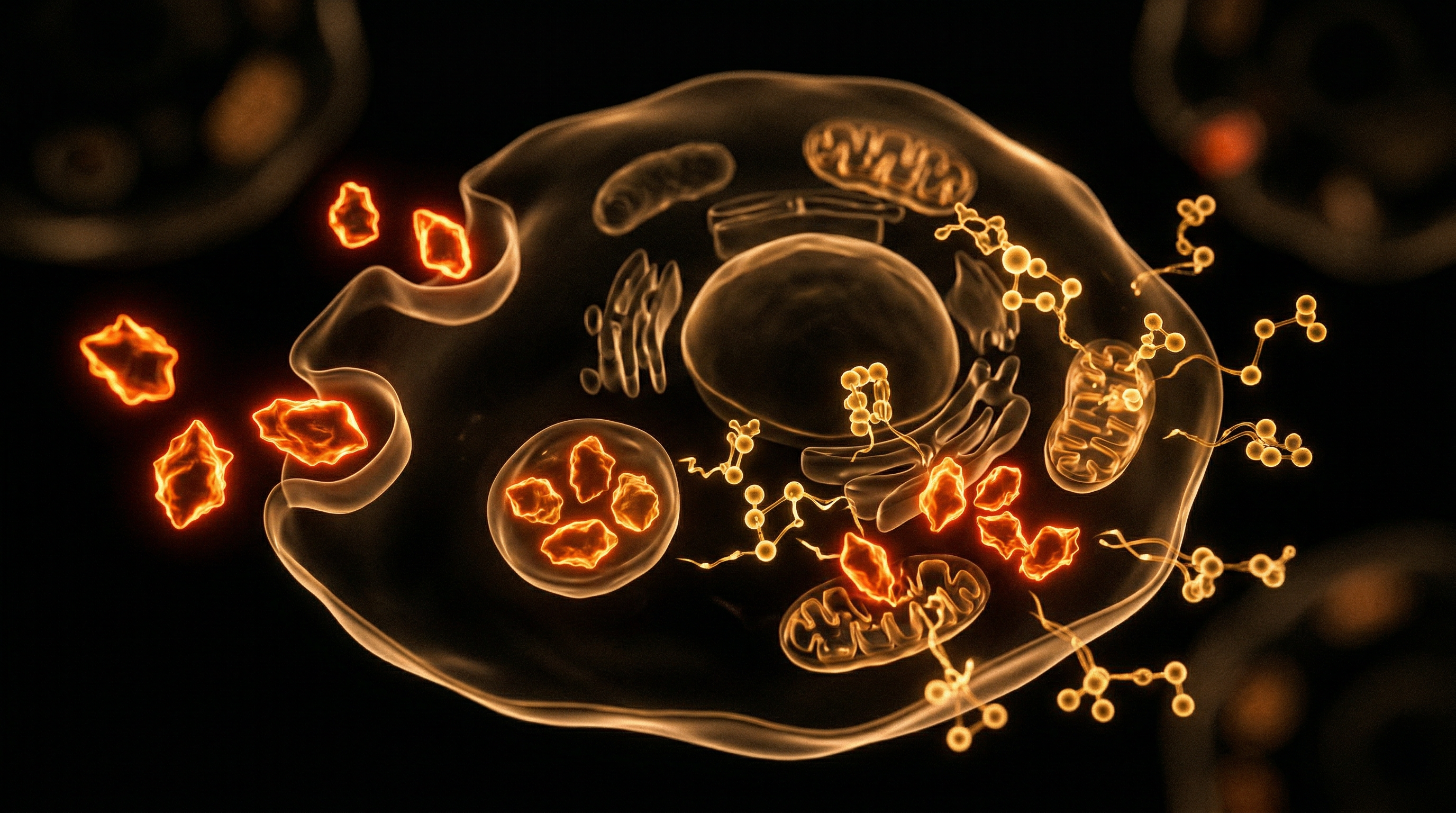
PM2.5 particles often contain a core of elemental carbon coated with polycyclic aromatic hydrocarbons (PAHs) and heavy metals like lead and cadmium. Once these enter the cells—including the delicate epithelial cells of the thymus—they target the mitochondria. The mitochondria are the powerhouses of the cell, but they are also the primary producers of ROS when under stress.
Particulate matter disrupts the electron transport chain, causing a "leak" of electrons that creates superoxide radicals. In the thymus, this mitochondrial failure leads to apoptosis (programmed cell death) of thymocytes before they can mature into functional T-cells.
Epigenetic Alterations
Newer research suggests that London’s air quality may be altering our very DNA expression. DNA methylation is a process the body uses to turn genes on or off. Exposure to high levels of nitrogen dioxide (NO2) and PM2.5 has been linked to the methylation of genes responsible for immune regulation.
Key Fact: Studies have shown that long-term exposure to urban particulate matter can "silence" the genes responsible for the production of Thymulin, a hormone essential for T-cell differentiation.
The Nrf2 Pathway Interference
The body has a master "thermostat" for oxidative stress called the Nrf2 pathway. Under normal conditions, Nrf2 triggers the production of endogenous antioxidants like glutathione. However, the sheer volume of pollutants in the London atmosphere can "overwhelm" this pathway. When Nrf2 is exhausted, the thymus is left defenceless against the daily barrage of toxins, accelerating the transition from a robust immune organ to a vestigial lump of fat.
Environmental Threats and Biological Disruptors
London’s atmosphere is a unique "chemical soup." While many cities face pollution, London’s geography, historic infrastructure, and transport density create specific biological disruptors.
The Underground "Iron" Problem
While surface-level PM2.5 is a concern, the London Underground represents one of the most concentrated sources of particulate matter in the world. The friction of train brakes against rails creates high concentrations of magnetite and iron-rich nanoparticles.
- Concentration: PM levels on the Northern or Central lines can be 10 to 50 times higher than at street level.
- Biomagnetism: These iron particles are small enough to travel along the olfactory nerve directly into the brain or enter the bloodstream via the lungs, contributing significantly to systemic iron overload and subsequent oxidative stress.
Diesel Exhaust and the "Urban Heat Island"
London’s "Urban Heat Island" effect traps pollutants at ground level, particularly during summer heatwaves. Diesel exhaust particles (DEPs) are particularly potent adjuvants. They don't just cause damage themselves; they "boost" the allergic response to pollen and other allergens, creating a state of hyper-inflammation that further exhausts the thymus gland.
Heavy Metal Accumulation
The legacy of London’s industrial past and current tyre-wear emissions means the soil and dust are rich in:
- Cadmium: A known "metallooestrogen" that can interfere with the hormonal signalling required for thymic function.
- Lead: Still present in higher concentrations near older London roadworks, lead is a potent neurotoxin and immunosuppressant.
- Zinc and Copper: Derived from brake pad wear, these metals contribute to the "Fenton Reaction" in the blood, generating highly destructive hydroxyl radicals.
The Cascade: From Exposure to Disease
The decline of the thymus is not an isolated event; it is the first domino in a cascade of systemic failure. When thymic output drops due to London’s air quality, the body enters a state known as Inflammageing.
The Rise of Senescent Cells
As the thymus fails to produce new, healthy T-cells, the body relies on older, "memory" T-cells that have been over-exposed to pathogens. These cells eventually become senescent—they stop dividing but refuse to die. Instead, they linger, secreting a cocktail of inflammatory chemicals known as the SASP (Senescence-Associated Secretory Phenotype).
Increased Vulnerability to Viral Infections
Londoners with pollution-compromised thymi are statistically more likely to suffer severe outcomes from respiratory viruses. Without a fresh supply of naïve T-cells, the immune system cannot effectively mount a response to a novel virus (like SARS-CoV-2 or new influenza strains). The system "panics," leading to the infamous cytokine storm which causes more damage than the virus itself.
The Cancer Connection
One of the primary roles of the T-cell population is immunosurveillance—the constant patrolling of the body to identify and destroy pre-cancerous cells.
Scientific Callout: A direct correlation has been observed between high PM2.5 exposure areas in East London and a reduced "cytotoxic T-cell" count, which may explain higher rates of certain cancers in these districts regardless of lifestyle factors like smoking.
What the Mainstream Narrative Omits
The mainstream health narrative regarding London’s air is strategically narrow. While "Clean Air Zones" and ULEZ are promoted as the solutions, several critical truths are suppressed or ignored:
1. The "Safe Levels" Fallacy
The UK government and the WHO set "thresholds" for PM2.5. However, biological data shows that oxidative damage to the thymus occurs at levels well below these legal limits. There is no "safe" amount of diesel soot or brake dust when it comes to the delicate microenvironment of the thymus.
2. The Focus on Lungs vs. Systemic Health
By framing pollution solely as a "respiratory issue," authorities avoid the much more frightening reality: that air pollution is a systemic metabolic and immunological disruptor. If the public understood that London’s air was literally "ageing" their immune systems and shortening their lifespan via thymic atrophy, the demand for radical infrastructure change would be far greater.
3. The Indoor Air Paradox
Mainstream advice often tells people to "stay indoors" on high-pollution days. Yet, indoor air in London—especially in poorly ventilated flats or offices near major roads—can often have higher concentrations of volatile organic compounds (VOCs) and trapped PM2.5 than the outside air. The narrative fails to address the need for medical-grade HEPA and charcoal filtration in urban dwellings.
4. The Synergistic Effect of Stress
The "London lifestyle"—characterised by high cortisol, sleep deprivation, and nutritional deficiencies—works synergistically with air pollution. Cortisol is a known thymic suppressant. When you combine the chemical stress of PM2.5 with the psychological stress of the city, the rate of thymic involution doubles.
The UK Context
London’s air quality is governed by a patchwork of historical neglect and modern intervention. While the "Great Smog" of 1952 killed thousands and led to the Clean Air Act, the modern "invisible smog" is more complex.
Geographic Hotspots
Data from London’s air quality monitoring networks (such as the London Air Quality Network managed by Imperial College) reveals shocking disparities.
- The Marylebone Road "Canyon": Often exceeds annual NO2 limits within the first week of January.
- East London and the Thames Gateway: These areas suffer from "prevailing wind" effects, where pollutants from the centre are pushed into lower-income boroughs, exacerbating health inequalities.
The ULEZ Debate
While the Ultra Low Emission Zone (ULEZ) has reduced NO2 levels, its impact on PM2.5 from non-exhaust sources (tyres and brakes) is negligible. Electric vehicles, which are often heavier than their internal combustion counterparts, actually produce more particulate matter from tyre wear.
Statistic: Over 50% of particulate matter in London now comes from non-exhaust emissions, meaning the "green revolution" of electric cars will not solve the thymic ageing crisis.
The Policy Gap
There is currently no national UK health strategy that specifically monitors immunological markers in relation to air quality. Public Health England focuses on mortality and hospital admissions, ignoring the "sub-clinical" decline in T-cell diversity that precedes chronic illness by decades.
Protective Measures and Recovery Protocols
As residents of a "polluted technocracy," we cannot wait for policy shifts to protect our biological integrity. We must adopt Bio-Defensive strategies to protect the thymus and mitigate the effects of PM2.5.
1. Advanced Filtration
Standard "air purifiers" are insufficient. Londoners should invest in systems that combine:
- HEPA H13/H14: To capture 99.97% of particles down to 0.3 microns.
- Activated Carbon: To adsorb nitrogen dioxide and VOCs.
- PECO or PCO Technology: To molecularly break down organic pollutants that HEPA cannot catch.
2. Nutritional Fortification
To counteract the oxidative stress on the thymus, specific nutrients are non-negotiable:
- N-Acetyl Cysteine (NAC): A precursor to glutathione, the body's primary defence against PM-induced oxidisation. NAC has been shown to protect lung tissue and reduce systemic inflammation.
- Vitamin D3 & K2: The thymus is highly expressive of Vitamin D receptors. London’s lack of sunlight, combined with pollution, makes high-dose supplementation essential for T-cell maturation.
- Zinc & Selenium: These trace minerals are essential for the production of thymic hormones. PM2.5 often displaces these minerals in the body.
- Sulforaphane: Found in broccoli sprouts, this compound "wakes up" the Nrf2 pathway, helping the body clear the toxins found in London’s air.
3. The "Thymic Thump" and Vagus Nerve Toning
While seemingly "alternative," techniques that stimulate the upper chest area and tone the Vagus Nerve can improve lymphatic drainage and reduce the sympathetic "fight or flight" response that further stresses the thymus. Cold exposure (cold showers) has also been shown to stimulate the production of new T-cells.
4. Strategic Avoidance
- Tube Safety: If using the London Underground, wearing a high-quality FFP3/N95 respirator is the only way to prevent the inhalation of iron-rich nanoparticles.
- Route Optimisation: Using "low-pollution" walking routes (via apps like CityAir) can reduce exposure by up to 50% compared to walking along main roads.
Summary: Key Takeaways
The link between London’s air and the decline of the thymus gland represents a silent epidemic of accelerated ageing. To survive and thrive in the urban environment, we must move beyond the surface-level narrative of "lung health" and recognise the systemic threat to our immunity.
- PM2.5 is a systemic toxin: It crosses the blood-air barrier and directly induces oxidative stress within the thymus gland.
- The Thymus is the "Clock": The rate of thymic involution is a primary driver of how fast we age and how susceptible we are to chronic disease.
- London is a unique threat: From the "iron dust" of the Underground to the tyre-wear of the South Circular, London’s air is a potent biological disruptor.
- Mainstream failure: Current policies focus on "allowable limits" and exhaust emissions, ignoring the cumulative, sub-clinical damage to the immune system.
- Personal Autonomy: Through advanced filtration, targeted supplementation (NAC, Zinc, Sulforaphane), and strategic exposure reduction, Londoners can shield their thymus from the urban onslaught.
In the age of "Inflammageing," protecting the thymus is not just a health choice—it is an act of biological resistance against a deteriorating environment. Understanding the invisible threat in the air is the first step toward reclaiming your immunological future.
This article is provided for informational and educational purposes only. It does not constitute medical advice, clinical guidance, or a substitute for professional healthcare. Information reflects cited research at time of publication. Always consult a qualified healthcare professional before acting on any health information.
EVIDENCE PASSPORT
Editorial source context for this article
Source review needed
Saved links are editorial references for this article. They may support specific claims rather than every sentence. Open and assess each source in context. This passport does not independently verify them.
Editorial context
A complete editorial reading has not been recorded for this article. Source links remain available for you to open and assess directly.
Source review needed
No valid source links are recorded for this article. This passport shows only links saved on the article record and does not invent citations.
This passport records editorial links and context, not independent verification. Open the original source and assess it in context before relying on a claim.
Medical Disclaimer
The information in this article is for educational purposes only and does not constitute medical advice, diagnosis, or treatment. Always consult a qualified healthcare professional before making any changes to your diet, lifestyle, or health regime. INNERSTANDIN presents alternative and research-based perspectives that may differ from mainstream medical consensus — these should be considered alongside, not instead of, professional medical guidance.
Read Full DisclaimerContinue the thread
Keep this question moving.
Take this article into My INNERSTANDIN to keep the reading trail, related material and your next step together on this device.
Explore this in the Body Map
See where this hits your biology. Interactive anatomy, threats, and protective protocols.
Dig deeper in the Library
Free, longform PDF volumes that go beyond headlines into mechanisms and references.