Autoimmune Pathogenesis: Molecular Mimicry and Mercury-Induced Loss of Immunological Tolerance
An in-depth exploration of the biochemical and immunological mechanisms by which mercury exposure disrupts self-tolerance, triggers molecular mimicry, and facilitates the development of chronic autoimmune conditions.

# Autoimmune Pathogenesis: Molecular Mimicry and Mercury-Induced Loss of Immunological Tolerance\n\n## Introduction: The Hidden Driver of Immune Confusion\nThe global rise in autoimmune conditions—ranging from Hashimoto’s thyroiditis to Multiple Sclerosis—has prompted a shift in medical inquiry toward environmental triggers. Among the most potent and insidious of these triggers is mercury, a heavy metal with no known biological role in human health. At INNERSTANDING, we focus on the root causes of disease, and few factors are as pervasive yet overlooked as mercury toxicity. The pathogenesis of mercury-induced autoimmunity is not a simple case of 'poisoning'; rather, it is a sophisticated disruption of the immune system’s most fundamental program: immunological tolerance. This article explores how mercury leverages molecular mimicry and protein modification to turn the body’s defence systems against its own tissues.\n\n## The Architecture of Immunological Tolerance\nTo understand how mercury causes harm, we must first define what the immune system is designed to do.
Immunological tolerance is the state of unresponsiveness to substances that have the potential to elicit an immune response, but are 'self'—the body's own proteins and cells. This is maintained through two primary filters: central tolerance (the deletion of self-reactive T-cells in the thymus) and peripheral tolerance (the suppression of self-reactive cells by T-regulatory or 'Treg' cells in the blood and tissues).\n\nWhen tolerance is lost, the immune system fails to distinguish between 'self' and 'non-self'. Mercury acts as a master disruptor of this delicate balance. Because it is highly lipophilic and has a high affinity for sulfhydryl (thiol) groups, mercury can penetrate almost any cell and bind to crucial proteins, altering their structure and making them appear foreign to the immune system.\n\n## Mercury and the Hapten Effect: Creating Neoantigens\nOne of the primary ways mercury induces autoimmunity is through the formation of 'neoantigens'. In biochemistry, a hapten is a small molecule that, when attached to a larger carrier such as a protein, can elicit an immune response.
Mercury acts as a hapten. When mercury ions enter the bloodstream or tissues, they bind to endogenous proteins (proteins naturally found in the body).\n\nThis binding alters the three-dimensional conformation (shape) of the protein. The immune system’s B-cells and T-cells, which are trained to recognise the original shape of the protein as 'safe', now encounter a modified structure that looks like an invader. This 'neo-self' protein is processed by antigen-presenting cells and shown to the immune system as a threat. Once the immune system mounts a response against this mercury-protein complex, the attack often broadens to include the original, unmodified protein.
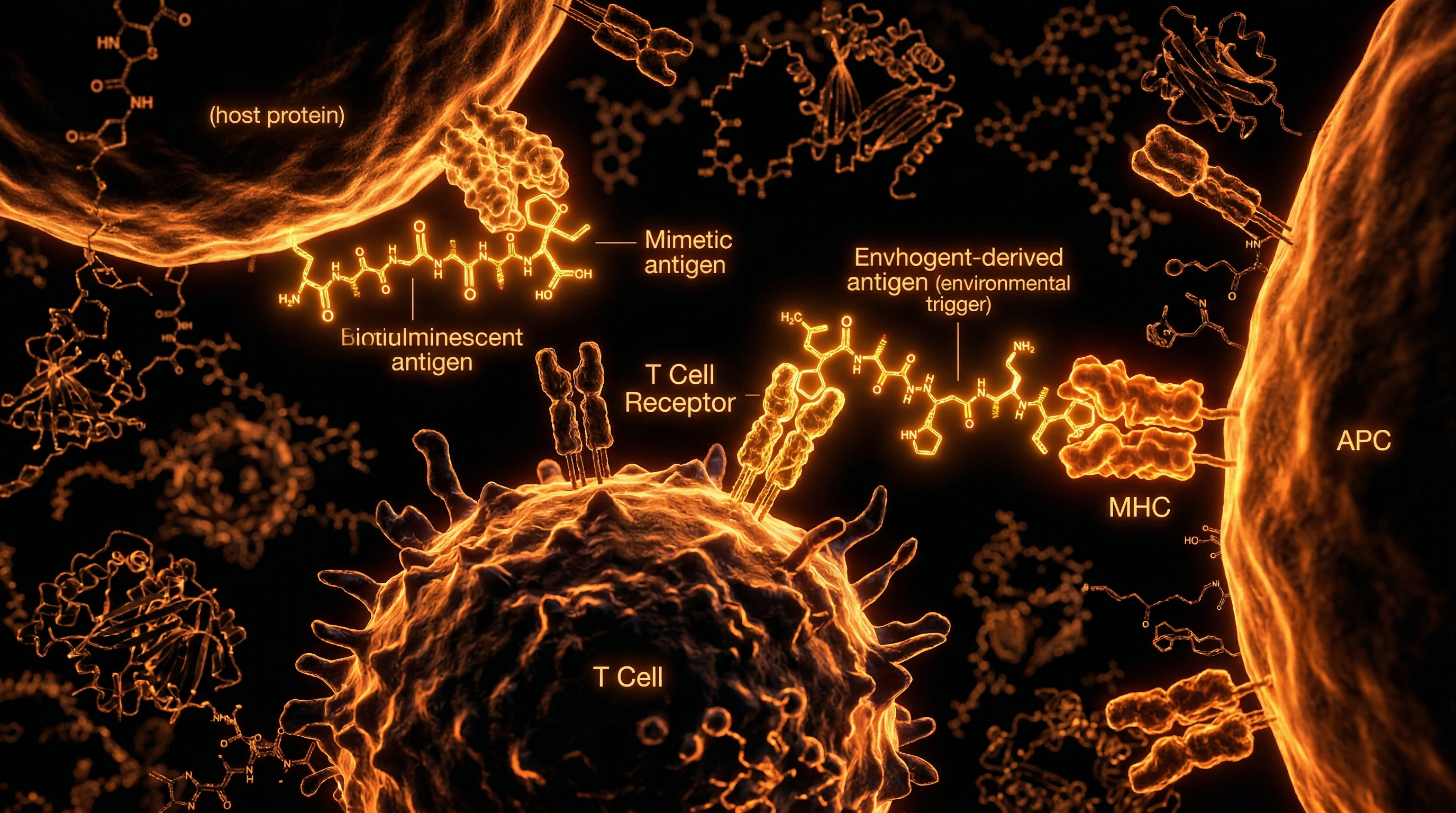
This phenomenon, known as 'epitope spreading', is a hallmark of progressive autoimmune disease.\n\n## Molecular Mimicry: The Identity Theft of the Microscopic World\nMolecular mimicry occurs when a foreign substance shares structural similarities with the body’s own self-antigens. Typically, this is discussed in the context of viruses or bacteria. However, mercury induces a unique form of chemical molecular mimicry. By binding to specific sites on cellular enzymes or structural proteins, mercury can create a chemical signature that 'mimics' other pathogens or induces a state of cellular stress that signals an 'alarm' (danger-associated molecular patterns or DAMPs).\n\nFurthermore, mercury has been shown to interfere with the Major Histocompatibility Complex (MHC) class II molecules. These molecules are responsible for presenting antigens to T-helper cells.
Mercury can alter the way antigens are loaded onto these molecules, leading to the presentation of 'cryptic' self-peptides that the immune system never learned to tolerate during its development in the thymus. Essentially, mercury forces the cell to 'lie' to the immune system about what is inside it, triggering an unnecessary and destructive inflammatory response.\n\n## Disruption of T-Cell Signalling and Cytokine Imbalance\nThe toxicity of mercury extends beyond protein modification; it directly influences the signalling pathways of immune cells. Research indicates that mercury exposure can shift the balance between Th1 (cell-mediated) and Th2 (humoral/antibody-mediated) immune responses. In many individuals, mercury triggers a profound Th2 dominance, which is associated with increased B-cell activity and the production of autoantibodies.\n\nSimultaneously, mercury impairs the function of T-regulatory (Treg) cells. These are the 'peacekeepers' of the immune system that prevent overreaction.
When mercury induces oxidative stress within these cells, it can lead to their apoptosis (programmed cell death) or functional inactivation. Without the Treg cells to provide a 'brake', the inflammatory Th1 and Th17 pathways run unchecked, leading to the tissue destruction seen in conditions like Rheumatoid Arthritis and Lupus.\n\n## The Role of Oxidative Stress and Mitochondria\nMercury is a powerful pro-oxidant. It depletes glutathione, the body's master antioxidant, and inhibits selenium-dependent enzymes that protect against oxidative damage. This creates a state of chronic oxidative stress. Oxidative damage to DNA and cellular membranes creates further 'debris' that the immune system must clear.
In a mercury-laden environment, this clearance process is often inefficient, leading to the accumulation of apoptotic bodies that further stimulate B-cells to produce anti-nuclear antibodies (ANAs), a common marker in systemic autoimmunity.\n\n## Clinical Implications: The Mercury-Autoimmune Connection\nIn clinical practice, we see specific patterns of mercury-induced autoimmunity. For instance, the thyroid gland has a high affinity for selenium and iodine; mercury competes for these binding sites, leading to modified thyroid proteins and the subsequent development of Hashimoto’s or Graves’ disease. Similarly, mercury’s ability to cross the blood-brain barrier and bind to myelin basic protein has been investigated as a contributing factor in the demyelination process of Multiple Sclerosis.\n\n## Conclusion: A Root-Cause Path to Recovery\nAutoimmunity is not an inevitable failure of the body, but a response to an environment that has become biochemically confusing. Mercury-induced loss of immunological tolerance demonstrates that the 'attack' on self-tissues is often a misdirected attempt to clear modified proteins and toxic metal loads. By identifying mercury as a root cause, patients and practitioners can move beyond mere symptom suppression with immunosuppressants and toward true healing through targeted detoxification, antioxidant support, and immune modulation.
At INNERSTANDING, we believe that restoring tolerance starts with removing the molecular triggers of confusion. Understanding the mechanism of molecular mimicry is the first step in reclaiming a balanced and resilient immune system.
This article is provided for informational and educational purposes only. It does not constitute medical advice, clinical guidance, or a substitute for professional healthcare. Information reflects cited research at time of publication. Always consult a qualified healthcare professional before acting on any health information.
RESEARCH FOUNDATIONS
Biological Credibility Archive
Citations provided for educational reference. Verify via PubMed or institutional databases.
Medical Disclaimer
The information in this article is for educational purposes only and does not constitute medical advice, diagnosis, or treatment. Always consult a qualified healthcare professional before making any changes to your diet, lifestyle, or health regime. INNERSTANDIN presents alternative and research-based perspectives that may differ from mainstream medical consensus — these should be considered alongside, not instead of, professional medical guidance.
Read Full DisclaimerReady to learn more?
Continue your journey through our classified biological research.
DISCUSSION ROOM
Members of THE COLLECTIVE discussing "Autoimmune Pathogenesis: Molecular Mimicry and Mercury-Induced Loss of Immunological Tolerance"
SILENT CHANNEL
Be the first to discuss this article. Your insight could help others understand these biological concepts deeper.
THE ARSENAL
Based on Mercury Toxicity — products curated by our research team for educational relevance and biological support.
Panaceum – Prebiotic Oligosaccharide Complex
INNERSTANDING may earn a commission on purchases made through these links. All products are selected based on rigorous educational relevance to our biological research.
RABBIT HOLE
Follow the biological thread deeper