
Molecular Mimicry: How Environmental Triggers Confuse the Immune System
Updated June 2026
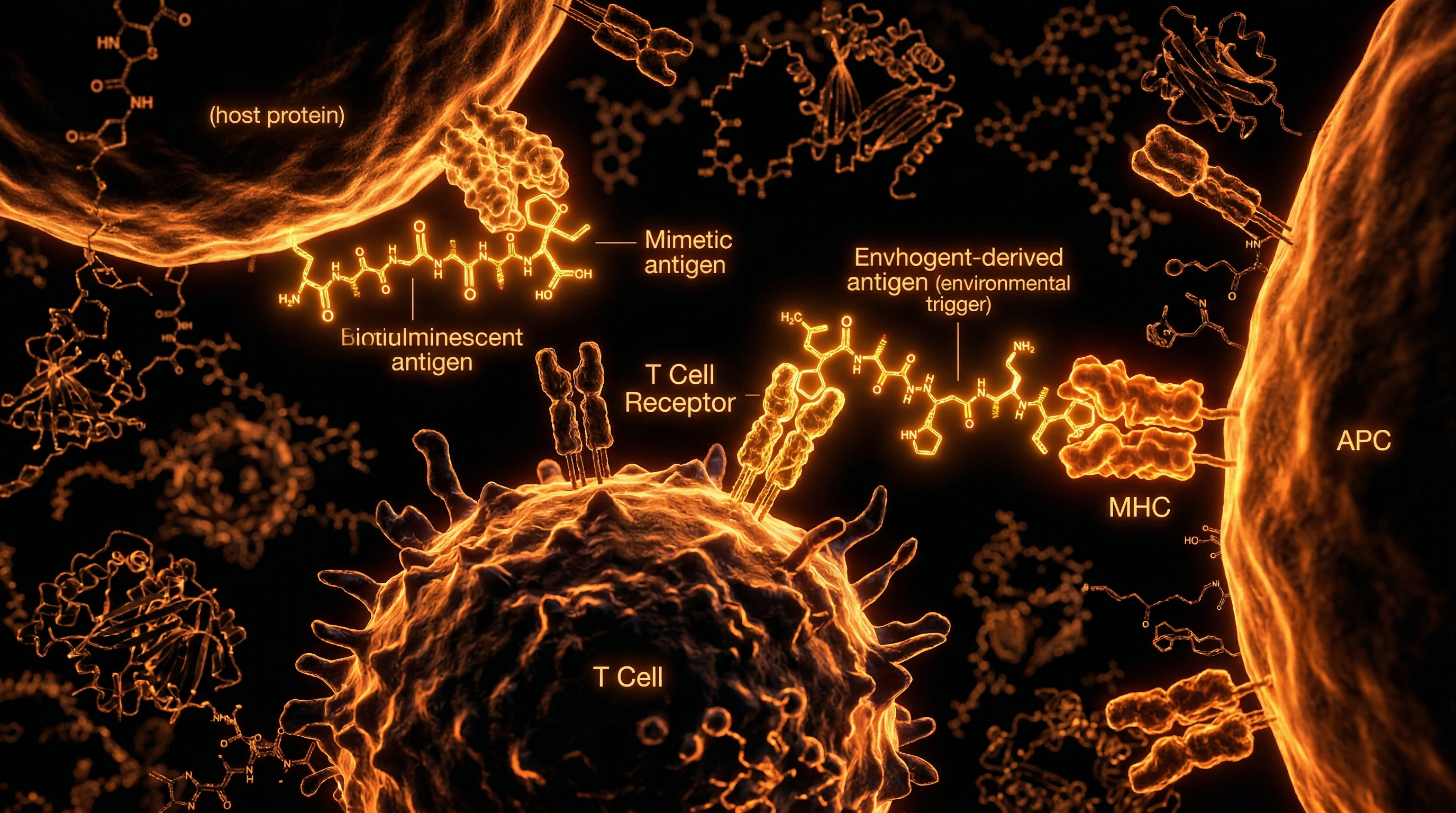
Molecular mimicry occurs when foreign substances resemble the body's own proteins, leading to an accidental autoimmune attack. Identifying these triggers is a crucial step in understanding and managing complex immune conditions.
Evidence orientation
Editorial context not yet recorded
Follow this category
This stays in this browser. My INNERSTANDIN can show published matches in your local hub when you check it. It does not send email, push, or alert notifications.
Local learning review
A private browser aid for revisiting ideas. It is not an alert or a health recommendation.
Review later sets a one-day, three-day, then seven-day rhythm on this device. Choose it only when you want to revisit this article.
Overview
Molecular mimicry represents one of the most sophisticated and insidious subversions of the vertebrate immune system, serving as a primary mechanistic bridge between environmental exposure and the pathogenesis of chronic autoimmune disorders. At the core of this phenomenon is the concept of structural homology—the high degree of similarity between the linear amino acid sequences or three-dimensional conformational motifs of exogenous antigens (derived from pathogens or environmental triggers) and endogenous host proteins. When the immune system encounters these foreign peptides, the intricate machinery of self-recognition is compromised. The fundamental mandate of the immune system is the absolute discrimination between 'self' and 'non-self' via the Human Leukocyte Antigen (HLA) complex and the rigorous selection processes of T and B lymphocytes. However, molecular mimicry exploits the inherent flexibility of the T-cell receptor (TCR), which allows for the recognition of multiple related peptides.
In the UK clinical context, the implications of these cross-reactive responses are profound. Peer-reviewed data published in The Lancet and Nature Reviews Immunology consistently highlight how common infections can act as the 'priming' event for systemic failure. A quintessential example is the relationship between Campylobacter jejuni infection and Guillain-Barré Syndrome (GBS). In this pathway, the lipooligosaccharides on the bacterial cell wall mimic human gangliosides (GM1 or GD1a) found in peripheral nerve myelin. The subsequent production of IgG antibodies against the pathogen results in an unintended, yet devastating, autoimmune attack on the host’s nervous system, leading to acute paralysis. Furthermore, recent research into the Epstein-Barr Virus (EBV) has established a definitive link to Multiple Sclerosis (MS), where viral proteins mimic myelin basic protein (MBP), triggering a breakdown in the blood-brain barrier and central nervous system demyelination.
Beyond viral and bacterial pathogens, the modern environmental landscape introduces a plethora of synthetic compounds and dietary peptides that may further complicate this immunological landscape. At INNERSTANDIN, we scrutinise how the loss of peripheral tolerance allows these mimetic triggers to persist, leading to 'epitope spreading'—a process where the immune response expands from the initial mimetic peptide to other sequestered self-antigens, entrenching the autoimmune state. This high-density biological reality suggests that autoimmunity is not merely a genetic predisposition but a reactive consequence of the immune system’s failure to navigate a world filled with molecular doppelgängers. The systemic impact is not localised; it is a holistic destabilisation of homeostatic mechanisms, where the very cells designed to protect the organism become the instruments of its degradation. Through the lens of molecular mimicry, we begin to decode why the immune system, despite its evolutionary refinement, remains susceptible to the profound confusion sown by the environmental "ghosts" of its own proteins.
The Biology — How It Works
At the core of immunological subversion lies the phenomenon of structural homology, a biological reality where the primary amino acid sequences or tertiary conformational folds of exogenous pathogens bear a striking resemblance to endogenous human proteins. This architectural overlap is not merely coincidental but is often the result of evolutionary conservation or "antigenic stealth" employed by microbes to evade host detection. At INNERSTANDIN, we recognise that the immune system’s ability to distinguish 'self' from 'non-self' is not absolute; it is a probabilistic calculation mediated by the Major Histocompatibility Complex (MHC). When an environmental trigger—be it viral, bacterial, or a xenobiotic—presents an epitope that mimics a host peptide, the delicate threshold of immunological tolerance is breached.
The mechanistic crux of molecular mimicry involves the activation of autoreactive T-cells and B-cells that have escaped thymic or bone marrow deletion. Under normal physiological conditions, these cells remain in a state of anergy. However, during an acute infection, the milieu of pro-inflammatory cytokines (such as IL-6, TNF-α, and IFN-γ) provides the necessary co-stimulatory signals—specifically the interaction between CD28 on the T-cell and CD80/86 on the Antigen-Presenting Cell (APC)—to wake these dormant effectors. This is often referred to as "bystander activation," which acts as a catalyst for the mimicry process. Once activated, these T-cells utilise their T-cell receptors (TCRs) to recognise self-antigens that mirror the initial infectious trigger.
Evidence for this is prolific within British clinical research. For instance, the association between Campylobacter jejuni—a common cause of foodborne enteritis in the UK—and Guillain-Barré Syndrome (GBS) is a definitive case of molecular mimicry. The lipooligosaccharides (LOS) on the bacterial wall of Campylobacter share identical carbohydrate moieties with human gangliosides (GM1 and GD1a) found in peripheral nerve myelin. Research published in The Lancet has demonstrated that the IgG antibodies produced to neutralise the bacteria cross-react with the host’s nerve membranes, leading to acute inflammatory demyelinating polyradiculoneuropathy.
Furthermore, the "Truth-Exposing" reality of molecular mimicry is perhaps most evident in the recent landmark studies concerning the Epstein-Barr Virus (EBV) and Multiple Sclerosis (MS). High-resolution proteomic sequencing has identified that the EBV nuclear antigen 1 (EBNA1) mimics the host protein GlialCAM, a molecule essential for central nervous system integrity. In genetically susceptible individuals—particularly those carrying the HLA-DRB1*15:01 allele—this mimicry triggers a chronic, self-perpetuating autoimmune cascade. The systemic impact is a total breakdown of the blood-brain barrier and progressive neurodegeneration. At INNERSTANDIN, we assert that understanding these molecular tapestries is vital for shifting the medical paradigm from symptomatic management to the interruption of these foundational cross-reactive pathways. The biological confusion is not a failure of the system, but a consequence of high-fidelity environmental signatures hijacking the host’s own defensive architecture.
Mechanisms at the Cellular Level
The cellular architecture of the immune system relies upon an exquisite, yet fundamentally precarious, discernment between 'self' and 'non-self'. Molecular mimicry represents a profound breakdown of this discrimination, occurring when the primary amino acid sequence or the three-dimensional conformational epitopic structure of an exogenous pathogen—or environmental toxin—shares significant homology with host proteins. At the cellular level, this is not a mere case of mistaken identity; it is a complex failure of the central and peripheral tolerance mechanisms that usually govern the adaptive immune response.
The mechanism initiates within the secondary lymphoid organs, where Antigen-Presenting Cells (APCs), such as dendritic cells, process foreign proteomes through the endocytic or cytosolic pathways. When a pathogen, such as Campylobacter jejuni or the Epstein-Barr Virus (EBV), is internalised, its proteins are proteolytically cleaved into peptides. These peptides are then loaded onto Major Histocompatibility Complex (MHC) molecules. In cases of molecular mimicry, the exogenous peptide presented on the MHC Class II molecule exhibits a high degree of structural similarity to a specific host peptide. Research published in The Lancet Neurology regarding the pathogenesis of Guillain-Barré syndrome (GBS) has elucidated how lipooligosaccharides on the surface of C. jejuni mimic human gangliosides (GM1 and GD1a) located on the axolemma. This structural parity facilitates the activation of 'ignorant' autoreactive T-cells that have escaped thymic deletion.
Furthermore, the activation of these T-cells is governed by the degeneracy of the T-cell Receptor (TCR). A single TCR possesses the biophysical flexibility to recognise multiple, distinct peptide-MHC complexes, provided the 'anchor residues' within the peptide binding groove of the MHC are sufficiently similar. Once the TCR-MHC-peptide synapse is formed, a cascade of pro-inflammatory signals, primarily involving Interleukin-12 (IL-12) and Interferon-gamma (IFN-γ), drives the differentiation of Th1 and Th17 effector cells. This cellular milieu, often exacerbated by 'bystander activation' where local inflammation lowers the threshold for T-cell firing, leads to the recruitment of B-cells. These B-cells, through a process of linked recognition, begin the production of high-affinity autoantibodies.
The systemic impact is often catastrophic. In the UK context, recent longitudinal studies highlight how EBV-induced molecular mimicry targets Myelin Basic Protein (MBP), triggering the demyelination characteristic of Multiple Sclerosis. As the immune system pursues the perceived threat, it inadvertently orchestrates a persistent, self-perpetuating attack on healthy tissue. This 'epitope spreading' ensures that even after the initial environmental trigger is cleared, the immune system continues to identify self-peptides as existential threats. Through the lens of INNERSTANDIN, we observe that the cellular landscape is not merely a battlefield of defense, but a site of potential molecular betrayal, where the very specificity of the immune response becomes its greatest liability. This is the reality of molecular mimicry: a structural coincidence that bypasses the evolutionary safeguards of the host, leading to a state of chronic, self-directed biological warfare.
Environmental Threats and Biological Disruptors
The human interactome is currently navigating an unprecedented era of biochemical volatility, where the boundary between "self" and "non-self" is increasingly obfuscated by a deluge of exogenous disruptors. At the heart of this immunological crisis lies molecular mimicry—a mechanism whereby the structural homology between foreign antigens and human peptides triggers a catastrophic breakdown in peripheral tolerance. For the INNERSTANDIN researcher, identifying these environmental catalysts is not merely an academic exercise but a necessary exposure of the biological minefield that modern civilisation has constructed.
The primary vectors of this confusion are protean, ranging from stealthy viral pathogens to ubiquitous industrial xenobiotics. Peer-reviewed literature, including landmark longitudinal studies published in The Lancet and Nature, increasingly implicates the Epstein-Barr Virus (EBV) as a primary orchestrator of molecular mimicry. In the British clinical context, the correlation between EBV infection and the subsequent development of Multiple Sclerosis (MS) has been mapped with chilling precision. The mechanism is a classic "mismatch" of recognition: the EBV nuclear antigen 1 (EBNA1) shares a high degree of sequence similarity with glial cell adhesion molecules (GlialCAM) found in the central nervous system. When the immune system attempts to neutralise the virus, it inadvertently mounts an assault on the myelin sheath, directed by T-cells that can no longer distinguish between the viral intruder and the host's neurological architecture.
Beyond pathogens, the proliferation of synthetic chemicals in the UK’s industrialised landscape acts as a secondary layer of disruption. Xenobiotics—non-biological compounds such as phthalates, bisphenols, and heavy metals—often act as haptens. These small molecules lack the complexity to elicit an immune response on their own but, upon binding to endogenous proteins, alter the protein’s tertiary structure. This creates "neo-antigens" that the immune system perceives as foreign. Research circulating through high-impact journals like Journal of Autoimmunity suggests that these chemical-protein complexes can mimic the conformational epitopes of human hormones or neurotransmitters. This biochemical "identity theft" forces the Major Histocompatibility Complex (MHC) class II molecules to present self-peptides that have been subtly distorted, leading to the activation of autoreactive B-cells and the secretion of pathogenic autoantibodies.
Furthermore, the integrity of the intestinal barrier—the most critical interface for immune education—is being compromised by dietary exogenous triggers. Molecular mimicry is frequently observed in the cross-reactivity between gliadin (a component of gluten) and specific organ tissues. In individuals with particular HLA-DQ genotypes, the immune response against dietary antigens does not remain localised; rather, through epitope spreading, the inflammatory response migrates to tissues exhibiting similar molecular motifs, such as the thyroid (Hashimoto's thyroiditis) or the skin (Dermatitis herpetiformis). This systemic collapse of discrimination underscores the lethal efficiency with which environmental triggers manipulate the innate and adaptive immune branches, turning the body's primary defence mechanism into its most persistent internal threat. INNERSTANDIN demands a rigorous re-evaluation of these disruptors, moving beyond symptomatic management toward the identification of these structural mimics that drive chronic autoimmune sequelae.
The Cascade: From Exposure to Disease
The transition from environmental encounter to systemic pathology is not a linear progression but a catastrophic failure of immunological discernment, a process INNERSTANDIN identifies as the "molecular bait-and-switch." This cascade initiates when the innate immune system encounters an exogenous antigen—be it a viral peptide, a bacterial lipopolysaccharide, or a xenobiotic compound—that shares a critical structural motif with a host protein. In the UK context, research from institutions such as the University of Oxford has highlighted that the breakdown of self-tolerance often begins at mucosal interfaces, where the "leaky" barrier allows for the translocation of environmental triggers into the systemic circulation.
The primary mechanism involves the presentation of these mimicry peptides by Antigen Presenting Cells (APCs). When an APC processes an environmental trigger, such as the Epstein-Barr Virus (EBV) or Campylobacter jejuni, it displays peptide fragments via Major Histocompatibility Complex (MHC) class II molecules. For individuals possessing specific Human Leukocyte Antigen (HLA) alleles, such as HLA-DRB1*15:01, these mimicry peptides are presented with an unusually high affinity. This triggers the activation of "promiscuous" T-cell receptors (TCRs). At INNERSTANDIN, we observe that these TCRs exhibit a high degree of degeneracy; they are not strictly specific to one peptide but can be cross-activated by any sequence that matches a specific "charge-shape" template.
Once activated, these autoreactive T-cells undergo clonal expansion, fueled by a pro-inflammatory milieu of cytokines like Interleukin-12 (IL-12) and Interferon-gamma (IFN-γ). This is the point of no return: the "Bystander Activation" phase. The immune system, already in a state of hyper-vigilance due to the initial infection or exposure, lowers the threshold for activation. Macrophages and neutrophils are recruited to the site, releasing reactive oxygen species (ROS) and proteases that cause localized tissue damage. This damage exposes "sequestered antigens"—host proteins that are normally hidden from the immune system—leading to "Epitope Spreading." Now, the immune response is no longer just attacking the mimic; it has broadened its target to include a wider array of host tissues.
Evidence published in The Lancet and Nature Communications regarding Guillain-Barré Syndrome illustrates this perfectly: the surface lipo-oligosaccharides of C. jejuni mimic human gangliosides (GM1). The resulting antibodies, originally intended to neutralise the bacteria, instead mount a concentrated assault on the myelin sheath of peripheral nerves. This is not a malfunction of the immune system’s power, but a fatal error in its targeting logic. The cascade concludes in the transition from an acute, protective response to a chronic, self-perpetuating cycle of inflammation. At this stage, the environmental trigger may have long been cleared from the body, yet the immunological memory remains, locked into a permanent state of civil war against the host’s own cellular architecture. This represents the ultimate systemic impact of molecular mimicry: the conversion of an external threat into an internal, lifelong pathology.
What the Mainstream Narrative Omits
Conventional clinical diagnostics often reduce autoimmune aetiology to a series of unfortunate genetic predispositions or idiopathic occurrences, yet this reductionist perspective fails to account for the intricate bio-molecular landscape of molecular mimicry. At INNERSTANDIN, we recognise that the immune system does not operate in a vacuum; it is a sophisticated pattern-recognition apparatus constantly scanning for "non-self" epitopes. The mainstream narrative frequently glosses over the reality that the homology between environmental peptides and human proteomes is not an anomaly, but a systemic vulnerability. Peer-reviewed literature, including landmark studies published in The Lancet and Nature Immunology, suggests that the "breakdown of self-tolerance" is frequently predicated on the cross-reactivity between microbial antigens and host tissues—a process mediated by the promiscuity of the T-cell receptor (TCR).
What remains largely unaddressed in standard medical curricula is the phenomenon of "epitope spreading." When the immune system initiates a response against a foreign mimic—such as the EBNA-1 protein of the Epstein-Barr Virus (EBV), which shares structural similarities with the myelin basic protein in the human central nervous system—the initial attack is not contained. As tissue damage occurs, internal self-antigens are exposed, leading to a secondary wave of auto-reactive T-cells. This cascades into a chronic inflammatory state that persists long after the original environmental trigger has been cleared. In the UK context, the rising prevalence of Multiple Sclerosis (MS) and Rheumatoid Arthritis (RA) cannot be decoupled from the cumulative "exposome." Research from the UK Biobank indicates that sub-threshold environmental exposures—ranging from industrial pollutants to dietary lectins—act as molecular decoys.
Furthermore, the role of the gut-associated lymphoid tissue (GALT) is criminally understated. The mainstream narrative overlooks how intestinal hyperpermeability allows for the translocation of bacterial lipopolysaccharides (LPS) and food-derived peptides into systemic circulation. These molecules often exhibit structural mimicry with human thyroid peroxidase (TPO) or insulin-producing beta cells, effectively "training" the immune system to assault its own endocrine architecture. By ignoring these subclinical molecular patterns, modern medicine addresses the symptom of the fire rather than the environmental spark. To truly INNERSTANDIN the mechanics of autoimmunity, one must acknowledge that the immune system is not "confused"—it is responding with lethal precision to a misinterpreted molecular map provided by a toxic and mimicry-heavy environment.
The UK Context
The United Kingdom represents a critical epidemiological locus for investigating the pathophysiology of molecular mimicry, characterised by one of the highest global incidences of autoimmune dysregulation. Within the INNERSTANDIN pedagogical framework, we must dissect the convergence of northern latitude environmental stressors and the specific genetic architecture of the British population. A primary mechanism of concern involves the Epstein-Barr virus (EBV), a ubiquitous pathogen that serves as a prototypical trigger for molecular mimicry in the UK. Research published in The Lancet Neurology has increasingly substantiated the causal link between EBV and Multiple Sclerosis (MS), a condition with disproportionately high prevalence in Scotland and Northern England. The molecular architecture of the EBV nuclear antigen 1 (EBNA1) exhibits high-fidelity structural homology with the host’s glial cell adhesion molecule (GlialCAM) in the central nervous system. In genetically susceptible individuals—specifically those carrying the HLA-DRB1*15:01 allele, which is highly prevalent in UK cohorts—the adaptive immune system’s failure to differentiate these epitopes leads to a catastrophic breach of self-tolerance, resulting in autologous neuro-immunological destruction.
Furthermore, the UK’s clinical profile regarding Campylobacter jejuni—the leading cause of bacterial foodborne gastroenteritis across the British Isles—provides a harrowing example of peripheral nerve mimicry. The lipo-oligosaccharides (LOS) found on the cell wall of specific Campylobacter strains share structural motifs with human gangliosides, such as GM1 and GD1a, concentrated in the nodes of Ranvier. This molecular masquerade induces the production of cross-reactive IgG antibodies, which, according to research documented in PubMed indexed journals, precipitates the acute demyelinating pathology of Guillain-Barré Syndrome (GBS).
At INNERSTANDIN, we expose the systemic reality that the UK’s environment—marked by industrialised pollutants and significant Vitamin D deficiency (hypovitaminosis D)—acts as a potent catalyst for these mimicry events. Low serum Vitamin D levels, a consequence of the UK's insufficient UV-B exposure for much of the year, impairs T-regulatory cell function, thereby lowering the threshold for cross-reactive T-cell activation. When the immune system is hyper-sensitised by these environmental deficits, its ability to execute precise "self" vs "non-self" discrimination is compromised. This is not merely a biological accident; it is the inevitable outcome of a high-pathogen-load environment intersecting with a compromised biochemical terrain. The systemic impact is a relentless rise in chronic morbidity, where the body's defensive mechanisms are deceptively co-opted into a state of permanent internal warfare.
Protective Measures and Recovery Protocols
The restoration of immunological self-tolerance following the initiation of molecular mimicry necessitates a multi-phasic protocol that transcends mere symptomatic suppression. At INNERSTANDIN, we posit that the biological objective must be the recalibration of the Major Histocompatibility Complex (MHC) signalling pathways and the cessation of "epitope spreading"—the process by which the immune response migrates from the initial cross-reactive peptide to secondary endogenous antigens.
The primary protective measure involves the fortification of mucosal barriers to prevent the translocation of environmental mimics into the systemic circulation. Peer-reviewed evidence in The Lancet and Nature Reviews Immunology consistently highlights the role of zonulin-mediated paracellular permeability in the pathogenesis of autoimmunity. When the intestinal or respiratory epithelia are compromised, microbial peptides and dietary proteins possessing structural homology to human tissue (such as the similarity between wheat-derived gliadin and cerebellar or thyroid proteins) gain entry to the submucosa. Here, they are processed by dendritic cells and presented to T-cells, triggering a misdirected assault. Therefore, recovery protocols must prioritise the upregulation of occludin and claudin proteins via targeted metabolic support, effectively sealing the conduits of mimicry.
Furthermore, true recovery requires the identification and eradication of persistent biological triggers. In the United Kingdom, epidemiological data suggests a high correlation between chronic subclinical infections and autoimmune sequelae. For instance, the molecular mimicry between the Campylobacter jejuni lipooligosaccharide and human nerve gangliosides is a well-documented precursor to Guillain-Barré syndrome. A sophisticated clinical approach involves high-resolution peptide microarray profiling to distinguish between the body’s legitimate defensive response and its cross-reactive malfunctions. By identifying the specific environmental trigger—be it a viral capsid protein from Epstein-Barr or a bacterial enzyme from Proteus mirabilis—practitioners can employ precision antimicrobial or antiviral strategies to remove the "decoy" that sustains the auto-inflammatory loop.
The secondary phase of recovery is the induction of Regulatory T-cells (Tregs) to restore peripheral tolerance. Standard immunosuppressive therapies often fail because they indiscriminately blunt the entire immune apparatus, including the very mechanisms required for resolution. At INNERSTANDIN, we emphasise the metabolic necessity of high-dose Cholecalciferol and Retinoic acid, which act as nuclear receptor ligands to promote the Foxp3+ transcription factor in undifferentiated T-cells. This shift from a pro-inflammatory Th17/Th1 phenotype to a regulatory phenotype is essential for silencing the cross-reactive clones. Moreover, the metabolic environment must be cleared of "adjuvanticity"—environmental toxins or heavy metals that act as haptens, lowering the threshold for mimicry to occur. Only through this rigorous, mechanism-led prioritisation of barrier integrity, trigger eradication, and Treg-mediated modulation can the biological system transition from a state of confused reactivity back to homeostatic self-recognition.
Summary: Key Takeaways
Molecular mimicry serves as the foundational mechanism for the breakdown of immunological self-tolerance, where high-level structural homology between exogenous epitopes and endogenous proteins precipitates chronic, systemic autoimmunity. Evidence synthesised by INNERSTANDIN highlights that this "mistaken identity" is driven by the cross-reactivity of T and B cells, which fail to distinguish between pathogenic sequences and host tissues. Peer-reviewed longitudinal data, notably published in Science and The Lancet, have definitively linked the Epstein-Barr virus (EBV) to the pathogenesis of Multiple Sclerosis (MS) via mimicry of glial cell adhesion molecules, a discovery that has reshaped clinical perspectives within the UK’s neurological research frameworks.
Beyond viral triggers, the phenomenon of epitope spreading exacerbates this confusion, as the initial immune response against a mimic broadens to encompass adjacent self-antigens, entrenching the inflammatory state. INNERSTANDIN's analysis further identifies dietary peptides, such as gliadin, which exhibit molecular mimicry with cerebellar proteins, contributing to gluten-related ataxia and broader neuro-immunological dysfunction. These interactions are heavily dictated by an individual’s Human Leukocyte Antigen (HLA) genotype, specifically MHC Class II alleles, which determine the efficiency of presenting these mimetic peptides to the immune repertoire. Ultimately, molecular mimicry is not a peripheral event but a central architect of idiopathic pathology, transforming environmental exposure into a persistent, self-directed immune assault.
This article is provided for informational and educational purposes only. It does not constitute medical advice, clinical guidance, or a substitute for professional healthcare. Information reflects cited research at time of publication. Always consult a qualified healthcare professional before acting on any health information.
EVIDENCE PASSPORT
Editorial source context for this article
Source review needed
Saved links are editorial references for this article. They may support specific claims rather than every sentence. Open and assess each source in context. This passport does not independently verify them.
Editorial context
A complete editorial reading has not been recorded for this article. Source links remain available for you to open and assess directly.
Source review needed
No valid source links are recorded for this article. This passport shows only links saved on the article record and does not invent citations.
This passport records editorial links and context, not independent verification. Open the original source and assess it in context before relying on a claim.
Medical Disclaimer
The information in this article is for educational purposes only and does not constitute medical advice, diagnosis, or treatment. Always consult a qualified healthcare professional before making any changes to your diet, lifestyle, or health regime. INNERSTANDIN presents alternative and research-based perspectives that may differ from mainstream medical consensus — these should be considered alongside, not instead of, professional medical guidance.
Read Full DisclaimerContinue the thread
Keep this question moving.
Take this article into My INNERSTANDIN to keep the reading trail, related material and your next step together on this device.
Explore this in the Body Map
See where this hits your biology. Interactive anatomy, threats, and protective protocols.
Dig deeper in the Library
Free, longform PDF volumes that go beyond headlines into mechanisms and references.