
Autoimmunity and Ageing: When the Thymus Fails its Filter
Updated May 2026
An in-depth look at how a shrinking thymus leaks autoreactive T-cells into the bloodstream. This failure of central tolerance is a hallmark of the ageing immune system's self-destructive tendencies.
Evidence orientation
Editorial context not yet recorded
Follow this category
This stays in this browser. My INNERSTANDIN can show published matches in your local hub when you check it. It does not send email, push, or alert notifications.
Local learning review
A private browser aid for revisiting ideas. It is not an alert or a health recommendation.
Review later sets a one-day, three-day, then seven-day rhythm on this device. Choose it only when you want to revisit this article.
Overview
The human immune system is often depicted as a vigilant army, a sophisticated network of cells and signals designed to repel foreign invaders. However, this metaphor obscures a more terrifying reality: the greatest threat to the organism frequently resides within. At the heart of this internal security apparatus lies the thymus gland, a pyramid-shaped organ situated in the upper chest, directly behind the sternum. For decades, conventional medicine treated the thymus as a disposable biological relic, an organ that served its purpose in childhood and could be safely ignored in adulthood.
We now know this assumption was a catastrophic oversight.
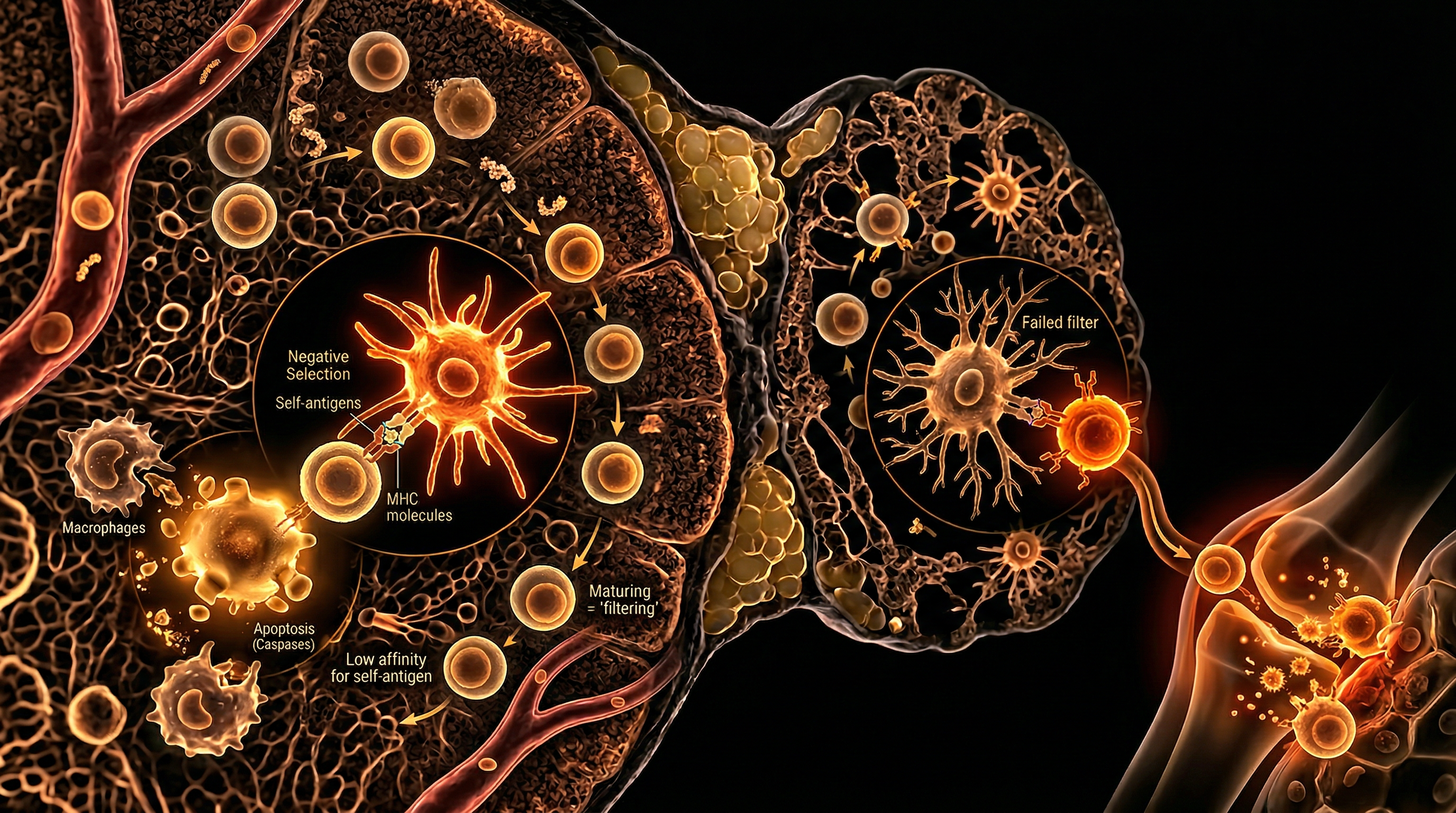
The thymus is the "school" of the immune system, specifically for T-lymphocytes (T-cells). Its primary function is the establishment of central tolerance—the process of training immune cells to distinguish between "self" and "non-self." When the thymus functions correctly, it ensures that any T-cell capable of attacking the body’s own tissues is identified and destroyed before it can enter the systemic circulation.
However, the thymus is the first organ in the human body to undergo involution—a programmed shrinking and loss of function that begins as early as puberty. By the time an individual reaches the age of 60, the thymus is largely composed of fatty adipose tissue, its functional capacity reduced to a mere fraction of its youth. This process, known as thymic involution, results in a "leaky filter." As the organ withers, it loses its ability to screen out "autoreactive" T-cells. These rogue agents, which should have been eliminated in the thymic medulla, escape into the bloodstream.
The result is the hallmark of the ageing immune system: a paradoxical state where the body is simultaneously more vulnerable to external pathogens (immunosenescence) and more prone to attacking its own organs (autoimmunity). This article explores the molecular mechanisms of this failure, the environmental disruptors accelerating our biological decline, and the suppressed scientific truths regarding thymic rejuvenation.
The Biology — How It Works
To understand the failure of the thymus, one must first understand its architectural brilliance. T-cell progenitors are born in the bone marrow and migrate to the thymus to undergo a rigorous multi-stage "education."
The Anatomy of Selection
The thymus is divided into two main regions: the cortex (outer layer) and the medulla (inner core).
- Positive Selection (Cortex): Immature T-cells (thymocytes) are presented with MHC (Major Histocompatibility Complex) molecules. If a T-cell cannot recognise these molecules, it is useless and is programmed to die. Only those that can "see" the body’s signalling system move forward.
- Negative Selection (Medulla): This is the "filter" stage. Specialized cells called Medullary Thymic Epithelial Cells (mTECs) act as a biological library. They express almost every protein found in the human body—from insulin to myelin—even if those proteins are usually only found in the pancreas or the brain.
The Role of AIRE
The "librarian" of this process is a protein called AIRE (Autoimmune Regulator). AIRE allows mTECs to express "tissue-restricted antigens" (TRAs). If a developing T-cell reacts too strongly to one of these self-proteins, it is deemed a threat and undergoes apoptosis (programmed cell death).
Important Fact: Approximately 98% of all T-cells produced in the thymus fail their "exams" and are destroyed. The immune system is built upon a foundation of mass cellular execution to ensure the survival of the host.
The Involution Paradox
As we age, the thymic epithelial space—the functional part of the organ—is replaced by fat. This is not merely a passive result of wear and tear; it is an active process of adipose involution. As the mTEC population declines, the expression of AIRE diminishes. The "library" of self-proteins becomes incomplete. When the library is missing pages, the "students" (T-cells) are no longer tested against those specific self-proteins. Consequently, T-cells that are "blind" to certain self-tissues are permitted to graduate and enter the periphery.
Mechanisms at the Cellular Level
The breakdown of central tolerance is not a single event but a cascade of cellular failures that transform the immune system from a protector into a predator.
1. The Depletion of mTECs and cTECs
The structural integrity of the thymus depends on Thymic Epithelial Cells (TECs). Cortical TECs (cTECs) and medullary TECs (mTECs) provide the necessary niche for T-cell development. With age, the progenitor cells that replenish these epithelial populations lose their proliferative capacity. This leads to a "thinning" of the thymic landscape. Without a dense network of mTECs, the probability of an autoreactive T-cell encountering its specific "self-antigen" is drastically reduced. It simply slips through the cracks.
2. The Rise of "Inflammaging"
As the thymus shrinks, the body compensates for the lack of new, "naive" T-cells by forcing existing T-cells to replicate. This is known as homeostatic proliferation. However, T-cells can only divide a finite number of times (the Hayflick limit). Over-replicated T-cells become senescent. These senescent T-cells do not just sit idle; they adopt a SASP (Senescence-Associated Secretory Phenotype).
They begin pumping out high levels of pro-inflammatory cytokines such as:
- IL-6 (Interleukin-6)
- TNF-alpha (Tumour Necrosis Factor-alpha)
- CRP (C-Reactive Protein)
This creates a state of chronic, low-grade systemic inflammation known as inflammaging. This inflammatory background lowers the threshold for autoimmune activation.
3. The Failure of Regulatory T-cells (Tregs)
The thymus is also responsible for producing Regulatory T-cells (Tregs). If the "killer" T-cells are the soldiers, Tregs are the military police. Their job is to suppress overactive immune responses. In the ageing thymus, the production of Tregs is not only reduced in quantity but also impaired in quality. The "police force" becomes corrupt or incompetent, allowing the rogue autoreactive T-cells to wreak havoc in the joints, the thyroid, and the nervous system.
Important Fact: Research indicates that by age 50, the output of new naive T-cells from the thymus has dropped by over 95% compared to neonates, leaving the body reliant on an increasingly "exhausted" and "erroneous" pool of old cells.
Environmental Threats and Biological Disruptors
The mainstream narrative suggests that thymic involution is an immutable law of nature. However, the rate and severity of this decline are heavily influenced by modern environmental stressors that our ancestors never encountered. These disruptors "poison the well" of our central tolerance.
Endocrine Disrupting Chemicals (EDCs)
The thymus is highly sensitive to hormonal fluctuations. Chemicals such as Bisphenol A (BPA), phthalates, and certain pesticides (like glyphosate) mimic or interfere with the body's natural hormones.
- Estrogen Mimicry: High levels of estrogenic compounds are known to accelerate thymic atrophy.
- The Cortisol Connection: Chronic psychological stress leads to elevated cortisol. The thymus is packed with glucocorticoid receptors. Persistent cortisol exposure is effectively "toxic" to thymocytes, causing premature apoptosis of developing T-cells and rapid shrinkage of the organ.
Heavy Metal Accumulation
The thymus acts as a "sink" for certain heavy metals. Mercury, cadmium, and aluminium have been found to accumulate in thymic tissue. These metals interfere with the delicate signalling required for negative selection. For example, mercury can displace Zinc, a mineral absolutely essential for the function of thymulin, a hormone required for T-cell maturation.
Nutritional Bankruptcy
The modern "Western" diet is fundamentally deficient in the raw materials required for thymic maintenance.
- Zinc Deficiency: Perhaps the most critical. Zinc is required for DNA synthesis and cell division in the thymus. A deficiency leads to immediate and profound thymic atrophy.
- Vitamin D3: Often mislabelled as a vitamin, D3 is a pro-hormone that modulates the AIRE gene. Low Vitamin D levels—ubiquitous in the UK and Northern latitudes—mean the "filter" is functionally impaired.
- Vitamin A (Retinoic Acid): Essential for the "homing" of T-cell progenitors to the thymus.
The Impact of Modern Medical Interventions
We must also address the "elephant in the room": the impact of early-life medical interventions on thymic development. The thymus is at its peak activity during the first two years of life. The aggressive administration of certain pharmaceutical products during this window—when the "filter" is still being calibrated—may interfere with the establishment of central tolerance. Furthermore, the overuse of broad-spectrum antibiotics decimates the gut microbiome. Since the "gut-thymus axis" is a critical pathway for immune education, a sterile or dysbiotic gut leads to a "confused" thymus.
The Cascade: From Exposure to Disease
How does a shrinking thymus in your 40s become Rheumatoid Arthritis or Hashimoto’s Thyroiditis in your 60s? The process is a slow-motion car crash of biological errors.
Step 1: The Escape
A T-cell with a receptor for myelin basic protein (the coating of your nerves) is born. In a young thymus, an mTEC would show this T-cell a piece of myelin. The T-cell would react, be identified as "self-reactive," and be killed. In the aged thymus, that mTEC is gone. The T-cell "graduates" and enters the blood.
Step 2: The Trigger (Molecular Mimicry)
This rogue T-cell may circulate harmlessly for years. However, if the individual contracts a virus (like Epstein-Barr) or a bacterial infection that has a protein structure similar to myelin, the T-cell is activated. This is called molecular mimicry. The T-cell attacks the virus, but now it is "primed."
Step 3: The Assault
The primed T-cell now looks for anything that resembles the virus. It finds the myelin in the central nervous system. Because the "Regulatory T-cells" (the police) are also diminished due to thymic ageing, there is no one to stop the attack.
Step 4: Epitope Spreading
As the T-cells destroy the myelin, they release more "self-antigens" that were previously hidden inside the cells. This attracts more immune cells. The fire spreads. What started as a specific attack on one protein becomes a general assault on the tissue. This is the "Cascade of Autoimmunity."
Statistical Fact: Autoimmune diseases now affect approximately 1 in 10 individuals in developed nations. The incidence of these conditions has risen by 3% to 9% annually over the last two decades, correlating precisely with the increase in environmental disruptors and the "accelerated ageing" of the population.
What the Mainstream Narrative Omits
The current medical model is built on symptom management rather than root-cause resolution. If you have an autoimmune disease, you are prescribed immunosuppressants (like Methotrexate) or biologics (like Humira). While these can save lives, they do nothing to address the source of the problem: the failed filter of the thymus.
The Profitability of Permanent Patients
There is very little financial incentive for the pharmaceutical industry to investigate thymic rejuvenation. A patient with a "fixed" thymus no longer needs a lifetime of expensive monoclonal antibodies. Consequently, research into thymic regeneration—though highly promising in the lab—receives a fraction of the funding dedicated to "blockbuster" autoimmune drugs.
The "Disposable Soma" Theory
Mainstream biology often accepts thymic involution as a "natural" part of the "Disposable Soma" theory—the idea that the body prioritizes reproduction over long-term maintenance. However, this ignores the fact that modern humans are living far beyond their "biological warranty." We are existing in a state of "post-thymic" vulnerability for decades. The silence regarding the link between iatrogenic (doctor-induced) harm—such as the removal of the thymus during infant cardiac surgery—and the subsequent explosion of autoimmune disease is particularly deafening.
The Hidden Impact of Electromagnetic Fields (EMFs)
Emerging (and often suppressed) research suggests that the thymus, as a highly bio-electric organ, may be sensitive to the pervasive non-ionising radiation of the modern world. Some studies indicate that high EMF exposure can induce oxidative stress in thymocytes, further accelerating the rate of involution. This is rarely discussed in clinical settings because it challenges the safety narratives of the telecommunications industry.
The UK Context
The United Kingdom faces a unique set of challenges regarding thymic health and the subsequent rise in autoimmunity.
The Vitamin D Crisis
Due to its latitude, the UK experiences "Vitamin D Winters" from October to March, where the sun is too low to trigger D3 synthesis in the skin. Given that Vitamin D is a primary regulator of the AIRE gene in the thymus, the British population is effectively operating with a "compromised filter" for half the year. The NHS recommendation of 400 IU is, in the view of many functional researchers, woefully inadequate to maintain thymic integrity.
The Industrial Legacy and "Forever Chemicals"
The UK’s history as an industrial powerhouse has left a legacy of heavy metal contamination in the soil and water. Furthermore, the UK has been slower than some European neighbours to ban certain endocrine-disrupting pesticides. The accumulation of these toxins in the British public—combined with a high-sugar, low-zinc "Western" diet—has created a "perfect storm" for thymic collapse.
NHS Strain and Autoimmune Diagnosis
The NHS is currently struggling with a backlog of autoimmune diagnoses. Patients often spend years in a "limbo" of vague symptoms (fatigue, brain fog, joint pain) because conventional blood tests (like ANA or ESR) often only become positive after significant tissue damage has occurred. There is no routine screening for thymic volume or T-cell diversity in the UK, which could act as an early warning system for impending autoimmunity.
Protective Measures and Recovery Protocols
While thymic involution is a formidable foe, we are not helpless. Science is revealing that the thymus is more plastic than we once believed. It is possible to slow, halt, or even partially reverse the "leakiness" of the filter.
1. Nutritional Fortification
- Zinc (with Ionophores): Supplementing with 25-50mg of Zinc Picolinate, combined with a natural ionophore like Quercetin or EGCG, ensures the mineral reaches the thymic cells. Zinc is the single most important nutrient for thymic "rebirth."
- Selenium: Essential for protecting the thymus from oxidative damage and supporting thyroid health (the thyroid and thymus are developmentally linked).
- High-Dose Vitamin D3/K2: Aiming for blood levels between 100-150 nmol/L is critical for maintaining AIRE expression and Treg production.
2. Peptides and Biogenic Modulators
This is where science "exposes" the potential for recovery that the mainstream often ignores.
- Thymosin Alpha-1 (Tα1): A naturally occurring thymic peptide. Synthesized versions are used in some countries to "re-train" the immune system. Tα1 has been shown to increase T-cell diversity and suppress autoimmunity.
- Thymulin: A zinc-dependent peptide that helps in the maturation of T-cells.
- Epitalon: A "fountain of youth" peptide developed in Russia that has shown the ability to increase telomere length and potentially slow thymic involution.
3. Hormonal Optimisation
- Melatonin: Often thought of only as a sleep hormone, melatonin is a potent thymic protector. It is produced within the thymus and helps prevent the age-related shift from "thymic tissue" to "fatty tissue."
- Managing the Cortisol/DHEA Balance: DHEA is a hormone that opposes the thymic-shrinking effects of cortisol. As we age, DHEA levels drop while cortisol often rises. Stress management and, where appropriate, DHEA supplementation can preserve thymic volume.
4. Lifestyle Interventions
- Intermittent Fasting: Autophagy (the body’s "self-cleaning" mechanism) triggered by fasting can help clear out senescent (zombie) immune cells and may stimulate the production of new naive T-cells from the bone marrow.
- Cold Stress (Cryotherapy): Brief exposure to extreme cold has been shown to stimulate the thymus and improve the Treg/T-effector ratio.
- Grounding (Earthing): While considered "fringe" by some, the practice of connecting the body to the Earth's electron flow may help reduce the systemic "inflammaging" that puts pressure on the thymus.
Summary: Key Takeaways
The failure of the thymus is the silent engine of the modern autoimmune epidemic. To understand why our bodies are turning against us, we must look at the source of immune education.
- The Failed Filter: Autoimmunity in ageing is largely caused by the "leakage" of autoreactive T-cells that the shrinking thymus fails to eliminate.
- The Role of AIRE: The loss of the AIRE protein as the thymus turns to fat is the molecular smoking gun of central tolerance failure.
- Environmental Acceleration: Modern toxins, chronic stress, and nutritional deficiencies (especially Zinc and Vitamin D) are causing the thymus to shrink decades faster than it should.
- Inflammaging: The decline of the thymus leads to a "senescent" immune system that remains in a state of permanent, destructive inflammation.
- The Path to Recovery: By focusing on thymic-specific nutrients (Zinc, Selenium), hormonal balance (DHEA, Melatonin), and advanced peptide therapies, we can potentially "re-educate" our immune systems.
The medical establishment may continue to treat the symptoms of autoimmunity with the "sledgehammer" of immunosuppression. But for those seeking INNERSTANDING, the path to health lies in the upper chest—in the pyramid-shaped gland that holds the keys to our biological identity. We must protect our filter, or we will eventually be consumed by our own protector.
This article is provided for informational and educational purposes only. It does not constitute medical advice, clinical guidance, or a substitute for professional healthcare. Information reflects cited research at time of publication. Always consult a qualified healthcare professional before acting on any health information.
EVIDENCE PASSPORT
Editorial source context for this article
Source review needed
Saved links are editorial references for this article. They may support specific claims rather than every sentence. Open and assess each source in context. This passport does not independently verify them.
Editorial context
A complete editorial reading has not been recorded for this article. Source links remain available for you to open and assess directly.
Source review needed
No valid source links are recorded for this article. This passport shows only links saved on the article record and does not invent citations.
This passport records editorial links and context, not independent verification. Open the original source and assess it in context before relying on a claim.
Medical Disclaimer
The information in this article is for educational purposes only and does not constitute medical advice, diagnosis, or treatment. Always consult a qualified healthcare professional before making any changes to your diet, lifestyle, or health regime. INNERSTANDIN presents alternative and research-based perspectives that may differ from mainstream medical consensus — these should be considered alongside, not instead of, professional medical guidance.
Read Full DisclaimerContinue the thread
Keep this question moving.
Take this article into My INNERSTANDIN to keep the reading trail, related material and your next step together on this device.
Explore this in the Body Map
See where this hits your biology. Interactive anatomy, threats, and protective protocols.
Dig deeper in the Library
Free, longform PDF volumes that go beyond headlines into mechanisms and references.