
Thymic Epithelial Cells: The Lost Sentinels of Self-Tolerance
Updated May 2026
When thymic epithelial cells decline, the body loses its ability to distinguish self from non-self. This article explains the mechanistic link between thymic ageing and the surge in autoimmune disorders.
Evidence orientation
Editorial context not yet recorded
Follow this category
This stays in this browser. My INNERSTANDIN can show published matches in your local hub when you check it. It does not send email, push, or alert notifications.
Local learning review
A private browser aid for revisiting ideas. It is not an alert or a health recommendation.
Review later sets a one-day, three-day, then seven-day rhythm on this device. Choose it only when you want to revisit this article.
Overview
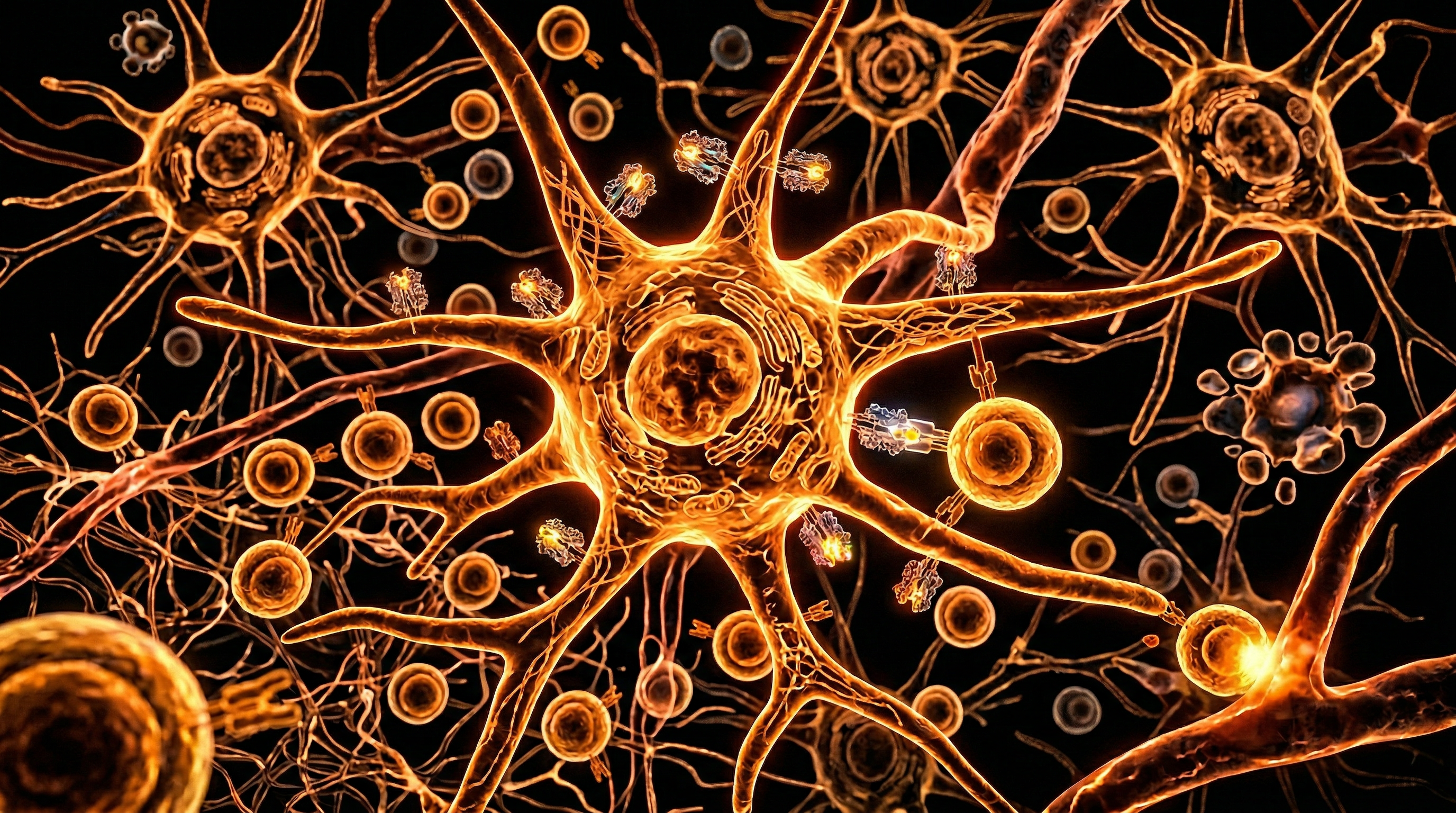
In the grand architecture of the human immune system, there exists a specialized, pyramid-shaped organ nestled behind the sternum that serves as the crucible of biological identity: the thymus gland. While the bone marrow produces the raw material of the immune response, it is the thymus that provides the education, the vetting, and the ultimate mandate for what constitutes "self" versus "non-self." At the heart of this pedagogical process are the Thymic Epithelial Cells (TECs).
Often overlooked in favour of the more famous T-lymphocytes they produce, TECs are the true architects of immune harmony. They are the "sentinels" that guard the borders of our biological integrity. However, a silent catastrophe is unfolding in the modern human. Through a process known as thymic involution, the thymus begins to atrophy almost immediately after puberty, replaced by non-functional adipose (fat) tissue. By the age of 50, the organ that once pulsed with the vibrant training of millions of immune cells is often reduced to a vestigial remnant.
This article posits that the decline of the TEC population is not merely a "natural" byproduct of ageing, but a central driver behind the global explosion of autoimmune disorders, chronic inflammation, and "immunosenescence." When the teachers (TECs) disappear, the students (T-cells) graduate into the bloodstream without a moral compass, unable to distinguish between a viral invader and the delicate lining of a human joint or the myelin sheath of a nerve.
Statistic: By the age of 70, the functional capacity of the thymus to produce new, "naive" T-cells drops to less than 5% of its peak adolescent output, leaving the body reliant on a dwindling pool of "memory" cells that are increasingly prone to error.
To understand why the modern world is witnessing a surge in conditions like Multiple Sclerosis, Rheumatoid Arthritis, and Hashimoto’s Thyroiditis, we must look to the crumbling walls of the thymic schoolhouse and the loss of the cells that once kept the peace.
The Biology — How It Works
The thymus is a bi-lobed organ structured into two primary regions: the outer cortex and the inner medulla. Within these regions, the Thymic Epithelial Cells are divided into two distinct lineages with specialized roles: Cortical Thymic Epithelial Cells (cTECs) and Medullary Thymic Epithelial Cells (mTECs).
The Education of a T-Cell
The journey of a T-cell begins when precursor cells from the bone marrow migrate to the thymus. At this stage, they are "double negative," meaning they lack the receptors (CD4 and CD8) required to interact with the rest of the immune system. The TECs are tasked with taking these raw, potentially dangerous cells through a two-stage "selection" process.
- Positive Selection (The Cortex): In the cortex, cTECs present fragments of proteins on Major Histocompatibility Complex (MHC) molecules. If a developing T-cell can successfully "recognise" these MHC molecules—which are essentially the "language" of the immune system—it is allowed to live. If it cannot, it is deemed useless and undergoes apoptosis (programmed cell death). This ensures that only functional T-cells enter the next stage.
- Negative Selection (The Medulla): This is where the mTECs become vital. Their role is to ensure the T-cell does not attack the body’s own tissues. This is the foundation of self-tolerance.
The Miracle of AIRE
How does a small gland in the chest "know" what a protein in the pancreas or the brain looks like? The answer lies in a remarkable gene expressed by mTECs called AIRE (Autoimmune Regulator).
The AIRE protein allows mTECs to break the rules of genetics. Typically, a cell only expresses the genes it needs for its specific function. However, mTECs use AIRE to express "tissue-restricted antigens" (TRAs) from across the entire body. They essentially "ghost-write" fragments of insulin, thyroid hormones, and brain proteins.
- The Test: As T-cells pass through the medulla, the mTECs show them these "self" proteins.
- The Sentence: If a T-cell reacts too strongly to these self-proteins, it is identified as a potential autoimmune threat.
- The Execution: These autoreactive T-cells are either deleted on the spot or diverted into becoming Regulatory T-cells (Tregs)—the "peacekeeper" cells that suppress inflammation in the peripheral tissues.
Without healthy, functioning mTECs, this "shadow library" of the human body is lost. The T-cells graduate without ever being tested against the proteins of the heart or the kidneys, leading to the release of "forbidden clones" into the systemic circulation.
Mechanisms at the Cellular Level
At the granular level, the decline of the thymus is driven by the loss of the Thymic Epithelial Progenitor Cell (TEPC) pool. Like all tissues, the thymus relies on stem-like cells to replenish the cTEC and mTEC populations. However, TECs are uniquely sensitive to oxidative stress and metabolic shifts.
The Role of FOXN1
The master regulator of thymic epithelial development is a transcription factor called FOXN1. This gene is the "on switch" for the production and maintenance of TECs. In the ageing process, or under environmental stress, FOXN1 expression plummets. When FOXN1 levels drop, the structural integrity of the thymus collapses. The tight-knit network of epithelial cells, which creates a specialized microenvironment for T-cell maturation, begins to disintegrate, replaced by fibrous tissue and fat.
The "Leaky" Selection Gate
When TEC density decreases, the physical encounters between T-cells and the "teachers" become less frequent. In a healthy thymus, a T-cell must undergo hundreds of "interrogations" by different mTECs to ensure it isn't autoreactive. As TECs die off, T-cells may pass through the medulla without ever encountering the specific antigen (e.g., myelin basic protein) that they are primed to attack. This is known as stochastic escape.
The Treg Deficit
Crucially, TECs are responsible for the generation of Natural Regulatory T-cells (nTregs). These cells are essential for preventing the immune system from overreacting to environmental triggers (like pollen or food) and for keeping "rogue" T-cells in check.
- When mTECs decline, the production of nTregs drops.
- This creates an "imbalance of power" in the blood: too many aggressive "effector" T-cells and too few "regulatory" T-cells to restrain them.
- This imbalance is the hallmark of every major autoimmune disease.
Environmental Threats and Biological Disruptors
While the mainstream narrative suggests thymic decline is an inevitable "clock" programmed into our DNA, biological researchers are beginning to uncover a more sinister reality: our modern environment is actively poisoning our TECs.
Endocrine Disruptors and Xenohormones
The thymus is an exquisitely endocrine-sensitive organ. It is highly responsive to sex hormones (oestrogen and testosterone). This is why the thymus begins to shrink at puberty—the surge in sex hormones signals the organ to "power down."
However, we are now swimming in a sea of xenoestrogens—chemicals like Bisphenol A (BPA), phthalates, and certain pesticides that mimic oestrogen in the body. These chemicals prematurely trigger thymic involution.
- BPA: Studies have shown that BPA exposure can lead to architectural changes in the thymus, reducing the number of mTECs and impairing the expression of the AIRE gene.
- Microplastics: Emerging research suggests that nanoplastics can cross the blood-thymus barrier, causing localized inflammation and oxidative stress that specifically targets the delicate epithelial network.
Heavy Metals and the "Aluminium Hypothesis"
The thymus acts as a "sink" for certain heavy metals. Aluminium, widely used as an adjuvant in various medical interventions and found in many consumer products, has been shown to accumulate in thymic tissue. Aluminium can induce "pyroptosis" (a highly inflammatory form of cell death) in epithelial cells. By damaging the TECs, these metals disrupt the delicate "negative selection" process, potentially explaining the correlation between environmental toxin exposure and the rise in childhood autoimmunity.
Chronic Cortisol Elevation
The "Stress-Thymus Axis" is a well-documented but often ignored phenomenon. Cortisol, the primary stress hormone, is directly toxic to both developing T-cells and the TECs that support them. In a state of chronic modern stress, the thymus is bathed in a constant drip of glucocorticoids, which accelerates the conversion of thymic tissue into fat.
Fact: Short-term acute stress can cause the thymus to shrink by up to 50% within days, though it can recover. Chronic stress, however, leads to permanent structural "remodelling" that destroys the epithelial sentinels.
The Cascade: From Exposure to Disease
What happens when the "sentinels" fall? The result is a predictable, multi-stage cascade that ends in clinical disease.
Stage 1: The Release of Forbidden Clones
Because the mTECs are no longer expressing the full library of self-antigens, T-cells that are "programmed" to attack human tissue (e.g., the insulin-producing cells of the pancreas) are allowed to exit the thymus and enter the lymphatic system.
Stage 2: The "Second Hit" (Molecular Mimicry)
These "forbidden" T-cells often remain dormant until they encounter a trigger. This is where molecular mimicry comes in. A person might contract a common virus (like Epstein-Barr or even a common cold). The T-cells produced to fight the virus may look very similar to the "self" proteins the thymus failed to show them years ago.
- Because the "Treg" population is also low (due to TEC decline), there is no "off switch."
- The T-cells attack the virus, but then pivot to attack the body's own tissues that "look like" the virus.
Stage 3: The Cytokine Storm and Tissue Destruction
Once the "self-attack" begins, it becomes a self-perpetuating loop. Damaged tissue releases "Damage-Associated Molecular Patterns" (DAMPs), which further recruit more aggressive T-cells. Without a functioning thymus to "re-educate" the system or produce new Tregs, the body enters a state of permanent internal warfare.
Stage 4: Systemic Immunosenescence
As the thymus becomes completely fatty, the body can no longer produce "naive" T-cells to deal with new threats. This is why elderly individuals (and now increasingly middle-aged people with "old" immune systems) are more susceptible to both new viral strains and cancer. The "T-cell repertoire" becomes narrow and exhausted.
What the Mainstream Narrative Omits
The mainstream medical establishment largely treats the thymus as a "disposable" organ, much like the appendix was once viewed. This "planned obsolescence" theory serves a specific economic framework.
The Symptom-Management Industry
There is significantly more profit in treating the symptom of a lost sentinel than in restoring the sentinel itself. The current "gold standard" for autoimmunity involves:
- Biologics: Drugs like Adalimumab (Humira) which cost thousands of pounds per month and work by suppressing the entire immune system.
- Corticosteroids: Which further damage the thymus, creating a "feedback loop" of dependency.
If the focus shifted toward Thymic Regeneration, the need for these lifelong, high-margin pharmaceutical interventions would plummet.
The Silence on Iatrogenic Damage
The medical community rarely discusses the impact of surgical procedures or aggressive treatments on the thymus. For example, in many paediatric cardiac surgeries, the thymus is partially or fully removed (thymectomy) simply because it "gets in the way" of the heart. Research now shows that these children grow up with severely "aged" immune systems and a vastly increased risk of autoimmunity by their 20s. This "collateral damage" is rarely mentioned in the consent forms.
The Nutritional Link
The mainstream also fails to acknowledge that TECs have specific, high-demand nutritional requirements. The "Western Diet," deficient in zinc, selenium, and Vitamin D, is a primary driver of thymic atrophy. Zinc, in particular, is the "key" to the hormone thymulin. Without zinc, thymulin is inactive, and the TECs cannot signal T-cells to mature.
The UK Context
In the United Kingdom, the crisis of thymic ageing is particularly acute, driven by a combination of environmental factors and public health oversights.
The NHS Burden
Autoimmune diseases now affect an estimated 4 million people in the UK. The cost to the NHS is billions of pounds annually. Yet, there is currently no NHS clinical pathway for "Thymic Health" or "Immune Rejuvenation." Patients are shuffled between rheumatology, endocrinology, and dermatology, with no one looking at the "central schoolhouse"—the thymus—where these problems originate.
The "Sunshine Deficit" and the UK Climate
The UK's lack of consistent UVB radiation for much of the year leads to widespread Vitamin D3 deficiency. Vitamin D3 is not just a vitamin; it is a secosteroid that binds to receptors on TECs and promotes the expression of the AIRE gene.
- The "UK standard" for Vitamin D sufficiency is often cited as 50 nmol/L, which many researchers argue is "survival level," not "immune-competence level."
- For optimal AIRE expression and thymic function, levels likely need to be upwards of 100-125 nmol/L.
Environmental Pollution in British Cities
UK urban centres like London, Birmingham, and Manchester have high levels of Nitrogen Dioxide (NO2) and particulate matter (PM2.5). Recent studies have shown that air pollution can penetrate the systemic circulation and induce inflammatory changes in the thymus, particularly in children whose organs are still developing. The "London Smog" of the past has been replaced by an "Invisible Chemical Smog" that targets the very sentinels of our immune system.
British Research: Leading but Disconnected
Interestingly, the UK is home to some of the world's leading thymic research at institutions like the Francis Crick Institute and the University of Edinburgh. British scientists are at the forefront of "organoid" technology—growing "mini-thymuses" in the lab. However, there is a massive "translational gap." While the science of thymic regeneration is booming, the clinical application for the average British citizen remains non-existent.
Protective Measures and Recovery Protocols
While the "sentinels" may be lost, they are not necessarily gone forever. Emerging science suggests the thymus possesses a remarkable capacity for regeneration—if the right conditions are met.
1. Zinc and Selenium: The Mineral Foundation
The thymus is the most zinc-concentrated organ in the body.
- Protocol: Supplementing with Zinc Picolinate (30-50mg) combined with an ionophore (like Quercetin) can help "unlock" thymulin production. Selenium (200mcg) is equally vital for protecting TECs from oxidative damage.
2. Vitamin D3, K2, and Magnesium
To support the AIRE gene and negative selection:
- Protocol: Maintain blood levels of Vitamin D3 between 100-150 nmol/L. Always pair D3 with Vitamin K2 (MK-7) to ensure calcium is directed away from the thymus (where it could cause calcification) and into the bones.
3. The Power of Thymic Peptides
In many parts of Europe (though less so in the UK), "thymic extracts" or synthetic peptides like Thymosin Alpha-1 (Tα1) are used to modulate the immune system.
- These peptides act as "hormonal signals" that tell the remaining TECs to increase their activity and promote Treg production.
- While Tα1 is a prescription medication in some jurisdictions, glandular extracts (thymus concentrate) are available as supplements, though their efficacy varies.
4. Intermittent Fasting and Autophagy
One of the most potent ways to "clear out" the fat from the thymus is through controlled fasting.
- Mechanism: Fasting triggers autophagy—the body's "self-cleaning" mode. Studies in mice have shown that prolonged fasting (48-72 hours) can actually trigger a "reset" of the hematopoietic stem cell system and lead to thymic regrowth.
- Protocol: Regular 16:8 intermittent fasting, with occasional 3-day "water fasts" (under medical supervision), may help rejuvenate the thymic microenvironment.
5. Eliminating Endocrine Disruptors
- Action: Switch to glass or stainless steel instead of plastic.
- Action: Use "clean" personal care products to avoid phthalates and parabens.
- Action: Filter UK tap water to remove fluoride and residual pharmaceutical compounds that can interfere with the delicate endocrine balance of the thymus.
6. Managing the "Stress Load"
Since cortisol is the "Thymus Killer," any practice that lowers the "Area Under the Curve" (AUC) for cortisol is protective. This isn't just "wellness"—it is biological preservation. Deep tissue work, meditation, and "forest bathing" (phytoncides from trees actually boost Natural Killer cell activity and support thymic health) are essential protocols.
Summary: Key Takeaways
The narrative of "Thymic Epithelial Cells: The Lost Sentinels of Self-Tolerance" is a call to action. We have ignored the "schoolhouse" of the immune system for too long, focusing instead on the unruly "students" (T-cells) that cause disease.
- The Sentinel Role: TECs (cTECs and mTECs) are responsible for the education of T-cells and the prevention of autoimmunity through the AIRE gene and negative selection.
- The Modern Crisis: Thymic involution is being accelerated by environmental toxins, xenoestrogens, heavy metals, and chronic stress.
- The Autoimmune Link: The decline of TECs leads to a "leaky" immune system, where "forbidden clones" attack the body’s own tissues and the production of "peacekeeping" Tregs fails.
- The Institutional Blind Spot: Mainstream medicine focuses on expensive symptom suppression rather than the biological reality of thymic decline.
- The UK Situation: A combination of Vitamin D deficiency, urban pollution, and an "NHS silo" mentality has left the British public vulnerable to an epidemic of autoimmunity.
- The Path Forward: Through targeted nutrition (Zinc, D3), lifestyle interventions (fasting, stress reduction), and the potential future use of thymic peptides, we can begin to restore the lost sentinels.
The "lost sentinels" can be found again. By understanding the biology of the thymus and the environmental forces arrayed against it, we can move from a state of "immune surrender" to one of "biological sovereignty." The future of medicine lies not in the suppression of the body, but in the restoration of its most fundamental teachers.
This article is provided for informational and educational purposes only. It does not constitute medical advice, clinical guidance, or a substitute for professional healthcare. Information reflects cited research at time of publication. Always consult a qualified healthcare professional before acting on any health information.
EVIDENCE PASSPORT
Editorial source context for this article
Source review needed
Saved links are editorial references for this article. They may support specific claims rather than every sentence. Open and assess each source in context. This passport does not independently verify them.
Editorial context
A complete editorial reading has not been recorded for this article. Source links remain available for you to open and assess directly.
Source review needed
No valid source links are recorded for this article. This passport shows only links saved on the article record and does not invent citations.
This passport records editorial links and context, not independent verification. Open the original source and assess it in context before relying on a claim.
Medical Disclaimer
The information in this article is for educational purposes only and does not constitute medical advice, diagnosis, or treatment. Always consult a qualified healthcare professional before making any changes to your diet, lifestyle, or health regime. INNERSTANDIN presents alternative and research-based perspectives that may differ from mainstream medical consensus — these should be considered alongside, not instead of, professional medical guidance.
Read Full DisclaimerContinue the thread
Keep this question moving.
Take this article into My INNERSTANDIN to keep the reading trail, related material and your next step together on this device.
Explore this in the Body Map
See where this hits your biology. Interactive anatomy, threats, and protective protocols.
Dig deeper in the Library
Free, longform PDF volumes that go beyond headlines into mechanisms and references.