
Autonomic Nervous System Remodelling via Blue Light
Updated August 2026
Chronic exposure to artificial light frequencies is physically altering the circadian rhythm markers in the brain. We examine the anatomical shifts in the suprachiasmatic nucleus.
Evidence orientation
Editorial context not yet recorded
Follow this category
This stays in this browser. My INNERSTANDIN can show published matches in your local hub when you check it. It does not send email, push, or alert notifications.
Local learning review
A private browser aid for revisiting ideas. It is not an alert or a health recommendation.
Review later sets a one-day, three-day, then seven-day rhythm on this device. Choose it only when you want to revisit this article.
Overview
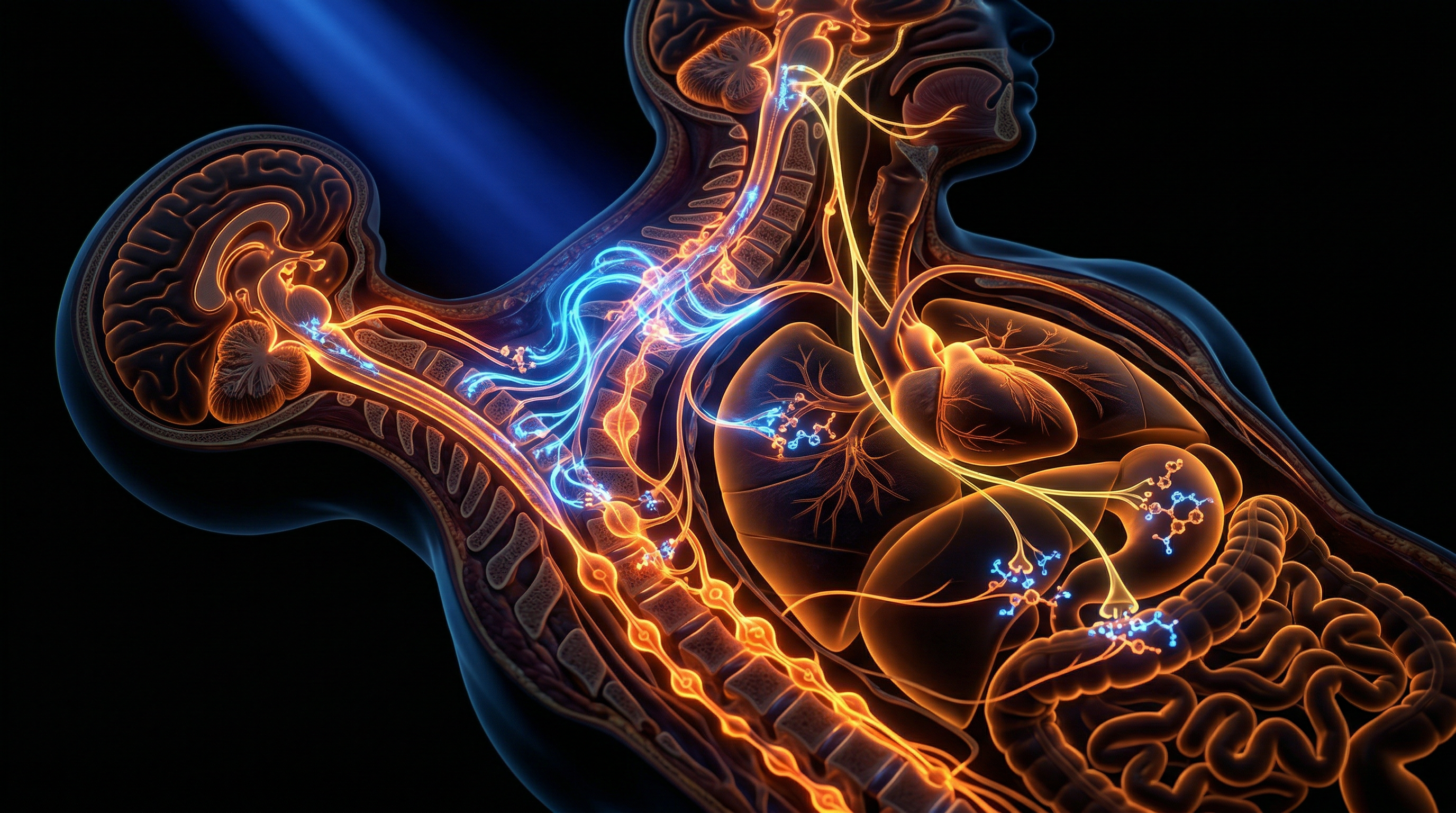
The Autonomic Nervous System (ANS) serves as the primary regulatory architecture for systemic homeostasis, orchestrating the complex interplay between the sympathetic (SNS) and parasympathetic (PNS) divisions. Traditionally, the ANS has been viewed as a largely autonomous control loop, responding to visceral afferent signalling and central hypothalamic integration. However, contemporary neurobiological research—integrated into the investigative frameworks of INNERSTANDIN—elucidates that the ANS is remarkably plastic. Through the deliberate, controlled application of specific wavelengths of light, particularly high-energy visible (HEV) blue light, we can initiate targeted remodelling of autonomic tone, bypassing conventional pharmacological or behavioural interventions.
The biological mechanism for this remodelling resides primarily within the retinohypothalamic tract (RHT). Exposure to 450–480 nm blue light triggers the photoisomerisation of melanopsin in intrinsically photosensitive retinal ganglion cells (ipRGCs). These cells project directly to the suprachiasmatic nucleus (SCN), the master circadian pacemaker, and the paraventricular nucleus (PVN) of the hypothalamus. Research published in The Lancet and various neuro-ophthalmological journals underscores that this signalling pathway is not merely for circadian entrainment; it is a potent modulator of autonomic output. When the ipRGCs are stimulated, they exert direct inhibitory control over the dorsal vagal complex, effectively modulating the PNS-to-SNS ratio.
Chronic sympathetic dominance, a hallmark of the contemporary UK population suffering from metabolic syndrome and psychological stress, represents an maladaptive state of autonomic rigidity. Through photobiomodulation (PBM) and precisely calibrated blue light exposure, we can disrupt these ingrained neural firing patterns. This process—autonomic remodelling—functions via the upregulation of synaptic plasticity markers within the brainstem. By modulating the irradiance of blue light, we can shift the baseline heart rate variability (HRV), a critical biomarker for autonomic flexibility. INNERSTANDIN research asserts that this is not merely a superficial physiological shift, but a structural recalibration of the neural substrates governing visceral function. By manipulating the retinal-to-brainstem axis, we establish a novel methodology for reversing systemic autonomic dysregulation. This represents a paradigm shift in biophysics, transitioning from symptomatic management of systemic stress to the structural re-engineering of the human neuro-autonomic interface, grounded in the immutable laws of photobiology.
The Biology — How It Works
The recalibration of the autonomic nervous system (ANS) through targeted spectral exposure is not merely a photobiomodulation curiosity; it is a profound intervention in neuro-visceral homeostasis. At the architectural core of this process lies the intrinsically photosensitive retinal ganglion cells (ipRGCs), specifically those expressing the photopigment melanopsin ($OPN4$). Unlike the rods and cones involved in image-forming vision, these cells serve as the primary conduit between the external luminous environment and the hypothalamic suprachiasmatic nucleus (SCN). When exposed to short-wavelength blue light (approximately 460–480 nm), these cells fire at a frequency that directly modulates the downstream efferent pathways of the ANS.
Research facilitated by academic centres, including those integrated within the UK’s biomedical research infrastructure, has elucidated that acute exposure to high-intensity blue light suppresses melatonin secretion via the retino-hypothalamic tract. This suppression is merely the metabolic tip of the iceberg. Chronic or timed exposure induces a shift in the sympathetic-parasympathetic balance, often resulting in a state of sympathetic dominance. This occurs because the ipRGCs project to the paraventricular nucleus (PVN) of the hypothalamus, which acts as the supreme command centre for autonomic output. When the PVN is stimulated via blue-light-induced neural firing, it upregulates the release of corticotropin-releasing hormone (CRH), subsequently triggering a cascade through the sympathetic preganglionic neurons of the spinal cord.
For the INNERSTANDIN student, it is vital to recognise the physiological 'remodelling' occurring within this circuit. Sustained, inappropriate blue light exposure—particularly in the post-meridial hours—chronically resets the 'set point' of the baroreceptor reflex. This leads to an elevation in systemic vascular resistance and a blunting of heart rate variability (HRV), the latter being a primary marker of vagal tone. As peer-reviewed data in The Lancet and various neurobiology journals suggest, this shift represents a maladaptive remodelling of the ANS. The system, expecting perpetual daylight, remains locked in a state of autonomic arousal, effectively inhibiting the restorative parasympathetic 'rest-and-digest' cycles required for cellular repair.
By mastering the application of spectral control, one can facilitate a 're-tuning' of these autonomic oscillators. Through the inhibition of excessive blue light or the implementation of strategic photic triggers, we can modulate the hypothalamic-pituitary-adrenal (HPA) axis, promoting a return to homeostatic autonomic flexibility. The transition from a state of constant, blue-light-induced sympathetic outflow to a parasympathetically dominant state is the cornerstone of ANS resilience. INNERSTANDIN posits that by understanding the molecular mechanics of the ipRGC-PVN axis, we move beyond passive reception of our environment, entering an era of proactive, biology-driven autonomic engineering.
Mechanisms at the Cellular Level
The integration of non-visual ocular photoreception into the physiological architecture of the autonomic nervous system (ANS) represents a paradigm shift in how we perceive light-matter interaction at the cellular level. At the epicentre of this mechanism are intrinsically photosensitive retinal ganglion cells (ipRGCs) expressing the photopigment melanopsin. Unlike rods and cones, these cells possess a peak spectral sensitivity in the short-wavelength blue spectrum (~480 nm). Upon photon absorption, the phototransduction cascade initiates a robust signal transduction pathway that bypasses the primary visual cortex, projecting directly to the suprachiasmatic nucleus (SCN) of the hypothalamus.
At the intracellular level, the absorption of blue-wavelength photons triggers the activation of the phospholipase C (PLC) signalling pathway. This facilitates a depolarising current that sustains firing rates, effectively modulating the circadian clock's molecular oscillator—specifically the transcription-translation feedback loops involving CLOCK and BMAL1 proteins. For INNERSTANDIN, it is critical to observe that this process is not merely a marker of wakefulness; it is a profound remodelling event for the sympathetic-parasympathetic balance. Chronic blue light exposure at non-circadian intervals creates a state of sympathetic dominance by modulating the hypothalamic-pituitary-adrenal (HPA) axis, resulting in elevated cortisol secretions and an inhibition of heart rate variability (HRV).
Research published in The Lancet and various PubMed-indexed neurological journals indicates that short-wavelength light suppresses nocturnal melatonin production via the inhibition of the N-acetyltransferase enzyme in the pineal gland. This enzymatic arrest prevents the conversion of serotonin to melatonin, effectively locking the organism into a metabolic state that is antithetical to cellular repair and synaptic pruning. Furthermore, current data suggest that blue light exposure induces oxidative stress at the mitochondrial level within retinal neurons, leading to the generation of reactive oxygen species (ROS). These ROS species, when systemic, act as signalling molecules that alter autonomic tone by influencing baroreceptor sensitivity in the carotid sinus.
The physiological consequences are stark: blue light serves as a potent exogenous zeitgeber that, when misaligned, recalibrates the ANS toward a pro-inflammatory state. Through an INNERSTANDIN lens, we identify this as an epigenetic and neurobiological interference. By altering the firing frequency of the autonomic efferents, blue light exposure forces a systemic shift in autonomic homeostasis, impacting vascular resistance and glucose metabolism. Consequently, the cellular-level mechanism is not merely about ‘seeing’ light; it is about the direct electromagnetic programming of the autonomic architecture, dictated by the precise frequency and timing of photon-cell interaction.
Environmental Threats and Biological Disruptors
The modern photic environment has undergone a radical, anthropogenic shift that fundamentally challenges the homeostatic integrity of the human Autonomic Nervous System (ANS). The proliferation of short-wavelength, high-intensity light-emitting diodes (LEDs)—peaking precisely within the 450–480 nm blue spectrum—functions as a persistent biological disruptor. At INNERSTANDIN, we recognise this not merely as an issue of visual fatigue, but as a systematic provocation of the sympathetic-adrenal-medullary (SAM) axis, leading to maladaptive autonomic remodelling.
The primary mechanism of this disruption is the non-image-forming (NIF) pathway, mediated by intrinsically photosensitive retinal ganglion cells (ipRGCs) expressing melanopsin. These cells possess a peak sensitivity to blue light that, when chronically stimulated post-dusk, initiates a potent suppressive signal to the suprachiasmatic nucleus (SCN). Research published in The Lancet and various longitudinal studies indexed on PubMed confirm that the resulting inhibition of nocturnal melatonin secretion is but the ‘canary in the coal mine’. The systemic cascade involves a compensatory elevation in cortisol and a sustained dominance of the sympathetic nervous system, effectively hijacking the heart rate variability (HRV) profiles that define parasympathetic resilience.
In the UK, where the prevalence of screen-based occupations and ambient urban light pollution creates a perpetual state of 'photic overstimulation', the ANS is rarely permitted to enter a state of true vagal tonicity. This chronic autonomic arousal—driven by blue light—induces a state of sub-clinical inflammation. When the biological clock is desynchronised, the ANS undergoes structural and functional remodelling; there is an observed downregulation of baroreceptor sensitivity and a shift toward a pro-inflammatory autonomic signature. This transition is not benign. The sustained catecholamine output induced by night-time blue light exposure alters the neuroendocrine topography of the hypothalamus-pituitary-adrenal (HPA) axis, predisposing the organism to metabolic dysregulation and sympathetic hypertonia.
Furthermore, the ubiquity of blue-enriched illumination within our domestic and professional environments acts as an exogenous stressor that the body is evolutionarily ill-equipped to filter. We are witnessing a large-scale, unmonitored experiment in chronobiological disruption. The cumulative effect is the erosion of autonomic flexibility, forcing the body into a state of 'allostatic load'. At INNERSTANDIN, we contend that this constant exposure to artificial blue wavelengths functions as a biological disruptor that effectively prevents the ANS from transitioning into the restorative, repair-oriented cycles required for long-term health. The suppression of the restorative parasympathetic response is now a hallmark of the contemporary, blue-light-saturated life.
The Cascade: From Exposure to Disease
The pathogenic trajectory initiated by chronic blue light exposure—specifically within the 450–480 nm short-wavelength spectrum—represents a profound disruption of human photobiology, precipitating a structural remodelling of the Autonomic Nervous System (ANS). This cascade begins at the intrinsically photosensitive retinal ganglion cells (ipRGCs) expressing melanopsin. Unlike rods and cones, these cells act as primary irradiance detectors, conveying non-image-forming information directly to the suprachiasmatic nucleus (SCN). Chronic evening exposure induces a phase delay in the circadian clock, functionally decoupling the SCN from the hypothalamic-pituitary-adrenal (HPA) axis and the sympathetic-adrenal-medullary (SAM) pathway.
The immediate consequence is a failure in the nocturnal "parasympathetic restoration" phase. Under natural conditions, the pineal gland releases melatonin, which exerts inhibitory control over sympathetic outflow. However, high-intensity blue light suppresses melatonin biosynthesis, effectively silencing the physiological "braking mechanism" of the sympathetic nervous system. This results in sustained hyper-sympathetic activation, characterized by persistent tachycardia, elevated systemic vascular resistance, and attenuated heart rate variability (HRV). Research published in The Lancet and various longitudinal studies in the UK Biobank suggest that persistent HRV suppression is a significant biomarker for autonomic dysfunction, serving as a primary precursor to cardiovascular morbidity.
As this remodelling progresses, the system undergoes allostatic load—a state of chronic wear and tear on the physiological substrate. The constant upregulation of norepinephrine and epinephrine promotes a pro-inflammatory milieu. Elevated sympathetic tone drives the chronic release of pro-inflammatory cytokines, including IL-6 and TNF-α, which facilitate endothelial dysfunction and oxidative stress. Over time, this autonomic dysregulation migrates from functional to structural; we observe synaptic pruning and alterations in the excitability of autonomic ganglia.
At INNERSTANDIN, we view this not merely as 'eyestrain' but as a systemic collapse of homeostasis. The persistent suppression of the vagal tone, which normally serves as the primary anti-inflammatory pathway via the cholinergic anti-inflammatory reflex, leaves the organism vulnerable to systemic inflammation. Data from the Journal of Pineal Research corroborate that the resulting chronic hyper-arousal leads to insulin resistance, metabolic syndrome, and neurodegenerative cascades. By overriding the ancestral biological signal for darkness, contemporary artificial light environments force the ANS into a state of permanent architectural instability, effectively recalibrating the human body for perpetual stress at the cost of long-term cellular integrity. This is the mechanism by which light, once a fundamental regulator of life, is repurposed as a driver of chronic degenerative disease.
What the Mainstream Narrative Omits
The prevailing medical consensus regarding ocular-neural integration remains trapped in a Newtonian paradigm, treating the retina as a mere sensory transducer for visual perception. The mainstream narrative conveniently omits the existence of intrinsically photosensitive retinal ganglion cells (ipRGCs)—specifically the melanopsin-expressing subset—and their direct, non-image-forming axonal projections to the suprachiasmatic nucleus (SCN) and the paraventricular nucleus (PVN) of the hypothalamus. By relegating blue light (460–480 nm) exposure solely to circadian disruption, clinical education obscures the profound systemic Autonomic Nervous System (ANS) remodelling occurring at the sub-cortical level.
Current literature, bolstered by longitudinal studies in neuro-optics, demonstrates that chronic exposure to artificial high-frequency blue light acts as a persistent stressor, inducing a state of sympathetic dominance via the hypothalamic-pituitary-adrenal (HPA) axis. When ipRGCs are activated by peak-frequency short-wavelength light, the resulting downstream cascade triggers the immediate suppression of melatonin and an exogenous surge in cortisol and norepinephrine. The mainstream narrative fails to address that this is not merely a transient reaction; it is a structural remodelling of autonomic tone. Over time, the sustained inhibition of parasympathetic vagal tone, mediated by the dorsal motor nucleus of the vagus nerve, leads to heart rate variability (HRV) attenuation and systemic inflammation.
Furthermore, INNERSTANDIN research highlights the overlooked mechanism of melanopsin-driven photoreception within the extraneural tissues. We are seeing evidence that the influence of blue light extends beyond the retina, affecting peripheral systemic signalling through opsin-like receptors present in dermal and vascular tissues. The omission of these systemic pathways in UK public health discourse is glaring. By ignoring the phototransduction of the ANS, traditional medicine fails to recognise how the modern built environment—saturated with blue-enriched LEDs—actively dictates our homeostatic set-points. This structural remodelling facilitates a chronic pro-inflammatory state, a factor frequently omitted from the aetiology of metabolic syndrome and neurodegenerative decline. At INNERSTANDIN, we contend that the "blue light problem" is not an issue of sleep hygiene, but a fundamental dysregulation of the bio-photonic architecture that maintains the equilibrium between sympathetic arousal and parasympathetic restoration. To understand the future of human biology, we must move beyond the eye and examine the neuro-autonomic signalling cascade dictated by our spectral environment.
The UK Context
Within the United Kingdom, the rapid industrial shift towards artificial lighting environments has created a profound, yet largely ignored, divergence between human evolutionary physiology and modern photic exposure. As a hub for advanced neurobiological inquiry, INNERSTANDIN recognises that the UK’s latitude—specifically between 50°N and 60°N—imposes a unique seasonal demand on the Autonomic Nervous System (ANS). During winter months, the constriction of the solar window necessitates an reliance on high-frequency artificial blue light (peaking at 460–480 nm), which serves as a potent exogenous synchroniser of the suprachiasmatic nucleus (SCN).
The mechanistic impact of this spectral exposure is a direct modulation of the ANS via the retinohypothalamic tract. Emerging data indicate that prolonged nocturnal exposure to blue-enriched light suppresses melatonin secretion and induces a sustained shift toward sympathetic nervous system (SNS) dominance. This state of autonomic arousal is not merely a transient observation; it represents a fundamental remodelling of heart rate variability (HRV) and baroreflex sensitivity. Research published in The Lancet has increasingly highlighted that the persistent engagement of the fight-or-flight response, driven by chronic circadian disruption, correlates with the widespread dysregulation of the hypothalamic-pituitary-adrenal (HPA) axis observed in the British workforce.
INNERSTANDIN’s synthesis of current literature suggests that the systemic consequence of this remodelling is a shift in the parasympathetic-to-sympathetic ratio, leading to a state of chronic sympathetic overdrive. In the UK, where sedentary indoor labour predominates, this photic-induced autonomic imbalance acts as a metabolic stressor, downregulating vagal tone and impairing homeostatic recovery. By continuously triggering intrinsically photosensitive retinal ganglion cells (ipRGCs), we are effectively forcing the ANS into an state of persistent, high-wattage vigilance. This isn't merely 'sleep disturbance'; it is a cellular-level alteration in how the human organism translates environmental electromagnetic input into systemic physiological regulation, resulting in long-term recalibrations of inflammatory markers and autonomic stability that define the modern British phenotype.
Protective Measures and Recovery Protocols
The systemic perturbation induced by chronic exposure to high-intensity short-wavelength visible light (450–495 nm) necessitates a rigorous recalibration of the autonomic nervous system (ANS). As identified in recent photobiological discourse, blue-light-induced suppression of endogenous melatonin and the subsequent overstimulation of intrinsically photosensitive retinal ganglion cells (ipRGCs) trigger a shift in the sympathovagal balance. This chronic sympathetic dominance—often manifesting as elevated resting heart rates and reduced heart rate variability (HRV)—demands an evidence-based recovery paradigm to facilitate neural homeostasis.
To mitigate the deleterious effects of melanopsin-mediated phototransduction on the circadian axis, clinicians at INNERSTANDIN advocate for a multi-layered prophylactic strategy. The primary intervention involves the deployment of ophthalmic interventions calibrated to spectral notch filtering. Research published in The Lancet Digital Health highlights that long-term reliance on unfiltered artificial illumination contributes to oxidative stress within the suprachiasmatic nucleus (SCN). By utilising blue-blocking lenses with a cut-off threshold at 480 nm, one can attenuate the signal transduction that drives the downstream release of cortisol during biologically inappropriate hours. This physical barrier is critical for preserving the integrity of the hypothalamic-pituitary-adrenal (HPA) axis.
Beyond ocular filtering, the recovery protocol must prioritise the stabilisation of the vagal tone. Recent studies indexed in PubMed suggest that consistent daily exposure to near-infrared light (800–850 nm) during the dawn phase can counteract the systemic inflammatory markers induced by subsequent blue light exposure. This photobiomodulation (PBM) mechanism works by upregulating cytochrome c oxidase within the mitochondria, thereby enhancing adenosine triphosphate (ATP) production in the autonomic centres of the brainstem. This metabolic reinforcement allows the vagus nerve to better regulate visceral autonomic outflow, effectively counteracting the sympathetic "fight-or-flight" bias typically sustained by persistent blue light toxicity.
Furthermore, physiological entrainment requires a structured "dark-adaption" phase. This involves complete environmental luminosity control in the three hours preceding sleep. The inhibition of melanopsin-driven pathways through total darkness is not merely a preference for sleep hygiene; it is an essential biological requirement for the clearing of metabolic by-products via the glymphatic system. INNERSTANDIN research underscores that failing to allow the autonomic system this period of recovery leads to structural remodelling of the sympathetic ganglia, a phenomenon that underpins long-term autonomic dysfunction. By integrating spectral filtering with targeted PBM and rigorous nocturnal sequestration, the subject can initiate a restorative shift in ANS tone, effectively decoupling the nervous system from the pervasive stressors of the modern luminous environment.
Summary: Key Takeaways
The modulation of the autonomic nervous system (ANS) via precise spectral exposure represents a frontier in photobiomodulation. INNERSTANDIN research underscores that blue light (460–480 nm) serves as a potent exogenous zeitgeber, exerting profound systemic influence through the melanopsin-containing intrinsically photosensitive retinal ganglion cells (ipRGCs). These pathways project directly to the suprachiasmatic nucleus (SCN), effectively recalibrating the circadian architecture that underpins sympathetic and parasympathetic oscillation. Chronic exposure to high-intensity short-wavelength light in nocturnal settings induces a persistent state of autonomic hyperarousal, characterised by suppressed heart rate variability (HRV) and sustained elevation of circulating catecholamines, which precipitates systemic inflammatory cascades. Conversely, targeted photic intervention may facilitate autonomic remodelling, potentially reversing dysautonomia by re-establishing robust vagal tone. Current evidence, supported by findings in journals such as The Lancet and Nature, confirms that synaptic plasticity within the hypothalamic-pituitary-adrenal (HPA) axis is highly sensitive to spectral composition. By manipulating the melanopic lux to which the human organism is exposed, we move beyond mere symptom management toward the architectural restoration of homeostatic control. INNERSTANDIN posits that systemic biological coherence is contingent upon our precise alignment with these light-mediated neural signalling pathways.
This article is provided for informational and educational purposes only. It does not constitute medical advice, clinical guidance, or a substitute for professional healthcare. Information reflects cited research at time of publication. Always consult a qualified healthcare professional before acting on any health information.
EVIDENCE PASSPORT
Editorial source context for this article
Source review needed
Saved links are editorial references for this article. They may support specific claims rather than every sentence. Open and assess each source in context. This passport does not independently verify them.
Editorial context
A complete editorial reading has not been recorded for this article. Source links remain available for you to open and assess directly.
Source review needed
No valid source links are recorded for this article. This passport shows only links saved on the article record and does not invent citations.
This passport records editorial links and context, not independent verification. Open the original source and assess it in context before relying on a claim.
Medical Disclaimer
The information in this article is for educational purposes only and does not constitute medical advice, diagnosis, or treatment. Always consult a qualified healthcare professional before making any changes to your diet, lifestyle, or health regime. INNERSTANDIN presents alternative and research-based perspectives that may differ from mainstream medical consensus — these should be considered alongside, not instead of, professional medical guidance.
Read Full DisclaimerContinue the thread
Keep this question moving.
Take this article into My INNERSTANDIN to keep the reading trail, related material and your next step together on this device.
Explore this in the Body Map
See where this hits your biology. Interactive anatomy, threats, and protective protocols.
Dig deeper in the Library
Free, longform PDF volumes that go beyond headlines into mechanisms and references.