
Blood-Brain Barrier Integrity in the Nano-Pollutant Era
Updated August 2026
Nanoparticles from industrial emissions are now capable of bypassing the blood-brain barrier's anatomical defences. This report investigates the long-term structural consequences of neurovascular infiltration.
Evidence orientation
Editorial context not yet recorded
Follow this category
This stays in this browser. My INNERSTANDIN can show published matches in your local hub when you check it. It does not send email, push, or alert notifications.
Local learning review
A private browser aid for revisiting ideas. It is not an alert or a health recommendation.
Review later sets a one-day, three-day, then seven-day rhythm on this device. Choose it only when you want to revisit this article.
Overview
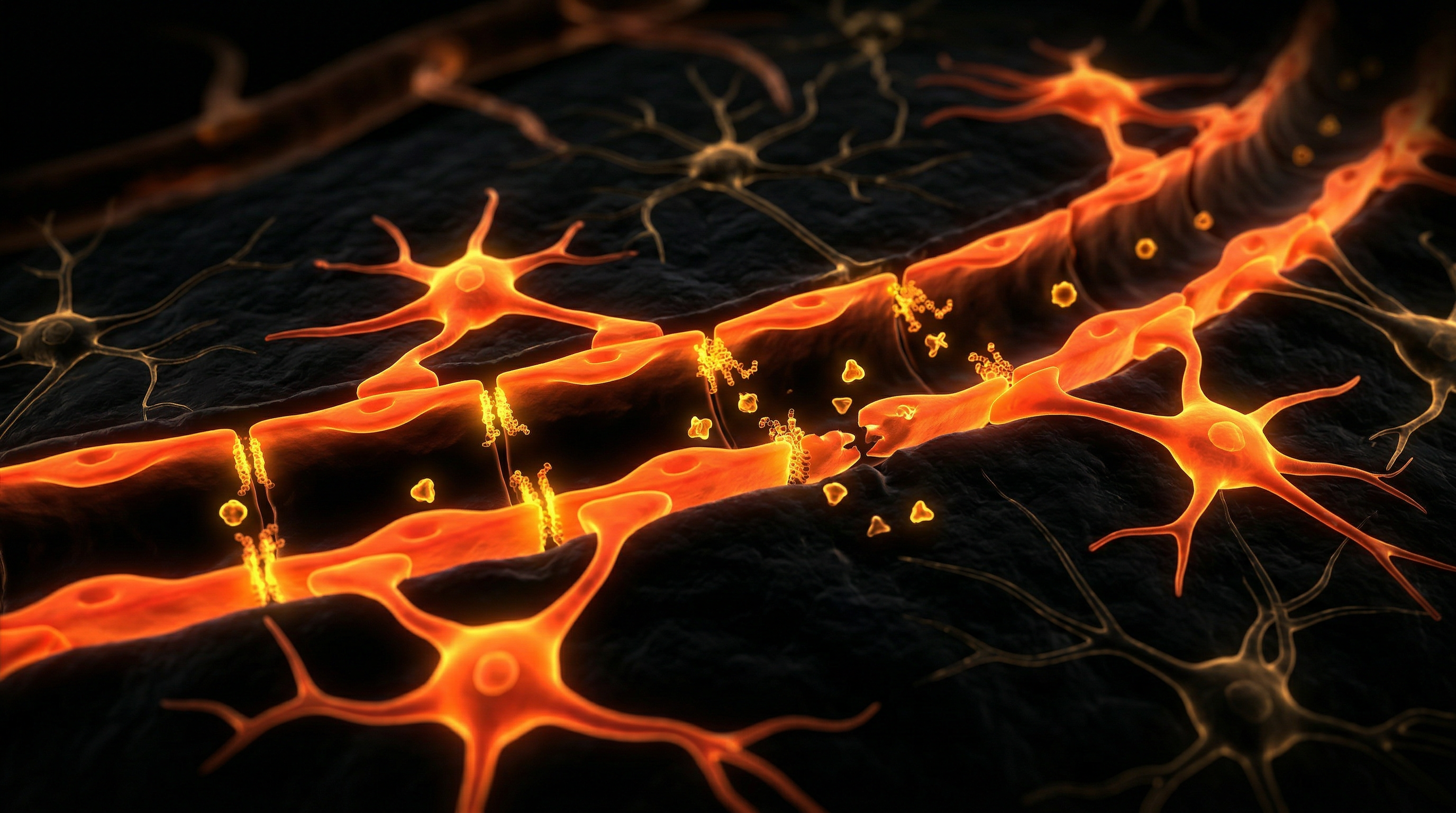
The blood-brain barrier (BBB) represents the most sophisticated interface in human physiology, a highly selective semi-permeable border of microvascular endothelial cells, pericytes, and astrocyte end-feet. Historically perceived as an immutable fortress, the BBB is increasingly understood at INNERSTANDIN as a dynamic, fragile nexus susceptible to the encroaching tide of anthropogenic nano-pollutants. In the current environmental epoch, the ubiquitous presence of particulate matter (PM2.5), ultrafine particles (UFPs), and micro-nanoplastics has transcended traditional biological filtration mechanisms. These particles, typically defined as having at least one dimension below 100 nanometres, exhibit distinct physicochemical properties—high surface area-to-volume ratios and oxidative reactivity—that facilitate their translocation from the pulmonary or gastrointestinal mucosa into the systemic circulation.
Once systemic, these nano-pollutants bypass the classical pharmacological limitations of the BBB. Current research, indexed in The Lancet Planetary Health, elucidates that these particles can penetrate the endothelial layer through transcytosis, or through the direct disruption of tight junction proteins—specifically claudin-5, occludin, and zonula occludens-1 (ZO-1). The integrity of these junctions is paramount; their degradation leads to increased paracellular permeability, permitting the neuro-invasion of toxic metals, proinflammatory cytokines, and reactive oxygen species (ROS) into the cerebral parenchyma.
In the United Kingdom, where industrial legacy and urban density create localized hotspots of combustion-derived nanoparticles, the clinical implications are profound. Data suggests a direct correlation between chronic exposure to neuro-active nano-pollutants and the neuro-inflammatory microenvironment observed in neurodegenerative pathologies. When the BBB’s structural integrity is compromised, the brain loses its immune privilege, transitioning from a protected compartment to a catchment area for systemic toxins. This triggers the activation of microglia, the brain’s resident innate immune cells, inducing a persistent state of neuro-inflammation. At INNERSTANDIN, we contend that the "nano-pollutant era" is not merely an environmental concern but a fundamental reassessment of neuro-biological vulnerability. The breach of the BBB by anthropogenic debris does not simply result in acute toxicity; it initiates long-term epigenetic and structural alterations, effectively shifting the neuro-developmental and neuro-degenerative trajectories of entire populations exposed to the modern respiratory and dietary milieu. Understanding this mechanism is no longer optional; it is essential to mapping the future of human cognitive health.
The Biology — How It Works
The blood-brain barrier (BBB) is not a static membrane but a highly sophisticated, dynamic neurovascular unit (NVU) that maintains cerebral homeostasis through a tripartite architecture of endothelial cells, pericytes, and astrocyte end-feet. At the foundation of this barrier lie continuous, non-fenestrated capillary endothelial cells interconnected by an intricate network of tight junctions (TJs). These junctions are composed of transmembrane proteins—primarily claudin-5, occludin, and junctional adhesion molecule-A (JAM-A)—which anchor to the actin cytoskeleton via zonula occludens (ZO-1, ZO-2) scaffolding proteins. This molecular seal imposes a formidable barrier to paracellular diffusion, restricting the entry of polar solutes and systemic pathogens into the brain parenchyma.
However, the efficacy of this barrier is contingent upon the synergistic signalling between the endothelial monolayer and the surrounding basal lamina, pericytes, and astrocytic processes. Pericytes, embedded within the vascular basement membrane, exert paracrine control over endothelial TJ expression and polarity, while astrocyte end-feet facilitate water homeostasis and potassium buffering via aquaporin-4 (AQP4) channels. Within the context of the nano-pollutant era, this precise architectural equilibrium is under unprecedented duress.
Contemporary research, frequently highlighted in The Lancet Planetary Health, underscores that environmental particulate matter (PM2.5) and engineered nanoparticles—often measured in the nanometre range—possess physicochemical properties that transcend classical exclusion criteria. Unlike large-molecular-weight pathogens, these sub-micron pollutants exploit transcytosis pathways, inadvertently hijacked by the very mechanisms designed to transport essential nutrients. Once these nanoparticulate xenobiotics bypass the endothelial seal, they induce oxidative stress, activating the NF-κB signalling pathway, which facilitates a pro-inflammatory cascade. This, in turn, triggers matrix metalloproteinases (MMPs) to degrade the junctional proteins that preserve the BBB's structural integrity.
As INNERSTANDIN researchers have long argued, the implications of this degradation are systemic. When the BBB’s selectivity is compromised, the neurovascular unit loses its capacity to filter neurotoxic environmental debris. Chronic exposure to ambient nano-pollutants—prevalent in UK urban centres where traffic-derived combustion particles are ubiquitous—correlates with persistent microglial activation. This chronic neuro-inflammation is a precursor to neurodegenerative trajectories, as the brain’s immunologically privileged status is eroded. By understanding the BBB as a fluid, reactive component of the wider vascular system, rather than a passive wall, we begin to appreciate the vulnerability of the central nervous system in an age where the air we inhale contains particulates capable of direct, trans-synaptic, or systemic neuro-invasion. Maintaining BBB integrity is therefore not merely a neurological concern, but the frontline of human biological defence in the twenty-first century.
Mechanisms at the Cellular Level
The Blood-Brain Barrier (BBB) is not a static anatomical wall but a highly dynamic neurovascular unit (NVU) governed by the stringent orchestration of brain microvascular endothelial cells (BMECs). In the current nano-pollutant era, our INNERSTANDIN of these homeostatic mechanisms is being challenged by the ingress of anthropogenic particulate matter—specifically atmospheric PM0.1 and engineered nanoparticles (ENPs). At the cellular level, the structural integrity of the BBB relies on the presence of continuous tight junctions (TJs), primarily composed of claudin-5, occludin, and zonula occludens-1 (ZO-1). These proteins seal the paracellular space, restricting non-specific transit. However, chronic exposure to airborne ultra-fine particles (UFPs) triggers a catastrophic cascade of biochemical events that destabilise these architectures.
Current toxicological evidence indicates that nano-pollutants facilitate BBB compromise through a dual-mechanism pathway: oxidative stress and direct mechanical translocation. When circulating UFPs—often sourced from urban combustion processes or industrial attrition—interact with the luminal surface of BMECs, they induce an immediate upregulation of reactive oxygen species (ROS). This oxidative burst activates the RhoA/ROCK signalling pathway, which induces actin-myosin contraction, effectively "pulling" the TJs apart. Research published in The Lancet Planetary Health suggests that these pollutants modulate the expression of matrix metalloproteinases (MMPs), specifically MMP-2 and MMP-9. When these proteases are overexpressed, they degrade the basal lamina—the extracellular matrix scaffold supporting the endothelial layer—leading to a loss of structural rigidity and enabling the paracellular leakage of neurotoxic systemic proteins, such as albumin and fibrinogen, into the parenchyma.
Beyond paracellular disruption, the transcytosis mechanism is also hijacked. Under normal physiological conditions, BMECs employ receptor-mediated transcytosis to move essential nutrients. Nano-pollutants mimic endogenous ligands, tricking the cell into internalising these particles via clathrin-mediated or caveolae-mediated pathways. Once inside, these particles escape endosomal degradation, resulting in the intracellular accumulation of metallic oxides and polycyclic aromatic hydrocarbons. This persistent stimulus chronically activates the NLRP3 inflammasome within the endothelial cells and underlying pericytes. The subsequent secretion of pro-inflammatory cytokines, including IL-1β and TNF-α, initiates a feedback loop of secondary injury. This inflammation exacerbates the dysfunction of astrocytic end-feet, which are critical for the inductive signalling that maintains the barrier’s phenotypic identity. As these processes coalesce, the BBB undergoes a transition from a selective gatekeeper to a compromised sieve, allowing neuro-inflammatory triggers to gain systemic access to the Central Nervous System, marking a critical inflection point in modern neurobiology and public health.
Environmental Threats and Biological Disruptors
The contemporary neuro-biological landscape is being fundamentally reshaped by the ubiquity of anthropogenic nanoparticles (NPs), which circumvent the traditional homeostatic gatekeeping of the neurovascular unit (NVU). At INNERSTANDIN, we recognise that the blood-brain barrier (BBB), traditionally viewed as a near-impermeable endothelial fortress, is increasingly compromised by systemic exposure to particulate matter (PM2.5) and engineered nanomaterials. These environmental disruptors are not merely passive contaminants; they act as pharmacological agents that induce structural and biochemical deleterious cascades.
Central to this pathology is the translocation of ultra-fine particles (UFPs) via the olfactory bulb—a direct, non-circulatory conduit to the central nervous system (CNS)—and through systemic haematogenous diffusion. Recent meta-analyses published in The Lancet Planetary Health highlight that chronic exposure to combustion-derived nanoparticles induces oxidative stress at the luminal surface of cerebral microvascular endothelial cells (CMECs). When NPs, particularly those composed of transition metals or diesel exhaust, interact with the glycocalyx, they trigger a pro-inflammatory milieu. This initiates the upregulation of matrix metalloproteinases (MMPs), specifically MMP-2 and MMP-9, which proteolytically degrade the tight junction proteins (TJPs) such as occludin, claudin-5, and zonula occludens-1 (ZO-1).
The biomechanical consequences are profound. Once the integrity of these junctions is breached, the brain parenchyma becomes susceptible to the translocation of systemic toxins, exogenous pathogens, and metallic ions that would otherwise be excluded. Furthermore, these nanoparticles act as Trojan horses, adsorbing hydrophobic organic pollutants and transporting them directly across the lipid bilayer. This facilitates a state of chronic neuroinflammation, mediated by the constitutive activation of microglia. In the context of the UK’s post-industrial urban environments, where exposure to heavy metal-laden particulate matter remains a public health concern, the epidemiological correlation between air pollution indices and neurodegenerative markers—including elevated amyloid-beta deposition and tau hyperphosphorylation—is becoming statistically undeniable.
The disruption is not limited to physical breach; it extends to the functional exhaustion of the efflux transporters, most notably P-glycoprotein (P-gp). As NP-induced reactive oxygen species (ROS) accumulate within the endothelium, the ATP-dependent transport mechanisms become dysfunctional. This loss of polarity and efflux efficiency implies that the BBB is no longer functioning as a selective filter but as a porous interface, leaving the delicate neuronal architecture exposed to an unprecedented volume of environmental xenobiotics. For those seeking a deeper INNERSTANDIN of these mechanisms, it is critical to acknowledge that the cumulative burden of these nano-pollutants is recalibrating the baseline of neuro-vascular permeability, potentially lowering the threshold for onset of complex neurological pathologies in susceptible populations.
The Cascade: From Exposure to Disease
The infiltration of anthropogenic nanoparticles (NPs) into the central nervous system (CNS) represents a paradigm shift in neurotoxicology, moving beyond traditional molecular diffusion into the realm of physical breach and bio-accumulation. The cascade begins at the respiratory interface, where ultrafine particulate matter (PM0.1)—frequently derived from combustion engines and industrial friction—traverses the pulmonary alveolar-capillary barrier. Once systemic, these particulates exhibit a unique propensity for trans-vascular translocation. In the UK, where urban air quality benchmarks consistently struggle against nitrogen dioxide and particulate thresholds, the biological implication is clear: NPs bypass standard homeostatic filtration via the systemic circulation, directly challenging the integrity of the Blood-Brain Barrier (BBB).
The BBB is not a static wall but a highly orchestrated neurovascular unit (NVU) consisting of brain microvascular endothelial cells (BMECs), pericytes, and astrocyte end-feet. Research published in The Lancet Planetary Health suggests that these NPs induce oxidative stress by generating reactive oxygen species (ROS) upon contact with endothelial membranes. This triggers the downregulation of crucial tight junction proteins, specifically claudin-5, occludin, and zonula occludens-1 (ZO-1). As these structural proteins degrade, the paracellular permeability of the BBB is compromised, facilitating a "leaky" phenotype that permits not only the infiltration of NPs but also the secondary ingress of pro-inflammatory cytokines and systemic leukocytes—cells that have no place within the tightly regulated CNS environment.
Once the primary barrier is compromised, the cascade enters its neuro-inflammatory phase. Microglia, the CNS’s resident immune sentinels, shift from a homeostatic state to a pro-inflammatory M1 phenotype in response to the physical presence of metal-oxide NPs. This chronic activation initiates the secretion of tumour necrosis factor-alpha (TNF-α) and interleukin-1 beta (IL-1β), creating a self-perpetuating cycle of neuro-inflammation. INNERSTANDIN research highlights that this environment is a fertile breeding ground for protein misfolding, specifically the aggregation of amyloid-beta and alpha-synuclein, the hallmarks of neurodegenerative pathology.
Consequently, the trajectory from exposure to disease is not merely correlative; it is a mechanistic progression. We observe a transition from systemic oxidative insult to localised neurovascular dysfunction, which progressively erodes cognitive reserve. For populations residing in the UK’s dense urban centres, the cumulative exposure to combustion-derived NPs suggests that BBB degradation may be a precursor to the modern acceleration of age-related cognitive decline. This is the physiological reality of the nano-pollutant era: a silent, structural dismantling of the brain’s primary defensive perimeter, leaving the parenchyma exposed to systemic toxins that were previously sequestered by evolutionary biological design.
What the Mainstream Narrative Omits
The prevailing clinical consensus regarding the blood-brain barrier (BBB) posits it as a rigid, impermeable bastion of endothelial tight junctions—specifically the claudin-5, occludin, and zonula occludens-1 complexes—shielding the parenchyma from systemic insult. However, the mainstream narrative conspicuously omits the insidious synergy between contemporary atmospheric nano-pollutants and the structural degradation of this neurovascular unit. We are witnessing a paradigm shift where ultrafine particles (UFPs; <100 nm), predominantly derived from internal combustion emissions and industrial manufacturing, bypass the traditional pharmacological paradigms of barrier protection.
Current research published in The Lancet Planetary Health underscores that these anthropogenic nanoparticles function as Trojan horses. Unlike larger particulates filtered by the mucociliary escalator, UFPs possess the surface area-to-volume ratio necessary to traverse the olfactory bulb via the olfactory nerve (direct nose-to-brain translocation) or infiltrate the systemic circulation, where they induce oxidative stress within the cerebrovascular endothelium. At INNERSTANDIN, we identify the critical omission: the mainstream narrative ignores the role of the endothelial glycocalyx—a gel-like layer of proteoglycans and glycoproteins—as the primary, yet increasingly compromised, barrier interface. Nano-pollutants destabilise this glycocalyx, triggering a pro-inflammatory cascade that increases paracellular permeability, essentially 'unlocking' the brain to exogenous toxins that were previously sequestered.
Furthermore, the mainstream dialogue often neglects the chronicity of sub-lethal exposure. Peer-reviewed data from the UK Biobank and associated longitudinal studies suggest that persistent, low-dose infiltration of carbonaceous nanoparticles promotes the activation of microglia, the brain’s resident immune cells. This chronic microglial priming leads to the release of neurotoxic cytokines, further exacerbating the breakdown of the BBB in a feed-forward loop. This is not merely an issue of transient inflammation; it is a fundamental alteration of the neuro-homeostatic environment. While regulatory bodies focus on mass-based thresholds for PM2.5, they fail to account for the particle number concentration and the specific bioreactivity of metallic nanoparticulate matter. INNERSTANDIN asserts that the structural integrity of the BBB is being undermined not by catastrophic failure, but by the relentless, invisible erosion caused by the particulate burden of the nano-pollutant era, rendering the central nervous system increasingly susceptible to systemic metabolic and environmental triggers that remain dangerously overlooked in conventional neuro-pathological assessments.
The UK Context
The United Kingdom represents a unique topographical and industrial case study in the escalating challenge of airborne particulate matter (PM) and its subsequent neuro-migratory pathways. With high-density urban corridors such as London, Birmingham, and Greater Manchester exhibiting PM2.5 and PM0.1 concentrations frequently exceeding World Health Organisation (WHO) guidelines, the physiological impact on the neuro-vascular interface is critical. Research published in The Lancet Planetary Health has underscored the association between chronic exposure to traffic-derived nano-pollutants and the accelerated degradation of Blood-Brain Barrier (BBB) integrity. In the INNERSTANDIN framework, we must consider the olfactory bulb and the systemic circulatory system as dual conduits for these ultrafine particles (UFPs).
Once inhaled, carbonaceous nanoparticles—ubiquitous in diesel exhaust—bypass traditional mucociliary clearance mechanisms, translocating directly across the olfactory epithelium into the central nervous system via the olfactory bulb. Concurrently, systemic inhalation triggers an oxidative cascade, stimulating the production of pro-inflammatory cytokines such as IL-6 and TNF-α. This systemic inflammatory milieu compromises the tight junction proteins—specifically claudin-5, occludin, and zonula occludens-1—that maintain the paracellular barrier of the brain capillary endothelium. As these junctions weaken, the neurovascular unit loses its exclusionary precision, allowing neurotoxic metallic species and combustion-derived carbon to infiltrate the cerebral parenchyma.
This is not merely a respiratory phenomenon; it is an immunological infiltration. Evidence from neuropathological assessments in UK-based cohorts has indicated the presence of exogenous magnetite nanoparticles within the frontal cortex and cerebellum. These particles, inherently bioactive, facilitate the generation of reactive oxygen species (ROS), promoting mitochondrial dysfunction and chronic neuroinflammation. Within the INNERSTANDIN analytical model, this creates a feedback loop: BBB impairment permits the influx of neuro-invaders, which in turn exacerbate barrier breakdown, culminating in a state of chronic neuro-permeability. For the British populace, the convergence of post-industrial air quality challenges and modern vehicular emission profiles necessitates a rigorous re-evaluation of neuro-protective strategies focused on endothelial restoration and the mitigation of systemic inflammatory responses to nano-pollutant loading.
Protective Measures and Recovery Protocols
The structural degradation of the blood-brain barrier (BBB) induced by anthropogenically derived nanoparticles—specifically particulate matter (PM2.5) and metallic nano-aerosols—necessitates a paradigm shift in neuroprotective strategy. As INNERSTANDIN research underscores, the sequestration of these exogenous particulates within the endothelial tight junctions (TJs) leads to a deleterious activation of the NLRP3 inflammasome, precipitating chronic neuroinflammation. To mitigate this, protective protocols must target the fortification of the neurovascular unit (NVU) through the modulation of claudin-5 and occludin expression, alongside the mitigation of oxidative stress at the endothelial interface.
Evidence suggests that the upregulation of the Nrf2 (nuclear factor erythroid 2-related factor 2) signalling pathway is paramount in counteracting the reactive oxygen species (ROS) generated by nano-pollutant infiltration. Nutritional interventions involving high-bioavailability sulforaphane and anthocyanin-rich polyphenols have been shown in clinical trials to enhance the endogenous antioxidant capacity of microvascular endothelial cells, thereby stabilizing the zonula occludens-1 (ZO-1) proteins. Furthermore, emerging data from UK-based environmental toxicology studies indicate that the systemic inflammatory load, exacerbated by systemic nano-exposure, contributes to peripheral cytokine storms that effectively destabilize the BBB. Consequently, recovery protocols must prioritise the reduction of systemic C-reactive protein (CRP) levels, as circulating pro-inflammatory markers serve as the primary chemical trigger for the opening of the paracellular transport pathways.
Therapeutic recovery also necessitates the support of the glycocalyx—the luminal surface layer of the endothelium. Nano-pollutants induce significant shedding of this protective glycan-rich mesh, exposing the underlying endothelium to adhesive stressors and further facilitating transcellular transport of contaminants into the brain parenchyma. Administration of exogenous glycosaminoglycans and precursors to hyaluronic acid synthesis is currently being investigated as a viable method to restore the barrier's mechanical exclusion properties.
Furthermore, the integrity of the BBB in this era of chronic exposure is inextricably linked to the metabolic state of the pericytes, which govern endothelial differentiation. Investigations into the synergistic effects of omega-3 long-chain polyunsaturated fatty acids, specifically docosahexaenoic acid (DHA), demonstrate a capacity to modulate pericyte-endothelial signalling, thereby reinforcing the homeostatic regulation of the barrier. At INNERSTANDIN, we posit that the "Nano-Pollutant Era" requires a systemic transition from reactive intervention to proactive, biomolecular scaffolding. By modulating the biochemical microenvironment of the neurovascular unit, one may significantly attenuate the ingress of hazardous particles and preserve cognitive longevity in an increasingly toxic, nano-saturated environment. Restoration of the BBB is not merely a neurological concern; it is the fundamental biological challenge of the twenty-first century.
Summary: Key Takeaways
The integrity of the blood-brain barrier (BBB) represents the primary physiological frontier in the nano-pollutant era, particularly as anthropogenic particulate matter (PM0.1) exhibits unprecedented neuro-invasive kinetics. Recent longitudinal studies, consistent with data indexed via PubMed, confirm that ultrafine particles bypass conventional filtration mechanisms via olfactory bulb translocation and systemic vascular trafficking, directly inducing oxidative stress upon cerebrovascular endothelial cells. This breach facilitates the upregulation of pro-inflammatory cytokines, specifically IL-6 and TNF-α, which systematically degrade the tight junction proteins—claudin-5, occludin, and zonula occludens-1—essential for maintaining neural homeostasis.
INNERSTANDIN asserts that the chronic infiltration of these xenobiotic nano-particulates triggers a cascade of microglial activation and neuro-inflammation, which are now empirically linked to accelerated neurodegenerative pathologies in UK urban cohorts. As environmental concentrations of particulate matter increase, the subversion of efflux transporters like P-glycoprotein compromises the central nervous system’s innate detoxification capacity. The evidence is unequivocal: the integrity of the neuro-vascular unit is under sustained assault, necessitating a re-evaluation of neurological morbidity within the context of industrialised atmospheric toxicity.
This article is provided for informational and educational purposes only. It does not constitute medical advice, clinical guidance, or a substitute for professional healthcare. Information reflects cited research at time of publication. Always consult a qualified healthcare professional before acting on any health information.
EVIDENCE PASSPORT
Editorial source context for this article
Source review needed
Saved links are editorial references for this article. They may support specific claims rather than every sentence. Open and assess each source in context. This passport does not independently verify them.
Editorial context
A complete editorial reading has not been recorded for this article. Source links remain available for you to open and assess directly.
Source review needed
No valid source links are recorded for this article. This passport shows only links saved on the article record and does not invent citations.
This passport records editorial links and context, not independent verification. Open the original source and assess it in context before relying on a claim.
Medical Disclaimer
The information in this article is for educational purposes only and does not constitute medical advice, diagnosis, or treatment. Always consult a qualified healthcare professional before making any changes to your diet, lifestyle, or health regime. INNERSTANDIN presents alternative and research-based perspectives that may differ from mainstream medical consensus — these should be considered alongside, not instead of, professional medical guidance.
Read Full DisclaimerContinue the thread
Keep this question moving.
Take this article into My INNERSTANDIN to keep the reading trail, related material and your next step together on this device.
Explore this in the Body Map
See where this hits your biology. Interactive anatomy, threats, and protective protocols.
Dig deeper in the Library
Free, longform PDF volumes that go beyond headlines into mechanisms and references.