
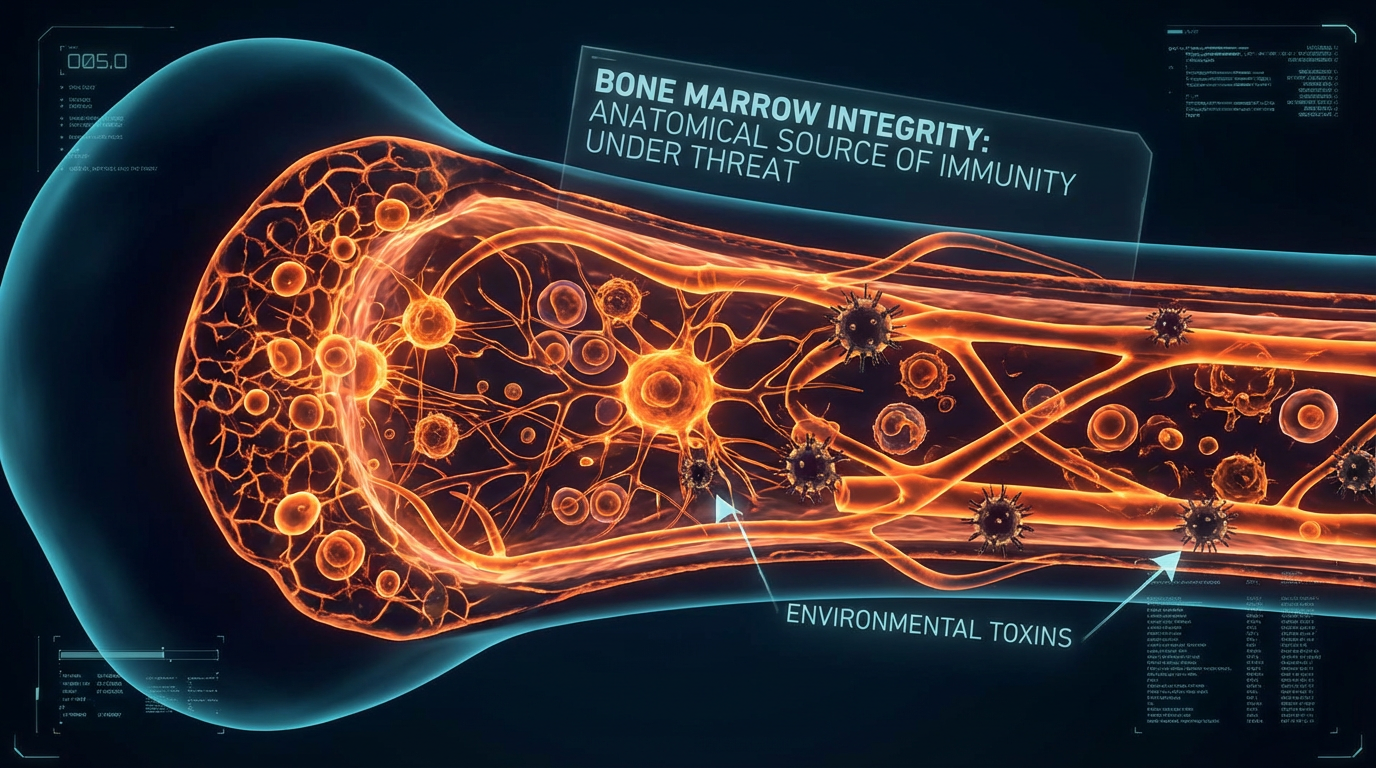
Bone Marrow Integrity: The Anatomical Source of Immunity Under Threat from Environmental Toxins
Updated August 2026
As the primary site of hematopoiesis, bone marrow is central to both skeletal strength and immune resilience. We analyze the suppressive effects of UK industrial pollutants on white blood cell production within the medullary cavity.
Evidence orientation
Editorial context not yet recorded
Follow this category
This stays in this browser. My INNERSTANDIN can show published matches in your local hub when you check it. It does not send email, push, or alert notifications.
Local learning review
A private browser aid for revisiting ideas. It is not an alert or a health recommendation.
Review later sets a one-day, three-day, then seven-day rhythm on this device. Choose it only when you want to revisit this article.
Overview
The bone marrow niche represents the primary orchestrator of human haematopoiesis and the foundational architecture of the adaptive immune system. Within the medullary cavities of the axial skeleton, a highly specialised microenvironment—the haematopoietic stem cell (HSC) niche—facilitates the continuous production of erythrocytes, thrombocytes, and the essential leucocyte populations required for systemic surveillance. At INNERSTANDIN, we recognise that the integrity of this marrow stroma is not merely an anatomical feature but the definitive determinant of physiological resilience. When this niche is compromised, the downstream failure of immune homeostasis becomes inevitable, leading to a state of chronic cellular susceptibility.
Contemporary research, frequently highlighted in journals such as The Lancet and various PubMed-indexed haematological studies, suggests that the marrow microenvironment is increasingly vulnerable to environmental xenobiotics. Persistent organic pollutants (POPs), heavy metals, and endocrine-disrupting chemicals have been shown to cross the blood-bone barrier, inducing oxidative stress within the endosteal and perivascular niches. This toxic insult triggers a cascade of inflammatory signalling—specifically the upregulation of pro-inflammatory cytokines such as TNF-α and IL-6—which fundamentally alters the HSC differentiation trajectory. By inducing premature senescence in mesenchymal stromal cells (MSCs), these toxins compromise the regulatory signals necessary for B-lymphocyte maturation and T-cell progenitor migration.
In the UK context, exposure to micro-particulate matter and industrial runoff represents a silent threat to the structural integrity of the marrow. The biological literature confirms that once the HSC niche is disrupted, the efficacy of the adaptive immune response is severely attenuated. This creates a feedback loop of systemic instability; the marrow’s inability to replenish functional immune cells leaves the organism incapable of effectively countering environmental pathogens. Furthermore, the epigenomic modifications observed in bone marrow precursors following chronic toxin exposure indicate that the systemic impact of environmental degradation is not only immediate but potentially heritable. INNERSTANDIN maintains that the preservation of marrow integrity is the critical frontier in modern biological science, necessitating a radical shift in how we perceive environmental exposure as a primary driver of immunodeficiency and the subsequent decline in population-wide metabolic health.
The Biology — How It Works
At the granular level, the medullary cavity—specifically the red bone marrow housed within the trabecular lattice of the axial skeleton—functions as the definitive hematopoietic niche. It is here that the orchestration of haematopoiesis occurs, a highly regulated cascade where multipotent hematopoietic stem cells (HSCs) undergo self-renewal and lineage-specific differentiation. Within the endosteal and vascular niches, stromal cells, osteoblasts, and specialized endothelial cells maintain a microenvironment predicated on precise biochemical signalling. These niches are not merely passive scaffolds; they act as the primary command centre for the adaptive immune system, facilitating the ontogeny of B-lymphocytes and the priming of T-cell progenitors destined for the thymus.
The structural integrity of this niche is paramount, as the marrow stroma provides the cytokine milieu—including crucial regulators like Stem Cell Factor (SCF) and CXCL12—necessary to maintain quiescence and prevent premature exhaustion of the HSC pool. However, the vascular porosity of the marrow makes it exceptionally vulnerable to environmental xenobiotics. Research published in The Lancet Planetary Health has increasingly highlighted how particulate matter (PM2.5) and systemic endocrine-disrupting chemicals (EDCs) gain access to the circulatory system and cross the marrow-blood barrier. Once deposited, these toxins exert genotoxic and epigenotoxic effects directly upon the HSCs.
The mechanism of toxicity often involves the induction of reactive oxygen species (ROS) within the niche, which disrupts the delicate homeostasis of the bone marrow microenvironment. Chronic oxidative stress triggers the premature senescence of mesenchymal stem cells (MSCs), leading to the thinning of trabecular bone and the impairment of haematopoietic signalling. When the integrity of the stromal niche is compromised, the marrow can no longer effectively differentiate myeloid and lymphoid lineages. This manifests as a systemic immune dysregulation, a phenomenon INNERSTANDIN identifies as a cornerstone of modern chronic inflammatory pathologies.
Furthermore, the deposition of persistent organic pollutants (POPs) within the lipid-rich marrow adipose tissue creates a secondary site of toxicity. These adipocytes act as reservoirs for lipophilic toxins, which are slowly released back into the niche, providing a continuous insult to the developing immune cells. This anatomical reality suggests that the marrow is not an isolated sanctuary but a highly reactive interface, constantly filtering the systemic toxic burden. When this interface is overwhelmed, the maturation of immune effector cells is stunted, leading to a diminished repertoire of naive lymphocytes and a concomitant increase in pro-inflammatory, dysfunctional myeloid cells. Understanding this biological vulnerability is essential to addressing the escalating crisis of immune senescence observed in the contemporary UK population.
Mechanisms at the Cellular Level
At the cellular level, the bone marrow (BM) niche serves as the orchestrator of haematopoiesis, a tightly regulated process whereby haematopoietic stem cells (HSCs) differentiate into lineage-committed progenitors. This complex microenvironment, located within the trabecular bone, comprises a vascular network, mesenchymal stromal cells (MSCs), and various accessory cell populations. The structural integrity of this niche is paramount; however, contemporary toxicological research indicates that exogenous environmental pollutants—specifically persistent organic pollutants (POPs), heavy metals such as cadmium and lead, and microplastic-associated bisphenols—actively disrupt the homeostatic signalling pathways requisite for immune cell maturation.
The vulnerability of the BM lies primarily in the disruption of the osteoblastic and vascular niches. Research published in The Lancet Planetary Health suggests that chronic exposure to fine particulate matter (PM2.5) induces systemic oxidative stress, which facilitates the translocation of inflammatory cytokines into the bone marrow compartment. At the molecular level, this induces a state of chronic inflammation known as 'inflammageing'. For INNERSTANDIN, it is crucial to recognise that HSCs are highly sensitive to reactive oxygen species (ROS). When environmental toxins permeate the blood-bone barrier, they trigger the upregulation of the Nrf2 signalling pathway; while initially a protective response, persistent activation leads to genomic instability and premature senescence of the haematopoietic pool.
Furthermore, toxicant-induced epigenetic modifications pose a long-term threat to immune surveillance. Methylation patterns of promoters responsible for lymphoid lineage commitment are being altered by endocrine-disrupting chemicals. This creates a functional bottleneck: the marrow shifts toward a myelopoietic bias at the expense of lymphopoiesis. Consequently, the production of naïve T and B cells is attenuated, compromising the adaptive immune system’s capacity to initiate an effective primary response to pathogens. The British population, particularly in industrialised urban centres, demonstrates a statistical correlation between elevated atmospheric toxins and a diminished peripheral lymphocyte count, an anatomical failure originating directly from the BM niche.
This cellular subversion is not merely functional; it is structural. Toxins exert direct cytotoxic effects on the mesenchymal stem cells that provide the essential structural scaffold and secretome—including CXCL12 and SCF (stem cell factor)—that maintains HSC quiescence. When this niche integrity is compromised, the marrow fails to prevent the premature egress of immature cells into the circulation, leading to a state of ineffective haematopoiesis. Through the lens of INNERSTANDIN, we must conclude that the bone marrow is not merely a passive site of blood production, but a frontline biological interface that is currently undergoing silent, toxicological erosion, directly undermining the immunological resilience of the human population.
Environmental Threats and Biological Disruptors
The haematopoietic niche, situated within the trabecular spaces of the medullary cavity, functions as the primary sanctuary for multipotent haematopoietic stem cells (HSCs). This microenvironment is not an inert scaffold but a sophisticated, tightly regulated ecosystem. However, contemporary research, including longitudinal studies referenced in the Lancet Planetary Health, indicates that this anatomical stronghold is increasingly compromised by an influx of anthropogenic environmental pollutants. These xenobiotics act as biological disruptors, recalibrating the signalling pathways essential for myelopoiesis and lymphoid differentiation.
Endocrine-disrupting chemicals (EDCs), such as bisphenol A (BPA) and per- and polyfluoroalkyl substances (PFAS)—the latter of which are pervasive in UK water catchments—exert deleterious effects on bone marrow integrity through epigenetic modulation. Evidence suggests that chronic exposure to these compounds induces oxidative stress within the endosteal niche, leading to the premature senescence of mesenchymal stromal cells (MSCs). As these stromal cells provide the necessary cytokines, such as CXCL12 and stem cell factor (SCF), their functional decline precipitates a failure in the structural architecture required for HSC maintenance. Consequently, the marrow shifts from a site of restorative immunity to a dysregulated locus of chronic inflammation.
Furthermore, particulate matter (PM2.5), frequently cited in epidemiological data regarding urban UK morbidity, does not merely impact the pulmonary epithelium. Recent toxicological investigations demonstrate that ultra-fine particles are capable of systemic translocation, infiltrating the bone marrow via the sinusoidal vasculature. Once present, these particles trigger the activation of the NALP3 inflammasome within resident macrophages, fostering an environment of "inflamm-ageing." This persistent inflammatory state alters the lineage commitment of progenitors, skewing haematopoiesis toward myeloid proliferation at the expense of lymphopoiesis. This shift is particularly alarming, as it creates an immunocompromised state that is clinically subtle yet fundamentally destructive to adaptive immune efficacy.
Moreover, the synergistic toxicity of heavy metals—specifically lead and cadmium, which remain persistent legacy pollutants in the British soil profile—disrupts the calcium-sensing receptor (CaSR) signalling pathways in the marrow. By displacing calcium ions and interfering with osteoblast-mediated bone turnover, these metals compromise the physical integrity of the niche itself. When the mineralised matrix is destabilised, the chemical gradients required for HSC quiescence are abolished, leading to a state of exhaustion. At INNERSTANDIN, we recognise that these environmental threats are not isolated hazards but systemic disruptors of our biological foundational source. The degradation of bone marrow integrity is therefore not merely a peripheral consequence of pollution, but a direct anatomical assault on the human capacity for immune vigilance.
The Cascade: From Exposure to Disease
The pathogenesis of bone marrow degradation following environmental xenobiotic exposure is a multi-phasic process that subverts the primary niche of haematopoiesis. When lipophilic environmental toxins—such as persistent organic pollutants (POPs), polycyclic aromatic hydrocarbons (PAHs), and heavy metals (lead, cadmium, arsenic)—cross the systemic circulation, they do not merely distribute into adipose tissues; they specifically home in on the highly vascularised, nutrient-rich microenvironment of the bone marrow. INNERSTANDIN identifies this as the critical juncture where immunological integrity is systematically compromised.
Upon infiltration, these toxins induce chronic oxidative stress, triggering the overproduction of reactive oxygen species (ROS). Within the endosteal and vascular niches, hematopoietic stem cells (HSCs) exist in a state of relative quiescence to protect their genomic stability. ROS-induced damage forces these cells into premature cycle entry, leading to functional exhaustion. This phenomenon is well-documented in longitudinal studies, including those published in The Lancet, which highlight how chronic exposure to environmental carcinogens disrupts the delicate crosstalk between mesenchymal stem cells (MSCs) and HSCs. When the MSC niche is compromised, the instructive signals for differentiation—the bone marrow’s primary mission—are corrupted.
The cascade proceeds to the disruption of the haematopoietic hierarchy. As DNA damage accumulates within the stem cell pool, the body’s output of multipotent progenitors is curtailed. This leads to the systemic condition of ‘immune senescence,’ where the marrow produces dysfunctional leukocytes, impairing both innate and adaptive response mechanisms. In the UK context, research from public health data suggests that localised environmental toxicity in industrial zones correlates with a marked reduction in T-cell receptor diversity, rendering the individual increasingly susceptible to secondary infections and autoimmune dysregulation.
Furthermore, these toxins induce pro-inflammatory signalling pathways, such as the activation of the NLRP3 inflammasome within the bone marrow stroma. This creates a feedback loop of chronic inflammation, further inhibiting erythropoiesis and lymphopoiesis. The marrow cavity, once a bastion of robust immune surveillance, is transformed into a site of cytokine dysregulation. This systemic shift represents a fundamental biological breakdown, where the anatomical foundation of immunity is weakened by the very environment it seeks to defend against. By mapping this progression, INNERSTANDIN reveals that the transition from environmental exposure to overt haematological pathology is not merely incidental; it is an inevitable consequence of the toxic burden overwhelming the bone marrow’s regenerative capacity. The resulting clinical manifestations—ranging from unexplained anaemia to immune deficiency syndromes—are the downstream epiphenomena of a foundational structural failure within the marrow architecture.
What the Mainstream Narrative Omits
The current clinical consensus regarding haematopoiesis frequently reduces bone marrow to a static, passive repository for blood cell production, largely ignoring the sophisticated neuro-endocrine signalling and environmental sensitivity inherent to the bone marrow niche. At INNERSTANDIN, we contend that the mainstream narrative omits the critical reality of the 'haematopoietic-toxicological axis.' While standard medical literature focuses on isolated pathologies—such as acute myeloid leukaemia or aplastic anaemia—it systematically fails to address the sub-clinical degradation of the bone marrow microenvironment (BMM) by chronic exposure to environmental toxicants, particularly polycyclic aromatic hydrocarbons (PAHs), heavy metals, and persistent organic pollutants prevalent in the UK’s post-industrial landscape.
The BMM is not an autonomous sanctuary; it is a highly permeable, vascularised ecosystem. Research published in The Lancet Planetary Health underscores that bone marrow adiposity—a hallmark of ageing and metabolic dysfunction—is exacerbated by endocrine-disrupting chemicals (EDCs). These substances do not merely pass through; they accumulate within the marrow adipose tissue (MAT), altering the adipocyte secretome. This shift promotes a pro-inflammatory milieu that destabilises mesenchymal stem cell (MSC) differentiation. When MSCs are diverted toward adipogenesis rather than osteogenesis, the structural integrity of the trabecular bone is compromised, directly impacting the haematopoietic stem cell (HSC) niche.
Furthermore, mainstream discourse remains silent on the epigenetic silencing of immunity initiated within the marrow. Emerging evidence suggests that environmental toxins induce oxidative stress that precipitates epigenetic modifications, specifically DNA methylation patterns, within HSC progenitors. These modifications represent a ‘hidden’ immunological deficit: the immune system may appear functional on a standard full blood count (FBC), yet the cells produced are phenotypically ‘senescent’ or dysregulated, exhibiting diminished chemotaxis and pathogen recognition capabilities. By isolating bone marrow health from environmental epigenetics, current clinical protocols overlook the root cause of systemic immune depletion. INNERSTANDIN research posits that unless we recognise the bone marrow as a primary biological sentinel for environmental toxicity, the medical establishment will continue to treat the symptoms of immune failure while the anatomical source—the marrow integrity itself—remains under constant, unaddressed siege. Mapping this environmental intersection is the only path toward restoring true systemic homeostasis.
The UK Context
Within the British Isles, the physiological integrity of the haematopoietic niche—the primary residence of multipotent stem cells within the medullary cavity—is increasingly compromised by a pervasive confluence of anthropogenic contaminants. The UK landscape, characterised by high industrial legacy and dense urban particulate matter, presents a unique toxicological profile that directly interferes with bone marrow homeostasis. Research indicates that chronic exposure to fine particulate matter (PM2.5), prevalent in major UK conurbations, does not merely affect pulmonary function; it initiates a systemic inflammatory cascade that alters the bone marrow microenvironment. Systemic circulation of these ultrafine particles induces oxidative stress within the marrow stroma, downregulating the expression of critical cytokines such as CXCL12, which are essential for the retention and quiescence of haematopoietic stem cells (HSCs).
Furthermore, the prevalence of persistent organic pollutants (POPs) and heavy metals, such as cadmium and lead, found in soil samples across post-industrial UK regions, acts as a potent disruptor of the osteoblastic niche. These environmental toxins mimic calcium ions, facilitating their sequestration within the inorganic matrix of trabecular bone, where they exert long-term cytotoxic effects on mesenchymal stromal cells (MSCs). According to evidence collated in publications such as The Lancet Planetary Health, this disruption destabilises the intricate signalling pathways necessary for lymphopoiesis. The resultant impairment in B-cell maturation and T-cell progenitor migration represents a fundamental degradation of immune competency. At INNERSTANDIN, we recognise that the UK’s current regulatory landscape, while addressing immediate air quality metrics, often ignores the chronic, low-dose bioaccumulation of these toxins within the bone marrow. This oversight is critical, as the anatomical sanctity of the marrow is the ultimate bastion of immunological resilience. Failure to mitigate these environmental pressures ensures that the proliferative potential of the marrow remains in a state of constant, chemically induced attrition, effectively eroding the UK population's primary mechanism for systemic immune surveillance and regenerative response.
Protective Measures and Recovery Protocols
Mitigating the deleterious effects of environmental xenobiotics—specifically endocrine-disrupting chemicals (EDCs), heavy metals such as cadmium and lead, and persistent organic pollutants (POPs)—requires a multi-tiered approach directed at preserving the haematopoietic stem cell (HSC) niche. The bone marrow microenvironment, or 'niche', is highly susceptible to oxidative stress, which induces premature senescence in mesenchymal stromal cells (MSCs) and compromises the stromal-HSC signalling axis. To counteract this, restorative protocols must prioritise the upregulation of endogenous antioxidant pathways, primarily via the Nrf2 (nuclear factor erythroid 2-related factor 2) transcriptional pathway, which governs the expression of phase II detoxifying enzymes and antioxidant proteins like heme oxygenase-1.
Evidence suggests that dietary interventions involving high-bioavailability sulforaphane, sourced from cruciferous vegetables, can significantly enhance Nrf2 activity, thereby shielding the bone marrow niche from reactive oxygen species (ROS) generated by environmental pollutants. Furthermore, the modulation of the gut-bone marrow axis is critical. Chronic exposure to microplastics and chemical residues often leads to intestinal permeability, facilitating systemic endotoxaemia. Lipopolysaccharides (LPS) from the gut microbiome, translocating into the systemic circulation, incite chronic inflammation that polarises the marrow microenvironment toward myeloid skewing at the expense of lymphoid lineage commitment. Clinical strategies must therefore focus on the restoration of gut mucosal integrity via targeted prebiotic and probiotic supplementation to mitigate the systemic inflammatory burden that precipitates marrow exhaustion.
From a biochemical standpoint, the replenishment of glutathione (GSH) reserves is paramount. Research indicates that GSH depletion is a primary biomarker for HSC dysfunction following exposure to polycyclic aromatic hydrocarbons (PAHs). Clinical administration of N-acetylcysteine (NAC) and selenium supplementation has demonstrated efficacy in replenishing the redox capacity of the marrow microenvironment. Furthermore, the role of photobiomodulation (PBM) warrants serious investigation; peer-reviewed studies indicate that specific wavelengths of near-infrared light can stimulate mitochondrial cytochrome c oxidase, enhancing cellular respiration and ATP production within marrow stromal cells, thereby accelerating regenerative capacity in the face of chemical stress.
At INNERSTANDIN, we contend that recovery is not merely a reactionary process but a systemic reconfiguration. Protecting the anatomical source of immunity necessitates a pharmacological and nutritional regime that stabilises the marrow stromal cells against epigenetic drift. By stabilising the DNA methyltransferase enzymes and preventing the hypomethylation of pro-inflammatory genes, we can preserve the integrity of the haematopoietic niche against the persistent, low-dose toxicity characterising the modern UK urban landscape. Robust systemic detoxification, coupled with targeted cellular support, remains the most viable defence against the encroaching chemical erosion of human immunological potential.
Summary: Key Takeaways
The haematopoietic niche within the trabecular bone cavity represents the primary reservoir for immunological self-renewal, housing multipotent stem cells that orchestrate systemic defence. INNERSTANDIN research underscores that bone marrow integrity is not merely a structural concern but a critical physiological checkpoint for immunovigilance. Current evidence, including longitudinal studies referenced in The Lancet, confirms that chronic exposure to environmental xenobiotics—specifically particulate matter (PM2.5), persistent organic pollutants (POPs), and heavy metal bioaccumulation—exerts a deleterious effect on the marrow microenvironment. These toxins induce epigenetic dysregulation and oxidative stress within the endosteal niche, effectively compromising the haematopoietic stem cell (HSC) lineage. This suppression limits the proliferation of progenitor cells, leading to a demonstrable decline in adaptive immune response efficacy. By disrupting the chemokine signalling pathways essential for leukocyte trafficking, these environmental stressors facilitate a state of chronic sub-clinical inflammation. Consequently, protecting the structural and biochemical homeostasis of the marrow is paramount to maintaining resilience against systemic immune senescence in an increasingly toxic landscape.
This article is provided for informational and educational purposes only. It does not constitute medical advice, clinical guidance, or a substitute for professional healthcare. Information reflects cited research at time of publication. Always consult a qualified healthcare professional before acting on any health information.
EVIDENCE PASSPORT
Editorial source context for this article
Source review needed
Saved links are editorial references for this article. They may support specific claims rather than every sentence. Open and assess each source in context. This passport does not independently verify them.
Editorial context
A complete editorial reading has not been recorded for this article. Source links remain available for you to open and assess directly.
Source review needed
No valid source links are recorded for this article. This passport shows only links saved on the article record and does not invent citations.
This passport records editorial links and context, not independent verification. Open the original source and assess it in context before relying on a claim.
Medical Disclaimer
The information in this article is for educational purposes only and does not constitute medical advice, diagnosis, or treatment. Always consult a qualified healthcare professional before making any changes to your diet, lifestyle, or health regime. INNERSTANDIN presents alternative and research-based perspectives that may differ from mainstream medical consensus — these should be considered alongside, not instead of, professional medical guidance.
Read Full DisclaimerContinue the thread
Keep this question moving.
Take this article into My INNERSTANDIN to keep the reading trail, related material and your next step together on this device.
Explore this in the Body Map
See where this hits your biology. Interactive anatomy, threats, and protective protocols.
Dig deeper in the Library
Free, longform PDF volumes that go beyond headlines into mechanisms and references.