
Brown Fat Thermogenesis and Lipid Clearance
Updated May 2026
Brown adipose tissue consumes circulating triglycerides to generate heat. Discover how cold exposure and metabolic activation can improve lipid profiles in the UK's temperate climate.
Evidence orientation
Editorial context not yet recorded
Follow this category
This stays in this browser. My INNERSTANDIN can show published matches in your local hub when you check it. It does not send email, push, or alert notifications.
Local learning review
A private browser aid for revisiting ideas. It is not an alert or a health recommendation.
Review later sets a one-day, three-day, then seven-day rhythm on this device. Choose it only when you want to revisit this article.
Overview
In the contemporary landscape of metabolic health, the narrative has long been dominated by a simplistic "calories in, calories out" framework. However, as we delve deeper into the cellular architecture of human physiology, a far more nuanced and potent system emerges: Brown Adipose Tissue (BAT). Unlike its more common counterpart, White Adipose Tissue (WAT)—which serves primarily as a storage depot for excess energy—brown fat is a highly metabolic, thermogenic organ. Its primary function is not to store energy, but to dissipate it as heat through a process known as non-shivering thermogenesis.
For decades, the scientific establishment relegated brown fat to the realm of infancy, believing it disappeared as humans transitioned into adulthood. It was only through the advent of modern PET-CT scanning that we discovered persistent, functional pockets of BAT in adult humans, predominantly located in the cervical, supraclavicular, and paravertebral regions. This discovery has profound implications for Cholesterol & Lipid Science. Brown fat acts as a "metabolic sink," aggressively clearing circulating triglycerides and glucose from the bloodstream to fuel its heat-generating engines.
In the UK, where the temperate maritime climate offers a natural abundance of cold stimuli, the failure to leverage this biological asset represents a significant missed opportunity in public health. This article explores the intricate mechanisms by which BAT optimises lipid profiles, the environmental factors currently suppressing this system, and how we can reclaim our metabolic sovereignty through deliberate activation protocols.
Key Statistic: Active brown fat can be up to 300 times more metabolically productive than most other tissues in the body when stimulated, significantly altering systemic lipid clearance rates.
The Biology — How It Works
To understand brown fat, one must first distinguish it from the white fat that characterises metabolic dysfunction. White adipocytes are composed of a single, large lipid droplet and very few mitochondria. Their purpose is sequestration. In contrast, brown adipocytes are multilocular, containing numerous small lipid droplets and an extraordinary density of iron-rich mitochondria, which gives the tissue its characteristic dark colour.
The Evolutionary Context of Thermogenesis
Humanity evolved in environments where thermal regulation was a constant challenge. Our ancestors did not live in the perpetual 21°C "thermal neutrality" of modern British homes. Instead, they were exposed to seasonal fluctuations and nocturnal cooling, which demanded a robust biological response to maintain core temperature. BAT evolved as an elegant solution to this: a way to turn stored chemical energy directly into kinetic heat without the need for the mechanical movement of shivering.
BAT vs. Beige Fat (Brite Adipocytes)
A critical nuance in modern lipid science is the distinction between constitutive brown fat and "beige" fat. Beige fat (or "brite"—brown-in-white) refers to white fat cells that undergo a phenotypic switch in response to specific stimuli, such as cold exposure or exercise. This process, known as "browning," increases the total thermogenic capacity of the body. By inducing the browning of WAT, we can essentially convert a storage organ into a furnace, radically shifting the body's lipid-handling capabilities.
The Role of the Sympathetic Nervous System (SNS)
The activation of BAT is almost entirely governed by the Sympathetic Nervous System. When the skin's thermoreceptors detect a drop in ambient temperature, signals are sent to the hypothalamus, which triggers the release of norepinephrine. This neurotransmitter binds to β3-adrenergic receptors on the surface of brown adipocytes, initiating a rapid intracellular cascade that leads to the combustion of fatty acids.
Mechanisms at the Cellular Level
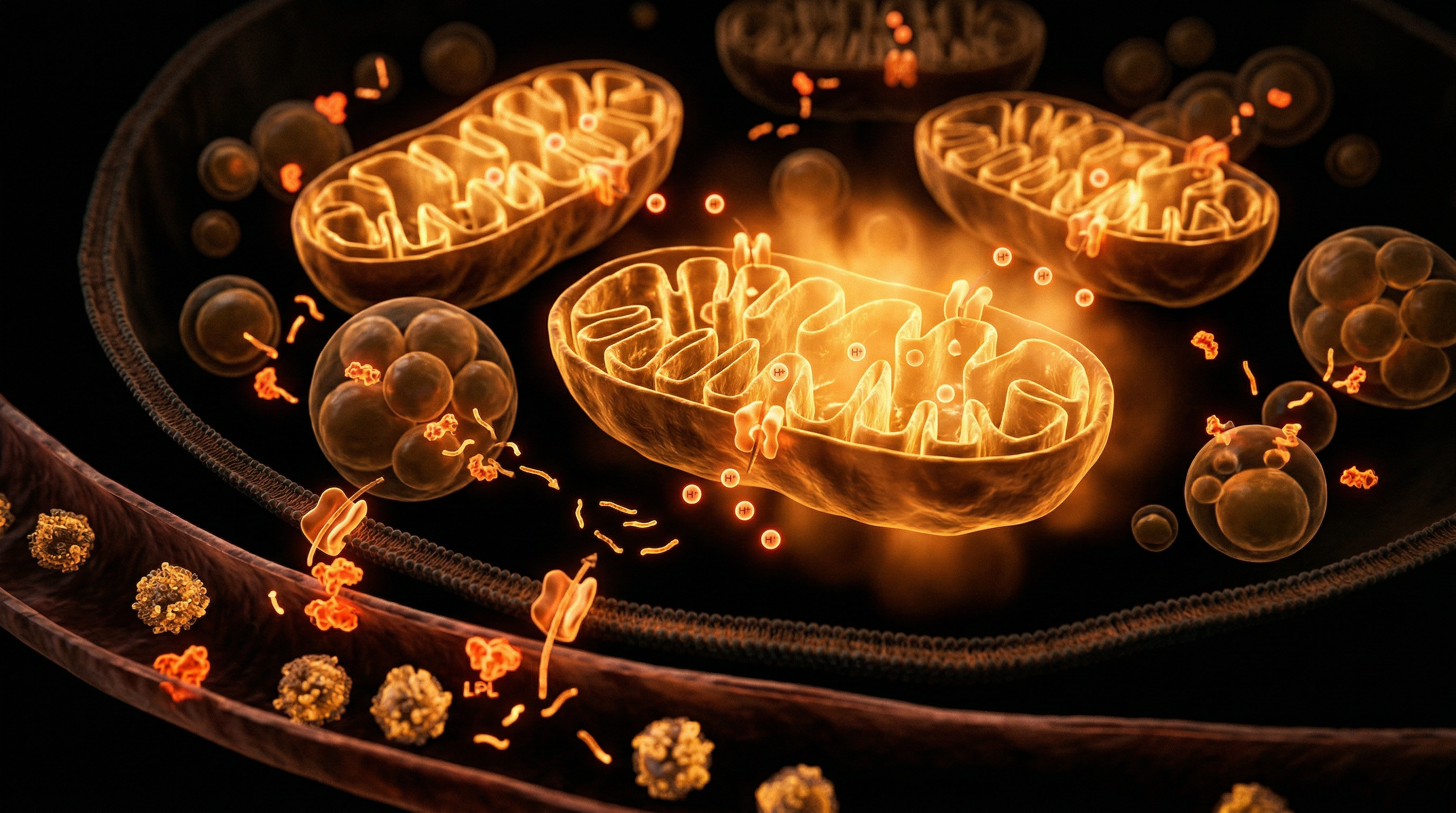
The "magic" of brown fat occurs within the inner mitochondrial membrane, through a protein called Uncoupling Protein 1 (UCP1), also known as thermogenin.
The UCP1 Proton Leak
In standard cellular respiration, the mitochondria create an electrochemical gradient by pumping protons across the inner membrane. These protons normally flow back through a protein called ATP synthase to produce ATP (the cell's energy currency). However, in brown fat, UCP1 provides an alternative pathway. It allows protons to "leak" back into the mitochondrial matrix without producing ATP.
Important Callout: This uncoupling means that the energy released from the oxidation of fuels is dissipated entirely as heat. It is a biological "short circuit" that forces the cell to consume vast amounts of fuel to maintain the gradient.
Lipid Uptake and Triglyceride Clearance
To sustain this high-intensity thermogenesis, BAT requires a constant supply of fuel. While it uses internal lipid droplets first, it quickly shifts to importing nutrients from the blood. This is achieved through two primary mechanisms:
- Lipoprotein Lipase (LPL) Activation: BAT secretes high levels of LPL, an enzyme that breaks down circulating triglycerides in the blood into free fatty acids that the cell can then absorb.
- CD36 Transporters: The expression of CD36 (fatty acid translocase) is massively upregulated in active BAT, allowing for the rapid "mopping up" of non-esterified fatty acids (NEFAs).
The Glucose-Lipid Synergy
While this article focuses on lipids, it is essential to note that BAT is also an incredibly efficient glucose sink. By clearing both glucose and triglycerides simultaneously, BAT prevents the formation of Very Low-Density Lipoproteins (VLDL) in the liver. This directly impacts the "atherogenic triad" (high triglycerides, low HDL, and high small-dense LDL), effectively cleaning the blood of the components that lead to arterial plaque.
Succinate: The Metabolic Signal
Recent research has highlighted the role of succinate, an intermediate of the TCA cycle. When BAT is activated by cold, it sequestered succinate from the circulation. The oxidation of succinate by succinate dehydrogenase (SDH) triggers a massive burst of reactive oxygen species (ROS) that further drives UCP1 thermogenesis. This "succinate signalling" represents a sophisticated feedback loop that links systemic metabolite levels to thermogenic demand.
Environmental Threats and Biological Disruptors
In the modern world, our brown fat is under siege. The "whitening" of our adipose tissue is not merely a result of overeating, but a consequence of environmental factors that actively suppress UCP1 expression.
The Trap of Thermal Neutrality
The most pervasive threat is the lack of thermal stress. In the UK, central heating and seasonal clothing ensure that we rarely leave the "thermoneutral zone" (roughly 22–27°C for a naked human). When the body is never challenged by cold, BAT becomes quiescent. Over time, the mitochondria atrophy, and the tissue is replaced by white fat. This "metabolic winter" within our own bodies leads to a systemic buildup of lipids that would otherwise have been cleared by thermogenic activity.
Obesogens and Endocrine Disruptors
We are increasingly exposed to obesogens—synthetic chemicals that interfere with lipid metabolism and adipose tissue development. Chemicals such as bisphenol A (BPA), phthalates, and PFAS (per- and polyfluoroalkyl substances) have been shown to inhibit the differentiation of brown adipocytes. These toxins can bind to the PPAR-gamma receptors, misdirecting stem cells to become white fat rather than brown or beige fat.
Blue Light and Circadian Disruption
The activation of BAT follows a strict circadian rhythm, governed by the master clock in the suprachiasmatic nucleus. Exposure to artificial blue light at night suppresses melatonin production. Melatonin is not just a sleep hormone; it is a potent activator of BAT and a facilitator of the "browning" process. By disrupting our light-dark cycles, we effectively "blind" the sympathetic nervous system to the cues that should trigger lipid clearance during the night.
Exposing the Truth: The rise in dyslipidaemia across the UK correlates almost perfectly with the adoption of widespread central heating and the proliferation of digital screens, suggesting that our "comfortable" lifestyle is a primary driver of cardiovascular disease.
The Cascade: From Exposure to Disease
When brown fat remains inactive, a destructive cascade begins, leading eventually to chronic metabolic disease. This process is often invisible, occurring at the molecular level long before it manifests as high blood pressure or a heart attack.
Step 1: Postprandial Lipaemia
In a healthy individual with active BAT, the surge of triglycerides following a meal is rapidly cleared. In an individual with "whitened" fat, these triglycerides remain in the blood for much longer—a state known as postprandial lipaemia. This prolonged exposure allows for the lipids to be modified by oxidation.
Step 2: The Liver Burden
With BAT no longer acting as a sink, the liver is forced to process the excess lipid load. This leads to the overproduction of VLDL particles and, eventually, the development of Non-Alcoholic Fatty Liver Disease (NAFLD). The liver becomes "congested," and its ability to regulate systemic cholesterol is compromised.
Step 3: LDL Transformation
As triglycerides remain elevated, an exchange occurs: cholesteryl esters in LDL particles are swapped for triglycerides from VLDL. These triglyceride-rich LDL particles are then acted upon by hepatic lipase, resulting in small, dense LDL (sdLDL). Unlike large, buoyant LDL, sdLDL is highly prone to oxidation and can easily penetrate the arterial wall.
Step 4: Systemic Inflammation and Atherosclerosis
The presence of oxidised sdLDL in the endothelium triggers an immune response. Macrophages rush to the site, ingest the lipids, and become "foam cells"—the foundational component of arterial plaque. Because inactive BAT also fails to secrete "batokines" (signalling molecules like FGF21 that have anti-inflammatory effects), the body remains in a pro-inflammatory state that accelerates plaque rupture and cardiovascular events.
What the Mainstream Narrative Omits
The current medical establishment, particularly within the UK's NHS framework, is heavily invested in a pharmaceutical-first approach to lipid management. While statins and PCSK9 inhibitors have their place, the mainstream narrative conspicuously omits the potential of endogenous lipid clearance via BAT.
The Statin Bias
Statins work primarily by inhibiting the liver's production of cholesterol. They do very little to address the systemic clearance of triglycerides or the underlying metabolic "laziness" of the adipose tissue. By focusing solely on LDL-C numbers, the mainstream narrative ignores the quality of the lipid profile and the functional state of the patient's metabolism.
The Silence on Thermal Hormesis
There is no "Cold Exposure" department in modern hospitals. Despite overwhelming evidence that thermal stress can improve insulin sensitivity and lipid profiles, it is rarely discussed in clinical settings. This is largely because cold exposure cannot be patented. There is no profit margin in a cold shower or a walk in the brisk British wind.
The "Safe" Temperature Myth
Building regulations and public health advice in the UK emphasise keeping homes at a minimum of 18–21°C for health. While this is crucial for the elderly and vulnerable to prevent hypothermia, for the healthy adult population, this constant warmth is a metabolic sedative. The narrative that we must always be "comfortable" is perhaps the most significant biological lie of the 21st century.
Important Callout: True metabolic health requires periods of discomfort. The absence of thermal stress is a biological signal that energy conservation is the priority, which inevitably leads to lipid accumulation and metabolic stagnation.
The UK Context
The United Kingdom presents a unique environment for brown fat research and application. Our climate, housing, and cultural habits all play a role in our current metabolic crisis.
The British Climate: A Wasted Resource
The UK has an average annual temperature of roughly 9–11°C. For the vast majority of the year, our external environment is perfectly calibrated to stimulate brown fat thermogenesis. However, we have engineered our lives to avoid this. From climate-controlled cars to insulated offices, we spend upwards of 90% of our time in artificial microclimates.
The Housing Crisis and "Over-Insulation"
While the UK's drive for energy-efficient housing is understandable from a CO2 perspective, it has created "thermal monocultures." Modern flats are often so well-insulated that they remain at 22°C+ year-round without heating. This lack of nocturnal cooling prevents the natural circadian activation of BAT, contributing to the rising rates of obesity and Type 2 diabetes in urban areas.
The "Indoor" Culture
Culturally, the UK has shifted from an outdoor, agrarian society to a sedentary, indoor one. The traditional "bracing walk" has been replaced by home entertainment. This shift has not only reduced physical activity but has also removed the "thermal tax" that our bodies used to pay. This tax—the energy required just to stay warm—once accounted for a significant portion of our daily caloric expenditure.
Protective Measures and Recovery Protocols
Reclaiming the function of your brown fat is not an overnight process, but through consistent application of hormetic stress, it is possible to "re-brown" your adipose tissue and transform your lipid profile.
1. Graduated Cold Exposure (The Soeberg Principle)
Research suggests that as little as 11 minutes of deliberate cold exposure per week, spread over 2–3 sessions, is enough to significantly increase BAT activity.
- Cold Showers: Start with 30 seconds at the end of a regular shower and gradually increase.
- Cold Water Immersion: Plunging into water below 15°C triggers a massive surge in norepinephrine.
- The "Cold Walk": Walking in the UK winter with minimal layers (within safety limits) can provide a sustained thermogenic stimulus.
2. Thermal Cycling in the Home
Break the "thermal neutrality" trap.
- Lower your thermostat to 17–18°C during the day.
- Keep the bedroom significantly cooler (15–16°C) at night. This mimics the natural nocturnal cooling that triggers melatonin and BAT activation.
- Avoid "over-dressing" when indoors. Allow your body to feel the slight edge of the cold.
3. Nutritional Activators
Certain compounds can mimic or enhance the effects of cold on BAT:
- Capsaicinoids: Found in chillies, these activate the TRPV1 receptors, which in turn stimulate the sympathetic nervous system.
- Resveratrol & Quercetin: These polyphenols have been shown to promote the "browning" of white fat cells via the SIRT1 pathway.
- Omega-3 Fatty Acids: High-quality EPA and DHA can increase UCP1 expression and improve the fluidity of mitochondrial membranes.
- Iron Sufficiency: Since BAT is dense with iron-rich mitochondria, maintaining optimal ferritin levels is crucial for its function.
4. Circadian Alignment
Protect your melatonin.
- Use blue-light blocking glasses after sunset.
- Expose yourself to bright natural light as soon as you wake up to "reset" your master clock.
- Maintain a consistent sleep-wake cycle to ensure the sympathetic nervous system is primed for BAT activation during the early morning hours.
5. Targeted Fasting
BAT activity is enhanced in a fasted state. Insulin is a storage hormone that suppresses lipolysis (the breakdown of fat). By incorporating Intermittent Fasting (16:8), you lower insulin levels, allowing the BAT to more easily access both internal lipid droplets and circulating triglycerides for fuel.
Pro Tip: Perform your cold exposure in a fasted state to maximise the demand for lipid clearance and upregulate fatty acid oxidation pathways.
Summary: Key Takeaways
The science of brown fat thermogenesis represents a paradigm shift in how we view cholesterol and lipid management. It moves the focus from "reduction via inhibition" (the statin model) to "clearance via activation" (the metabolic model).
- BAT is a Metabolic Filter: Active brown fat aggressively pulls triglycerides and glucose from the blood to generate heat via UCP1 uncoupling.
- The Modern Deficit: Our reliance on central heating and our avoidance of cold has led to the "whitening" of our fat and a subsequent rise in dyslipidaemia.
- Environmental Toxins: Obesogens and blue light act as biological disruptors that suppress our innate thermogenic capacity.
- The UK Opportunity: Our temperate climate is a natural tool for metabolic health. By simply lowering the thermostat and embracing the cold, we can activate a powerful endogenous system for lipid clearance.
- Actionable Change: Through the "Soeberg Principle" of cold exposure, nutritional support, and circadian alignment, we can re-brown our fat and protect ourselves from the cascade of cardiovascular disease.
We must stop viewing the cold as an enemy to be avoided and start seeing it as a vital biological signal. In the quest for innerstanding our health, the humble brown adipocyte stands as a testament to our body's incredible capacity for self-regulation—provided we give it the environment it evolved to thrive in. The path to a pristine lipid profile may not be found in a pill bottle, but in the bracing air of a British winter.
This article is provided for informational and educational purposes only. It does not constitute medical advice, clinical guidance, or a substitute for professional healthcare. Information reflects cited research at time of publication. Always consult a qualified healthcare professional before acting on any health information.
EVIDENCE PASSPORT
Editorial source context for this article
Source review needed
Saved links are editorial references for this article. They may support specific claims rather than every sentence. Open and assess each source in context. This passport does not independently verify them.
Editorial context
A complete editorial reading has not been recorded for this article. Source links remain available for you to open and assess directly.
Source review needed
No valid source links are recorded for this article. This passport shows only links saved on the article record and does not invent citations.
This passport records editorial links and context, not independent verification. Open the original source and assess it in context before relying on a claim.
Medical Disclaimer
The information in this article is for educational purposes only and does not constitute medical advice, diagnosis, or treatment. Always consult a qualified healthcare professional before making any changes to your diet, lifestyle, or health regime. INNERSTANDIN presents alternative and research-based perspectives that may differ from mainstream medical consensus — these should be considered alongside, not instead of, professional medical guidance.
Read Full DisclaimerContinue the thread
Keep this question moving.
Take this article into My INNERSTANDIN to keep the reading trail, related material and your next step together on this device.