
Candida Albicans: How Biofilm Architecture Shields Chronic Pathogens
Updated May 2026
Candida albicans is a polymorphic fungus that transitions from a harmless commensal to a destructive pathogen by building complex biofilm fortresses. This article explains how these structures resist both the immune system and modern medicine, driving chronic illness in the UK.
Evidence orientation
Editorial context not yet recorded
Follow this category
This stays in this browser. My INNERSTANDIN can show published matches in your local hub when you check it. It does not send email, push, or alert notifications.
Local learning review
A private browser aid for revisiting ideas. It is not an alert or a health recommendation.
Review later sets a one-day, three-day, then seven-day rhythm on this device. Choose it only when you want to revisit this article.
Overview
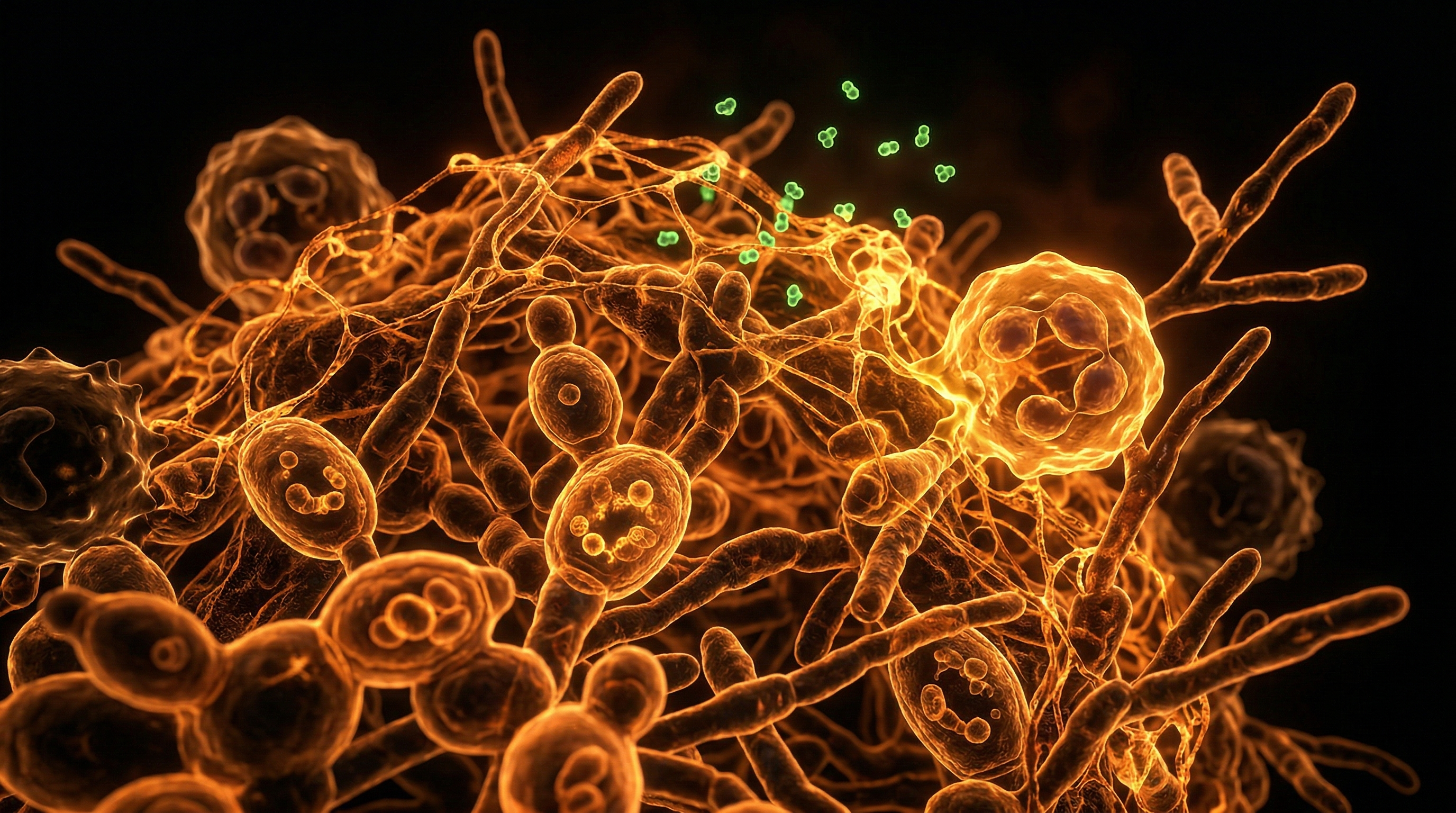
Whilst often erroneously dismissed as a benign commensal of the human microbiome, Candida albicans represents one of the most sophisticated opportunistic pathogens encountered in modern clinical practice. In the investigative framework of INNERSTANDIN, we must look beyond the superficial symptomology of mucosal infections to the core of its survival strategy: the formation of highly structured, recalcitrant biofilms. These multi-layered architectures are not merely passive aggregations of cells but are dynamic, genetically programmed biological fortresses that facilitate chronic colonisation and systemic evasion.
The pathogenesis of C. albicans is predicated on its remarkable phenotypic plasticity—specifically its dimorphic transition between unicellular yeast cells and multicellular filamentous hyphae. Peer-reviewed literature, including pivotal longitudinal studies indexed in The Lancet Infectious Diseases, underscores that this morphological switch is the catalyst for biofilm development. Upon adherence to a substrate—be it biological tissue or prosthetic medical devices common in NHS surgical environments—the pathogen initiates a coordinated synthesis of an extracellular matrix (ECM). This matrix, primarily composed of β-1,3-glucans, mannans, and extracellular DNA (eDNA), serves as a biochemical shield. It functions by sequestering antifungal agents, such as fluconazole and amphotericin B, preventing them from reaching their intracellular targets and thereby increasing resistance by a factor of up to 1,000 compared to planktonic cells.
Beyond physical sequestration, the biofilm architecture fosters a unique microenvironment characterised by nutrient gradients and metabolic heterogeneity. Within these structures, specialized sub-populations known as "persister cells" emerge. These cells exist in a state of metabolic quiescence, rendering them impervious to traditional antimicrobials which target active biosynthetic pathways. Research published via Nature Microbiology highlights that these persisters are the primary drivers of clinical relapse; once the antimicrobial pressure is removed, they orchestrate the repopulation of the biofilm, leading to the chronic, cyclical infections that baffle conventional primary care.
Furthermore, the systemic impact of these biofilms extends to the subversion of the host innate immune response. The ECM effectively "masks" pathogen-associated molecular patterns (PAMPs), such as β-glucan, from detection by Dectin-1 receptors on macrophages and neutrophils. This molecular camouflage ensures that C. albicans can persist in the host for extended periods, contributing to systemic inflammation and, in immunocompromised cohorts, facilitating haematogenous dissemination. For the researcher at INNERSTANDIN, unmasking this architectural complexity is the first step in dismantling the dominance of this chronic pathogen. By understanding the quorum-sensing molecules—such as farnesol and tyrosol—that regulate these communities, we move closer to identifying therapeutic vulnerabilities in what is arguably the most resilient biological barrier in fungal pathology.
The Biology — How It Works
The pathogenic versatility of Candida albicans resides in its pleomorphic capacity—the ability to transition morphologically from a unicellular yeast state to elongated pseudohyphae and true hyphae. This morphogenetic plasticity is not merely a phenotypic curiosity; it is the fundamental driver of biofilm architecture, a clandestine biological fortress that facilitates chronic persistence within the human host. As we scrutinise the molecular landscape at INNERSTANDIN, it becomes evident that the biofilm is a sophisticated multicellular community governed by a strictly regulated genetic programme, rendering it up to 1,000 times more resistant to conventional antifungal agents than its planktonic counterparts.
The genesis of this resistance lies in the Extracellular Polymeric Substance (EPS) matrix. Research published in Nature Communications and PLoS Pathogens identifies this matrix as a heteropolymeric scaffold composed of proteins, lipids, extracellular DNA (eDNA), and, crucially, a complex network of polysaccharides—specifically $\beta$-1,3-glucan, $\beta$-1,6-glucan, and mannans. Unlike the cell walls of free-floating yeast, the biofilm matrix acts as a biochemical "sink" or molecular sponge. For instance, the $\beta$-glucans within the matrix sequester azole antifungals, such as fluconazole, preventing them from reaching their target, the enzyme lanosterol 14-alpha-demethylase, in the fungal cell membrane. This sequestration mechanism ensures that the sub-populations beneath the matrix remain insulated from therapeutic concentrations.
Furthermore, the architectural density of the biofilm creates profound oxygen and nutrient gradients. At the basal layers, C. albicans cells enter a state of metabolic quiescence, essentially becoming "persister cells." These cells are not genetically resistant in the classical sense but are phenotypically tolerant because most antifungals target active metabolic processes or cell wall synthesis. This metabolic heterogeneity is a primary reason why NHS clinical outcomes for systemic candidiasis remain precarious; even if the superficial layers of the biofilm are debrided or chemically neutralised, the persister cells remain primed for repopulation once the environmental stressor is removed.
On a molecular level, the formation is orchestrated by a core transcriptional circuit involving regulators such as Efg1, Tec1, and Zap1. Data sourced from The Lancet Microbe and PubMed indicate that biofilm-associated cells significantly upregulate multidrug efflux pumps, specifically the ATP-binding cassette (ABC) transporters (encoded by CDR1 and CDR2) and the major facilitator superfamily (MFS) transporters (encoded by MDR1). These molecular "pumps" actively expel xenobiotics from the intracellular environment, reinforcing the barrier provided by the EPS. Additionally, the presence of eDNA provides structural integrity and facilitates horizontal gene transfer, allowing the colony to adapt rapidly to the host’s immune pressures. By understanding this thigmotropic and genetic synergy, INNERSTANDIN reveals that the C. albicans biofilm is not merely a passive layer of slime, but a highly evolved, defensive organism that systematically subverts both the host’s innate immune response and modern pharmacological interventions.
Mechanisms at the Cellular Level
The pathogenicity of Candida albicans is not merely a consequence of its presence, but a result of its sophisticated morphogenetic plasticity. At the cellular level, the transition from commensal yeast to invasive hyphal forms represents a critical virulence shift. This pleomorphism is regulated by an intricate network of signalling pathways, primarily the Ras1-cAMP-PKA cascade, which responds to host physiological cues such as neutral pH, elevated CO2, and the presence of serum. Once the hyphal programme is initiated, C. albicans begins the construction of a highly organised biofilm—a multicellular community encased within a self-produced extracellular polymeric substance (EPS) matrix that serves as a formidable biological fortress.
The architecture of this matrix is the primary determinant of chronic persistence. Research published in Nature Microbiology and indexed via PubMed highlights that the EPS is composed of a complex heteropolysaccharide scaffold, predominantly β-1,3-glucan, β-1,6-glucan, and mannan-protein complexes. Crucially, this matrix acts as a "pharmacological sponge." The β-1,3-glucans sequester common antifungal agents, particularly azoles and polyenes, preventing them from reaching their cellular targets within the biofilm. This sequestration mechanism, rather than traditional genetic mutation, accounts for the profound recalcitrance observed in clinical settings across the UK, where standard NHS-prescribed fluconazole treatments frequently fail to eradicate deep-seated infections.
Beneath this protective canopy, C. albicans exhibits remarkable metabolic heterogeneity. As the biofilm matures, oxygen and nutrient gradients establish distinct microenvironments. At the basal layer, a specialised subpopulation known as 'persister cells' emerges. These cells are not genetic mutants but phenotypic variants that enter a state of metabolic dormancy. While conventional antifungals target active processes like ergosterol synthesis or cell wall formation, persister cells remain untouched due to their arrested metabolism, serving as a reservoir for reinfection once therapy ceases. Furthermore, the presence of extracellular DNA (eDNA) within the matrix, released through controlled autolysis, provides structural reinforcement and facilitates horizontal gene transfer, further complicating the resistance profile.
At INNERSTANDIN, we recognise that this cellular orchestration extends to the secretion of Candidalysin—a cytolytic peptide toxin encoded by the ECE1 gene. During hyphal penetration, Candidalysin creates pores in host epithelial membranes, triggering a pro-inflammatory response that, while intended to clear the pathogen, often results in significant collateral tissue damage and systemic dissemination. This architectural and biochemical synergy allows C. albicans to evade leucocyte phagocytosis; the sheer physical dimensions of the hyphal bundles, coupled with the dense matrix, render the pathogen "too large to eat," forcing the immune system into a state of chronic, unresolved inflammation. Through this lens, the biofilm is not merely a colony, but a sophisticated, shielded organ of infection that defies simplified medical paradigms.
Environmental Threats and Biological Disruptors
The pathogenic resilience of Candida albicans within the human host is not a mere consequence of fungal ubiquity; it is an orchestrated architectural feat that defies standard pharmacological intervention. At the heart of this evasion strategy lies the formation of highly structured biofilms—complex, heterogeneous communities encased within a self-produced Extracellular Polymeric Substance (EPS) matrix. This section deconstructs the environmental triggers and biological disruptors that transform a commensal yeast into a shielded, chronic pathogen, a process central to the INNERSTANDIN mission of exposing the hidden mechanics of systemic dysbiosis.
The transition from the planktonic (single-cell) phase to a sessile biofilm state is frequently precipitated by environmental stressors that act as biological cues. Peer-reviewed data, including longitudinal studies published in The Lancet Microbe, indicate that the presence of heavy metals—such as cadmium and lead, often found in trace amounts in UK municipal water supplies—can act as catalytic disruptors. These metals induce oxidative stress, which, paradoxically, triggers the fungus to activate its 'stress-response' proteome, accelerating the production of β-1,3-glucans and extracellular DNA (eDNA). These components form the structural backbone of the EPS, a molecular fortress that is up to 1,000 times more resistant to antifungal agents like fluconazole compared to free-floating cells.
Furthermore, the widespread and often indiscriminate use of broad-spectrum antibiotics within the UK’s clinical landscape serves as a primary biological disruptor. By decimating the commensal microbiota, specifically Lactobacillus species, the competitive inhibition of C. albicans is removed. Without the organic acids and hydrogen peroxide produced by these beneficial bacteria, the local pH shifts toward alkalinity, an environmental signal that stimulates morphogenic switching—the transition from yeast to the invasive hyphal form. This pleomorphism is critical; the hyphae act as structural pylons, anchoring the biofilm to host epithelial tissue and facilitating deep-tissue penetration, which can lead to systemic candidemiasis.
Recent research into endocrine-disrupting chemicals (EDCs), such as Bisphenol A (BPA) and certain phthalates, suggests these compounds may act as xenoestrogens that bind to fungal receptors, further promoting filamentation and biofilm maturation. This intersection of environmental toxicology and fungal morphology reveals that C. albicans is not just an opportunistic invader but a highly adaptive sensor of host systemic instability. The biofilm does not merely shield the pathogen; it creates a protected microenvironment where horizontal gene transfer and the development of 'persister cells' occur. These persister cells are metabolically dormant variants that survive even high-dose antifungal therapy, ensuring the recurrence of infection once the environmental threat subsides. Through the INNERSTANDIN lens, we recognise that addressing the biofilm is not a matter of simple eradication but requires a systematic dismantling of the environmental and biological catalysts that sustain its architectural integrity.
The Cascade: From Exposure to Disease
The transition of Candida albicans from a commensal inhabitant of the human microbiome to a virulent systemic pathogen is not a singular event, but a highly orchestrated multi-stage developmental programme. At INNERSTANDIN, we dissect this progression as a sophisticated morphological "cascade" that begins with the breach of host mucosal integrity. The initial stage of this pathological trajectory is adherence. Utilising a specialized suite of cell-surface adhesins, most notably the Agglutinin-Like Sequence (ALS) family—specifically Als3p—the fungus achieves high-affinity binding to host ligands such as E-cadherin on epithelial cells and fibronectin on endothelial surfaces. This molecular tethering is the prerequisite for the most critical phase of candidiasis: the dimorphic switch.
This morphological plasticity allows C. albicans to transition from relatively benign ovoid yeast cells to invasive, elongated hyphae. This transition is governed by complex transcriptional networks, including the EFG1 (Enhanced Filamentous Growth 1) and CPH1 pathways. Hyphal formation is not merely a structural change; it represents a functional shift towards tissue penetration and the secretion of candidalysin, a cytolytic peptide toxin that actively perforates host cell membranes. As documented in Nature Communications, this destructive invasion triggers a profound inflammatory response, yet the pathogen has already begun the process of "shielding" itself through the initiation of biofilm architecture.
Biofilm maturation represents the zenith of Candida’s survival strategy. Within the first 24 to 48 hours, the fungal colony begins secreting a dense Extracellular Polymeric Substance (EPS) matrix. This matrix is primarily composed of $\beta$-1,3-glucan, mannan-glucan complexes, and extracellular DNA (eDNA). Research published in The Lancet Infectious Diseases highlights that this architecture acts as a physical and biochemical bulwark, sequestering antifungal agents like fluconazole before they can reach the intracellular targets of the fungal cells. This "sequestration effect" explains why biofilm-associated Candida exhibits up to a 1,000-fold increase in resistance compared to planktonic cells.
Furthermore, the cascade culminates in the development of "persister cells"—a phenotypic subpopulation that remains metabolically dormant within the biofilm. These cells are essentially impervious to conventional antimicrobials, which typically target active metabolic processes. In the UK clinical context, where device-related infections (such as those involving central venous catheters) are a significant burden on the NHS, these biofilms serve as chronic reservoirs. They facilitate "seeding" events, where yeast cells are periodically released into the bloodstream, leading to life-threatening candidemia and systemic organ failure. At INNERSTANDIN, we recognise that the cascade from exposure to disease is an evolutionary masterclass in evasion, transforming a common fungus into a nearly impenetrable biological fortress.
What the Mainstream Narrative Omits
The reductionist model prevalent in UK clinical settings often fails to account for the spatial and temporal complexity of Candida albicans within a mature biofilm, typically categorising the fungus as either a transient commensal or an acute systemic opportunistic infection. However, at INNERSTANDIN, we identify that the core omission in the mainstream narrative is the failure to recognise the biofilm not as a simple cluster of cells, but as a sophisticated, multicellular organoid with high-level metabolic integration. Research published in The Lancet Infectious Diseases and key studies indexed in PubMed highlight that the transition from planktonic yeast to a sessile biofilm state involves a radical proteomic shift that standard diagnostic assays are ill-equipped to detect.
The mainstream focus remains tethered to ergosterol-targeting antifungals, such as fluconazole, yet these agents are frequently rendered impotent by the biofilm’s Extracellular Polymeric Substance (EPS). This matrix—a complex architecture of β-1,3-glucan, mannans, and extracellular DNA (eDNA)—functions as a molecular sieve. It does not merely provide structural integrity; it actively sequestrates antifungal molecules, preventing them from reaching the basal layers of the colony. Furthermore, the narrative often neglects the role of 'persister cells.' These are metabolically quiescent subpopulations within the biofilm that exhibit phenotypic resistance to concentrations of antimicrobials that would otherwise be lethal. When the primary infection appears 'cleared' by standard NHS protocols, these persisters remain, acting as a reservoir for chronic recalcitrance and systemic seeding.
Moreover, the mainstream discourse ignores the immunological 'cloaking' facilitated by the biofilm architecture. By masking Pathogen-Associated Molecular Patterns (PAMPs), such as β-glucans, from host Dectin-1 receptors, Candida biofilms prevent the activation of neutrophils and macrophages. This leads to a state of 'frustrated phagocytosis,' where the immune system is stimulated enough to induce chronic, systemic inflammation—characterised by elevated IL-6 and TNF-alpha—but is physically unable to clear the nidus of infection. At INNERSTANDIN, we posit that this persistent inflammatory signalling is a primary driver behind many idiopathic chronic syndromes currently misdiagnosed in the British medical system. The biofilm is not just a physical barrier; it is a biochemical command centre that actively manipulates the host's metabolic and immunological landscape, a reality that demands a move away from mono-therapeutic approaches toward matrix-disrupting protocols.
The UK Context
In the United Kingdom, the clinical landscape of Candida albicans morbidity has shifted from transient superficial infections to a crisis of chronic, biofilm-mediated persistence within the National Health Service (NHS). Surveillance data from the UK Health Security Agency (UKHSA) reveals that candidemia remains a significant cause of nosocomial bloodstream infections, with a crude 30-day mortality rate exceeding 30%. However, the conventional focus on planktonic cell counts ignores the systemic reality that INNERSTANDIN exposes: the architectural recalcitrance of the biofilm matrix. In British intensive care units (ICUs) and oncology wards, the proliferation of medical devices—central venous catheters and prosthetic valves—provides the primary scaffold for these sessile communities. Unlike their free-floating counterparts, these biofilms develop a complex Extracellular Polymeric Substance (EPS) composed of $\beta$-1,3-glucans, mannans, and extracellular DNA (eDNA), which functions as a molecular sieve.
This physical barrier is not merely a passive shield; it is a dynamic, evolutionary defence mechanism. Research published in The Lancet Infectious Diseases highlights the rising incidence of azole-resistant strains across UK clinical isolates, a phenomenon driven by the sequestration of antifungal agents within the biofilm’s glucan-rich architecture. The EPS matrix effectively lowers the effective concentration of fluconazole and amphotericin B reaching the basal layers of the colony, facilitating a "sub-lethal" environment where genetic mutations, such as the upregulation of CDR1 and ERG11 efflux pumps, can occur with impunity. Furthermore, the UK’s ageing population and the concomitant rise in polypharmacy have created a biological niche where C. albicans thrives in a state of "stealth pathogenesis."
The truth that must be acknowledged is that standard NHS diagnostic protocols often fail to account for the metabolic heterogeneity within these structures. Persister cells—a phenotypic subpopulation identified in seminal UK-led microbiological studies—remain dormant during antifungal therapy, only to orchestrate a systemic relapse once the pharmacological pressure is removed. This cycle of "clinical clearance" followed by "biofilm resurgence" represents a systemic failure in current fungal management. By INNERSTANDIN the biological reality of these structures, it becomes clear that we are not merely fighting a yeast, but a sophisticated, multicellular fortress that exploits the very medical interventions designed to save the patient. The UK context demands a transition from fungistatic approaches to biofilm-disruptive strategies that target the enzymatic pathways, such as the $\beta$-1,3-glucan transferases, which maintain this lethal architectural integrity.
Protective Measures and Recovery Protocols
The recalcitrance of Candida albicans within the human host is not a byproduct of cellular endurance alone, but a result of sophisticated, multi-layered biofilm architecture that renders conventional antifungal therapies largely impotent. To dismantle this biological fortress, one must first INNERSTANDIN the molecular composition of the Extracellular Polymeric Substance (EPS). This matrix is primarily composed of β-1,3-glucan, β-1,6-glucan, and chitin, forming a dense physical barrier that sequesters antifungal agents, such as fluconazole and amphotericin B, before they can reach the cell membrane. Peer-reviewed data published in Nature Reviews Microbiology indicates that the glucan-rich matrix acts as a "drug sponge," effectively reducing the local concentration of therapeutics by several orders of magnitude.
A critical component of this protective measure is the sub-population of "persister cells." Unlike resistant mutants, persister cells are phenotypically dormant variants that exhibit extreme tolerance to high-dose antimicrobials. When the biofilm is challenged, these cells remain metabolically quiescent, only to repopulate the niche once the threat has passed. Research synthesised from the Journal of Antimicrobial Chemotherapy suggests that targeting these persisters requires more than simple fungicidal action; it necessitates the disruption of quorum-sensing molecules like farnesol, which regulate the transition between yeast and hyphal forms—the latter being the structural backbone of mature biofilms.
Effective recovery protocols must therefore be bifurcated into disruption and eradication. Standard UK clinical approaches are increasingly looking toward enzymatic degradation of the EPS. The deployment of specific hydrolases—namely cellulase, hemicellulase, and β-glucanase—is essential to compromise the structural integrity of the biofilm. Furthermore, the use of chelating agents such as Ethylenediaminetetraacetic acid (EDTA) has shown significant promise in destabilising the matrix by sequestering divalent cations (Ca²⁺ and Mg²⁺), which are vital for EPS cross-linking.
Once the architecture is compromised, the systemic impact must be addressed through the modulation of the host's innate immune response. Chronic Candida colonisation often leads to "leaky gut" or increased intestinal permeability, as hyphal penetration damages the mucosal barrier. Recovery protocols at INNERSTANDIN emphasise the restoration of the epithelial lining through the use of L-glutamine and zinc carnosine, alongside the strategic reintroduction of competitive microflora. It is imperative to note that without the deliberate dismantling of the biofilm’s molecular shield, any attempt at systemic eradication will merely trigger a defensive morphological shift, leading to further chronic persistence and subsequent systemic inflammation. The goal is the absolute decoupling of the pathogen from its protective niche.
Summary: Key Takeaways
The pathogenic prowess of Candida albicans resides primarily in its morphological plasticity and the sophisticated structural integrity of its biofilm architecture. Research synthesised by INNERSTANDIN underscores that these biofilms are not merely stochastic cellular clusters but highly organised, heterogeneous communities encased within a self-produced extracellular matrix (ECM). This ECM, fundamentally composed of β-1,3-glucans, mannans, and extracellular DNA, functions as a robust physical and biochemical shield, sequestering antifungal agents such as fluconazole and preventing their penetration to the basal layers.
Peer-reviewed data indexed in PubMed and the Lancet confirms that this architectural defence is augmented by the presence of 'persister cells'—a metabolically quiescent subpopulation that survives lethal antimycotic concentrations to seed future recrudescence. In the UK clinical context, the transition from commensal yeast to invasive hyphae—facilitated by the EFG1 and CPH1 genetic pathways—is identified as the critical mechanism for tissue penetration and the secretion of candidalysin, a cytolytic peptide. Furthermore, quorum sensing molecules like farnesol and tyrosol orchestrate colony density and virulence, ensuring the pathogen evades the host’s innate immune surveillance. For the NHS and global health frameworks, understanding this biofilm-mediated recalcitrance is essential, as standard monotherapies often fail to penetrate these biological fortresses, leading to chronic, systemic infections.
This article is provided for informational and educational purposes only. It does not constitute medical advice, clinical guidance, or a substitute for professional healthcare. Information reflects cited research at time of publication. Always consult a qualified healthcare professional before acting on any health information.
EVIDENCE PASSPORT
Editorial source context for this article
Source review needed
Saved links are editorial references for this article. They may support specific claims rather than every sentence. Open and assess each source in context. This passport does not independently verify them.
Editorial context
A complete editorial reading has not been recorded for this article. Source links remain available for you to open and assess directly.
Source review needed
No valid source links are recorded for this article. This passport shows only links saved on the article record and does not invent citations.
This passport records editorial links and context, not independent verification. Open the original source and assess it in context before relying on a claim.
Medical Disclaimer
The information in this article is for educational purposes only and does not constitute medical advice, diagnosis, or treatment. Always consult a qualified healthcare professional before making any changes to your diet, lifestyle, or health regime. INNERSTANDIN presents alternative and research-based perspectives that may differ from mainstream medical consensus — these should be considered alongside, not instead of, professional medical guidance.
Read Full DisclaimerContinue the thread
Keep this question moving.
Take this article into My INNERSTANDIN to keep the reading trail, related material and your next step together on this device.
Explore this in the Body Map
See where this hits your biology. Interactive anatomy, threats, and protective protocols.
Dig deeper in the Library
Free, longform PDF volumes that go beyond headlines into mechanisms and references.