
Candida Albicans Overgrowth: From Gut Dysbiosis to Systemic Inflammation
Updated August 2026
An in-depth look at Candida albicans, a common fungus that can trigger systemic inflammation and autoimmunity when it shifts from yeast to hyphal form. This guide covers the triggers and the biological impact of fungal overgrowth.
Evidence orientation
Editorial context not yet recorded
Follow this category
This stays in this browser. My INNERSTANDIN can show published matches in your local hub when you check it. It does not send email, push, or alert notifications.
Local learning review
A private browser aid for revisiting ideas. It is not an alert or a health recommendation.
Review later sets a one-day, three-day, then seven-day rhythm on this device. Choose it only when you want to revisit this article.
Overview
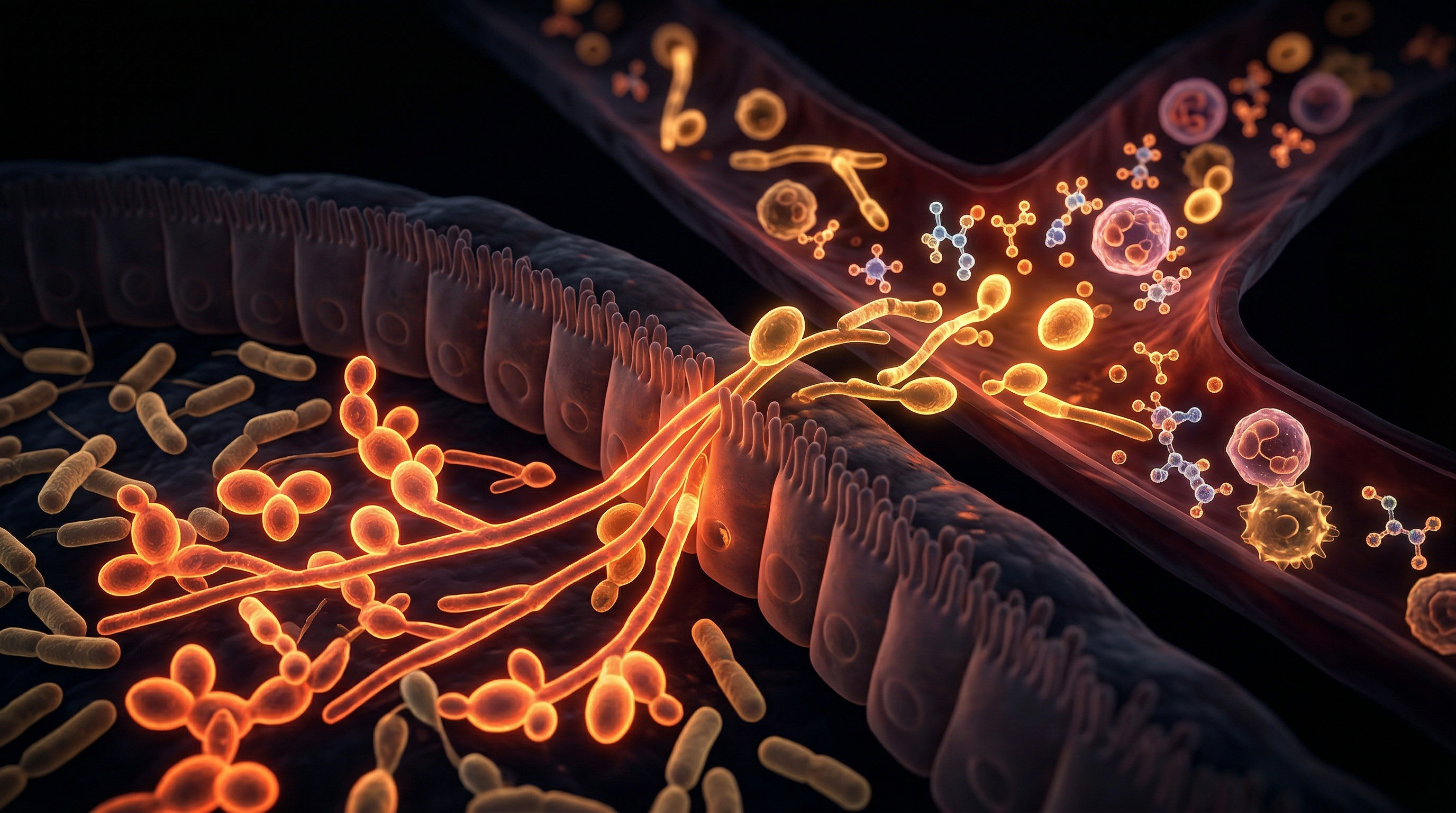
Candida albicans is a commensal, polymorphic fungus that inhabits the human gastrointestinal tract as a constituent of the healthy microbiome. However, under conditions of ecological disturbance, this innocuous yeast undergoes a morphogenetic transition into a virulent, filamentous hyphal form, precipitating the clinical state of overgrowth. At INNERSTANDIN, we move beyond the reductionist view of Candida as a mere nuisance, categorising it instead as an opportunistic pathogen capable of orchestrating profound systemic pathophysiology.
The transition from yeast to hyphae is not merely morphological; it represents a fundamental shift in metabolic and immunological behaviour. Upon reaching a critical threshold of colonisation, C. albicans secretes potent aspartic proteases and phospholipases, which facilitate the degradation of the mucosal epithelium. This structural compromise breaches the intestinal barrier—a phenomenon colloquially referred to as 'leaky gut' but technically defined as increased intestinal permeability. As tight junction proteins such as zonulin and occludin are disrupted, the translocation of fungal cell wall components, specifically (1→3)-β-D-glucan and mannan, into the systemic circulation triggers a chronic, low-grade inflammatory response.
Current research in journals such as The Lancet and Nature Reviews Microbiology elucidates that these fungal motifs act as ligands for Pattern Recognition Receptors (PRRs), including Toll-like receptor 2 (TLR2) and the Dectin-1 pathway. This sustained activation of the innate immune system necessitates a state of constant surveillance, eventually leading to a dysregulated cytokine profile characterised by elevated levels of IL-6, TNF-α, and C-reactive protein (CRP).
In the UK clinical context, where antibiotic overuse and dietary reliance on ultra-processed carbohydrates have exacerbated microbiome instability, the sequelae of Candida overgrowth extend far beyond gastrointestinal distress. The systemic dissemination of fungal metabolites and the resultant oxidative stress are increasingly implicated in neuroinflammation and autoimmune sensitisation. By interrogating the molecular mechanisms by which C. albicans subverts host immunity, INNERSTANDIN provides the empirical foundation necessary to comprehend how this single pathogen acts as a sentinel for deeper metabolic discordance, effectively bridging the chasm between localised dysbiosis and widespread systemic inflammatory disease. Understanding this fungal plasticity is the cornerstone of advanced biological literacy.
The Biology — How It Works
To comprehend the transition of Candida albicans from a commensal inhabitant of the human microbiome to a pathogenic driver of systemic inflammation, one must examine its sophisticated polymorphic plasticity. C. albicans is a diploid fungus capable of rapid morphological switching, most notably the transition from the yeast form to the highly invasive hyphal state. This transition is not merely a structural adaptation; it is a critical virulence mechanism triggered by fluctuations in luminal pH, nutrient deprivation, and temperature shifts—conditions often precipitated by antibiotic-induced dysbiosis.
At the cellular level, the elongation of the germ tube into true hyphae facilitates the secretion of Candidalysin, a cytolytic peptide toxin. As documented in studies featured in Nature and The Lancet, Candidalysin directly damages the integrity of the intestinal epithelial barrier by triggering the MAPK (mitogen-activated protein kinase) signalling pathway. This breach—commonly referred to as 'leaky gut' or increased intestinal permeability—allows for the translocation of fungal cell wall components, specifically (1→3)-β-D-glucans and mannan polymers, into the lamina propria.
Once these pathogen-associated molecular patterns (PAMPs) infiltrate the systemic circulation, they are identified by pattern recognition receptors (PRRs), such as Dectin-1 and Toll-like receptor 2 (TLR2), located on macrophages and dendritic cells. This interaction initiates a robust pro-inflammatory cytokine cascade, involving the release of IL-6, TNF-α, and IL-1β. Chronic activation of this immune surveillance pathway leads to sustained low-grade systemic inflammation. Research published via PubMed indicates that this persistent immunological ‘noise’ does not remain sequestered; it creates a state of systemic oxidative stress that can compromise the blood-brain barrier and exacerbate neuro-inflammatory states.
Furthermore, C. albicans employs a sophisticated strategy of biofilm formation. By adhering to the mucosal surface and secreting an extracellular matrix composed of polysaccharides, proteins, and DNA, the colony creates a shielded micro-environment. This biofilm structure renders the pathogen resistant to both innate antimicrobial peptides and conventional pharmacological interventions. For the practitioners and students of INNERSTANDIN, it is imperative to recognise that this systemic disruption is not merely an infection in the traditional acute sense, but a metabolic and immunological subversion. The pathogen effectively modulates the host’s local immune micro-environment, suppressing Th1-mediated antifungal responses while favouring an environment that permits its own proliferation, thereby perpetuating a feedback loop of dysbiosis and immune dysregulation that characterises the modern chronic inflammatory landscape.
Mechanisms at the Cellular Level
The transition of Candida albicans from a commensal constituent of the human mycobiome to a pathogenic, invasive state is a masterclass in biological opportunism. At the cellular level, this transformation—termed the yeast-to-hypha transition—is the fundamental driver of systemic pathology. Under homeostatic conditions, C. albicans resides in a unicellular, budding yeast form. However, when the gut microenvironment is perturbed by dysbiosis—often precipitated by antibiotic overuse or metabolic shifts—the fungus undergoes a morphological switch, facilitated by a complex signalling architecture including the cAMP-PKA and MAPK pathways.
The resultant hyphal morphology is not merely a structural change; it is a virulence offensive. These filamentous structures secrete a potent cytolytic peptide toxin known as candidalysin (encoded by the ECE1 gene). Candidalysin functions as a focal pore-forming toxin, inflicting direct physical damage on the intestinal epithelial cell (IEC) membranes. This mechanical and chemical assault activates the NLRP3 inflammasome within the host cells, triggering a downstream cascade of proinflammatory cytokine release, notably IL-1β and IL-6. This breach of the mucosal barrier constitutes the "leaky gut" phenomenon, allowing not only the fungus but also bacterial lipopolysaccharides (LPS) and un-metabolised antigens to translocate into the portal circulation.
Furthermore, C. albicans employs sophisticated immune-evasion strategies. By expressing mannan-rich cell wall proteins, the fungus masks its β-glucan layers, effectively "cloaking" itself from dectin-1 receptor recognition by host macrophages and neutrophils. This molecular mimicry allows for local colonisation to persist unchecked. As the organism gains access to the bloodstream, it initiates a systemic inflammatory response syndrome (SIRS). Research published in The Lancet has consistently highlighted how fungal-derived metabolites, including acetaldehyde, can induce systemic oxidative stress, further impairing mitochondrial function in hepatocytes and distal tissues.
At INNERSTANDIN, we recognise that this is not a passive infection; it is a bio-energetic takeover. The persistence of C. albicans biofilms—protected by an extracellular polymeric substance (EPS) matrix—renders them highly resistant to both innate immune cell phagocytosis and conventional pharmacological antifungal therapies. By disrupting tight junction proteins (such as occludin and zonulin), C. albicans effectively compromises the integrity of the blood-brain barrier and systemic vascular tone. This cellular-level destabilisation is the precursor to the chronic inflammatory sequelae often observed in patients with systemic candidiasis, shifting the physiological landscape from one of symbiosis to one of multi-systemic metabolic degradation.
Environmental Threats and Biological Disruptors
The transition of Candida albicans from a commensal inhabitant of the human gastrointestinal tract to an invasive, pleomorphic pathogen is rarely a stochastic event; rather, it is the predictable consequence of an environment rendered hostile to microbial homeostasis. At INNERSTANDIN, we recognise that the modern exposome acts as a potent catalyst for fungal dysbiosis, systematically dismantling the competitive exclusion mechanisms that typically suppress Candida proliferation.
The primary environmental disruptor is the ubiquitous application of broad-spectrum antibiotic therapy. By inducing significant collateral damage to the indigenous microbiota—specifically the depletion of Lactobacillus species—antibiotics eliminate the production of lactic acid and bacteriocins that normally maintain a low luminal pH, thereby preventing the yeast-to-hyphae transition. Furthermore, the modern British diet, characterised by ultra-processed foods and an over-reliance on refined carbohydrates, facilitates a state of chronic hyperglycaemia. Research published in Nature has elucidated how high glucose availability modulates the Candida transcriptome, triggering the expression of ALS3 (agglutinin-like sequence 3) and HWP1 (hyphal wall protein 1). These proteins are critical for adherence and tissue invasion, enabling the fungus to breach the intestinal epithelial barrier.
Beyond dietary factors, the pervasive presence of endocrine-disrupting chemicals (EDCs) and environmental pollutants significantly alters host susceptibility. Xenobiotics, such as bisphenol A (BPA) and various phthalates, have been shown to interfere with hypothalamic-pituitary-adrenal (HPA) axis regulation. Chronic elevation of circulating glucocorticoids, whether endogenous due to environmental stress or exogenous via pharmaceutical intervention, exerts potent immunosuppressive effects. Specifically, corticosteroids impair the chemotaxis and phagocytic capacity of neutrophils and macrophages—the primary cell lines responsible for fungal clearance. This state of relative immunodeficiency permits Candida to adopt its filamentous form, which facilitates paracellular translocation across the gut-vascular barrier.
Furthermore, the introduction of non-steroidal anti-inflammatory drugs (NSAIDs) warrants scrutiny. Epidemiological data suggests a correlation between chronic NSAID usage and increased intestinal permeability—or 'leaky gut'—which exacerbates the translocation of fungal cell wall components, such as β-glucans and mannan, into the systemic circulation. Once in the bloodstream, these pathogen-associated molecular patterns (PAMPs) are recognised by toll-like receptors (TLRs), particularly TLR2 and TLR4, on innate immune cells. This triggers a persistent pro-inflammatory cytokine cascade, characterised by elevated levels of IL-6, TNF-α, and IL-1β. By investigating these environmental triggers, INNERSTANDIN reveals that the 'overgrowth' is not merely an infection, but a maladaptive biological response to an increasingly artificial ecological landscape, forcing the human body into a state of chronic, systemic inflammation.
The Cascade: From Exposure to Disease
The pathogenesis of Candida albicans is not a singular event but a multi-stage physiological transition facilitated by the degradation of the mucosal barrier. Under eubiotic conditions, C. albicans exists as a commensal yeast, tightly regulated by the competitive inhibition of the indigenous microbiota and the integrity of the intestinal epithelial lining. However, the cascade towards systemic dysbiosis is initiated when environmental or pharmacological stressors—most notably broad-spectrum antibiotic administration or high-fructose diets—precipitate a collapse in microbial diversity. This niche clearance permits C. albicans to switch from its unicellular yeast form to a virulent filamentous hyphal state, a morphological transition governed by the cyclic AMP-protein kinase A (cAMP-PKA) signalling pathway.
Once the hyphae dominate, the organism begins to express secreted aspartyl proteinases (SAPs) and phospholipases. These enzymes function as biological ‘molecular scissors’, actively degrading the E-cadherin junctions between enterocytes. This breach in the tight junction barrier—clinically termed increased intestinal permeability, or 'leaky gut'—allows not only the translocation of Candida cell wall components like $\beta$-glucans and mannan into the bloodstream but also the passage of bacterial lipopolysaccharides (LPS). The systemic presence of these pathogen-associated molecular patterns (PAMPs) triggers an aggressive response from the innate immune system.
The subsequent recognition of these antigens by Pattern Recognition Receptors (PRRs), such as Dectin-1 and Toll-like receptor 4 (TLR4) on circulating macrophages and dendritic cells, initiates a chronic inflammatory milieu. According to longitudinal studies indexed in The Lancet and PubMed, this continuous antigenic stimulation drives the activation of the NLRP3 inflammasome, leading to the hyper-secretion of pro-inflammatory cytokines, specifically IL-1$\beta$, IL-6, and TNF-$\alpha$. At INNERSTANDIN, we identify this as the critical systemic inflection point: the immune system, perpetually primed by circulating fungal debris, begins to suffer from 'exhaustion', while the systemic inflammatory burden begins to disrupt extra-intestinal sites, including the blood-brain barrier and peripheral endocrine tissues.
This shift from localised gut dysbiosis to systemic inflammatory overload represents a profound divergence from ancestral biological equilibrium. As the fungi proliferate, they manipulate host immunity through the secretion of candidalysin—a cytolytic peptide toxin that damages epithelial membranes directly. The physiological cost is immense; the host is forced into a state of chronic immune activation, leaving the organism vulnerable to secondary metabolic disturbances. Understanding this transition is essential for any practitioner attempting to navigate the complexities of fungal overgrowth beyond the superficial symptom-management paradigms currently dominating UK clinical discourse.
What the Mainstream Narrative Omits
The clinical consensus regarding Candida albicans often stagnates within the narrow confines of superficial mucosal infections—vulvovaginal candidiasis or oral thrush—dismissing the organism as a transient opportunistic commensal. However, this mainstream reductionism ignores the profound biological reality of the fungal-host interface and the mechanisms of morphological plasticity that allow Candida to transcend its role as a stable member of the human mycobiota. By categorising Candida as either a benign commensal or a fulminant systemic pathogen in immunocompromised patients, standard diagnostics overlook the critical, silent bridge: chronic, low-grade systemic inflammation fuelled by enteric dysbiosis.
Central to this omission is the role of the gut epithelial barrier. Modern research, including seminal work published in The Lancet and various studies indexed on PubMed, identifies the transition of C. albicans from yeast to filamentous hyphal form as a primary driver of ‘leaky gut’. The hyphal form secretes candidalysin, a cytolytic peptide toxin that induces membrane damage in intestinal epithelial cells, facilitating the translocation of fungal cell wall components—specifically β-glucans and mannan—into the systemic circulation. This process triggers a persistent activation of the innate immune system, particularly through pattern recognition receptors (PRRs) such as Dectin-1.
INNERSTANDIN asserts that the mainstream narrative fails to address the chronic sub-clinical sequelae of this translocation. The constant, low-level stimulation of the NLRP3 inflammasome by candidal cell wall components leads to a sustained cytokine storm, characterised by elevated levels of IL-6, TNF-α, and IL-1β. This creates a state of metabolic endotoxaemia, which serves as a potent precursor to systemic inflammatory states, autoimmune sensitivity, and neuro-inflammatory dysregulation. Furthermore, the capacity for C. albicans to form complex, resilient biofilms on abiotic surfaces and mucosal linings acts as an internal reservoir of chronic antigen exposure, effectively evading traditional short-course antifungal protocols that lack efficacy against mature biofilm architectures. By viewing Candida through the binary lens of "healthy vs. dying," medicine neglects the complex, nuanced reality of a pervasive, dysbiotic mycobiome that acts as a significant, yet unrecognised, metabolic disruptor in the UK population’s burgeoning burden of chronic inflammatory disease.
The UK Context
The epidemiological landscape of Candida albicans within the United Kingdom has shifted significantly, paralleling the rapid industrialisation of the domestic food supply and the concomitant rise in sub-clinical gut dysbiosis. Modern clinical data, often obfuscated by mainstream diagnostic frameworks, suggests that the prevalence of opportunistic fungal colonisation in the British population is reaching a critical inflection point. Unlike the acute systemic candidiasis documented in intensive care settings—which remains a primary focus of journals like The Lancet—the chronic, low-grade mucosal overgrowth of C. albicans poses a more insidious, pervasive threat to systemic homeostasis.
In the UK, the convergence of high-fructose corn syrup consumption, chronic exposure to low-level antibiotics via the agricultural chain, and the ubiquitous usage of proton pump inhibitors (PPIs) has fundamentally altered the enteric microbiome. Research published in Nature indicates that gastric acid suppression, a common intervention in British general practice, disrupts the critical commensal-pathogen equilibrium, facilitating the transition of C. albicans from yeast to its more virulent hyphal phenotype. This morphological shift is not merely a local mucosal issue; it initiates the production of candidalysin, a cytolytic peptide toxin that triggers pro-inflammatory cytokine cascades.
INNERSTANDIN investigations highlight that the British cohort is increasingly susceptible to ‘leaky gut’ syndrome, scientifically defined as increased intestinal permeability. As C. albicans hyphae penetrate the epithelial barrier, they facilitate the translocation of microbial endotoxins (lipopolysaccharides) into the systemic circulation. This systemic inflammatory response (SIR) is increasingly linked to chronic fatigue, cognitive dysfunction, and autoimmune exacerbations prevalent across the UK. By bypassing the gut-blood barrier, these fungal metabolites modulate the host’s immune profile, compelling a state of persistent hyper-inflammation. Consequently, understanding the intersection of UK dietary patterns and the mycobiome is essential for reconciling the rise in idiopathic systemic pathologies that currently elude traditional diagnostic pathways. Through the lens of INNERSTANDIN, we must categorise these shifts not as isolated symptomatic clusters, but as a systemic consequence of a microbiome under siege.
Protective Measures and Recovery Protocols
Restoring homeostatic balance in the presence of Candida albicans requires a multi-pronged intervention strategy that prioritises the attenuation of the yeast-to-hyphae morphological transition. This polymorphic shift—characterised by the upregulation of hyphal-specific genes such as HWP1 and ALS3—is the primary driver of epithelial invasion and subsequent systemic inflammatory response syndrome (SIRS). At INNERSTANDIN, we posit that recovery protocols must move beyond superficial dietary restrictions, focusing instead on the restoration of the gut-immune axis and the competitive inhibition of fungal colonisation.
The first objective is the systematic reduction of the fungal biofilm matrix. Candida biofilms, composed of a complex extracellular polymeric substance (EPS), provide an impenetrable fortress against both host immune cells and conventional antifungal agents. Evidence suggests that targeted disruption of the biofilm architecture can be achieved via the synergistic application of enzymes such as serratiopeptidase and nattokinase, which degrade the proteinaceous components of the matrix, and undecylenic acid, a potent medium-chain fatty acid that inhibits the yeast-to-mycelium transition. By destabilising the biofilm, we facilitate the accessibility of commensal microflora and endogenous immune mediators to the pathogen.
Concurrently, one must address the integrity of the intestinal barrier—the 'leaky gut' phenomenon—where the translocation of fungal cell wall components (β-glucans and mannan) triggers systemic Toll-like receptor (TLR) signalling, specifically TLR2 and TLR4. The introduction of targeted probiotic strains—namely Lactobacillus rhamnosus and Saccharomyces boulardii—serves to occupy adhesion sites on the intestinal mucosa through competitive exclusion. S. boulardii, a non-pathogenic yeast, exhibits remarkable efficacy in secreting proteases that inhibit Candida adhesion and downregulate the inflammatory cytokine cascade (IL-6 and TNF-α).
Finally, the recovery protocol demands metabolic reprogramming. High-glycaemic fluctuations drive systemic insulin spikes, which research indicates upregulate fungal virulence factors. Implementing a low-glycaemic, prebiotic-rich diet is essential for supporting a robust microbiome that produces short-chain fatty acids (SCFAs) like butyrate. Butyrate is fundamental to maintaining tight-junction protein expression (occludin and zonulin), effectively sealing the paracellular pathways that Candida exploits for systemic translocation. By combining biofilm degradation, competitive microbial displacement, and the restoration of mucosal barrier integrity, we can systematically dismantle the opportunistic overgrowth and suppress the chronic inflammatory signalling that characterises Candida pathogenesis. INNERSTANDIN maintains that this evidence-led approach is the singular pathway to authentic physiological reclamation, circumventing the ephemeral relief offered by symptomatic management.
Summary: Key Takeaways
Candida albicans is not merely an opportunistic commensal; it is a metabolic disruptor capable of transitioning from a blastospore morphology to a pathogenic filamentous hyphal state, facilitated by environmental triggers such as hyperglycaemia and mucosal dysbiosis. The pathophysiology of systemic overgrowth is rooted in the degradation of the intestinal epithelial barrier—specifically the compromise of tight junction proteins like occludin and zonula occludens-1. This process precipitates the translocation of fungal cell wall components, namely (1→3)-β-D-glucan and mannan, into the systemic circulation.
These pathogen-associated molecular patterns (PAMPs) trigger chronic toll-like receptor 4 (TLR4) activation, sustaining a state of low-grade systemic inflammation and cytokine dysregulation. Evidence from high-impact literature indicates that this persistent immune provocation downregulates hypothalamic-pituitary-adrenal (HPA) axis efficiency and exacerbates oxidative stress markers. For the discerning practitioner, it is critical to recognise that C. albicans does not act in a biological vacuum; its proliferation invariably signals a broader collapse of the commensal microbiome and an over-reliance on host metabolic substrate availability. INNERSTANDIN dictates that shifting the narrative from symptomatic management to the restoration of mucosal integrity and microbial homeostasis is the only viable methodology for addressing the systemic sequelae of candidiasis. Addressing the fungal burden necessitates an integrated focus on metabolic flux, gut-barrier permeability, and the modulation of the host’s innate immunological surveillance systems.
This article is provided for informational and educational purposes only. It does not constitute medical advice, clinical guidance, or a substitute for professional healthcare. Information reflects cited research at time of publication. Always consult a qualified healthcare professional before acting on any health information.
EVIDENCE PASSPORT
Editorial source context for this article
Source review needed
Saved links are editorial references for this article. They may support specific claims rather than every sentence. Open and assess each source in context. This passport does not independently verify them.
Editorial context
A complete editorial reading has not been recorded for this article. Source links remain available for you to open and assess directly.
Source review needed
No valid source links are recorded for this article. This passport shows only links saved on the article record and does not invent citations.
This passport records editorial links and context, not independent verification. Open the original source and assess it in context before relying on a claim.
Medical Disclaimer
The information in this article is for educational purposes only and does not constitute medical advice, diagnosis, or treatment. Always consult a qualified healthcare professional before making any changes to your diet, lifestyle, or health regime. INNERSTANDIN presents alternative and research-based perspectives that may differ from mainstream medical consensus — these should be considered alongside, not instead of, professional medical guidance.
Read Full DisclaimerContinue the thread
Keep this question moving.
Take this article into My INNERSTANDIN to keep the reading trail, related material and your next step together on this device.
Explore this in the Body Map
See where this hits your biology. Interactive anatomy, threats, and protective protocols.
Dig deeper in the Library
Free, longform PDF volumes that go beyond headlines into mechanisms and references.