
Coenzyme Q10 and Heart Health: The Evolutionary Synergy of Bovine Cardiac Tissue
Updated May 2026
Explains the high concentration of CoQ10 in bovine heart and its role in mitochondrial energy. It suggests heart consumption as a strategy for British cardiac health.
Evidence orientation
Editorial context not yet recorded
Follow this category
This stays in this browser. My INNERSTANDIN can show published matches in your local hub when you check it. It does not send email, push, or alert notifications.
Local learning review
A private browser aid for revisiting ideas. It is not an alert or a health recommendation.
Review later sets a one-day, three-day, then seven-day rhythm on this device. Choose it only when you want to revisit this article.
Overview
The modern human exists in a state of profound evolutionary mismatch. While our ancestors thrived on a dietary repertoire that included the entirety of the animal—the "nose-to-tail" philosophy—the contemporary Western diet has retreated into a sterile consumption of lean muscle meats, skeletal tissues, and ultra-processed plant analogues. Nowhere is this nutritional divergence more catastrophic than in the realm of cardiac health. As cardiovascular disease remains the leading cause of mortality across the British Isles, the medical establishment continues to overlook a foundational biological truth: the human heart requires specific, highly concentrated co-factors to maintain its relentless mechanical output.
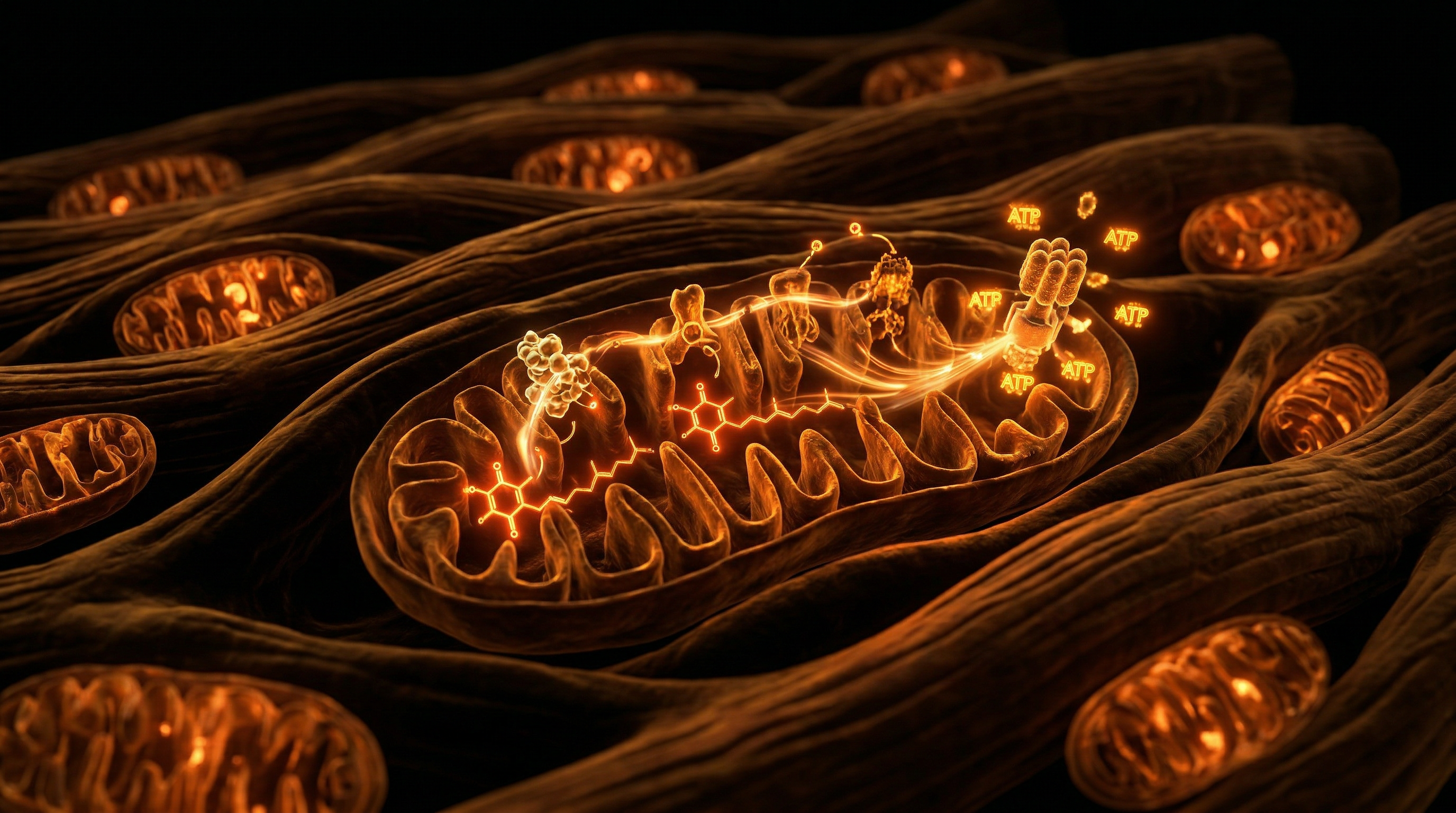
Among these, Coenzyme Q10 (CoQ10) stands as the sentinel of bioenergetics. Found in its highest natural concentrations within the bovine cardiac tissue, CoQ10 is not merely a supplement but a fundamental component of the mitochondrial engine. The heart is the most metabolically active organ in the body; it never rests, beating approximately 100,000 times a day. To sustain this, it demands a constant, unwavering supply of Adenosine Triphosphate (ATP).
This article explores the deep-seated synergy between bovine heart consumption and human cardiac resilience. We will dissect the molecular mechanisms that allow the bovine heart to serve as a concentrated "bio-battery" for the human system, expose the environmental factors that are currently depleting our natural CoQ10 stores, and challenge the mainstream narratives that have systematically removed these nutrient-dense "sacred foods" from the British dinner table. By reintegrating the bovine heart into our nutritional protocols, we are not simply eating meat; we are engaging in a targeted biological intervention designed to restore mitochondrial integrity.
Fact: The heart contains more mitochondria per cell than almost any other tissue in the body, with up to 35% of the cardiomyocyte volume being occupied by these energy-producing organelles.
The Biology — How It Works
To understand why bovine cardiac tissue is the gold standard for heart health, we must first understand the molecule itself. Coenzyme Q10, or Ubiquinone, is a fat-soluble, vitamin-like substance produced endogenously by the human body, but its production peaks in our early twenties and undergoes a precipitous decline thereafter.
The Structure of Ubiquinone and Ubiquinol
CoQ10 exists in two primary redox states: Ubiquinone (the oxidised form) and Ubiquinol (the reduced, antioxidant form). In the body, CoQ10 constantly shifts between these two states as it facilitates the transfer of electrons. Bovine heart is uniquely potent because it provides the full matrix of the molecule alongside the co-factors required for its utilisation—specifically heme iron, B-vitamins, and collagenous proteins.
Like Supports Like: The Biological Doctrine of Signatures
The ancient concept of "like supports like" (the Doctrine of Signatures) has often been dismissed by reductionist science as superstition. However, modern biochemistry is beginning to validate the premise. When we consume bovine heart, we are not just ingesting protein; we are ingesting a specific profile of amino acids—L-carnitine, Taurine, and Anserine—that are found in significantly higher concentrations in cardiac tissue than in skeletal muscle (such as steak). These compounds work synergistically with CoQ10 to transport fatty acids into the mitochondria for oxidation.
- L-Carnitine: Acts as a shuttle, carrying long-chain fatty acids across the inner mitochondrial membrane.
- Taurine: Regulates calcium ion homeostasis, which is critical for the rhythmic contraction of the heart.
- CoQ10: The spark plug that initiates the combustion of those fatty acids into energy.
Why Bovine?
The bovine heart is a massive, incredibly powerful muscle that must pump blood through an animal weighing up to a tonne. The sheer density of mitochondria required to sustain a cow's circulatory demands makes its cardiac tissue an unparalleled source of CoQ10. While other organs like the liver contain CoQ10, the heart remains the primary reservoir. For a British population suffering from widespread "energy drought" at the cellular level, this evolutionary synergy offers a direct pathway to recovery.
Mechanisms at the Cellular Level
At the core of the heart's function lies the Electron Transport Chain (ETC), located on the inner mitochondrial membrane. This is where the true "magic" of CoQ10 occurs. To understand the gravity of CoQ10 deficiency, one must understand the microscopic conveyor belt of life.
The Electron Transport Chain and Complex III
The ETC consists of five complexes. CoQ10’s primary role is to act as a mobile electron carrier, specifically transporting electrons from Complex I and Complex II to Complex III.
- Complex I (NADH Dehydrogenase): Electrons are harvested from the food we eat.
- The CoQ10 Bridge: CoQ10 accepts these electrons, becoming Ubiquinol.
- Complex III (Cytochrome bc1 Complex): Ubiquinol delivers the electrons here, continuing the flow that eventually creates a proton gradient used to synthesise ATP.
Without sufficient CoQ10, this chain is interrupted. Electrons "leak" out of the chain prematurely, reacting with oxygen to create Superoxide, a highly reactive and damaging free radical. This is the definition of Oxidative Stress.
Membrane Stabilisation
Beyond its role in energy production, CoQ10 is vital for the structural integrity of the cardiomyocyte (heart cell) membranes. It prevents the peroxidation of lipids within the membrane. When the lipid bilayer of a heart cell becomes oxidised, the cell loses its "gatekeeping" ability, allowing toxins in and letting vital minerals like potassium leak out. This leads to arrhythmias and, eventually, heart failure.
The Role of Cytochrome P450
CoQ10 is also involved in the induction of the Cytochrome P450 enzyme system, which is responsible for detoxifying endogenous metabolic products and exogenous toxins. A heart rich in CoQ10 is not only a more energetic heart but a more "clean" heart, capable of processing the metabolic byproducts of its own intense activity.
Statistic: Clinical studies have shown that patients with Congestive Heart Failure (CHF) often have 50% lower levels of CoQ10 in their cardiac tissue compared to healthy controls.
Environmental Threats and Biological Disruptors
In the 21st century, the human heart is under siege. We are no longer living in the environment for which our genetics were forged. Several modern "innovations" act as direct inhibitors of mitochondrial function and CoQ10 synthesis.
The Statin Sabotage
The most significant biological disruptor in the Western world is the widespread prescription of HMG-CoA Reductase Inhibitors, commonly known as statins. While marketed as a panacea for heart health by lowering cholesterol, statins work by blocking the Mevalonate Pathway.
The problem? The Mevalonate Pathway is the very same biological "highway" the body uses to produce CoQ10. By suppressing cholesterol, statins unintentionally—but predictably—decimate the body's internal production of CoQ10. This creates an iatrogenic (doctor-induced) state of cardiac energy failure, often manifesting as muscle pain, fatigue, and ironically, a weakened heart.
Glyphosate and the Gut-Heart Axis
The UK’s agricultural landscape is heavily reliant on glyphosate, a broad-spectrum herbicide. Research suggests that glyphosate can act as a mitochondrial toxin, interfering with the shikimate pathway in gut bacteria, which in turn disrupts the production of aromatic amino acids needed for various co-factors. Furthermore, glyphosate can chelate (bind) minerals like manganese and zinc, which are essential for the enzymes that work alongside CoQ10.
Non-Native Electromagnetic Fields (nnEMFs)
A burgeoning field of research suggests that constant exposure to high-frequency nnEMFs (from Wi-Fi, mobile towers, and smart devices) can disrupt the voltage-gated calcium channels (VGCCs) in our cells. The heart has one of the highest densities of these channels. When these channels are stuck "open" due to EMF exposure, the cell becomes flooded with calcium, leading to massive oxidative stress that consumes CoQ10 at an unsustainable rate.
- Blue Light Exposure: Artificial lighting at night suppresses melatonin, which is the "clean-up crew" for mitochondria. Without melatonin, the damage caused by daytime ATP production isn't repaired, placing a double burden on CoQ10.
- Seed Oils: The consumption of industrially processed vegetable oils (high in Linoleic Acid) leads to the incorporation of fragile fats into the mitochondrial membranes, making them more susceptible to oxidation.
The Cascade: From Exposure to Disease
What happens when these environmental threats meet a CoQ10-depleted population? A systematic collapse of cardiac bioenergetics.
Stage 1: Mitochondrial Decoupling
The first stage is mitochondrial decoupling. The "proton leak" increases, meaning the mitochondria are burning fuel but not producing ATP efficiently. The individual feels "tired but wired." The heart begins to struggle to meet the demands of physical exertion.
Stage 2: The Energy Drought
As CoQ10 levels fall below a critical threshold (typically 25% below optimal), the heart enters an energy drought. To compensate, the heart may physically enlarge (hypertrophy) to attempt to maintain cardiac output through sheer bulk rather than efficiency. This is a losing game; a larger heart requires even more energy, which isn't there.
Stage 3: Chronic Inflammation and Fibrosis
The persistent oxidative stress caused by electron leakage triggers the body’s inflammatory response. Cytokines are released, and the delicate cardiac tissue begins to be replaced by stiff, fibrous scar tissue. This is cardiac fibrosis, the precursor to heart failure.
Stage 4: Systemic Failure
Because the heart is the pump for the entire system, cardiac energy failure quickly becomes systemic. The kidneys fail to filter blood properly (congestive heart failure), the lungs fill with fluid, and the brain suffers from "brain fog" due to reduced perfusion. At this stage, mainstream medicine often suggests more drugs that further deplete CoQ10, completing a lethal feedback loop.
Fact: The British Heart Foundation reports that there are around 7.6 million people living with heart and circulatory diseases in the UK. Many of these cases are fundamentally rooted in bioenergetic failure.
What the Mainstream Narrative Omits
The suppression of "nose-to-tail" nutrition is not an accident of history; it is a consequence of a reductionist paradigm that prioritises shelf-stable, high-profit "food products" and pharmaceutical interventions over ancestral wisdom and nutrient density.
The Cholesterol Distraction
For decades, the mainstream narrative has focused almost exclusively on Low-Density Lipoprotein (LDL) cholesterol as the "villain" of heart health. This hyper-fixation has served as a convenient smokescreen. By focusing on cholesterol, the industry can ignore the more complex—and more important—issue of mitochondrial health and oxidative stress. Cholesterol is actually a vital repair molecule; blaming it for heart disease is like blaming the firemen for the fire. The real issue is the oxidation of that cholesterol, a process that CoQ10 specifically prevents.
The Synthetic Fallacy
When the mainstream does acknowledge CoQ10, it is usually in the form of highly processed, synthetic supplements. While some high-quality Ubiquinol supplements are effective, they lack the complex food matrix found in bovine heart. Science often tries to isolate "the active ingredient," but nature provides a symphony. Bovine heart contains the specific ratios of selenium, zinc, and amino acids that act as the delivery vehicle and "co-pilots" for CoQ10.
The Vilification of Red Meat
The public has been conditioned to fear red meat, and particularly organ meats, due to concerns about saturated fat and purines. However, the evolutionary record is clear: humans have been consuming the hearts of ruminants for millions of years. The "epidemic" of heart disease only began when we stopped eating these foods and replaced them with refined grains and seed oils.
- Purines: Often cited as a reason to avoid organs (due to gout), purines are actually essential precursors for the synthesis of ATP.
- Saturated Fat: Essential for the stability of cell membranes and the absorption of fat-soluble vitamins like CoQ10.
The UK Context
The United Kingdom faces a unique set of challenges regarding heart health and nutrition. Historically, the British diet included significantly more offal. Dishes like "faggots" (made from heart and liver), "braised heart," and various "puddings" were staples of the working-class diet, providing a robust level of cardiac protection.
The Post-War Nutritional Decline
Following the Second World War and the subsequent "modernisation" of the British food system, organ meats were relegated to "pauper's food" and eventually phased out of supermarkets entirely. Today, the average British consumer is squeamish at the sight of a heart on a butcher's counter, preferring plastic-wrapped chicken breasts and "meat-free" alternatives.
The NHS Crisis and Bioenergetics
The NHS is currently buckled under the weight of chronic disease management. The vast majority of cardiac care in the UK is reactive, not proactive. We wait for the heart to fail, then use surgery and drugs to manage the symptoms. A nationwide shift toward mitochondrial-centric nutrition, including the reintroduction of bovine cardiac tissue, could significantly reduce the burden on the healthcare system by addressing the root cause of heart failure: the energy drought.
The Quality of British Beef
The UK has some of the highest standards of cattle welfare in the world. Grass-fed, pasture-raised British beef is naturally higher in CoQ10 and Omega-3 fatty acids than grain-fed alternatives. By supporting local, regenerative British farming, consumers can access the highest quality cardiac tissues while bypassing the industrial agricultural complex that contributes to environmental toxicity.
Callout: In the 1930s, the British physician Sir Robert McCarrison observed that populations eating traditional, whole-food diets (including organ meats) were almost entirely free of the heart diseases plaguing "modernised" Britain.
Protective Measures and Recovery Protocols
Restoring your cardiac health requires a multi-faceted approach that prioritises the replenishment of CoQ10 and the protection of the mitochondria.
1. Reintroducing Bovine Heart
The most direct way to support your heart is to consume the heart of a healthy, grass-fed ruminant.
- Frequency: Aim for 100g to 200g of bovine heart, twice per week.
- Preparation: Heart is a muscular organ; it can be tough if overcooked. The best methods are "low and slow" (stews and casseroles) or very quick (thinly sliced and seared like a steak).
- The "Sneak" Method: For those who are squeamish, heart can be minced (ground) and mixed into regular beef mince at a 20/80 ratio for burgers or Bolognese. It adds a deep, umami richness without a strong "offal" flavour.
2. Mitigating Statin Impact
If you are currently prescribed statins, it is crucial to discuss CoQ10 supplementation with a health professional who understands mitochondrial medicine. Many forward-thinking practitioners now recommend a minimum of 200mg of Ubiquinol alongside any statin prescription to mitigate the inevitable depletion.
3. Environmental Detoxification
Protect the CoQ10 you have by reducing the "drain" on your system:
- Switch to an Organic, Local Diet: Minimise glyphosate exposure by choosing pasture-raised British meats and organic produce.
- Light Hygiene: Maximise morning sunlight (red light) to prime the mitochondria and strictly limit blue light exposure after sunset.
- Eliminate Seed Oils: Replace sunflower, rapeseed, and vegetable oils with stable fats like tallow, suet, or butter.
4. Co-Factor Support
CoQ10 doesn't work in a vacuum. Ensure your diet is rich in the minerals that support the ETC:
- Magnesium: Found in abundance in sea salt and chlorophyll-rich plants.
- Selenium: Essential for the enzyme (Thioredoxin reductase) that recycles Ubiquinone back into Ubiquinol.
- Copper and Iron: Found naturally in the bovine heart-liver matrix.
5. Recovery Protocol: The Cardiac Trinity
For those recovering from cardiac events or suffering from chronic fatigue, the "Cardiac Trinity" of animal-based nutrition consists of:
- Bovine Heart (for CoQ10 and Taurine)
- Bovine Liver (for Vitamin A, Copper, and B12)
- Bone Broth (for Glycine to support the structural collagen of the heart valves)
Summary: Key Takeaways
The path to a resilient heart is not found in a laboratory, but in our evolutionary history. The bovine heart is a biological powerhouse, offering a concentrated source of CoQ10 in a bioavailable form that synthetic supplements cannot replicate.
- CoQ10 is the Essential Spark: It is the primary electron carrier in the mitochondria. Without it, the heart cannot produce the ATP it needs to function.
- Bovine Heart is the Superior Source: It provides a synergistic matrix of CoQ10, L-carnitine, and taurine—the fundamental building blocks of cardiac bioenergetics.
- Modern Life is a CoQ10 Drain: Statins, glyphosate, seed oils, and nnEMFs systematically deplete our cardiac energy stores.
- The Mainstream Narrative is Flawed: The focus on cholesterol is a distraction from the deeper reality of mitochondrial dysfunction and oxidative stress.
- UK Traditions Must Be Revived: Reintroducing traditional British offal into our diets is a powerful, cost-effective strategy for public health.
By embracing the "nose-to-tail" philosophy and specifically valuing the bovine heart, we reclaim our biological sovereignty. We move away from a state of dependency on symptom-masking pharmaceuticals and toward a future of true, deep-seated cardiac vitality. The heart of the ox is, quite literally, the medicine for the heart of the man. It is time we returned to the table.
This article is provided for informational and educational purposes only. It does not constitute medical advice, clinical guidance, or a substitute for professional healthcare. Information reflects cited research at time of publication. Always consult a qualified healthcare professional before acting on any health information.
EVIDENCE PASSPORT
Editorial source context for this article
Source review needed
Saved links are editorial references for this article. They may support specific claims rather than every sentence. Open and assess each source in context. This passport does not independently verify them.
Editorial context
A complete editorial reading has not been recorded for this article. Source links remain available for you to open and assess directly.
Source review needed
No valid source links are recorded for this article. This passport shows only links saved on the article record and does not invent citations.
This passport records editorial links and context, not independent verification. Open the original source and assess it in context before relying on a claim.
Medical Disclaimer
The information in this article is for educational purposes only and does not constitute medical advice, diagnosis, or treatment. Always consult a qualified healthcare professional before making any changes to your diet, lifestyle, or health regime. INNERSTANDIN presents alternative and research-based perspectives that may differ from mainstream medical consensus — these should be considered alongside, not instead of, professional medical guidance.
Read Full DisclaimerContinue the thread
Keep this question moving.
Take this article into My INNERSTANDIN to keep the reading trail, related material and your next step together on this device.
Explore this in the Body Map
See where this hits your biology. Interactive anatomy, threats, and protective protocols.
Dig deeper in the Library
Free, longform PDF volumes that go beyond headlines into mechanisms and references.