
Cytochrome P450: The Genetic Architecture of Modern Detoxification
Updated May 2026
This article explores the superfamily of enzymes responsible for the Phase I metabolism of over 90 percent of clinical drugs. Understanding genetic polymorphisms in these enzymes is crucial for personalising detoxification strategies in the UK.
Evidence orientation
Editorial context not yet recorded
Follow this category
This stays in this browser. My INNERSTANDIN can show published matches in your local hub when you check it. It does not send email, push, or alert notifications.
Local learning review
A private browser aid for revisiting ideas. It is not an alert or a health recommendation.
Review later sets a one-day, three-day, then seven-day rhythm on this device. Choose it only when you want to revisit this article.
Overview
In the silent, microscopic theatre of the human liver, a complex superfamily of enzymes performs a feat of chemical alchemy every second of our lives. These are the Cytochrome P450 (CYP450) enzymes—the primary arbiters of our internal environment and the most critical component of the Phase I biotransformation pathway. While often relegated to the footnotes of medical textbooks, these heme-thiolate proteins are the frontline soldiers in a war against a modern world that is increasingly saturated with synthetic xenobiotics, industrial pollutants, and pharmaceutical compounds.
The Cytochrome P450 system is not merely a biological curiosity; it is the genetic architecture upon which modern detoxification is built. It is responsible for the metabolism of over 90 percent of clinical drugs currently on the market, as well as an untold number of endogenous molecules including steroid hormones, lipids, and bile acids. However, this system is currently under unprecedented strain. The divergence between our ancient genetic blueprints and the hyper-industrialised chemical landscape of the 21st century has created a "metabolic mismatch" that is at the root of much chronic illness.
This article serves as a deep-dive investigation into the CYP450 superfamily. We will explore the intricate mechanisms of its catalytic cycle, the profound impact of genetic polymorphisms on individual health, and the systemic failure of mainstream medicine to account for the radical biochemical individuality of the British public. To understand CYP450 is to understand the very threshold between health and toxicity.
Fact: The "450" in Cytochrome P450 refers to the characteristic peak in the absorption spectrum of the enzyme at 450 nanometres when it is in the reduced state and complexed with carbon monoxide.
The Biology — How It Works
The Cytochrome P450 superfamily represents one of the most evolutionarily conserved systems in nature. Found in almost all living organisms—from bacteria to humans—these enzymes have evolved to manage the "non-self" molecules that enter the body. In humans, while the liver is the primary hub of CYP activity, these enzymes are also strategically stationed in the lungs, kidneys, gastrointestinal tract, and the brain, acting as a multi-layered defence system.
The Nomenclature of Complexity
To navigate the world of CYP450, one must understand the genetic nomenclature. The enzymes are classified into families, subfamilies, and individual genes based on their amino acid sequence identity:
- Families (e.g., CYP3): Members share more than 40% sequence identity.
- Subfamilies (e.g., CYP3A): Members share more than 55% sequence identity.
- Individual Enzymes (e.g., CYP3A4): The specific protein responsible for the chemical reaction.
In humans, there are 57 functional genes and 58 pseudogenes. While this might seem like a small number to manage the vast array of chemicals in existence, the beauty of the CYP450 system lies in its promiscuity. A single enzyme, such as CYP3A4, is capable of metabolising hundreds of structurally diverse compounds.
The Phase I Sentinel
Detoxification is generally divided into three phases. Phase I is the initial modification of a toxin. Its primary goal is to introduce or expose a functional group (such as a hydroxyl, carboxyl, or amino group) on the target molecule. This process, often referred to as "functionalisation," typically makes the molecule more polar (water-soluble) and prepares it for Phase II conjugation, where it is tethered to another molecule (like glutathione or glucuronic acid) for excretion.
Without a functioning CYP450 system, lipophilic (fat-soluble) toxins would remain trapped in our adipose tissues and cell membranes indefinitely, leading to progressive systemic poisoning.
Mechanisms at the Cellular Level
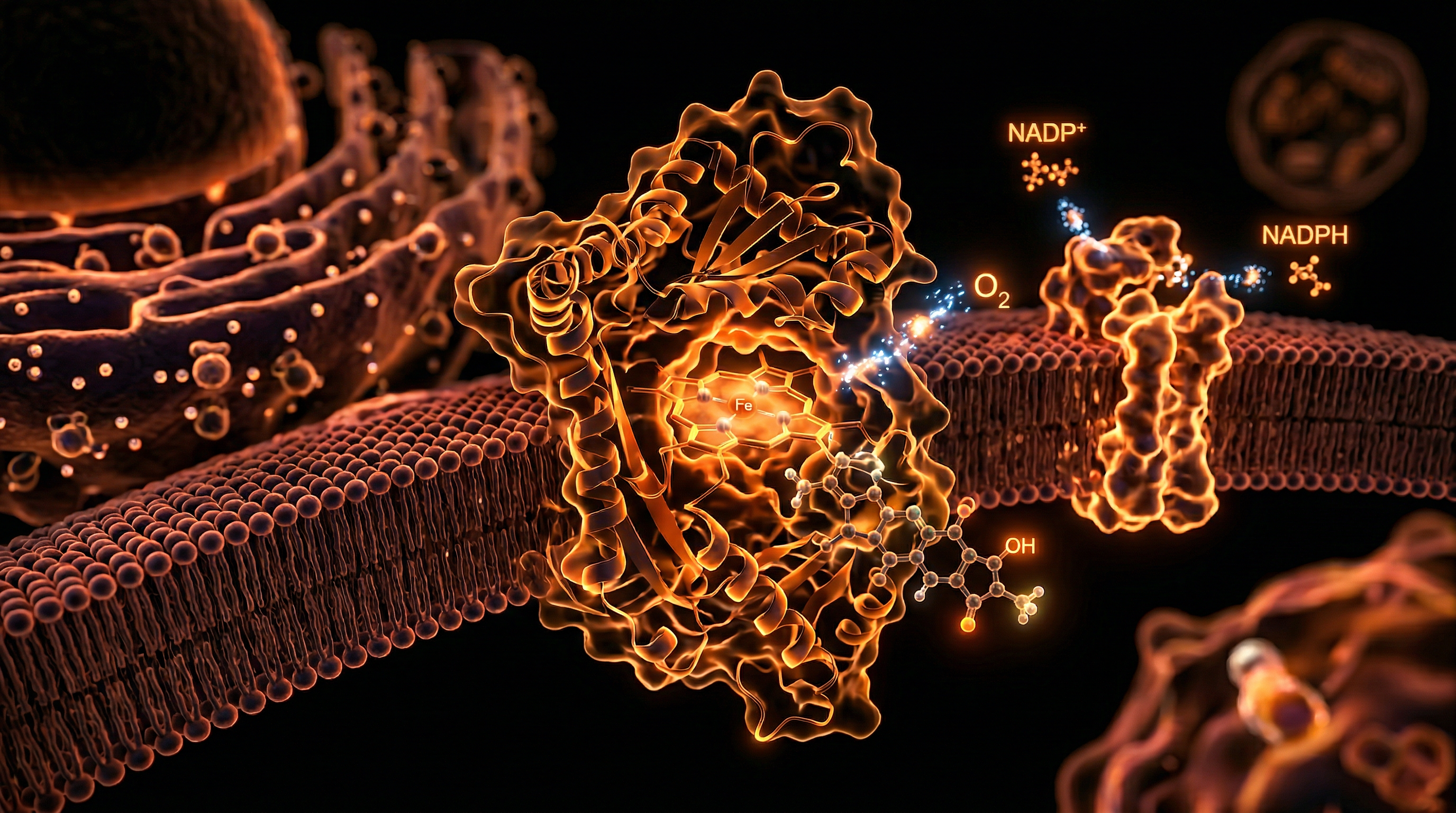
At the molecular scale, the Cytochrome P450 enzyme is a masterpiece of precision engineering. At its core lies a heme group—an iron atom held within a porphyrin ring. This iron atom is the catalytic engine that drives the monooxygenase reaction.
The Catalytic Cycle
The standard reaction performed by these enzymes involves the activation of molecular oxygen ($O2$) and the insertion of one oxygen atom into the substrate (the toxin), while the other oxygen atom is reduced to water. The general equation is as follows: $$RH + O2 + NADPH + H^+ \rightarrow ROH + H_2O + NADP^+$$
The cycle follows a rigorous sequence:
- Substrate Binding: The toxin (RH) binds to the active site of the CYP450 enzyme.
- First Electron Transfer: An electron is transferred from NADPH via the helper enzyme Cytochrome P450 Reductase, reducing the iron from the ferric ($Fe^{3+}$) to the ferrous ($Fe^{2+}$) state.
- Oxygen Binding: Molecular oxygen binds to the ferrous iron.
- Second Electron Transfer: A second electron is added, creating a highly reactive "peroxo" species.
- Cleavage and Insertion: The oxygen-oxygen bond is cleaved. One oxygen atom is released as water, and the remaining, highly reactive oxygen atom (the ferryl-oxo species) is inserted into the substrate.
- Product Release: The now-hydroxylated substrate (ROH) is released, and the enzyme returns to its resting state.
The Site of Action: The Endoplasmic Reticulum
Most CYP450 enzymes are tethered to the membrane of the Smooth Endoplasmic Reticulum (SER) within the cell. This placement is no accident. The SER is the factory floor of the cell, and by lining its membranes with CYP enzymes, the cell ensures that any incoming lipid-soluble toxins are processed before they can interfere with delicate nuclear or mitochondrial functions.
Important Fact: The requirement for NADPH means that detoxification is an energy-intensive process. A cell that is metabolically compromised or nutrient-depleted cannot efficiently clear toxins, regardless of its genetic potential.
Environmental Threats and Biological Disruptors
The CYP450 system evolved over millions of years to handle naturally occurring plant alkaloids and metabolic waste. It was never designed to cope with the "chemical blitzkrieg" of the post-Industrial Revolution era. Today, our enzymes are being bombarded by a cocktail of substances that not only demand processing but often actively subvert the enzymes' ability to function.
Xenobiotic Overload
We are now exposed to over 80,000 synthetic chemicals, many of which did not exist eighty years ago.
- Pesticides and Herbicides: Compounds like Glyphosate and Organophosphates are not just substrates; they are often "suicide inhibitors" that permanently disable the enzyme during the metabolism process.
- Microplastics and Phthalates: These ubiquitous endocrine disruptors compete for the same CYP450 pathways used by our endogenous hormones, such as oestrogen and testosterone. This leads to a "logjam" where neither the synthetic chemical nor the natural hormone is cleared effectively.
- Heavy Metals: Lead, mercury, and cadmium can displace the iron atom in the heme centre of the CYP enzyme, rendering it catalytically inert.
The Pharmaceutical Paradox
The modern medical paradigm relies heavily on the "one size fits all" prescription model. However, many drugs are pro-drugs, meaning they are inactive when swallowed and must be activated by CYP450 enzymes (e.g., Codeine being converted to Morphine by CYP2D6). Conversely, many drugs are deactivated by these enzymes.
When a patient takes multiple medications—a common occurrence in the ageing UK population—polypharmacy leads to dangerous drug-drug interactions. One drug may inhibit a specific CYP enzyme, causing another drug to build up to toxic levels in the bloodstream.
Endocrine Disruptors and the "Estrobolome"
A particularly concerning category of environmental threats is the impact on CYP1A1, CYP1A2, and CYP1B1. These enzymes are responsible for metabolising oestrogen. Environmental toxins like PAHs (Polycyclic Aromatic Hydrocarbons) from vehicle exhaust and charred food can over-stimulate these pathways, shifting oestrogen metabolism toward the "toxic" 16-alpha-hydroxyestrone or 4-hydroxyestrone metabolites, which are strongly linked to DNA damage and breast cancer.
The Cascade: From Exposure to Disease
The failure or inefficiency of the CYP450 system initiates a catastrophic biological cascade. This is not a sudden event but a slow, decades-long erosion of cellular integrity.
The Bioactivation Trap
The most dangerous aspect of Phase I metabolism is that the intermediate product (the "functionalised" toxin) is often more reactive and more toxic than the original parent compound. For example, Benzo[a]pyrene (found in cigarette smoke and industrial smog) is relatively inert until it is processed by CYP1A1 into an epoxide. If Phase II enzymes (like Glutathione S-transferase) are not immediately available to neutralise this epoxide, it will bind to DNA, forming "DNA adducts" that trigger mutations.
The Oxidative Burst
The CYP450 catalytic cycle is "leaky." During the transfer of electrons, reactive oxygen species (ROS) such as superoxide and hydrogen peroxide can escape the active site. If the body’s antioxidant defences (Superoxide Dismutase, Catalase, Glutathione) are overwhelmed, this leads to Oxidative Stress.
- Lipid Peroxidation: ROS attack the polyunsaturated fatty acids in cell membranes, destroying the cell's structural integrity.
- Mitochondrial Decay: The mitochondria, being in close proximity to the SER, often bear the brunt of this oxidative damage, leading to chronic fatigue and metabolic syndrome.
Chronic Inflammation and Autophagy Failure
When the body cannot clear "metabolic sludge," the immune system is recruited. Macrophages and other immune cells attempt to clean up the chemically damaged debris, leading to a state of chronic low-grade inflammation. Over time, this exhausts the body’s ability to perform autophagy (the self-cleaning mechanism of the cell), leading to the accumulation of misfolded proteins and cellular senescence—the hallmarks of Alzheimer’s and Parkinson’s diseases.
Statistic: It is estimated that up to 20% of all adverse drug reactions (ADRs) in hospitalised patients are due to genetic variations in the CYP450 system that were not accounted for by the prescribing clinician.
What the Mainstream Narrative Omits
The mainstream medical and regulatory narrative regarding detoxification and CYP450 is characterised by a series of convenient omissions designed to protect industrial and pharmaceutical interests.
The Myth of the "Safe Threshold"
Regulatory bodies such as the MHRA (UK) and the FDA (US) often set "Acceptable Daily Intakes" (ADIs) for toxins based on the assumption that every individual possesses a standard, high-functioning detoxification capacity. This is a scientific fallacy. A "safe" dose for an Extensive Metaboliser may be a lethal dose for a Poor Metaboliser. By ignoring genetic polymorphism, the mainstream narrative effectively sacrifices a significant percentage of the population to "statistically insignificant" side effects.
Epigenetic Silencing
Mainstream science rarely discusses how environmental factors can "silence" CYP450 genes without changing the DNA sequence. Heavy metals, chronic stress (via cortisol), and even certain processed food additives can cause DNA methylation of CYP promoters. This means that even if you have the "good" genes for detoxification, your environment can "turn them off," leaving you vulnerable.
The Synergistic Effect
Toxicology usually studies one chemical at a time. In reality, we are exposed to a "chemical soup." The mainstream narrative ignores synergistic toxicity, where two chemicals, both at "safe" levels, interact with the CYP450 system in a way that magnifies their toxicity tenfold. For example, the presence of an insecticide can inhibit the enzyme needed to detoxify a common food preservative, leading to unexpected neurological symptoms.
The Suppression of Pharmacogenomics
The technology to test an individual's CYP450 genotype has existed for decades. Yet, in the UK's NHS, pharmacogenomic testing is still not a standard precursor to prescribing. This omission persists because the "one drug fits all" model is more profitable and easier to manage than a personalised, precision-medicine approach that would require doctors to understand complex biochemistry.
The UK Context
In the United Kingdom, the state of the Cytochrome P450 system is under specific pressures. The UK’s industrial heritage, its unique dietary habits, and the current regulatory flux post-Brexit create a specific "detoxification profile" for the British public.
The Industrial Legacy and Soil Health
Large swathes of the UK, particularly in the North and the Midlands, suffer from soil contaminated with heavy metals (lead, arsenic) and persistent organic pollutants (POPs) from the Victorian era through to the late 20th century. These substances are "legacy inhibitors" of the CYP450 system, which are still making their way into the local food chain and groundwater.
The British Diet and the "Second Meal Effect"
The UK has one of the highest rates of ultra-processed food (UPF) consumption in Europe. These foods are devoid of the phytonutrients required to induce (activate) CYP enzymes. For instance, the absence of cruciferous vegetables in the standard British diet means a lack of Indole-3-Carbinol, a vital modulator of the CYP1 family. Furthermore, the high intake of refined sugars leads to Non-Alcoholic Fatty Liver Disease (NAFLD), which physically destroys the hepatocytes where CYP450 enzymes reside.
Regulatory Divergence Post-Brexit
As the UK diverges from EU chemical regulations (REACH), there is a growing concern that standards for pesticides and industrial chemicals may be lowered to facilitate trade deals. This increases the "body burden" on the UK population's CYP450 system at a time when the NHS is least equipped to handle the resulting rise in chronic illness.
The Postcode Lottery of Genomic Medicine
While the UK is a leader in genomic research (e.g., the 100,000 Genomes Project), the clinical application for the average citizen is non-existent. A patient in London might have access to private functional testing, while a patient in a rural community may be prescribed a cocktail of CYP-interacting drugs with zero oversight of their genetic compatibility.
Protective Measures and Recovery Protocols
Understanding the CYP450 system allows us to move from being passive victims of environmental toxicity to active managers of our biological destiny. We can support these enzymes through targeted nutritional interventions, lifestyle modifications, and the strategic use of hermetic stressors.
Nutritional Modulation: Inducers and Inhibitors
We can "tune" our enzymes by choosing specific foods that act as ligands for the receptors that control CYP expression (such as the AhR and PXR receptors).
- To Support CYP1A2 (Caffeine and Oestrogen metabolism): Consume cruciferous vegetables (broccoli, Brussels sprouts, kale). These contain sulforaphane, which induces Phase II and balances Phase I.
- To Support CYP3A4 (The Workhorse): Ensure adequate intake of Magnesium and Vitamin B3 (Niacin), which are essential co-factors for the production of NADPH.
- Caution with Inhibitors: Be aware that grapefruit juice contains naringenin, which potently inhibits CYP3A4. While this can sometimes be used to increase the bioavailability of certain nutrients, it can be deadly if combined with medications like statins or calcium channel blockers.
The Role of Sulfur and Heme Support
Since CYP450 enzymes are heme-thiolate proteins, they require iron and sulfur.
- Sulfur-rich foods: Garlic, onions, and eggs provide the precursors for Glutathione, which is essential for neutralising the reactive intermediates produced by CYP450.
- Iron Homeostasis: One must ensure adequate iron levels (ferritin) without reaching iron overload, as excess free iron contributes to the very oxidative stress we are trying to avoid.
Targeted Supplementation
- Milk Thistle (Silymarin): Protects the hepatocyte membranes and increases the survival of enzymes under toxic stress.
- Curcumin: Acts as a "biphasic" modulator, slowing down overactive Phase I enzymes (which create too many toxins) while speeding up Phase II enzymes (which clear them).
- Resveratrol: Specifically helps modulate CYP1B1, protecting against the formation of carcinogenic oestrogen metabolites.
Lifestyle and Environmental Control
- Water Filtration: Using high-quality carbon and reverse osmosis filters to remove fluoride and pharmaceutical residues from UK tap water is non-negotiable for protecting the liver.
- Sauna Therapy: By inducing sweating, we can offload some of the lipophilic toxins through the skin, reducing the total burden on the CYP450 system.
- Circadian Alignment: CYP450 activity follows a strict circadian rhythm. Disrupted sleep (blue light at night) impairs the liver's ability to regenerate these enzymes during the nocturnal fast.
Summary: Key Takeaways
The Cytochrome P450 superfamily is the invisible foundation of human resilience. However, this foundation is cracking under the weight of an artificial world.
- Genetic Individuality: We are not all the same. Your "detox type"—whether you are a Poor, Intermediate, Extensive, or Ultra-rapid Metaboliser—dictates your reaction to drugs, coffee, alcohol, and pollution.
- Phase I Risk: The CYP450 system is a double-edged sword. It prepares toxins for removal but can also "bioactivate" them into more dangerous forms if Phase II conjugation is not supported.
- Systemic Failure: The mainstream medical model’s refusal to implement widespread pharmacogenomic testing is a form of institutional negligence that leads to millions of preventable adverse reactions.
- The UK Burden: British citizens face unique challenges from industrial legacies and a diet that suppresses rather than supports our ancient detoxification machinery.
- Proactive Protection: Through the use of cruciferous vegetables, sulfur-rich foods, and the avoidance of known enzyme inhibitors, we can optimise our genetic expression.
In the era of the "Great Chemical Reset," understanding your Cytochrome P450 architecture is no longer an academic exercise—it is a survival necessity. We must demand a healthcare system that respects biochemical individuality and move toward a lifestyle that nourishes the very enzymes that keep us alive.
"References & Technical Notes:"
- Nelson, D. R. (2009). "The Cytochrome P450 Homepage."
- Guengerich, F. P. (2008). "Cytochrome P450 and Chemical Toxicology." Chemical Research in Toxicology.
- Lynch, T., & Price, A. (2007). "The Effect of Cytochrome P450 Metabolism on Drug Response, Interactions, and Adverse Effects." American Family Physician.
- Wilkinson, G. R. (2005). "Drug Metabolism and Variability among Patients in Drug Response." New England Journal of Medicine.
This article is provided for informational and educational purposes only. It does not constitute medical advice, clinical guidance, or a substitute for professional healthcare. Information reflects cited research at time of publication. Always consult a qualified healthcare professional before acting on any health information.
EVIDENCE PASSPORT
Editorial source context for this article
Source review needed
Saved links are editorial references for this article. They may support specific claims rather than every sentence. Open and assess each source in context. This passport does not independently verify them.
Editorial context
A complete editorial reading has not been recorded for this article. Source links remain available for you to open and assess directly.
Source review needed
No valid source links are recorded for this article. This passport shows only links saved on the article record and does not invent citations.
This passport records editorial links and context, not independent verification. Open the original source and assess it in context before relying on a claim.
Medical Disclaimer
The information in this article is for educational purposes only and does not constitute medical advice, diagnosis, or treatment. Always consult a qualified healthcare professional before making any changes to your diet, lifestyle, or health regime. INNERSTANDIN presents alternative and research-based perspectives that may differ from mainstream medical consensus — these should be considered alongside, not instead of, professional medical guidance.
Read Full DisclaimerContinue the thread
Keep this question moving.
Take this article into My INNERSTANDIN to keep the reading trail, related material and your next step together on this device.
Explore this in the Body Map
See where this hits your biology. Interactive anatomy, threats, and protective protocols.
Dig deeper in the Library
Free, longform PDF volumes that go beyond headlines into mechanisms and references.