
Delayed Cord Clamping: The Biological Necessity of Placental Transfusion
Updated May 2026
Clamping the umbilical cord too early denies the newborn up to 30 percent of its intended blood volume. This practice is a major contributor to neonatal iron deficiency in early childhood.
Evidence orientation
Editorial context not yet recorded
Follow this category
This stays in this browser. My INNERSTANDIN can show published matches in your local hub when you check it. It does not send email, push, or alert notifications.
Local learning review
A private browser aid for revisiting ideas. It is not an alert or a health recommendation.
Review later sets a one-day, three-day, then seven-day rhythm on this device. Choose it only when you want to revisit this article.
Overview
For decades, the standard of care in Western obstetrics has involved a manoeuvre that is as violent as it is subtle: the immediate clamping and cutting of the umbilical cord. This practice, often performed within seconds of delivery, has been framed as a neutral clinical necessity, a harmless step in the "active management" of birth. However, through the lens of evolutionary biology and neonatal physiology, this intervention represents a profound disruption of a critical biological process. We are witnessing the systematic deprivation of the newborn’s most vital resource at the exact moment of its greatest vulnerability.
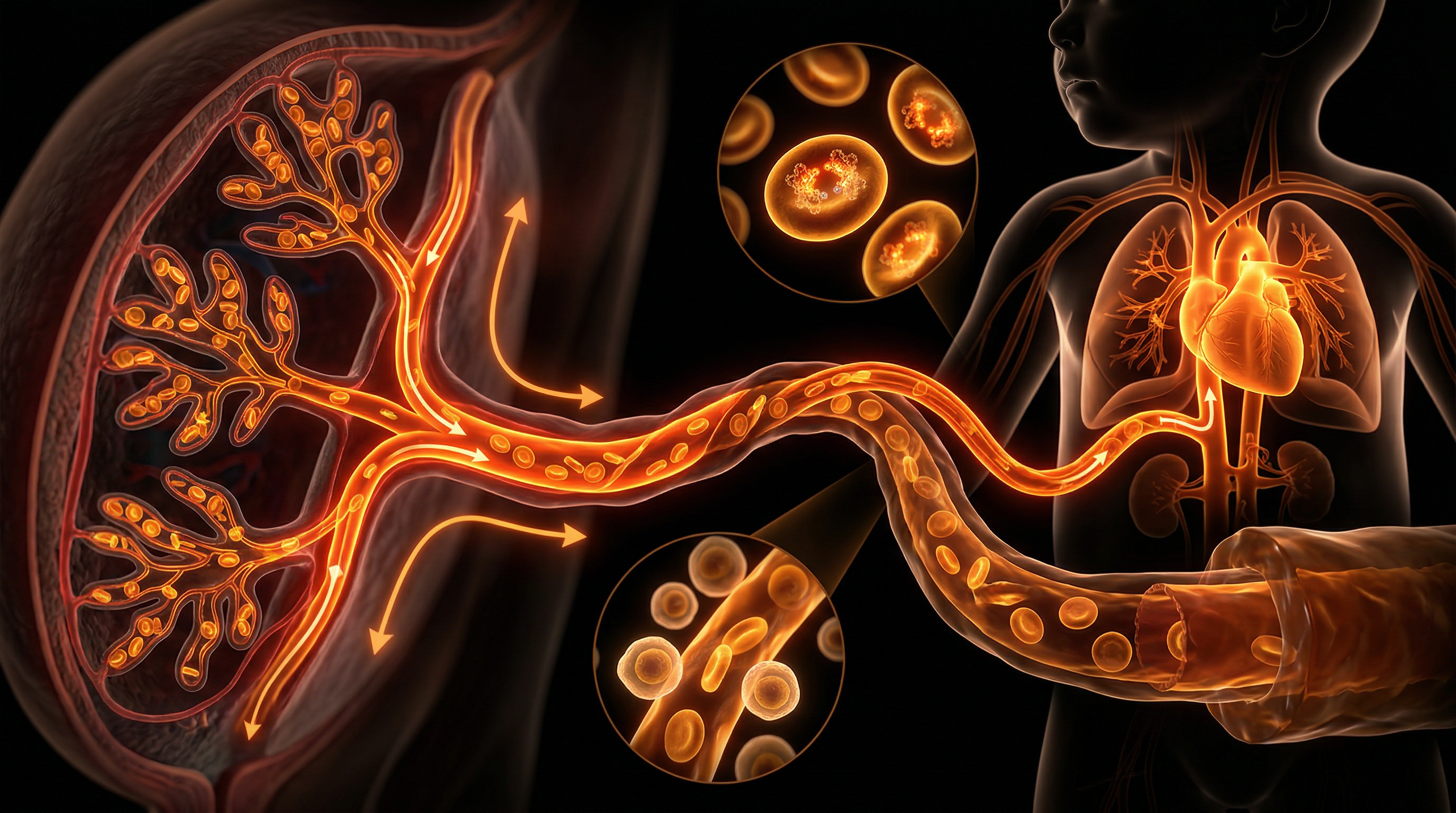
The umbilical cord is not a vestigial attachment to be discarded; it is a high-pressure conduit for the placental transfusion, a process through which the neonate receives up to 30 percent of its intended total blood volume. When we clamp the cord prematurely—a practice known as Immediate Cord Clamping (ICC)—we essentially "bleed" the infant of nearly a third of its circulatory capacity. This blood is rich in oxygenated erythrocytes, essential nutrients, and life-sustaining stem cells.
The consequences of this deprivation are not merely academic. They manifest as a silent epidemic of Neonatal Iron Deficiency, impaired neurodevelopment, and compromised cardiovascular transitions. This article serves as a comprehensive interrogation of the biological necessity of Delayed Cord Clamping (DCC), or more accurately, Optimal Cord Clamping (OCC). We will explore how the transition from womb to world is designed to occur, and how modern medical intervention has prioritised clinical convenience over the fundamental blueprint of human survival.
Fact: Clamping the cord before it has stopped pulsating denies the newborn approximately 80–100ml of blood, which is equivalent to a 70kg adult losing nearly two litres of blood instantaneously.
The Biology — How It Works
To understand why delayed clamping is a biological necessity, one must first understand the unique circulatory state of the foetus. In utero, the placenta serves as the infant’s lungs, kidneys, and gut. The foeto-placental circulation is a unified system where roughly one-third of the total blood volume is located within the placenta at any given time. This blood is constantly circulating, picking up oxygen and nutrients from the maternal blood via the placental barrier.
Upon birth, the infant must undergo the most radical physiological shift of its life: the transition from liquid to gas breathing. This shift is not instantaneous; it is a choreographed sequence of events that requires the support of the placental blood volume.
The Pressure Gradient and Alveolar Expansion
As the baby takes its first breaths, the lungs expand and the pulmonary vascular resistance (PVR)—which was high in utero to bypass the lungs—plunges. This drop in resistance creates a vacuum-like effect, drawing blood into the pulmonary capillaries to facilitate gas exchange. If the cord remains intact, the placenta provides a "buffer" or a reservoir. The pressure from the contracting uterus and the natural recoil of the umbilical arteries pushes blood into the newborn to fill these newly opened pulmonary vessels.
The Three Stages of Transfusion
The placental transfusion occurs in stages.
- The Initial Surge: Within the first 60 seconds, a rapid transfer of blood occurs as the uterus contracts, physically squeezing blood out of the placenta.
- The Pulsatile Phase: For several minutes, the umbilical arteries continue to pulse. This is not just a heartbeat; it is a refined regulatory mechanism. The arteries eventually constrict (vasospasm) to prevent blood from flowing back to the placenta, while the umbilical vein remains open to allow blood to flow toward the infant.
- The Equilibrium: Once the infant’s blood pressure and pulmonary circulation have stabilised, the transfusion ceases naturally. The cord goes limp, white, and pulseless.
Statistic: Research indicates that roughly 50% of the placental blood is transferred to the infant by 1 minute, and nearly 90% is transferred by 3 minutes.
Mechanisms at the Cellular Level
The blood being sequestered in the placenta during ICC is not "spare" blood. It is a specialised biological cocktail engineered for the neonate’s immediate and long-term survival.
Haemoglobin and Oxygen Carrying Capacity
The primary component of this transfusion is fetal haemoglobin (HbF). This blood is highly efficient at carrying oxygen. By allowing the full transfusion, the neonate begins life with significantly higher haematocrit levels. This provides a crucial safety net during the first hours of life when the infant’s respiratory system may be irregular or under-efficient. Without this extra volume, the infant must work harder to oxygenate its tissues, increasing the risk of respiratory distress.
The Iron Reservoir
Perhaps the most critical long-term benefit of DCC is the massive influx of iron. Iron is a non-negotiable requirement for the production of myelin, the insulating sheath around nerves that allows for rapid signal transmission in the brain.
- A full placental transfusion provides approximately 75–100 mg of supplemental iron.
- To put this in perspective, this amount of iron is equivalent to what a newborn would normally ingest from breast milk over the course of four to six months.
By clamping early, we are effectively inducing an iron deficit at the very moment the brain is undergoing its most rapid period of growth and myelination.
Stem Cells: The Body’s Repair Kit
The placental blood is the body’s richest source of Haematopoietic Stem Cells (HSCs) and Mesenchymal Stem Cells (MSCs). These cells are multipotent; they have the ability to differentiate into various tissue types and are involved in immune system priming and tissue repair.
- HSCs are responsible for building the infant's lifelong immune system.
- MSCs have potent anti-inflammatory properties that may protect the newborn from the inflammatory "storm" associated with a traumatic birth or sudden oxygen deprivation (hypoxia).
By discarding the placenta and cord immediately, we are throwing away a "biological insurance policy" that the infant has spent nine months cultivating.
Wharton’s Jelly: Nature’s Clamp
The umbilical cord is encased in a gelatinous substance called Wharton’s Jelly. This substance is highly sensitive to temperature changes. When the baby is born and the cord is exposed to the cooler air of the delivery room, the jelly begins to swell and collapse the vessels within the cord. This is Nature’s Clamp. It is a physiological fail-safe that ensures the cord closes at exactly the right time—usually when the transfusion is complete. Man-made plastic clamps are a crude and unnecessary substitute for this elegant biological timing.
Environmental Threats and Biological Disruptors
The primary threat to the placental transfusion is the modern "assembly line" model of obstetrics. Several factors contribute to the rush to clamp the cord, none of which are rooted in the infant's biological needs.
The Myth of Efficiency
In a high-turnover hospital environment, time is the most expensive commodity. Waiting three to five minutes for a cord to stop pulsating is often viewed as an inconvenience. This creates a psychological pressure on the clinician to "get on with it," often justifying the clamp as a way to hand the baby to the paediatrician or to begin the delivery of the placenta.
Synthetic Oxytocin (Pitocin/Syntocinon)
The routine use of synthetic oxytocin to manage the "third stage" of labour (the delivery of the placenta) is a significant disruptor. Synthetic oxytocin causes the uterus to contract violently and rapidly. While this can prevent maternal haemorrhage, it also accelerates the placental separation process. If the cord is not clamped, the blood is forced into the baby under unnaturally high pressure. Conversely, if the cord is clamped immediately during a synthetic oxytocin-driven contraction, the baby is denied the blood that was meant to be delivered more gradually.
Gravity and Positioning
A persistent medical myth suggests that the baby must be held below the level of the placenta (introitus) for the transfusion to occur. This has led many clinicians to keep the baby low, delaying skin-to-skin contact. However, recent studies have shown that gravity does not significantly impact the volume of the transfusion. The primary driver is uterine contraction and the pressure gradient of the infant's circulatory system. The real threat is the interruption of the process, not the position of the infant.
Stem Cell Banking
The commercialisation of cord blood banking represents a direct conflict of interest. Private companies charge parents thousands of pounds to harvest and store cord blood for "future use." For these companies to get a viable "unit" of blood, the cord must be clamped immediately to trap the blood inside the cord and placenta. This is an ethical paradox: the infant is deprived of its own blood today to potentially use a fraction of it in twenty years.
Callout: Modern obstetrics often treats the placenta as medical waste, yet it contains the very "liquid gold" required to prevent childhood anaemia.
The Cascade: From Exposure to Disease
What happens when we ignore these biological imperatives? The "Cascade of Intervention" often leads to a "Cascade of Pathophysiology."
Phase 1: Immediate Respiratory and Cardiovascular Stress
When the cord is clamped before the lungs have fully expanded, the infant’s heart experiences a sudden "preload" drop. The left atrium of the heart, which was receiving blood from the placenta, suddenly finds its supply cut off. This can lead to a transient drop in cardiac output and systemic blood pressure. In fragile or preterm infants, this sudden hemodynamic shift can lead to Intraventricular Haemorrhage (IVH)—bleeding in the brain.
Phase 2: The Iron Deficiency Trap
As the infant reaches 4 to 6 months of age, the iron stores provided by the placenta are meant to sustain them through the transition to solid foods. Infants who underwent ICC are significantly more likely to develop Iron Deficiency (ID).
- Cognitive Impact: Iron is essential for the function of the hippocampus (memory) and the basal ganglia (motor control).
- Behavioural Impact: Studies have linked early childhood iron deficiency to increased rates of anxiety, depression, and social problems in later childhood.
Phase 3: Neurodevelopmental Delays
A landmark study published in JAMA Pediatrics (Andersson et al.) followed children who had either ICC or DCC (at least 3 minutes). At four years of age, the children in the DCC group showed significantly higher scores in fine motor skills and social skills, particularly in boys. This suggests that the impact of cord clamping is not just a temporary haematological issue but a permanent neurodevelopmental one.
Phase 4: The Jaundice Misconception
For years, the mainstream narrative argued that DCC caused Neonatal Jaundice (hyperbilirubinaemia). The logic was that "too much blood" would lead to the breakdown of excess red blood cells, overwhelming the infant's liver. However, systematic reviews (including Cochrane) have shown that while DCC may lead to slightly higher bilirubin levels, it does not increase the risk of jaundice requiring phototherapy. The benefit of the iron and stem cells far outweighs the minor physiological process of processing the extra red cells.
What the Mainstream Narrative Omits
The resistance to DCC is not based on science, but on institutional inertia and the history of obstetric practice.
The "Active Management" Agenda
In the 1960s, "Active Management of the Third Stage of Labour" (AMTSL) was introduced to reduce the risk of Post-Partum Haemorrhage (PPH) for the mother. This protocol included:
- Administration of a uterotonic drug (synthetic oxytocin).
- Immediate Cord Clamping.
- Controlled cord traction to pull the placenta out.
ICC was bundled into this protocol without any evidence that it actually reduced PPH. We now know that the timing of the clamp has zero impact on maternal blood loss. However, because it was part of the "package," it became the global standard.
The Gender Gap in Iron Deficiency
Research indicates that male infants may be more susceptible to the negative effects of ICC. Male foetuses generally have lower iron stores in utero compared to female foetuses. When the cord is clamped early, boys are pushed into a state of clinical deficiency much sooner, which may explain the higher rates of neurodevelopmental disorders observed in males.
The Resuscitation Paradox
One of the most dangerous omissions in the mainstream narrative is the treatment of babies who need help breathing at birth. Standard protocol dictates that if a baby is "flat" or not breathing, the cord must be clamped immediately so the baby can be moved to a resuscitation table.
- The Biological Truth: A baby who isn't breathing needs the oxygenated blood from the placenta more than a healthy baby. By clamping the cord, the clinician cuts off the infant’s only source of oxygen while they struggle to establish their own.
- The Solution: Resuscitation with an intact cord is the biological gold standard, yet few hospitals are equipped with "bedside resuscitaires" (like the LifeStart trolley) to allow this.
The UK Context
In the United Kingdom, the tide is slowly turning, but the implementation of optimal practices remains inconsistent across NHS Trusts.
NICE Guidelines
The National Institute for Health and Care Excellence (NICE) currently recommends that the cord should not be clamped earlier than 1 minute after birth unless the baby’s heart rate is less than 60 beats per minute or is not rising. While this is an improvement over the "immediate" standard, many advocates argue that 1 minute is still insufficient for a full transfusion.
The "Wait for White" Movement
A grassroots movement, championed by midwives like Amanda Burleigh, has successfully campaigned for the "Wait for White" approach. This pushes for clinicians to wait until the cord is pulseless and white—indicating that all the blood has been transferred—before clamping.
Policy vs. Practice
Despite these guidelines, the reality on the labour ward is often different.
- Audit Gaps: Many hospitals do not strictly audit the timing of cord clamping, leading to "clinical creep" where the cord is clamped at 30 or 45 seconds under the guise of "delayed."
- Staffing Pressures: Understaffed wards often lead to rushed deliveries where the physiological "wait" is sacrificed for speed.
Key Fact: The World Health Organization (WHO) now recommends DCC for at least 1–3 minutes, yet this remains one of the most frequently ignored clinical guidelines in high-income countries.
Protective Measures and Recovery Protocols
For parents and practitioners seeking to honour the biological necessity of placental transfusion, a proactive approach is essential.
During Birth: The Plan for DCC
- Explicit Consent: DCC should be a non-negotiable part of the birth plan. Use terms like "Optimal Cord Clamping" to signal a desire for a full transfusion (until the cord is white).
- Physiological Third Stage: Where safe, opt for a physiological third stage (delivery of the placenta without synthetic oxytocin). This allows the process to happen at the body's own pace, ensuring the maximum transfer of stem cells.
- Delayed Clamping in C-Sections: DCC is possible and safe during Caesarean sections. The surgeon can simply wait 60–120 seconds before clamping while the baby is held at the level of the incision.
Post-Birth: Recovering from ICC
If a baby has already suffered ICC (which is the case for most adults and many current children), there are steps to mitigate the long-term effects of the resulting iron deficiency.
- Delayed Introduction of Solids: Waiting until 6 months to introduce solids allows the infant's gut to mature, but if ICC occurred, iron-rich foods (liver, red meat, egg yolks) should be prioritised from the start of weaning.
- Avoidance of Calcium with Iron: Calcium inhibits iron absorption. Ensure that iron-rich meals are not given alongside large amounts of cow’s milk or calcium-heavy supplements.
- Iron Monitoring: For children who show signs of fatigue, irritability, or developmental delays, a full iron panel (including Ferritin levels, not just haemoglobin) is essential. A "normal" haemoglobin can often hide a severely depleted iron store.
- Nutritional Support: Supporting the microbiome is key. A healthy gut absorbs nutrients more efficiently. Probiotics and fermented foods can help optimise the uptake of what iron is available.
Summary: Key Takeaways
The practice of immediate cord clamping is a biological transgression that has been normalised through decades of medical over-intervention. By understanding the mechanics of the placental transfusion, we can see that the umbilical cord is not merely a "link," but a vital organ that completes its function only after the birth of the baby.
- Placental transfusion provides 30% of the newborn's blood volume and a massive reservoir of iron and stem cells.
- Immediate Cord Clamping (ICC) is a primary driver of neonatal iron deficiency, which can lead to permanent neurodevelopmental impairment.
- Delayed Cord Clamping (DCC) supports the transition of the heart and lungs, reducing the risk of respiratory distress and brain haemorrhage.
- Institutional Inertia and the commercialisation of cord blood banking are the primary barriers to the adoption of optimal cord clamping.
- Wait for White: The biological "standard" is to leave the cord intact until it is pulseless and white, ensuring the infant receives its full biological inheritance.
As we move toward a more "INNERSTANDING" of birth, we must advocate for the protection of this first, most vital transfer of life. The cord is the baby's first lifeline; it should be severed only when its work is truly done.
This article is provided for informational and educational purposes only. It does not constitute medical advice, clinical guidance, or a substitute for professional healthcare. Information reflects cited research at time of publication. Always consult a qualified healthcare professional before acting on any health information.
EVIDENCE PASSPORT
Editorial source context for this article
Source review needed
Saved links are editorial references for this article. They may support specific claims rather than every sentence. Open and assess each source in context. This passport does not independently verify them.
Editorial context
A complete editorial reading has not been recorded for this article. Source links remain available for you to open and assess directly.
Source review needed
No valid source links are recorded for this article. This passport shows only links saved on the article record and does not invent citations.
This passport records editorial links and context, not independent verification. Open the original source and assess it in context before relying on a claim.
Medical Disclaimer
The information in this article is for educational purposes only and does not constitute medical advice, diagnosis, or treatment. Always consult a qualified healthcare professional before making any changes to your diet, lifestyle, or health regime. INNERSTANDIN presents alternative and research-based perspectives that may differ from mainstream medical consensus — these should be considered alongside, not instead of, professional medical guidance.
Read Full DisclaimerContinue the thread
Keep this question moving.
Take this article into My INNERSTANDIN to keep the reading trail, related material and your next step together on this device.
Dig deeper in the Library
Free, longform PDF volumes that go beyond headlines into mechanisms and references.