
Endoplasmic Reticulum Stress-Induced Apoptosis: The PERK-eIF2alpha-CHOP Signaling Pathway
An in-depth exploration of how misfolded protein accumulation triggers the Unfolded Protein Response (UPR), specifically focusing on the PERK-eIF2alpha-CHOP cascade as a molecular switch for programmed cell death.
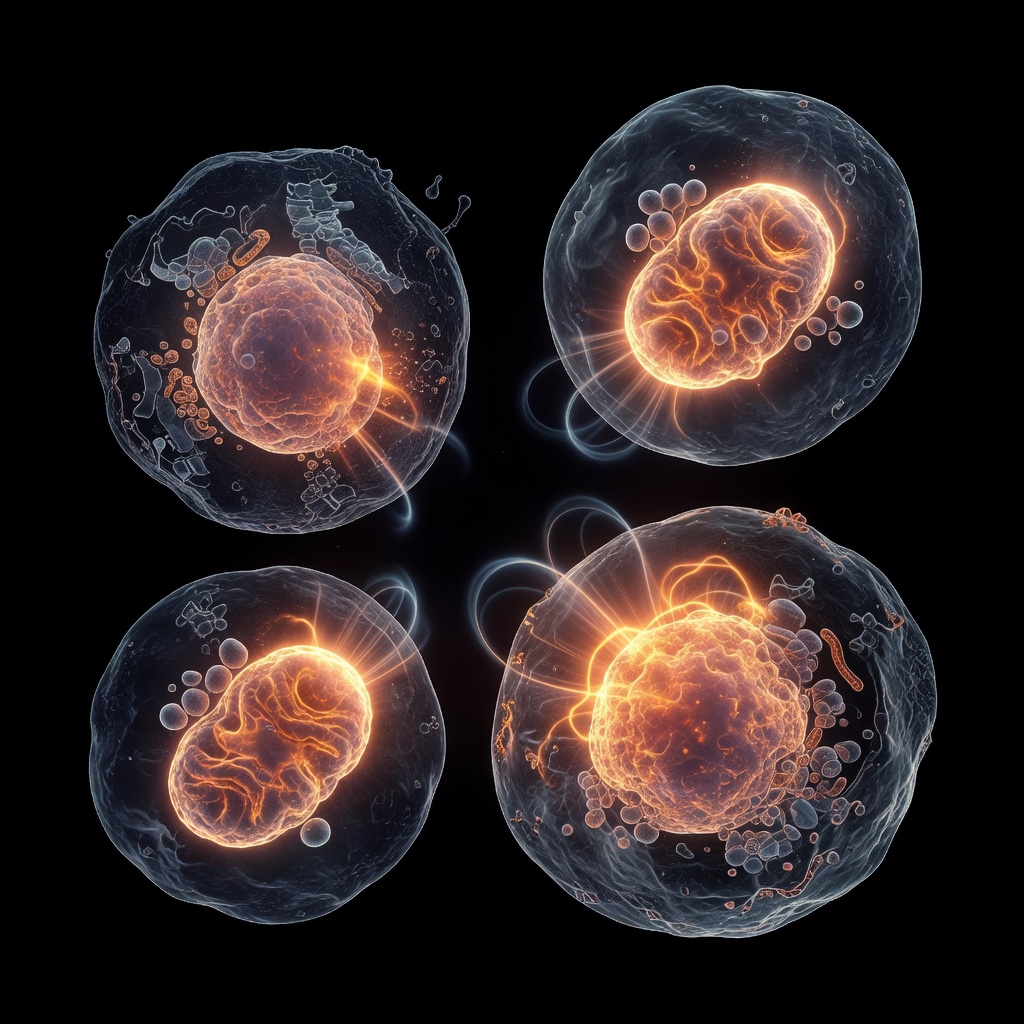
# The Molecular Sentinel: Understanding ER Stress-Induced Apoptosis\n\nIn the intricate landscape of cellular biology, the Endoplasmic Reticulum (ER) serves as the primary factory for protein synthesis, folding, and maturation. For a cell to function correctly, the proteins it produces must be folded into specific three-dimensional conformations. When this process fails, the resulting accumulation of misfolded or unfolded proteins leads to a state known as Endoplasmic Reticulum Stress. To combat this, cells have evolved a sophisticated adaptive mechanism called the Unfolded Protein Response (UPR). However, when the stress is chronic or overwhelming, the UPR shifts from a pro-survival to a pro-apoptotic signal.
This article examines the critical role of the PERK-eIF2alpha-CHOP signaling pathway in mediating this transition.\n\n## The Genesis of ER Stress: Root Causes and Cellular Homeostasis\n\nThe ER is not merely a biosynthetic hub; it is a sensitive sensor of cellular health. Under normal physiological conditions, a balance (proteostasis) is maintained between protein synthesis and the folding capacity of the ER. Several factors can disrupt this delicate equilibrium, leading to ER stress. These root causes include genetic mutations in chaperones, nutrient deprivation (particularly glucose), oxidative stress, viral infections, and fluctuations in calcium levels. Since the ER is the cell's largest calcium reservoir, any depletion of intraluminal calcium impairs the function of calcium-dependent chaperones like calnexin and calreticulin, directly triggering the accumulation of misfolded proteins.\n\n## The Unfolded Protein Response: Three Arms of Defense\n\nUpon sensing misfolded proteins, the cell activates the UPR via three transmembrane sensors: IRE1, ATF6, and PERK.
In a healthy state, these sensors are kept inactive by their association with the chaperone protein BiP (GRP78). When misfolded proteins accumulate, BiP dissociates from the sensors to assist in protein folding, thereby releasing the sensors to initiate signaling. While IRE1 and ATF6 primarily focus on increasing folding capacity and protein degradation, the PERK (Protein Kinase RNA-like ER Kinase) pathway acts as a critical regulator of global protein synthesis and the eventual decision to undergo apoptosis.\n\n## The PERK-eIF2alpha-ATF4 Axis: From Adaptation to Arrest\n\nThe activation of PERK is the first line of defense in the UPR. Once released from BiP, PERK undergoes homodimerization and autophosphorylation. Its primary substrate is the alpha subunit of eukaryotic initiation factor 2 (eIF2alpha).
Phosphorylation of eIF2alpha at Serine 51 leads to a rapid and global inhibition of mRNA translation. This serves as an immediate 'emergency brake,' reducing the influx of new proteins into the overloaded ER lumen to prevent further damage.\n\nParadoxically, while global translation is suppressed, the translation of specific mRNAs with upstream open reading frames (uORFs) is enhanced. The most notable of these is ATF4 (Activating Transcription Factor 4). ATF4 enters the nucleus to upregulate genes involved in amino acid metabolism, antioxidant responses, and, crucially, the pro-apoptotic transcription factor CHOP.\n\n## CHOP: The Molecular Executioner\n\nC/EBP Homologous Protein (CHOP), also known as GADD153, is the central mediator of ER stress-induced apoptosis. Under mild stress, CHOP expression is kept low.
However, during persistent stress, the sustained activation of the PERK-eIF2alpha-ATF4 axis leads to a massive induction of CHOP. CHOP does not possess intrinsic catalytic activity; rather, it functions by regulating the expression of a vast network of genes that tip the balance toward cell death.\n\nCHOP's mechanism of action is multifaceted. First, it downregulates the expression of Bcl-2, an anti-apoptotic protein that normally stabilizes the mitochondrial membrane. Second, it promotes the expression of pro-apoptotic members of the Bcl-2 family, such as BIM, PUMA, and BAX. Third, CHOP induces the expression of ERO1alpha (Endoplasmic Reticulum Oxidoreductase 1), which catalyzes protein disulfide bond formation.
While this may seem helpful, hyper-activation of ERO1alpha generates reactive oxygen species (ROS), causing further oxidative stress and triggering calcium release from the ER into the cytoplasm.\n\n## Downstream Targets: The Bridge to Mitochondria\n\nThe ER and mitochondria are closely linked through Mitochondria-Associated Membranes (MAMs). The CHOP-induced increase in ROS and cytoplasmic calcium leads to mitochondrial membrane permeabilization. Once the mitochondrial outer membrane is compromised, Cytochrome C is released into the cytosol, where it binds with APAF-1 to form the apoptosome. This activates Caspase-9, which in turn activates the executioner caspases (Caspase-3 and Caspase-7), leading to the systematic dismantling of the cell.\n\n## Pathological Significance: When Proteostasis Fails\n\nThe PERK-eIF2alpha-CHOP pathway is implicated in the pathogenesis of several modern chronic diseases. In Type 2 Diabetes, the high demand for insulin production causes chronic ER stress in pancreatic beta cells.
Persistent PERK activation leads to CHOP-mediated beta-cell loss, exacerbating insulin deficiency. In neurodegenerative diseases like Alzheimer\u2019s and Parkinson\u2019s, the accumulation of toxic protein aggregates (amyloid-beta or alpha-synuclein) triggers chronic UPR activation, leading to neuronal apoptosis and cognitive decline.\n\nFurthermore, in cardiovascular disease, ischemia-reperfusion injury causes a sudden spike in ER stress. The resulting CHOP induction contributes significantly to cardiomyocyte death and subsequent heart failure. Understanding this signaling cascade is therefore essential for developing targeted therapies that can either inhibit CHOP or enhance the ER's folding capacity before the apoptotic threshold is reached.\n\n## Conclusion\n\nThe PERK-eIF2alpha-CHOP signaling pathway represents a sophisticated cellular decision-making process. It begins as a survival mechanism, aiming to restore homeostasis by halting protein production and increasing folding efficiency.
Yet, in the face of insurmountable stress, it serves as the final judge, initiating a programmed death sequence to protect the organism from the presence of dysfunctional cells. For clinicians and researchers, targeting the root causes of ER stress and modulating the transition from ATF4-mediated survival to CHOP-mediated apoptosis remains one of the most promising frontiers in molecular medicine.
This article is provided for informational and educational purposes only. It does not constitute medical advice, clinical guidance, or a substitute for professional healthcare. Information reflects cited research at time of publication. Always consult a qualified healthcare professional before acting on any health information.
RESEARCH FOUNDATIONS
Biological Credibility Archive
Citations provided for educational reference. Verify via PubMed or institutional databases.
Medical Disclaimer
The information in this article is for educational purposes only and does not constitute medical advice, diagnosis, or treatment. Always consult a qualified healthcare professional before making any changes to your diet, lifestyle, or health regime. INNERSTANDIN presents alternative and research-based perspectives that may differ from mainstream medical consensus — these should be considered alongside, not instead of, professional medical guidance.
Read Full DisclaimerReady to learn more?
Continue your journey through our classified biological research.
DISCUSSION ROOM
Members of THE COLLECTIVE discussing "Endoplasmic Reticulum Stress-Induced Apoptosis: The PERK-eIF2alpha-CHOP Signaling Pathway"
SILENT CHANNEL
Be the first to discuss this article. Your insight could help others understand these biological concepts deeper.
THE ARSENAL
Based on Apoptosis & Cellular Death Mechanisms — products curated by our research team for educational relevance and biological support.
Energy Blend Supports
Peptides, one of the secret Russian military health marvels, now available. 40 years research

Clean Slate – Detoxes thousands of chemicals,heavy metals, pesticides, allergens, mold spores and fungus
INNERSTANDING may earn a commission on purchases made through these links. All products are selected based on rigorous educational relevance to our biological research.
RABBIT HOLE
Follow the biological thread deeper
