Cytochrome c Release and the Formation of the Apoptosome: A Biochemical Analysis of Intrinsic Suicide Cascades
An in-depth exploration of the intrinsic apoptotic pathway, focusing on the transition of cytochrome c from energy production to its role as a lethal signaling molecule in the assembly of the apoptosome.

# Cytochrome c Release and the Formation of the Apoptosome: A Biochemical Analysis of Intrinsic Suicide Cascades
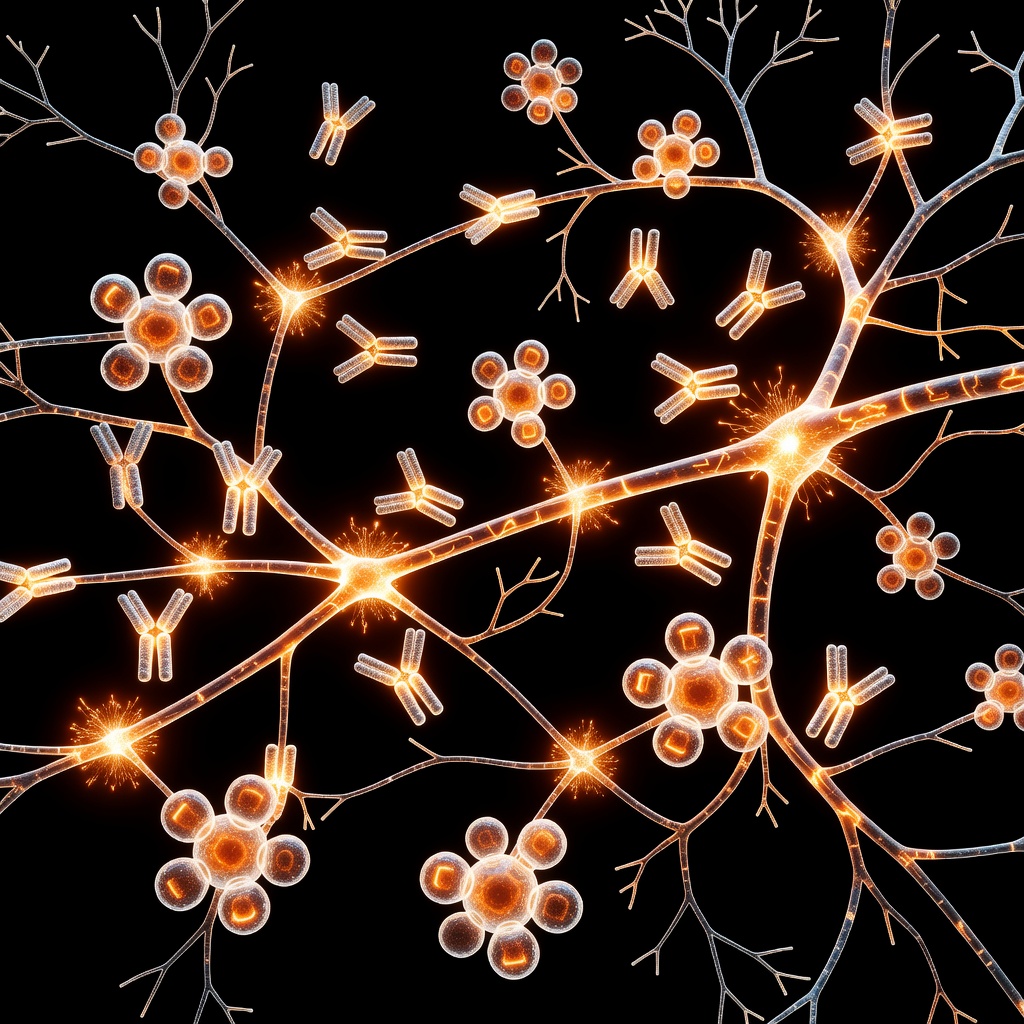
In the intricate landscape of cellular biology, the decision of a cell to terminate itself is as vital as the decision to divide. This process, known as apoptosis, or programmed cell death, serves as a fundamental mechanism for maintaining homeostasis, sculpting embryonic development, and eradicating damaged or potentially malignant cells. At the heart of the intrinsic (mitochondrial-mediated) apoptotic pathway lies a remarkable biochemical transformation: the migration of cytochrome c from the mitochondrial intermembrane space into the cytosol and its subsequent orchestration of the apoptosome—a molecular machine often referred to as the 'wheel of death.'
The Dual Life of Cytochrome c
Under normal physiological conditions, cytochrome c is a small hemeprotein loosely associated with the inner mitochondrial membrane. Its primary role is essential for life: it acts as a mobile electron carrier within the electron transport chain, shuttling electrons from Complex III (coenzyme Q–cyt c reductase) to Complex IV (cytochrome c oxidase). In this capacity, it is a key player in the generation of the proton gradient necessary for ATP synthesis.
However, when a cell encounters severe internal stress—such as DNA damage, oxidative stress, or cytokine deprivation—cytochrome c is recruited for a more sinister purpose. Its release into the cytosol marks a definitive shift from aerobic respiration to the initiation of the intrinsic suicide cascade. This transition is not accidental but is tightly regulated by the Bcl-2 family of proteins.
Methylene Blue – Advanced Cellular Chemistry
A pharmaceutical-grade compound designed to optimise mitochondrial function and cellular energy production. This high-purity formula supports metabolic efficiency and mental clarity by acting as a powerful electron donor within your cells.
Vetting Notes
Pending
The Point of No Return: MOMP
The release of cytochrome c is facilitated by Mitochondrial Outer Membrane Permeabilization (MOMP). This event is often cited as the 'point of no return' in the apoptotic process. MOMP is governed by the balance between pro-apoptotic and anti-apoptotic members of the Bcl-2 family.
When pro-apoptotic signals predominate, proteins such as Bax and Bak undergo a conformational change and oligomerize within the mitochondrial outer membrane. This forms pores that compromise the membrane's integrity. Consequently, cytochrome c, along with other pro-apoptotic factors like Smac/DIABLO and Omi/HtrA2, leaks into the cytoplasm. Once cytochrome c enters the cytosolic environment, the cell’s fate is largely sealed.
The Architecture of the Apoptosome
In the cytosol, cytochrome c encounters a protein called Apoptotic Protease-Activating Factor 1 (Apaf-1). In a healthy cell, Apaf-1 exists in an inactive, monomeric state. The interaction between cytochrome c and Apaf-1 is the catalyst for the assembly of the apoptosome.
1. Nucleotide Exchange and Conformational Change
Cytochrome c binds to the WD40 repeat domains of Apaf-1. This binding triggers a conformational change that requires energy in the form of dATP or ATP. The hydrolysis of these nucleotides allows Apaf-1 to 'unfold,' exposing its CARD (Caspase Recruitment Domain) and its oligomerization domain.
2. Heptameric Assembly
Once activated, seven Apaf-1 molecules aggregate to form a wheel-like, heptameric structure. This is the apoptosome. The structure is characterized by a central hub formed by the CARD domains and 'spokes' extending outward, composed of the WD40 and NB-ARC domains. The symmetry and precision of this assembly are critical for its function as a platform for caspase activation.
The Activation of Caspase-9
The primary function of the apoptosome is to recruit and activate pro-caspase-9. Caspases (cysteine-aspartic proteases) are synthesized as inactive zymogens (pro-caspases) to prevent premature cellular destruction. The CARD domains at the center of the apoptosome hub interact with the CARD domain of pro-caspase-9 through homophilic interactions.
Unlike many other enzymes that require proteolytic cleavage for activation, pro-caspase-9 is activated through dimerization on the apoptosome platform. This is known as the 'induced proximity' model. Once bound to the apoptosome, pro-caspase-9 molecules are brought into close enough proximity to facilitate their activation. The apoptosome-caspase-9 complex is often termed the 'holoenzyme.'
The Execution Phase: The Caspase Cascade
Activated caspase-9 is an initiator caspase. Its role is not to dismantle the cell directly, but to activate the 'executioner' caspases, specifically caspase-3 and caspase-7. This leads to an exponential amplification of the apoptotic signal.
The executioner caspases proceed to cleave a wide array of cellular substrates. They target the cytoskeleton (leading to cell shrinkage and blebbing), nuclear lamins (leading to nuclear fragmentation), and ICAD (Inhibitor of Caspase-Activated DNase). The cleavage of ICAD releases the enzyme CAD, which migrates to the nucleus and fragments the cell's DNA into nucleosomal units. The end result is the systematic packaging of the cell into apoptotic bodies, which are then recognized and engulfed by phagocytes without inducing an inflammatory response.
Clinical Significance and the Root Cause of Disease
Understanding the cytochrome c-apoptosome pathway is not merely an academic exercise; it is fundamental to understanding the root causes of many human diseases.
- —Cancer: Many tumors develop resistance to apoptosis by overexpressing anti-apoptotic proteins like Bcl-2 or by losing the function of Apaf-1. This allows cells with significant DNA damage to survive and proliferate, leading to oncogenesis.
- —Neurodegeneration: Conversely, in conditions such as Alzheimer’s or Parkinson’s disease, the intrinsic apoptotic pathway may be hyper-activated. Chronic oxidative stress in neurons can trigger premature cytochrome c release, leading to the gradual loss of essential neural tissue.
- —Therapeutic Potential: Current research is heavily focused on modulating this pathway. Small molecules that mimic pro-apoptotic proteins (BH3 mimetics) are being developed to force cancer cells into apoptosis by triggering the release of cytochrome c.
Conclusion
The transition of cytochrome c from a facilitator of life-sustaining energy to a harbinger of cellular death is one of the most elegant examples of biological economy. The assembly of the apoptosome represents a critical regulatory gate, ensuring that the lethal caspase cascade is only initiated under specific, irreparable conditions. By studying these intrinsic suicide cascades, we gain deeper insights into the fundamental balance of life and death at the cellular level, opening new doors for treating the root causes of our most challenging medical conditions.
This article is provided for informational and educational purposes only. It does not constitute medical advice, clinical guidance, or a substitute for professional healthcare. Information reflects cited research at time of publication. Always consult a qualified healthcare professional before acting on any health information.
RESEARCH FOUNDATIONS
Biological Credibility Archive
Citations provided for educational reference. Verify via PubMed or institutional databases.
Medical Disclaimer
The information in this article is for educational purposes only and does not constitute medical advice, diagnosis, or treatment. Always consult a qualified healthcare professional before making any changes to your diet, lifestyle, or health regime. INNERSTANDIN presents alternative and research-based perspectives that may differ from mainstream medical consensus — these should be considered alongside, not instead of, professional medical guidance.
Read Full DisclaimerReady to learn more?
Continue your journey through our classified biological research.
DISCUSSION ROOM
Members of THE COLLECTIVE discussing "Cytochrome c Release and the Formation of the Apoptosome: A Biochemical Analysis of Intrinsic Suicide Cascades"
SILENT CHANNEL
Be the first to discuss this article. Your insight could help others understand these biological concepts deeper.
THE ARSENAL
Based on Apoptosis & Cellular Death Mechanisms — products curated by our research team for educational relevance and biological support.
Methylene Blue – Advanced Cellular Chemistry
Fulvic Minerals – Natural Rare Earth Minerals. The essential trace elements missing from modern processed foods.
Energy Blend Supports
INNERSTANDING may earn a commission on purchases made through these links. All products are selected based on rigorous educational relevance to our biological research.
RABBIT HOLE
Follow the biological thread deeper