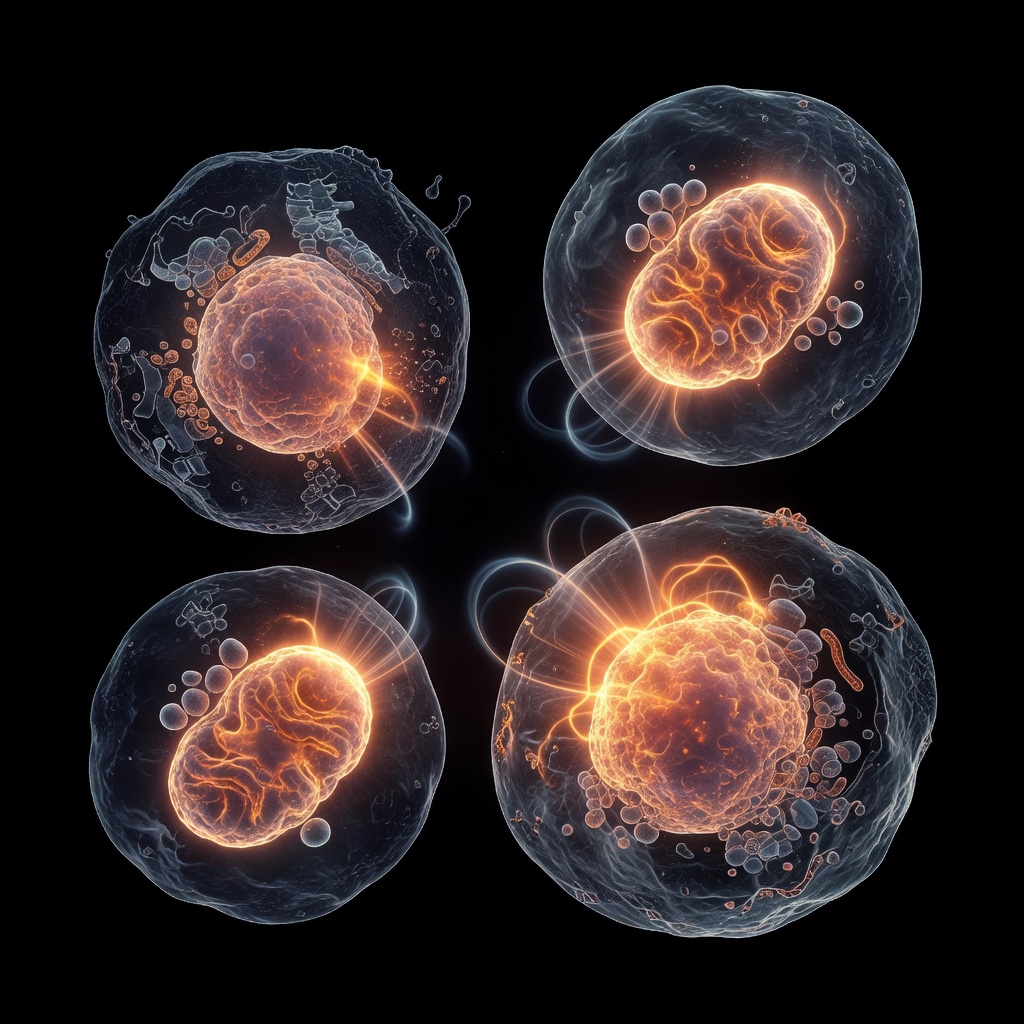
Mitochondrial Permeability Transition Pore (mPTP) Regulation in Heavy Metal-Induced Apoptosis
This comprehensive analysis explores the molecular mechanism of the Mitochondrial Permeability Transition Pore (mPTP) and how its regulation is catastrophically disrupted by heavy metal exposure, leading to programmed cell death and systemic health issues.

# Introduction: The Mitochondrial Gatekeeper
In the landscape of cellular biology, the mitochondrion is often relegated to the simple description of a 'powerhouse.' However, at INNERSTANDING, we recognize it as the primary decision-maker for cellular life and death. Central to this regulatory role is the Mitochondrial Permeability Transition Pore (mPTP). This high-conductance, non-specific channel remains a critical focal point in understanding how environmental stressors, specifically heavy metals, bypass our biological defences to trigger apoptosis—programmed cell death.
Heavy metals such as lead (Pb), cadmium (Cd), mercury (Hg), and arsenic (As) are ubiquitous in the modern environment. Their toxicity is not merely a matter of general 'systemic stress'; rather, it is rooted in their ability to manipulate mitochondrial proteins and the mPTP, effectively forcing the cell to commit suicide. This article delves into the biochemical interplay between these toxic elements and the mPTP, providing a root-cause perspective on heavy metal-induced cellular demise.
# Understanding the mPTP: Structure and Function
The mPTP is a proteinaceous pore that spans both the inner and outer mitochondrial membranes. While its exact molecular composition remains a subject of ongoing research, several key components are universally recognized: the Voltage-Dependent Anion Channel (VDAC) in the outer membrane, the Adenine Nucleotide Translocator (ANT) in the inner membrane, and Cyclophilin D (CypD) in the mitochondrial matrix.

Clean Slate – Detoxes thousands of chemicals,heavy metals, pesticides, allergens, mold spores and fungus
Clean Slate is a cellular-level detoxifier that targets heavy metals, pesticides, and environmental toxins to unblock your body's natural defense pathways. It helps reduce systemic inflammation and restores the nutrient absorption sites often compromised by modern toxicity.
Vetting Notes
Pending
Under healthy physiological conditions, the mPTP remains closed or undergoes only transient 'flickering' to maintain mitochondrial homeostasis and calcium balance. However, when the pore opens permanently, it allows the free passage of solutes with a molecular mass up to 1,500 Daltons. This results in the dissipation of the mitochondrial membrane potential (ΔΔm), the cessation of ATP synthesis, and the massive influx of water into the matrix, causing the organelle to swell and eventually rupture.
# The Impact of Heavy Metal Bioaccumulation
Heavy metals are particularly insidious because they are not easily metabolised or excreted. Through a process called 'ionic mimicry,' metals like Lead and Cadmium disguise themselves as essential minerals like Calcium (Ca2+) and Zinc (Zn2+). This allows them to enter cells through existing transport channels and reach the mitochondria, where they begin their disruption of the mPTP.
From a root-cause perspective, the accumulation of these metals acts as a 'molecular wedge,' preventing the natural regulatory mechanisms from keeping the mPTP closed. This chronic state of mitochondrial vulnerability is what distinguishes acute poisoning from the chronic, low-level exposure common in industrialised regions.
# Mechanism: Oxidative Stress and Calcium Overload
The opening of the mPTP is primarily triggered by two factors: an increase in mitochondrial Calcium concentration and the presence of Reactive Oxygen Species (ROS). Heavy metals are masters of manipulating both.
- —Calcium Dysregulation: Heavy metals displace calcium from its binding sites. This sudden 'surge' of free intracellular calcium is sequestered by the mitochondria. Once the calcium threshold is exceeded, it binds to Cyclophilin D, which then undergoes a conformational change that pulls the mPTP into an open state.
- —The ROS Feedback Loop: Heavy metals are potent oxidants. They inhibit the Electron Transport Chain (ETC) complexes, specifically Complex I and III. This inhibition leads to the 'leakage' of electrons, which react with oxygen to form superoxide and hydroxyl radicals. Oxidative stress further sensitises the mPTP to opening, creating a lethal feedback loop that accelerates mitochondrial failure.
# Heavy Metal Specificity: Cd, Pb, and Hg
Each heavy metal employs a slightly different strategy to target the mPTP:
- —Cadmium (Cd): Cadmium is a notorious mitochondrial poison. It has a high affinity for thiol (-SH) groups found in the proteins that make up the mPTP. By binding to these groups, Cadmium induces a structural change in the pore, forcing it open even in the absence of high calcium levels. It also depletes glutathione, the cell’s primary antioxidant, leaving the mPTP defenceless against oxidative damage.
- —Lead (Pb): Lead acts primarily through calcium mimicry. It can stimulate the mPTP opening by directly binding to the calcium-sensing sites of the pore. Lead also damages the mitochondrial inner membrane directly, making it 'leaky' and lowering the threshold for mPTP-induced apoptosis.
- —Mercury (Hg): Mercury, specifically in its methylmercury form, targets the mitochondrial membrane's lipids and the ANT protein. It induces a rapid opening of the mPTP, leading to the immediate release of pro-apoptotic factors into the cytoplasm.
# From Pore Opening to Programmed Cell Death
The consequences of mPTP opening are irreversible. Once the pore is open, the mitochondria release several 'death signals' that were previously sequestered within the intermembrane space. The most significant of these is Cytochrome c.
Once Cytochrome c enters the cytosol, it binds with Apaf-1 (Apoptotic Protease Activating Factor-1) and pro-caspase-9 to form a complex known as the 'apoptosome.' This complex activates the executioner caspases (Caspase-3 and Caspase-7), which systematically dismantle the cell's DNA, proteins, and cytoskeleton. This mitochondrial-mediated pathway of apoptosis is the primary mechanism by which heavy metals cause organ-specific damage, particularly in the kidneys, liver, and brain.
# Root-Cause Perspectives: Environmental Health and Detoxification
At INNERSTANDING, we believe that understanding the mPTP is the key to developing effective detoxification strategies. Simply removing metals from the blood is often insufficient if the mitochondrial damage has already reached the 'point of no return.'
Focusing on the mPTP suggests that therapeutic interventions should aim to:
- —Stabilize the Membrane: Utilizing phospholipids and antioxidants (like Alpha Lipoic Acid) to protect the mPTP structure from oxidative stress.
- —Inhibit Cyclophilin D: Research into CypD inhibitors suggests a potential path for preventing mPTP opening in the presence of toxins.
- —Support Thiol Integrity: Providing the body with precursors for glutathione (such as N-Acetyl Cysteine) can help shield the mPTP proteins from heavy metal binding.
# Conclusion
The regulation of the Mitochondrial Permeability Transition Pore is a sophisticated balancing act that sits at the core of our cellular health. Heavy metals disrupt this balance with surgical precision, utilizing oxidative stress and ionic mimicry to force the mPTP open and trigger apoptosis. By understanding these mechanisms, we move closer to addressing the root causes of heavy metal toxicity, shifting from merely managing symptoms to protecting the very foundations of cellular life.
This article is provided for informational and educational purposes only. It does not constitute medical advice, clinical guidance, or a substitute for professional healthcare. Information reflects cited research at time of publication. Always consult a qualified healthcare professional before acting on any health information.
RESEARCH FOUNDATIONS
Biological Credibility Archive
Citations provided for educational reference. Verify via PubMed or institutional databases.
Medical Disclaimer
The information in this article is for educational purposes only and does not constitute medical advice, diagnosis, or treatment. Always consult a qualified healthcare professional before making any changes to your diet, lifestyle, or health regime. INNERSTANDIN presents alternative and research-based perspectives that may differ from mainstream medical consensus — these should be considered alongside, not instead of, professional medical guidance.
Read Full DisclaimerReady to learn more?
Continue your journey through our classified biological research.
DISCUSSION ROOM
Members of THE COLLECTIVE discussing "Mitochondrial Permeability Transition Pore (mPTP) Regulation in Heavy Metal-Induced Apoptosis"
SILENT CHANNEL
Be the first to discuss this article. Your insight could help others understand these biological concepts deeper.
THE ARSENAL
Based on Apoptosis & Cellular Death Mechanisms — products curated by our research team for educational relevance and biological support.
Clean Slate – Detoxes thousands of chemicals,heavy metals, pesticides, allergens, mold spores and fungus

Methylene Blue – Advanced Cellular Chemistry
Fulvic Minerals – Natural Rare Earth Minerals. The essential trace elements missing from modern processed foods.
INNERSTANDING may earn a commission on purchases made through these links. All products are selected based on rigorous educational relevance to our biological research.
RABBIT HOLE
Follow the biological thread deeper