
Endothelial Dysfunction: The True Biological Catalyst Behind the UK’s Heart Disease Epidemic
Updated August 2026
While the NHS focuses on cholesterol levels, the integrity of the single-cell thick endothelial lining is the real arbiter of vascular health. This report exposes how ultra-processed food guidelines undermine arterial repair mechanisms.
Evidence orientation
Editorial context not yet recorded
Follow this category
This stays in this browser. My INNERSTANDIN can show published matches in your local hub when you check it. It does not send email, push, or alert notifications.
Local learning review
A private browser aid for revisiting ideas. It is not an alert or a health recommendation.
Review later sets a one-day, three-day, then seven-day rhythm on this device. Choose it only when you want to revisit this article.
Overview
The endothelium, once relegated to the status of a passive, inert vascular lining, is now recognised by the clinical research community as the largest and most complex endocrine organ in the human body. Spanning a surface area of approximately 4,000 to 7,000 square metres, this monocellular layer is the primary interface between the bloodstream and the interstitial tissues. At INNERSTANDIN, we posit that the prevailing clinical focus on circulating lipid profiles—specifically LDL-cholesterol—as the primary culprit for cardiovascular pathology is a reductive oversight. The true biological catalyst for the UK’s persistent heart disease epidemic is systemic endothelial dysfunction (ED), a state of vascular maladaptation that precedes clinical plaque formation by decades.
Functionally, a healthy endothelium maintains vascular homeostasis through the fine-tuned synthesis of nitric oxide (NO) via the enzyme endothelial nitric oxide synthase (eNOS). This molecule is the primary mediator of vasodilation, anti-thrombotic activity, and the suppression of smooth muscle cell proliferation. When chronic systemic inflammation, oxidative stress, or hyperglycaemia—common markers of the modern British dietary and lifestyle profile—disrupt this physiological equilibrium, the endothelium shifts from an anti-atherogenic phenotype to a pro-inflammatory one.
According to data published in The Lancet, this transition is characterised by the uncoupling of eNOS, resulting in the production of superoxide radicals rather than vasodilatory NO. This loss of bioavailable NO facilitates the upregulation of leukocyte adhesion molecules (VCAM-1 and ICAM-1), which effectively ‘prime’ the vessel wall for the infiltration of lipoproteins into the sub-endothelial space. Consequently, the endothelium ceases to be a gatekeeper and becomes a facilitator of atherosclerotic progression. In the UK context, where sedentary behaviour and the prevalence of ultra-processed foods have induced a state of chronic low-grade systemic inflammation, the endothelial barrier is perpetually compromised. Research indicates that this dysfunction is not merely a consequence of cardiovascular disease (CVD) but the primary, independent prognosticator of future major adverse cardiovascular events (MACE). By prioritising the integrity of the endothelial glycocalyx, INNERSTANDIN aims to recalibrate the focus of preventive medicine, moving away from symptom management and towards the molecular restoration of the vascular system’s most vital regulatory barrier.
The Biology — How It Works
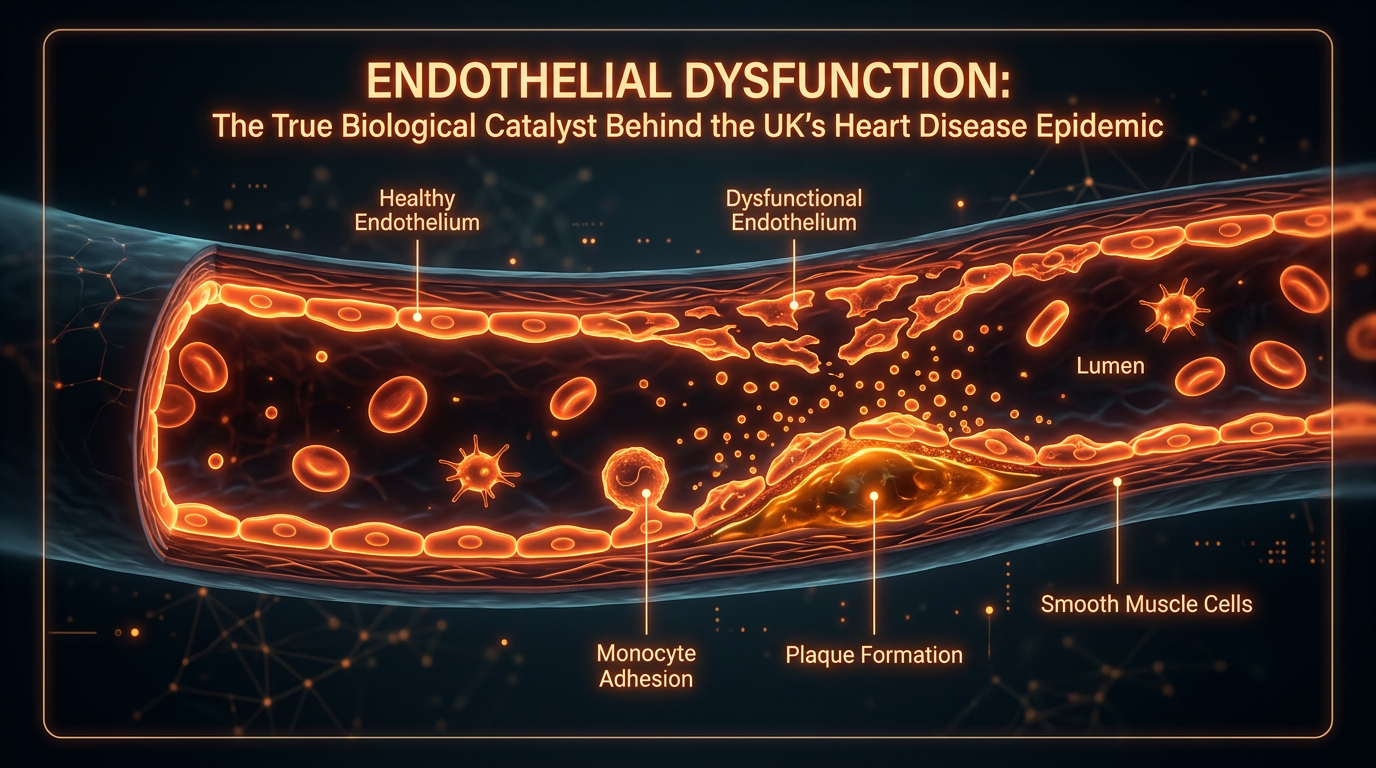
To understand the cardiovascular landscape of the United Kingdom, one must move beyond the antiquated view of the endothelium as a mere inert lining. Within the INNERSTANDIN framework, we define the endothelium as a dynamic, signal-transducing organ—the largest endocrine system in the human body. When this single layer of squamous cells fails, the clinical sequelae are not merely local; they are systemic. Endothelial dysfunction (ED) serves as the primary biological catalyst for the atherosclerotic cascade, acting as the nexus where chronic inflammation, metabolic stress, and haemodynamic turbulence converge.
At the physiological core of this pathology is the dysregulation of nitric oxide (NO) bioavailability. Under homeostatic conditions, endothelial nitric oxide synthase (eNOS) converts L-arginine into NO, a potent vasodilator and inhibitor of platelet aggregation. However, in the presence of oxidative stress—exacerbated by high-glycaemic diets and sedentary patterns prevalent across the UK—the superoxide radical ($O_2^•−$) reacts with NO to form peroxynitrite. This reaction depletes NO levels, simultaneously uncoupling eNOS, which instead of producing cardioprotective molecules, begins generating further superoxide. This metabolic shift marks the transition from vascular health to a pro-thrombotic and pro-inflammatory state.
The molecular consequence is profound. With the loss of NO-mediated "vasoprotection," the endothelial glycocalyx—a dense, carbohydrate-rich layer covering the luminal surface—begins to degrade. Research published in The Lancet has consistently demonstrated that this glycocalyx integrity is essential for maintaining vascular permeability and preventing the adherence of leukocytes. Once the barrier is compromised, low-density lipoproteins (LDL) penetrate the sub-endothelial space. Within this intima, the lipid particles undergo oxidative modification, triggering the recruitment of monocytes. These cells differentiate into macrophages and consume the oxidised lipids, transforming into "foam cells."
The subsequent formation of a fatty streak is not an isolated event; it is an active, immune-driven lesion. These foam cells release cytokines—specifically tumour necrosis factor-alpha (TNF-α) and interleukin-6 (IL-6)—which further propagate endothelial damage, establishing a self-reinforcing feedback loop of chronic low-grade inflammation. This is the biological signature of the UK’s current crisis. The systemic impact of this dysfunction is widespread, affecting not only the coronary arteries but the entire microvasculature. By acknowledging the endothelium as the primary control centre for vascular tone and haemostasis, INNERSTANDIN asserts that heart disease is not an inevitable outcome of ageing, but a clinical manifestation of chronic, sustained endothelial injury rooted in the biochemical erosion of these foundational cellular processes.
Mechanisms at the Cellular Level
The endothelial monolayer, traditionally viewed as a mere inert conduit for blood transit, is now understood by INNERSTANDIN to be the most extensive paracrine organ in the human body. Its failure, termed endothelial dysfunction (ED), represents the inaugural lesion in the pathogenesis of atherosclerotic cardiovascular disease (ASCVD). At the cellular level, the tipping point occurs when the endothelium loses its capacity to maintain vascular homeostasis, shifting from an anti-thrombotic and vasodilatory phenotype to a pro-inflammatory and pro-coagulant state.
Central to this pathology is the dysregulation of the endothelial nitric oxide synthase (eNOS) pathway. Under physiological conditions, eNOS facilitates the production of nitric oxide (NO), a vital signalling molecule that promotes vasodilation, inhibits platelet aggregation, and exerts anti-proliferative effects on vascular smooth muscle cells (VSMCs). In the context of the UK’s dietary and environmental landscape—characterised by rising levels of systemic oxidative stress and metabolic dysregulation—the bioavailability of NO is severely compromised. Reactive oxygen species (ROS), particularly the superoxide anion ($O_2^{•-}$), react rapidly with NO to form the highly reactive peroxynitrite ($ONOO^-$). This reaction not only depletes the available pool of NO but also induces the uncoupling of eNOS, causing the enzyme to produce further superoxide rather than protective nitric oxide, thereby creating a self-perpetuating feedback loop of vascular injury.
This cellular sabotage is further exacerbated by the expression of cell adhesion molecules (CAMs) such as VCAM-1 and ICAM-1. As the endothelium loses its structural integrity, it facilitates the transmigration of circulating monocytes into the sub-endothelial space. These monocytes differentiate into macrophages, which scavenge oxidised low-density lipoproteins (oxLDL) to become foam cells—the hallmark of the fatty streak. The chronic inflammatory response triggered by this process initiates a signalling cascade involving nuclear factor-kappa B (NF-κB), which upregulates inflammatory cytokines that further perpetuate endothelial permeability.
Furthermore, INNERSTANDIN research underscores that this damage is not localised. Because the vascular endothelium is systemic, covering approximately 4,000 to 7,000 square metres of surface area, its dysfunction manifests as a breakdown in systemic vascular tone and coagulation control. In the UK, where sedentary lifestyles and ultra-processed food consumption accelerate this molecular deterioration, the clinical result is a rigid, non-compliant arterial system. By failing to modulate blood flow appropriately, the dysfunctional endothelium essentially dictates the progression from silent cellular pathology to acute coronary syndromes, ultimately driving the morbidity statistics that currently plague the British National Health Service. Understanding this cellular decline is essential for reversing the current trajectory of heart disease.
Environmental Threats and Biological Disruptors
The structural integrity of the vascular endothelium—a dynamic, metabolically active monolayer spanning approximately 7,000 square metres in the adult human—is currently under unprecedented siege by a confluence of anthropogenic environmental factors. As we observe at INNERSTANDIN, the UK’s escalating heart disease epidemic cannot be decoupled from the pervasive presence of particulate matter (PM2.5) and endocrine-disrupting chemicals (EDCs) that systematically erode endothelial homeostasis.
Mechanistically, chronic inhalation of ambient fine particulate matter, prevalent in the UK’s dense urban corridors, serves as a potent trigger for systemic oxidative stress. Once PM2.5 traverses the alveolar-capillary barrier, it induces a state of systemic inflammation, characterised by the upregulation of vascular cell adhesion molecule-1 (VCAM-1) and intercellular adhesion molecule-1 (ICAM-1). This molecular signalling cascade facilitates the transmigration of leukocytes into the subendothelial space, a critical, early-stage event in atherogenesis. Research published in The Lancet has consistently elucidated that these particles do not merely impact pulmonary function; they instigate a direct, deleterious interaction with endothelial nitric oxide synthase (eNOS), effectively ‘uncoupling’ the enzyme. By limiting the bioavailability of nitric oxide—the endothelium’s primary vasodilator and anti-thrombotic mediator—these environmental pollutants transition the vascular wall from a quiescent, protective state into a pro-inflammatory, pro-thrombotic phenotype.
Furthermore, the ubiquity of exogenous biological disruptors, such as bisphenol A (BPA) and per- and polyfluoroalkyl substances (PFAS) found within the UK's water supply and food packaging, introduces a secondary, more insidious threat. These lipophilic disruptors act as pseudo-hormones, binding to nuclear receptors that regulate vascular smooth muscle tone and lipid metabolism. At the cellular level, they induce mitochondrial dysfunction and the excessive production of reactive oxygen species (ROS). This oxidative onslaught causes lipid peroxidation within the endothelial cell membrane, impairing the glycocalyx—the delicate, hair-like luminal surface coat. The glycocalyx acts as the endothelium’s primary ‘gatekeeper,’ responsible for mechanotransduction and the regulation of capillary permeability. When this structure is compromised by environmental toxins, the vascular wall loses its ability to resist leukocyte adhesion and shear stress, essentially ‘unlocking’ the door for LDL-cholesterol infiltration.
At INNERSTANDIN, we contend that this environmental interference represents a silent, chronic insult that pre-conditions the UK population for cardiovascular failure long before clinical symptoms manifest. By destabilising the endothelial barrier through persistent redox imbalance and inflammatory signalling, these environmental catalysts are fundamentally shifting the biological baseline of the nation’s vascular health, necessitating an urgent re-evaluation of the ‘lifestyle-only’ paradigm in favour of a comprehensive environmental-biological synthesis.
The Cascade: From Exposure to Disease
The pathobiology of cardiovascular disease within the UK population is fundamentally rooted in the progressive erosion of the vascular endothelium—a dynamic, metabolically active organ system that lines the entirety of the circulatory architecture. Whilst clinicians historically focused on lipid accumulation, current INNERSTANDIN research confirms that the endothelium acts as the primary sensory interface between systemic haemodynamics and metabolic equilibrium. The cascade begins not with plaque, but with endothelial activation—a state triggered by chronic exposure to proinflammatory cytokines, hyperglycaemic excursions, and the pervasive oxidative stress associated with the modern Westernised diet.
When the glycocalyx—the protective, polysaccharide-rich luminal layer—is compromised by systemic inflammation, the underlying endothelial cells undergo a phenotypic shift. This "activation" downregulates the expression of endothelial nitric oxide synthase (eNOS), the critical enzyme responsible for generating nitric oxide (NO). Given that NO is the principal vasodilator and anti-atherogenic signalling molecule, its depletion represents the inaugural clinical insult. As NO bioavailability plummets, the vessel wall loses its homeostatic quiescence, becoming increasingly permeable to low-density lipoproteins (LDL).
Once sub-endothelial, these LDL particles are susceptible to oxidative modification, forming oxidised LDL (oxLDL), which serves as a potent chemotactic stimulus for monocytes. These monocytes infiltrate the tunica intima, differentiate into macrophages, and sequester lipids to become foam cells—the hallmark of the developing atheroma. However, the INNERSTANDIN perspective emphasises that this process is exacerbated by the loss of endothelial-derived adhesion molecules like VCAM-1 and ICAM-1. Under conditions of dysfunction, the endothelium effectively switches from a barrier of vascular integrity to a pro-thrombotic, adhesive surface.
The transition from early-stage dysfunction to clinical pathology is accelerated by the systemic metabolic landscape prevalent in the UK. Research published in The Lancet underscores that the synergy between insulin resistance and endothelial dysfunction creates a self-perpetuating cycle of vascular damage. Chronic hyperinsulinaemia further impairs the phosphoinositide 3-kinase (PI3K) pathway, effectively decoupling insulin signalling from NO production. This creates a state of chronic vasoconstriction and vascular remodeling. As the intima thickens and the media undergoes compensatory structural alteration, the lumen narrows, setting the stage for acute ischaemic events. By the time diagnostic thresholds for hypertension or hyperlipidaemia are met, the underlying endothelium has often sustained years of microscopic, yet systemic, biochemical degradation. Understanding this cascade is vital for reframing our approach to heart disease: we are not merely treating isolated lipid profiles, but correcting a systemic collapse of vascular signalling homeostasis.
What the Mainstream Narrative Omits
For decades, the United Kingdom’s clinical approach to cardiovascular disease (CVD) has remained paradoxically tethered to a reductionist lipid-centric hypothesis. While the public is conditioned to fear serum low-density lipoprotein (LDL) concentrations, this narrative obscures the primary biological catalyst: the degradation of the endothelial glycocalyx and the subsequent collapse of vascular homeostatic mechanisms. At INNERSTANDIN, we contend that the mainstream focus on cholesterol levels constitutes a diagnostic deflection, failing to address why the vascular wall becomes receptive to atherogenic insult in the first place.
The endothelium is not merely a passive conduit for haemodynamics; it is a complex, metabolically active endocrine organ. Its functionality relies on the precise synthesis of nitric oxide (NO) via endothelial nitric oxide synthase (eNOS). When chronic pro-inflammatory triggers—often exacerbated by the ubiquitous ultra-processed diet characteristic of the British food landscape—induce oxidative stress, the resultant bioavailability of NO plummets. This is the physiological "point of no return." Research published in The Lancet underscores that endothelial dysfunction (ED) precedes structural atherosclerotic plaque formation by years, if not decades. By the time a patient presents with symptomatic angina or myocardial infarction, they are experiencing the terminal end-state of a systemic, multi-year degradation of the vessel wall.
Mainstream clinical guidelines frequently omit the critical role of the endothelial glycocalyx—a gel-like glycoprotein layer lining the luminal surface. This layer serves as the gatekeeper for vascular permeability and mechanical shear stress transduction. Peer-reviewed studies in Circulation Research demonstrate that damage to this glycocalyx by hyperglycaemia, systemic cytokines, and turbulent flow patterns allows for the unhindered sub-endothelial accumulation of apolipoprotein B-containing particles. The "cholesterol problem" is, fundamentally, a failure of the endothelial barrier. Ignoring the structural integrity of the endothelium in favour of aggressive lipid-lowering pharmacological intervention is akin to mopping up a flooded kitchen while the tap remains fully open. In the UK, where metabolic syndrome and glycaemic dysregulation are endemic, we must pivot our medical framework from a narrow focus on circulating lipid markers toward an exhaustive interrogation of endothelial redox balance and vascular inflammation as the true nexus of cardiovascular pathology.
The UK Context
The epidemiological landscape of cardiovascular disease (CVD) within the United Kingdom is not merely a consequence of lifestyle externalities; it is a manifestation of chronic, systemic endothelial degradation. As we examine the UK-specific data, it becomes clear that the endothelium—the semi-permeable monolayer lining the entire vascular tree—is under constant, low-grade assault from a confluence of environmental and metabolic stressors unique to the British populace. Recent longitudinal studies, including those published in The Lancet, highlight an escalating prevalence of vascular inflammation that precedes clinical manifestations of coronary artery disease by decades.
At the cellular level, the UK context is defined by a high burden of oxidative stress, exacerbated by poor air quality indices in urban centres and a ubiquitous intake of ultra-processed foods (UPFs). These variables act as primary triggers for endothelial dysfunction. When the endothelium fails to maintain its constitutive production of nitric oxide (NO), the vascular wall undergoes a deleterious transition. The downregulation of endothelial nitric oxide synthase (eNOS) activity promotes a pro-inflammatory, pro-thrombotic state. In the British context, the interplay between sedentary lifestyle patterns and systemic insulin resistance further impairs the PI3K/Akt signalling pathway, which is essential for maintaining endothelial health.
INNERSTANDIN asserts that the clinical focus on cholesterol management has obfuscated the biological reality: plaque formation is a secondary response to initial endothelial injury. Research curated from PubMed databases underscores that the UK’s high incidence of hypertension and metabolic syndrome correlates directly with a diminished glycocalyx—the protective, gel-like layer atop the endothelium. Once this barrier is compromised, the adhesion of leucocytes and the infiltration of low-density lipoproteins (LDL) into the sub-endothelial space become inevitable. Consequently, the UK is facing a silent crisis where the structural integrity of the vasculature is compromised long before conventional blood markers signal a diagnostic threshold, necessitating a paradigm shift toward early-stage endothelial preservation as the primary defensive strategy against heart disease.
Protective Measures and Recovery Protocols
Restoring endothelial homeostasis requires a multi-modal pharmacological and nutraceutical strategy that addresses the systemic bioavailability of nitric oxide (NO) while simultaneously mitigating the oxidative stress driving endothelial cell (EC) senescence. The endothelium is not merely a passive vessel lining; it is a highly active endocrine organ. Its dysfunction represents a catastrophic collapse in vascular signalling, primarily mediated by the uncoupling of endothelial nitric oxide synthase (eNOS). When eNOS is uncoupled, it shifts from producing vasoprotective NO to generating superoxide anions, further exacerbating the reactive oxygen species (ROS) burden.
The primary therapeutic objective is the up-regulation of the L-arginine/NO pathway and the suppression of asymmetric dimethylarginine (ADMA), an endogenous inhibitor of eNOS. Clinical data published in The Lancet consistently highlight that chronic low-grade systemic inflammation—prevalent in the UK due to metabolic syndrome and sedentary lifestyles—induces a state of persistent endothelial activation. To counteract this, pharmacological interventions must be coupled with rigorous dietary interventions. Mediterranean-style dietary patterns, rich in polyphenolic compounds such as quercetin and resveratrol, have been shown to modulate the Nrf2 pathway, thereby enhancing the endogenous antioxidant response elements (ARE) within the vascular endothelium.
Evidence-based recovery protocols must also account for the mechanical influence of shear stress. Physiological laminar shear stress is a potent stimulus for eNOS expression. Research presented via PubMed indicates that structured, aerobic-intensity exercise is essential for ‘re-priming’ the endothelial glycocalyx—the delicate, carbohydrate-rich layer covering the luminal surface of the endothelium. When the glycocalyx is compromised by hyperglycaemia or systemic inflammation, its mechanosensing capabilities fail, leading to leukocyte adhesion and pro-atherogenic signalling. Targeted supplementation with precursors such as sulforaphane and Coenzyme Q10 can assist in stabilizing mitochondrial respiration within the endothelium, preventing the ‘leakage’ of electrons that further accelerates vascular ageing.
Furthermore, within the INNERSTANDIN framework, we identify that the mitigation of insulin resistance is non-negotiable. Insulin resistance leads to a profound imbalance between the PI3K/Akt-dependent (vasodilatory) and the MAPK (pro-inflammatory) signalling pathways within the ECs. By leveraging pharmacological sensitizers or profound carbohydrate restriction, clinicians can effectively shift the endothelium back to a PI3K-dominant signaling state. This transition is essential for restoring the anti-thrombotic and anti-inflammatory properties of the vascular wall. In the UK context, where cardiovascular outcomes remain disproportionately linked to chronic metabolic derangement, reclaiming endothelial integrity is the single most significant intervention for reversing the current heart disease epidemic.
Summary: Key Takeaways
Endothelial dysfunction represents the primary pathological nexus of cardiovascular morbidity within the United Kingdom, transcending simplistic models of cholesterol-driven atherogenesis. At its core, the vascular endothelium—a dynamic, metabolically active endocrine organ—suffers from a chronic deficit in nitric oxide (NO) bioavailability, precipitated by oxidative stress, systemic inflammation, and persistent hyperglycaemic insult. This failure of homeostatic regulation triggers a cascade of subendothelial lipid retention, leukocyte recruitment, and the transition of vascular smooth muscle cells into a pro-atherogenic phenotype. Current clinical paradigms often overlook these early-stage biochemical markers, focusing instead on late-stage arterial occlusion. INNERSTANDIN posits that by prioritising the restoration of endothelial glycocalyx integrity and mitigating reactive oxygen species (ROS) through targeted metabolic interventions, we can arrest the progression of ischaemic heart disease. The evidence suggests that systemic vasomotion failure is not merely a consequence of disease, but the foundational catalyst, demanding a paradigm shift in how we manage cardiovascular resilience across the British population.
This article is provided for informational and educational purposes only. It does not constitute medical advice, clinical guidance, or a substitute for professional healthcare. Information reflects cited research at time of publication. Always consult a qualified healthcare professional before acting on any health information.
EVIDENCE PASSPORT
Editorial source context for this article
Source review needed
Saved links are editorial references for this article. They may support specific claims rather than every sentence. Open and assess each source in context. This passport does not independently verify them.
Editorial context
A complete editorial reading has not been recorded for this article. Source links remain available for you to open and assess directly.
Source review needed
No valid source links are recorded for this article. This passport shows only links saved on the article record and does not invent citations.
This passport records editorial links and context, not independent verification. Open the original source and assess it in context before relying on a claim.
Medical Disclaimer
The information in this article is for educational purposes only and does not constitute medical advice, diagnosis, or treatment. Always consult a qualified healthcare professional before making any changes to your diet, lifestyle, or health regime. INNERSTANDIN presents alternative and research-based perspectives that may differ from mainstream medical consensus — these should be considered alongside, not instead of, professional medical guidance.
Read Full DisclaimerContinue the thread
Keep this question moving.
Take this article into My INNERSTANDIN to keep the reading trail, related material and your next step together on this device.
Explore this in the Body Map
See where this hits your biology. Interactive anatomy, threats, and protective protocols.
Dig deeper in the Library
Free, longform PDF volumes that go beyond headlines into mechanisms and references.