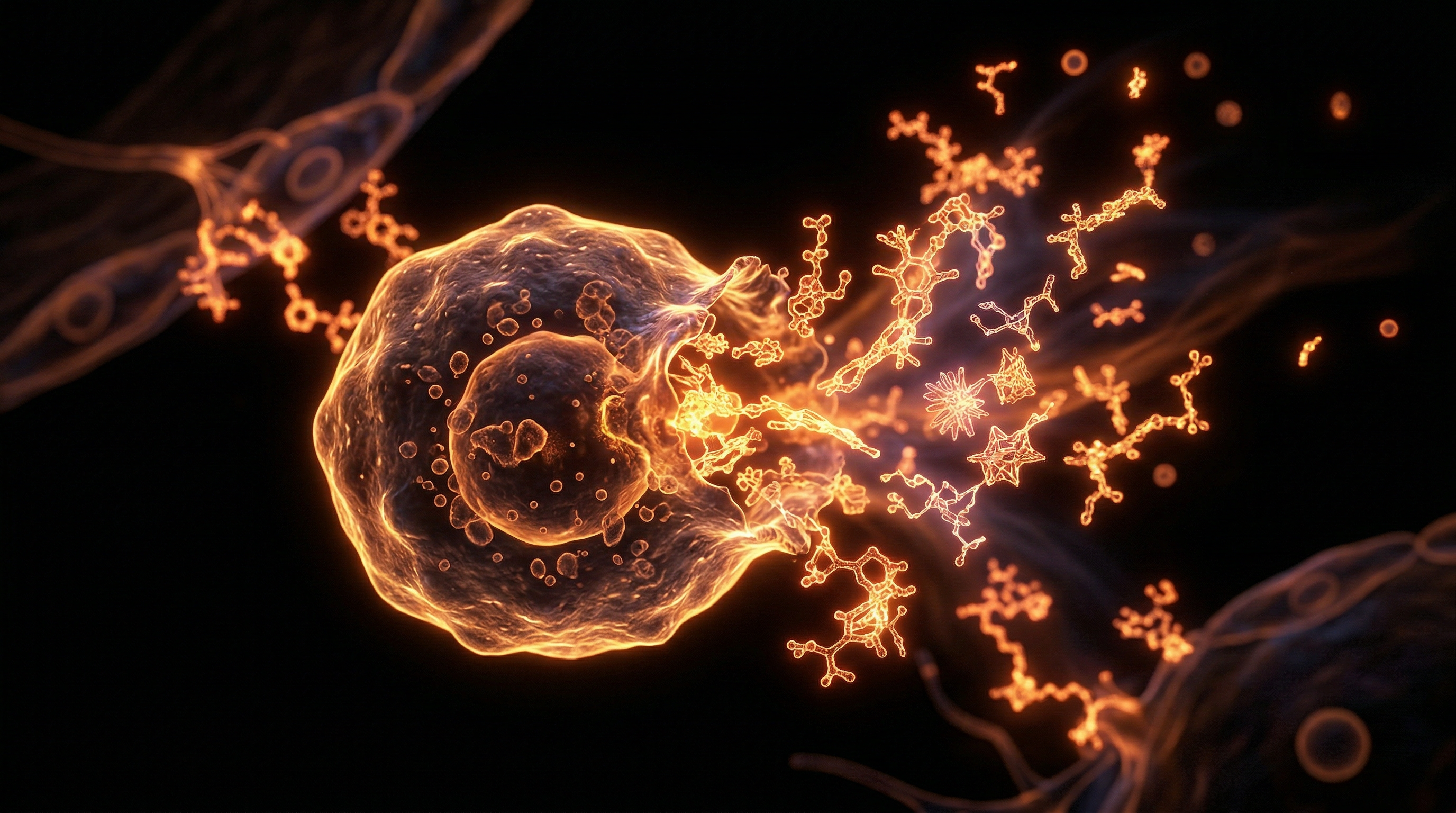
Epigenetic Priming of Bone Marrow Niche Environments: How Chronic Inflammatory Signaling Triggers Myeloid Bias
An in-depth exploration of how chronic systemic inflammation reconfigures the bone marrow microenvironment, leading to permanent epigenetic changes that skew blood cell production toward pro-inflammatory myeloid lineages, contributing to chronic disease and accelerated ageing.

# Epigenetic Priming of Bone Marrow Niche Environments: How Chronic Inflammatory Signaling Triggers Myeloid Bias ## Introduction: The Bone Marrow as a Systemic Sensor The bone marrow is far more than a simple factory for blood cells; it is a highly sophisticated, sensing organ that responds dynamically to the internal environment of the human body. At the heart of this system are Haematopoietic Stem Cells (HSCs), the multipotent progenitors responsible for generating the entire spectrum of our immune and circulatory cells. In a state of homeostasis, these cells maintain a delicate balance, producing the right proportions of red blood cells, platelets, and the various white blood cells required for immunity. However, emerging research in the field of osteo-immunology reveals that this balance is not fixed. Chronic, low-grade systemic inflammation—often termed 'inflammageing'—acts as a persistent signal that fundamentally alters the bone marrow niche.
Through a process known as epigenetic priming, chronic inflammatory signaling rewires the genetic landscape of HSCs, leading to a phenomenon called 'myeloid bias.' This shift represents a root-cause driver for many of the most prevalent chronic diseases in the UK today, from cardiovascular disease to neurodegeneration. ## The Architecture of the Bone Marrow Niche To understand how this bias occurs, we must first look at the 'niche'—the microenvironment where HSCs reside. This niche consists of various cell types, including osteoblasts (bone-building cells), endothelial cells (lining blood vessels), and mesenchymal stromal cells (MSCs). These cells provide the structural and biochemical support necessary for HSCs to remain in a state of 'quiescence'—a dormant phase where they are protected from damage. In health, the niche regulates the exit of HSCs from dormancy. When the body faces an acute infection, the niche sends signals to trigger the production of myeloid cells (neutrophils and monocytes) to fight the threat.
Once the infection clears, the system returns to baseline. However, when the signal never stops—due to obesity, chronic stress, gut dysbiosis, or metabolic syndrome—the niche becomes 'inflamed.' ## The Mechanism of Epigenetic Priming Epigenetics refers to changes in gene expression that do not involve alterations to the underlying DNA sequence. Think of the DNA as a library of books and the epigenome as the bookmarks that determine which pages are read. Chronic inflammatory signaling, specifically through cytokines like Interleukin-1 beta (IL-1β), Interleukin-6 (IL-6), and Tumour Necrosis Factor-alpha (TNF-α), induces specific epigenetic modifications in HSCs. These modifications often involve DNA methylation and histone acetylation.
For instance, chronic exposure to IL-1β triggers a transcriptional program driven by the PU.1 transcription factor. This doesn't just increase myeloid production in the short term; it 'primes' the HSCs. Even if the immediate inflammatory stimulus is removed, the 'bookmarks' remain. The chromatin (the structure housing DNA) stays open at the sites responsible for myeloid development and closed at the sites for lymphoid (B-cell and T-cell) development. This is 'trained immunity' at the stem cell level, and it has profound consequences. ## The Shift to Myeloid Bias This epigenetic priming manifests as myeloid bias.
A biased HSC is no longer truly multipotent in its functional output; it is heavily skewed toward producing monocytes and granulocytes at the expense of lymphocytes. While this might seem like a robust defense mechanism, it creates a self-perpetuating cycle of inflammation. Myeloid cells produced by these primed HSCs are themselves more inflammatory. They enter the circulation and infiltrate tissues like the arterial walls or the brain, where they release more cytokines, further stimulating the bone marrow. This 'feed-forward' loop accelerates the progression of atherosclerosis, as these inflammatory monocytes become the foam cells that destabilise plaques.
Furthermore, the reduction in lymphoid output weakens the adaptive immune system, making the individual more susceptible to viral infections and reducing the efficacy of vaccines—a hallmark of immunosenescence. ## Clonal Haematopoiesis and Systemic Risk One of the most significant discoveries in recent haematology is Clonal Haematopoiesis of Indeterminate Potential (CHIP). CHIP occurs when a single mutated HSC gains a fitness advantage and begins to dominate the bone marrow output. Research shows that chronic inflammation provides the perfect selective pressure for these mutated clones to thrive. HSCs with mutations in genes like DNMT3A or TET2—genes that regulate the epigenome—are particularly resistant to inflammatory stress. As these clones expand, they produce a massive amount of highly inflammatory myeloid cells.
This state is now recognised as a major independent risk factor for cardiovascular disease, often surpassing traditional markers like cholesterol. The root cause is not just the mutation itself, but the inflammatory environment of the bone marrow niche that allowed that mutation to become dominant. ## Addressing the Root Cause: Niche Restoration From an educational perspective, understanding epigenetic priming shifts our focus from merely suppressing symptoms to addressing the environment of the bone marrow. Can we 're-prime' the niche? While we cannot easily erase epigenetic marks, we can modulate the signals that maintain them. 1. Metabolic Integrity: High insulin levels and dyslipidaemia directly signal the bone marrow niche to increase myeloid output.
Improving insulin sensitivity is a primary step in cooling the marrow. 2. Gut-Bone Axis: Lipopolysaccharides (LPS) from gut permeability (leaky gut) can travel to the bone marrow, acting as a potent trigger for TLR4 receptors on HSCs, driving myeloid bias. Supporting gut barrier function is essential. 3. Resolution of Senescence: Senescent cells (often called 'zombie cells') secrete a cocktail of pro-inflammatory factors (the SASP) that continuously bathe the bone marrow in inflammatory signals. Lifestyle interventions that promote autophagy and the clearance of these cells may help restore niche health. ## Conclusion The epigenetic priming of the bone marrow niche is a pivotal discovery in our understanding of chronic disease.
It explains why inflammation is not just a transient state, but a lasting change in our biological programming. By viewing bone marrow health through the lens of haematopoiesis and myeloid bias, we can better appreciate the importance of maintaining a low-inflammation lifestyle. Protecting the 'library' of our stem cells from the 'bookmarks' of chronic stress is a fundamental pillar of long-term health and longevity.
This article is provided for informational and educational purposes only. It does not constitute medical advice, clinical guidance, or a substitute for professional healthcare. Information reflects cited research at time of publication. Always consult a qualified healthcare professional before acting on any health information.
RESEARCH FOUNDATIONS
Biological Credibility Archive
Citations provided for educational reference. Verify via PubMed or institutional databases.
Medical Disclaimer
The information in this article is for educational purposes only and does not constitute medical advice, diagnosis, or treatment. Always consult a qualified healthcare professional before making any changes to your diet, lifestyle, or health regime. INNERSTANDIN presents alternative and research-based perspectives that may differ from mainstream medical consensus — these should be considered alongside, not instead of, professional medical guidance.
Read Full DisclaimerReady to learn more?
Continue your journey through our classified biological research.
DISCUSSION ROOM
Members of THE COLLECTIVE discussing "Epigenetic Priming of Bone Marrow Niche Environments: How Chronic Inflammatory Signaling Triggers Myeloid Bias"
SILENT CHANNEL
Be the first to discuss this article. Your insight could help others understand these biological concepts deeper.
THE ARSENAL
Based on Bone Marrow Health & Haematopoiesis — products curated by our research team for educational relevance and biological support.

Clean Slate – Detoxes thousands of chemicals,heavy metals, pesticides, allergens, mold spores and fungus

Glutathione Builder – Advanced Amino Acid Formula
Magnesium Blend – The Most Important Mineral
INNERSTANDING may earn a commission on purchases made through these links. All products are selected based on rigorous educational relevance to our biological research.
RABBIT HOLE
Follow the biological thread deeper