
Gelatin Excipients: IgE-Mediated Responses and Alpha-Gal Syndrome
Updated May 2026
Researching the prevalence of allergic reactions to porcine-derived gelatin used as a stabilizer. It connects these ingredients to the rising incidence of Alpha-gal syndrome in Europe.
Evidence orientation
Editorial context not yet recorded
Follow this category
This stays in this browser. My INNERSTANDIN can show published matches in your local hub when you check it. It does not send email, push, or alert notifications.
Local learning review
A private browser aid for revisiting ideas. It is not an alert or a health recommendation.
Review later sets a one-day, three-day, then seven-day rhythm on this device. Choose it only when you want to revisit this article.
Overview
In the sophisticated landscape of modern vaccinology and pharmacology, the focus remains predominantly on the active immunogenic components—the viral vectors, the mRNA strands, or the attenuated pathogens. However, a silent and increasingly dangerous crisis resides within the "inactive" ingredients: the excipients. Among these, gelatin, a protein derived from the partial hydrolysis of collagen extracted from the skin, bones, and connective tissues of animals (most commonly porcine or bovine), stands as one of the most prevalent stabilisers in use today.
While the medical establishment has long regarded gelatin as a "biologically inert" and safe vehicle for drug delivery, a growing body of evidence suggests otherwise. We are currently witnessing a surge in IgE-mediated hypersensitivity reactions that are not merely random idiosyncratic events but are deeply linked to a misunderstood clinical entity: Alpha-gal syndrome (AGS).
Alpha-gal syndrome is a serious, potentially life-threatening allergic condition where the immune system reacts to Galactose-alpha-1,3-galactose, a sugar molecule found in most mammals. Humans, along with other catarrhine primates, lost the ability to produce this carbohydrate millions of years ago, making it a foreign antigen to our physiological systems. When porcine-derived gelatin—laden with Alpha-gal—is injected via vaccines or consumed in medications, it can trigger a catastrophic immune cascade in sensitised individuals.
The narrative surrounding vaccine safety frequently omits the reality that environmental factors, specifically tick bites, are re-programming the human immune system to reject these porcine excipients. In Europe and the United Kingdom, the rising prevalence of the Ixodes ricinus tick has turned a niche allergy into a burgeoning public health shadow-crisis. This article explores the biological mechanisms, the systemic failures in screening, and the urgent need to re-evaluate the use of animal-derived stabilisers in the 21st century.
Fact: Gelatin is the most common identifiable cause of severe allergic reactions to vaccines containing it, such as the MMR, Varicella, and Zoster vaccines, yet routine screening for gelatin sensitivity prior to immunisation remains non-existent in most clinical settings.
The Biology — How It Works
To understand the pathology of gelatin-induced reactions, one must first understand the molecular architecture of the excipient itself. Gelatin is produced by the thermal and chemical degradation of collagen. In the pharmaceutical industry, porcine (pig) skin is the preferred source due to its high yield and consistent gelling properties.
The Molecular Structure of Gelatin
Gelatin consists of a complex mixture of proteins and peptides. During the manufacturing process, the triple-helix structure of collagen is broken down into random coiled domains. However, what remains intact—and what poses the greatest threat—are the carbohydrate side-chains and specific peptide sequences that are immunologically active.
The Alpha-Gal Antigen
The primary culprit in these reactions is Galactose-alpha-1,3-galactose (Alpha-gal). In non-primate mammals (pigs, cows, sheep), this carbohydrate is ubiquitously expressed on the surface of cells and within the connective tissue matrix.
- The Evolutionary Divide: Approximately 28 million years ago, the ancestors of humans lost the functional GGTA1 gene, which codes for the enzyme alpha-1,3-galactosyltransferase.
- The Result: Humans naturally produce high levels of anti-Gal antibodies (IgM and IgG) as a baseline defence against environmental microbes that display similar sugars.
- The Pathology: Under certain conditions, this baseline immune presence shifts from a protective IgG response to a pathological IgE-mediated response.
Gelatin as a Stabiliser
The role of gelatin in vaccines is to protect the active ingredients from degradation during freeze-drying (lyophilisation) and storage. It prevents the viral particles from sticking to the glass vial or denaturing due to temperature fluctuations. Because it is highly effective and incredibly cheap—a byproduct of the industrial livestock industry—there has been little commercial incentive for pharmaceutical giants to transition to synthetic or plant-based alternatives.
Mechanisms at the Cellular Level
The reaction to gelatin excipients is a classic Type I Hypersensitivity, but with a molecular twist that differentiates it from common allergies like hay fever or peanut allergy.
IgE-Mediated Sensitisation
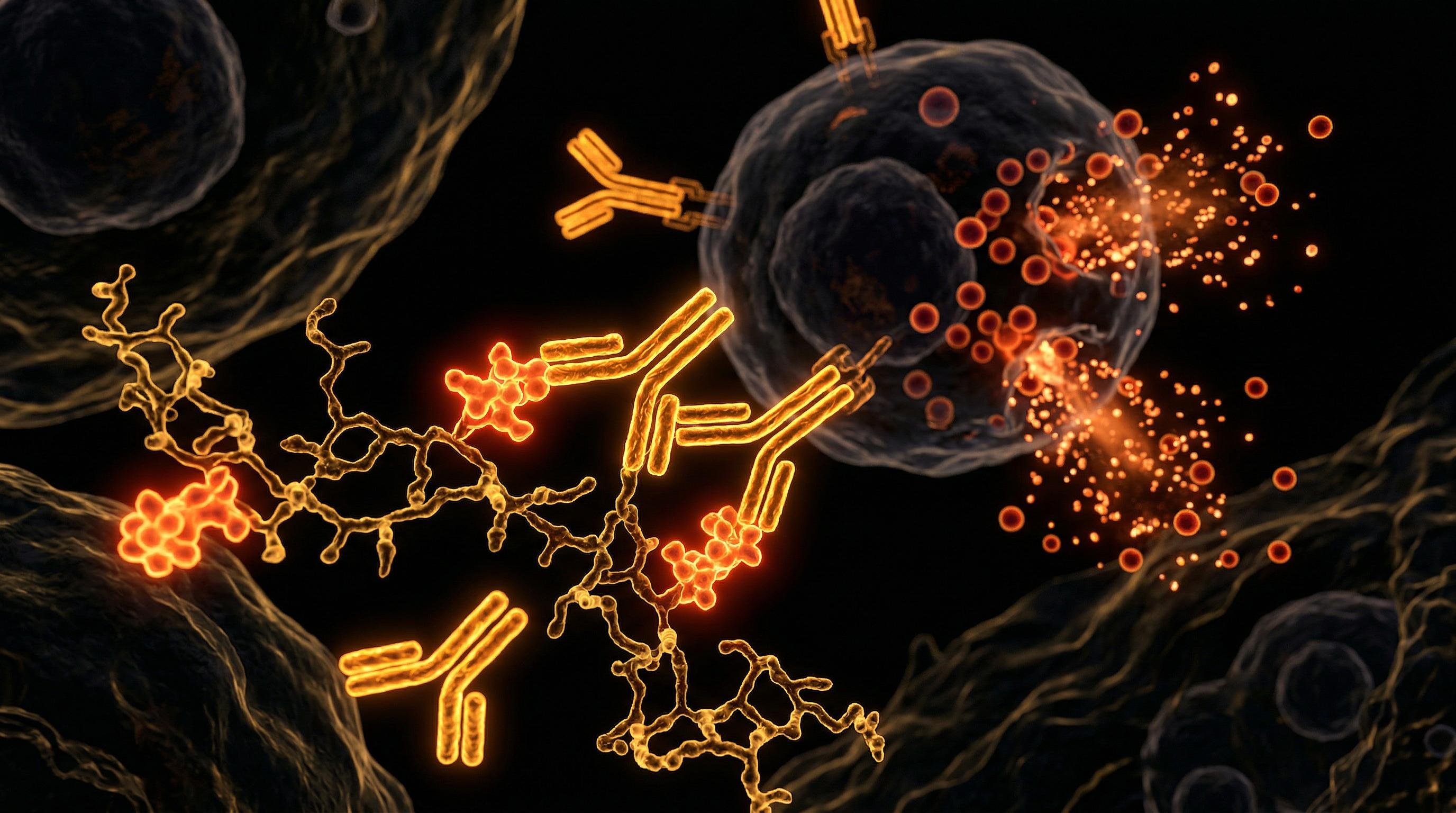
The process begins with the production of Immunoglobulin E (IgE) antibodies specifically targeted at the Alpha-gal epitope or the gelatin protein backbone itself. These IgE antibodies circulate in the blood and eventually bind to high-affinity receptors (FcεRI) on the surface of mast cells and basophils.
The Degranulation Cascade
When a sensitised individual is injected with a gelatin-containing vaccine (such as the MMR or Rabies vaccine), the gelatin molecules enter the systemic circulation. These molecules cross-link the IgE antibodies bound to mast cells.
- Immediate Response: This cross-linking triggers an immediate influx of calcium into the cell, leading to the explosive release of pre-formed mediators, including histamine, heparins, and proteases.
- Secondary Response: The cells begin synthesising de novo mediators like leukotrienes and prostaglandins, which exacerbate inflammation, cause vasodilation, and lead to bronchial constriction.
The Alpha-Gal Paradox: Delayed vs. Immediate
One of the most confounding aspects of Alpha-gal syndrome is the timing.
- Oral Ingestion: When red meat is eaten, the reaction is typically delayed by 3 to 6 hours. This is because Alpha-gal is carried on chylomicrons (fat particles) that take hours to enter the bloodstream via the thoracic duct.
- Parenteral Exposure (Injection): When gelatin excipients are injected, the Alpha-gal is introduced more directly into the tissues or bloodstream. This bypasses the slow digestive process, leading to much faster onset of anaphylaxis, often within minutes of the injection.
Statistic: Studies have shown that individuals with Alpha-gal syndrome can have IgE levels for bovine and porcine gelatin that are 10 to 100 times higher than the general population, making even minute quantities of excipients potentially lethal.
Environmental Threats and Biological Disruptors
Why is a sugar molecule that we have lived alongside for millions of years suddenly becoming a major allergen? The answer lies in the environment—specifically the interaction between humans and ectoparasites.
The Role of the Tick
In Europe and the UK, the *hard-bodied tick Ixodes ricinus*** (the castor bean tick) is the primary driver of Alpha-gal sensitisation. When a tick feeds on a non-primate mammal (like a deer or a sheep), its gut becomes populated with Alpha-gal.
- The Bite: When the tick subsequently bites a human, it injects saliva containing Alpha-gal-rich proteins and enzymes.
- The Immune Breach: The tick's saliva also contains substances that modulate the host's immune response, pushing it toward a Th2 (allergic) profile. This environment is the perfect "storm" for the human immune system to start producing IgE antibodies against Alpha-gal.
Cross-Reactivity and Molecular Mimicry
The immune system, now "primed" by the tick bite, no longer sees Alpha-gal as a benign carbohydrate. It views it as a component of a parasite. Consequently, when the individual later encounters the same carbohydrate in a porcine-derived gelatin stabiliser within a vaccine, the immune system reacts as if it is under a massive parasitic invasion.
Industrial Agriculture and Feed
The prevalence of Alpha-gal in gelatin may also be influenced by how the animals are raised. The industrial processing of porcine tissues involves aggressive chemical treatments, but these often fail to strip away the highly resilient Alpha-gal epitopes. Furthermore, the standardisation of porcine gelatin means that a single vial of vaccine may contain collagen fragments from hundreds of different animals, increasing the statistical likelihood of high-antigenic load.
The Cascade: From Exposure to Disease
The progression from a simple tick bite to a full-blown vaccine-induced crisis follows a predictable, yet often ignored, biological cascade.
Phase 1: The Sensitisation Event
The patient is bitten by an Ixodes ricinus tick while walking in the British countryside or a European forest. They may notice a small red bump, but often no "bullseye" rash (which is characteristic of Lyme, not AGS). Over the following weeks, their B-cells begin churning out Alpha-gal IgE.
Phase 2: The Silent Period
The individual remains unaware of their status. They might experience mild "idiopathic" hives or stomach upset after eating pork or beef, but they rarely connect it to the tick bite or the food, due to the 3–6 hour delay in oral symptoms.
Phase 3: The Iatrogenic Trigger
The patient receives a medical intervention. This could be:
- Vaccination: An MMR, Varicella, or Yellow Fever shot containing porcine gelatin.
- Surgical Products: Bovine heart valves, gelatin-based haemostatic sponges (e.g., Gelfoam), or heparin derived from porcine intestinal mucosa.
- Colloid Infusions: Gelatin-based plasma expanders used in emergency medicine.
Phase 4: Systemic Crisis
Upon injection, the IgE-primed mast cells throughout the body degranulate simultaneously.
- Cutaneous: Hives (urticaria), angioedema (swelling of the lips, tongue, and throat).
- Respiratory: Wheezing, shortness of breath, airway obstruction.
- Cardiovascular: A rapid drop in blood pressure (hypotension), tachycardia, and eventual loss of consciousness.
Important Fact: Many cases of "unexplained" fainting or "anxiety-related" collapses following vaccination are, in reality, sub-clinical anaphylactic reactions to gelatin excipients in Alpha-gal sensitised patients.
What the Mainstream Narrative Omits
The refusal of regulatory bodies and pharmaceutical manufacturers to address the gelatin-Alpha-gal link is a testament to the prioritisation of industrial convenience over individual safety.
The Myth of the "Inert" Excipient
The pharmaceutical industry continues to classify gelatin as a GRAS (Generally Recognized As Safe) substance. This classification is based on antiquated data that predates our understanding of carbohydrate-specific IgE responses. By labelling gelatin as "inert," manufacturers are not required to disclose the specific concentration of Alpha-gal or the exact animal source on the patient-facing leaflet in a way that highlights the allergy risk.
Lack of Pre-Vaccination Screening
There is currently no protocol in the UK's NHS or the European Medicines Agency (EMA) to screen patients for Alpha-gal IgE before administering gelatin-containing vaccines. This is despite the fact that a simple blood test (ImmunoCAP) could identify those at risk.
The Financial Incentive
Why not switch to synthetic stabilisers?
- Cost: Porcine gelatin is a literal waste product of the meat industry; it costs almost nothing.
- Regulatory Hurdle: Changing an excipient requires a "post-approval change" process, involving new stability studies and regulatory filings, which costs millions.
- The Monopoly: A handful of companies dominate the global gelatin supply, creating a "lock-in" effect where the entire supply chain is geared toward animal-derived products.
Underreporting of Adverse Events
When an allergic reaction occurs post-vaccination, it is often attributed to the "viral components" or simply labelled as "allergic reaction to vaccine, cause unknown." By failing to test these patients for gelatin and Alpha-gal IgE, the medical community ensures that the true prevalence of this issue remains hidden in the data.
The UK Context
The United Kingdom presents a unique and escalating risk profile for gelatin-mediated Alpha-gal reactions.
The Rise of Ixodes ricinus
In the UK, the Ixodes ricinus tick is widespread, particularly in the South East, the South West, the Lake District, and the Scottish Highlands. Changes in land management, increasing deer populations, and milder winters have led to a surge in tick activity. Consequently, the "pool" of Alpha-gal sensitised individuals in the British population is expanding.
Vaccine Specifics in the NHS
Several vaccines commonly used in the UK contain significant amounts of porcine gelatin:
- Priorix / M-M-R II (MMR): Essential childhood vaccines.
- Zostavax (Shingles): Often given to the elderly, whose immune systems may be more prone to dysregulation.
- Fluenz Tetra (Nasal Flu Spray): Contains porcine gelatin and is given to millions of British schoolchildren annually.
- Varivax (Chickenpox): Often administered privately or to at-risk groups.
The British Medical Establishment’s Blind Spot
While the US CDC has begun to recognise AGS as a "nationwide public health problem," the UK's response has been lethargic. Many GPs (General Practitioners) in the UK are still entirely unfamiliar with Alpha-gal syndrome, often dismissing patients who report reactions to meat as having "food intolerances" or psychological issues. This lack of awareness extends to the vaccination clinic, where "allergy to gelatin" is a checkbox that many patients don't know they should tick.
Callout: In the UK, the Fluenz Tetra nasal spray contains porcine gelatin. While the NHS offers an injected alternative for those with religious objections (Islam/Judaism), there is no standard "medical" warning for those with tick-bite history or Alpha-gal sensitisation.
Protective Measures and Recovery Protocols
For those who suspect they have been sensitised to Alpha-gal or have had a reaction to gelatin excipients, a proactive approach is necessary to navigate a medical system that is largely unequipped to help.
Diagnostic Steps
- Alpha-gal IgE Blood Test: Request a specific IgE test for Galactose-alpha-1,3-galactose.
- Gelatin Specific IgE: Test for both bovine and porcine gelatin IgE, as sensitisation levels can differ.
- Basophil Activation Test (BAT): A more advanced functional assay that measures how your white blood cells actually respond when exposed to the allergen.
Navigating Healthcare
- Demand Gelatin-Free Alternatives: Many vaccines have gelatin-free versions. For example, some brands of MMR are produced without gelatin. Patients must be their own advocates and demand the "religious" alternative if a "medical" one is not acknowledged.
- Check All Medications: Gelatin is found in "gel-caps," many tablets, and even some intravenous fluids. Always check the Summary of Product Characteristics (SmPC) for every drug prescribed.
- The "Tick Check": If you live in a high-risk area (like the New Forest or the Highlands), rigorous tick prevention is essential to prevent "boosting" your IgE levels.
Biological Recovery and Stabilisation
If you have been sensitised, the goal is to lower the IgE burden and stabilise mast cells:
- Mast Cell Stabilisers: Natural flavonoids like Quercetin and Luteolin can help prevent mast cells from degranulating too easily.
- Vitamin D3: Essential for modulating the immune response and preventing the "Th2 shift."
- Total Avoidance: For a period of 1–2 years, total avoidance of mammalian products (meat, dairy, gelatin) can sometimes lead to a natural decline in IgE levels, as the "memory" of the immune system fades without re-exposure from tick bites.
Summary: Key Takeaways
The intersection of industrial pharmaceutical practices and environmental biological changes has created a perfect storm for excipient-induced disease.
- Gelatin is not inert: It is a potent immunomodulator and a carrier for the Alpha-gal carbohydrate, which is foreign to human physiology.
- The Tick Link: Sensitisation to gelatin excipients is often preceded by bites from ticks like Ixodes ricinus, which re-program the immune system to produce IgE against mammalian sugars.
- The Route Matters: While oral ingestion of Alpha-gal causes a delayed reaction, injection via vaccines bypasses normal metabolic barriers, leading to rapid and severe anaphylaxis.
- Systemic Negligence: The mainstream medical narrative continues to ignore the Alpha-gal-gelatin connection to maintain the status quo of cheap, animal-derived vaccine production.
- Awareness is Protection: In the UK and Europe, patients must become hyper-aware of their "excipient status" and demand gelatin-free options to avoid potentially fatal iatrogenic outcomes.
As we move toward an era of "precision medicine," it is no longer acceptable to ignore the complex biological realities of the ingredients used to stabilise our medicines. The porcine ghost must be exorcised from the machine.
This article is provided for informational and educational purposes only. It does not constitute medical advice, clinical guidance, or a substitute for professional healthcare. Information reflects cited research at time of publication. Always consult a qualified healthcare professional before acting on any health information.
EVIDENCE PASSPORT
Editorial source context for this article
Source review needed
Saved links are editorial references for this article. They may support specific claims rather than every sentence. Open and assess each source in context. This passport does not independently verify them.
Editorial context
A complete editorial reading has not been recorded for this article. Source links remain available for you to open and assess directly.
Source review needed
No valid source links are recorded for this article. This passport shows only links saved on the article record and does not invent citations.
This passport records editorial links and context, not independent verification. Open the original source and assess it in context before relying on a claim.
Medical Disclaimer
The information in this article is for educational purposes only and does not constitute medical advice, diagnosis, or treatment. Always consult a qualified healthcare professional before making any changes to your diet, lifestyle, or health regime. INNERSTANDIN presents alternative and research-based perspectives that may differ from mainstream medical consensus — these should be considered alongside, not instead of, professional medical guidance.
Read Full DisclaimerContinue the thread
Keep this question moving.
Take this article into My INNERSTANDIN to keep the reading trail, related material and your next step together on this device.