
Yeast-Derived Proteins: Evaluating Allergic Sensitization to Saccharomyces
Updated May 2026
Investigating the presence of residual yeast proteins in vaccines produced using recombinant yeast cells. It analyzes the risk of developing sensitivities to common fungal antigens.
Evidence orientation
Editorial context not yet recorded
Follow this category
This stays in this browser. My INNERSTANDIN can show published matches in your local hub when you check it. It does not send email, push, or alert notifications.
Local learning review
A private browser aid for revisiting ideas. It is not an alert or a health recommendation.
Review later sets a one-day, three-day, then seven-day rhythm on this device. Choose it only when you want to revisit this article.
Overview
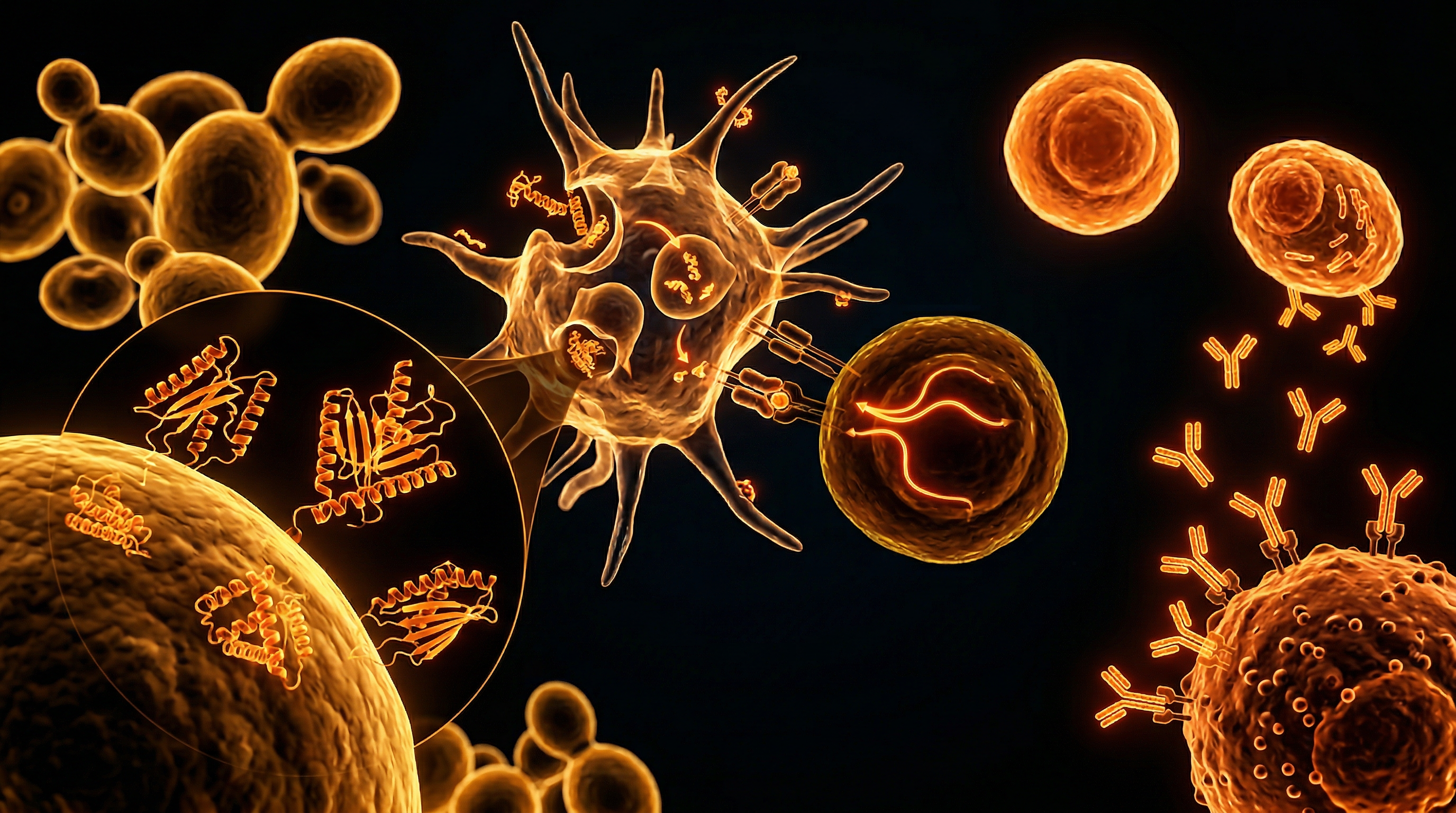
The architectural shift in vaccinology over the last four decades has moved away from simple attenuated pathogens toward the sophisticated realm of recombinant DNA technology. At the heart of this revolution lies Saccharomyces cerevisiae, commonly known as baker’s yeast. While lauded for its efficiency as a biological "factory" for producing viral subunits—most notably for the Hepatitis B (HBV) and Human Papillomavirus (HPV) vaccines—a critical, often suppressed, question remains: What are the immunological consequences of injecting residual yeast-derived proteins directly into the human systemic circulation?
As a senior biological researcher at INNERSTANDING, I have spent years deconstructing the biochemical pathways that govern our immune responses. The mainstream medical establishment frequently dismisses the presence of residual host cell proteins (HCPs) as "trace amounts" that are "clinically insignificant." However, molecular biology tells a different story. When we bypass the natural barriers of the skin and digestive tract, introducing fungal-derived antigens alongside potent adjuvants, we risk bypassing self-tolerance and inducing a state of chronic allergic sensitisation.
This article provides a deep-dive investigation into the mechanisms by which yeast proteins, specifically those from Saccharomyces, interact with the human immune system. We will explore the "glyco-code" of yeast, the failure of current purification standards, and the silent epidemic of fungal sensitivities that may be rooted in our modern immunisation schedules.
Fact: Modern recombinant vaccines may contain up to 5% of residual yeast protein per dose, a concentration that, while seemingly small, represents trillions of foreign protein molecules capable of triggering an immune cascade.
The Biology — How It Works
To understand the risk, one must first understand the utility. Saccharomyces cerevisiae is a eukaryotic organism, meaning its cellular machinery—specifically its ability to perform post-translational modifications—closely resembles that of human cells. This makes it an ideal "expression system" for complex viral proteins.
The Recombinant Expression System
In the production of the Hepatitis B vaccine, for example, the gene for the Hepatitis B surface antigen (HBsAg) is inserted into the yeast genome. The yeast cell then treats this gene as its own, churning out HBsAg proteins. Following a period of fermentation, the yeast cells are "lysed" (burst open), and the viral proteins are harvested.
The Purification Paradox
The primary challenge in biomanufacturing is the separation of the desired vaccine antigen from the "background noise" of the host cell. Despite rigorous chromatography and filtration processes, it is biologically impossible to achieve 100% purity. Residual yeast DNA, cell wall components like mannans, and cytoplasmic proteins remain sequestered within the final product.
In the context of the UK’s vaccination programme, these residual elements are injected intramuscularly. Unlike the yeast we ingest in bread or beer—which is processed by the proteolytic enzymes of the stomach and the secretory IgA of the gut—injected yeast proteins gain immediate access to dendritic cells and macrophages in the muscle tissue.
Mechanisms at the Cellular Level
The human immune system is designed to recognise "non-self" patterns. Fungi, including Saccharomyces, possess unique molecular signatures known as Pathogen-Associated Molecular Patterns (PAMPs). When these proteins are introduced via injection, they trigger a specific set of cellular receptors.
Mannosylation and the Lectin Pathway
One of the most significant differences between yeast and human proteins is glycosylation—the process of attaching sugar molecules to proteins. Yeast proteins are "hyper-mannosylated," meaning they are heavily coated in mannose sugars.
- Mannose-Binding Lectin (MBL): This is a key component of the innate immune system. When MBL detects yeast mannans, it activates the complement system, a series of proteins that enhance (complement) the ability of antibodies and phagocytic cells to clear microbes and damaged cells.
- Dectin-1 and Dectin-2: These are receptors on the surface of dendritic cells specifically designed to recognise fungal beta-glucans and mannans.
When a vaccine containing residual yeast protein is injected, the Dectin receptors are "hit" hard. This creates a pro-inflammatory environment. While the vaccine designer intends for this inflammation to boost the response to the viral antigen, it often leads to "off-target" sensitisation against the yeast itself.
The Role of Molecular Mimicry
Molecular mimicry occurs when there is a structural similarity between a foreign antigen (in this case, a yeast protein) and a human protein. Research has indicated that certain yeast proteins share sequences with human proteins involved in neurological and connective tissue health.
Statistic: Research into "ASiA" (Autoimmune/Inflammatory Syndrome Induced by Adjuvants) suggests that molecular mimicry in genetically predisposed individuals can lead to the immune system attacking its own tissues after exposure to fungal-derived vaccine components.
Environmental Threats and Biological Disruptors
The risk of sensitisation to Saccharomyces does not exist in a vacuum. We live in a world saturated with biological disruptors that prime the immune system for hyper-reactivity.
The Adjuvant Synergy
The most common adjuvant used in recombinant vaccines is Aluminium hydroxide or Aluminium phosphate. Aluminium is a potent Th2-stimulator. The Th2 arm of the immune system is responsible for allergic responses and IgE production.
When yeast proteins are co-administered with Aluminium:
- The Aluminium creates a "depot" at the injection site, keeping the yeast proteins in contact with immune cells for weeks or even months.
- The Aluminium induces "cell stress" signals, which act as a clarion call to the immune system.
- The immune system, in its heightened state, develops a "memory" not just for the virus, but for the Saccharomyces carrier.
Cross-Reactivity with Environmental Fungi
There is a profound cross-reactivity between Saccharomyces cerevisiae and other fungi, such as Candida albicans (the cause of thrush) and Malassezia (linked to skin conditions like seborrheic dermatitis).
If an individual is "primed" by a yeast-containing vaccine, they may develop heightened sensitivities to environmental moulds or internal yeast overgrowths. This creates a feedback loop: a person with a subclinical Candida issue receives a yeast-derived vaccine, and their immune system goes into overdrive, leading to chronic inflammatory conditions that the mainstream medical community often labels as "idiopathic" (of unknown cause).
The Cascade: From Exposure to Disease
Once the immune system has lost its tolerance to Saccharomyces proteins, a multi-stage biological cascade begins, which can manifest in various systemic diseases.
Phase 1: Allergic Sensitisation (IgE and IgG4)
The initial response is often the production of specific antibodies. While IgE is the classic "allergy" antibody (responsible for anaphylaxis or hives), IgG4 is often elevated in cases of chronic, delayed-onset sensitivity. This phase may be asymptomatic or present as mild fatigue and muscle aches following vaccination.
Phase 2: Epitope Spreading
As the immune system remains in a state of "high alert" against yeast proteins, it begins to target increasingly smaller fragments of the protein (epitopes). Eventually, it may start targeting proteins that look similar to yeast, even if they are native to the human body. This is known as "epitope spreading" and is a hallmark of the progression from allergy to autoimmunity.
Phase 3: Systemic Manifestations
The chronic presence of anti-yeast antibodies has been linked in peer-reviewed literature to several serious conditions:
- Crohn’s Disease: Anti-Saccharomyces cerevisiae antibodies (ASCA) are a well-recognised biomarker for Crohn's. While the mainstream view is that these antibodies are a result of gut leakiness, our research suggests that the initial sensitisation could, in some cases, be parenteral (injected).
- Skin Disorders: Chronic urticaria and atopic dermatitis have been exacerbated in patients with high yeast sensitivity.
- Neurological Inflammation: Because the "gut-fungal-brain" axis is so tightly regulated, systemic yeast sensitivity can lead to neuro-inflammation, manifesting as "brain fog," anxiety, and sensory processing issues.
What the Mainstream Narrative Omits
The official position held by regulatory bodies like the FDA and the EMA (and by extension, the MHRA in the UK) is that the risk of yeast allergy from vaccines is "extremely rare." However, this narrative relies on a narrow definition of "allergy."
The Ignored Spectrum of Sensitivity
Mainstream safety studies typically only look for acute anaphylaxis occurring within minutes of injection. They almost entirely ignore:
- Delayed-type hypersensitivity (DTH): T-cell mediated responses that take 48–72 hours to manifest.
- Chronic IgG-mediated inflammation: Which can take weeks to build into a systemic symptom.
- The "Cumulative Load": A child following the standard schedule receives multiple doses of yeast-derived vaccines (Hepatitis B at birth, 2, and 4 months in many countries; HPV in adolescence). The cumulative exposure to residual yeast proteins is never calculated.
Testing Deficiencies
There is currently no requirement to screen infants or adolescents for yeast sensitivity before administering recombinant vaccines. Furthermore, the standard "skin prick" test for yeast is notoriously unreliable for detecting the complex, delayed-type sensitivities associated with recombinant protein exposure.
The Purity "Ceiling"
The technology to completely strip a viral protein of its yeast-derived glycans (mannose chains) exists, but it is prohibitively expensive. Pharmaceutical companies operate on a "good enough" basis, where the level of purity is determined by what the regulator will accept, rather than what is biologically optimal for human health.
The UK Context
In the United Kingdom, the use of yeast-derived vaccines is widespread, yet public awareness regarding the risks of Saccharomyces sensitisation is virtually non-existent.
The NHS Green Book
The "Green Book" (Immunisation against infectious disease), which serves as the bible for UK vaccinators, mentions yeast allergy only as a contraindication for specific vaccines like Engerix-B or Gardasil. However, it provides no guidance on how a clinician should identify a yeast-sensitive individual, nor does it discuss the potential for the vaccine itself to induce the sensitivity.
Regulatory Oversight (MHRA)
The Medicines and Healthcare products Regulatory Agency (MHRA) relies heavily on post-marketing surveillance (the Yellow Card scheme). The flaw here is obvious: if a doctor does not believe a yeast-derived protein can cause a chronic inflammatory condition three months after vaccination, they will never file a report. This creates a "silence loop" where the lack of data is used to prove the absence of risk.
Specific Vaccines in the UK Market
Several vaccines currently on the UK market utilise Saccharomyces cerevisiae as the expression system:
- Hepatitis B vaccines: (e.g., Engerix B, Fendrix).
- HPV vaccines: (e.g., Gardasil 9).
- Combination vaccines: Which may include Hepatitis B components.
For many UK citizens, the first exposure to high-dose yeast proteins comes within hours of birth or during the highly sensitive hormonal window of early puberty (HPV vaccine), both of which are critical periods for immune system "programming."
Protective Measures and Recovery Protocols
If you or your children have been exposed to yeast-derived vaccines, or if you suspect a sensitivity to Saccharomyces, there are steps you can take to mitigate the biological impact and restore immune equilibrium.
1. Advanced Diagnostic Testing
Move beyond the basic skin prick test. Consider:
- ASCA (Anti-Saccharomyces cerevisiae antibodies): Specifically testing for both IgA and IgG variants.
- Lymphocyte Response Assay (LRA): A more sophisticated test that looks at delayed T-cell reactions to yeast proteins.
- Intestinal Permeability Assessment: To see if a systemic yeast sensitivity is contributing to "leaky gut."
2. Dietary Modulation
If sensitised, it is essential to reduce the "antigenic load" on the immune system.
- Low-Tyramine/Low-Yeast Diet: Avoid fermented foods, aged cheeses, and breads made with baker’s yeast.
- The "Anti-Fungal" Approach: Incorporate natural antifungals like caprylic acid, oregano oil, and garlic to manage any cross-reactive Candida overgrowth.
3. Immunological Support
- Quercetin and Luteolin: These flavonoids are "mast cell stabilisers." They help prevent the over-release of histamine and pro-inflammatory cytokines in response to yeast antigens.
- Vitamin D3/K2: Essential for modulating the T-reg cells, which are responsible for maintaining self-tolerance and "switching off" inappropriate allergic responses.
- Specific Probiotics: Strains like Lactobacillus rhamnosus GG have been shown to help "re-train" the immune system toward tolerance and away from Th2-driven allergy.
4. Detoxification of Adjuvants
Since Aluminium is the catalyst for yeast sensitisation, supporting the body’s ability to eliminate metals is crucial.
- Silica-rich water: Facilitates the excretion of Aluminium through the urine.
- Sweat therapy: Using infrared saunas to support the lymphatic clearance of metabolic waste.
Summary: Key Takeaways
- Yeast as a Bio-Factory: Saccharomyces cerevisiae is used to produce recombinant vaccines, but the process leaves behind residual host cell proteins and mannans.
- The Glyco-Code Risk: Yeast proteins are hyper-mannosylated, which triggers the innate immune system’s lectin pathway and Dectin receptors, potentially leading to chronic inflammation.
- Adjuvant Synergy: Aluminium adjuvants in vaccines prime the immune system to develop lasting sensitivities (IgE and IgG4) to these residual yeast proteins.
- Systemic Disease Links: Sensitivity to Saccharomyces (ASCA) is a clinically recognised marker for autoimmune conditions like Crohn’s disease and has been linked to chronic urticaria.
- The Narrative Gap: Regulatory bodies focus on rare acute anaphylaxis while ignoring the much more common delayed-type hypersensitivities and the cumulative effect of repeated exposures.
- The Path Forward: Recovery involves advanced testing, reducing the dietary yeast load, stabilising mast cells, and supporting the body’s natural detoxification pathways.
In the pursuit of public health, we must not ignore the subtle, molecular-level disruptions that occur when we manipulate the fundamentals of biology. The injection of fungal-derived proteins into the human body is a biological "black box" that warrants far greater scrutiny than the mainstream narrative currently allows. Understanding the risk of yeast-derived proteins is not just about vaccine safety; it is about protecting the long-term integrity of the human immune system.
This article is provided for informational and educational purposes only. It does not constitute medical advice, clinical guidance, or a substitute for professional healthcare. Information reflects cited research at time of publication. Always consult a qualified healthcare professional before acting on any health information.
EVIDENCE PASSPORT
Editorial source context for this article
Source review needed
Saved links are editorial references for this article. They may support specific claims rather than every sentence. Open and assess each source in context. This passport does not independently verify them.
Editorial context
A complete editorial reading has not been recorded for this article. Source links remain available for you to open and assess directly.
Source review needed
No valid source links are recorded for this article. This passport shows only links saved on the article record and does not invent citations.
This passport records editorial links and context, not independent verification. Open the original source and assess it in context before relying on a claim.
Medical Disclaimer
The information in this article is for educational purposes only and does not constitute medical advice, diagnosis, or treatment. Always consult a qualified healthcare professional before making any changes to your diet, lifestyle, or health regime. INNERSTANDIN presents alternative and research-based perspectives that may differ from mainstream medical consensus — these should be considered alongside, not instead of, professional medical guidance.
Read Full DisclaimerContinue the thread
Keep this question moving.
Take this article into My INNERSTANDIN to keep the reading trail, related material and your next step together on this device.