
Genetic Expression: How Seed Oils Alter Epigenetic Profiles
Updated May 2026
Dietary fatty acids act as signalling molecules that can turn on pro-inflammatory genes. This piece examines the epigenetic impact of high-PUFA diets on the long-term health of the UK population.
Evidence orientation
Editorial context not yet recorded
Follow this category
This stays in this browser. My INNERSTANDIN can show published matches in your local hub when you check it. It does not send email, push, or alert notifications.
Local learning review
A private browser aid for revisiting ideas. It is not an alert or a health recommendation.
Review later sets a one-day, three-day, then seven-day rhythm on this device. Choose it only when you want to revisit this article.
Overview
For decades, the nutritional discourse has been dominated by a reductionist view of calories and macronutrient ratios. We have been told that a fat is simply a concentrated source of energy—nine calories per gram—and that the primary concern for cardiovascular health is the avoidance of saturated fats. However, as we delve deeper into the burgeoning field of nutrigenomics and epigenetics, a far more sinister reality emerges. Dietary fats are not merely fuel; they are potent signalling molecules that communicate directly with our genetic architecture.
The industrial revolution of the human diet, specifically the massive influx of Polyunsaturated Fatty Acids (PUFAs) from seed oils (such as soybean, corn, sunflower, and rapeseed oil), represents perhaps the most significant uncontrolled biological experiment in history. These oils, once used primarily for industrial lubricants, now comprise a staggering percentage of the modern British caloric intake.
This article explores the profound epigenetic consequences of this shift. We are discovering that high levels of Linoleic Acid (LA)—the primary omega-6 fatty acid in seed oils—do more than just sit in our adipose tissue. They act as "molecular switches" that can permanently alter the expression of genes associated with inflammation, metabolic function, and cellular longevity. By bypassing the traditional mechanisms of genetic inheritance, these industrial fats are rewriting the "software" of human biology in real-time, predisposing the UK population to a cascade of chronic, degenerative diseases. We are not just what we eat; we are the genetic expression of the inflammatory messages our food sends to our cells.
The Biology — How It Works
To understand how seed oils alter our health, we must first understand the distinction between the Genome (the hardware) and the Epigenome (the software). Your DNA is a fixed blueprint, but the epigenome determines which parts of that blueprint are read and which are ignored.
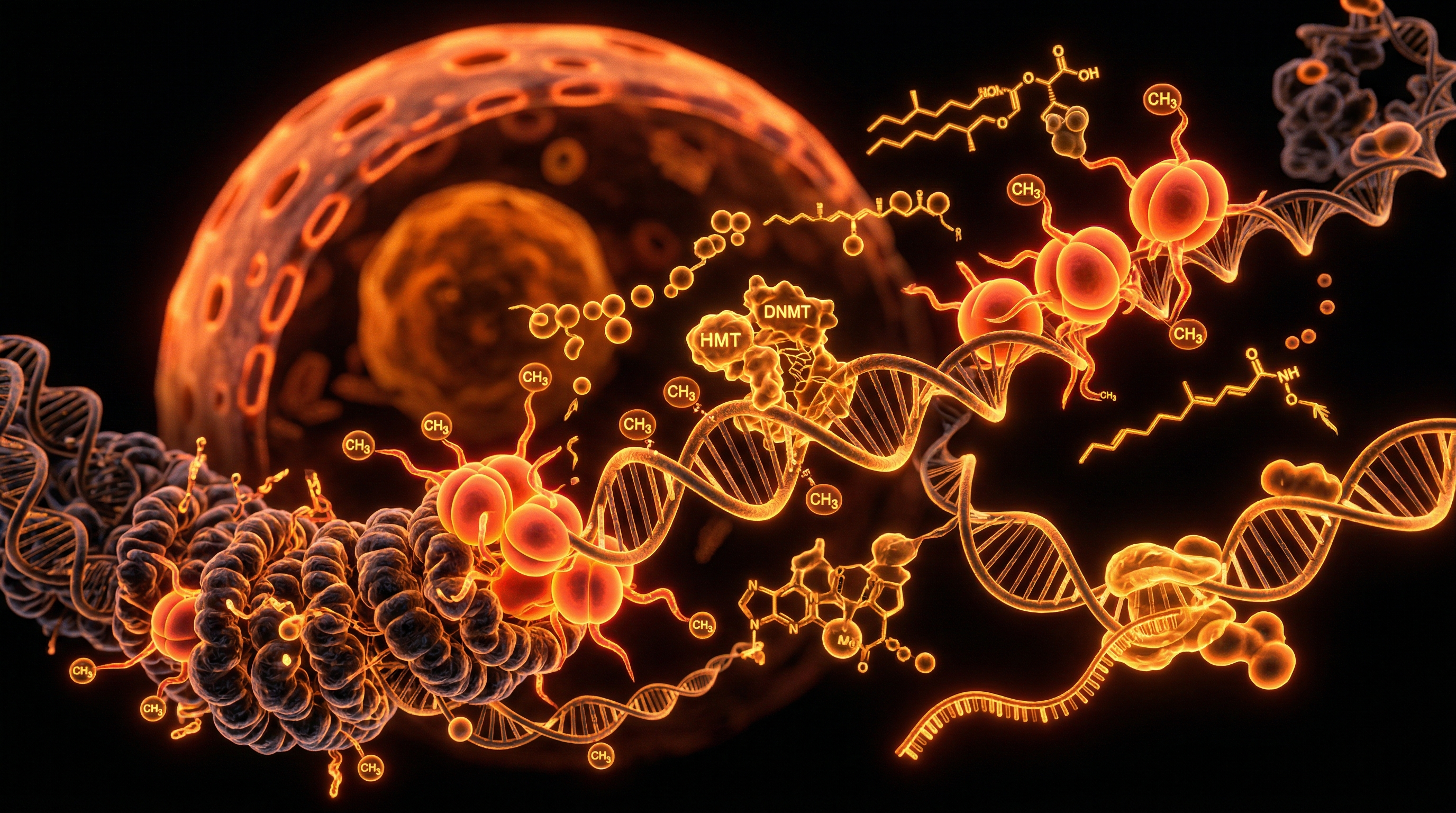
Dietary fatty acids influence this process through three primary epigenetic mechanisms: DNA methylation, histone modification, and the regulation of non-coding RNAs.
The Signalling Power of Fatty Acids
Fatty acids are the natural ligands for a family of nuclear receptors known as Peroxisome Proliferator-Activated Receptors (PPARs). When you consume high concentrations of seed oils, the breakdown products of linoleic acid bind to these receptors.
- PPAR-alpha and PPAR-gamma are critical for regulating lipid metabolism and glucose sensing.
- Excessive stimulation by omega-6 PUFAs can "overdrive" these receptors, leading to a state of permanent metabolic confusion where cells lose their ability to efficiently burn saturated fats or glucose.
DNA Methylation and the Silencing of Health
DNA methylation involves the addition of a methyl group to the DNA molecule, typically "silencing" a gene. High-PUFA diets have been shown to induce aberrant methylation patterns in the promoter regions of genes responsible for suppressing inflammation. When these "brake" genes are silenced, the body remains in a state of chronic, low-grade systemic inflammation.
Histone Modification
DNA is wrapped around proteins called histones. If the wrapping is tight, the gene is hidden; if it is loose, the gene is expressed. Seed oil metabolites, specifically through the production of reactive oxygen species (ROS), can modify these histones, effectively "unlocking" pro-inflammatory pathways that should remain dormant.
Fact: Research indicates that the half-life of linoleic acid in human adipose tissue is approximately 600 to 700 days. This means that the epigenetic "insult" from a high-seed-oil diet can persist for years after the dietary habits have changed.
Mechanisms at the Cellular Level
The primary danger of seed oils lies in their chemical instability. Unlike saturated fats, which are molecularly "straight" and stable, PUFAs contain multiple double bonds that are highly susceptible to oxidation.
Lipid Peroxidation and 4-HNE
When seed oils are exposed to heat (during processing or cooking) or when they circulate in the warm, oxygen-rich environment of the human body, they undergo lipid peroxidation. This process generates toxic secondary metabolites, the most notorious being 4-Hydroxynonenal (4-HNE).
4-HNE is a highly reactive aldehyde that acts as a "genotoxic" agent. It can directly form adducts with DNA, leading to mutations and, more significantly, epigenetic alterations.
- 4-HNE has been shown to interfere with the p53 tumour suppressor protein, a master regulator that prevents cells from becoming cancerous.
- By damaging the epigenetic regulation of p53, seed oils essentially disable the body's primary defence against cellular malignancy.
The Mitochondrial Disruption
Mitochondria are the powerhouses of the cell, but they are also the primary site of ROS production. The membranes of the mitochondria are composed of phospholipids. In a diet high in seed oils, the mitochondria incorporate linoleic acid into a specific phospholipid called cardiolipin.
- Cardiolipin is essential for the structure of the electron transport chain.
- When cardiolipin is saturated with omega-6 PUFAs, it becomes extremely vulnerable to oxidation.
- Oxidised cardiolipin triggers a signal for apoptosis (programmed cell death) and leaks inflammatory signals into the cytoplasm, activating the inflammasome.
The Pro-Inflammatory Cascade
The consumption of seed oils significantly increases the ratio of Omega-6 to Omega-3 fatty acids in the cell membranes. This ratio is a primary driver of the Arachidonic Acid cascade.
- Linoleic Acid is converted into Arachidonic Acid.
- This serves as a precursor for pro-inflammatory eicosanoids (prostaglandins, leukotrienes, and thromboxanes).
- These molecules act as signals that turn on the NF-κB pathway, the "master switch" for inflammation. Once NF-κB is epigenetically primed to be hyper-reactive, the body responds to even minor stressors with an exaggerated, damaging inflammatory response.
Environmental Threats and Biological Disruptors
The modern food environment in the United Kingdom is saturated with these biological disruptors. The "threat" is not merely the presence of these oils, but the industrial processes they undergo before reaching the consumer.
Industrial Refining and Deodorisation
Seed oils are extracted using high heat and chemical solvents like hexane, a neurotoxin. Because the resulting oil smells rancid due to immediate oxidation, it must undergo a process of deodorisation.
- This involves heating the oil to extreme temperatures (up to 250°C), which creates trans-fats and cyclic polymers.
- These "zombie fats" are structurally foreign to human biochemistry. When they are incorporated into cell membranes, they create "leaky" cells that cannot properly regulate the transport of ions and signalling molecules.
The Adulteration of "Healthy" Foods
The greatest environmental threat is the ubiquity of these oils. They are found in:
- Plant-based "milks" and "meats".
- Almost all commercial bread and baked goods in the UK.
- Salad dressings and "low-fat" spreads marketed as heart-healthy.
- Infant formulas (predisposing children to epigenetic shifts from birth).
Statistic: Since the 1960s, the concentration of linoleic acid in human breast milk has increased by over 200% in Western populations, directly mirroring the increase in seed oil consumption.
The Synergistic Effect of Sugar and Seed Oils
The danger of seed oils is amplified when combined with refined carbohydrates and fructose—a hallmark of the "Ultra-Processed Food" (UPF) diet. Fructose promotes the synthesis of fats in the liver (De Novo Lipogenesis), while seed oils provide the substrate for lipid peroxidation. Together, they create a "perfect storm" of metabolic dysfunction, leading to Non-Alcoholic Fatty Liver Disease (NAFLD), which is now reaching epidemic proportions in the UK.
The Cascade: From Exposure to Disease
The epigenetic alterations caused by seed oils do not manifest overnight. Instead, they trigger a slow-motion biological collapse—a cascade that moves from the molecular level to the systemic level.
Step 1: Metabolic Inflexibility
Through the disruption of PPAR signalling, the body loses the ability to switch between burning fat and burning glucose. This is the hallmark of insulin resistance. The cells become "clogged" with oxidised omega-6 fats, and the insulin receptors on the cell surface become desensitised.
Step 2: The Rise of Autoimmunity
By altering the epigenetic profile of T-cells and macrophages, seed oils promote an overactive immune system. The "leaky" cell membranes allow intracellular components to escape into the bloodstream, where the immune system identifies them as foreign invaders. This is a primary driver behind the explosion of autoimmune conditions like Hashimoto’s thyroiditis, Crohn’s disease, and rheumatoid arthritis.
Step 3: Neurodegeneration and the "Brain on Fire"
The brain is the most lipid-dense organ in the body. The substitution of stable saturated fats (like those found in butter and tallow) with unstable PUFAs has devastating effects on neurological health.
- 4-HNE and other lipid peroxides can cross the blood-brain barrier.
- They induce "neuro-inflammation," which is linked to the epigenetic silencing of BDNF (Brain-Derived Neurotrophic Factor).
- Low levels of BDNF are a primary marker for depression, anxiety, and Alzheimer’s disease.
Step 4: Transgenerational Epigenetic Inheritance
Perhaps the most concerning aspect of the "cascade" is its ability to span generations. Studies in epigenetic inheritance suggest that the metabolic "insults" experienced by a parent due to a high-PUFA diet can be passed down via epigenetic tags on sperm and egg cells.
- This means children may be born with "pre-primed" inflammatory pathways and a predisposition for obesity, regardless of their own future diet.
What the Mainstream Narrative Omits
The mainstream medical and nutritional establishment continues to promote seed oils as "heart-healthy" alternatives to animal fats. However, this narrative is built on a foundation of selective data and historical bias.
The Great Saturated Fat Myth
The demonisation of saturated fat began with the Seven Countries Study by Ancel Keys, which famously cherry-picked data to create a correlation between saturated fat and heart disease. What the mainstream narrative omits is the Minnesota Coronary Experiment and the Sydney Diet Heart Study.
- In these trials, participants who replaced saturated fats with seed oils (vegetable oils) actually had higher rates of death from all causes, despite successfully lowering their cholesterol.
- The results of these studies were buried for decades because they contradicted the prevailing "Heart-Healthy" dogma.
The Cholesterol Distraction
The focus on LDL cholesterol as the primary driver of heart disease is a significant scientific oversight. It is not the amount of LDL that matters as much as the quality of the LDL particles.
- Seed oils cause LDL particles to become small and dense.
- These small-dense LDL particles are highly prone to oxidation (forming OxLDL).
- It is the oxidised LDL, driven by seed oil consumption, that is taken up by macrophages to form foam cells and arterial plaque.
Financial Conflicts of Interest
The shift toward seed oils was not driven by health, but by economics. Seed oils are a byproduct of the industrial soy and corn industries. They are cheap to produce, easy to transport, and have a long shelf life when heavily processed. Organizations like the American Heart Association (AHA) and various British nutritional bodies have historically received significant funding from the very industries that profit from the sale of vegetable oils and ultra-processed foods.
Callout: Modern "vegetable oils" are often labelled as "pure" or "natural," yet they require complex chemical refinery processes including degumming, neutralisation, bleaching, and deodorisation to be rendered edible.
The UK Context
The United Kingdom faces a unique set of challenges regarding the seed oil epidemic. Our culinary heritage was once rooted in stable fats—suet, lard, and butter—but the mid-20th-century "public health" campaigns radically altered the British pantry.
The NHS and Public Health England (PHE)
Current NHS guidelines still encourage the British public to "swap saturated fats for unsaturated fats" like rapeseed and sunflower oil. This advice is disseminated through GPs, schools, and hospitals, creating a population-wide reliance on industrial fats.
- The result? The UK has some of the highest rates of obesity and metabolic disease in Europe.
- Despite a reduction in traditional "animal fat" consumption over the last 50 years, the incidence of Type 2 Diabetes in the UK has skyrocketed.
The "Rapeseed" Revolution
In the UK, Rapeseed Oil (often marketed as "Canola" in the US) has been positioned as the "Gold Standard" of healthy oils due to its high smoke point and Omega-3 content. However, rapeseed oil is still a highly processed PUFA.
- While it contains alpha-linolenic acid (an omega-3), this is often oxidised during the high-heat deodorisation process, turning a potentially beneficial fat into a pro-inflammatory one.
- The UK's "Cheap Food" policy has led to rapeseed oil being the primary fat used in nearly all supermarket ready-meals, "British-made" biscuits, and restaurant fryers.
The Burden on the NHS
The chronic diseases driven by epigenetic dysregulation—cancer, diabetes, and heart disease—account for the vast majority of NHS spending. By ignoring the role of seed oils in genetic expression, the UK's health policy is merely treating the symptoms of a "biological software" error that it continues to promote through outdated dietary advice.
Protective Measures and Recovery Protocols
If seed oils have altered our epigenetic profile, is the damage permanent? The beauty of the epigenome is its plasticity. While the "insults" can last for years, they can be reversed through strategic biological interventions.
1. The Elimination Phase
The first and most critical step is the total elimination of industrial seed oils.
- Read Labels: Avoid anything containing "vegetable oil," "sunflower oil," "rapeseed oil," "soybean oil," "corn oil," or "safflower oil."
- Home Cooking: Replace these with stable, ancestral fats: Ghee, Tallow, Lard, Butter, and Coconut Oil. These fats are saturated, meaning they lack the double bonds that allow for oxidation.
- Fruit Oils: Cold-pressed Extra Virgin Olive Oil and Avocado Oil are acceptable, as they are primarily monounsaturated and less prone to oxidation, provided they are not used for high-heat frying.
2. Purging the Tissues
Because linoleic acid is stored in the adipose tissue for years, a "purge" is necessary.
- Vitamin E (Alpha-Tocopherol): This is the body's primary fat-soluble antioxidant. High-PUFA diets deplete Vitamin E stores. Supplementing with high-quality, mixed-tocopherol Vitamin E can help protect your cells from the oxidation of stored seed oils as they are released from the fat cells.
- Low-PUFA Weight Loss: When losing weight, the stored seed oils are released into the bloodstream. It is vital to maintain a high antioxidant status during this time to prevent systemic lipid peroxidation.
3. Epigenetic "Reset" Nutrients
Certain nutrients act as methyl donors or histone deacetylase inhibitors, helping to "reset" the epigenetic switches.
- Choline and Folate: Found in egg yolks and liver, these are essential for proper DNA methylation.
- Glycine: Found in bone broth and collagen. Glycine helps the liver process toxins and supports the synthesis of glutathione, the body’s master antioxidant.
- Omega-3 (DHA/EPA): While still a PUFA, long-chain omega-3s from wild-caught fish help rebalance the ratio and can help "turn off" the pro-inflammatory NF-κB signals.
4. Metabolic Health as a Shield
- Intermittent Fasting: Triggers autophagy, a cellular "housekeeping" process that breaks down damaged proteins and organelles (like the oxidised mitochondria mentioned earlier).
- Sunlight Exposure: Increases the production of subcellular melatonin, a potent antioxidant that specifically protects the mitochondria from lipid peroxidation.
Important Fact: Saturated fats are the preferred fuel for the human heart and are essential for the structural integrity of every cell membrane in the body. They provide the stable "casing" that protects our genetic material from external stressors.
Summary: Key Takeaways
The link between seed oils and epigenetic expression is the "missing link" in our understanding of the modern health crisis. By moving beyond the simplistic calorie model, we can see that industrial fats are a form of biological misinformation.
- Genetic Misprogramming: Seed oils (high in Linoleic Acid) act as signalling molecules that "turn on" genes for inflammation and "turn off" genes for metabolic health.
- Chemical Instability: The multiple double bonds in PUFAs make them highly susceptible to oxidation, creating toxic byproducts like 4-HNE that damage DNA and cause epigenetic "scars."
- The NHS Failure: Current UK dietary guidelines continue to promote these industrial oils despite overwhelming evidence of their role in chronic disease.
- The Long Game: Because of their long half-life in our fat cells, the effects of seed oils are cumulative and can even be passed to future generations via epigenetic inheritance.
- The Path Forward: Recovery is possible through the elimination of industrial fats, the reintroduction of stable animal fats, and the use of specific nutrients to support the "reprogramming" of the epigenome.
We are currently at a crossroads in the UK's public health history. To reclaim our national vitality, we must look past the "industrialised" science of the last 70 years and return to a biologically appropriate diet. Our genes are waiting for the right signals; it is time we started sending them.
This article is provided for informational and educational purposes only. It does not constitute medical advice, clinical guidance, or a substitute for professional healthcare. Information reflects cited research at time of publication. Always consult a qualified healthcare professional before acting on any health information.
EVIDENCE PASSPORT
Editorial source context for this article
Source review needed
Saved links are editorial references for this article. They may support specific claims rather than every sentence. Open and assess each source in context. This passport does not independently verify them.
Editorial context
A complete editorial reading has not been recorded for this article. Source links remain available for you to open and assess directly.
Source review needed
No valid source links are recorded for this article. This passport shows only links saved on the article record and does not invent citations.
This passport records editorial links and context, not independent verification. Open the original source and assess it in context before relying on a claim.
Medical Disclaimer
The information in this article is for educational purposes only and does not constitute medical advice, diagnosis, or treatment. Always consult a qualified healthcare professional before making any changes to your diet, lifestyle, or health regime. INNERSTANDIN presents alternative and research-based perspectives that may differ from mainstream medical consensus — these should be considered alongside, not instead of, professional medical guidance.
Read Full DisclaimerContinue the thread
Keep this question moving.
Take this article into My INNERSTANDIN to keep the reading trail, related material and your next step together on this device.
Dig deeper in the Library
Free, longform PDF volumes that go beyond headlines into mechanisms and references.