
Glucuronidation: Eliminating Pharmaceutical Metabolites
Updated May 2026
Glucuronidation is the most frequent Phase II reaction for a wide variety of pharmaceutical drugs. Impairment in this pathway leads to increased drug sensitivity and adverse side effects.
Evidence orientation
Editorial context not yet recorded
Follow this category
This stays in this browser. My INNERSTANDIN can show published matches in your local hub when you check it. It does not send email, push, or alert notifications.
Local learning review
A private browser aid for revisiting ideas. It is not an alert or a health recommendation.
Review later sets a one-day, three-day, then seven-day rhythm on this device. Choose it only when you want to revisit this article.
Overview
In the sophisticated architecture of human physiology, the liver acts as the primary sentinel and chemical processing plant. While the mainstream medical discourse often focuses on the "Phase I" oxidation pathways—the Cytochrome P450 system—the truly decisive moment for pharmaceutical clearance occurs in Phase II biotransformation. Among these secondary pathways, Glucuronidation stands as the most critical, frequent, and physiologically demanding mechanism for the elimination of both endogenous toxins and exogenous pharmaceutical compounds.
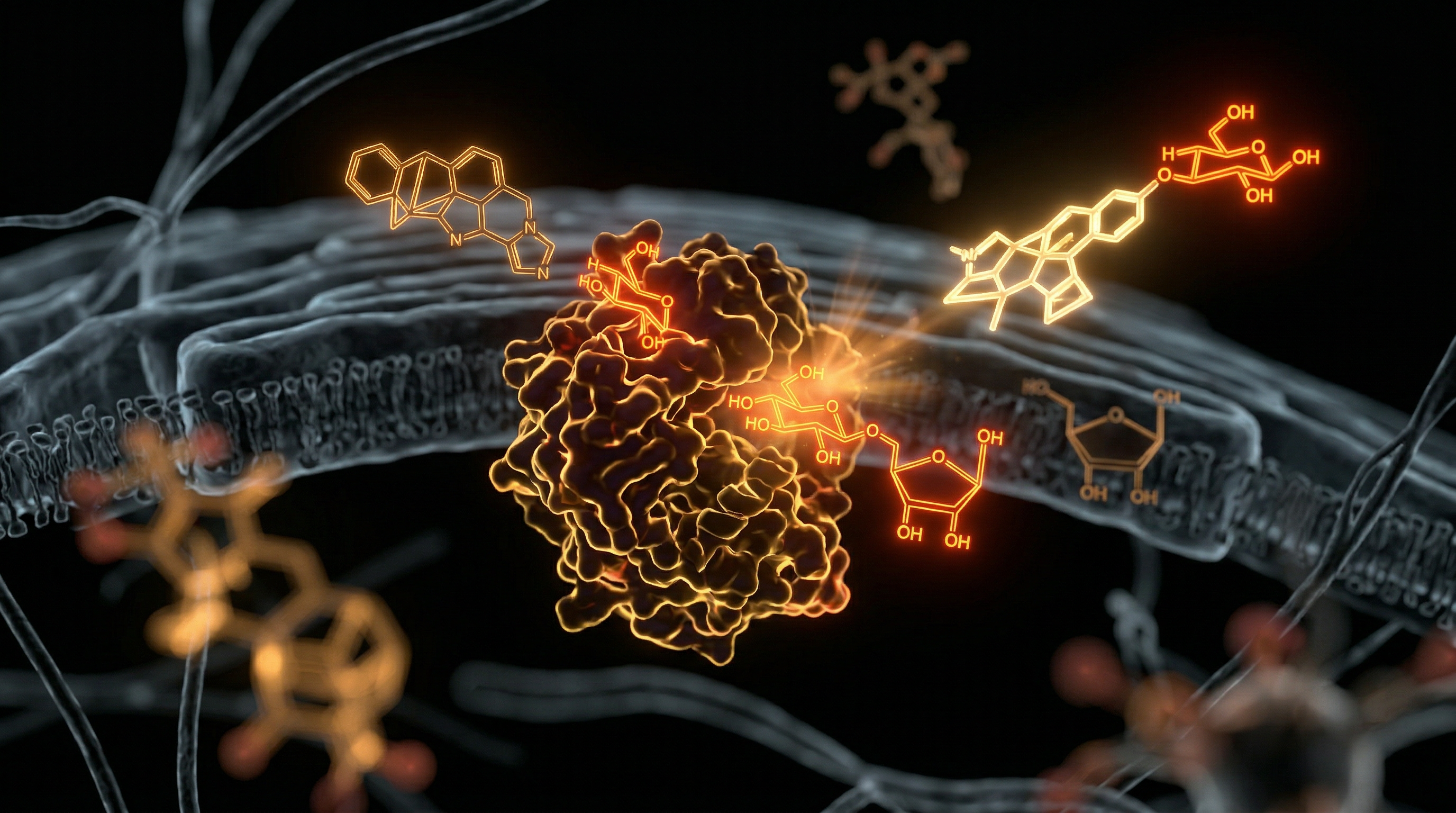
Glucuronidation is the process by which glucuronic acid (derived from glucose) is conjugated to a substrate, transforming a lipophilic (fat-soluble) molecule into a hydrophilic (water-soluble) metabolite. This transformation is not merely a chemical convenience; it is a biological necessity. Without it, the majority of modern medications, ranging from simple paracetamol to complex chemotherapy agents, would remain trapped within the lipid membranes of our cells, recirculating indefinitely and triggering systemic toxicity.
However, we are currently witnessing a silent crisis in metabolic health. The efficacy of the glucuronidation pathway is being systematically compromised by environmental pollutants, nutritional deficiencies, and a "one-size-fits-all" pharmacological model that ignores genetic variability. When this pathway is impaired, the result is "metabolic gridlock," leading to heightened drug sensitivity, adverse drug reactions (ADRs), and the accumulation of hormonal metabolites, such as oestrogen, which contribute to the rising tide of chronic illness.
Fact: Glucuronidation is responsible for the metabolism of approximately 40% to 70% of all clinical drugs, making it the single most important Phase II detoxification pathway in the human body.
This article provides a deep-dive analysis into the molecular mechanics of glucuronidation, the environmental factors threatening its integrity, and the clinical implications of its failure—implications that the pharmaceutical industry often overlooks in favour of standardised dosing protocols.
The Biology — How It Works
To understand glucuronidation, one must understand the UDP-glucuronosyltransferase (UGT) superfamily of enzymes. These enzymes are primarily located within the membranes of the endoplasmic reticulum (ER), specifically the smooth ER, within hepatocytes (liver cells), though they are also found in the kidneys, intestines, and brain.
The Conjugation Chemistry
The fundamental goal of glucuronidation is the attachment of UDP-glucuronic acid (UDP-GA) to a functional group on a drug molecule (such as a hydroxyl, carboxyl, or amino group). This reaction is catalysed by UGT enzymes.
The process follows a specific sequence:
- Activation: Glucose-1-phosphate is converted into UDP-glucose, which is then oxidised into UDP-glucuronic acid. This requires adequate cellular energy (ATP) and the presence of the cofactor NAD+.
- Transfer: The UGT enzyme facilitates the transfer of the glucuronic acid moiety from UDP-GA to the target drug (the aglycone).
- Excretion: The resulting glucuronide conjugate is significantly more polar and larger than its parent molecule. This change in physical properties allows it to be efficiently transported out of the cell via efflux transporters and excreted through the bile into the faeces or through the blood to the kidneys for urinary excretion.
The UGT Enzyme Families
The UGT enzymes are categorized into two main families involved in drug metabolism: UGT1 and UGT2.
- UGT1A1: The most famous isoform, primarily responsible for the conjugation of bilirubin. It is also the primary enzyme for metabolising the cancer drug irinotecan and various oestrogens.
- UGT1A4: Specialises in the N-glucuronidation of tertiary amines, affecting drugs like clozapine and lamotrigine.
- UGT2B7: A "workhorse" enzyme that handles opioids (morphine), NSAIDs (ibuprofen, naproxen), and certain anti-retroviral drugs.
The biological complexity of these enzymes allows the human body to handle a vast array of synthetic chemicals. However, because these enzymes share substrates, they are prone to competitive inhibition. If the liver is busy processing a high load of environmental toxins, its capacity to clear a pharmaceutical drug is drastically reduced.
Mechanisms at the Cellular Level
At the cellular level, glucuronidation is not an isolated event but part of a highly coordinated "metabolic relay." For a drug to be glucuronidated, it must first be accessible to the ER.
The Role of the Endoplasmic Reticulum (ER)
The UGT enzymes are "transmembrane proteins," meaning they sit within the lipid bilayer of the ER. This positioning is strategic but also makes them vulnerable. If the cellular environment is under oxidative stress, the lipid membranes of the ER can undergo peroxidation, which physically deforms the UGT enzymes and reduces their catalytic efficiency.
The First-Pass Effect and Bioavailability
When a drug is taken orally, it passes from the gut into the portal vein and directly to the liver. This is the "first-pass effect." A robust glucuronidation system can conjugate a large percentage of the drug before it ever reaches systemic circulation.
- If glucuronidation is "fast," the drug’s bioavailability is low, and the patient may need a higher dose.
- If glucuronidation is "slow" (due to genetics or inhibition), the drug’s bioavailability skyrockets, leading to what the mainstream identifies as "unexplained side effects" but what is, in reality, a predictable overdose at a standard dose.
The Glucose Connection
Since the substrate for glucuronidation is derived from glucose, the pathway is intricately linked to carbohydrate metabolism. In states of insulin resistance or depleted glycogen (such as during prolonged fasting or extreme keto-adaptation without proper support), the availability of UDP-glucuronic acid may become a limiting factor. This creates a paradox where metabolic dysfunction in one area (blood sugar) leads to toxic accumulation in another (drug clearance).
Stat: Research indicates that UGT activity can vary by as much as 10-fold to 50-fold between individuals, yet standard pharmaceutical prescribing rarely accounts for this "biochemical individuality."
Environmental Threats and Biological Disruptors
The modern world is an "assault course" for the UGT system. We are no longer dealing with simple pharmaceutical clearance; the liver is simultaneously battling an unprecedented load of industrial chemicals that compete for the same glucuronidation pathways.
Glyphosate and Pesticide Interference
The most pervasive threat is glyphosate. While the "mainstream" narrative insists glyphosate is safe for humans because we lack the shikimate pathway, it ignores the chemical's impact on the liver. Glyphosate has been shown to disrupt the Cytochrome P450 enzymes and, critically, to deplete the cellular stores of glycine and glutathione, while indirectly stressing the UGT system by inducing mitochondrial dysfunction. When the mitochondria fail, ATP production drops, and since the creation of UDP-glucuronic acid is an energy-dependent process, glucuronidation slows to a crawl.
Endocrine Disruptors: BPA and Phthalates
Bisphenol A (BPA) and various phthalates found in plastics are not only oestrogen mimics; they are also substrates for UGT1A1 and UGT2B7.
- When you drink from a plastic bottle, your UGT enzymes prioritising the clearance of BPA.
- If you then take a dose of paracetamol or a prescribed NSAID, the drug must "wait in line."
- This competition leads to a longer half-life for the drug in your system, increasing the risk of hepatotoxicity.
Heavy Metal Accumulation
Heavy metals such as cadmium, mercury, and lead bind to the thiol groups of enzymes and disrupt the overall redox balance of the hepatocyte. Cadmium, in particular, has been shown to downregulate the expression of UGT genes, effectively silencing the body's ability to clear pharmaceutical metabolites at the genetic level.
The Alcohol Factor
Chronic alcohol consumption induces certain Phase I enzymes but can exhaust the Phase II pathways. The metabolism of ethanol consumes large amounts of NAD+, the very cofactor needed to produce UDP-glucuronic acid. This is why the "morning after" pill or standard painkiller can be significantly more toxic to an individual who consumes alcohol regularly.
The Cascade: From Exposure to Disease
When glucuronidation fails, the consequences are not confined to the liver. A failure in this pathway triggers a cascade of systemic issues.
Enterohepatic Circulation: The "Vicious Cycle"
One of the most insidious aspects of failed glucuronidation involves the gut-liver axis. Once the liver successfully conjugates a drug into a glucuronide, it is sent to the intestines via the bile for excretion. However, certain "bad" bacteria in the gut produce an enzyme called Beta-glucuronidase.
This enzyme acts like a pair of chemical scissors, snipping the glucuronic acid off the drug and "re-activating" it. The drug (or hormone) is then re-absorbed into the bloodstream. This is known as enterohepatic recirculation.
- Drug Toxicity: This causes the drug to stay in the body for days instead of hours.
- Oestrogen Dominance: Recirculating oestrogen metabolites are a primary driver of endometriosis, PCOS, and oestrogen-positive breast cancers.
NSAID-Induced Enteropathy
The failure to properly clear Non-Steroidal Anti-Inflammatory Drugs (NSAIDs) via glucuronidation is a leading cause of "leaky gut" and intestinal ulceration. When the UGT2B7 pathway is overwhelmed, NSAID metabolites accumulate in the intestinal mucosa, causing direct cellular damage and increasing intestinal permeability.
Gilbert’s Syndrome: The Genetic Vulnerability
Approximately 5% to 10% of the population carries a genetic polymorphism known as Gilbert’s Syndrome (a defect in the UGT1A1 gene). While conventionally dismissed by GPs as a "benign condition" characterized by occasional jaundice, it is actually a significant metabolic handicap. Individuals with Gilbert’s have a 70% reduction in their glucuronidation capacity. For these people, standard doses of medications like Statin drugs or the anaesthetic Propofol can be life-threatening.
Callout: In the context of "Polypharmacy" (taking multiple drugs), the risk of UGT-related toxicity increases exponentially, as drugs compete for a dwindling supply of UGT enzymes and UDP-glucuronic acid.
What the Mainstream Narrative Omits
The current medical-industrial complex relies on a "standardised patient" model. This model is fundamentally flawed because it ignores the profound variability in Phase II detoxification capacity.
The Myth of the "Safe" Paracetamol Dose
Paracetamol (Acetaminophen) is the most widely used drug in the UK. The mainstream narrative suggests that as long as you stay under 4 grams a day, you are safe. However, paracetamol is primarily cleared via glucuronidation (60%) and sulfation (35%). If an individual has Gilbert’s Syndrome, or is nutritionally deficient in the precursors for glucuronic acid, the body is forced to use the "salvage pathway"—the CYP2E1 enzyme—which produces a highly toxic metabolite called NAPQI. This metabolite destroys liver cells unless neutralised by glutathione. By ignoring the glucuronidation status of the patient, the "safe" dose becomes a gamble.
The Omission of Microbiome Testing
Mainstream oncology and endocrinology rarely, if ever, test for faecal beta-glucuronidase levels. By ignoring the gut’s ability to "undo" the liver’s detoxification work, doctors are effectively mopping the floor while the tap is still running. Patients are prescribed "aromatase inhibitors" or "hormone blockers" without ever addressing the fact that their body is simply re-absorbing the hormones it tried to eliminate.
Epigenetic Silencing
The mainstream narrative focuses on "mutations" (fixed genetic errors) but ignores epigenetic silencing. Environmental toxins can "turn off" the expression of UGT enzymes without changing the DNA sequence. This means a person can have "perfect" genes but still possess the detox capacity of someone with severe genetic defects due to their chemical environment.
The UK Context
In the United Kingdom, the challenge of glucuronidation impairment is exacerbated by specific regional factors and regulatory oversights.
The "Gilbert’s" Prevalence in the British Isles
The prevalence of the *UGT1A128 allele (the marker for Gilbert’s Syndrome) is notably high in Caucasian populations of Northern European descent. Despite this, there is no mandatory screening for this polymorphism before prescribing drugs known to be cleared by this pathway. In the UK, the NHS** continues to treat Gilbert’s as an aesthetic issue (jaundice) rather than a metabolic contraindication for dozens of pharmaceutical classes.
Water Quality and Endocrine Disruptors
The UK's water infrastructure is increasingly burdened with "forever chemicals" (PFAS) and pharmaceutical residues that are not fully removed by standard treatment processes. These chemicals act as "constant inhibitors" of the UGT system. UK residents in high-density urban areas like London or Manchester are effectively living in a "dilute soup" of UGT inhibitors, lowering their threshold for drug tolerance.
The MHRA and Regulatory Lag
The Medicines and Healthcare products Regulatory Agency (MHRA) has been slow to update safety labels to reflect the risks of UGT polymorphisms. While the US FDA has begun to include warnings for UGT1A1 status on certain oncology drugs, the UK's "Standard of Care" remains dangerously behind the curve in integrating Pharmacogenomics (the study of how genes affect drug response) into primary care.
UK Stat: Adverse Drug Reactions (ADRs) are estimated to cost the NHS over £2 billion annually and are responsible for roughly 6.5% of all hospital admissions. A significant portion of these are linked to avoidable Phase II metabolic failures.
Protective Measures and Recovery Protocols
Understanding the "suppressed truths" of glucuronidation allows us to take proactive steps to restore metabolic integrity. We can "induce" these enzymes and provide the body with the raw materials it needs to clear pharmaceutical metabolites effectively.
1. Calcium D-Glucarate: The Secret Weapon
Calcium D-Glucarate is perhaps the most important supplement for anyone concerned with glucuronidation. It does not "stimulate" the liver; rather, it inhibits beta-glucuronidase in the gut.
- By blocking this enzyme, Calcium D-Glucarate prevents the de-conjugation of toxins.
- This ensures that once the liver has glucuronidated a drug or hormone, it actually leaves the body.
2. Induction through Cruciferous Vegetables
Compounds like Sulforaphane (found in broccoli sprouts) and Indole-3-Carbinol are potent inducers of UGT enzymes. They work through the Nrf2 pathway, a genetic master switch that turns on the body's internal pharmacy. Consuming cruciferous vegetables daily provides the epigenetic signals required to keep UGT production high.
3. Supporting the UDP-GA Pool
To make glucuronic acid, the body needs:
- Adequate Glucose: Not from refined sugar, but from complex carbohydrates that provide a steady supply of glycogen.
- Magnesium: Required for the ATP-dependent steps of creating UDP-glucuronic acid.
- B-Vitamins: Specifically B3 (Niacin) to maintain the NAD+/NADH ratio.
4. Dandelion Root and Artichoke
Traditional British herbalism has long used Dandelion Root (Taraxacum officinale) and Globe Artichoke (Cynara scolymus). Modern science confirms these botanicals increase bile flow (choleresis). Since glucuronide conjugates are excreted via bile, "moving the bile" is essential to prevent these toxins from sitting in the gallbladder and being re-absorbed.
5. Precision Testing
To move beyond guesswork, individuals should seek:
- Genomic Testing: Check for SNPs (Single Nucleotide Polymorphisms) in UGT1A1, UGT2B7, and UGT1A4.
- Organic Acids Test (OAT): This can provide indirect markers of detoxification demand and "glucaric acid" levels.
- Faecal Beta-Glucuronidase Testing: Available through private functional medicine laboratories in the UK (e.g., GI-MAP or Invivo Diagnostics).
Summary: Key Takeaways
The science of glucuronidation exposes a massive hole in the safety profile of modern medicine. When we understand that the body's ability to eliminate drugs is not a fixed constant but a dynamic process influenced by genes, diet, and the environment, the "one-size-fits-all" medical model collapses.
- Glucuronidation is the gatekeeper of pharmaceutical safety, converting fat-soluble drugs into water-soluble waste.
- The UGT enzyme system is under constant siege from environmental toxins like BPA and glyphosate, which compete for the same pathways.
- Enterohepatic recirculation acts as a "back door," where gut bacteria undo the liver's detox work, leading to chronic hormone imbalance and prolonged drug toxicity.
- The Mainstream Narrative ignores the 5-10% of the population with genetic impairments (Gilbert’s Syndrome), leading to thousands of "preventable" adverse drug reactions.
- Recovery is possible through the use of Calcium D-Glucarate to block gut enzymes, the consumption of Nrf2-inducing cruciferous vegetables, and the strategic support of cellular energy.
As we move toward a future of "Innerstanding," we must demand a medical system that respects biochemical individuality. Until then, the responsibility lies with the individual to protect their metabolic pathways from the chemical onslaught of the 21st century. The liver's ability to conjugate is not just a chemical reaction; it is the thin line between a therapeutic intervention and a toxic event.
This article is provided for informational and educational purposes only. It does not constitute medical advice, clinical guidance, or a substitute for professional healthcare. Information reflects cited research at time of publication. Always consult a qualified healthcare professional before acting on any health information.
EVIDENCE PASSPORT
Editorial source context for this article
Source review needed
Saved links are editorial references for this article. They may support specific claims rather than every sentence. Open and assess each source in context. This passport does not independently verify them.
Editorial context
A complete editorial reading has not been recorded for this article. Source links remain available for you to open and assess directly.
Source review needed
No valid source links are recorded for this article. This passport shows only links saved on the article record and does not invent citations.
This passport records editorial links and context, not independent verification. Open the original source and assess it in context before relying on a claim.
Medical Disclaimer
The information in this article is for educational purposes only and does not constitute medical advice, diagnosis, or treatment. Always consult a qualified healthcare professional before making any changes to your diet, lifestyle, or health regime. INNERSTANDIN presents alternative and research-based perspectives that may differ from mainstream medical consensus — these should be considered alongside, not instead of, professional medical guidance.
Read Full DisclaimerContinue the thread
Keep this question moving.
Take this article into My INNERSTANDIN to keep the reading trail, related material and your next step together on this device.
Explore this in the Body Map
See where this hits your biology. Interactive anatomy, threats, and protective protocols.
Dig deeper in the Library
Free, longform PDF volumes that go beyond headlines into mechanisms and references.