
Epigenetic Echoes: Herbicide Residues and the Multi-Generational Legacy
Published April 2026
Exploring the transgenerational epigenetic effects of glyphosate, where exposure today may program chronic disease in our grandchildren through DNA methylation changes.
Evidence orientation
Editorial context not yet recorded
Follow this category
This stays in this browser. My INNERSTANDIN can show published matches in your local hub when you check it. It does not send email, push, or alert notifications.
Local learning review
A private browser aid for revisiting ideas. It is not an alert or a health recommendation.
Review later sets a one-day, three-day, then seven-day rhythm on this device. Choose it only when you want to revisit this article.
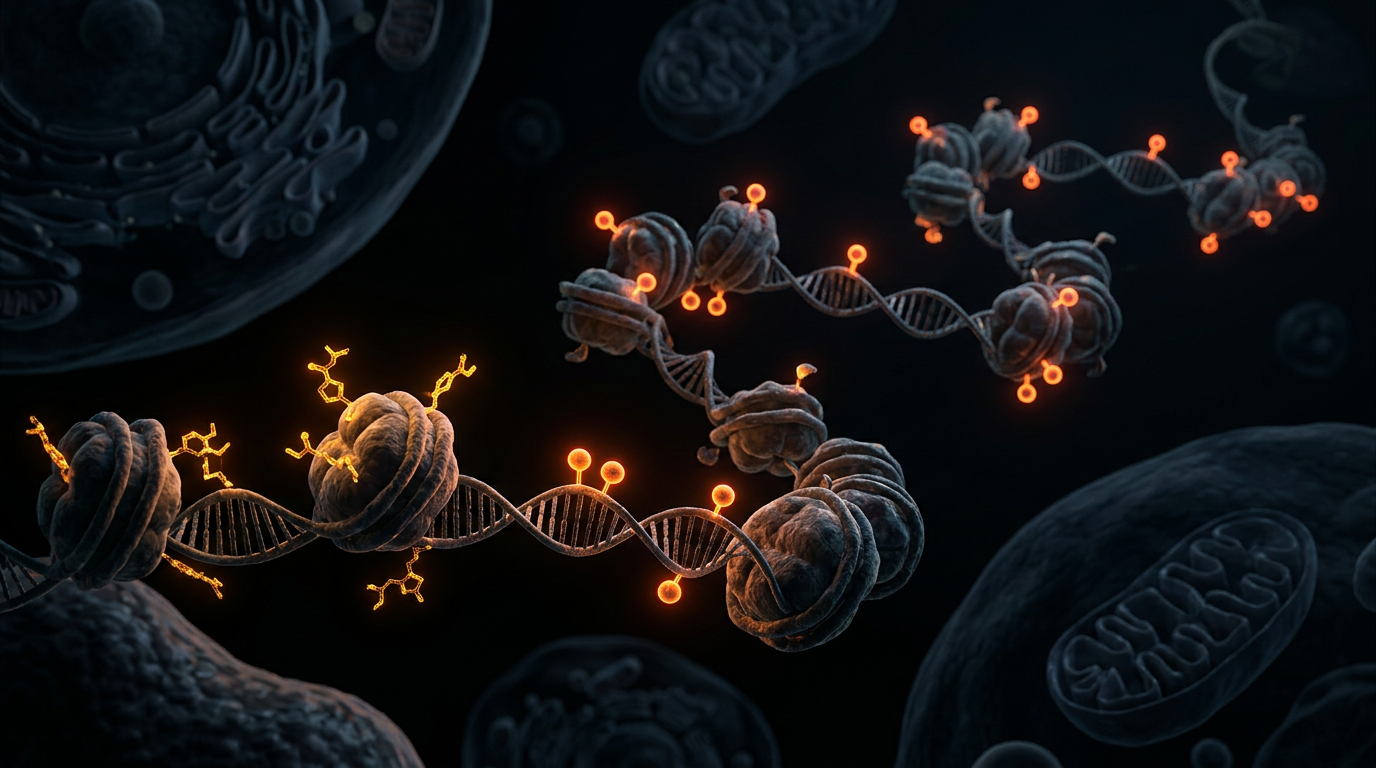
Traditional toxicology focuses on 'the dose makes the poison,' assuming that low-level exposure is harmless if it doesn't cause immediate illness. However, the emerging field of epigenetics is revealing that glyphosate residues can have 'transgenerational' effects that persist long after the initial exposure. Studies in animal models have shown that when a mother is exposed to glyphosate during pregnancy, the third generation (the great-grandchildren) exhibits significantly higher rates of kidney disease, obesity, and reproductive failure, even if that generation was never directly exposed to the chemical. This occurs through DNA methylation—the process by which 'tags' are added to genes to turn them on or off. Glyphosate appears to disrupt these tags, effectively 'programming' future generations for chronic disease.
This paradigm shift suggests that the true cost of our herbicide-intensive agriculture will not be fully realised for decades. ### Methylation Disruptions and Germ Line Alterations. The germ line—the cells that become sperm and eggs—is particularly sensitive to environmental signals during development. Glyphosate’s ability to interfere with metabolic pathways and mineral availability directly impacts the methylation cycles required for healthy fetal development. When these epigenetic marks are incorrectly set in the germ line, they are passed down as a 'cellular memory' of toxicity. This means that the rising rates of metabolic syndrome and infertility in the UK may not just be a result of current lifestyle choices, but the biological legacy of chemical exposures in previous generations.
We are, quite literally, eating the sins of our forefathers' farming practices. ### Non-Monotonic Dose-Response Curves. One of the most dangerous myths in mainstream safety assessment is the linear dose-response curve. Endocrine-disrupting chemicals like glyphosate often follow a 'non-monotonic' curve, where extremely low doses can actually be more disruptive than high doses. This is because low levels of a chemical can mimic hormones and bind to receptors that are designed to respond to minute signals. By flooding these receptors at the 'parts per trillion' level, glyphosate residues can throw the entire endocrine system into chaos, affecting thyroid function, insulin sensitivity, and reproductive health.
The UK’s 'Safe' Maximum Residue Limits (MRLs) are based on the old linear model and likely fail to protect against these subtle but profound epigenetic shifts. ### From Wheat Desiccation to Metabolic Syndrome. In the UK, a significant source of glyphosate exposure is the 'pre-harvest' use on crops to kill them quickly and ensure an even dry-down. This practice ensures that the highest concentrations of the chemical are present on the grain at the time of harvest, which then makes its way into our bread, pasta, and beer. This chronic, low-level ingestion is the perfect recipe for epigenetic disruption. As we see a surge in 'unexplained' metabolic disorders across younger demographics, we must look beyond calories and exercise.
We must examine the persistent herbicide residues that are rewriting our genetic code. Understanding this transgenerational legacy is the first step toward demanding a truly precautionary approach to agricultural chemicals.
This article is provided for informational and educational purposes only. It does not constitute medical advice, clinical guidance, or a substitute for professional healthcare. Information reflects cited research at time of publication. Always consult a qualified healthcare professional before acting on any health information.
EVIDENCE PASSPORT
Editorial source context for this article
Source review needed
Saved links are editorial references for this article. They may support specific claims rather than every sentence. Open and assess each source in context. This passport does not independently verify them.
Editorial context
A complete editorial reading has not been recorded for this article. Source links remain available for you to open and assess directly.
Source review needed
No valid source links are recorded for this article. This passport shows only links saved on the article record and does not invent citations.
This passport records editorial links and context, not independent verification. Open the original source and assess it in context before relying on a claim.
Medical Disclaimer
The information in this article is for educational purposes only and does not constitute medical advice, diagnosis, or treatment. Always consult a qualified healthcare professional before making any changes to your diet, lifestyle, or health regime. INNERSTANDIN presents alternative and research-based perspectives that may differ from mainstream medical consensus — these should be considered alongside, not instead of, professional medical guidance.
Read Full DisclaimerContinue the thread
Keep this question moving.
Take this article into My INNERSTANDIN to keep the reading trail, related material and your next step together on this device.
Explore this in the Body Map
See where this hits your biology. Interactive anatomy, threats, and protective protocols.
Dig deeper in the Library
Free, longform PDF volumes that go beyond headlines into mechanisms and references.