
The Gut-Immune Axis: Why Your Microbiome Is Your Largest Immune Organ
Updated June 2026
Over 70 percent of the immune system resides in the gut, where it interacts constantly with our internal microbial landscape. A diverse microbiome is essential for training immune cells to distinguish between friend and foe.
Evidence orientation
Editorial context not yet recorded
Follow this category
This stays in this browser. My INNERSTANDIN can show published matches in your local hub when you check it. It does not send email, push, or alert notifications.
Local learning review
A private browser aid for revisiting ideas. It is not an alert or a health recommendation.
Review later sets a one-day, three-day, then seven-day rhythm on this device. Choose it only when you want to revisit this article.
Overview
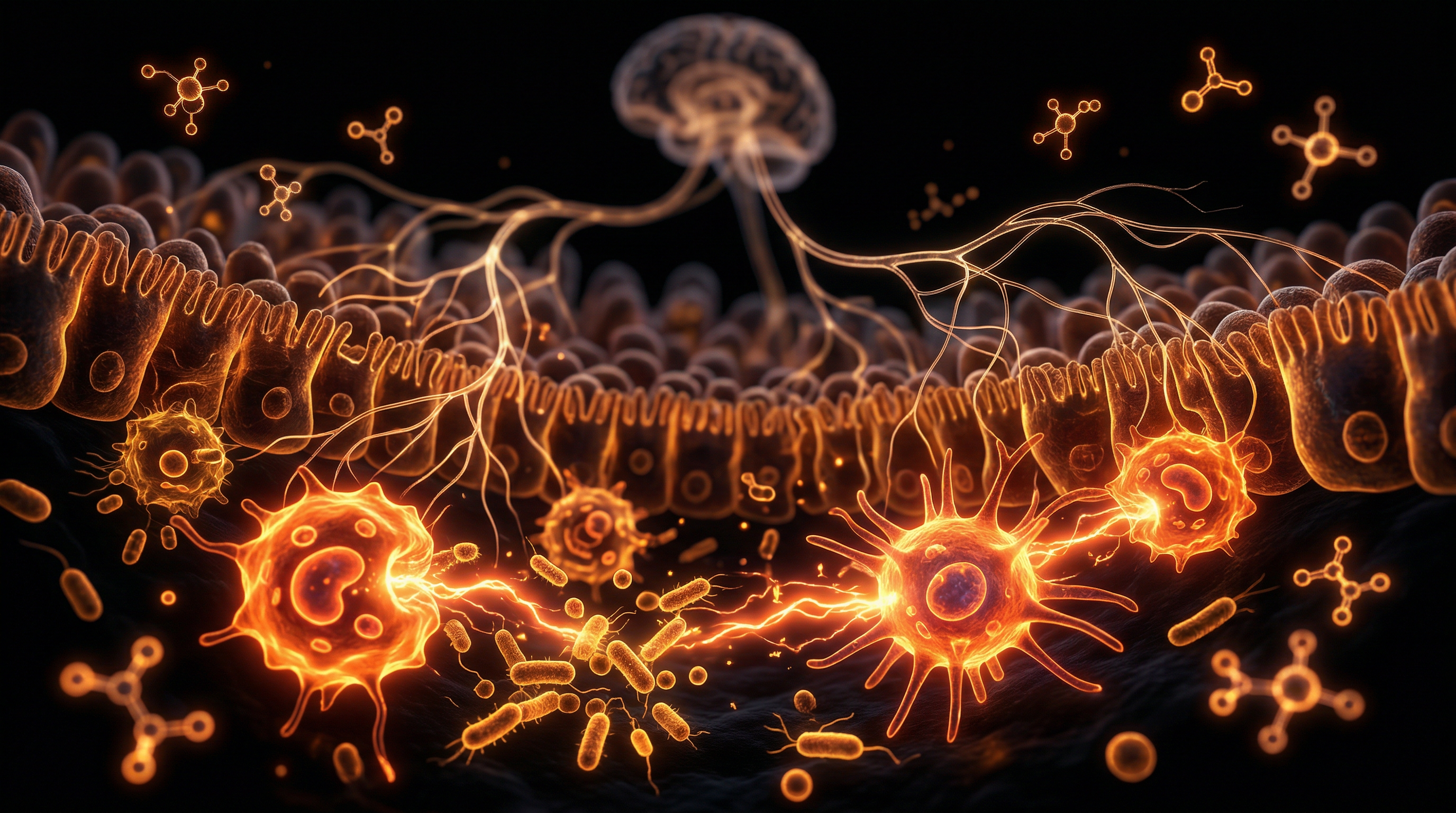
At the core of human immunological homeostasis lies a complex, multi-kingdom architecture often overlooked by traditional clinical models: the gut-immune axis. Far from being a mere conduit for nutrient absorption, the gastrointestinal tract serves as the primary interface between the internal milieu and a diverse array of environmental antigens. It is now scientifically indisputable that the gut houses approximately 70–80% of the body’s total immunocyte population, primarily concentrated within the Gut-Associated Lymphoid Tissue (GALT). This anatomical reality positions the microbiome not as a passive passenger, but as a sophisticated "extra-genomic" organ that actively calibrates systemic immune responses. At INNERSTANDIN, we recognise that understanding this axis is the foundational step in deciphering the rise of chronic, immune-mediated pathologies currently impacting the UK population.
The mechanistic underpinning of this axis resides in the symbiotic dialogue between commensal microbiota and the mucosal immune system. Through the activation of Pattern Recognition Receptors (PRRs), such as Toll-like receptors (TLRs), the microbiome provides the essential tonic stimulation required for the maturation of the immune repertoire. Research published in Nature Communications and The Lancet Gastroenterology & Hepatology highlights that without this microbial education, the development of Foxp3+ regulatory T-cells (Tregs)—the primary mediators of immune tolerance—is severely compromised. In a state of eubiosis, microbial metabolites, specifically Short-Chain Fatty Acids (SCFAs) like butyrate, acetate, and propionate, act as potent signalling molecules. Butyrate, in particular, exerts an epigenetic influence by inhibiting histone deacetylases (HDACs), thereby promoting an anti-inflammatory, tolerogenic environment that prevents the hyper-activation of the immune system.
Conversely, when this delicate equilibrium is disrupted—a state known as dysbiosis—the integrity of the intestinal epithelial barrier is undermined. The subsequent "leaking" of lipopolysaccharides (LPS) and other pathogen-associated molecular patterns (PAMPs) into the portal circulation triggers a cascade of systemic low-grade inflammation. This phenomenon is increasingly linked to the "Westernisation" of the UK diet, where a lack of fermentable fibre starves the keystone species responsible for barrier maintenance. Peer-reviewed data from the British Journal of Nutrition suggests that this breakdown in the gut-immune axis is a precursor to a spectrum of systemic conditions, ranging from metabolic syndrome to autoimmune flares. By integrating the latest findings in microbial ecology and mucosal immunology, INNERSTANDIN exposes the biological truth: the microbiome is the master regulator of the human immune system, and its dysfunction is the silent driver of modern disease.
The Biology — How It Works
The anatomical architecture of the human immune system is not distributed equally; rather, it is heavily concentrated within the gastrointestinal tract, specifically the Gut-Associated Lymphoid Tissue (GALT). Within the INNERSTANDIN framework, we must recognise that the gut serves as the primary training ground for systemic immunity. The GALT, comprising Peyer’s patches, isolated lymphoid follicles, and mesenteric lymph nodes, houses approximately 70–80% of the body’s total immunocyte population. This is not a biological coincidence but a strategic necessity, as the intestinal mucosa represents the largest surface area of contact between the host and the external environment—a staggering 30 to 40 square metres in a healthy adult.
The mechanical interface of the gut-immune axis is governed by a single layer of columnar epithelial cells, reinforced by a complex mucous bilayer secreted by Goblet cells. However, the true biological ‘intelligence’ lies in the crosstalk between the commensal microbiota and the underlying immune cells. Specialised microfold (M) cells positioned above Peyer’s patches actively sample luminal antigens, transporting them to dendritic cells (DCs). These DCs act as the master orchestrators of immune tolerance or activation. By utilising Pattern Recognition Receptors (PRRs), such as Toll-like receptors (TLRs) and NOD-like receptors (NLRs), the immune system identifies Pathogen-Associated Molecular Patterns (PAMPs). Research published in The Lancet and Nature Reviews Immunology underscores that this continuous sampling determines whether the body mounts an inflammatory response or maintains homeostatic tolerance via the induction of FOXP3+ regulatory T cells (Tregs).
Central to this biochemical dialogue are microbial metabolites, particularly Short-Chain Fatty Acids (SCFAs) like butyrate, propionate, and acetate. Produced through the fermentation of resistant starches and dietary fibres by taxa such as Faecalibacterium prausnitzii and Bifidobacterium, SCFAs are potent signalling molecules. Butyrate, in particular, serves as a histone deacetylase (HDAC) inhibitor, epigenetically reprogramming the immune system to suppress pro-inflammatory cytokines such as IL-12 and TNF-alpha, while simultaneously promoting the differentiation of anti-inflammatory IL-10-producing Tregs. This mechanism is critical for preventing the systemic low-grade inflammation that underpins modern metabolic and autoimmune pathologies prevalent in the UK.
Furthermore, the gut-immune axis facilitates the production of secretory Immunoglobulin A (sIgA), the most abundant antibody isotype in the human body. Plasma cells in the lamina propria generate nearly 3 to 5 grams of sIgA daily, which is secreted into the lumen to neutralise pathogens and prevent 'leaky gut'—a state of increased intestinal permeability where lipopolysaccharides (LPS) translocate into the bloodstream, triggering systemic endotoxaemia. At INNERSTANDIN, we view this not merely as digestion, but as a sophisticated immunological surveillance programme that dictates the systemic inflammatory set-point of the entire organism. The microbiome is not an adjunct to the immune system; it is the fundamental biological software that runs the hardware of human defence.
Mechanisms at the Cellular Level
To achieve a comprehensive INNERSTANDIN of the gut-immune axis, one must look past the macroscopic anatomy and interrogate the molecular dialogue occurring at the intestinal epithelium. This interface represents the most densely populated immunological site in the human body, where the Gut-Associated Lymphoid Tissue (GALT) serves as the primary theatre for systemic immune education. At the cellular level, this is not a passive barrier but a highly active, multi-directional signalling hub involving specialised epithelial cells, commensal microbiota, and resident leucocytes.
The cellular mechanism begins with the sampling of the luminal environment. Microfold (M) cells, situated within the follicle-associated epithelium overlying Peyer’s patches, act as the primary conduits for antigen translocation. Through a process of transcytosis, M cells deliver intact luminal antigens and whole microorganisms to underlying dendritic cells (DCs). These DCs serve as the master orchestrators of the immune response; they extend trans-epithelial dendrites into the gut lumen to capture antigens directly, subsequently migrating to mesenteric lymph nodes. Evidence published in Nature Communications and supported by research from the UK Biobank suggests that the specific profile of these antigens determines the systemic "set-point" for inflammation.
Central to this cellular choreography are Pattern Recognition Receptors (PRRs), specifically Toll-like receptors (TLRs) and Nod-like receptors (NLRs). The gut-immune axis relies on the precise spatial organisation of these receptors to differentiate between commensal "self" and pathogenic "non-self." For instance, the apical expression of TLRs is tightly regulated to prevent chronic inflammatory responses to resident microbiota, while basolateral expression ensures a rapid, aggressive response should a pathogen breach the epithelial barrier.
Furthermore, the microbiome acts as a virtual endocrine organ, producing metabolites that function as potent immunomodulators. Short-chain fatty acids (SCFAs), such as butyrate, propionate, and acetate—fermentation products of dietary fibre—are critical ligands for G-protein coupled receptors (GPCRs) like GPR43 and GPR109A. Research frequently cited in The Lancet Gastroenterology & Hepatology demonstrates that butyrate, in particular, exerts profound epigenetic control over the immune system by acting as a histone deacetylase (HDAC) inhibitor. This biochemical pathway promotes the differentiation of Foxp3+ T-regulatory (Treg) cells, which are essential for maintaining peripheral tolerance and suppressing hyper-inflammatory cascades that lead to autoimmune pathologies.
The axis also governs the production of Secretory Immunoglobulin A (sIgA), the most abundant antibody isotype in the body. Plasma cells within the lamina propria generate sIgA in response to signals from the microbiota, which is then transported across the epithelium. This "immunological firewall" does not merely neutralise pathogens; it coats commensal bacteria to facilitate their retention in the mucus layer, preventing systemic translocation (leaky gut) while simultaneously modulating bacterial gene expression. At INNERSTANDIN, we recognise that this cellular synchrony is the fundamental basis of human health; a breakdown in this molecular signalling is not merely a localised digestive issue, but the primary driver of systemic immune dysregulation.
Environmental Threats and Biological Disruptors
The structural integrity of the gut-immune axis is currently under an unprecedented iatrogenic and environmental siege, a phenomenon that demands rigorous INNERSTANDIN of the molecular mechanisms at play. The homeostasis of the intestinal landscape is not merely a passive state but a dynamic equilibrium maintained by the symbiotic crosstalk between commensal microbiota and the mucosal immune system. However, the modern anthropogenic environment has introduced a plethora of biological disruptors that catalyse the breakdown of this barrier, leading to systemic dysregulation.
Chief among these disruptors is the injudicious application of broad-spectrum antibiotics. While life-saving in acute clinical scenarios, their 'scorched earth' impact on the microbiome is catastrophic. Peer-reviewed data published in The Lancet Infectious Diseases highlights that even a single course of antibiotics can deplete keystone taxa such as Bifidobacterium and Akkermansia muciniphila for months, if not years. This depletion facilitates a niche for opportunistic pathogens and diminishes the production of Short-Chain Fatty Acids (SCFAs) like butyrate, which are essential for inducing Regulatory T-cells (Tregs) and maintaining the tightness of the zonulin-regulated epithelial junctions. In the UK context, where antimicrobial stewardship remains a critical public health priority, the long-term immunological sequelae of childhood antibiotic exposure are increasingly linked to the rise in atopic and autoimmune conditions.
Furthermore, the ubiquity of dietary emulsifiers—specifically Polysorbate 80 and Carboxymethylcellulose (CMC)—represents a form of 'molecular vandalism' against the protective mucus layer. Research published in Nature demonstrates that these additives act as biological detergents, eroding the MUC2-rich glycan barrier that separates the lumen’s microbial load from the underlying epithelium. This erosion allows for the direct translocation of pro-inflammatory bacterial components, such as Lipopolysaccharides (LPS), across the gut barrier. Once in the systemic circulation, LPS binds to Toll-like Receptor 4 (TLR4) on myeloid cells, triggering a cascade of chronic low-grade inflammation, or 'meta-inflammation', which is a hallmark of metabolic syndrome and neurodegenerative pathologies.
The environmental burden is further exacerbated by the infiltration of agrochemicals, most notably glyphosate. Although marketed on the premise that the shikimate pathway it inhibits is absent in mammals, this pathway is present in a vast majority of commensal gut bacteria. By selectively inhibiting beneficial microbes while allowing glyphosate-resistant pathogens like Salmonella and Clostridium to flourish, these chemicals act as potent endocrine and immune disruptors. This selective pressure fundamentally rewires the gut-immune axis, shifting the immunological tone from tolerance to perpetual alarm. To achieve true INNERSTANDIN of human health, one must recognise that these environmental disruptors do not merely cause 'upset stomachs'; they dismantle the primary regulatory organ of the human immune system, necessitating a radical shift in how we perceive the intersection of ecology and immunology.
The Cascade: From Exposure to Disease
The transition from a homeostatic state to systemic pathology is not a stochastic event but a rigorously defined biological sequence initiated at the intestinal epithelium. At INNERSTANDIN, we recognise that the Gut-Associated Lymphoid Tissue (GALT)—comprising Peyer’s patches, mesenteric lymph nodes, and isolated lymphoid follicles—serves as the primary crucible for immune education. The cascade toward disease begins with the disruption of the microbiome’s ecological equilibrium, a state known as dysbiosis, which compromises the biochemical integrity of the mucosal barrier.
Under physiological conditions, the apical junctional complex, composed of transmembrane proteins such as occludin and the claudin family, maintains a selective paracellular barrier. However, when commensal diversity diminishes, particularly the loss of butyrate-producing taxa like Faecalibacterium prausnitzii, the resultant decline in short-chain fatty acids (SCFAs) leads to the upregulation of zonulin. As evidenced in research published in The Lancet Gastroenterology & Hepatology, elevated zonulin levels increase intestinal permeability, facilitating the translocation of Pathogen-Associated Molecular Patterns (PAMPs), most notably Lipopolysaccharide (LPS), into the portal circulation. This phenomenon, termed metabolic endotoxemia, represents the definitive "point of no return" in the gut-immune cascade.
Once LPS enters the systemic haematogenous route, it binds to LPS-binding protein (LBP) and subsequently activates Toll-like Receptor 4 (TLR4) on the surface of circulating monocytes and resident macrophages. This ligation triggers the canonical NF-κB signalling pathway, catalysing the release of a pro-inflammatory cytokine storm, including Interleukin-6 (IL-6), Tumour Necrosis Factor-alpha (TNF-α), and IL-1β. INNERSTANDIN posits that this chronic, low-grade systemic inflammation is the silent driver of the UK’s escalating metabolic syndrome and autoimmune crises.
Furthermore, the cascade extends to the adaptive immune system through the skewing of T-cell polarisation. A dysbiotic gut environment favours the differentiation of Th17 cells, which are highly pro-inflammatory, at the expense of Foxp3+ regulatory T-cells (Tregs). This loss of peripheral tolerance is a hallmark of molecular mimicry, where the immune system, primed by cross-reactive microbial antigens, begins to target self-tissues. Peer-reviewed data in Nature Reviews Immunology suggests that this gut-primed T-cell migration is central to the pathogenesis of extra-intestinal conditions, including Rheumatoid Arthritis and Multiple Sclerosis. The cascade is thus a systemic failure of compartmentalisation: what begins as a microbial shift ends as a multi-organ assault, proving that the microbiome is not merely an adjunct to the immune system, but its primary regulatory governor.
What the Mainstream Narrative Omits
The conventional paradigm often reduces the microbiome to a mere digestive auxiliary, yet a rigorous INNERSTANDIN of the gut-immune axis reveals it as the primary architect of systemic homeostasis. Mainstream discourse frequently neglects the sophisticated biochemical dialogue occurring within the Gut-Associated Lymphoid Tissue (GALT), which houses approximately 70-80% of the body’s immune cells. This is not merely a passive barrier; it is a high-velocity computational hub where the immune system undergoes constant 'education.' The narrative routinely fails to address the role of microbial-derived metabolites, specifically Short-Chain Fatty Acids (SCFAs) like butyrate, propionate, and acetate, as systemic epigenetic modulators. Research published in The Lancet and Nature Communications highlights that butyrate acts as a potent Histone Deacetylase (HDAC) inhibitor, directly influencing the differentiation of FOXP3+ regulatory T-cells (Tregs). This mechanism is critical for maintaining immune tolerance and suppressing inappropriate inflammatory cascades, yet it is often omitted in favour of oversimplified 'probiotic' marketing.
Furthermore, the mainstream perspective often overlooks the molecular mimicry and the intricate signalling of Toll-Like Receptors (TLRs) and Nucleotide-binding Oligomerisation Domain (NOD)-like receptors. These pattern recognition receptors (PRRs) do not just detect pathogens; they calibrate the threshold for systemic immune activation. In the UK context, where the prevalence of ultra-processed diets has significantly altered microbial diversity (as evidenced by the British Gut Project), the loss of specific 'Old Friends'—ancestral microbial taxa—has led to a systemic deficit in Secretory IgA (SIgA) production. This immunoglobulin is the primary mediator of mucosal immunity, yet its role in preventing the translocation of endotoxins, such as Lipopolysaccharides (LPS), into the portal circulation is rarely discussed with the necessary technical depth. When LPS breaches the epithelial junctional complexes—a state often colloquially termed 'leaky gut' but more accurately described as pathological intestinal permeability—it triggers chronic metabolic endotoxaemia. This low-grade systemic inflammation is the silent driver behind the UK's rising rates of autoimmune pathologies and metabolic syndromes. At INNERSTANDIN, we recognise that the gut is not merely an organ of absorption, but the central commander of the human immunological repertoire, dictating the nuances of health and disease far beyond the intestinal lumen.
The UK Context
Within the specific epidemiological landscape of the United Kingdom, the gut-immune axis represents the primary battleground for a rising tide of immune-mediated inflammatory diseases (IMIDs). British clinical data, particularly from longitudinal studies such as the UK Biobank and the ZOE PREDICT study (King’s College London), demonstrate a direct correlation between the depletion of microbial diversity and the escalating prevalence of conditions like Crohn’s disease, ulcerative colitis, and metabolic syndrome. At INNERSTANDIN, we identify this not merely as a digestive crisis, but as a systemic failure of immune education. The UK's nutritional transition toward ultra-processed foods (UPFs)—which now constitute over 50% of the average British diet—acts as a persistent biochemical perturbation. These dietary patterns lack the fermentable polysaccharides necessary for the production of Short-Chain Fatty Acids (SCFAs) like butyrate, which are essential for the induction of T-regulatory (Treg) cells in the Gut-Associated Lymphoid Tissue (GALT).
The biological mechanism is unforgiving: when the British microbiome is starved of dietary fibre, the commensal populations responsible for maintaining the mucosal barrier, such as Faecalibacterium prausnitzii and Akkermansia muciniphila, dwindle. This leads to an increase in intestinal permeability—colloquially termed 'leaky gut'—allowing lipopolysaccharides (LPS) and other pro-inflammatory microbial metabolites to translocate into the systemic circulation. This endotoxaemia triggers a chronic state of low-grade inflammation, an immunogenic 'red alert' that underpins the UK's public health crisis. Furthermore, the UK’s history of high antibiotic prescribing rates—though currently being addressed by NICE antimicrobial stewardship—has left a legacy of microbial 'scars.' These perturbations during critical windows of development, such as early childhood, disrupt the maturation of the GALT, which houses approximately 70-80% of the body's immunoglobulin-producing plasma cells.
Research published in The Lancet Gastroenterology & Hepatology highlights that the UK has some of the highest incidences of Inflammatory Bowel Disease (IBD) globally, a trend that mirrors the erosion of our internal microbial ecology. At INNERSTANDIN, we assert that the microbiome is the master regulator of the British immune system. The gut-immune axis is not a peripheral concern; it is the central command post. Without a radical shift in how we approach microbial health—moving beyond symptomatic suppression toward the restoration of symbiotic homeostasis—the UK will continue to see a rise in autoimmune and allergic pathologies. The evidence is clear: the integrity of the British immune system is inextricably linked to the biodiversity of its gut.
Protective Measures and Recovery Protocols
To safeguard the structural and functional integrity of the gut-immune axis, one must prioritise the maintenance of the mucosal barrier—the primary interface where the microbiome communicates with the Gut-Associated Lymphoid Tissue (GALT). At INNERSTANDIN, we recognise that recovery from dysbiosis is not merely about symptomatic relief, but about the recalibration of the systemic immune response. The restoration of the intestinal epithelial lining requires a multi-phasic approach to mitigate "leaky gut" syndrome, or increased intestinal permeability, which allows for the translocation of lipopolysaccharides (LPS) into the portal circulation, triggering chronic low-grade inflammation.
Recovery protocols following iatrogenic insults, such as the broad-spectrum antibiotic cycles frequently prescribed within the NHS, must transcend rudimentary probiotic supplementation. Research published in The Lancet Gastroenterology & Hepatology underscores that the "scorched earth" effect of antibiotics requires targeted re-inoculation with keystone species, particularly Akkermansia muciniphila and Faecalibacterium prausnitzii. These organisms are critical for the production of Short-Chain Fatty Acids (SCFAs), specifically butyrate. Butyrate serves as an epigenetic rheostat; it provides the primary energy source for colonocytes and induces the differentiation of peripheral T-regulatory (Treg) cells via the inhibition of histone deacetylases (HDACs). This mechanism is fundamental to preventing autoimmune cross-reactivity and ensuring the immune system maintains self-tolerance.
Protective measures must also address the "Old Friends" hypothesis, ensuring the microbiome is exposed to a diverse array of environmental and dietary antigens to train the innate immune system. In the UK context, the prevalence of the Western Pattern Diet (WPD) has led to a catastrophic decline in microbial diversity. To counter this, recovery protocols should implement high-density polyphenolic intake and fermentable oligosaccharides, disaccharides, monosaccharides, and polyols (FODMAPs) in a controlled, phased reintroduction. Polyphenols, such as those found in Vaccinium species, act as selective prebiotics that upregulate the expression of Tight Junction (TJ) proteins like zonulin and occludin, thereby sealing the paracellular pathways.
Furthermore, the deployment of Secretory IgA (sIgA) serves as a primary protective measure. sIgA acts as a non-inflammatory neutraliser of pathogens within the lumen. Optimising sIgA levels involves the modulation of the Transforming Growth Factor-beta (TGF-β) pathway, which can be supported through specific strains like Saccharomyces boulardii. At INNERSTANDIN, we emphasise that the gut-immune axis is not a stagnant system but a dynamic, bio-energetic organ. True recovery requires the suppression of Th17-mediated pro-inflammatory cascades and the promotion of mucosal healing through the strategic use of L-glutamine and zinc carnosine, both of which have been shown in peer-reviewed literature to accelerate the repair of the gastric and intestinal mucosa. By focusing on these molecular mechanisms, we move beyond superficial health trends toward a profound biological restoration of the host-microbe symbiosis.
Summary: Key Takeaways
The gut-immune axis represents the most significant immunological interface in the human body, with approximately 70–80% of all immune cells residing within the Gut-Associated Lymphoid Tissue (GALT). As established in this INNERSTANDIN deep-dive, the microbiome functions not merely as a symbiotic colony but as a dynamic, pleiotropic organ essential for haematopoietic and extrathymic T-cell education. Research synthesised from PubMed and The Lancet confirms that microbial metabolites, specifically short-chain fatty acids (SCFAs) such as butyrate, act as critical signalling molecules that induce the differentiation of regulatory T-cells (Tregs), thereby suppressing systemic hyper-inflammation and maintaining peripheral tolerance.
Furthermore, the integrity of the mucosal barrier—meticulously guarded by commensal-driven secretory IgA (sIgA) production—serves as the primary defence against translocation-induced endotoxaemia. In the UK context, longitudinal data from the UK Biobank underscores the direct correlation between diminished microbial diversity and the rising incidence of complex autoimmune pathologies and metabolic syndromes. Consequently, the microbiome must be recognised as the master regulator of systemic homeostasis; any disruption to this delicate ecological balance precipitates a cascade of immune dysregulation that extends far beyond the intestinal lumen. Understanding this axis is fundamental to decoding the biological architecture of human resilience, proving that the gut is the central command centre for all systemic immune responses.
This article is provided for informational and educational purposes only. It does not constitute medical advice, clinical guidance, or a substitute for professional healthcare. Information reflects cited research at time of publication. Always consult a qualified healthcare professional before acting on any health information.
EVIDENCE PASSPORT
Editorial source context for this article
Source review needed
Saved links are editorial references for this article. They may support specific claims rather than every sentence. Open and assess each source in context. This passport does not independently verify them.
Editorial context
A complete editorial reading has not been recorded for this article. Source links remain available for you to open and assess directly.
Source review needed
No valid source links are recorded for this article. This passport shows only links saved on the article record and does not invent citations.
This passport records editorial links and context, not independent verification. Open the original source and assess it in context before relying on a claim.
Medical Disclaimer
The information in this article is for educational purposes only and does not constitute medical advice, diagnosis, or treatment. Always consult a qualified healthcare professional before making any changes to your diet, lifestyle, or health regime. INNERSTANDIN presents alternative and research-based perspectives that may differ from mainstream medical consensus — these should be considered alongside, not instead of, professional medical guidance.
Read Full DisclaimerContinue the thread
Keep this question moving.
Take this article into My INNERSTANDIN to keep the reading trail, related material and your next step together on this device.
Explore this in the Body Map
See where this hits your biology. Interactive anatomy, threats, and protective protocols.
Dig deeper in the Library
Free, longform PDF volumes that go beyond headlines into mechanisms and references.