
Histamine Intolerance: When SIBO Triggers Systemic Inflammation
Updated May 2026
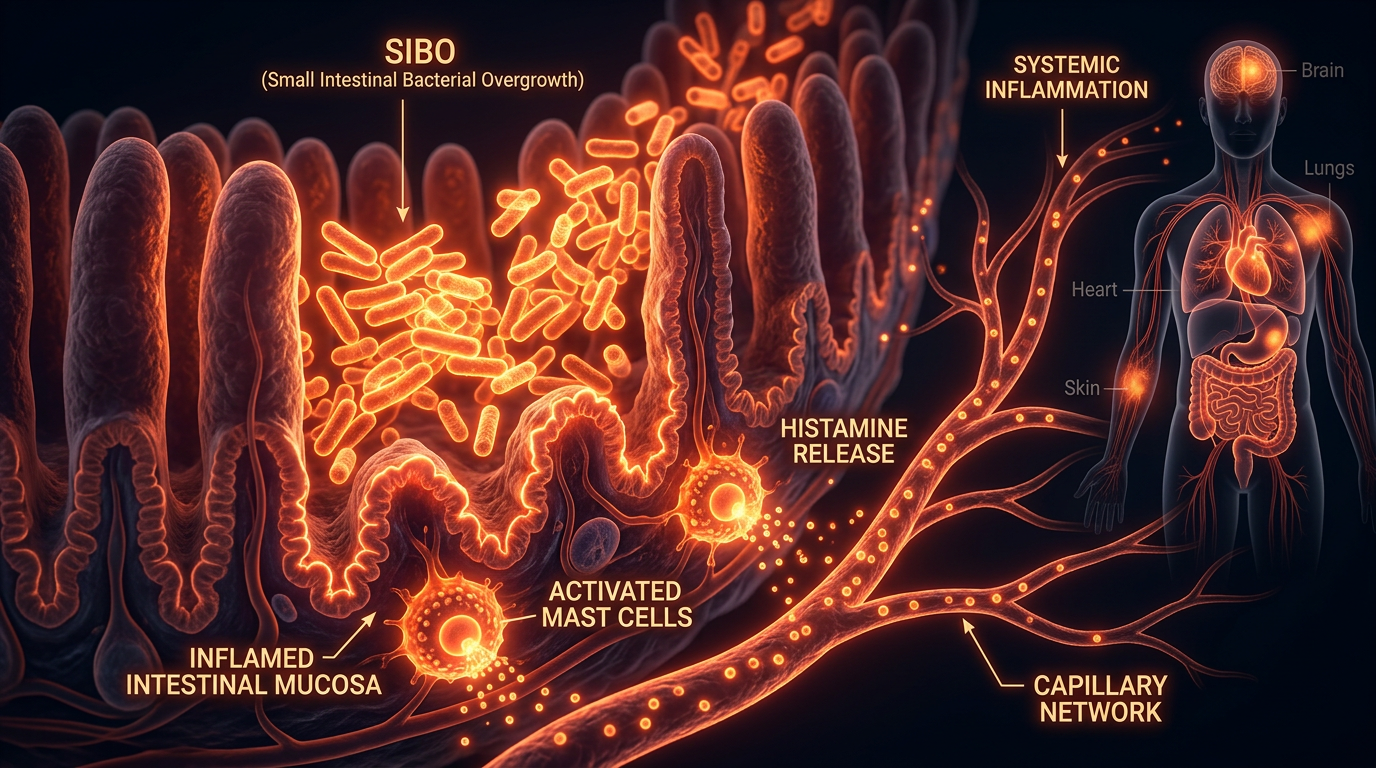
Specific SIBO bacteria produce histamine, while the inflammation they cause reduces the body's ability to break it down. This leads to a 'bucket overflowing' effect, resulting in hives, headaches, and palpitations.
Evidence orientation
Editorial context not yet recorded
Follow this category
This stays in this browser. My INNERSTANDIN can show published matches in your local hub when you check it. It does not send email, push, or alert notifications.
Local learning review
A private browser aid for revisiting ideas. It is not an alert or a health recommendation.
Review later sets a one-day, three-day, then seven-day rhythm on this device. Choose it only when you want to revisit this article.
Overview
In the modern landscape of chronic illness, few conditions are as pervasive, misunderstood, and systemic in their devastation as Histamine Intolerance (HIT). For decades, patients presenting with a disparate constellation of symptoms—ranging from sudden-onset hives and debilitating migraines to heart palpitations and chronic fatigue—have been shuffled through the revolving doors of clinical specialities. They are seen by dermatologists for their skin, neurologists for their headaches, and cardiologists for their tachycardia, yet the unifying catalyst remains hidden beneath the surface. At INNERSTANDING, we recognise that these symptoms are not isolated failures of individual organs, but rather the frantic signals of an internal regulatory system in total collapse.
Histamine Intolerance is not a traditional allergy. It is a metabolic imbalance—a state where the body’s "histamine bucket" has overflowed. While mainstream medicine frequently attempts to "mop the floor" by prescribing antihistamines, it consistently fails to ask why the tap is running so fast and why the drain is blocked. The answer, as current biological research increasingly confirms, lies within the intricate, coiled corridors of the small intestine. Specifically, the emergence of Small Intestinal Bacterial Overgrowth (SIBO) acts as both the primary source of exogenous histamine and the destroyer of the very enzymes designed to neutralise it.
This article serves as a definitive exploration into the mechanistic nexus between SIBO and systemic inflammation. We will dissect how a breakdown in the delicate microbial balance of the small bowel transforms a vital biological messenger—histamine—into a potent neurotoxin and inflammatory driver. We are witnessing a silent epidemic across the United Kingdom and the Western world, where the convergence of degraded food systems, antibiotic overuse, and environmental toxicants has rendered our internal ecosystems incapable of maintaining homeostasis. To understand Histamine Intolerance is to understand the fundamental fragility of the human-microbe interface.
##
The Biology — How It Works
To comprehend the pathology of Histamine Intolerance, one must first understand the physiological role of histamine itself. Histamine (2-(4-imidazolyl)ethylamine) is a biogenic amine involved in local immune responses, the regulation of physiological function in the gut, and acting as a neurotransmitter for the brain, spinal cord, and uterus. Under normal conditions, histamine is a friend; it triggers the gastric acid secretion necessary for protein digestion and acts as a vital alarm signal for the immune system to initiate repair.
However, the body maintains a strict threshold for histamine. This is regulated by a "supply and demand" architecture. Histamine enters the system through two primary routes: endogenous production (stored in mast cells and basophils) and exogenous ingestion (found in fermented foods, aged meats, and certain vegetables). To prevent this accumulation from becoming toxic, the body employs two primary degradation enzymes: Diamine Oxidase (DAO), which operates primarily in the extracellular space and the digestive tract, and Histamine N-methyltransferase (HNMT), which handles histamine within the cells, particularly in the central nervous system.
The "Bucket Theory" of histamine suggests that symptoms only manifest once the cumulative load of histamine from diet, environment, and internal production exceeds the body's total enzymatic capacity to degrade it.
In a healthy individual, the DAO enzyme produced in the brush border (the microvilli) of the small intestine acts as a sentinel, neutralising histamine from food before it can enter the bloodstream. When SIBO enters the equation, this sentinel is slaughtered. SIBO is characterised by the translocation of bacteria from the large intestine into the small intestine—an area that should be relatively sterile. These bacteria do not merely sit idly; they engage in high-speed fermentation of carbohydrates and, crucially, the decarboxylation of amino acids.
The biological failure occurs when specific strains of bacteria—such as Klebsiella pneumoniae, Morganella morganii, and certain Lactobacillus species—proliferate in the small bowel. These organisms possess the enzyme histidine decarboxylase (HDC), which allows them to convert the amino acid L-histidine (found in almost all proteins) into histamine. Consequently, the SIBO patient is not just reacting to "high-histamine foods"; they are hosting a 24-hour histamine factory within their own digestive tract. This constant internal secretion ensures the "bucket" is perpetually full, leaving the individual one bite of spinach or one stressful event away from a systemic inflammatory "spillover."
##
Mechanisms at the Cellular Level
The interplay between SIBO and histamine occurs at a granular, molecular level that dictates the severity of the patient's symptoms. When the small intestine is colonised by an overgrowth of Gram-negative bacteria, the primary consequence is the release of Lipopolysaccharides (LPS)—endotoxins found in the outer membrane of these bacteria.
The Destruction of the Brush Border
The small intestine’s lining is comprised of enterocytes featuring tiny, finger-like projections called villi. These villi are the primary site for DAO production. SIBO induces a state of chronic low-grade inflammation that leads to villous blunting or atrophy. As the surface area of the villi decreases, the production of DAO plummets. This creates a catastrophic feedback loop: the bacteria are producing more histamine, while the host's ability to produce the enzyme required to break it down is systematically destroyed by the presence of those very bacteria.
Mast Cell Activation Syndrome (MCAS) and the Cross-talk
Beyond the enzymatic deficiency, we must look at the Mast Cell. Mast cells are the primary storage sites for histamine in the body. They are strategically positioned at the interfaces between the host and the environment (skin, gut lining, respiratory tract). In the context of SIBO, the intestinal barrier becomes "leaky" (increased intestinal permeability). When LPS and bacterial metabolites leak into the lamina propria, they bind to Toll-Like Receptor 4 (TLR4) on mast cells.
This binding acts as a "red alert" signal, causing the mast cells to undergo degranulation. This process releases not just histamine, but a cocktail of pro-inflammatory cytokines, chemokines, and proteases. In a patient with SIBO-driven HIT, the mast cells are in a state of hyper-vigilance. They are being constantly "poked" by bacterial overgrowth, leading to systemic releases of histamine that affect distant organs. This explains why a gut-based issue can manifest as:
- Neurological: Vasodilation of cranial blood vessels via H1 and H2 receptors, leading to migraines.
- Cardiovascular: Activation of H2 receptors in the heart, causing tachycardia (palpitations) and arrhythmias.
- Dermatological: H1 receptor activation in the skin leading to pruritus (itching) and urticaria (hives).
The Genetic Component: SNPS and Vulnerability
While SIBO is the primary driver, individual susceptibility is often dictated by genetic polymorphisms (SNPs). Mutations in the AOC1 gene (which codes for DAO) or the HNMT gene can result in naturally lower "baseline" levels of these enzymes. For these individuals, a SIBO infection is not merely an inconvenience; it is a biological "perfect storm" that can lead to near-total disability, as their innate capacity to handle even small amounts of biogenic amines is genetically compromised.
##
Environmental Threats and Biological Disruptors
The rise of SIBO and Histamine Intolerance cannot be viewed in a vacuum. It is a direct consequence of the anthropogenic environment—the world we have built that is increasingly hostile to human biology. Several key disruptors act as catalysts, preparing the ground for SIBO to take root and for histamine pathways to fail.
The Antibiotic Paradox
The UK healthcare system has historically over-prescribed broad-spectrum antibiotics for minor viral infections. While these drugs are life-saving in acute scenarios, they act as "nuclear weapons" within the gut microbiome. By wiping out the commensal, protective bacteria in the colon, antibiotics create a "vacuum" that opportunistic, histamine-producing bacteria are all too happy to fill. Furthermore, antibiotics like metronidazole or certain cephalosporins have been shown to directly inhibit DAO activity, meaning the very "cure" offered for infection can trigger a lifetime of histamine intolerance.
Glyphosate and the Death of Tight Junctions
The prevalence of glyphosate (the active ingredient in common herbicides) in the British food supply is a significant, yet often ignored, factor. Glyphosate acts as a "stealth antibiotic," specifically targeting the Shikimate pathway in beneficial bacteria while leaving many pathogenic, histamine-producing strains unscathed. More alarmingly, glyphosate has been shown to disrupt zonulin levels, the protein responsible for regulating the tight junctions of the gut lining. This promotes "Leaky Gut," which, as established, is the primary trigger for mast cell degranulation and systemic histamine spillover.
Microplastics and Endocrine Disruptors
Emerging research suggests that microplastics—now found in the stool samples of almost every Western adult—act as physical irritants to the intestinal mucosa. These particles can adsorb persistent organic pollutants (POPs) and deliver them directly to the gut lining. These toxins act as endocrine disruptors, interfering with the hormonal regulation of the gut. Since oestrogen is a known potent trigger for mast cell degranulation (and histamine itself can stimulate oestrogen production), this creates a hormonal-histamine loop that particularly affects women, often manifesting as severe PMS or "histamine flares" during specific points in the menstrual cycle.
##
The Cascade: From Exposure to Disease
The progression from a healthy gut to a state of systemic Histamine Intolerance follows a predictable, albeit devastating, cascade. It rarely happens overnight; it is the result of years of cumulative biological insults.
Stage 1: The Inciting Incident
The cascade often begins with an "inciting incident" that slows down the Migrating Motor Complex (MMC). The MMC is the "inter-digestive housekeeper" of the small intestine—a wave of electrical activity that sweeps residual food and bacteria into the colon. Common triggers for MMC failure include:
- Food poisoning (Post-infectious IBS)
- Chronic stress (which shifts the body into a sympathetic state, halting digestion)
- Excessive snacking (which prevents the MMC from initiating)
Stage 2: Colonisation and Fermentation
With the "housekeeper" out of work, bacteria from the large intestine migrate upward. They begin to colonise the small intestine, where they feast on undigested starches and sugars. This leads to the classic SIBO symptoms: bloating, gas, and abdominal pain. However, it is the fermentation of proteins that starts the histamine clock. As these bacteria decarboxylate histidine, the small intestine becomes a reservoir of toxic amines.
Stage 3: Enzyme Failure and Permeability
The constant presence of these bacteria and their waste products (LPS) creates local inflammation. The DAO enzymes on the villi are "burned off" by the inflammatory fire. Simultaneously, the gut lining becomes permeable. Histamine, which should have been broken down in the gut or excreted, now has a "backstage pass" to the entire body. It enters the portal vein and moves into systemic circulation.
Stage 4: Systemic "Spillover"
The "bucket" is now full. The liver, tasked with processing these toxins via the HNMT pathway, becomes overwhelmed. Histamine begins to bind to receptors throughout the body. The patient experiences a "flare"—perhaps after a glass of red wine (high histamine) or a period of high stress (mast cell trigger).
- The brain experiences neuro-inflammation, leading to "brain fog" and cognitive decline.
- The lungs experience bronchoconstriction, mimicking asthma.
- The skin erupts in dermatitis or flushing.
- The heart experiences arrhythmia.
At this stage, the patient is often diagnosed with "anxiety" or "medically unexplained symptoms" because their bloodwork (standard CBC) typically appears normal. The mainstream narrative fails to look at the functional reality of the gut.
##
What the Mainstream Narrative Omits
The failure of modern allopathic medicine to address Histamine Intolerance and SIBO is not merely an oversight; it is a systemic blind spot born of a reductionist philosophy. The mainstream narrative views the body as a collection of separate parts rather than a deeply integrated biological web.
The Antihistamine Deception
The primary "solution" offered by GPs for histamine symptoms is the prescription of H1 blockers like Cetirizine or Loratadine. While these can provide temporary symptomatic relief by blocking the receptors, they do nothing to address the source of the histamine. In fact, long-term use of certain antihistamines can lead to a "rebound effect" where the body upregulates its receptors, making the patient even more sensitive over time. Furthermore, by masking the symptoms, these drugs allow the underlying SIBO to continue its destruction of the gut lining unchecked.
The "Allergy" Misnomer
Patients are often told that if their IgE skin prick tests are negative, they do not have a histamine issue. This is a dangerous falsehood. Histamine Intolerance is a pseudo-allergy. It is a quantitative issue (too much histamine), not a qualitative immune error (an IgE reaction to a specific protein). By dismissing patients who test negative for traditional allergies, the medical establishment leaves millions to suffer from "non-allergic rhinitis" or "idiopathic urticaria" without ever investigating the SIBO-DAO axis.
The Denial of SIBO
Until recently, many UK practitioners dismissed SIBO as a "naturopathic myth," despite decades of peer-reviewed evidence. Even now, the gold-standard test—the Lactulose Breath Test—is notoriously difficult to access on the NHS. Without a diagnosis of SIBO, the root cause of the histamine intolerance remains invisible, leading to years of unnecessary suffering and the progression of the disease into more severe autoimmune conditions.
##
The UK Context
The United Kingdom presents a unique and troubling environment for the proliferation of SIBO and Histamine Intolerance. Our dietary habits, healthcare structure, and environmental standards have created a "hot zone" for biogenic amine toxicity.
The "Ultra-Processed" Crisis
The UK consumes more ultra-processed food (UPF) than any other country in Europe. UPFs are typically low in the micronutrients required for DAO production (such as Vitamin B6, Vitamin C, Copper, and Zinc) and high in emulsifiers like carboxymethylcellulose and polysorbate 80. These emulsifiers have been proven to thin the protective mucus layer of the gut, allowing SIBO bacteria to adhere directly to the epithelial cells, accelerating inflammation and histamine release.
The NHS Backlog and "Functional" Gaps
The current state of the NHS means that a patient presenting with the "vague" symptoms of HIT—fatigue, bloating, and headaches—is likely to wait months for a referral, only to be given a 10-minute consultation that ignores the gut-brain-skin axis. This has led to a "diagnostic delay" of, on average, five to seven years for HIT sufferers.
In the UK, it is estimated that 1 in 10 people suffer from some form of SIBO, yet less than 5% of these cases are correctly identified in a primary care setting.
The British "Aged Food" Tradition
Culturally, the British diet is rich in high-histamine "staples" that act as triggers. From aged Cheddar cheeses and "real ales" to fermented vinegars and tinned fish, the traditional UK palate is a minefield for someone with a compromised DAO system. In a healthy gut, these foods are nutritious; in a SIBO-ravaged gut, they are inflammatory triggers.
##
Protective Measures and Recovery Protocols
Recovery from SIBO-induced Histamine Intolerance requires a multi-phasic, disciplined approach that moves beyond simple symptom management. It is about "emptying the bucket" while simultaneously "fixing the drain."
Phase 1: Immediate Burden Reduction (The Low-Histamine Diet)
This is a temporary measure designed to lower the systemic inflammatory load.
- Eliminate: Aged cheeses, alcohol (especially wine and beer), fermented foods (sauerkraut, kombucha), tinned fish, tomatoes, eggplant, and spinach.
- Prioritise: Freshly slaughtered meat (freezer-to-pan), fresh-caught white fish, gluten-free grains (if tolerated), and low-histamine vegetables like asparagus, courgette, and onions (which contain quercetin, a natural mast cell stabiliser).
Phase 2: Eradicating the Overgrowth (SIBO Treatment)
You cannot fix Histamine Intolerance without addressing the SIBO.
- Herbal Antimicrobials: Specific botanicals such as Allicin (from garlic), Berberine, and Neem have been shown to be as effective as pharmaceutical antibiotics (like Rifaximin) in reducing bacterial overgrowth without the same systemic collateral damage.
- Prokinetic Support: To prevent relapse, the Migrating Motor Complex must be restarted. Agents such as Ginger root extract or 5-HTP can help stimulate the "housekeeping" waves of the small intestine.
Phase 3: Enzymatic and Nutrient Support
We must provide the body with the raw materials to rebuild its defences.
- Exogenous DAO: Supplementing with Diamine Oxidase (derived from porcine kidney or legume sprouts) before meals can neutralise dietary histamine, preventing it from entering the bloodstream.
- Cofactor Repletion: DAO requires Vitamin B6, Vitamin C, Copper, and Magnesium to function. SIBO often causes malabsorption of these very nutrients, creating a deficiency-driven downward spiral.
- Mast Cell Stabilisation: Natural bioflavonoids like Quercetin and Luteolin can help "quiet" the hyper-reactive mast cells, reducing the amount of histamine they release in response to triggers.
Phase 4: Vagal Tone and Stress Management
The gut is inextricably linked to the nervous system. Chronic stress keeps the body in "fight or flight," which inhibits the production of stomach acid and bile—the body’s natural disinfectants for the small intestine.
- Vagus Nerve Stimulation: Techniques such as cold water immersion, gargling, and diaphragmatic breathing can help shift the body into the parasympathetic "rest and digest" state, allowing the gut lining to heal.
##
Summary: Key Takeaways
The connection between SIBO and Histamine Intolerance represents a paradigm shift in our understanding of systemic disease. It teaches us that the "location" of a symptom is rarely the "location" of the cause.
- SIBO is a Histamine Factory: The overgrowth of bacteria in the small intestine produces massive amounts of histamine through the decarboxylation of amino acids.
- Inflammation Destroys the Shield: The chronic inflammation caused by SIBO blunts the intestinal villi, leading to a catastrophic drop in the DAO enzyme needed to break down histamine.
- The "Bucket" is the Key: Symptoms occur when the cumulative load of internal production (SIBO), dietary intake, and mast cell release exceeds the body's enzymatic capacity.
- Mainstream Medicine is Failing: Focusing on antihistamines is a temporary "band-aid" that ignores the underlying bacterial dysbiosis and the environmental toxins driving it.
- Recovery is Possible: By eradicating SIBO, supporting the DAO enzyme, and stabilising mast cells, individuals can move from a state of systemic reactivity to one of vibrant health.
At INNERSTANDING, we believe that true health is only possible when we look past the superficial symptoms and confront the biological truths of our internal ecosystems. Histamine Intolerance is not a life sentence; it is an urgent call to restore the integrity of the human gut. The path to recovery is complex and requires a rejection of the "quick fix" culture, but for those willing to do the work, the reward is a return to a life free from the fog of systemic inflammation.
This article is provided for informational and educational purposes only. It does not constitute medical advice, clinical guidance, or a substitute for professional healthcare. Information reflects cited research at time of publication. Always consult a qualified healthcare professional before acting on any health information.
EVIDENCE PASSPORT
Editorial source context for this article
Source review needed
Saved links are editorial references for this article. They may support specific claims rather than every sentence. Open and assess each source in context. This passport does not independently verify them.
Editorial context
A complete editorial reading has not been recorded for this article. Source links remain available for you to open and assess directly.
Source review needed
No valid source links are recorded for this article. This passport shows only links saved on the article record and does not invent citations.
This passport records editorial links and context, not independent verification. Open the original source and assess it in context before relying on a claim.
Medical Disclaimer
The information in this article is for educational purposes only and does not constitute medical advice, diagnosis, or treatment. Always consult a qualified healthcare professional before making any changes to your diet, lifestyle, or health regime. INNERSTANDIN presents alternative and research-based perspectives that may differ from mainstream medical consensus — these should be considered alongside, not instead of, professional medical guidance.
Read Full DisclaimerContinue the thread
Keep this question moving.
Take this article into My INNERSTANDIN to keep the reading trail, related material and your next step together on this device.