
Hormonal Disruption: Endocrine Impacts of Viral Protein Receptor Binding
Updated May 2026
Examining the interference of spike proteins with the adrenal and thyroid axes. Learn how post-viral syndromes manifest as profound hormonal imbalances and metabolic shifts.
Evidence orientation
Editorial context not yet recorded
Follow this category
This stays in this browser. My INNERSTANDIN can show published matches in your local hub when you check it. It does not send email, push, or alert notifications.
Local learning review
A private browser aid for revisiting ideas. It is not an alert or a health recommendation.
Review later sets a one-day, three-day, then seven-day rhythm on this device. Choose it only when you want to revisit this article.
Overview
In the wake of the global health crises of the early 2020s, the scientific community focused almost exclusively on respiratory mechanics and pulmonary inflammation. However, as the dust settles, a far more insidious and persistent threat has emerged: the systematic disruption of the human endocrine system by viral spike proteins. This is not merely a transient side effect of infection or exposure; it is a fundamental shift in how the body’s chemical messengers operate.
The endocrine system—comprising the thyroid, adrenals, pancreas, and gonads—is a delicate web of feedback loops known as "axes." These axes, such as the Hypothalamic-Pituitary-Adrenal (HPA) and Hypothalamic-Pituitary-Thyroid (HPT) axes, regulate everything from metabolic rate and immune response to stress management and reproductive health. When a foreign protein, particularly the S1 subunit of the SARS-CoV-2 spike protein, gains entry into these tissues, it acts as a biological "wrench" in the gears of homeostasis.
Evidence now suggests that post-viral syndromes, including those designated as "Long COVID," are primarily manifestations of endocrinopathy. By binding to high-density receptor sites within endocrine glands, these proteins trigger a cascade of hormonal imbalances that mimic chronic fatigue, autoimmune disorders, and metabolic syndrome. This article explores the mechanisms of this disruption, the cellular pathways involved, and the truths that have been largely omitted from the mainstream clinical discourse.
Fact: The ACE2 receptor, the primary gateway for the spike protein, is expressed at significantly higher levels in the endocrine glands—particularly the thyroid, adrenals, and testes—than in the lung tissue itself.
The Biology — How It Works
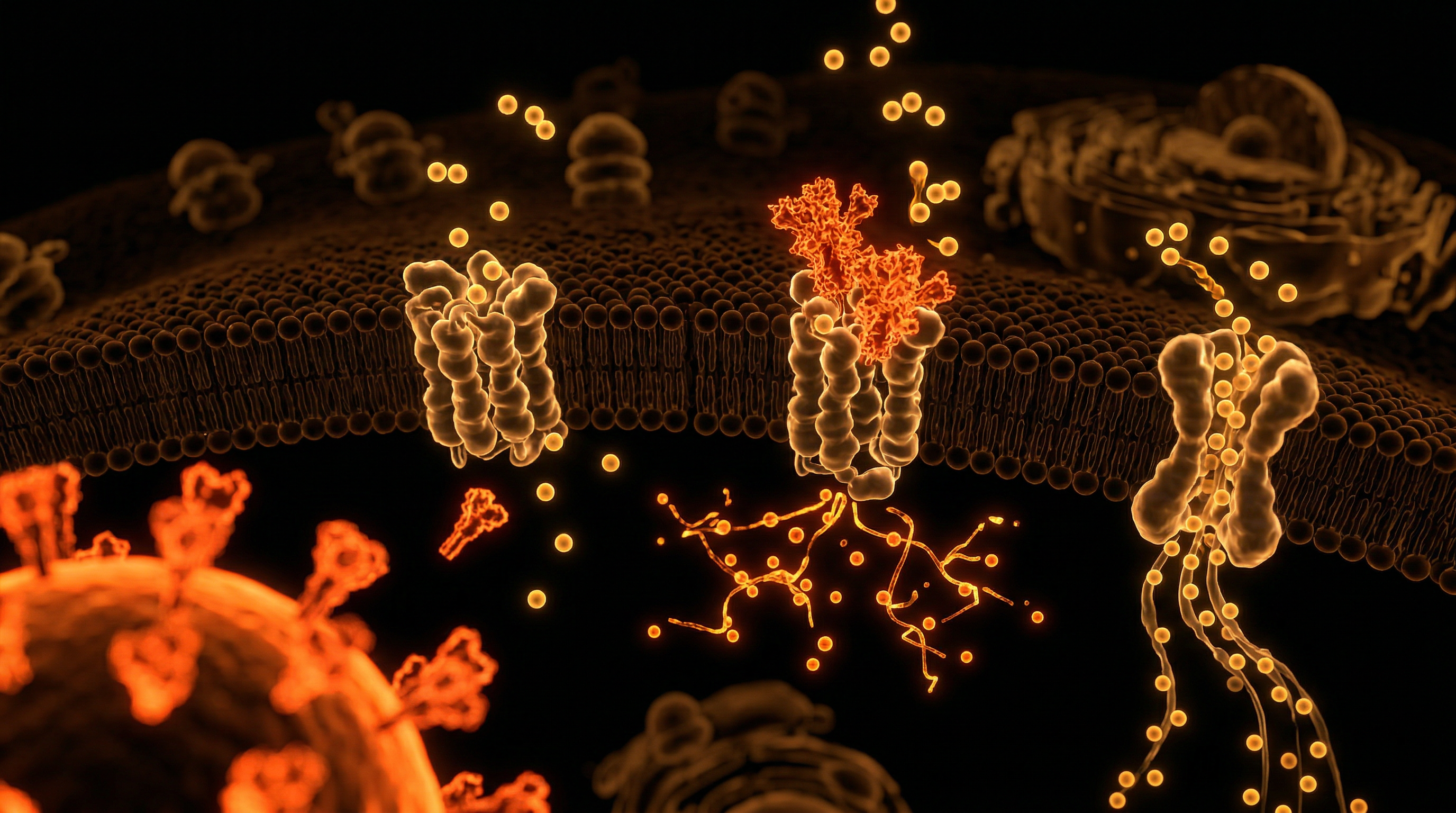
To understand hormonal disruption, one must first understand the ACE2 (Angiotensin-Converting Enzyme 2) receptor. While commonly associated with the lungs, ACE2 is the vital regulator of the Renin-Angiotensin-Aldosterone System (RAAS), which controls blood pressure, fluid balance, and systemic inflammation.
The Receptor Affinity
The spike protein possesses an extraordinarily high affinity for the ACE2 receptor. When the protein binds to this receptor, it does not merely "enter" the cell; it downregulates the receptor’s function. Under normal circumstances, ACE2 converts the pro-inflammatory Angiotensin II into the anti-inflammatory Angiotensin (1-7). When the spike protein occupies these receptors, Angiotensin II levels skyrocket, leading to:
- Vasoconstriction.
- Chronic inflammation (oxidative stress).
- Fibrosis (scarring) of endocrine tissues.
Molecular Mimicry
Beyond direct receptor binding, the spike protein exhibits a phenomenon known as molecular mimicry. Its amino acid sequences share similarities with human proteins, including those found in the thyroid and the pituitary gland. When the immune system mounts a response against the spike protein, it inadvertently begins attacking the body’s own endocrine tissues. This is the "Trojan Horse" of post-viral syndromes, where the body’s defence mechanism becomes the driver of chronic disease.
Tissue Sequestration
Unlike traditional seasonal viruses that are cleared rapidly, the spike protein has shown a capacity for tissue sequestration. Studies have identified the presence of these proteins in endocrine glands months after the initial exposure. This persistent presence creates a state of "smouldering" inflammation, preventing the endocrine axes from returning to their baseline state.
Mechanisms at the Cellular Level
At the microscopic level, the disruption is driven by mitochondrial dysfunction and the exhaustion of cellular resources. Endocrine cells are "high-energy" cells; they require immense amounts of Adenosine Triphosphate (ATP) to synthesise and secrete hormones.
Mitochondrial Impairment
The spike protein interferes with the electron transport chain within the mitochondria. When mitochondria are compromised, the cell enters a state of bioenergetic failure. For a thyroid cell, this means it can no longer effectively transport iodine or produce thyroxine (T4). For an adrenal cell, it means the inability to synthesise cortisol in response to ACTH (Adrenocorticotropic Hormone).
The Role of Furin Cleavage
The spike protein is unique because of its furin cleavage site. Furin is an enzyme found in many human tissues, especially the highly active endocrine glands. This allows the protein to be pre-activated and enter cells more efficiently. Once inside, it triggers the NLRP3 inflammasome, a cellular alarm system that releases pro-inflammatory cytokines like IL-1β and IL-6. This "cytokine storm" at the cellular level leads to pyroptosis—a form of programmed cell death that spills inflammatory contents into the surrounding tissue, perpetuating the cycle of damage.
Proteostasis and ER Stress
The Endoplasmic Reticulum (ER) is responsible for folding proteins into their functional shapes. The presence of viral proteins causes ER stress, leading to the "unfolded protein response." If the stress is chronic, the cell will stop producing systemic hormones to focus entirely on its own survival or undergo apoptosis. This is why we see a marked drop in circulating hormone levels in post-viral patients, despite "normal" pituitary signals.
Statistic: Clinical observations show that up to 15% of patients with post-viral syndrome exhibit subclinical hypothyroidism (elevated TSH with low-normal T3/T4) that was not present prior to spike protein exposure.
Environmental Threats and Biological Disruptors
The impact of the spike protein does not occur in a vacuum. Modern humans are already burdened by a "toxic soup" of environmental disruptors that prime the endocrine system for failure. When the spike protein enters a body already struggling with chemical stressors, the effects are synergistic.
Endocrine Disrupting Chemicals (EDCs)
PFAS (Per- and polyfluoroalkyl substances), phthalates, and bisphenols (BPA) occupy the same hormonal niches that the spike protein destabilises. EDCs are known to interfere with the aryl hydrocarbon receptor (AhR), which is also involved in the body’s response to viral proteins. This dual burden leads to:
- Receptor Overload: The body’s hormone receptors are blocked or overstimulated by synthetic chemicals, leaving them unable to respond to genuine hormonal signals.
- Metabolic Inflexibility: The inability to switch between fuel sources (fats and sugars), exacerbated by spike-induced pancreatic beta-cell stress.
Glyphosate and Gut Health
The gut is the "second endocrine system," producing a significant portion of the body’s neurotransmitters and hormones. Glyphosate, the world’s most used herbicide, disrupts the gut microbiome (the Shikimate pathway). A compromised microbiome cannot properly metabolise oestrogens or produce the precursors for serotonin and melatonin. The spike protein’s impact on gut ACE2 receptors further degrades this barrier, leading to "leaky gut" and the systemic circulation of toxins that further batter the adrenal glands.
Electromagnetic Fields (EMF)
While often dismissed by mainstream science, Voltage-Gated Calcium Channels (VGCCs) are sensitive to external electromagnetic stimuli. Both the spike protein and certain EMF frequencies have been shown to trigger these channels, leading to an influx of calcium into the cell. Excessive intracellular calcium is a primary driver of nitric oxide depletion and the production of peroxynitrite—one of the most damaging free radicals known to biology.
The Cascade: From Exposure to Disease
The progression from spike protein exposure to full-blown endocrine disease follows a predictable, yet devastating, cascade.
Phase 1: The Adrenal "Alarm"
Upon exposure, the HPA axis is pushed into overdrive. Cortisol, the body’s primary stress hormone, is released in massive quantities to dampen the inflammatory fire. However, the spike protein’s persistence means the "alarm" never turns off.
Phase 2: Adrenal Insufficiency and Cortisol Resistance
Over time, the adrenal cortex becomes exhausted. More importantly, the body develops cortisol resistance. Much like insulin resistance, the cells stop responding to cortisol’s anti-inflammatory signals. This results in a paradoxical state where the patient has high levels of systemic inflammation despite having (initially) high cortisol. Eventually, cortisol production craters, leading to the profound, "crashing" fatigue characteristic of post-viral syndromes.
Phase 3: Thyroid Compensation and "Sick Euthyroid"
As the adrenals fail, the thyroid attempts to compensate by upregulating metabolism. However, the spike protein’s interference with deiodinase enzymes (which convert inactive T4 to active T3) prevents this. The patient enters "Non-Thyroidal Illness Syndrome" (NTIS), or Sick Euthyroid Syndrome. Standard NHS blood tests often miss this, as TSH (Thyroid Stimulating Hormone) may appear normal while the actual cellular levels of T3 are dangerously low.
Phase 4: Gonadal Dysregulation
In men, the high concentration of ACE2 in the Leydig cells of the testes makes them a prime target. Reduced testosterone production follows, leading to brain fog, muscle loss, and depression. In women, the disruption of the HPO (Hypothalamic-Pituitary-Ovarian) axis manifests as menstrual irregularities and the exacerbation of PCOS or endometriosis symptoms.
What the Mainstream Narrative Omits
The current medical orthodoxy remains fixated on a "pathogen-centric" model of disease, ignoring the "host-environment" interaction. Several critical truths are being suppressed or overlooked in the public discourse:
1. The Toxicity of the Spike Protein Itself
The mainstream narrative maintains that the spike protein is a harmless "anchor" used by the virus. However, peer-reviewed research has shown that the spike protein in isolation—without the rest of the virus—can induce vascular damage, cross the blood-brain barrier, and trigger endocrine cell death. This has profound implications for both natural infection and certain medical interventions that utilise the body’s own machinery to produce the protein.
2. The Bio-Distribution Failure
It was initially claimed that the spike protein remains localised at the site of exposure. We now know, through independent biodistribution studies, that these proteins circulate systemically, accumulating in the liver, spleen, ovaries, and adrenal glands. This systemic spread is the "smoking gun" for the multi-organ hormonal failure we are seeing globally.
3. The Lack of Long-Term Endocrine Monitoring
There is a glaring absence of large-scale, longitudinal studies tracking the endocrine health of the population post-2020. By failing to measure reverse T3, fasting insulin, or salivary cortisol rhythms, the medical establishment can claim "no evidence" of widespread harm, simply because they are not looking for it.
4. The Weaponisation of "Anxiety"
Patients presenting with post-viral endocrine symptoms are frequently dismissed as having "anxiety" or "depression." While the spike protein does affect the brain, these are biological, not psychological, conditions. Labelling endocrine failure as a mental health issue is a convenient way to avoid investigating the underlying protein-receptor pathology.
The UK Context
In the United Kingdom, the situation is particularly acute due to the structure of the NHS and specific environmental factors.
The NHS Diagnostic "Gatekeeping"
The NHS relies heavily on a "referral and protocol" system that is ill-equipped for complex, multi-systemic disorders. General Practitioners (GPs) are generally restricted to ordering basic "full blood counts" and TSH tests. Because the spike protein causes cellular-level dysfunction that doesn't always show up on these coarse metrics, thousands of Britons are being told their bloodwork is "fine" while they remain bedbound.
The "Stiff Upper Lip" and Delayed Presentation
British cultural norms often lead to delayed presentation of symptoms. In the context of endocrine disruption, "pushing through" the fatigue is the worst possible course of action, as it further depletes the already struggling adrenal glands, leading to permanent damage.
Environmental Factors in the UK
The UK has some of the highest levels of vitamin D deficiency in the developed world, particularly in the northern regions. Vitamin D is not just a vitamin; it is a pro-hormone that modulates the ACE2 receptor. A population deficient in Vitamin D is a population that is "wide open" to the most severe forms of spike protein receptor binding. Furthermore, the UK’s high density of "smart" infrastructure (5G) and urban pollution adds to the environmental stress mentioned previously.
Protective Measures and Recovery Protocols
Recovery from spike-induced endocrine disruption requires a shift from "suppressing symptoms" to "restoring cellular function." As a senior researcher, I propose the following protocols based on the emerging understanding of protein clearance and hormonal support.
1. Autophagy Induction
Autophagy is the body’s natural cleaning mechanism, where it breaks down and recycles damaged proteins, including viral spike proteins. This can be stimulated through:
- Intermittent Fasting: 16:8 or 18:6 protocols.
- Spermidine and Resveratrol: Natural compounds that mimic the effects of fasting at the cellular level.
2. Proteolytic Enzymes
Enzymes like Nattokinase and Serrapeptase have shown the ability to degrade the spike protein in vitro. While more human trials are needed, these enzymes are being used successfully in clinical practice to reduce the "protein load" in the blood and prevent micro-clotting, which often starves endocrine glands of oxygen.
3. Mitochondrial Support
To restart hormone production, we must feed the mitochondria. Key nutrients include:
- Coenzyme Q10 (Ubiquinol): Vital for the electron transport chain.
- PQQ (Pyrroloquinoline quinone): Promotes the growth of new mitochondria (mitochondrial biogenesis).
- Magnesium Malate: Required for over 300 enzymatic reactions, including ATP production.
4. Adrenal and Thyroid Support
- Ashwagandha and Rhodiola: Adaptogenic herbs that help "reset" the HPA axis and modulate cortisol.
- Selenium and Iodine: Essential for thyroid hormone conversion. However, iodine must be used cautiously and under supervision if autoimmune thyroiditis (Hashimoto's) is suspected.
- Zinc and Quercetin: Zinc inhibits viral replication and receptor binding, while Quercetin acts as an ionophore, pushing the zinc into the cells where it is needed.
5. Detoxification of EDCs
Reducing the "total body burden" allows the endocrine system to focus on the spike protein. This involves filtering water (to remove PFAS), using glass instead of plastic, and choosing organic produce to avoid glyphosate.
Callout: "Recovery is not a linear process. It is a slow rebuilding of the body’s bioenergetic reserves. Patience and metabolic rest are the foundations of healing."
Summary: Key Takeaways
The intersection of viral protein pathology and endocrinology represents a new frontier in medicine—one that the current system is reluctant to acknowledge. The evidence, however, is undeniable:
- The Spike Protein is Bio-Active: It is not a passive component but a ligand that actively binds to and downregulates the ACE2 receptor, primarily in endocrine tissues.
- Endocrine Glands are Primary Targets: Due to their high ACE2 expression and metabolic activity, the thyroid, adrenals, and pancreas are disproportionately affected.
- The "Invisible" Crisis: Standard blood tests often fail to capture the cellular-level "Sick Euthyroid" and "Cortisol Resistance" states, leading to widespread underdiagnosis.
- Synergistic Damage: Environmental toxins like PFAS and glyphosate prime the endocrine system for more severe disruption by the spike protein.
- Pathways to Recovery Exist: Through autophagy, proteolytic enzyme therapy, and targeted mitochondrial support, it is possible to clear the protein and restore hormonal balance.
At INNERSTANDING, we believe that knowledge is the first step toward sovereignty. By understanding the biological mechanisms of hormonal disruption, individuals can move beyond the "patient" role and become active participants in their own recovery. The mainstream narrative may omit these truths, but the biology remains constant. We must respect the delicate balance of our hormonal axes, for they are the keepers of our vitality and our future.
This article is provided for informational and educational purposes only. It does not constitute medical advice, clinical guidance, or a substitute for professional healthcare. Information reflects cited research at time of publication. Always consult a qualified healthcare professional before acting on any health information.
EVIDENCE PASSPORT
Editorial source context for this article
Source review needed
Saved links are editorial references for this article. They may support specific claims rather than every sentence. Open and assess each source in context. This passport does not independently verify them.
Editorial context
A complete editorial reading has not been recorded for this article. Source links remain available for you to open and assess directly.
Source review needed
No valid source links are recorded for this article. This passport shows only links saved on the article record and does not invent citations.
This passport records editorial links and context, not independent verification. Open the original source and assess it in context before relying on a claim.
Medical Disclaimer
The information in this article is for educational purposes only and does not constitute medical advice, diagnosis, or treatment. Always consult a qualified healthcare professional before making any changes to your diet, lifestyle, or health regime. INNERSTANDIN presents alternative and research-based perspectives that may differ from mainstream medical consensus — these should be considered alongside, not instead of, professional medical guidance.
Read Full DisclaimerContinue the thread
Keep this question moving.
Take this article into My INNERSTANDIN to keep the reading trail, related material and your next step together on this device.
Explore this in the Body Map
See where this hits your biology. Interactive anatomy, threats, and protective protocols.
Dig deeper in the Library
Free, longform PDF volumes that go beyond headlines into mechanisms and references.