
Hormonal Hijack: Estrogenic Mimicry in UK Soy and Maize Imports
Updated May 2026
Imported soy and maize used in UK food manufacturing often carry residues that mimic natural hormones. These endocrine disruptors can interfere with pubertal development and reproductive cycles.
Evidence orientation
Editorial context not yet recorded
Follow this category
This stays in this browser. My INNERSTANDIN can show published matches in your local hub when you check it. It does not send email, push, or alert notifications.
Local learning review
A private browser aid for revisiting ideas. It is not an alert or a health recommendation.
Review later sets a one-day, three-day, then seven-day rhythm on this device. Choose it only when you want to revisit this article.
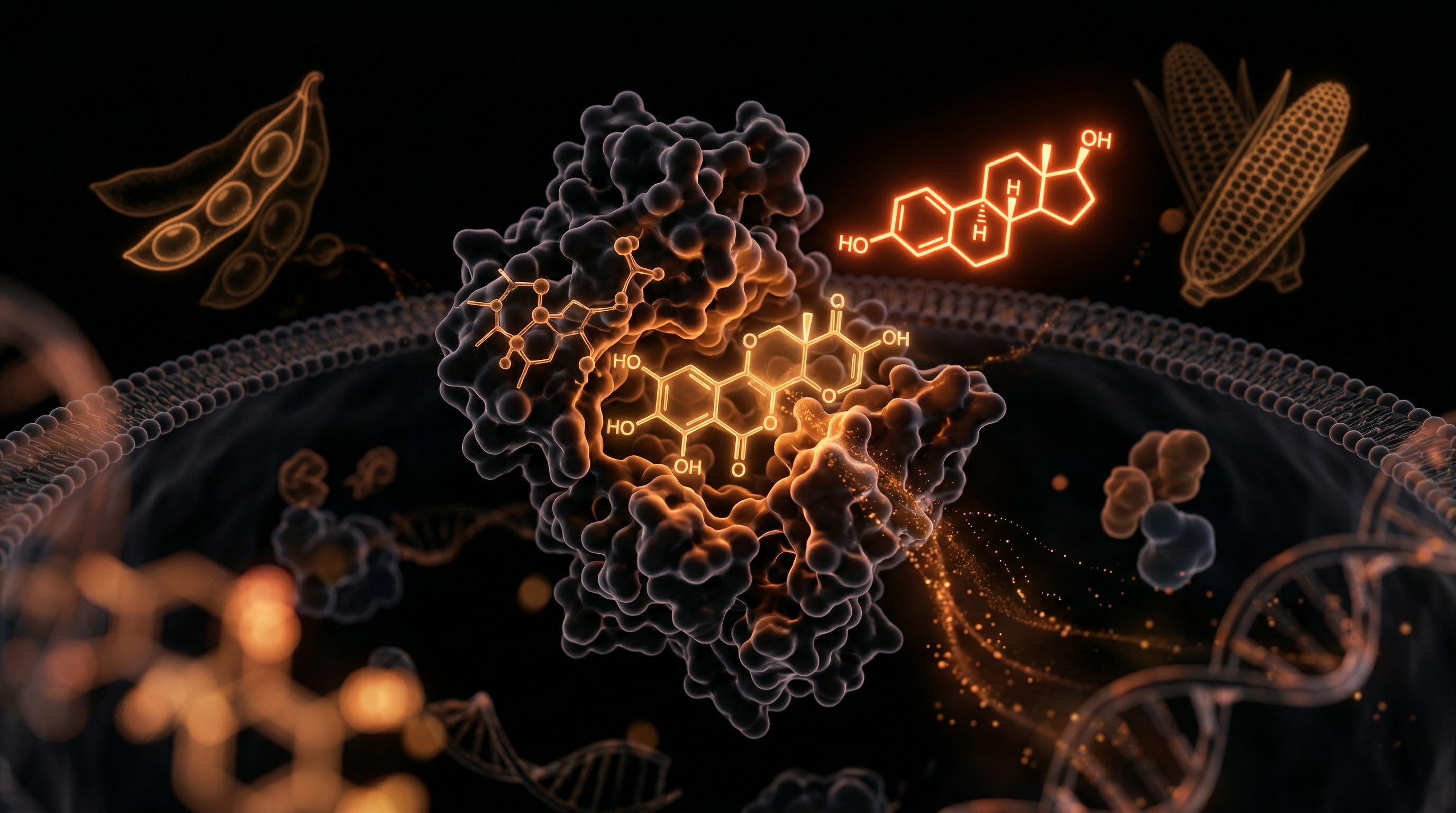
The modern British diet is no longer a simple matter of domestic produce and seasonal availability. Beneath the surface of our supermarket shelves lies a complex, invisible network of global supply chains that ferry millions of tonnes of soy and maize into the United Kingdom annually. While these crops serve as the foundational calories for both human processed foods and the livestock that populate our meat and dairy aisles, they carry a clandestine biological burden.
Recent toxicological analyses and endocrinological research suggest that we are currently participating in a massive, uncontrolled biological experiment. Imported soy and maize, predominantly sourced from the Americas, are frequently saturated with Endocrine Disrupting Chemicals (EDCs) and high concentrations of phytoestrogens. These substances do not merely pass through the human body; they mimic, block, or interfere with the delicate hormonal signalling pathways that govern human growth, reproduction, and metabolic health. This article explores the systemic "hormonal hijack" occurring within the UK population, driven by the residues of industrial agriculture.
Overview
The United Kingdom is a net importer of calories. Specifically, the UK relies heavily on imported soy for animal feed—approximately 3.5 million tonnes per year—and maize for a staggering variety of applications, from high-fructose corn syrups to thickening agents and starches. The vast majority of these imports originate from countries like Brazil, Argentina, and the USA, where agricultural regulations regarding pesticide residues and Genetically Modified (GM) traits are significantly more permissive than those historically maintained within the European sphere.
The core of the issue is Estrogenic Mimicry. Our endocrine system operates on a "lock and key" mechanism, where tiny amounts of hormones (like oestradiol) trigger profound physiological changes. However, foreign compounds found in these imported crops—both natural isoflavones and synthetic pesticide residues—are shaped similarly enough to the "key" that they can turn on these biological switches at the wrong time, in the wrong amounts, or in the wrong tissues.
Key Statistic: According to data from the Expert Committee on Pesticide Residues in Food (PRiF), a significant percentage of imported grain samples contain multiple residues, creating a "cocktail effect" that is rarely accounted for in individual safety assessments.
This "hijack" is not an acute poisoning but a chronic, low-dose exposure that alters the fundamental hormonal milieu of the British public. From the rising rates of precocious puberty in girls to the precipitous decline in male fertility and the surge in metabolic dysfunction, the fingerprints of estrogenic mimicry are everywhere.
The Biology — How It Works
To understand the hormonal hijack, one must first understand the Endocrine System. This system is a network of glands that produce hormones: the chemical messengers of the body. These messengers control everything from heart rate and metabolism to the timing of puberty and the maintenance of pregnancy.
The Oestrogen Receptor (ER)
The primary targets of these mimics are the Oestrogen Receptors, specifically ERα and ERβ. These receptors are located throughout the body—not just in reproductive organs, but in the brain, bone, liver, and cardiovascular system. When an oestrogen-like molecule enters the body, it can bind to these receptors.
- Agonism: The mimic activates the receptor, sending a signal as if natural oestrogen were present.
- Antagonism: The mimic blocks the receptor, preventing the body’s natural hormones from doing their job.
Phytoestrogens vs. Xenoestrogens
In the context of soy and maize imports, the body faces a dual assault:
- Phytoestrogens: These are naturally occurring plant compounds, such as genistein and daidzein, found in high concentrations in soy. While often marketed as "healthy," in the context of high-volume, processed soy imports (like Soy Protein Isolate), these compounds can reach levels that significantly disrupt human hormonal balance.
- Xenoestrogens: These are synthetic chemicals, primarily pesticide residues like Glyphosate, Atrazine, and various organophosphates. These molecules are potent endocrine disruptors that mimic oestrogen with a high affinity for receptors, often being far more difficult for the liver to detoxify than natural plant compounds.
The Concept of "Total Oestrogenic Load"
The human body is evolved to handle fluctuations in endogenous hormones. It is not evolved to handle the Total Oestrogenic Load imposed by the modern industrial diet. When we consume meat from animals raised on oestrogen-rich soy meal, combined with processed foods containing maize-derived fillers and soy emulsifiers, the cumulative effect is a state of "Estrogen Dominance."
Mechanisms at the Cellular Level
The interference does not stop at the receptor binding site. The molecular mimicry extends deep into the cell's machinery, affecting gene expression and signal transduction.
Nuclear Receptor Signalling
Once an estrogenic mimic binds to a receptor in the cytoplasm, the complex moves into the nucleus of the cell. Here, it binds to specific sequences of DNA known as Estrogen Response Elements (EREs). This initiates the transcription of genes that would normally only be active under specific physiological conditions. In children, this can prematurely trigger the biological "clocks" that initiate puberty.
Epigenetic Modifications
One of the most concerning aspects of estrogenic mimicry is Epigenetic Programming. Research suggests that exposure to EDCs in soy and maize can lead to "marks" on the DNA (methylation or histone acetylation) that change how genes are expressed for the rest of a person's life.
Scientific Fact: Exposure to estrogenic mimics during critical windows of development—such as in utero or during early childhood—can permanently re-programme the endocrine system, increasing the risk of cancers and reproductive disorders decades later.
Disrupting the HPG Axis
The Hypothalamic-Pituitary-Gonadal (HPG) axis is the master control loop for reproductive hormones. When the hypothalamus senses high levels of "oestrogen" (even if it is actually a chemical mimic from maize pesticide residues), it reduces its production of Gonadotropin-Releasing Hormone (GnRH). This, in turn, tells the pituitary to stop stimulating the testes or ovaries. In men, this leads to suppressed testosterone production and reduced spermatogenesis.
Environmental Threats and Biological Disruptors
The soy and maize entering the UK are rarely "clean" crops. They are products of a chemical-intensive agricultural model. The residues found on these imports act as powerful Biological Disruptors.
Glyphosate: More than just a Weedkiller
Glyphosate (the active ingredient in Roundup) is used extensively on GM soy and maize. While the industry claims it is safe for humans because we lack the "shikimate pathway" found in plants, recent research identifies it as a potential endocrine disruptor. It has been shown to interfere with aromatase—the enzyme that converts androgens into oestrogens—thereby skewing the delicate balance of sex hormones in both men and women.
Atrazine: The Chemical Castrator
Though banned for use in the UK, Atrazine is still widely used in maize production in the US and South America. Residues of Atrazine on imported maize products are a major concern. Atrazine is notorious in the scientific community for its ability to induce "chemical castration" in amphibians by upregulating aromatase, and similar pathways are suspected in humans.
The "Cocktail Effect" in UK Imports
Regulatory bodies often set Maximum Residue Levels (MRLs) for individual chemicals. However, they rarely consider the synergistic effects of multiple chemicals. A shipment of Brazilian soy may contain residues of five different pesticides. While each might be below the legal limit, their combined estrogenic potency can be exponential.
- Synergy: 1 + 1 = 10. Two chemicals that are harmless individually can become highly toxic when combined.
- Persistence: Many of these xenoestrogens are "lipophilic," meaning they store themselves in the fat tissues of the animals we eat and, eventually, in our own bodies.
The Cascade: From Exposure to Disease
The result of this sustained estrogenic mimicry is a "cascade" of physiological failures. We are seeing a shift in the very biological fabric of the UK population.
Precocious Puberty
In the UK, the average age of the onset of puberty in girls has been steadily declining. Early breast development (thelarche) is now frequently seen in girls as young as seven or eight. This is strongly correlated with the consumption of processed foods high in soy isoflavones and the presence of xenoestrogens in the food supply. Early puberty is not merely a social inconvenience; it is linked to a higher risk of breast cancer and psychological distress later in life.
The Decline of the British Male
Male fertility in the UK and across the West is in a state of collapse. Sperm counts have dropped by over 50% in the last four decades. Estrogenic mimicry is a primary suspect.
- Cryptorchidism: Undescended testes in newborn boys are rising.
- Gynaecomastia: The development of breast tissue in men (popularly termed "man boobs") is a direct physical manifestation of oestrogen dominance.
Metabolic Syndrome and Obesity
Oestrogen is a "pro-growth" hormone. When the body is flooded with mimics, it signals the adipose tissue (fat) to expand, particularly around the midsection. Furthermore, xenoestrogens are often "obesogens"—chemicals that disrupt the metabolic rate and insulin sensitivity. This creates a vicious cycle: excess fat tissue produces even more oestrogen via aromatase, further deepening the hormonal hijack.
Callout: The "beer belly" is often less about the calories in the alcohol and more about the estrogenic residues in the grains and the disruption of the liver’s ability to clear hormones.
What the Mainstream Narrative Omits
The mainstream health narrative in the UK—driven by government bodies and corporate-funded "charities"—frequently ignores the role of agricultural residues in chronic disease.
The "Safe Level" Fallacy
The UK's Food Standards Agency (FSA) and other bodies rely on outdated toxicological models that assume "the dose makes the poison." This is fundamentally incorrect for endocrine disruptors. EDCs often exhibit a non-monotonic dose-response. This means they can be more dangerous at extremely low doses than at high doses, because they are "heard" by the body's sensitive receptors as a signal rather than a toxin.
The Shielding of the Livestock Industry
The UK's meat industry is entirely dependent on imported soy. If the public were to understand the level of estrogenic residues in the feed used for British poultry and pork, the economic fallout would be massive. Consequently, there is little incentive for the government to mandate rigorous testing for these compounds in animal feed imports.
Regulatory Capture
Many of the scientists sitting on the boards that determine "safe" pesticide levels have ties to the agro-chemical industry. This regulatory capture ensures that as long as a chemical doesn't cause immediate, acute death, it is allowed to remain in the food chain, regardless of its long-term hormonal impact.
The UK Context
Post-Brexit, the UK is in an increasingly precarious position regarding food safety. As we move away from EU-aligned standards and seek new trade deals with the US and the CPTPP (Comprehensive and Progressive Agreement for Trans-Pacific Partnership), the pressure to accept lower-standard agricultural imports is immense.
The "Soya Secret"
The UK imports vast quantities of soy from the Amazon and the Cerrado in Brazil. Not only is this an environmental catastrophe (deforestation), but these regions use pesticides that are strictly forbidden in the UK. By importing the crop, we are essentially "outsourcing" the pollution and then "importing" the biological consequences.
Maize and the Ultra-Processed Food (UPF) Crisis
British supermarkets are currently filled with Ultra-Processed Foods (UPFs). A quick scan of labels reveals "maize starch," "modified corn flour," and "soy lecithin" in almost everything. These are the primary delivery vehicles for estrogenic mimics. The UK has one of the highest consumptions of UPFs in Europe, which correlates directly with our rising rates of endocrine-related illnesses.
- The NHS Burden: The cost of treating PCOS (Polycystic Ovary Syndrome), endometriosis, and male infertility—all linked to hormonal disruption—is a massive and growing burden on the NHS.
- Policy Gaps: Currently, there is no mandatory labelling for products derived from animals fed on GM soy or maize treated with certain xenoestrogens.
Protective Measures and Recovery Protocols
While the systemic hijack is daunting, individuals can take scientifically backed steps to protect their biological integrity and "detoxify" their endocrine systems.
1. Dietary Substitution
The most effective measure is to reduce the primary sources of exposure.
- Source Organic: Organic standards prohibit the use of synthetic pesticides like Glyphosate and Atrazine.
- Grass-Fed and Finished: Choose meat and dairy from animals that have been pasture-raised rather than grain-fed. This eliminates the "bio-accumulation" of soy/maize mimics.
- Eliminate UPFs: By avoiding processed foods, you eliminate the industrial maize and soy derivatives that carry the highest residue loads.
2. Supporting Phase I and Phase II Detoxification
The liver is responsible for clearing excess oestrogen and xenoestrogens. You can support these pathways through specific nutrients:
- DIM (Diindolylmethane): Found in cruciferous vegetables like broccoli and kale, DIM helps the liver convert "bad" oestrogens into "good" metabolites.
- Calcium D-Glucarate: This compound prevents the "re-absorption" of oestrogens in the gut, ensuring they are excreted from the body.
- Sulforaphane: A potent inducer of Phase II detoxification enzymes.
3. Filtration and Lifestyle
- Water Filtration: Many pesticide residues from maize runoff end up in the water table. Use high-quality (Reverse Osmosis or Carbon) water filters.
- Avoid Plastics: Xenoestrogens from soy/maize act synergistically with BPA and phthalates from plastic packaging. Switching to glass or stainless steel reduces the "multi-hit" effect on your receptors.
4. Strategic Supplementation
For those already suffering from symptoms of oestrogen dominance, certain supplements can help re-balance the HPG axis:
- Zinc: Essential for testosterone production and acts as an aromatase inhibitor.
- Iodine: Protects oestrogen receptors in breast and prostate tissue.
Summary: Key Takeaways
The "Hormonal Hijack" is a silent crisis affecting the British population. It is the result of a food system that prioritises cheap, bulk calories over biological safety.
- Soy and Maize are the primary vectors: Imported crops carry both natural phytoestrogens and synthetic xenoestrogen residues.
- Molecular Mimicry is the mechanism: These compounds bind to human receptors, disrupting the HPG axis and altering gene expression.
- The UK is uniquely vulnerable: Post-Brexit trade and a high reliance on Ultra-Processed Foods make British citizens particularly exposed.
- Fertility and Development are at risk: The surge in precocious puberty and the decline in male fertility are direct consequences of this oestrogenic load.
- Action is possible: Through organic sourcing, supporting liver detoxification, and avoiding industrial fillers, the body can recover its hormonal sovereignty.
As we move forward, it is imperative that we demand greater transparency in the UK food supply. The "hormonal hijack" can only be stopped by acknowledging that the food we import is not just fuel—it is information. When that information is corrupted by endocrine-disrupting mimics, the very future of our biological health is at stake. The path to Innerstanding begins with the realisation that what we eat today dictates the hormonal health of our children tomorrow.
This article is provided for informational and educational purposes only. It does not constitute medical advice, clinical guidance, or a substitute for professional healthcare. Information reflects cited research at time of publication. Always consult a qualified healthcare professional before acting on any health information.
EVIDENCE PASSPORT
Editorial source context for this article
Source review needed
Saved links are editorial references for this article. They may support specific claims rather than every sentence. Open and assess each source in context. This passport does not independently verify them.
Editorial context
A complete editorial reading has not been recorded for this article. Source links remain available for you to open and assess directly.
Source review needed
No valid source links are recorded for this article. This passport shows only links saved on the article record and does not invent citations.
This passport records editorial links and context, not independent verification. Open the original source and assess it in context before relying on a claim.
Medical Disclaimer
The information in this article is for educational purposes only and does not constitute medical advice, diagnosis, or treatment. Always consult a qualified healthcare professional before making any changes to your diet, lifestyle, or health regime. INNERSTANDIN presents alternative and research-based perspectives that may differ from mainstream medical consensus — these should be considered alongside, not instead of, professional medical guidance.
Read Full DisclaimerContinue the thread
Keep this question moving.
Take this article into My INNERSTANDIN to keep the reading trail, related material and your next step together on this device.
Explore this in the Body Map
See where this hits your biology. Interactive anatomy, threats, and protective protocols.
Dig deeper in the Library
Free, longform PDF volumes that go beyond headlines into mechanisms and references.