
Humanin: Protecting the Brain from Mitochondrial Decay
Updated May 2026
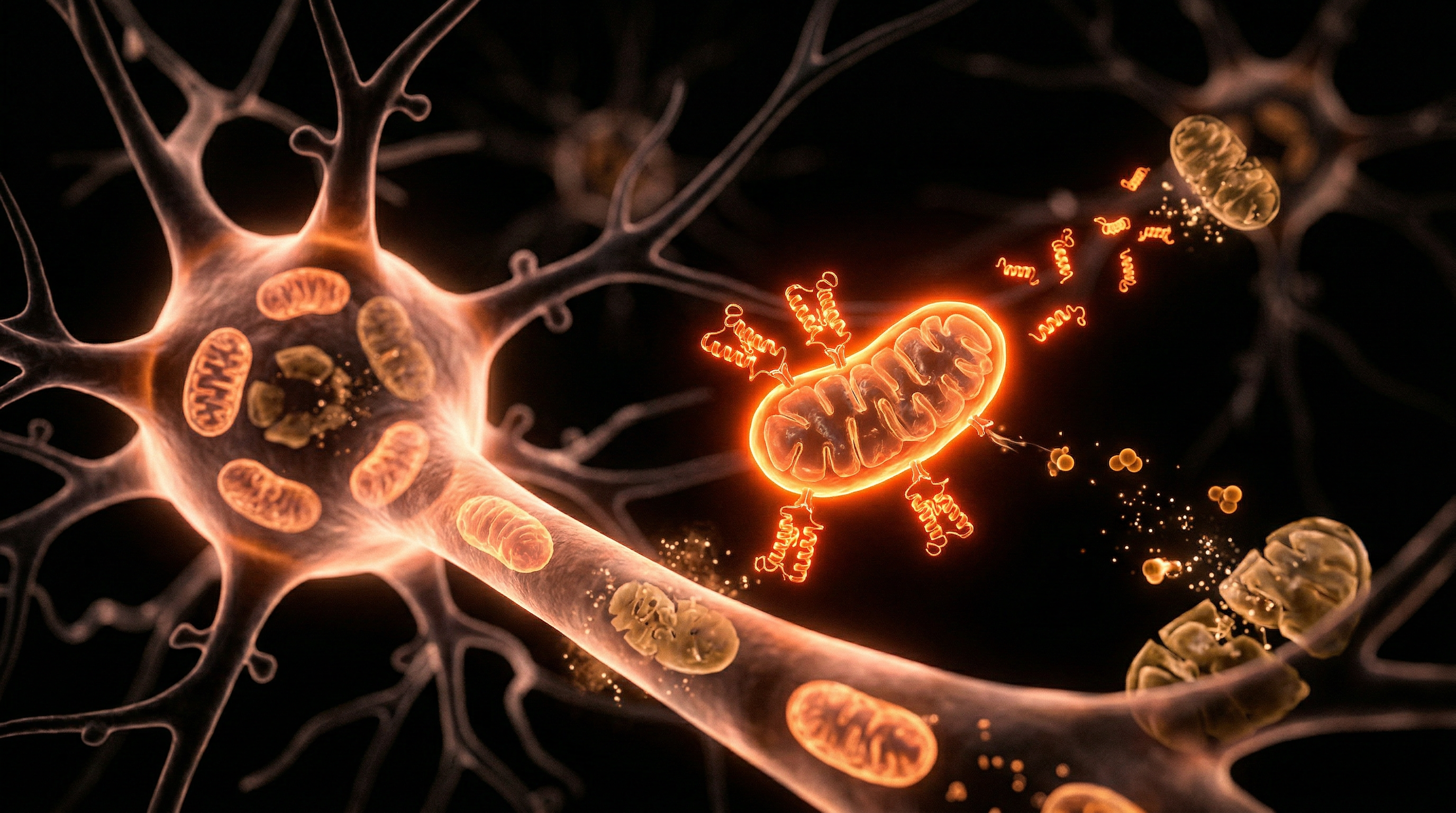
Humanin is a cytoprotective peptide that prevents apoptosis in neurons and vascular cells. Its role in preventing Alzheimer's is becoming a focal point for UK-based neurodegenerative research.
Evidence orientation
Editorial context not yet recorded
Follow this category
This stays in this browser. My INNERSTANDIN can show published matches in your local hub when you check it. It does not send email, push, or alert notifications.
Local learning review
A private browser aid for revisiting ideas. It is not an alert or a health recommendation.
Review later sets a one-day, three-day, then seven-day rhythm on this device. Choose it only when you want to revisit this article.
Overview
The history of medicine is often defined by what we choose to overlook. For decades, the biological community has been transfixed by the nucleus, the purported "command centre" of the cell, while relegating the mitochondria to the role of mere cellular furnaces. However, a profound shift in paradigm is underway. As a senior researcher at INNERSTANDING, I have spent years investigating the subtle, often suppressed nuances of mitochondrial signalling. Among the most potent and misunderstood elements of this system is Humanin—a 24-amino acid peptide that represents the frontier of cytoprotection and neuro-regenerative science.
First identified in 2001 by Nishimoto and his colleagues at Keio University, Humanin (HN) was discovered within the cDNA library of a patient suffering from Alzheimer’s Disease (AD). It was found in a region of the brain that, remarkably, remained resilient despite the surrounding neurodegeneration. This peptide is not encoded by the nuclear genome, but rather by the 16S ribosomal RNA gene (MT-RNR2) within the mitochondrial DNA (mtDNA). It is the inaugural member of a class of molecules known as Mitochondrial-Derived Peptides (MDPs).
Humanin is, in essence, an "anti-death" signal. It acts as a primary defence mechanism against apoptosis (programmed cell death) in neurons, cardiac myocytes, and vascular endothelial cells. Its discovery shattered the reductive view of mitochondria as passive energy producers, revealing them instead as active regulators of cellular longevity and survival. In the UK, where the burden of neurodegenerative disease is projected to cripple the National Health Service (NHS) by mid-century, understanding Humanin is no longer a matter of academic curiosity—it is a matter of civilisational survival.
Callout Fact: Humanin levels naturally decline with age. Research indicates that centenarians and their offspring possess significantly higher circulating levels of Humanin compared to the general elderly population, suggesting it is a primary biomarker for "healthspan."
The Biology — How It Works
To understand Humanin, one must first appreciate the dual-genome nature of the human cell. While the nucleus contains the vast majority of our genetic blueprint, the mitochondria retain their own circular DNA, a vestige of their ancient symbiotic origin. Humanin is the product of a small open reading frame (sORF) within the mitochondrial genome. It is transcribed and translated as a 24-amino acid peptide (MAPRGFSCLLLLTSEIDLPVKRRA) that can act both intracellularly and as a secreted hormone.
The Mitochondrial Retrograde Response
Humanin functions as part of the mitochondrial retrograde response, a communication pathway whereby mitochondria signal their status to the nucleus. When a cell undergoes stress—be it oxidative, ischaemic, or toxic—the mitochondria secrete Humanin to initiate a survival programme. This peptide acts as a "chaperone" and a "signalling ligand," traversing the cellular membrane to interact with both internal proteins and external receptors.
Secretion and Transport
Once synthesised, Humanin can be secreted into the extracellular space. In the blood, it often binds to IGFBP-3 (Insulin-like Growth Factor Binding Protein-3). This binding is crucial; it not only stabilises the peptide but also modulates its activity. Interestingly, while IGFBP-3 is often associated with pro-apoptotic pathways in cancer, its interaction with Humanin appears to neutralise these "death signals," redirecting the cell toward survival and metabolic homeostasis.
The Receptor Complex
Humanin exerts its extracellular effects through a sophisticated tripartite receptor complex consisting of:
- CNTFR (Ciliary Neurotrophic Factor Receptor)
- WSX-1 (IL-27 receptor subunit)
- gp130 (Glycoprotein 130)
This complex initiates the JAK2/STAT3 signalling pathway, a cascade that upregulates the expression of protective genes and suppresses the inflammatory response. In the context of the brain, this pathway is essential for maintaining the integrity of the Blood-Brain Barrier (BBB) and ensuring the survival of cholinergic neurons.
Mechanisms at the Cellular Level
The neuroprotective efficacy of Humanin is not attributed to a single action but to a multi-modal defence strategy. It operates at the intersection of metabolism, proteostasis, and programmed cell death.
Inhibition of the "Executioner" Proteins
The primary mechanism by which Humanin prevents neuronal decay is through its interaction with the Bcl-2 family of proteins. In a healthy cell, pro-survival proteins (like Bcl-2) and pro-apoptotic proteins (like Bax) exist in a delicate balance. Under stress, Bax undergoes a conformational change and translocates to the mitochondrial membrane, where it forms pores, leading to the release of Cytochrome C and the initiation of the caspase cascade—the "execution phase" of apoptosis.
Humanin binds directly to Bax in the cytosol. By "sequestering" Bax, Humanin prevents its translocation to the mitochondrial membrane. This effectively "vetoes" the cell's decision to commit suicide.
Neutralising Amyloid-Beta Toxicity
In the mainstream narrative of Alzheimer's, Amyloid-Beta (Aβ) plaques are the primary villains. While this is an oversimplification (which we will address later), Aβ is undoubtedly neurotoxic. It induces oxidative stress and disrupts mitochondrial function. Humanin has been shown to be the only endogenous peptide capable of inhibiting neurotoxicity induced by a wide range of AD-related genes and proteins, including:
- Amyloid-Beta 1-42
- Presenilin-1 and Presenilin-2 mutations
- APP (Amyloid Precursor Protein) mutations
Humanin does not necessarily clear the plaques; rather, it makes the neurons "immune" to the toxic environment created by the plaques. It preserves mitochondrial membrane potential and prevents the ATP depletion that usually precedes neuronal death.
Activation of STAT3 and Neurogenesis
Beyond mere survival, Humanin promotes cellular "flourishing." Through the activation of STAT3 (Signal Transducer and Activator of Transcription 3), Humanin induces the expression of manganese superoxide dismutase (MnSOD), a powerful antioxidant enzyme. Furthermore, emerging evidence suggests that Humanin may play a role in promoting neurogenesis—the birth of new neurons in the hippocampus—thereby countering the cognitive decline associated with ageing and trauma.
Callout Fact: Humanin is so potent that its synthetic analogue, [Gly14]-Humanin (HNG), is 1,000 times more active than the naturally occurring peptide, showing profound neuroprotective effects in various animal models of dementia.
Environmental Threats and Biological Disruptors
If Humanin is such a potent endogenous protector, why is neurodegeneration reaching epidemic proportions? The answer lies in the unprecedented environmental assault on mitochondrial integrity. We live in an era of "mitochondrial sabotage," where modern life systematically degrades the very organelles responsible for our survival.
The Glyphosate Nexus
The UK’s agricultural reliance on glyphosate (the active ingredient in many herbicides) is a primary driver of mitochondrial decay. Glyphosate acts as a glycine analogue, potentially incorporating itself into proteins where glycine should be. More critically, glyphosate is a known disruptor of the shikimate pathway in the gut microbiome. While humans do not have this pathway, our gut bacteria do, and they use it to produce aromatic amino acids that are precursors to neurotransmitters.
Even more insidiously, glyphosate acts as a chelator of divalent cations like manganese and magnesium—essential cofactors for mitochondrial enzymes and the production of Humanin itself. When mitochondrial DNA is damaged by such toxins, the expression of the MT-RNR2 gene is suppressed, leaving the brain without its primary peptide shield.
Non-Ionising Radiation (EMFs)
The proliferation of high-frequency electromagnetic fields (EMFs) from 5G infrastructure and Wi-Fi creates a state of chronic calcium influx into cells via Voltage-Gated Calcium Channels (VGCCs). This "calcium storm" leads to the overproduction of peroxynitrite, a highly reactive nitrogen species that causes oxidative damage to mitochondrial membranes and mtDNA. Since Humanin is encoded within the mitochondria, damage to the mtDNA directly compromises the cell's ability to produce this protective peptide.
Microplastics and Nanoparticles
Recent studies have identified microplastics within human brain tissue. These particles interfere with the mitophagy process—the cellular "rubbish collection" system that clears out damaged mitochondria. When damaged mitochondria are not removed, they continue to produce reactive oxygen species (ROS) and fail to produce Humanin, creating a vicious cycle of decay.
The Cascade: From Exposure to Disease
The progression from environmental exposure to overt neurodegeneration is not an overnight occurrence; it is a "slow-burn" cascade of bioenergetic failure.
Phase 1: Mitochondrial Inefficiency
The cascade begins with the depletion of mitochondrial cofactors (NAD+, CoQ10, Magnesium) due to toxic load and poor nutrition. Humanin production begins to stutter. The cell's "buffering capacity" against stress is reduced.
Phase 2: The Proteostatic Collapse
As Humanin levels drop, the "veto power" over apoptosis is lost. Misfolded proteins, such as Tau and Amyloid-Beta, begin to accumulate because the cell no longer has the energy or the chaperone proteins to process them. This is the stage of "mild cognitive impairment."
Phase 3: The Apoptotic Tipping Point
Chronic inflammation (neuroinflammation) sets in. Microglia, the brain's immune cells, shift from a "nurturing" state to a "destructive" state. Without the inhibitory effect of Humanin on JNK (c-Jun N-terminal kinase), the apoptotic pathways are fully engaged. Neurons begin to die in the hippocampus and cerebral cortex.
Phase 4: Systemic Mitochondrial Decay
By this stage, the decay is no longer localised. The drop in systemic Humanin affects the entire body, leading to the comorbidities often seen with Alzheimer's: cardiovascular disease, type 2 diabetes, and sarcopenia. This confirms that AD is not just a "brain disease" but a systemic manifestation of mitochondrial failure.
- Inflammation: Humanin suppresses the "NLRP3 inflammasome," a key driver of chronic inflammation.
- Vascular Decay: Humanin protects the endothelial cells lining the blood vessels in the brain, preventing the "leaky brain" syndrome.
- Metabolic Dysfunction: Humanin improves insulin sensitivity; its absence accelerates the "Type 3 Diabetes" aspect of Alzheimer's.
What the Mainstream Narrative Omits
The pharmaceutical industry’s fixation on the Amyloid Hypothesis is perhaps one of the greatest scientific distractions of the 21st century. Billions of pounds have been poured into drugs designed to clear amyloid plaques, yet these drugs have largely failed to improve cognitive function. Why? Because amyloid plaques are often a symptom, not the primary cause, of the disease.
The "Aβ as a Protective Response" Theory
Some researchers, including those whose work is frequently sidelined, suggest that Amyloid-Beta is actually an antimicrobial peptide produced by the brain to trap pathogens or sequester toxins. By aggressively removing it without addressing the underlying mitochondrial decay or the "trigger" (e.g., chronic infection or toxicity), mainstream treatments may actually be worsening the brain's ability to defend itself.
The Suppression of MDP Research
Why isn't Humanin a household name? Unlike a proprietary synthetic chemical, Humanin is an endogenous peptide. While analogues like HNG are being studied, the natural pathways to boost Humanin (such as calorie restriction, specific light exposure, and cold thermogenesis) cannot be patented. The "medical-industrial complex" prioritises "blockbuster" drugs over biological restoration. There is a profound lack of funding for large-scale clinical trials on Humanin, despite its proven efficacy in every preclinical model of AD.
The Genetic Determinism Fallacy
The public is often told that "bad genes" (like APOE4) are a death sentence. However, Humanin offers a different perspective. Even in the presence of the APOE4 allele, high levels of Humanin can mitigate the associated risk. Our destiny is not written in our nuclear DNA; it is written in our mitochondrial function, which is largely under our epigenetic and environmental control.
The UK Context
In the United Kingdom, the statistics are sobering. Dementia is now the leading cause of death, surpassing heart disease. The cost of care is astronomical, and the emotional toll on families is immeasurable. However, the UK is also uniquely positioned at the heart of mitochondrial research.
The NHS Crisis and the "Dementia Tsunami"
The NHS is currently structured to treat symptoms rather than the underlying bioenergetic causes of disease. The "standard of care" for AD involves drugs like Donepezil, which provide marginal symptomatic relief while doing nothing to stop the underlying mitochondrial decay. There is an urgent need for the UK medical establishment to pivot toward "Mitochondrial Medicine."
UK Research Excellence
Institutions such as King's College London and the University of Cambridge have world-class mitochondrial research departments. Some of the most innovative work on retrograde signalling and the "Mitochondrial Stress Response" is happening on British soil. However, there is a "translational gap" between these laboratory breakthroughs and the clinical guidelines used by GPs in the UK.
Regulatory Hurdles
The UK’s Medicines and Healthcare products Regulatory Agency (MHRA) maintains a conservative stance on peptide therapies. While this ensures safety, it also delays the availability of potentially life-saving interventions like HNG. There is a growing movement in the UK for "Right to Try" legislation that would allow patients with terminal neurodegenerative conditions access to cutting-edge peptides like Humanin.
Callout Fact: In the UK, the "Dementia Research Institute" has recently begun acknowledging the role of mitochondrial dysfunction, yet "Humanin" remains a term rarely found in public health literature.
Protective Measures and Recovery Protocols
The good news is that mitochondrial health is dynamic. Even if Humanin levels have declined, it is possible to stimulate its production and restore cellular protection. As a senior researcher, I advocate for a multi-layered approach to "Mitochondrial Rescue."
1. Photobiomodulation (Red Light Therapy)
Mitochondria are light-sensitive. Specifically, cytochrome c oxidase (a key enzyme in the electron transport chain) absorbs red and near-infrared light (600nm - 1000nm). Exposure to these wavelengths can increase ATP production and has been shown to stimulate the expression of cytoprotective MDPs like Humanin. In the grey, light-deprived climate of the UK, supplemental red light therapy is essential for brain health.
2. Hormetic Stress: Heat and Cold
Exposure to extreme temperatures induces "hormesis"—a beneficial stress response.
- Sauna Use: Regular sauna use induces heat-shock proteins and has been linked to a 60% reduction in the risk of Alzheimer's in Finnish studies.
- Cold Exposure: Cold water immersion activates brown adipose tissue and triggers the "mitochondrial biogenesis" pathway, likely upregulating Humanin as a survival signal.
3. Nutritional Strategy: The "Mito-Fuel" Diet
To support Humanin production, the body needs the building blocks for mitochondrial DNA and protein synthesis.
- Glycine and Proline: These amino acids are critical for the structure of Humanin. Bone broth and collagen are excellent sources.
- Magnesium Threonate: This specific form of magnesium crosses the blood-brain barrier and supports the synaptic density that Humanin protects.
- Avoidance of "Mito-Toxins": Transitioning to an organic, non-GMO diet is the only way to reduce glyphosate exposure in the UK.
4. Peptide Therapy (The Frontier)
While naturally boosting Humanin is the foundation, synthetic analogues like HNG and HNGF6A represent the future of neuro-recovery. These are currently available through research chemical channels, though they should only be used under the guidance of a practitioner familiar with peptide science. They offer a "reset" for the brain's protective systems.
5. Circadian Integrity
Mitochondria have their own "clocks." Disruption of the circadian rhythm (through blue light exposure at night or irregular sleep) inhibits the nightly repair phase of the brain. Humanin secretion follows a rhythmic pattern, and deep sleep is the primary window for "mitochondrial housekeeping."
Summary: Key Takeaways
The discovery of Humanin has fundamentally altered our understanding of what it means to age and what it means to "decay." It is the bridge between our ancient mitochondrial past and our cognitive future.
- The Mitochondrial Guardian: Humanin is a mitochondrial-derived peptide that acts as a universal cytoprotector, shielding the brain from the "executioner" proteins that cause cell death.
- Beyond Amyloid: The mainstream focus on amyloid plaques is a partial truth. The real battle for the brain is fought at the level of mitochondrial bioenergetics.
- Environmental Sabotage: Our modern environment—saturated with glyphosate, EMFs, and microplastics—is a "War on Mitochondria," suppressing our natural Humanin production.
- The UK Opportunity: The UK has the scientific prowess to lead the world in Mitochondrial Medicine, but it must first overcome the inertia of the current pharmaceutical paradigm.
- The Path Forward: Restoring Humanin involves a combination of ancestral wisdom (hormesis, light exposure, whole foods) and cutting-edge peptide science.
As we stand on the precipice of a global dementia crisis, we must look within our own cells for the answer. The mitochondria have provided us with the shield; it is our responsibility to ensure it does not rust. Humanin is not just a peptide; it is a testament to the resilience of life itself, waiting to be reactivated.
"References and Further Reading:"
- Hashimoto, Y., et al. (2001). "A rescue factor abolishing neuronal cell death by a wide spectrum of Alzheimer's disease genes." Science.
- Lee, C., et al. (2013). "The Mitochondrial-Derived Peptide Humanin: A Review of its Mechanism of Action and Therapeutic Potential." Trends in Endocrinology & Metabolism.
- Cohen, P. (2014). "Humanin: A novel regulator of insulin sensitivity and mitochondrial function." Mitochondrion.
- Seneff, S. (2021). Toxic Legacy: How the Weedkiller Glyphosate Is Destroying Our Health and the Environment.
- UK Dementia Research Institute. (2023). "Mitochondrial Dysfunction in Neurodegeneration: Current Perspectives."
This article is provided for informational and educational purposes only. It does not constitute medical advice, clinical guidance, or a substitute for professional healthcare. Information reflects cited research at time of publication. Always consult a qualified healthcare professional before acting on any health information.
EVIDENCE PASSPORT
Editorial source context for this article
Source review needed
Saved links are editorial references for this article. They may support specific claims rather than every sentence. Open and assess each source in context. This passport does not independently verify them.
Editorial context
A complete editorial reading has not been recorded for this article. Source links remain available for you to open and assess directly.
Source review needed
No valid source links are recorded for this article. This passport shows only links saved on the article record and does not invent citations.
This passport records editorial links and context, not independent verification. Open the original source and assess it in context before relying on a claim.
Medical Disclaimer
The information in this article is for educational purposes only and does not constitute medical advice, diagnosis, or treatment. Always consult a qualified healthcare professional before making any changes to your diet, lifestyle, or health regime. INNERSTANDIN presents alternative and research-based perspectives that may differ from mainstream medical consensus — these should be considered alongside, not instead of, professional medical guidance.
Read Full DisclaimerContinue the thread
Keep this question moving.
Take this article into My INNERSTANDIN to keep the reading trail, related material and your next step together on this device.
Explore this in the Body Map
See where this hits your biology. Interactive anatomy, threats, and protective protocols.
Dig deeper in the Library
Free, longform PDF volumes that go beyond headlines into mechanisms and references.