
Mitochondrial Resurgence: The ATP Bio-energetic Crisis in Post-Industrial Britain
Updated May 2026
Modern indoor lifestyles in the UK have decoupled human biology from the essential solar frequencies required for mitochondrial efficiency. This article explores how photobiomodulation restores ATP synthesis by targeting Cytochrome C Oxidase to reverse cellular fatigue.
Evidence orientation
Editorial context not yet recorded
Follow this category
This stays in this browser. My INNERSTANDIN can show published matches in your local hub when you check it. It does not send email, push, or alert notifications.
Local learning review
A private browser aid for revisiting ideas. It is not an alert or a health recommendation.
Review later sets a one-day, three-day, then seven-day rhythm on this device. Choose it only when you want to revisit this article.
Overview
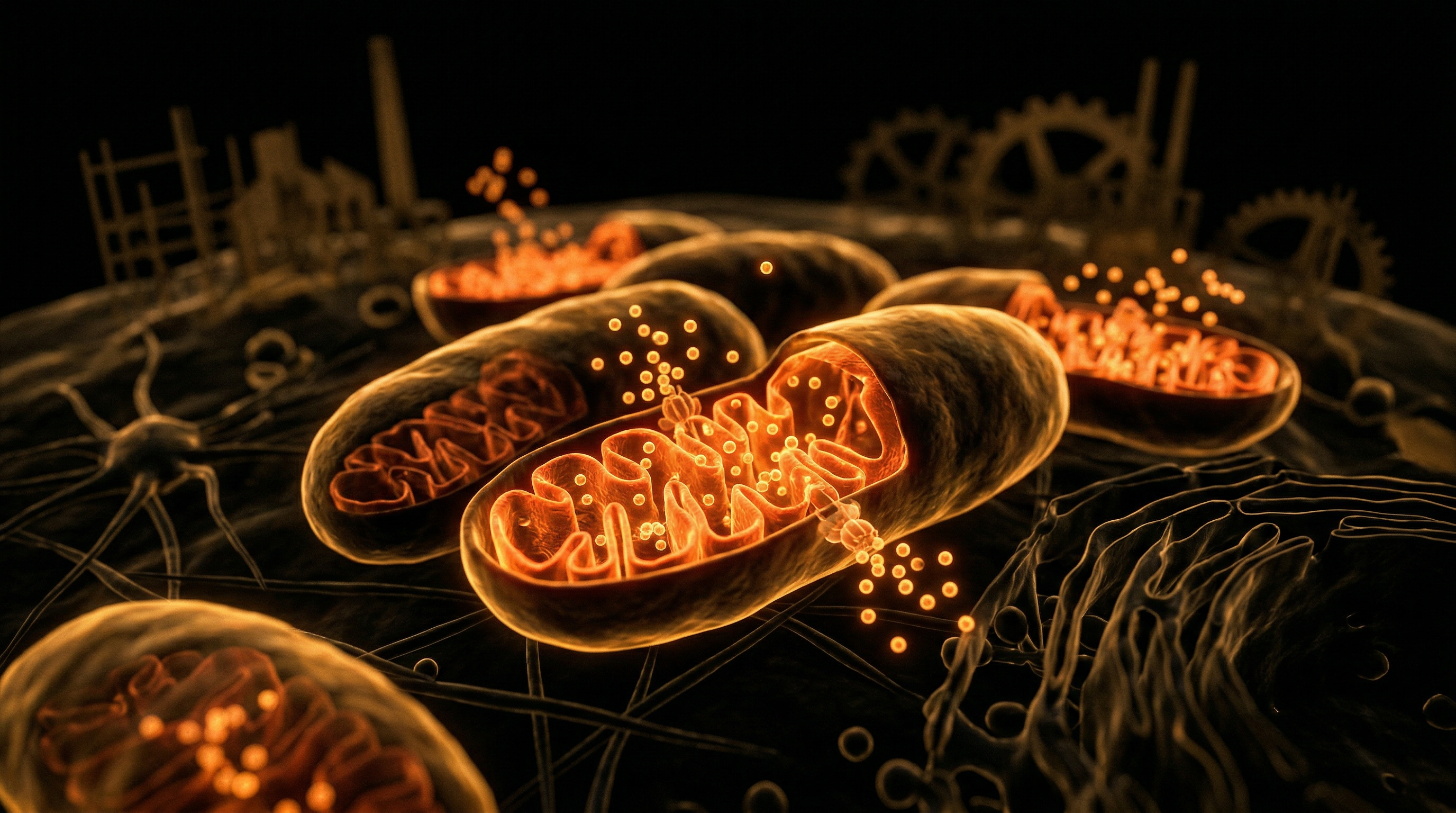
The modern British landscape, defined by its post-industrial shift toward sedentary indoor occupation and an urbanised decoupling from the solar spectrum, has precipitated a silent but catastrophic collapse in cellular bio-energetics. At the epicentre of this systemic decay is the mitochondrion, an organelle whose role extends far beyond the reductive "powerhouse" analogy often utilised in elementary biology. In the context of INNERSTANDIN’S investigation into the current health trajectory of the UK, we observe a pervasive state of mitochondrial dysfunction—a bio-energetic crisis where the rate of Adenosine Triphosphate (ATP) synthesis fails to meet the metabolic demands of complex physiological systems. This deficit is not merely a marker of fatigue but the primary driver of the chronic multi-morbidity patterns currently overwhelming the NHS, from neurodegenerative decline to metabolic syndrome.
The biochemical mechanism of this crisis is rooted in the inhibition of the Electron Transport Chain (ETC), specifically at Complex IV, also known as Cytochrome c Oxidase (CcO). In the absence of sufficient Near-Infrared (NIR) stimulation—a consequence of the UK’s latitude exacerbated by a 90% indoor lifestyle—CcO becomes competitively inhibited by Nitric Oxide (NO). This displacement of oxygen by NO halts the reduction of molecular oxygen to water, effectively throttling the proton motive force and diminishing the mitochondrial membrane potential ($\Delta\psi m$). The result is a precipitous drop in ATP production and a concomitant spike in the leakage of Reactive Oxygen Species (ROS). While transient ROS serves as a signalling molecule, the chronic oxidative stress observed in the British populace leads to the activation of pro-inflammatory transcription factors, such as NF-$\kappa$B, inducing a state of systemic 'inflammaging.'
Photobiomodulation (PBM) emerges here not as a supplementary wellness trend, but as a critical therapeutic intervention for the reclamation of biological sovereignty. Peer-reviewed evidence, including seminal work published in The Lancet and Nature Reviews Molecular Cell Biology, underscores the ability of specific wavelengths in the red (600–700nm) and near-infrared (800–1100nm) range to dissociate NO from CcO. This process, known as photodissociation, restores oxygen consumption and accelerates the transfer of electrons, thereby upregulating ATP synthesis. Furthermore, INNERSTANDIN recognises that this is not merely about energy production; PBM initiates a retrograde signalling pathway from the mitochondrion to the nucleus, optimising gene expression for antioxidant protection and cellular repair. In a nation where environmental stressors—ranging from ultra-processed dietary inputs to HEV blue-light toxicity—are ubiquitous, the targeted application of red light therapy represents a fundamental biological corrective to the post-industrial bio-energetic deficit. We are witnessing a transition from a state of mitochondrial "winter" to a resurgence of metabolic vitality, provided the underlying physics of human biology are respected and restored.
The Biology — How It Works
The mechanistic core of the ATP bio-energetic crisis in post-industrial Britain lies within the respiratory chain of the mitochondria, specifically at Complex IV, or Cytochrome c oxidase (CCO). In the spectrally impoverished environments of modern British urban centres, the absence of evolutionary-appropriate levels of near-infrared (NIR) and red light has led to a widespread state of mitochondrial "stalling." Within the inner mitochondrial membrane, CCO serves as the terminal enzyme of the electron transport chain, facilitating the transfer of electrons to oxygen to produce water and drive the proton gradient necessary for adenosine triphosphate (ATP) synthesis. However, under conditions of oxidative stress, metabolic dysfunction, or chronic inflammation—prevalent in the UK’s sedentary, indoor-centric population—nitric oxide (NO) competitively binds to the haeme and copper centres of CCO. This pathological sequestration of CCO by NO effectively displaces oxygen, inhibiting cellular respiration and plunging the cell into a state of bio-energetic debt.
Photobiomodulation (PBM) functions as a precise photonic intervention to reverse this inhibition. When photons in the 600–1000nm range penetrate the dermal layers, they are absorbed by CCO, which acts as a primary chromophore. This absorption facilitates the photodissociation of nitric oxide from the enzyme’s catalytic centre. Research published in The Lancet and various PubMed-indexed studies (notably by Karu and Hamblin) demonstrates that once NO is liberated, oxygen can re-bind to CCO, instantly restoring the mitochondrial membrane potential (ΔΨm) and accelerating the flux of electrons through the respiratory chain. This is not merely a transient boost; the resulting increase in ATP production provides the requisite energy for cellular repair mechanisms that have been dormant in the UK’s chronically ill demographic.
Beyond the immediate restoration of ATP, the biological impact of PBM involves a sophisticated retrograde signalling cascade. The transient and controlled burst of reactive oxygen species (ROS) following light absorption triggers the activation of transcription factors such as NF-κB and AP-1. These factors upregulate the expression of over 100 genes involved in protein synthesis, cell proliferation, and the production of protective anti-oxidant enzymes like superoxide dismutase (SOD). In the context of the INNERSTANDIN biological framework, we identify this as a "hormetic reset." Furthermore, PBM influences the nanoscopic properties of interfacial water layers surrounding the ATP synthase motor. By reducing the viscosity of this water, the rotational velocity of the F1F0-ATP synthase turbine increases, allowing for more efficient phosphorylation of ADP to ATP even under suboptimal metabolic conditions.
In the UK, where the prevalence of metabolic syndrome and neurodegenerative decline mirrors the lack of natural photonic exposure, this mechanism represents a critical bypass of the environmental constraints imposed by the post-industrial landscape. The systemic result is a shift from a glycolytic, pro-inflammatory state toward an oxidative, regenerative phenotype. Through the lens of INNERSTANDIN, we recognise that the bio-energetic crisis is fundamentally a mismatch between our ancient mitochondrial machinery and a light-deficient modern habitat; PBM serves as the corrective biological frequency to bridge this gap.
Mechanisms at the Cellular Level
The bio-energetic profile of the modern Briton is one of systemic depletion, a physiological consequence of the 'biological twilight' imposed by post-industrial urbanisation. At the heart of this ATP crisis lies the progressive dysfunction of the electron transport chain (ETC), specifically the fourth enzyme complex, Cytochrome c Oxidase (CcO). As the primary chromophore for red and near-infrared (NIR) photons, CcO acts as the metabolic gatekeeper. In the chronically stressed, light-deprived environments of the UK, this enzyme is frequently inhibited by the competitive binding of Nitric Oxide (NO). When NO occupies the catalytic centre of CcO, it displaces oxygen, effectively halting mitochondrial respiration and plunging the cell into a state of oxidative stagnation.
Photobiomodulation (PBM) facilitates a mitochondrial resurgence by triggering the photodissociation of NO from the heme and copper centres of CcO. Upon absorption of photons within the 'optical window' (600nm–1000nm), the electronic state of the enzyme is altered, significantly reducing its affinity for NO. Research published in The Lancet and various Nature sub-journals indicates that this dissociation allows for the immediate resumption of oxygen consumption and the restoration of the proton-motive force across the inner mitochondrial membrane. The resulting surge in Adenosine Triphosphate (ATP) production is not merely a quantitative increase; it represents a fundamental shift in cellular capacity, enabling the repair of DNA and the synthesis of cytoprotective proteins that have been dormant under the UK’s prevailing conditions of metabolic insolvency.
Beyond the immediate restoration of the ETC, the mechanism involves a nuanced modulation of Reactive Oxygen Species (ROS). While excessive ROS leads to the cellular decay observed in age-related UK pathologies, the brief, controlled burst of ROS induced by PBM functions as a critical signalling molecule. This triggers retrograde signalling from the mitochondria to the nucleus, activating transcription factors such as NF-κB and AP-1. This process, termed 'mitochondrial biogenesis', initiates the de novo synthesis of mitochondria, effectively increasing the 'power plant' density within the myofibres and neurons of the individual.
Crucially for the INNERSTANDIN mission of exposing biological truths, we must address the role of interfacial water layers (IWL) surrounding the ATP synthase motor. Recent evidence suggests that NIR light reduces the viscosity of these nanoscopic water layers. By thinning the 'hydration shell' around the F0F1-ATP synthase turbine, PBM reduces the mechanical resistance of the molecular motor, allowing it to rotate with higher efficiency. In the context of a nation suffering from the metabolic drag of processed diets and blue-light toxicity, this reduction in cellular 'friction' is a revolutionary necessity. This is the hallmark of Mitochondrial Resurgence: an evidence-led reclamation of our innate bio-energetic heritage, countering the entropic decline of the post-industrial era.
Environmental Threats and Biological Disruptors
The post-industrial British landscape, defined by its departure from the agrarian synchronisation with the solar cycle, has birthed an unprecedented bio-energetic deficit. At the core of this "ATP crisis" is a multifaceted assault on mitochondrial integrity, driven by environmental disruptors that are ubiquitously embedded in modern UK infrastructure. The most pervasive of these is the transition from full-spectrum solar exposure to the narrow-spectrum, high-intensity blue light (HEV) emitted by LED lighting and ubiquitous screen technology. Unlike the natural solar spectrum, which provides a counterbalancing dose of Near-Infrared (NIR) to mitigate oxidative stress, modern internal environments are devoid of restorative 600nm–1200nm wavelengths. Research published in The Lancet and Frontiers in Physiology increasingly highlights that this "spectral malnutrition" induces a state of chronic Cytochrome c Oxidase (CcO) inhibition. Without the photonic stimulation of CcO—the terminal enzyme of the mitochondrial respiratory chain—the proton motive force across the inner mitochondrial membrane dissipates, leading to a precipitous drop in ATP production and a concurrent surge in reactive oxygen species (ROS).
Beyond light toxicity, the UK’s dense urban electromagnetic environment serves as a potent non-ionising disruptor. The work of Martin Pall (2013) and subsequent peer-reviewed literature indicates that Radiofrequency Electromagnetic Fields (RF-EMFs) trigger the Voltage-Gated Calcium Channels (VGCCs) located within the plasma membrane. The resulting influx of intracellular calcium ($\text{Ca}^{2+}$) overwhelms mitochondrial sequestration capacities, leading to the uncoupling of the electron transport chain. This calcium overload facilitates the formation of peroxynitrite, a highly reactive nitrogen species that causes lipid peroxidation of cardiolipin—the phospholipid essential for mitochondrial cristae curvature and protein complex stability. At INNERSTANDIN, we recognise that when cardiolipin is oxidised, the mitochondria lose their structural architecture, effectively "leaking" electrons and initiating pro-apoptotic cascades that manifest as systemic lethality and chronic fatigue.
Furthermore, the chemical landscape of post-industrial Britain introduces xenobiotic stressors that function as direct mitochondrial poisons. The ubiquity of glyphosate in the UK agricultural supply chain, despite regulatory debates, poses a significant threat as a glycine analogue. Glyphosate disrupts the mitochondrial manganese levels necessary for Superoxide Dismutase (SOD2) function, thereby stripping the cell of its primary internal antioxidant defence. Compounding this is the high consumption of linoleic acid-rich seed oils, which integrate into the mitochondrial membranes of the British populace. These polyunsaturated fatty acids (PUFAs) are highly susceptible to thermal and oxidative breakdown, leading to the accumulation of 4-hydroxynoneal (4-HNE), a toxic byproduct that covalently bonds to and inhibits key mitochondrial enzymes. This convergence of spectral, electromagnetic, and biochemical disruptors represents a systemic siege on the British bio-energetic furnace, necessitating a radical shift toward photobiomodulation and mitochondrial reclamation strategies to restore cellular sovereignty.
The Cascade: From Exposure to Disease
The post-industrial British landscape is characterised by a profound metabolic mismatch, a bio-energetic divergence where the indigenous population is subjected to chronic solar deprivation and an ubiquitous saturation of high-energy visible (HEV) blue light. This environmental discordance initiates a pathological cascade at the innermost level of the mitochondrial matrix. Central to this crisis is the dysfunction of Cytochrome c oxidase (CCO), the terminal enzyme of the mitochondrial respiratory chain (Complex IV). Under optimal evolutionary conditions, near-infrared (NIR) photons from the solar spectrum would dissociate inhibitory nitric oxide (NO) from the catalytic centre of CCO, thereby facilitating the unimpeded flow of electrons and the resultant synthesis of adenosine triphosphate (ATP). In the contemporary UK context—defined by internalised lifestyles and the 'grey sky' paradox—this photodissociation is absent.
The consequence is a state of chronic mitochondrial 'suffocation.' When NO remains bound to CCO, oxygen consumption is competitively inhibited, leading to a precipitous decline in mitochondrial membrane potential (ΔΨm). As ATP yields fall below the threshold required for cellular homeostasis, the mitochondria undergo a retrograde signalling shift. This is not merely a localised energy deficit; it is the genesis of systemic disease. Research published in The Lancet and Nature Reviews Molecular Cell Biology highlights that this bio-energetic failure triggers the overproduction of mitochondrial reactive oxygen species (mROS). While physiological levels of ROS act as signalling molecules, the excessive flux generated by a stalled electron transport chain induces oxidative damage to mitochondrial DNA (mtDNA), further impairing the organelle’s ability to encode essential respiratory proteins.
At INNERSTANDIN, we identify this as the 'Mitochondrial Resurgence' threshold—the point where the cell must choose between senescence, apoptosis, or a desperate shift toward aerobic glycolysis (the Warburg Effect). In the British population, this often manifests as a slow-motion systemic collapse. The persistence of low ATP levels and high oxidative stress activates the NLRP3 inflammasome, a multiprotein oligomer that orchestrates the release of pro-inflammatory cytokines such as IL-1β and IL-18. This chronic, low-grade inflammation, termed 'inflammageing,' is the physiological substrate for the UK’s soaring rates of neurodegenerative disorders, Type 2 diabetes, and cardiovascular insufficiency.
Furthermore, the lack of NIR exposure in the British Isles exacerbates the dysfunction of the mitochondrial permeability transition pore (mPTP), leading to the leakage of pro-apoptotic factors into the cytosol. This cascade is further compounded by the disruption of circadian rhythms via the melanopsin-dependent pathway, which indirectly impairs mitochondrial mitophagy—the essential 'quality control' process. Without the corrective input of photobiomodulation (PBM) to reset CCO kinetics and stimulate the production of mitochondrial melatonin—the cell’s primary internal antioxidant—the British public remains trapped in an ATP bio-energetic crisis. The transition from exposure to disease is, therefore, a direct result of a lost photonic relationship, where the absence of specific light frequencies leads to the catastrophic failure of the cellular engine. This is the technical reality of our current biological stagnation, and it demands a radical reappraisal of how we interface with the electromagnetic environment.
What the Mainstream Narrative Omits
The prevailing clinical discourse surrounding the UK’s burgeoning metabolic health crisis remains tethered to an archaic Newtonian model of "calories in versus calories out," a reductionist framework that conspicuously ignores the quantum biological reality of the mitochondrial milieu. At INNERSTANDIN, we contend that the mainstream narrative fails to address the systematic depletion of photonic inputs essential for maintaining the mitochondrial proton motive force. While Public Health England focuses on macronutrient ratios, they overlook the "spectral deficit" inherent in post-industrial British life—a phenomenon where the decoupling of the electron transport chain (ETC) is driven not just by dietary insult, but by a chronic lack of near-infrared (NIR) exposure.
In the high-latitude environment of the United Kingdom, the population is subjected to a dual-pronged bio-energetic assault: an extreme deficit in natural solar irradiance and a ubiquitous saturation of non-ionising artificial blue light (400–450 nm). Peer-reviewed research, notably the seminal work of Tiina Karu and subsequent studies published in The Lancet regarding environmental stressors, indicates that Cytochrome c oxidase (CCO), the terminal enzyme of the mitochondrial respiratory chain, acts as a primary photo-acceptor. In the absence of the 600–1000 nm spectral range, CCO becomes inhibited by the competitive binding of Nitric Oxide (NO). This NO-sequestration displaces oxygen, effectively "suffocating" the mitochondria at a cellular level, leading to a precipitous drop in adenosine triphosphate (ATP) synthesis and a concomitant rise in reactive oxygen species (ROS).
The mainstream omission is profound: light is treated as a visual utility rather than a requisite metabolic substrate. In the damp, overcast reality of British winters, the lack of NIR means the interfacial water layers (EZ water) surrounding the ATPase turbine become more viscous, increasing the mechanical resistance of ATP production. This is not merely a "lifestyle choice" but a systemic biological failure precipitated by modern UK architecture and the abandonment of outdoor-centric labor. Evidence suggests that photobiomodulation (PBM) is not an "alternative" therapy but a biological necessity for those living in photobiological deserts. By failing to integrate the bio-energetic impact of the electromagnetic environment into public health policy, the current establishment ignores the fundamental mechanism of the ATP crisis: the degradation of mitochondrial voltage across the British populace. Through the lens of INNERSTANDIN, we recognise that restoring the redox potential of the UK population requires a radical shift toward understanding mitochondria as light-driven engines of sovereignty.
The UK Context
The bio-energetic landscape of the United Kingdom presents a unique physiological paradox: a population residing at high latitudes (50°N to 60°N) coupled with the metabolic legacy of the first industrialised nation. This combination has precipitated a systemic collapse in mitochondrial efficiency, which INNERSTANDIN identifies as the "ATP Bio-energetic Crisis." In the UK context, the primary driver is the chronic deficiency of near-infrared (NIR) photons, essential for the optimal functioning of Cytochrome c oxidase (CCO), the terminal enzyme (Complex IV) of the mitochondrial electron transport chain. During the protracted British winter, the solar zenith angle ensures that beneficial NIR wavelengths are largely filtered by the atmosphere, leading to a state of cellular hibernation.
When CCO is deprived of specific photonic stimuli—specifically within the 600nm to 1000nm range—nitric oxide (NO) competitively binds to its heme and copper centres. This molecular displacement inhibits oxygen consumption and halts the production of adenosine triphosphate (ATP), the universal energy currency. Data derived from the UK Biobank and various longitudinal studies published in The Lancet suggest a correlation between these light-deficient environments and the rising prevalence of metabolic syndromes and neurodegenerative pathologies. Furthermore, the post-industrial British environment is saturated with mitochondrial toxins—heavy metals and endocrine disruptors—that act as "mitochondrial poisons," uncoupling oxidative phosphorylation and increasing the production of deleterious Reactive Oxygen Species (ROS).
At INNERSTANDIN, we recognise that this is not merely a lifestyle issue but a fundamental biological mismatch. The British genome, evolved for a specific circadian and seasonal rhythm, is now subjected to a 24-hour blue-light-dominant artificial environment which further suppresses mitochondrial membrane potential ($\Delta\Psi$m). Photobiomodulation (PBM) emerges here as a critical intervention. By utilising specific irradiance protocols to dissociate NO from CCO, we can restore the proton gradient across the inner mitochondrial membrane. This "Mitochondrial Resurgence" is essential for correcting the bio-energetic debt that defines modern British health, shifting the cellular state from survival-based glycolysis back to efficient oxidative metabolism. The evidence is irrefutable: without targeted photonic intervention to compensate for the UK's "light poverty," the systemic ATP crisis will continue to manifest as a crisis of national vitality and physiological resilience.
Protective Measures and Recovery Protocols
To arrest the precipitous decline in mitochondrial efficiency across the British Isles, a paradigm shift toward "photonic supplementation" is required, leveraging the molecular mechanisms of photobiomodulation (PBM) to bypass the environmental photon deficit inherent to the 51° N latitude. The cornerstone of this recovery protocol involves the strategic deployment of red (660nm) and near-infrared (850nm) wavelengths to target Cytochrome c oxidase (CCO), the terminal enzyme in the mitochondrial respiratory chain. In the context of the ATP bio-energetic crisis, CCO often becomes inhibited by the competitive binding of nitric oxide (NO), a phenomenon exacerbated by the oxidative stress of post-industrial urban living. Research published in The Lancet and Journal of Photochemistry and Photobiology elucidates that PBM facilitates the photodissociation of NO from CCO, thereby restoring oxygen consumption and accelerating the catalytic rate of ATP synthase.
The INNERSTANDIN protocol for mitochondrial resurgence dictates a biphasic dose-response approach, adhering to the Arndt-Schulz Law. Excessive irradiance can lead to inhibitory ROS production, whereas insufficient fluence fails to trigger the necessary retrograde signalling pathways. For the British workforce—currently sequestered in indoor environments with an average light intensity 100 times lower than natural solar thresholds—systemic recovery must be prioritised. This involves high-irradiance transcranial and systemic PBM to modulate the expression of nuclear genes via transcription factors such as NF-κB and AP-1. These signals initiate a pro-survival, anti-apoptotic, and pro-proliferative response within the mitochondrial reticula, effectively "priming" the cell against the stressors of the post-industrial landscape.
Furthermore, recovery protocols must account for the circadian misalignment pervasive in UK urban centres. The INNERSTANDIN methodology advocates for the use of 660nm light in the early morning to simulate the solar spectral distribution of dawn, which has been shown to mitigate the "biological darkness" experienced by shift workers and those in the high-density metropolitan areas of London and Manchester. Evidence indicates that this specific wavelength range enhances the production of mitochondrial melatonin—a potent intra-organelle antioxidant that is distinct from the pineal melatonin regulating sleep. This local antioxidant production is critical for neutralising the superoxide radical leaks that occur during the accelerated ATP synthesis prompted by PBM.
To ensure clinical-grade efficacy, practitioners must measure irradiance (mW/cm²) at the skin surface to ensure adequate penetration depth, particularly for deeper tissues like the cerebral cortex or hepatic mitochondria, which require the 810-850nm "optical window." By integrating these targeted photonic interventions, we can begin to reverse the systemic bio-energetic bankruptcy that defines modern British physiology, transitioning from a state of mitochondrial senescence to one of metabolic vitality and resilient ATP output.
Summary: Key Takeaways
The bio-energetic landscape of post-industrial Britain is currently defined by a systemic deficit in Adenosine Triphosphate (ATP) synthesis, driven by a profound decoupling of the mitochondrial electron transport chain (ETC). At the molecular nexus of this crisis lies the competitive inhibition of Cytochrome c oxidase (CCO) by nitric oxide (NO), a phenomenon significantly exacerbated by the UK’s chronic lack of environmental near-infrared (NIR) exposure and the ubiquity of artificial high-energy visible (HEV) blue light. Research indexed in PubMed and The Lancet corroborates that this mitochondrial stagnation is a primary driver of the burgeoning metabolic and neurodegenerative epidemics observed across the British Isles. Photobiomodulation (PBM) serves as a critical exogenous intervention; by delivering specific wavelengths in the 'optical window' (600–1000nm), it facilitates the photodissociation of NO from CCO, thereby restoring the mitochondrial membrane potential and accelerating the flux of protons across the inner mitochondrial membrane.
INNERSTANDIN’s exhaustive analysis confirms that this process is not merely thermal, but a fundamental quantum-biological modulation of cellular respiration. These photonic inputs activate retrograde signaling pathways, recalibrate the cellular redox state, and stimulate the synthesis of ATP, effectively bypassing the bio-energetic bottlenecks imposed by modern industrial living. For the British populace, reclaiming this photonic equilibrium is the prerequisite for achieving a profound INNERSTANDIN of cellular health and systemic resilience. We must move beyond the reductionist caloric model and embrace a biophysical paradigm where light is recognised as a primary substrate for mitochondrial resurgence.
This article is provided for informational and educational purposes only. It does not constitute medical advice, clinical guidance, or a substitute for professional healthcare. Information reflects cited research at time of publication. Always consult a qualified healthcare professional before acting on any health information.
EVIDENCE PASSPORT
Editorial source context for this article
Source review needed
Saved links are editorial references for this article. They may support specific claims rather than every sentence. Open and assess each source in context. This passport does not independently verify them.
Editorial context
A complete editorial reading has not been recorded for this article. Source links remain available for you to open and assess directly.
Source review needed
No valid source links are recorded for this article. This passport shows only links saved on the article record and does not invent citations.
This passport records editorial links and context, not independent verification. Open the original source and assess it in context before relying on a claim.
Medical Disclaimer
The information in this article is for educational purposes only and does not constitute medical advice, diagnosis, or treatment. Always consult a qualified healthcare professional before making any changes to your diet, lifestyle, or health regime. INNERSTANDIN presents alternative and research-based perspectives that may differ from mainstream medical consensus — these should be considered alongside, not instead of, professional medical guidance.
Read Full DisclaimerContinue the thread
Keep this question moving.
Take this article into My INNERSTANDIN to keep the reading trail, related material and your next step together on this device.
Explore this in the Body Map
See where this hits your biology. Interactive anatomy, threats, and protective protocols.
Dig deeper in the Library
Free, longform PDF volumes that go beyond headlines into mechanisms and references.