
Interleukin-7: The Critical Fuel for Thymic Restoration
Updated May 2026
IL-7 is the primary cytokine required for the survival and proliferation of developing T-cells. We investigate the potential for IL-7 therapy to boost thymic output in the elderly.
Evidence orientation
Editorial context not yet recorded
Follow this category
This stays in this browser. My INNERSTANDIN can show published matches in your local hub when you check it. It does not send email, push, or alert notifications.
Local learning review
A private browser aid for revisiting ideas. It is not an alert or a health recommendation.
Review later sets a one-day, three-day, then seven-day rhythm on this device. Choose it only when you want to revisit this article.
Overview
The human immune system is not a static shield, but a dynamic, regenerative engine that relies on a specific biological clock: the thymus gland. Tucked behind the breastbone, this small organ is the cradle of adaptive immunity, responsible for "educating" T-cells—the precision soldiers of our internal defence. However, the thymus is also the first organ to succumb to the ravages of time. By the age of 50, most individuals have lost over 80% of their functional thymic epithelial tissue, a process known as thymic involution.
This decline is not merely a "natural" part of ageing; it is the fundamental driver behind immunosenescence—the progressive decay of the immune system that leads to increased susceptibility to infections, cancers, and chronic inflammatory diseases. At the heart of this regenerative failure lies a deficiency in a single, critical cytokine: Interleukin-7 (IL-7).
Known to specialists as the "critical fuel" for lymphopoiesis, IL-7 is the primary non-redundant growth factor required for the survival, proliferation, and differentiation of developing T-cells. Without it, the thymus becomes a barren wasteland, unable to produce the naïve T-cells necessary to meet new viral or malignant challenges. This article serves as a comprehensive investigation into the molecular architecture of IL-7, the environmental forces conspiring to suppress it, and the suppressed clinical potential of IL-7 therapy as a cornerstone for human longevity and immune restoration.
Fact: Thymic involution begins shortly after puberty, and by the age of 70, the rate of new T-cell production is estimated to be 1/100th of what it was during childhood.
The Biology — How It Works
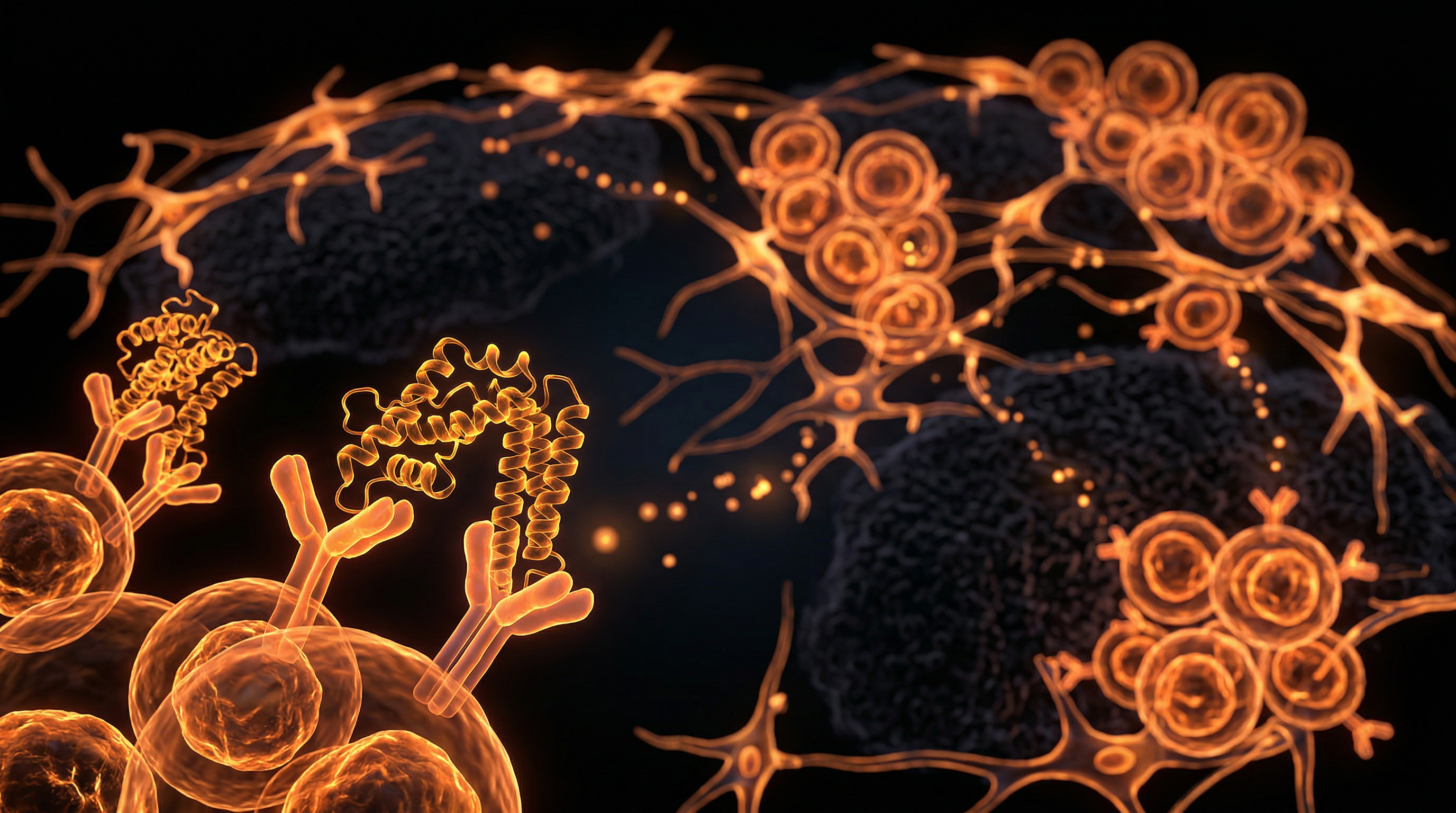
Interleukin-7 is a 25 kDa glycoprotein, a member of the type I cytokine family. Unlike most cytokines, which are secreted by activated immune cells during an inflammatory response, IL-7 is constitutively produced by non-haematopoietic stromal cells. These include the epithelial cells of the thymus and the fibroblastic reticular cells within the bone marrow and lymph nodes.
The Genetic Blueprint
The human IL-7 gene is located on Chromosome 8q12-13. Its production is strictly regulated; the body does not "flush" the system with IL-7. Instead, it maintains a precise, homeostatic level. When T-cell counts are low (lymphopenia), the body does not necessarily increase IL-7 production; rather, the existing IL-7 becomes more available because there are fewer cells to consume it. This is known as homeostatic competition.
The Receptor Complex
To exert its effects, IL-7 must bind to its specific receptor, the IL-7R, which is a heterodimer composed of two distinct chains:
- IL-7Rα (CD127): The specific binding component.
- Common Gamma Chain (γc or CD132): A shared signalling component used by several other interleukins (IL-2, IL-4, IL-9, IL-15, and IL-21).
The expression of CD127 is a hallmark of a healthy, "competent" T-cell. When a T-cell is exhausted or chronically overstimulated, it often sheds this receptor, becoming "blind" to the fuel it needs to survive.
The Role of the Thymic Epithelium
The thymus is divided into two main zones: the cortex and the medulla. Thymic Epithelial Cells (TECs) in these regions provide the "niche" where IL-7 is secreted. It acts as a survival signal for thymocytes (developing T-cells) as they move through the stages of maturation. Without the constant bathing in IL-7 provided by the TECs, these cells undergo programmed cell death (apoptosis) before they can ever reach the bloodstream.
Mechanisms at the Cellular Level
At the molecular level, IL-7 is more than just a growth factor; it is a master regulator of metabolic and genetic stability within the lymphocyte lineage.
1. Anti-Apoptotic Signalling
IL-7’s primary role is keeping cells alive. It achieves this by modulating the balance of the Bcl-2 family of proteins. When IL-7 binds to its receptor, it activates the PI3K/Akt pathway, which:
- Upregulates Bcl-2 (a pro-survival protein).
- Upregulates Mcl-1.
- Inhibits Bad and Bax (pro-death proteins).
In the absence of IL-7, the mitochondria of a developing T-cell begin to leak, triggering the caspase cascade that leads to cellular suicide.
2. Metabolic Priming
T-cells require immense amounts of energy to proliferate. IL-7 facilitates the uptake of glucose by increasing the expression of the Glut1 transporter on the cell surface. It also activates the mTORC1 pathway, which coordinates protein synthesis and nutrient sensing. This ensures that the cell has the "building blocks" necessary for the rapid division required during thymopoiesis.
3. V(D)J Recombination
One of the most profound roles of IL-7 is its influence on the T-cell Receptor (TCR) gene rearrangement. During the "Double Negative" (DN) stages of T-cell development, the cell must physically rearrange its DNA to create a unique receptor. IL-7 signalling makes the TCR-gamma, delta, and beta loci accessible to the RAG (Recombination-Activating Gene) enzymes.
Scientific Callout: Without IL-7 signalling, the T-cell cannot "unlock" its DNA to build its defensive hardware, effectively rendering the immune system blind to new threats.
4. Homeostatic Proliferation
Outside the thymus, IL-7 remains critical. It maintains the pool of naïve T-cells and memory T-cells. It prevents the "narrowing" of the immune repertoire. As we age, our immune system becomes dominated by "clonally expanded" memory cells that have seen the same old viruses (like CMV), while the pool of naïve cells—those ready for a new virus or a new cancer mutation—shrinks. IL-7 is the only factor capable of expanding this naïve pool without causing systemic inflammation.
Environmental Threats and Biological Disruptors
The decline of the thymus and the reduction in IL-7 efficacy are not solely the result of chronological time. Modern environmental factors act as "accelerants" for thymic atrophy.
Endocrine Disrupting Chemicals (EDCs)
The thymus is highly sensitive to hormonal fluctuations. Compounds such as Bisphenol A (BPA), phthalates, and certain pesticides (Glyphosate) have been shown to interfere with the thymic stroma. These chemicals mimic oestrogen or disrupt thyroid signalling, both of which are intimately linked to the health of thymic epithelial cells.
Chronic Cortisol and Stress
The thymus is perhaps the most stress-sensitive organ in the body. Chronic elevation of cortisol—driven by the modern "always-on" lifestyle—induces mass apoptosis of thymocytes and causes the thymus to shrink rapidly. This is an evolutionary mechanism intended to save energy during short-term "fight or flight" scenarios, but in the context of modern chronic stress, it leads to permanent thymic scarring (fibrosis).
Electromagnetic Fields (EMF) and Oxidative Stress
Emerging research suggests that the delicate microenvironment of the thymic cortex is susceptible to non-ionising radiation. Excessive exposure to EMFs can trigger reactive oxygen species (ROS) production within the stromal cells. Because the thymus relies on a very specific redox balance to foster T-cell maturation, this oxidative stress can lead to the "premature ageing" of the IL-7 producing machinery.
Heavy Metal Accumulation
Metals such as cadmium, lead, and mercury—prevalent in urban environments and industrial food chains—accumulate in the glandular tissues. These metals can displace essential co-factors like zinc. The thymus is highly zinc-dependent; zinc deficiency is a primary cause of thymic atrophy, and without zinc, the hormone thymulin (which works in tandem with IL-7) becomes inactive.
The Cascade: From Exposure to Disease
When IL-7 levels drop and the thymus involutes, a catastrophic domino effect begins within the human body. This is the "Cascade of Immunosenescence."
1. The Shrinking Repertoire
The most immediate effect is a reduction in T-cell receptor (TCR) diversity. The body loses its ability to recognize "neo-antigens"—the small mutations that occur in cancer cells. This is why cancer incidence spikes exponentially after the age of 50. The "policemen" of the body are all old, retired, or focused on the wrong targets.
2. "Inflammaging"
As the thymus fails, the body attempts to compensate by "filling the gaps" with peripheral expansion of existing T-cells. These cells often become senescent. Senescent T-cells don't fight infections; instead, they secrete SASP (Senescence-Associated Secretory Phenotype)—a cocktail of pro-inflammatory cytokines like IL-6 and TNF-alpha. This leads to a state of chronic, low-grade systemic inflammation known as inflammaging, which underpins heart disease, Alzheimer's, and Type 2 Diabetes.
3. Loss of Self-Tolerance
The thymus is not only responsible for creating T-cells but also for deleting those that would attack the body’s own tissues (Negative Selection). As the thymic medulla decays, this "quality control" process fails. Self-reactive T-cells escape into the bloodstream, leading to the late-onset autoimmune diseases frequently seen in the elderly, such as rheumatoid arthritis or polymyalgia rheumatica.
4. Vulnerability to "Cytokine Storms"
An immune system lacking the "calming" and "organising" influence of a robust T-cell pool is prone to overreaction. When faced with a novel pathogen (such as SARS-CoV-2), an IL-7 depleted system cannot mount a precision strike. Instead, it resorts to a "scorched earth" policy—uncontrolled innate immune activation that leads to the lethal cytokine storms witnessed in modern clinical settings.
What the Mainstream Narrative Omits
In the halls of "Mainstream Medicine," the focus is almost exclusively on symptom management and vaccine efficacy. However, there is a glaring omission in this narrative: a vaccine is only as good as the immune system’s ability to respond to it.
The Vaccine Failure Paradox
Medical authorities frequently lament the "poor vaccine response" in the elderly. They suggest "higher doses" or "adjuvants." What they omit is that the primary reason for vaccine failure in the over-70s is thymic insufficiency. If there are no naïve T-cells to be trained by the vaccine, the vaccine is biologically useless. The "elephant in the room" is that we are trying to software-update a computer (the immune system) whose hardware (the thymus) has already burnt out.
The Suppression of IL-7 Therapy
Why is Recombinant Human IL-7 (rhIL-7) not a standard-of-care treatment? Clinical trials, such as those involving the drug CYT107, have shown remarkable results in "re-booting" the immune systems of HIV patients, cancer patients, and even those with sepsis. IL-7 can increase T-cell counts by 300-400% without the toxicities associated with other interleukins (like IL-2).
The "suppressed truth" is that a rejuvenated immune system would drastically reduce the market for chronic disease medications. IL-7 represents a regenerative paradigm, whereas the pharmaceutical industry is built on a maintenance paradigm. There is no profit in a "one-off" thymic restoration that prevents twenty years of chronic inflammatory disease.
The Nutrient Deception
The mainstream narrative also ignores the catastrophic impact of modern agricultural soil depletion. We are told our diets are "fine," yet the specific micronutrients required for IL-7 production and thymic function—zinc, selenium, and bioactive Vitamin A—have plummeted in concentration in British produce over the last 50 years. We are living in a state of "hidden hunger" that starves the thymus of its raw materials.
The UK Context
In the United Kingdom, the crisis of thymic ageing is compounded by specific regional factors that are often overlooked by the NHS and public health bodies.
The "Winter Crisis" and Immune Exhaustion
The UK's lack of sunlight for six months of the year is more than just a Vitamin D issue. Vitamin D receptors are highly expressed in the thymus. The chronic Vitamin D deficiency prevalent in the British population—exacerbated by "indoor lifestyles"—means that the British thymus is essentially "operating in the dark" for half the year. This correlates directly with the seasonal "Winter Crisis" in the NHS, where the elderly population's immune systems collapse under the weight of common respiratory viruses.
Industrial Legacy and Pollution
The UK’s industrial heritage has left a legacy of heavy metal contamination in urban soils. Cities like London, Manchester, and Birmingham have significant levels of airborne particulate matter (PM2.5). These micro-particles are small enough to enter the bloodstream and accumulate in the lymphatic system, directly inhibiting the stromal cells that produce IL-7.
The "Long Covid" Paradigm
The UK has been significantly impacted by "Long Covid." Emerging research from British universities suggests that many "Long Haulers" are suffering from T-cell exhaustion and thymic atrophy triggered by the initial viral insult. Instead of investigating IL-7 as a restorative "fuel" for these patients, the UK clinical focus remains on psychological support and exercise pacing, ignoring the underlying biological "fuel shortage."
Academic Excellence vs. Clinical Inertia
Ironically, the UK is home to some of the world's leading researchers in thymic biology (such as those at the Francis Crick Institute). However, there is a massive "translational gap." While British scientists map the "Thymus Cell Atlas," the average British GP has no diagnostic tools to measure thymic output (such as TREC assays) or any means to prescribe IL-7 precursors.
Protective Measures and Recovery Protocols
While pharmaceutical-grade IL-7 (rhIL-7) remains difficult to access for the general public, there are biological strategies and "off-label" protocols that can support thymic health and maximise the IL-7 we have left.
1. Zinc and Selenium: The Essential Co-Factors
The thymus cannot function without Zinc.
- Protocol: Supplementation with 25-50mg of Zinc Picolinate daily, paired with a copper balance, is essential.
- Selenium: 200mcg of Selenium (as Selenomethionine) supports the antioxidant enzymes (Glutathione Peroxidase) that protect the thymic stroma from oxidative decay.
2. The "Thymic Diet": Fat-Soluble Vitamins
The thymus requires Vitamin A (Retinol)—not Beta-Carotene—to maintain epithelial integrity.
- Sources: High-quality cod liver oil, pasture-raised egg yolks, and beef liver.
- Vitamin D3/K2: A target blood level of 100-150 nmol/L is necessary to support the "training" of T-cells within the thymus.
3. Fasting and Autophagy
One of the most potent ways to trigger thymic regeneration is Prolonged Fasting (48-72 hours). Research by Dr. Valter Longo has shown that fasting triggers a "purge" of old, damaged immune cells and stimulates haematopoietic stem cells to produce fresh, naïve T-cells. This process is mediated by the reduction of PKA (Protein Kinase A) and IGF-1.
4. Growth Hormone and IGF-1 Modulation
There is evidence that Growth Hormone (GH) can partially reverse thymic involution. The "TRIIM" (Thymus Regeneration, Immunorestoration, and Insulin Mitigation) trial used a combination of:
- DHEA
- Metformin
- Recombinant Growth Hormone
The results showed not only an increase in thymic fat-to-tissue ratio but also a reversal of the participants' "epigenetic age."
5. Avoiding the "Thymic Killers"
- Eliminate Refined Sugars: High blood glucose leads to the glycosylation of IL-7 receptors, making them non-functional.
- Reduce EMF Exposure: Sleep in a "low-EMF" environment to allow the thymus to repair during the nocturnal melatonin peak.
- Stress Management: Techniques that increase Vagal Tone (like deep breathing or cold exposure) inhibit the cortisol spikes that kill thymocytes.
6. Bio-identical Glandulars
Though controversial in mainstream circles, the use of Thymic Extracts (derived from bovine or porcine sources) has a long history in European biological medicine. These extracts contain "thymic factors" like Thymulin and Thymosin alpha-1, which may act as "signalling mimetics" for IL-7, encouraging the maturation of remaining T-cells.
Summary: Key Takeaways
The role of Interleukin-7 in human health can no longer be ignored. It is the "Master Key" to the immune system.
- The Fuel Shortage: Immunosenescence is primarily a result of the thymus running out of IL-7, leading to a lack of naïve T-cells.
- The Involution Crisis: Thymic decay is the "first domino" in the diseases of ageing, from cancer to autoimmunity.
- Environmental Sabotage: Modern toxins (BPA, Glyphosate, EMFs) and the "UK Vitamin D gap" accelerate the destruction of the thymic stroma.
- The Pharmaceutical Blind Spot: Mainstream medicine prioritises symptom management over the regenerative potential of IL-7 therapy.
- Biological Sovereignty: Through specific nutritional protocols (Zinc, Retinol), fasting, and the modulation of the GH/IGF-1 axis, it is possible to slow—and perhaps even reverse—the clock on immune ageing.
Final Callout: We are as old as our immune system. To restore the thymus is to restore the very foundation of human resilience. The science of IL-7 provides the blueprint; it is now a matter of overcoming the institutional inertia that keeps this knowledge from the public.
Author: Senior Biological Researcher, INNERSTANDING Date: October 2023 Tags: Cytokines, IL-7, Therapy, Restoration, Thymus Gland, Immunosenescence
This article is provided for informational and educational purposes only. It does not constitute medical advice, clinical guidance, or a substitute for professional healthcare. Information reflects cited research at time of publication. Always consult a qualified healthcare professional before acting on any health information.
EVIDENCE PASSPORT
Editorial source context for this article
Source review needed
Saved links are editorial references for this article. They may support specific claims rather than every sentence. Open and assess each source in context. This passport does not independently verify them.
Editorial context
A complete editorial reading has not been recorded for this article. Source links remain available for you to open and assess directly.
Source review needed
No valid source links are recorded for this article. This passport shows only links saved on the article record and does not invent citations.
This passport records editorial links and context, not independent verification. Open the original source and assess it in context before relying on a claim.
Medical Disclaimer
The information in this article is for educational purposes only and does not constitute medical advice, diagnosis, or treatment. Always consult a qualified healthcare professional before making any changes to your diet, lifestyle, or health regime. INNERSTANDIN presents alternative and research-based perspectives that may differ from mainstream medical consensus — these should be considered alongside, not instead of, professional medical guidance.
Read Full DisclaimerContinue the thread
Keep this question moving.
Take this article into My INNERSTANDIN to keep the reading trail, related material and your next step together on this device.
Explore this in the Body Map
See where this hits your biology. Interactive anatomy, threats, and protective protocols.
Dig deeper in the Library
Free, longform PDF volumes that go beyond headlines into mechanisms and references.