
Magnesium Sulfate: Cardiovascular Regulation and Neural Calm
Updated May 2026
Intravenous magnesium acts as a potent calcium channel blocker and neuromuscular relaxant. This article explains its role in blood pressure regulation and managing acute anxiety.
Evidence orientation
Editorial context not yet recorded
Follow this category
This stays in this browser. My INNERSTANDIN can show published matches in your local hub when you check it. It does not send email, push, or alert notifications.
Local learning review
A private browser aid for revisiting ideas. It is not an alert or a health recommendation.
Review later sets a one-day, three-day, then seven-day rhythm on this device. Choose it only when you want to revisit this article.
Overview
In the hierarchy of essential minerals, magnesium occupies a position of singular importance, yet it remains one of the most clinically overlooked elements in modern allopathic medicine. Known as the ‘Master Mineral’, magnesium is a co-factor in over 600 enzymatic reactions, regulating everything from protein synthesis and muscle function to blood glucose control and blood pressure regulation. However, when administered intravenously as Magnesium Sulfate ($MgSO_4$), this mineral transcends its role as a mere nutrient and becomes a potent pharmacological intervention—a physiological ‘fire extinguisher’ for the cardiovascular and nervous systems.
The modern Western landscape is defined by a silent epidemic of magnesium deficiency. This is not a coincidence but a systemic byproduct of industrialised agriculture, water demineralisation, and chronic psychological stress. As a senior biological researcher for INNERSTANDING, I have observed how the systemic depletion of magnesium acts as a foundational driver for the ‘diseases of civilisation’: hypertension, cardiac arrhythmias, and chronic anxiety disorders.
Intravenous (IV) magnesium therapy offers a direct route to bypass the limitations of the gastrointestinal tract, providing immediate bioavailability to cells that are starved of this critical cation. By acting as a natural calcium channel blocker and a potent NMDA receptor antagonist, magnesium sulfate serves as the ultimate regulator of cellular ‘excitability’. This article provides an exhaustive exploration of the biochemical pathways, the environmental forces conspiring against our mineral status, and the suppressed clinical utility of magnesium in restoring cardiovascular stability and neural calm.
The Biology — How It Works
To understand magnesium sulfate, one must first understand the delicate dance between magnesium ($Mg^{2+}$) and calcium ($Ca^{2+}$). In biological systems, calcium is the signal for 'action'—it triggers muscle contraction, nerve firing, and the release of neurotransmitters. Magnesium is the essential counterbalance; it is the signal for 'relaxation' and 'recovery'.
The Intracellular Guard
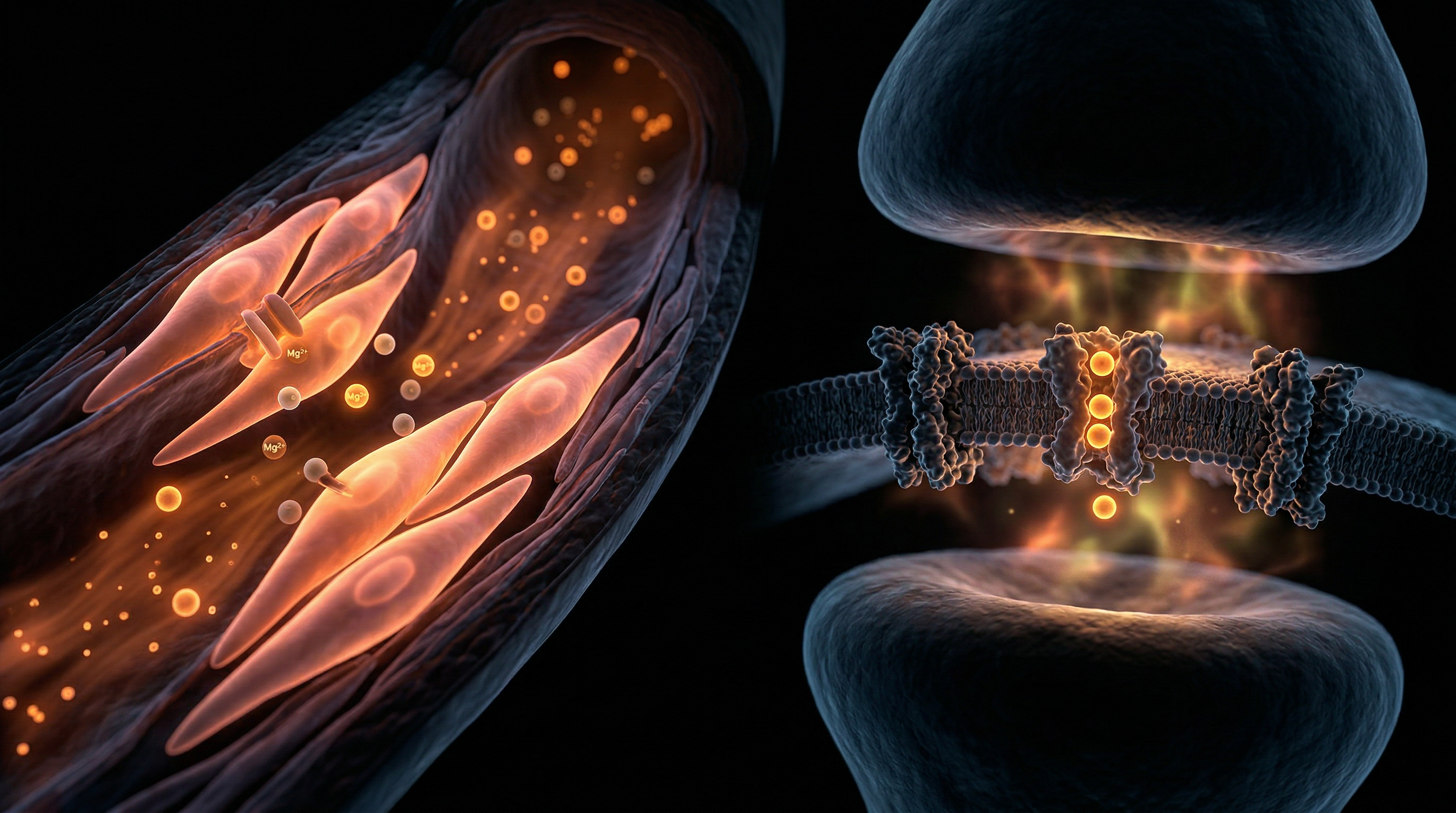
Magnesium is primarily an intracellular cation. While only about 1% of the body's magnesium is found in the blood, its presence within the mitochondria and the cytoplasm is what dictates the energy status of the cell. Magnesium is bound to ATP (Adenosine Triphosphate), the universal energy currency of life. Without magnesium, ATP is biologically inactive. This means that every energy-dependent process in the human body, from the beating of the heart to the firing of a neuron, is fundamentally magnesium-dependent.
Cardiovascular Dynamics
In the cardiovascular system, magnesium sulfate acts as a powerful vasodilator. It achieves this by modulating the tone of the vascular smooth muscle. When magnesium levels are optimal, the blood vessels remain flexible and responsive. When magnesium is depleted, calcium floods the vascular cells, leading to chronic vasoconstriction and, inevitably, hypertension.
Statistic: Clinical studies have shown that intravenous magnesium can reduce systemic vascular resistance by up to 25%, providing a rapid and safe method for lowering blood pressure without the rebounding effects common in synthetic anti-hypertensives.
The Neurological Brake
In the central nervous system, magnesium acts as the 'gatekeeper' of the NMDA (N-methyl-D-aspartate) receptor. This receptor is responsible for excitatory neurotransmission. Under normal conditions, a magnesium ion sits in the channel of the NMDA receptor, blocking the flow of calcium into the neuron. This prevents the nerve from over-firing. In states of magnesium deficiency or high stress, this 'plug' is removed, leading to a state of excitotoxicity—where neurons are overstimulated to the point of exhaustion or death. This manifests clinically as anxiety, restlessness, and insomnia.
Mechanisms at the Cellular Level
The sophistication of magnesium sulfate lies in its multi-modal mechanism of action. It does not simply target one pathway; it rebalances the entire electrochemical environment of the cell.
1. Physiological Calcium Antagonism
Magnesium is often called 'nature's calcium channel blocker'. Unlike pharmaceutical calcium channel blockers (like Amlodipine), which can have significant side effects and disrupt long-term mineral balance, magnesium works through physiological competition.
- L-Type Calcium Channels: Magnesium inhibits the entry of calcium through these channels in cardiac and smooth muscle cells.
- Sarcoplasmic Reticulum: It regulates the release of calcium from internal stores, ensuring that muscle contraction is followed by complete relaxation.
2. The Sodium-Potassium Pump ($Na^+/K^+-ATPase$)
The 'battery' of every cell is the sodium-potassium pump, which maintains the electrical gradient necessary for life. This pump is strictly magnesium-dependent. If magnesium is low, the pump fails, leading to a loss of intracellular potassium and an accumulation of sodium and calcium. In the heart, this is the primary mechanism behind arrhythmias and tachycardia. IV magnesium sulfate stabilises this pump, effectively 'recharging' the cellular battery and restoring a normal sinus rhythm.
3. Modulation of Catecholamines
During the 'fight or flight' response, the adrenal glands release catecholamines (adrenaline and noradrenaline). These hormones rapidly deplete magnesium as they force the body into a high-energy, high-tension state. Magnesium sulfate acts to inhibit the release of these catecholamines and blunts the tissue's sensitivity to them. This is why magnesium is the primary treatment for Phaeochromocytoma (adrenal tumours) crises and is highly effective in managing acute panic attacks where adrenaline is coursing through the system.
4. Blood-Brain Barrier (BBB) Integrity
Magnesium is crucial for maintaining the integrity of the blood-brain barrier. It regulates the tight junctions between endothelial cells, preventing pro-inflammatory cytokines and toxins from entering the brain parenchyma. In cases of neuroinflammation, which is increasingly linked to depression and anxiety, magnesium sulfate acts as a neuroprotective agent by reducing BBB permeability.
Environmental Threats and Biological Disruptors
We must address why a substance so fundamental to our survival is so frequently deficient in the modern population. The reality is that our environment has been engineered—whether by negligence or design—to be magnesium-depleted.
The Depletion of the Soil
The most significant threat to our magnesium status is the industrialisation of agriculture. Since the 'Green Revolution', the focus has been on NPK (Nitrogen, Phosphorus, Potassium) fertilisers. These fertilisers allow crops to grow quickly and look healthy, but they do not replenish the trace minerals in the soil. Furthermore, the use of glyphosate—the active ingredient in many herbicides—acts as a potent mineral chelator. It binds to magnesium in the soil, making it unavailable to the plant. Consequently, the vegetables we eat today contain up to 80% less magnesium than those our grandparents consumed.
Water Demineralisation
Historically, humans obtained a significant portion of their magnesium from 'hard' water sources. Modern municipal water treatment focuses on safety and clarity, often removing essential minerals in the process. Fluoridation of water further compounds this issue, as fluoride can bind to magnesium, creating magnesium fluoride, an insoluble compound that the body cannot utilise.
The Blue Light and EMF Burden
Emerging research suggests that our constant exposure to Artificial Blue Light and Electromagnetic Fields (EMFs) may accelerate magnesium depletion. EMFs have been shown to activate Voltage-Gated Calcium Channels (VGCCs) in the cell membrane. This activation causes an influx of calcium into the cell, which the body attempts to counter by flushing magnesium out of the cell. In our hyper-connected, 5G-saturated environment, we are effectively 'leaking' magnesium at a cellular level.
Key Fact: Chronic stress triggers the release of cortisol, which increases the renal excretion of magnesium. This creates a vicious cycle: stress depletes magnesium, and low magnesium makes the body more sensitive to stress.
The Cascade: From Exposure to Disease
When magnesium levels fall below the physiological threshold, a predictable cascade of systemic failure begins. This is not a sudden collapse but a slow erosion of regulatory capacity.
Phase 1: Sub-clinical Irritability
The early stages of magnesium deficiency often present as non-specific symptoms: muscle twitches (fasciculations), fatigue, and 'brain fog'. Centrally, the individual becomes less resilient to stress. Small inconveniences trigger disproportionate anxiety responses because the NMDA 'brakes' are failing.
Phase 2: Metabolic and Vascular Tension
As the deficiency deepens, the vascular system begins to stiffen. Peripheral resistance increases, leading to Essential Hypertension. At this stage, mainstream medicine typically prescribes diuretics, which ironically further deplete magnesium and potassium levels, accelerating the pathology. Simultaneously, insulin sensitivity decreases. Magnesium is required for the insulin receptor to function; without it, glucose cannot efficiently enter the cell, leading to hyperinsulinemia and Type 2 Diabetes.
Phase 3: The Acute Event
The final stage of the cascade is the acute cardiovascular or neurological event. This may manifest as:
- Atrial Fibrillation: The electrical instability of the heart reaches a tipping point.
- Myocardial Infarction: Vasospasms in the coronary arteries, often triggered by stress, lead to ischaemia.
- Preeclampsia/Eclampsia: In pregnancy, the ultimate 'stress test', magnesium deficiency leads to life-threatening hypertension and seizures.
- Panic Disorder: A state of constant neural excitotoxicity where the brain's 'alarm' system cannot be turned off.
What the Mainstream Narrative Omits
The suppression of magnesium sulfate’s utility in clinical practice is a classic example of how economic interests dictate medical protocols. Magnesium sulfate is a generic, naturally occurring salt. It cannot be patented, and it is incredibly inexpensive to produce.
The Pharmaceutical Displacement
There is no profit in a 'Magnesium Miracle'. If the public—and the medical profession—fully embraced magnesium as the primary intervention for hypertension and anxiety, the market for billion-pound blockbuster drugs like ACE inhibitors, Statins, and Benzodiazepines would collapse.
Mainstream psychiatry, for instance, focuses almost exclusively on neurotransmitter reuptake (SSRIs). Yet, if the underlying issue is excitotoxicity caused by a lack of magnesium at the NMDA receptor, no amount of serotonin-tinkering will solve the problem. In fact, many psychiatric medications further tax the liver and kidneys, contributing to mineral imbalances.
The Myth of the 'Normal' Serum Test
Perhaps the greatest omission is the continued reliance on the Serum Magnesium Test. Because the body prioritises keeping blood magnesium levels stable to prevent immediate cardiac arrest, it will 'leach' magnesium from the bones and muscles to maintain serum levels. Therefore, a patient can have a 'normal' blood test while being severely depleted at a cellular and skeletal level.
Exposing the Truth: The 'normal' range for magnesium in most UK labs is set too low (typically 0.7 to 1.0 mmol/L). Research suggests that any value below 0.85 mmol/L is associated with increased cardiovascular risk, yet doctors are trained to ignore these 'sub-optimal' levels until they become 'critically' low.
The UK Context
In the United Kingdom, the situation is particularly acute. The British Geological Survey has highlighted significant areas of the UK where soil is depleted of essential minerals due to centuries of intensive farming and high rainfall, which leaches minerals from the earth.
The NHS Burden
The National Health Service (NHS) is currently overwhelmed by the 'Big Three' of magnesium deficiency: Heart Disease, Diabetes, and Mental Health issues. Despite this, magnesium sulfate is largely reserved for the intensive care unit (ICU) or the maternity ward (for eclampsia).
There is a profound 'Postcode Lottery' regarding access to advanced nutrient therapy. While private clinics in London and the South East are increasingly offering IV magnesium infusions for stress and recovery, the average patient in a regional GP surgery is rarely, if ever, screened for magnesium deficiency or offered a mineral-based intervention for their high blood pressure or anxiety.
Regulatory Resistance
The UK's regulatory bodies, such as NICE (National Institute for Health and Care Excellence), have strict guidelines that favour synthetic pharmaceuticals. While magnesium sulfate is recognised for its role in specific acute conditions, its use as a preventative or foundational therapy for cardiovascular health is ignored. This top-down approach ensures that the British public remains dependent on a lifelong regime of 'management' drugs rather than achieving a state of physiological mineral-rich 'resolution'.
Protective Measures and Recovery Protocols
Restoring magnesium status is not merely about taking a generic supplement. It requires a strategic, bioavailable approach to overcome years of depletion and environmental toxicity.
The Power of the IV Route
For those in a state of 'Magnesium Bankruptcy', oral supplementation is often insufficient. The gut has a limited capacity for magnesium absorption, and high doses of oral magnesium sulfate (Epsom salts) have a laxative effect. IV Magnesium Sulfate bypasses the digestive system entirely, delivering the cation directly into the bloodstream. This:
- Saturates the tissues rapidly.
- Provides immediate relief from vascular tension.
- Resets the neural threshold for anxiety.
- Enhances mitochondrial ATP production.
The typical protocol in a therapeutic setting involves the administration of 2g to 4g of magnesium sulfate in a saline or dextrose solution over 30 to 60 minutes. This 'flush' of magnesium can induce a profound sense of warmth and relaxation—a physical manifestation of the vascular and nervous systems finally 'letting go'.
Strategic Oral Supplementation
Once the initial crisis is managed through IV therapy, maintenance is essential. However, not all magnesium forms are equal:
- Magnesium Glycinate: Highly bioavailable and gentle on the stomach. Excellent for anxiety and sleep.
- Magnesium Threonate: The only form known to effectively cross the blood-brain barrier, making it superior for cognitive health.
- Magnesium Malate: Ideal for those with fatigue and fibromyalgia, as malic acid is a key player in the Krebs cycle.
Transdermal Therapy: The Ancient Method
For a daily 'reset', transdermal application is highly effective. Magnesium ions can be absorbed through the skin.
- Epsom Salt Baths: A soak in high-concentration magnesium sulfate is a potent way to lower cortisol and soothe sore muscles.
- Magnesium Oil: Sprayed directly onto the skin, this bypasses the liver and provides a slow release of minerals into the peripheral tissues.
Dietary and Lifestyle Adjustments
- Eliminate Glyphosate: Choose organic produce whenever possible to avoid mineral chelators.
- Mineral-Rich Water: Opt for naturally high-mineral spring waters (look for a high 'Dry Residue' at 180°C on the label).
- EMF Hygiene: Turn off Wi-Fi at night and limit blue light exposure to preserve cellular magnesium stores.
- The Calcium Ratio: Aim for a 1:1 or 2:1 ratio of Calcium to Magnesium. Most Western diets are 4:1 or higher, which drives systemic calcification of the arteries.
Summary: Key Takeaways
Magnesium sulfate is far more than a simple chemical compound; it is a fundamental pillar of biological stability. In an age of high-frequency stress and industrialised nutrient depletion, it serves as the ultimate antidote to the 'over-excited' state of the modern human.
- Magnesium as the 'Off Switch': It is the primary physiological antagonist to calcium, ensuring that our hearts beat rhythmically and our nerves do not fire uncontrollably.
- The IV Advantage: Intravenous administration provides a rapid, high-concentration 'reset' for the cardiovascular and nervous systems that oral supplements cannot match.
- A Systemic Deficiency: Industrial farming, water treatment, and chronic stress have created a society that is functionally magnesium-starved, leading to an epidemic of hypertension and anxiety.
- Institutional Neglect: The medical establishment's reliance on flawed serum tests and patentable pharmaceuticals has pushed magnesium sulfate to the fringes of clinical practice, despite its proven safety and efficacy.
- Path to Recovery: Restoration requires a multi-faceted approach—IV infusions for acute depletion, high-quality oral chelates for maintenance, and environmental changes to stop the 'leakage' of this precious mineral.
By reclaiming our mineral heritage and INNERSTANDING the profound role of magnesium sulfate, we can exit the cycle of chronic disease and enter a state of true cardiovascular regulation and neural calm. The solution to many of our most complex health crises is not to be found in a new laboratory molecule, but in the restoration of a mineral that has been at the centre of life since the very beginning.
This article is provided for informational and educational purposes only. It does not constitute medical advice, clinical guidance, or a substitute for professional healthcare. Information reflects cited research at time of publication. Always consult a qualified healthcare professional before acting on any health information.
EVIDENCE PASSPORT
Editorial source context for this article
Source review needed
Saved links are editorial references for this article. They may support specific claims rather than every sentence. Open and assess each source in context. This passport does not independently verify them.
Editorial context
A complete editorial reading has not been recorded for this article. Source links remain available for you to open and assess directly.
Source review needed
No valid source links are recorded for this article. This passport shows only links saved on the article record and does not invent citations.
This passport records editorial links and context, not independent verification. Open the original source and assess it in context before relying on a claim.
Medical Disclaimer
The information in this article is for educational purposes only and does not constitute medical advice, diagnosis, or treatment. Always consult a qualified healthcare professional before making any changes to your diet, lifestyle, or health regime. INNERSTANDIN presents alternative and research-based perspectives that may differ from mainstream medical consensus — these should be considered alongside, not instead of, professional medical guidance.
Read Full DisclaimerContinue the thread
Keep this question moving.
Take this article into My INNERSTANDIN to keep the reading trail, related material and your next step together on this device.
Explore this in the Body Map
See where this hits your biology. Interactive anatomy, threats, and protective protocols.
Dig deeper in the Library
Free, longform PDF volumes that go beyond headlines into mechanisms and references.