The NMDA Receptor Gating Mechanism: Magnesium's Pathophysiological Role in Preventing Glutamate Excitotoxicity
An in-depth exploration of the biochemical interplay between magnesium and the N-methyl-D-aspartate (NMDA) receptor, explaining how magnesium deficiency leads to glutamate-driven neuronal damage and the importance of maintaining ionic balance for neurological health.

# The NMDA Receptor Gating Mechanism: Magnesium's Pathophysiological Role in Preventing Glutamate Excitotoxicity\n\nIn the intricate web of human neurobiology, the balance between excitation and inhibition is a fundamental requirement for health. This balance is largely regulated by the N-methyl-D-aspartate (NMDA) receptor, an ionotropic glutamate receptor that plays a starring role in synaptic plasticity, learning, and memory. However, the NMDA receptor is also a site of significant vulnerability. When its gating mechanism fails, the resulting influx of calcium triggers a destructive process known as glutamate excitotoxicity, leading to neuronal death and neurodegeneration. At the center of this protective mechanism is one of the body's most vital minerals: Magnesium.
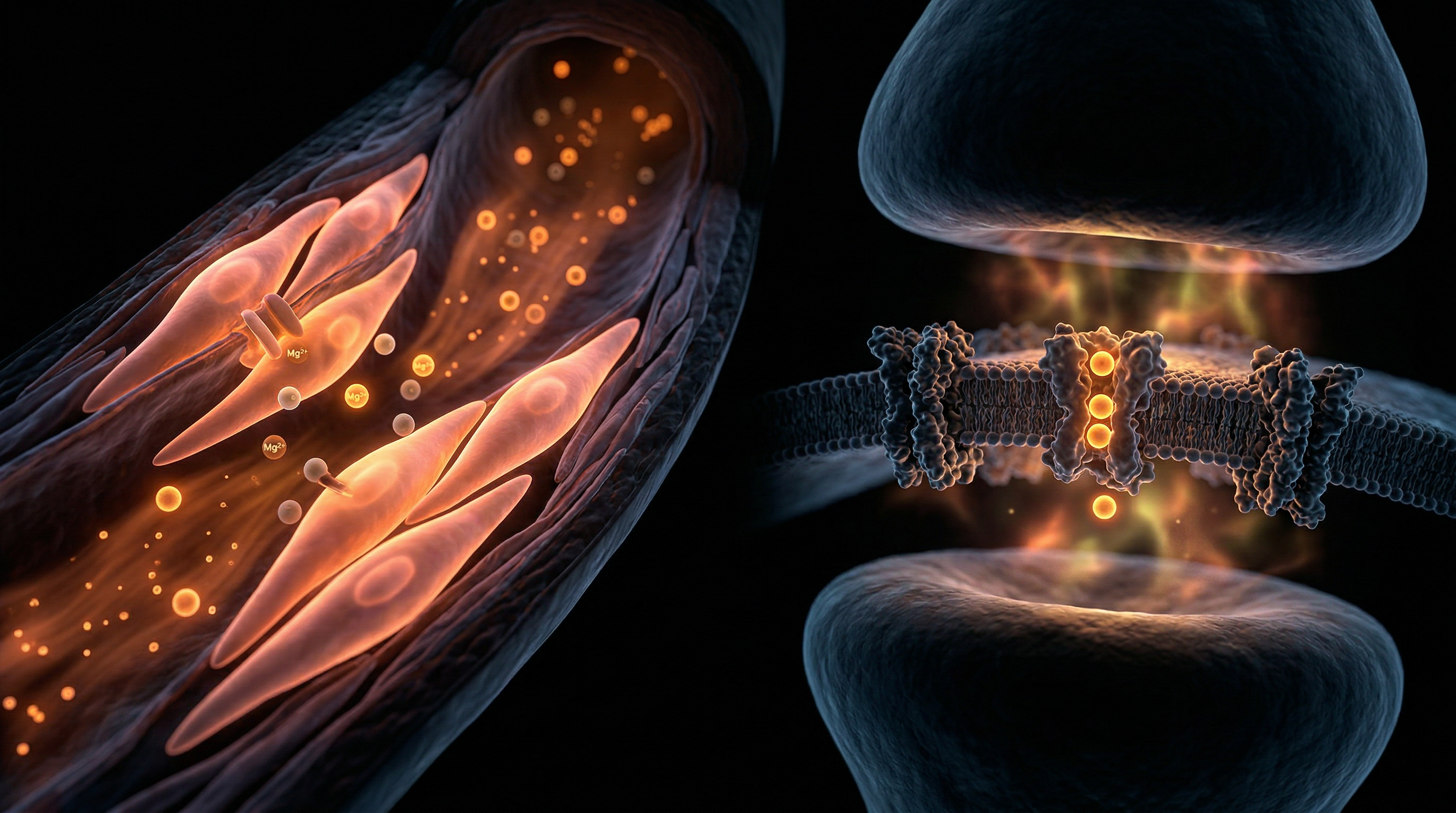
For INNERSTANDING, we explore the root causes and pathophysiological implications of this gating mechanism and how magnesium acts as the brain's primary shield.\n\n## The Molecular Sentinel: The NMDA Receptor Structure\n\nThe NMDA receptor is unique among ionotropic receptors because it functions as a 'coincidence detector.' For the channel to open and allow ions to flow, two distinct events must occur simultaneously. First, the neurotransmitter glutamate must bind to its specific site on the receptor. Second, the post-synaptic neuron must be depolarized, meaning its internal electrical charge must shift from negative to positive. This dual requirement ensures that the NMDA receptor only activates during significant neurological activity, preventing the brain from being flooded with 'noise.'\n\nWhat mediates this voltage-dependent activation? The answer is the magnesium block.
At resting membrane potential, a magnesium ion (Mg2+) is physically lodged within the pore of the NMDA receptor. Because of its positive charge and the negative environment inside the cell, the magnesium ion is pulled into the channel but is too large to pass through easily. It effectively acts as a physiological 'plug,' preventing other ions, specifically calcium (Ca2+), from entering the cell even if glutamate is present. This is the first line of defense in neurological stability.\n\n## The Pathophysiology of Magnesium Depletion\n\nWhen systemic magnesium levels are optimal, the NMDA gate remains securely 'plugged' during periods of rest. However, in states of magnesium deficiency—a common condition in modern populations—this block becomes unstable.
Without sufficient extracellular magnesium to maintain the plug, the NMDA receptor becomes 'leaky.' In this state, even minimal amounts of glutamate, or minor electrical fluctuations, can cause the magnesium ion to dislodge prematurely.\n\nThe consequence of a weak magnesium block is a state of chronic neuronal hyper-excitability. This is not merely a theoretical concern; it is the biochemical basis for many symptoms of magnesium deficiency. When the NMDA gate is too easily opened, the brain becomes hyper-sensitized to stimuli. This manifests clinically as heightened anxiety, sensory overload, chronic pain, and migraines. The 'noise' in the brain becomes deafening because the primary filter—the magnesium-gated NMDA receptor—is no longer functional.\n\n## Glutamate Excitotoxicity: The Calcium Cascade\n\nThe most severe consequence of a failed magnesium gate is glutamate excitotoxicity.
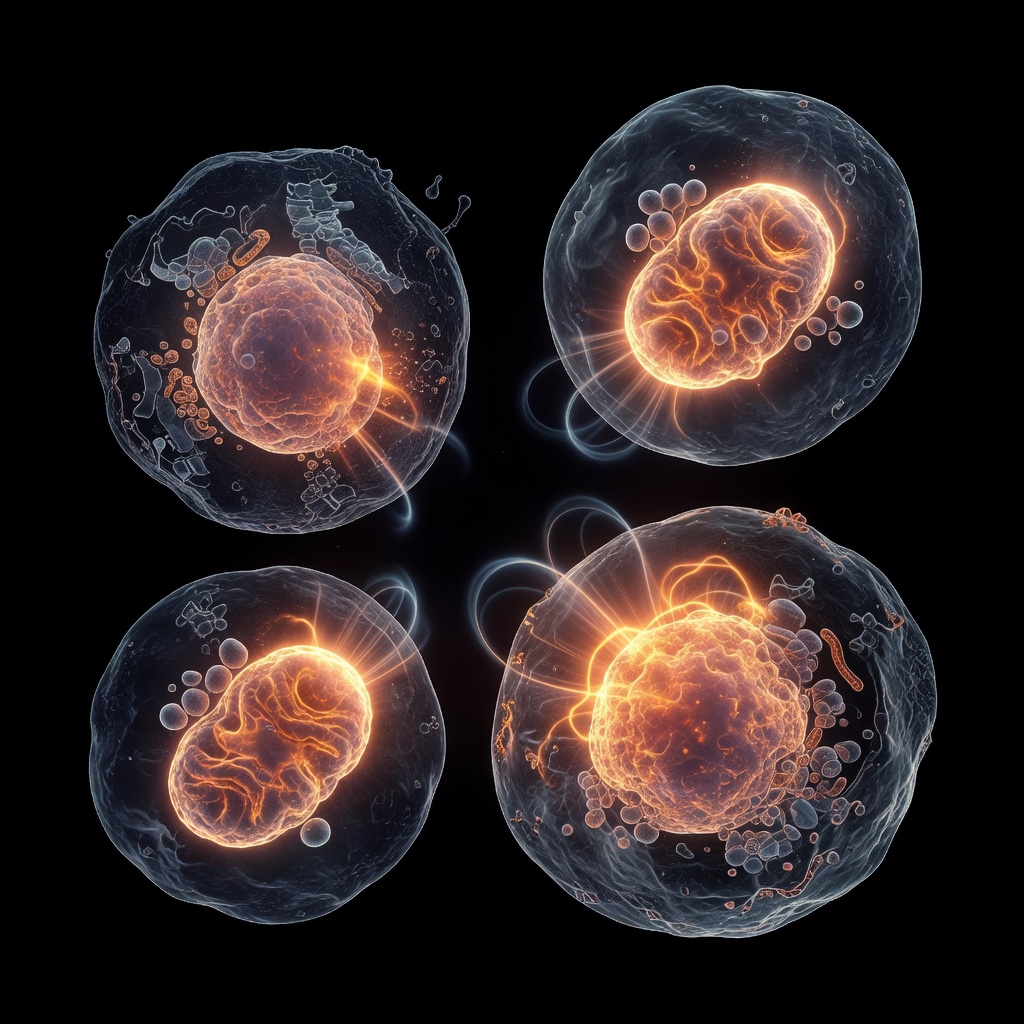
When the magnesium plug is absent or easily removed, calcium ions flood into the neuron in excessive quantities. While calcium is a vital signaling molecule, its presence in high concentrations is lethal to the cell. Excessive intracellular calcium activates a suite of destructive enzymes, including proteases (which digest cellular proteins), lipases (which destroy the cell membrane), and endonucleases (which break down DNA).\n\nFurthermore, the mitochondria, which are responsible for sequestering excess calcium, quickly become overwhelmed. This mitochondrial calcium overload leads to the production of massive amounts of reactive oxygen species (ROS), causing oxidative stress that further damages the cell's internal structures. Eventually, the mitochondrial membrane collapses, releasing pro-apoptotic factors that signal the cell to commit suicide.
Magnesium Blend – The Most Important Mineral
A high-bioavailability mineral blend designed to support over 300 essential biochemical reactions, from energy production to muscle relaxation. This formula helps combat daily fatigue while providing the foundational support your nervous system and bones require.
Vetting Notes
Pending
This process of excitotoxicity is a core pathological mechanism in several devastating conditions, including ischemic stroke, traumatic brain injury, and chronic neurodegenerative diseases like Alzheimer's and Parkinson's. In every case, the loss of the magnesium-mediated NMDA block is a pivotal step toward neuronal death.\n\n## Root Causes of Magnesium Deficiency in the UK\n\nTo address the failure of the NMDA gating mechanism, we must look beyond the receptor itself and investigate the root causes of magnesium depletion. In the UK, several factors contribute to a widespread 'magnesium crisis.'\n\n1. Agricultural Soil Depletion: For decades, intensive farming practices have prioritized crop yield and appearance over nutrient density. As a result, the magnesium content in British soil has declined significantly.
Studies indicate that we would need to consume several times the amount of vegetables today to achieve the same magnesium intake as our grandparents.\n\n2. The Stress Loop: Magnesium is known as the 'anti-stress' mineral because it modulates the hypothalamic-pituitary-adrenal (HPA) axis. However, stress itself causes the body to dump magnesium into the urine. This creates a vicious cycle: stress depletes magnesium, which weakens the NMDA gate, which increases neuronal excitability, which further increases the body's stress perception.\n\n3. High Calcium-to-Magnesium Ratios: Many UK diets are high in dairy and fortified foods but low in magnesium-rich seeds, nuts, and leafy greens.
An intake of calcium that vastly outweighs magnesium (greater than a 2:1 ratio) can interfere with magnesium absorption and function, effectively 'crowding out' the mineral needed for the NMDA block.\n\n4. Digestive Malabsorption: Chronic gut inflammation, low stomach acid (hypochlorhydria), and the use of Proton Pump Inhibitors (PPIs) are rampant. These conditions significantly impair the body's ability to ionize and absorb magnesium from food or low-quality supplements.\n\n## Clinical Applications: Restoring the Gatekeeper\n\nRestoring the NMDA gate requires more than just 'any' magnesium supplement. Because the NMDA receptors are located within the central nervous system, we must utilize forms of magnesium that effectively cross the blood-brain barrier. Magnesium L-threonate is a specialized chelate designed for this purpose, showing a unique ability to increase magnesium levels in the cerebrospinal fluid.
This makes it the gold standard for treating excitotoxicity-related symptoms like brain fog and cognitive decline.\n\nAdditionally, Magnesium Bisglycinate is an excellent option for systemic support. The glycine component of this chelate acts as an inhibitory neurotransmitter, providing a secondary calming effect on the nervous system while the magnesium works to restore the NMDA block. For patients with significant digestive issues, transdermal magnesium or ionic liquid forms may circumvent the gut and provide more immediate relief.\n\n## Conclusion\n\nThe relationship between magnesium and the NMDA receptor is a cornerstone of neurological health. By acting as a voltage-dependent plug, magnesium ensures that our neurons only fire when they are supposed to, protecting them from the lethal effects of calcium overload. When we address the root causes of magnesium deficiency—addressing soil quality, managing stress, and choosing bioavailable forms—we are doing more than just supplementing a mineral; we are reinforcing the brain's fundamental gating mechanism.
In an era of increasing neurological stress, maintaining the magnesium block is a non-negotiable step toward long-term brain resilience and health.
This article is provided for informational and educational purposes only. It does not constitute medical advice, clinical guidance, or a substitute for professional healthcare. Information reflects cited research at time of publication. Always consult a qualified healthcare professional before acting on any health information.
RESEARCH FOUNDATIONS
Biological Credibility Archive
Citations provided for educational reference. Verify via PubMed or institutional databases.
Medical Disclaimer
The information in this article is for educational purposes only and does not constitute medical advice, diagnosis, or treatment. Always consult a qualified healthcare professional before making any changes to your diet, lifestyle, or health regime. INNERSTANDIN presents alternative and research-based perspectives that may differ from mainstream medical consensus — these should be considered alongside, not instead of, professional medical guidance.
Read Full DisclaimerReady to learn more?
Continue your journey through our classified biological research.
THE ARSENAL
Based on Magnesium Forms, Functions & Deficiency — products curated by our research team for educational relevance and biological support.
Magnesium Blend – The Most Important Mineral
INNERSTANDING may earn a commission on purchases made through these links. All products are selected based on rigorous educational relevance to our biological research.
RABBIT HOLE
Follow the biological thread deeper