
Manganese Scarcity and Mitochondropathy
Updated May 2026
Manganese is a crucial cofactor for mitochondrial superoxide dismutase, yet its levels are dropping in modern UK produce. This article explores the link between manganese deficiency and oxidative damage to the mitochondria.
Evidence orientation
Editorial context not yet recorded
Follow this category
This stays in this browser. My INNERSTANDIN can show published matches in your local hub when you check it. It does not send email, push, or alert notifications.
Local learning review
A private browser aid for revisiting ideas. It is not an alert or a health recommendation.
Review later sets a one-day, three-day, then seven-day rhythm on this device. Choose it only when you want to revisit this article.
Overview
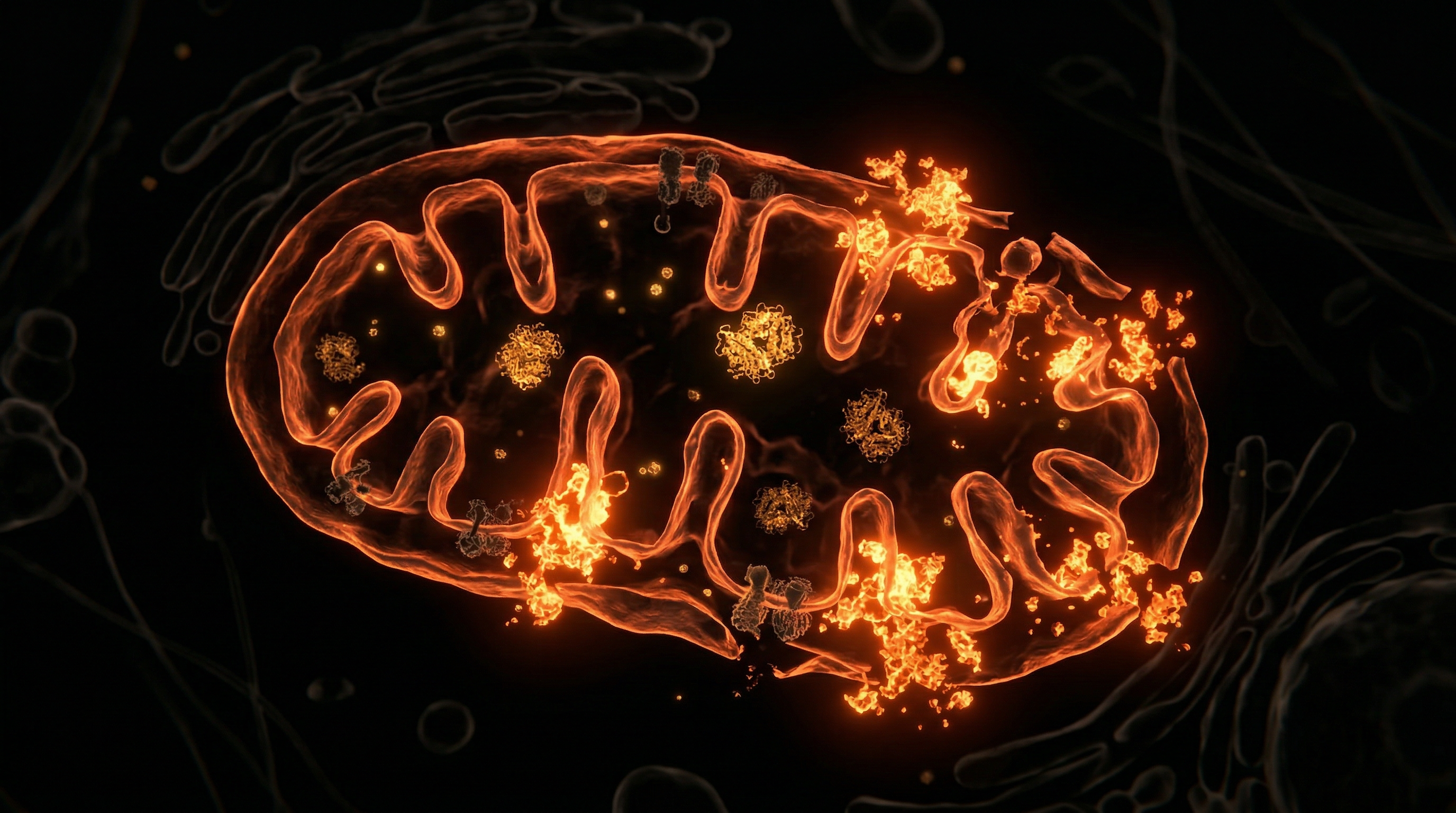
In the hierarchy of nutritional discourse, Manganese (Mn) is frequently relegated to a footnote, eclipsed by the more popularised minerals like Magnesium or Zinc. However, as we descend into the microscopic landscape of the human cell—specifically the mitochondrial matrix—this trace element emerges as the lynchpin of aerobic survival. We are currently witnessing a silent, systemic collapse in Manganese bioavailability, a phenomenon that correlates with a precipitous rise in mitochondrial dysfunction, or mitochondropathy.
The central thesis of this investigation is that modern industrial practices, primarily in the United Kingdom and Western Europe, have engineered a "Manganese gap." This gap is not merely a dietary shortfall but a fundamental disruption of the mitochondrial antioxidant defence system. Without sufficient Manganese, the Manganese Superoxide Dismutase (MnSOD) enzyme fails, leaving the mitochondrial DNA (mtDNA) and the electron transport chain (ETC) vulnerable to scorched-earth oxidative damage.
This article serves as an urgent dossier for INNERSTANDING, exposing the biochemical mechanisms by which Manganese deficiency precipitates systemic disease and the environmental factors that are systematically stripping this vital element from our food chain.
The UK’s soil manganese levels have declined by over 30% in the last sixty years, directly mirroring the surge in chronic metabolic and neurodegenerative conditions across the British population.
##
The Biology — How It Works
Manganese is a transition metal, essential for the function of a diverse array of metalloenzymes. While the human body contains only 12–20 mg of Manganese at any given time, its turnover and localisation are critical. It is concentrated in the mitochondria, the nucleus, and the endoplasmic reticulum, reflecting its role in high-stakes metabolic processes.
The Guardian of the Matrix: MnSOD
The most vital role of Manganese is its position as the central cofactor for Sod2, commonly known as MnSOD. Within the mitochondria, the process of oxidative phosphorylation—the conversion of nutrients into ATP—inevitably leaks electrons. These "stray" electrons react with oxygen to form Superoxide (O2•−), a highly reactive and destructive free radical.
MnSOD is the only enzyme capable of neutralising superoxide within the mitochondrial matrix. It catalyses the dismutation of superoxide into oxygen and hydrogen peroxide. Without Manganese to activate this enzyme, the superoxide radical accumulates, leading to the formation of Peroxynitrite (ONOO−), a potent oxidant that can irreversibly damage proteins, lipids, and the mitochondrial genome.
Enzymatic Multitasking
Beyond antioxidant defence, Manganese acts as a requisite spark for several other pathways:
- Pyruvate Carboxylase: A rate-limiting enzyme in gluconeogenesis, responsible for maintaining blood sugar stability and providing intermediates for the Krebs cycle.
- Arginase: The final enzyme in the Urea Cycle, which facilitates the detoxification of ammonia in the liver. Manganese deficiency here leads to "brain fog" and neurotoxicity due to ammonia buildup.
- Glycosyltransferases: Enzymes required for the synthesis of proteoglycans and glycoproteins, the building blocks of cartilage and bone.
- Glutamine Synthetase: High concentrations of Mn are found in the brain, where this enzyme converts the excitatory neurotransmitter glutamate into the benign glutamine, preventing excitotoxicity.
##
Mechanisms at the Cellular Level
To understand the gravity of Manganese scarcity, one must look at the Electron Transport Chain (ETC). The ETC consists of five complexes (I-V) embedded in the inner mitochondrial membrane.
The Superoxide Leak
Under normal conditions, roughly 0.1% to 2% of the oxygen consumed by mitochondria is converted into superoxide. This is a normal physiological "exhaust." However, when MnSOD activity is compromised due to Manganese scarcity, this exhaust begins to melt the engine.
- Lipid Peroxidation: The mitochondrial membrane is rich in cardiolipin, a phospholipid essential for the structural integrity of the ETC. Superoxide-driven radicals attack cardiolipin, causing the membrane to leak protons. This dissipates the Proton Motive Force, effectively "short-circuiting" the battery of the cell.
- mtDNA Fragmentation: Unlike nuclear DNA, mitochondrial DNA lacks the protective shield of histone proteins. It is situated directly adjacent to the site of radical production. Manganese deficiency leaves mtDNA exposed. Damaged mtDNA produces mutated proteins for the ETC, which in turn produce more radicals—a feedback loop of cellular decay.
- The Calcium Link: Manganese and Calcium share similar transport pathways into the mitochondria. Manganese acts as a natural regulator of the Mitochondrial Calcium Uniporter (MCU). When Manganese is low, Calcium influx can become dysregulated, leading to "Calcium Overload," which triggers the opening of the Mitochondrial Permeability Transition Pore (mPTP), resulting in programmed cell death (apoptosis).
The Glycation Connection
Manganese is also a cofactor for enzymes involved in the metabolism of Advanced Glycation End-products (AGEs). In a state of Manganese deficiency, the body cannot effectively manage the "caramelisation" of proteins caused by high blood sugar. This accelerates the aging process of the vascular system and the brain, contributing to what is now being termed "Type 3 Diabetes" or Alzheimer’s disease.
##
Environmental Threats and Biological Disruptors
The scarcity of Manganese is not a biological accident; it is an environmental consequence. Several factors are actively preventing Manganese from reaching the human mitochondrial matrix.
The Glyphosate Factor
The most significant disruptor in the modern era is Glyphosate, the active ingredient in most commercial herbicides. Glyphosate was originally patented as a chelator—a chemical designed to bind and strip minerals from surfaces.
In the soil, glyphosate binds to Manganese, making it insoluble and unavailable to the plant. Even if a crop is not "Roundup Ready," the drift and soil persistence of this chemical mean that produce grown in glyphosate-treated fields is chronically deficient in Manganese. Furthermore, glyphosate inhibits the shikimate pathway in soil microbes, which are essential for mobilizing minerals for plant uptake.
Research indicates that glyphosate-exposed crops can have up to 50-80% less Manganese than their organic counterparts.
Heavy Metal Competition
Toxic metals like Lead (Pb), Aluminium (Al), and Cadmium (Cd) compete for the same transport proteins as Manganese. In an industrialised environment like the UK, high levels of airborne and waterborne Aluminium can block Manganese from crossing the blood-brain barrier. This creates a "functional deficiency" where Manganese might be present in the diet, but it cannot reach the enzymes that require it.
Soil pH and Monoculture
UK agriculture has historically favoured high-nitrogen fertilisers, which acidify the soil. While Manganese is more soluble in acidic soils, excessive use of phosphate fertilisers creates Manganese Phosphates, which are unavailable to plants. The lack of crop rotation and the focus on "high-yield" grains has depleted the trace mineral density of the topsoil, leaving the modern British diet calorie-rich but micronutrient-barren.
##
The Cascade: From Exposure to Disease
Manganese-related mitochondropathy does not manifest overnight. It is a slow, degenerative cascade that affects the most energy-intensive organs: the brain, the heart, and the endocrine system.
Neurodegeneration: The Basal Ganglia Focus
The brain is highly susceptible to oxidative stress. The Basal Ganglia, responsible for motor control and executive function, has the highest demand for Manganese for its antioxidant enzymes.
- Parkinson’s Disease: While Manganese toxicity (Manganism) causes Parkinsonian symptoms, recent research suggests that deficiency may be just as dangerous. Without MnSOD, dopaminergic neurons in the substantia nigra undergo oxidative collapse.
- Huntington’s Disease: Evidence shows that Manganese transport is impaired in Huntington’s, suggesting that providing bioavailable Mn could be neuroprotective.
Metabolic Syndrome and Type 2 Diabetes
As a cofactor for Pyruvate Carboxylase, Manganese is essential for the "anaplerotic" reactions that keep the Krebs cycle turning. When these reactions stall, the cell cannot burn glucose efficiently. This leads to Insulin Resistance. The body attempts to compensate by producing more insulin, but the underlying mitochondrial engine is broken. This is not a "sugar" problem; it is a "metabolic spark plug" problem.
Connective Tissue and Skeletal Integrity
The "hidden" symptom of Manganese deficiency is chronic joint pain and ligament laxity. Because glycosyltransferases require Mn, a deficiency prevents the body from repairing cartilage. We are seeing an epidemic of early-onset osteoarthritis and "mysterious" tendon ruptures in the UK, often misdiagnosed as simple overuse, when the root cause is a failure of structural synthesis due to Mn scarcity.
##
What the Mainstream Narrative Omits
The current medical and nutritional establishment operates on a "scurvy-level" definition of deficiency. If you don't have an acute clinical collapse, they deem your levels "sufficient." This narrative ignores subclinical insufficiency and the nuance of biochemical individuality.
The Serum Fallacy
The standard blood test for Manganese measures serum levels. However, Manganese is an intracellular mineral. Less than 1% of the body’s Manganese is found in the blood. A person can have "normal" serum Manganese while their mitochondria are starving for the element. The mainstream narrative relies on outdated testing protocols that fail to capture the cellular reality.
The RDA Deception
The Recommended Dietary Allowance (RDA) for Manganese (approximately 2.3 mg for men, 1.8 mg for women) is based on the bare minimum needed to prevent overt disease, not the amount required to combat the unprecedented levels of oxidative stress in the 21st century. In a world saturated with EMFs, glyphosate, and microplastics—all of which increase ROS production—our requirement for Mn-dependent antioxidant protection has likely doubled or tripled.
The "All Manganese is Toxic" Myth
Mainstream toxicology often focuses exclusively on Manganese toxicity (found in miners or industrial workers). This has created a fear-based reluctance to supplement or fortify with Manganese. By conflating inhalation toxicity with nutritional necessity, the narrative has effectively discouraged the population from addressing a critical deficiency.
##
The UK Context
The United Kingdom presents a unique case study in Manganese scarcity. The post-war "Green Revolution" in Britain shifted the focus toward yield and caloric density, at the expense of mineral complexity.
The DEFRA Soil Reports
Data from the Department for Environment, Food & Rural Affairs (DEFRA) has consistently shown a downward trend in the trace mineral content of British soil. The heavy use of NPK (Nitrogen, Phosphorus, Potassium) fertilisers has created "luxury consumption" in plants—they grow fast and large, but their mineral uptake cannot keep pace.
The British Diet
The traditional British diet has moved away from Manganese-rich staples. Historically, the consumption of whole grains, offal (specifically liver), and forest-foraged nuts provided ample Manganese. Today, the dominance of ultra-processed foods (UPFs) means most Britons are consuming "diluted" calories. Even the "healthy" salads in UK supermarkets are often hydroponically grown in solutions that lack a full spectrum of trace elements.
Water Fluoridation
Parts of the UK undergo water fluoridation. Fluoride is known to interfere with Manganese-dependent enzymes. Specifically, it can bind to Manganese in the gut, preventing absorption, and potentially interfere with MnSOD activity in the tissues. This creates a secondary layer of scarcity that is rarely discussed in public health forums.
##
Protective Measures and Recovery Protocols
If we are to combat the rise of mitochondropathy, we must move toward a strategy of "Manganese Restoration." This involves both increasing intake and, crucially, protecting the Manganese we have.
1. Dietary Prioritisation
To overcome the "Manganese gap," one must seek out foods that concentrate this mineral.
- Cloves: The highest known dietary source. Incorporating ground cloves into the diet is a potent way to boost Mn.
- Mussels and Oysters: These filter-feeders concentrate Manganese from the sea.
- Hazelnuts and Pecans: Excellent sources, provided they are organic and grown in mineral-rich soil.
- Organic Leafy Greens: Specifically spinach and chard, but they must be organic to avoid the glyphosate chelation effect.
2. Strategic Supplementation
For those already showing signs of mitochondrial fatigue (brain fog, chronic lethargy, joint pain), supplementation may be necessary.
- Manganese Bisglycinate: This chelated form is highly bioavailable and less likely to compete with other minerals for absorption.
- Avoid Over-Supplementing Zinc/Iron: High doses of Zinc or Iron can inhibit Manganese absorption. These should be taken at different times of the day.
3. Mitigating the Disruptors
- Filtered Water: Use a high-quality filter (Reverse Osmosis or specialized fluoride filters) to remove fluoride and heavy metals that compete with Mn.
- Organic Only: Given the glyphosate-Manganese link, choosing organic for the "Dirty Dozen" (the most sprayed crops) is a non-negotiable for mitochondrial health.
- Fulvic and Humic Acids: These natural soil-derived substances can help "re-mineralise" the body by chaperoning trace elements like Manganese into the cell.
4. Enhancing MnSOD Expression
Manganese is the fuel, but the enzyme (MnSOD) also needs to be "turned on."
- Cold Thermogenesis: Exposure to cold (ice baths or cold showers) is a powerful stimulator of mitochondrial biogenesis and MnSOD expression.
- Melatonin: Beyond sleep, melatonin is a mitochondrial-targeted antioxidant that works synergistically with MnSOD to protect the matrix.
##
Summary: Key Takeaways
The link between Manganese scarcity and mitochondropathy is a clear example of how environmental degradation translates directly into biological decay. We have traded our bioenergetic sovereignty for industrial convenience.
- The MnSOD Vanguard: Manganese is not optional; it is the primary cofactor for the only enzyme that prevents the mitochondria from self-destructing through oxidative stress.
- The Glyphosate Trap: Modern agriculture, through the use of chelating herbicides like glyphosate, has created a "mineral desert" in our food, leading to systemic Manganese deficiency.
- Beyond the Brain: While neurodegeneration is a major consequence, Manganese scarcity also drives the UK’s epidemics of metabolic syndrome and chronic joint disease.
- The Testing Gap: Traditional serum tests are inadequate. We must look at the "mitochondrial picture"—fatigue, recovery time, and cognitive clarity—as the true markers of Manganese status.
- Taking Control: Restoration requires a deliberate shift toward organic, mineral-dense foods, the removal of environmental disruptors like fluoride, and the targeted use of bioavailable Manganese chelates.
The "Manganese Scarcity" is a silent crisis, but it is one we can solve. By restoring this single trace element to its rightful place in our biochemistry, we can begin the process of repairing the mitochondrial engines of the nation. It is time to move beyond the mainstream narrative and reclaim our bioenergetic integrity.
This article is provided for informational and educational purposes only. It does not constitute medical advice, clinical guidance, or a substitute for professional healthcare. Information reflects cited research at time of publication. Always consult a qualified healthcare professional before acting on any health information.
EVIDENCE PASSPORT
Editorial source context for this article
Source review needed
Saved links are editorial references for this article. They may support specific claims rather than every sentence. Open and assess each source in context. This passport does not independently verify them.
Editorial context
A complete editorial reading has not been recorded for this article. Source links remain available for you to open and assess directly.
Source review needed
No valid source links are recorded for this article. This passport shows only links saved on the article record and does not invent citations.
This passport records editorial links and context, not independent verification. Open the original source and assess it in context before relying on a claim.
Medical Disclaimer
The information in this article is for educational purposes only and does not constitute medical advice, diagnosis, or treatment. Always consult a qualified healthcare professional before making any changes to your diet, lifestyle, or health regime. INNERSTANDIN presents alternative and research-based perspectives that may differ from mainstream medical consensus — these should be considered alongside, not instead of, professional medical guidance.
Read Full DisclaimerContinue the thread
Keep this question moving.
Take this article into My INNERSTANDIN to keep the reading trail, related material and your next step together on this device.
Explore this in the Body Map
See where this hits your biology. Interactive anatomy, threats, and protective protocols.
Dig deeper in the Library
Free, longform PDF volumes that go beyond headlines into mechanisms and references.