
The Master Clock: Why Your Liver and Muscles Have Their Own Timepieces
Updated May 2026
Understanding the synchronization between the brain's central clock and peripheral organ clocks is vital for metabolic efficiency. This article explores how modern lifestyle desynchrony leads to insulin resistance and weight gain.
Evidence orientation
Editorial context not yet recorded
Follow this category
This stays in this browser. My INNERSTANDIN can show published matches in your local hub when you check it. It does not send email, push, or alert notifications.
Local learning review
A private browser aid for revisiting ideas. It is not an alert or a health recommendation.
Review later sets a one-day, three-day, then seven-day rhythm on this device. Choose it only when you want to revisit this article.
Overview
For decades, the standard medical curriculum has treated the human body as a biological machine that operates in a linear, steady state. We were taught that as long as the right fuel was provided and the correct "parts" remained functional, the system would hum along indefinitely. This reductionist view is not only outdated—it is dangerously incomplete. At the heart of our physiological existence lies a rhythmic, oscillating pulse that governs every single chemical reaction from our scalp to our toes. This is the science of Chronobiology, and we are currently living through a silent epidemic of "circadian anarchy."
The modern human exists in a state of permanent biological friction. We have decoupled our internal timing from the rotation of the Earth, and the results are catastrophic. While the mainstream narrative focuses almost exclusively on "what" we eat and "how much" we exercise, it systematically ignores the most critical variable in the metabolic equation: When.
Our bodies are not monolithic entities controlled by a single timer. Instead, we are a complex orchestra of billions of cellular clocks. While the brain houses the "Conductor"—a tiny cluster of neurons called the Suprachiasmatic Nucleus (SCN)—the "musicians" are the peripheral clocks located in every major organ, most notably the liver and the skeletal muscles.
When the conductor and the orchestra are in sync, the body achieves a state of metabolic grace: insulin sensitivity is high, inflammation is low, and fat oxidation is effortless. However, when the liver is processing a midnight snack while the brain thinks it is the middle of the winter night, the result is physiological dissonance. This article will expose the mechanics of this desynchrony, demonstrating how the modern UK lifestyle—characterised by blue light, late-night calories, and sedentary behaviour—is literally tearing our biological clocks apart, leading directly to the skyrocketing rates of Type 2 diabetes, non-alcoholic fatty liver disease (NAFLD), and obesity.
According to the British Heart Foundation, around 7.6 million people in the UK are living with heart and circulatory diseases, many of which are exacerbated by the metabolic dysfunction rooted in circadian disruption.
##
##
The Biology — How It Works
To understand why your liver has its own clock, we must first understand the hierarchy of the circadian system. The primary pacemaker is the Suprachiasmatic Nucleus (SCN), located in the hypothalamus, directly above the optic chiasm. The SCN is hard-wired to the outside world via the retinohypothalamic tract. When photons of light—specifically in the blue spectrum (460-480nm)—hit the melanopsin-containing retinal ganglion cells in the eye, a signal is sent to the SCN to signify "Daytime."
The Central Conductor
The SCN’s primary role is to synchronise the rest of the body to the solar cycle. It does this through two main channels: the autonomic nervous system and the endocrine system. One of its most famous outputs is the suppression of melatonin from the pineal gland during the day and its release at night. However, the SCN's reach is much further. It regulates core body temperature and the release of cortisol, the "alertness" hormone that should peak shortly after waking (the Cortisol Awakening Response).
The Peripheral Rebellion
Until the late 1990s, scientists believed the SCN was the only clock. We now know this is false. Experiments involving the surgical removal of the SCN in animal models showed that while the animals lost their overall behavioural rhythms (sleeping and waking at random times), their individual organs—the liver, the lungs, the muscles—continued to oscillate on their own 24-hour cycles for several days.
This revealed a profound biological truth: every organ is a timekeeper.
- The Liver Clock focuses on glucose production (gluconeogenesis), glycogen storage, and cholesterol synthesis.
- The Muscle Clock governs glucose uptake, fatty acid oxidation, and mitochondrial biogenesis.
- The Pancreas Clock dictates the timing of insulin secretion.
The Conflict of Cues
The critical distinction lies in what "sets" these clocks. The SCN is primarily set by Light. However, the peripheral clocks—the liver and muscles—are primarily set by Food Intake (nutrients) and Physical Activity.
In a natural state, these cues are aligned: we see light, we move, and we eat. In the modern UK context, we see artificial light at 11:00 PM (setting the SCN to "day"), while we sit stationary (telling the muscles it is "night") and consume a high-carbohydrate snack (telling the liver it is "midday"). This is Circadian Misalignment, a state of internal temporal chaos that the human genome is fundamentally unequipped to handle.
Statistics from the Office for National Statistics (ONS) suggest that over 19% of the UK workforce is engaged in some form of shift work, placing nearly a fifth of the population in a state of chronic, forced circadian desynchrony.
##
##
Mechanisms at the Cellular Level
The "ticking" of these clocks is not a metaphorical concept; it is a literal molecular mechanism occurring inside the nucleus of your cells. This is known as the Transcription-Translation Feedback Loop (TTFL). Understanding this loop is essential to recognising how metabolic disease begins at the microscopic level.
The Core Loop: CLOCK and BMAL1
At the centre of the cellular clock are two proteins: CLOCK (Circadian Locomotor Output Cycles Kaput) and BMAL1 (Brain and Muscle ARNT-Like Protein 1). During the start of the "biological day," these two proteins bind together to form a complex. This complex acts as a key that unlocks specific parts of our DNA known as E-box elements.
When CLOCK and BMAL1 bind to these elements, they trigger the transcription of thousands of genes. These are called Circadian Effector Genes. However, they also trigger the production of their own "off-switches": the Period (PER) and Cryptochrome (CRY) proteins.
The Negative Feedback
As the day progresses, PER and CRY proteins build up in the cytoplasm of the cell. Once they reach a critical concentration, they enter the nucleus and physically block CLOCK and BMAL1 from working. This shuts down the cycle. Over the course of the night, the PER and CRY proteins are slowly degraded by enzymes like Casein Kinase 1, and by morning, the "off-switch" is gone, allowing CLOCK and BMAL1 to start the cycle all over again.
Metabolic Integration: SIRT1 and AMPK
This molecular clock is intimately tied to our energy status through two "fuel sensor" enzymes:
- SIRT1 (Sirtuin 1): This enzyme requires NAD+ to function. SIRT1 interacts with the clock proteins to de-acetylate them, essentially "cleaning" the clock and ensuring it runs efficiently. If NAD+ levels are low (common in overnutrition and aging), the clock becomes "sluggish" and loses its precision.
- AMPK (AMP-activated protein kinase): Known as the body’s master energy sensor, AMPK is activated when energy is low (during fasting or exercise). AMPK can directly phosphorylate and degrade the CRY proteins, effectively "resetting" the clock in response to metabolic demand.
In the liver, this means that the timing of your meals directly dictates which genes are turned on. If you eat during your biological night, you are forcing the liver to activate Lipogenesis (fat creation) at a time when its molecular clock is trying to prioritise Autophagy (cellular cleanup). You are essentially trying to renovate a house while the cleaning crew is trying to mop the floors; the result is a mess.
##
##
Environmental Threats and Biological Disruptors
We are currently submerged in a "toxic chronobiological soup." The environment in the UK—from the lighting in our London offices to the ingredients in our supermarket meal deals—is designed to break our internal clocks.
The Blue Light Assault
The human eye is most sensitive to blue light because, evolutionarily, blue light meant "midday sun." Modern LED bulbs, smartphone screens, and tablets emit a disproportionate amount of blue light. When we use these devices after sunset, we are sending a powerful "High Noon" signal to the SCN. This inhibits the release of melatonin, but more importantly, it shifts the SCN’s phase, creating a lag between the brain and the peripheral organs.
Ultra-Processed Foods (UPF) and "Time-Free" Eating
In the UK, over 50% of the average diet now consists of Ultra-Processed Foods. These foods are often high in refined sugars and emulsifiers, but their most dangerous attribute in chronobiology is their availability. We live in a 24/7 "food swamp."
The liver clock is designed to anticipate food. In a natural cycle, the liver prepares for glucose influx by upregulating certain enzymes. When we graze from 7:00 AM until 11:00 PM, the liver clock never enters the "fasted" state. This leads to the permanent suppression of FOXO1, a transcription factor vital for glucose regulation and longevity.
Endocrine Disrupting Chemicals (EDCs)
Common chemicals found in the UK environment, such as Bisphenol A (BPA) from plastic linings and Phthalates in personal care products, have been shown to interfere with circadian gene expression. These toxins act as "Xeno-hormones" that can bind to receptors in the liver and muscle, giving the cells conflicting signals about what time of day it is. The Environment Agency and the FSA have faced increasing pressure to regulate these substances more strictly as evidence grows of their "chrono-toxic" effects.
Social Jetlag
This is a term used to describe the discrepancy between our biological clock and our social obligations (work, school, socialising). Most people in the UK live in a state of permanent jetlag, waking up with an alarm clock on weekdays (forcing a phase advance) and sleeping in on weekends (allowing a phase delay). This "yo-yoing" of the biological clock is a major driver of systemic inflammation.
A study published in The Lancet Public Health highlighted that individuals with high levels of social jetlag have a significantly higher Body Mass Index (BMI) and are more likely to suffer from metabolic syndrome, even when controlling for sleep duration.
##
##
The Cascade: From Exposure to Disease
What happens when these clocks drift apart? It isn't just a matter of feeling "tired." It is the initiation of a systemic biological collapse.
1. Insulin Resistance in the Muscle
The skeletal muscles are the primary site for glucose disposal in the body. They possess a high density of GLUT4 transporters, which move to the cell surface to pull sugar out of the blood in response to insulin. The expression of these transporters is under strict circadian control. When the muscle clock is disrupted—due to a lack of movement or late-night light—the muscle becomes "deaf" to insulin signals. This results in elevated blood glucose, even if the pancreas is pumping out massive amounts of insulin.
2. The Fatty Liver (NAFLD) Trap
The liver is the body’s metabolic hub. Under a normal circadian rhythm, the liver spends the day processing nutrients and the night burning stored fat (beta-oxidation). When the liver clock is desynchronised, it loses the ability to switch between these two modes. It begins to synthesise new fat (De Novo Lipogenesis) regardless of the energy state. This fat becomes "parked" in the liver cells (hepatocytes), leading to Non-alcoholic Fatty Liver Disease.
3. Mitochondrial Dysfunction
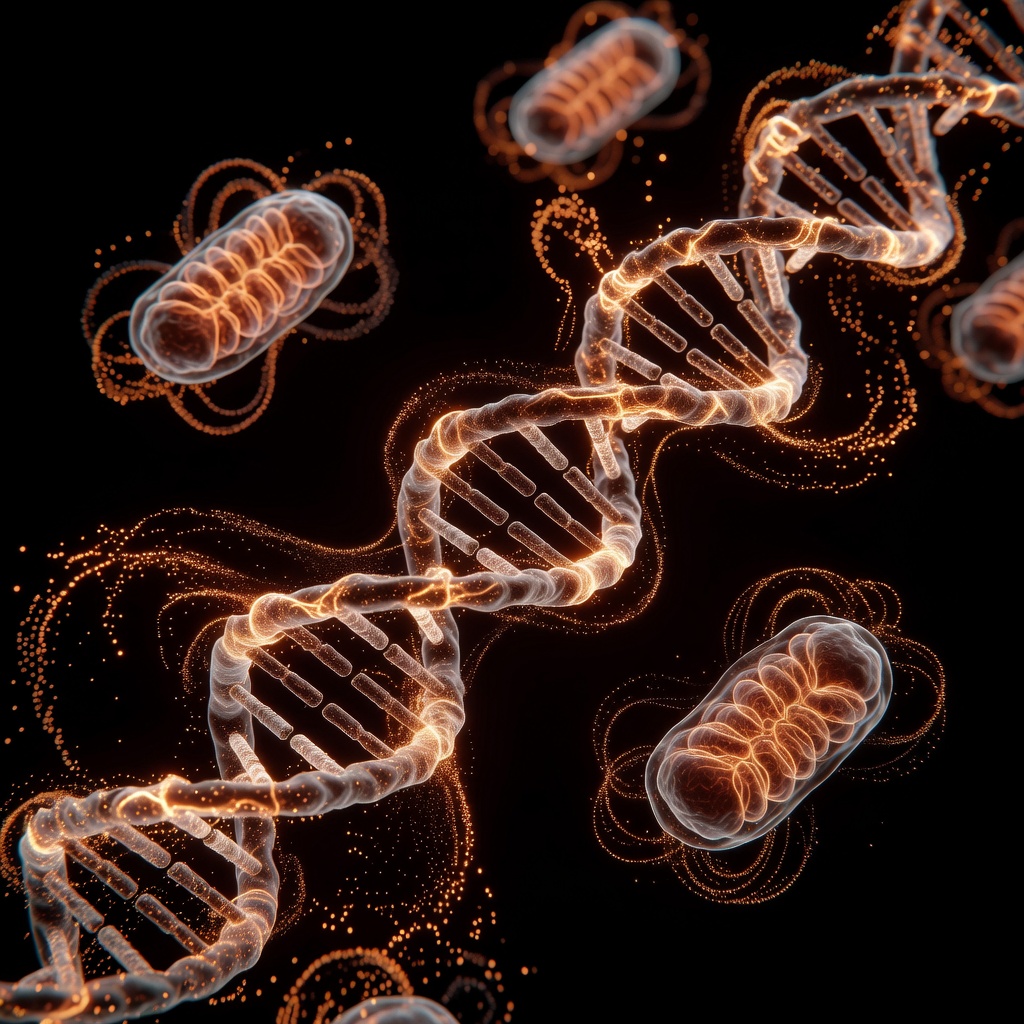
The mitochondria—the power plants of our cells—have their own rhythms. They undergo cycles of fission (splitting) and fusion (joining) that are timed by the molecular clock. Circadian disruption halts this process, leading to the accumulation of "broken" mitochondria that leak Reactive Oxygen Species (ROS). This oxidative stress damages DNA and further degrades the cellular clock, creating a vicious downward spiral.
4. The Breakdown of the Blood-Brain Barrier
Recent research suggests that circadian desynchrony in the peripheral organs can actually lead to increased permeability of the Blood-Brain Barrier (BBB). This allows systemic toxins and inflammatory cytokines (like IL-6 and TNF-alpha) to enter the brain, potentially contributing to neurodegenerative diseases like Alzheimer's—which many researchers are now calling "Type 3 Diabetes" due to its metabolic roots.
##
##
What the Mainstream Narrative Omits
The mainstream health advice provided by the NHS and various UK health charities is often decades behind the cutting-edge science of chronobiology. There is a reason why the "Eatwell Guide" and the "Calories In vs. Calories Out" (CICO) model have failed to stem the tide of obesity.
The CICO Lie
The fundamental flaw of the CICO model is that it assumes a calorie is treated the same way by the body at 8:00 AM as it is at 8:00 PM. This is demonstrably false. Diet-induced thermogenesis (the energy required to process food) is significantly higher in the morning. A 500-calorie meal eaten in the evening causes a much larger spike in blood glucose and insulin than the exact same meal eaten in the morning. By ignoring timing, the mainstream narrative sets people up for failure.
The Pharmaceutical Vested Interest
The UK's pharmaceutical industry (governed by the MHRA) generates billions of pounds from medications for "lifestyle diseases"—statins for cholesterol, metformin for diabetes, and SSRIs for the depression that often accompanies metabolic dysfunction. There is no "profit" in teaching the public how to synchronise their SCN with morning sunlight or the benefits of a 10-hour eating window. Chronobiology offers a "software update" for the body that is essentially free, which makes it an unattractive prospect for an industry built on the sale of "hardware patches" (pills).
The Silence on Blue Light
While the government issues warnings about salt and sugar, there is a deafening silence regarding the "biological toxicity" of the modern light environment. The transition from incandescent bulbs (which have a warmer, red-heavy spectrum) to cheap, blue-heavy LEDs was driven by energy efficiency targets, with zero consideration for the long-term impact on the British public's circadian health.
##
##
The UK Context
The UK presents a unique set of challenges for maintaining a healthy "Master Clock."
The Latitudinal Problem
Due to our northern latitude, the UK experiences extreme variations in day length. In the winter, many workers commute to work in the dark and return in the dark, effectively spending months in a state of Seasonal Affective Disorder (SAD) and circadian "drift." Without the powerful synchronising signal of the sun, the SCN becomes weak, allowing the peripheral clocks to wander even further.
The "Pub Culture" and Late-Night Dining
The British social structure often revolves around late-evening alcohol consumption and "takeaway" culture. Alcohol is a potent circadian disruptor; it fragmentises sleep and suppresses melatonin. When combined with high-fat, high-salt foods consumed late at night (the classic post-pub kebab or chips), the metabolic impact is amplified. The liver is forced to prioritise alcohol detoxification at a time when its clock is trying to manage a massive influx of glucose and lipids.
The NHS Crisis
The NHS is currently buckling under the weight of chronic diseases that are, at their core, circadian in nature. If the UK government were to implement "Circadian Hygiene" protocols—such as blue-light filtering in hospitals and schools, and promoting time-restricted feeding—the potential savings to the taxpayer would be in the billions. Instead, we continue to treat the symptoms of a "broken clock" with ever-increasing doses of medication.
Public Health England (now UKHSA) reports that obesity costs the NHS approximately £6.1 billion annually, a figure projected to rise significantly by 2050 if current trends in metabolic dysfunction continue.
##
##
Protective Measures and Recovery Protocols
Understanding the "Master Clock" is the first step. The second is taking radical responsibility for your biological timing. To resynchronise your liver and muscle clocks, you must implement a "Chrono-Recovery" protocol.
1. The "Anchor" Meal (Time-Restricted Feeding)
The most powerful way to set your liver and gut clocks is through Time-Restricted Feeding (TRF).
- The Protocol: Limit your calorie intake to a 10-hour window (e.g., 8:00 AM to 6:00 PM).
- The Why: This allows your liver clock to fully enter the "fasted" phase, triggering Autophagy and the clearance of stored fats. Ensure your largest meal is earlier in the day when insulin sensitivity is at its peak.
2. Morning Photon Loading
To set the SCN, you must receive high-intensity light as soon as possible after waking.
- The Protocol: Get outside for 15-30 minutes before 9:00 AM, even on overcast "British Grey" days. Lux levels outside, even behind clouds, are significantly higher than any indoor lighting.
- The Why: This suppresses melatonin and triggers the Cortisol Awakening Response, anchoring the brain's clock for the next 24 hours.
3. Evening Light Hygiene
You must defend your pineal gland from the "blue light assault."
- The Protocol: Use "Blue Blocker" glasses (with amber or red lenses) after sunset. Switch off overhead LED lights and use floor lamps with warm-spectrum bulbs. Enable "Night Shift" mode on all devices, but ideally, avoid screens 2 hours before bed.
- The Why: This protects the natural rise of melatonin, which is not only a sleep hormone but a powerful antioxidant that "cleans" the brain and liver during the night.
4. Resistance Training Timing
Muscle clocks are highly responsive to mechanical tension.
- The Protocol: If possible, perform resistance training in the late afternoon (between 3:00 PM and 6:00 PM).
- The Why: Studies show that grip strength, core temperature, and mitochondrial efficiency in the muscles peak in the late afternoon. Training at this time reinforces the muscle's "active" phase and improves glucose disposal for your evening meal.
5. Targeted Supplementation (The "Chrono-Nutrients")
Certain nutrients can help "re-grease" the molecular gears of the clock.
- Magnesium: Essential for the function of the CLOCK/BMAL1 complex. Most UK diets are deficient in magnesium due to soil depletion. Use Magnesium Glycinate or Malate in the evening.
- Melatonin: While often used for sleep, low-dose melatonin (0.3mg to 1mg) can act as a "phase shifter" to help pull a delayed clock forward.
- Resveratrol/Pterostilbene: These compounds activate SIRT1, which, as discussed, helps "clean" the clock proteins.
##
##
Summary: Key Takeaways
The "Master Clock" is not a single entity but a decentralised network of biological timekeepers. The crisis of modern health in the UK is, fundamentally, a crisis of misalignment.
- The SCN (Brain) is set by light; the Liver and Muscles are set by food and movement.
- Modern Life forces these clocks into conflict, leading to a state of "circadian anarchy."
- Insulin Resistance and NAFLD are the direct results of eating and viewing light during the biological night.
- Mainstream Advice fails by ignoring the temporal dimension of human biology.
- The Solution lies in synchronising our light exposure and food intake with the natural solar cycle.
The liver knows what time it is. Your muscles know what time it is. The question is: does your lifestyle allow them to stay in sync, or are you forcing your body to play a symphony where every musician is reading a different score? True health is not found in a pill or a crash diet; it is found in the rhythmic harmony of the Master Clock. In an age of biological chaos, reclaiming your rhythm is the most subversive—and effective—act of health preservation you can perform.
This article is provided for informational and educational purposes only. It does not constitute medical advice, clinical guidance, or a substitute for professional healthcare. Information reflects cited research at time of publication. Always consult a qualified healthcare professional before acting on any health information.
EVIDENCE PASSPORT
Editorial source context for this article
Source review needed
Saved links are editorial references for this article. They may support specific claims rather than every sentence. Open and assess each source in context. This passport does not independently verify them.
Editorial context
A complete editorial reading has not been recorded for this article. Source links remain available for you to open and assess directly.
Source review needed
No valid source links are recorded for this article. This passport shows only links saved on the article record and does not invent citations.
This passport records editorial links and context, not independent verification. Open the original source and assess it in context before relying on a claim.
Medical Disclaimer
The information in this article is for educational purposes only and does not constitute medical advice, diagnosis, or treatment. Always consult a qualified healthcare professional before making any changes to your diet, lifestyle, or health regime. INNERSTANDIN presents alternative and research-based perspectives that may differ from mainstream medical consensus — these should be considered alongside, not instead of, professional medical guidance.
Read Full DisclaimerContinue the thread
Keep this question moving.
Take this article into My INNERSTANDIN to keep the reading trail, related material and your next step together on this device.
Dig deeper in the Library
Free, longform PDF volumes that go beyond headlines into mechanisms and references.