
Maternal PTSD: Structural Changes in the Postpartum Brain
Updated May 2026
Maternal PTSD from birth trauma results in measurable structural changes in the hippocampus and amygdala. These neurobiological shifts can impair maternal functioning and emotional regulation.
Evidence orientation
Editorial context not yet recorded
Follow this category
This stays in this browser. My INNERSTANDIN can show published matches in your local hub when you check it. It does not send email, push, or alert notifications.
Local learning review
A private browser aid for revisiting ideas. It is not an alert or a health recommendation.
Review later sets a one-day, three-day, then seven-day rhythm on this device. Choose it only when you want to revisit this article.
Overview
The transition into motherhood, traditionally framed as a period of profound joy and biological fulfilment, masks a darker, more clinical reality for a significant cohort of women. Perinatal Post-Traumatic Stress Disorder (mPTSD) is not a mere psychological fragility or a transient emotional lapse; it is a profound neurobiological injury. Emerging research in the fields of functional neuroimaging and molecular biology suggests that birth trauma—defined as a mother’s perception of near-death or serious injury to herself or her infant during childbirth—precipitates a cascade of structural alterations within the cerebral architecture.
For decades, the medical establishment has prioritised the physical survival of the neonate, often at the expense of the maternal neurological integrity. While "healthy baby, healthy mother" remains the reductionist mantra of modern obstetrics, it ignores the pathophysiological remodeling occurring within the maternal cranium. When a birth experience transitions from a physiological process into a life-threatening or violent event, the brain’s survival circuitry undergoes a radical recalibration.
This article serves as a comprehensive interrogation of these shifts. We will explore how the amygdala, hippocampus, and prefrontal cortex—the triad of emotional regulation and memory—are physically reshaped by trauma. We will also expose how the systemic failures of modern maternity care act as biological disruptors, and why the mainstream narrative continues to ignore the permanent neurological "scars" left by obstetric violence and clinical negligence.
Statistics indicate that approximately 4% to 9% of women experience PTSD following childbirth, with the figure rising to 18% in high-risk groups. This suggests that hundreds of thousands of mothers are navigating neuroanatomical changes that impair their ability to function.
The Biology — How It Works
The postpartum brain is already in a state of heightened neuroplasticity. Driven by a surge in hormones such as oxytocin, prolactin, and oestradiol, the maternal brain undergoes "pruning" and reorganisation to facilitate bonding and infant-focused vigilance. However, when trauma is introduced into this highly plastic state, the reorganisation becomes maladaptive.
The Amygdaloid Hyper-responsivity
The amygdala, a pair of almond-shaped clusters located deep within the temporal lobes, serves as the brain’s "smoke detector." In a healthy postpartum transition, the amygdala increases in sensitivity to infant cues. In cases of mPTSD, this sensitivity becomes pathological hypertrophy.
Trauma triggers an over-arousal of the sympathetic nervous system, leading to an enlarged and hyper-active amygdala. This structural shift means the mother remains in a state of permanent "high alert." Environmental stimuli that should be neutral—the smell of a hospital, a specific tone of voice, or even the infant’s cry—are processed as immediate existential threats. This is not a choice; it is a structural mandate of an enlarged amygdala that has been conditioned to equate the birthing environment with death.
Hippocampal Atrophy and Fragmentation
Conversely, the hippocampus, responsible for memory consolidation and the spatial-temporal context of experiences, often shows significant volume reduction in the wake of chronic or acute PTSD.
In the context of birth trauma, high levels of cortisol (the primary stress hormone) exert a neurotoxic effect on the hippocampal neurons. This leads to:
- Dissociative Amnesia: The inability to recall specific, vital details of the birth.
- Flashbacks: Because the hippocampus fails to "date-stamp" the trauma, the brain perceives the past event as happening in the present moment.
- Contextual Failure: The mother cannot differentiate between the safety of her current home and the perceived danger of the delivery suite.
The Prefrontal Cortex (PFC) Disconnect
The prefrontal cortex is the "executive" of the brain, responsible for moderating emotional responses and impulse control. In mPTSD, we observe a thinning of the ventromedial prefrontal cortex (vmPFC). This results in a "top-down" failure of regulation. Normally, the PFC sends inhibitory signals to the amygdala to "quiet" the fear response. In the traumatised postpartum brain, this communication line is severed. The amygdala runs unchecked, and the PFC lacks the structural density to exert rational control over the emotional surges.
The "Triple Network" model of PTSD suggests that the Salience Network (which identifies threats) becomes dominant, while the Default Mode Network (involved in self-referential thought) and the Central Executive Network (involved in problem-solving) are severely degraded.
Mechanisms at the Cellular Level
To understand why the brain physically changes, we must look at the cellular and molecular environment during a traumatic labour. The brain is not a static organ; it is a dynamic chemical theatre.
Glucocorticoid Toxicity
During a traumatic birth, the Hypothalamic-Pituitary-Adrenal (HPA) axis is pushed into an extreme state. The resulting flood of glucocorticoids (cortisol) is intended to provide energy for "fight or flight." However, the postpartum brain is uniquely vulnerable. Prolonged exposure to high-dose cortisol leads to the retraction of dendritic spines in the hippocampus. Essentially, the "branches" of the neurons wither away, reducing the brain's ability to process and store information.
Glutamate Excitotoxicity
Trauma induces a massive release of glutamate, the brain’s primary excitatory neurotransmitter. When glutamate levels remain elevated, it overstimulates the NMDA receptors, leading to an influx of calcium into the cells. This process, known as excitotoxicity, can lead to neuronal cell death. In the maternal brain, this "burnout" often manifests as the cognitive "fog" or "mom-brain" that is frequently dismissed as simple exhaustion, but is actually indicative of cellular-level distress.
Microglial Activation and Neuroinflammation
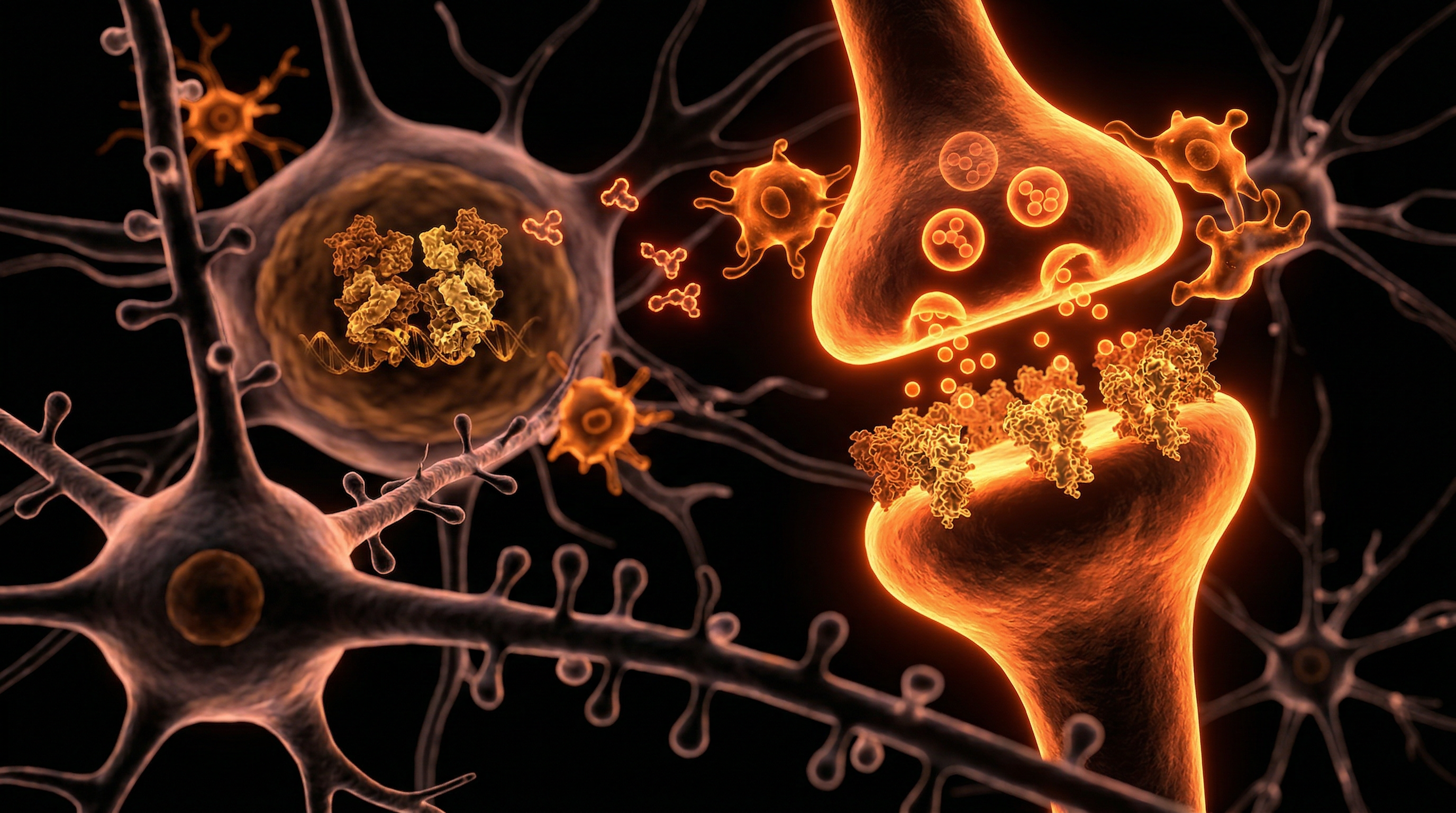
Recent research has highlighted the role of microglia—the brain’s resident immune cells. Traumatic stress "primes" these cells. Once activated, they release pro-inflammatory cytokines (such as IL-6 and TNF-alpha). This state of chronic neuroinflammation prevents the birth of new neurons (neurogenesis) and contributes to the structural degradation of the brain’s white matter. The "scarring" is not just psychological; it is a measurable inflammatory state.
Epigenetic Modifications
Perhaps most concerning is the epigenetic impact. Traumatic birth can lead to the methylation of genes involved in the oxytocin receptor system (OXTR). When these genes are "silenced" or altered, the mother’s brain becomes physically less responsive to the very hormone designed to facilitate recovery and bonding. This creates a biological barrier to maternal-infant attachment that no amount of "willpower" can overcome.
Environmental Threats and Biological Disruptors
The modern obstetric environment is often fundamentally at odds with maternal neurobiology. For a mammal to give birth safely and without trauma, the neocortex (the rational brain) must be quieted, allowing the archaic brain (the brainstem and limbic system) to take over.
The "White Coat" Inhibition
The presence of non-familiar observers, bright lights, and invasive monitoring triggers the neocortical part of the brain. This creates a "biological mismatch." When a mother feels watched or judged, her body produces adrenaline, which antagonises oxytocin. This stalls labour and often leads to the "cascade of intervention." Each intervention—from forceps to emergency caesareans—increases the likelihood of a traumatic neurobiological imprint.
Synthetic Oxytocin (Syntocinon/Pitocin)
The widespread use of synthetic oxytocin is a significant biological disruptor. Natural oxytocin is produced in the hypothalamus and released in pulses, crossing the blood-brain barrier to provide analgesia and euphoria. Synthetic oxytocin, administered via IV, does not readily cross the blood-brain barrier. It creates intense, painful uterine contractions without the concomitant "neurological cushioning." This discrepancy creates a state of physiological betrayal, where the body is in agony and the brain is denied its natural chemical defence, heightening the risk of PTSD.
Sleep Deprivation as a Catalyst
Postpartum sleep deprivation is often normalised, but in the context of trauma, it is a potent neuroanatomical disruptor. Sleep is when the brain clears out metabolic waste via the glymphatic system. When a traumatised mother cannot sleep—due to hyper-vigilance or hospital protocols—the neurotoxic by-products of the stress response remain in the brain, accelerating the structural damage to the hippocampus.
- Obstetric Violence: Non-consensual procedures or verbal abuse during labour.
- Social Isolation: Lack of "The Village" or postnatal support.
- Medicalisation: Treating a physiological process as a surgical emergency.
- Lack of Continuity: Being cared for by multiple strangers rather than a known midwife.
The Cascade: From Exposure to Disease
The progression from a "difficult birth" to a permanent neurostructural shift is known as the trauma cascade. It rarely happens overnight; it is a cumulative erosion of the maternal nervous system.
Stage 1: The Peritraumatic Phase
This occurs during and immediately after the birth. The brain is flooded with catecholamines. If the mother perceives a lack of control or support, the brain "tags" the event as a threat to survival. The periductal gray—a region involved in the "freeze" response—may become overactive, leading to dissociation.
Stage 2: Acute Stress and Memory Consolidation
In the weeks following birth, the brain attempts to process the event. If the environment is supportive, the PFC may successfully regulate the amygdala. However, if the mother is met with gaslighting ("At least the baby is okay"), the consolidation of the trauma becomes entrenched. The hippocampus begins to show the first signs of volume loss.
Stage 3: Chronic mPTSD and Structural Remodeling
If the trauma remains untreated for six months or more, the changes become structural. The amygdala remains enlarged, the PFC shows visible thinning on MRI scans, and the HPA axis becomes dysregulated (either producing too much cortisol or, eventually, crashing into hypocortisolism).
At this stage, the mother may experience:
- Secondary Depression: Often misdiagnosed as Postpartum Depression (PPD), though the root is trauma.
- Autoimmune Issues: Due to the chronic inflammatory state of the nervous system.
- Cognitive Impairment: Difficulty with executive function, memory, and focus.
The biological cost of ignored birth trauma is not just a "sad mother," but a physiologically compromised individual whose nervous system is trapped in a loop of historical terror.
What the Mainstream Narrative Omits
The current discourse surrounding maternal mental health is sanitized and, quite frankly, deceptive. It focuses heavily on "hormones" as a catch-all explanation, effectively pathologising the woman while ignoring the iatrogenic (doctor-induced) causes of her distress.
The Silencing of Obstetric Violence
The mainstream narrative rarely uses the term "obstetric violence." By framing birth trauma as an individual’s failure to cope, rather than a systemic failure of the medical institution, the structural brain changes are dismissed as "mental health issues" rather than "physical injuries." If a soldier returned from war with these exact brain changes, it would be recognized as a combat injury. When a mother returns from a traumatic delivery with the same neurobiology, she is told she has "the baby blues."
The "Healthy Baby" Fallacy
The medical system measures success by the Apgar score of the infant. This ignores the neuro-maternal outcome. A "successful" delivery that leaves the mother with a shrunken hippocampus and a hyper-reactive amygdala is not a success; it is a long-term public health failure. The narrative omits the fact that a traumatised mother’s brain changes can affect her ability to co-regulate with her infant, potentially passing the neurobiological "load" to the next generation via epigenetic inheritance.
The Over-prescription of SSRIs
While Selective Serotonin Reuptake Inhibitors (SSRIs) can be helpful for some, they are often used as a "chemical band-aid" to avoid addressing the structural and systemic roots of the trauma. SSRIs do not "un-shrink" the hippocampus or retrain the amygdala in the same way that trauma-informed therapies do. The mainstream focus on "chemical imbalances" ignores the structural neuroanatomy of PTSD.
The UK Context
In the United Kingdom, the state of perinatal mental health is currently under intense scrutiny, yet the neurobiological aspect remains undervalued in frontline NHS care.
The NHS Staffing Crisis
The NHS is currently grappling with a shortage of over 2,500 midwives. This staffing crisis is a direct driver of maternal brain trauma. When midwives are overstretched, they cannot provide the continuous, supportive presence required to keep a mother’s "threat system" offline. The result is an environment of "industrialised birth" where mothers are processed rather than cared for, directly contributing to the prevalence of mPTSD.
The Ockenden and Kirkup Reports
Recent inquiries into NHS trusts (such as Shrewsbury and Telford, and East Kent) have exposed "substandard care" and a "culture of denial." These reports describe environments where trauma was the norm. From a biological perspective, these hospitals were essentially "trauma factories," producing the structural brain changes we have discussed on a departmental scale.
The Postcode Lottery of Care
Access to Specialist Perinatal Mental Health Teams in the UK remains a "postcode lottery." While some areas have excellent Mother and Baby Units (MBUs), many women are left with no access to trauma-informed care. Furthermore, the UK’s primary treatment model—CBT (Cognitive Behavioural Therapy)—is often insufficient for mPTSD because it targets the neocortex, whereas trauma is stored in the subcortical structures (the amygdala and brainstem).
The Cost to the Economy
The London School of Economics (LSE) estimated that the cost of perinatal mental health problems to the UK economy is approximately £8.1 billion per year. A significant portion of this is due to the long-term impact on the mother's ability to work and the subsequent impact on the child’s development. Despite this, the investment in preventing birth trauma is a fraction of this cost.
Protective Measures and Recovery Protocols
Recovery from mPTSD requires more than "positive thinking." It requires an intervention strategy that targets the brain's biology and structure.
Neuroplasticity and Healing
The same neuroplasticity that allowed the brain to be damaged by trauma can be harnessed for healing. The brain is capable of neurogenesis and synaptogenesis throughout life.
- EMDR (Eye Movement Desensitization and Reprocessing): This is the gold standard for mPTSD. By using bilateral stimulation, EMDR helps the hippocampus "process" and "file away" the traumatic memories, reducing the amygdala's hyper-activity. It essentially "re-wires" the circuit between the PFC and the limbic system.
- Vagus Nerve Stimulation: Techniques that activate the Vagus nerve (the main component of the parasympathetic nervous system) can help "reset" the HPA axis. This includes deep breathing, chanting, and certain types of yoga, which have been shown to increase vagal tone and lower cortisol.
- Nutritional Psychiatry: Recovery requires the building blocks of brain tissue. High doses of Omega-3 fatty acids (DHA/EPA), Magnesium, and B-vitamins are essential for repairing the myelin sheath and supporting hippocampal health.
- Oxytocin Restoration: Safe, skin-to-skin contact with the infant (when the mother feels ready) and supportive, non-judgmental community "holding" can help up-regulate the suppressed oxytocin system.
Institutional Change
To prevent these structural changes in the first place, we must move toward a Human Rights-Based Approach to maternity care.
- Trauma-Informed Care: Every midwife and obstetrician must be trained in how the brain responds to stress.
- Continuity of Carer: The UK must prioritise the "Continuity of Carer" model, which has been shown to significantly reduce the rates of birth trauma.
- The Golden Hour: Protecting the first hour after birth from unnecessary medical intrusion to allow the mother's brain to transition safely from "survival mode" to "bonding mode."
Biofeedback and Neurofeedback
For women with severe structural changes, Neurofeedback can be revolutionary. By providing real-time data on brainwave patterns, mothers can learn to "train" their brain to move out of the high-frequency "Beta" waves associated with anxiety and into the calmer "Alpha" and "Theta" states.
Summary: Key Takeaways
- Maternal PTSD is a Physical Brain Injury: It involves measurable structural changes, including amygdala hypertrophy, hippocampal atrophy, and prefrontal cortex thinning.
- The "Ghost" is in the Glands: Dysregulation of the HPA axis and chronic neuroinflammation are the primary drivers of the symptoms.
- Medical Systems are Often the Source: The medicalisation of birth and the use of synthetic oxytocin without psychological support create a biological "perfect storm" for trauma.
- The UK System is Failing Mothers: A shortage of midwives and a "healthy baby" focus at the expense of maternal mental health is causing a hidden epidemic of neurological damage.
- Recovery is Possible Through Neuroplasticity: Targeted therapies like EMDR, nutritional support, and nervous system regulation can repair and remodel the traumatised brain.
- The Silence Must End: We must stop treating birth trauma as a psychological quirk and start treating it as the serious biological and human rights issue it is.
The maternal brain is the most complex and delicate social organ in existence. To allow it to be structurally compromised by avoidable birth trauma is not just a medical failure; it is a betrayal of the very foundation of human society. At INNERSTANDING, we demand a shift in the narrative—away from the dismissive and toward the biological truth. The scars of birth are not always visible on the skin; sometimes, they are etched into the very folds of the brain.
This article is provided for informational and educational purposes only. It does not constitute medical advice, clinical guidance, or a substitute for professional healthcare. Information reflects cited research at time of publication. Always consult a qualified healthcare professional before acting on any health information.
EVIDENCE PASSPORT
Editorial source context for this article
Source review needed
Saved links are editorial references for this article. They may support specific claims rather than every sentence. Open and assess each source in context. This passport does not independently verify them.
Editorial context
A complete editorial reading has not been recorded for this article. Source links remain available for you to open and assess directly.
Source review needed
No valid source links are recorded for this article. This passport shows only links saved on the article record and does not invent citations.
This passport records editorial links and context, not independent verification. Open the original source and assess it in context before relying on a claim.
Medical Disclaimer
The information in this article is for educational purposes only and does not constitute medical advice, diagnosis, or treatment. Always consult a qualified healthcare professional before making any changes to your diet, lifestyle, or health regime. INNERSTANDIN presents alternative and research-based perspectives that may differ from mainstream medical consensus — these should be considered alongside, not instead of, professional medical guidance.
Read Full DisclaimerContinue the thread
Keep this question moving.
Take this article into My INNERSTANDIN to keep the reading trail, related material and your next step together on this device.
Explore this in the Body Map
See where this hits your biology. Interactive anatomy, threats, and protective protocols.
Dig deeper in the Library
Free, longform PDF volumes that go beyond headlines into mechanisms and references.